16 Confess your faults to one another and pray for one another, that you may be healed. The effective, fervent prayer of a righteous man accomplishes much.
Romans 3:10-11Modern English Version (MEV)
10 As it is written:“There is none righteous, no, not one; 11 there is no one who understands;there is no one who seeks after God.
Anyone can pray. God hears our prayers. God answers prayer. But He doesn’t answer all prayers equally. That doesn’t mean that God is unfair or unjust. It means that God listens beyond our words and prayers– He knows our thoughts, He perceives our motives and inmost desires. He also knows the consequences of all that we ask.
James 5:16 (above) is sometimes misused by Christians to boast in their “effectiveness”: in essence, saying “If God answers my prayers for a comfortable lifestyle or good health, it proves that I am righteous.” But this is putting the cart before the horse. The last phrase is contingent upon the first– “Confess your faults to one another, and pray for one another, that you may be healed.” It is the effective (prayers designed to effect others), fervent (heart-felt, committed) prayer of a righteous (cleansed, renewed in spirit and mind and heart) man (or woman) that accomplishes much (for the kingdom, for healing, for grace, unity, or renewal). The effectiveness comes after the confession; after the renewal, and through the Holy Spirit. If we are boasting about our effectiveness, we’re missing the point.
It is the humble seeker who prays for and with others, pours herself/himself out for “one another” who accomplishes much. Such men and women spark movements and revivals, not in their own power or wisdom, but in allowing the Holy Spirit to work in their lives, and in their prayers for others. Which is more “effective”– getting what I want for myself, or bringing lost souls to new life?
If your prayers seem to lack power, consider the following:
Who am I praying for today? What am I praying for myself? For others? For the Glory of God? Am I praying fervently? Diligently? Righteously? In confession and gratitude, as well as supplication?
Next, consider what it means to be “effective.” Are you praying for a healing that doesn’t happen immediately or completely? God may be using your prayers to great effect in ways you do not expect. God can bring spiritual and emotional healing even in physical suffering. He can also bring healing to others as they see our faith and hope at work in difficult circumstances.
Finally, ask if there is something else you should be doing in addition to praying about the situation. Are you ignoring a clear call from God to do something (or stop doing something) in obedience to His Word? Are you harboring a grudge against someone? Do you need to make things right with someone? With God?
The effective, fervent prayer of a righteous person WILL accomplish much more than we can imagine. What would our neighborhoods look like if we spent more time on our knees than pointing fingers or shaking fists?
7 “Ask and it will be given to you; seek and you will find; knock and the door will be opened to you.8 For everyone who asks receives; the one who seeks finds; and to the one who knocks, the door will be opened.
9 “Which of you, if your son asks for bread, will give him a stone?10 Or if he asks for a fish, will give him a snake?11 If you, then, though you are evil, know how to give good gifts to your children, how much more will your Father in heaven give good gifts to those who ask him!12 So in everything, do to others what you would have them do to you, for this sums up the Law and the Prophets.
I used to own a small retail shop, and I came to recognize at least three different types of shoppers. There are the browsers– they had no clear idea of what they were looking for, and they spent their time looking at items and chatting. They may have ended up buying items, but they were just as likely to pick up an item, consider it, and then cast it aside if something else caught their eye, or their friends were ready to leave.
Then, there were the lookers. They would pick up certain items, look at the price, look at the color and size, hold it up, try it on (if it can be worn); they may even ask their friends’ advice. They had a particular need or desire, and they were looking for an item that would suit– or at least come close.
But the seekers– look out! They marched in, came right up to the counter and asked a host of specific questions. “Do you have_______________?” They had a description of the item they were seeking– size, color, brand or label–often very specific and they insisted that nothing else would do. If I assured them that I did not have that item in stock, they turned tail and walked away. If I said that I had something similar, they may have let me bring it out for inspection–reluctantly– but one glance was all it took for them to make up their minds. If I suggested something else, they were likely to shake their head(s) and walk away. They may have come back in a week or month, or even the next year, looking for the same item, or something else, but they came with the same pulsing energy, and excitement. Price was generally no object. The fact that I didn’t have the item they were looking for did not diminish their excitement or desire to find “that one item” that brought them through my door. They may have walked out with nothing, but I was treated to several minutes of description of a special item: what made is special, how long they had been looking, all the close-calls and “might-have-beens.” I learned a lot about antiques and collectibles I had never heard of before our encounter!
We live in a world of browsers– in fact, our search engines/internet information-gathering applications are called “browsers”. We enter a keyword, the application brings back dozens or thousands of possible sites, and we “browse” through our options until we find one that seems to give us the information we want or need. This is fine if we are looking for general information. It becomes frustrating if we are looking for an exact website, unless we know its domain name or URL.
In pursuing prayer, and “seeking” a closer relationship with God, sometimes, I stoop to browsing– I’m not really seeking His face, just looking around for encouragement or validation or a vague warm, fuzzy “feeling”. God is a rewarder of those who seek Him. Earnestly, diligently, fervently. We are not called to browse idly, but to seek boldly.
I used to work with teens. Sometimes I would organize a scavenger hunt, or a treasure hunt. Teams would form, clues or lists would be given, along with a time limit. Students would run, climb, dig, crawl, scamper, push, sweep, turn things over, and under, and all around–all in the pursuit of a clue or an item for a game. How much more might we see God’s response if we brought this kind of energy and passion to our prayer life?
There is a zoo, about an hour from my house, where you can climb up on a platform at certain times of the day, and feed giraffes. Since giraffes are not native to the American Midwest, this is probably the closest I ever have come, or ever will come, to a live giraffe, and I have enjoyed the opportunity to interact with this unique member of God’s creation.
Giraffes are grazers, but their unique bodies are not best designed for munching on grass or other low-lying plants. Instead, their focus is on the tops of trees and tall bushes. For me to feed a giraffe, I need to be at the level of the tree branches. And it changes my perspective. I’m no longer paying attention to ants and blades of grass. I can see landscapes and clouds for miles stretching out around me. Not a bad view at all!
Yet giraffes are still grounded–they do not soar like eagles, above all the clouds and unattached to the earth. Giraffes must still be on guard and prepared to flee danger from predators or grass fires. But their unique height and perspective give them a better view to see the danger from far off, and act accordingly.
Sometimes, I think we are called to pray with a giraffe’s perspective–to look up and out and pray from the treetops–a little closer to God and leaving behind the small things of the world. Lofty prayers of gratitude and praise; prayers that recognize that there is a big world of wonder all around us. Prayers that look ahead and can see trouble on the horizon; to seek God’s face early and prepare for hard times ahead.
This doesn’t mean that we will always be in a place to pray treetop prayers. Sometimes, we need to pray from the depths. There are days when we cannot lift our eyes without help from the very God to whom we pray. But we are called to walk THROUGH the valleys, not to stay in them! We should feel confident that God will still hear us, no matter where we may be. But the Bible reminds us often that we should look up, ascend, raise our eyes, and change our perspective.
I lift up my eyes to the hills. From where does my help come? My help comes from the Lord, who made heaven and earth. Psalm 121: 1-2 (ESV)
Lift up your eyes and look to the heavens: Who created all these? He who brings out the starry host one by one and calls forth each of them by name. Isaiah 40:26
Since, then, you have been raised with Christ, set your hearts on things above, where Christ is… Set your minds on things above, not on earthly things. Colossians 3: 1-2
But as for me, I watch in hope for the Lord, I wait for God my Savior; my God will hear me.Micah 7:7
So we fix our eyes not on what is seen, but on what is unseen, since what is seen is temporary, but what is unseen is eternal. 2 Corinthians 4:18
“Surely then you will find delight in the Almighty and will lift up your face to God.”Job 22:26
“But you, Lord, are a shield around me, my glory, the One who lifts my head high.” Psalm 3:3
I plan to take some time today for treetop prayer. Will you?
I saw you at the store today. I saw your stressed-out look And your nervous glances. I nodded and said, “Hello.” I didn’t ask about your family– Your husband’s job search, Your child’s illness… I felt so bad for you.
But did I Pray?
She came into my shop yesterday. She was slurring her words a little As she tried to focus. She didn’t meet my eyes. I was polite to her. I felt guilty because I was a bit Relieved when she left. I wondered if she would be ok.
But did I Pray?
I worked into the night making pies For the church bake sale. Peach, cherry, pecan– Perfect crusts for each one. I gave my best effort.
But did I Pray?
I got up and wrote my blog for the day. I spoke of prayer and the need to cry out, To share my heart in prayer. I quoted scripture, shared personal anecdotes And offered suggestions about how to Start and end the day–
But did I Pray?
Lord, forgive me for the times I’ve failed to come to You– In my pride, or in my need, In my confusion or awkwardness. In my sorrow, or in my joy. Help me to seek You FIRST So I don’t have to think back and ask
I went to a weekly prayer meeting the other day. We started with a reading from scripture. It was just a short passage from Mark (chapter 1, verses 29-39) about Jesus’ early ministry. But I was so excited about the insight we got, that I want to share it here.
29-30 Then, leaving the synagogue, he and his disciples went over to Simon and Andrew’s home, where they found Simon’s mother-in-law sick in bed with a high fever. They told Jesus about her right away. 31 He went to her bedside, and as he took her by the hand and helped her to sit up, the fever suddenly left, and she got up and prepared dinner for them!
32-33 By sunset the courtyard was filled with the sick and demon-possessed, brought to him for healing; and a huge crowd of people from all over the city of Capernaum gathered outside the door to watch. 34 So Jesus healed great numbers of sick folk that evening and ordered many demons to come out of their victims. (But he refused to allow the demons to speak, because they knew who he was.)
35 The next morning he was up long before daybreak and went out alone into the wilderness to pray.
36-37 Later, Simon and the others went out to find him, and told him, “Everyone is asking for you.”
38 But he replied, “We must go on to other towns as well, and give my message to them too, for that is why I came.”
39 So he traveled throughout the province of Galilee, preaching in the synagogues and releasing many from the power of demons.
Mark 1:29-39 The Living Bible
The first thing we noticed was the timing. Jesus had just been at the Synagogue, so this was likely on the Sabbath– the day of rest! Jesus and the disciples walked to the house where Simon Peter and Andrew lived. This would be close to the Synagogue, since travel was curtailed on the Sabbath. But instead of being able to rest, Jesus ended up healing Simon’s mother-in-law. Then people start flooding in, before and after sunset, begging to be healed. After sunset, even more people could come from a farther distance, and many were there just to watch. Jesus worked far into the night, healing and casting out demons.
But look what happens in verse 35. “The next morning, he was up before daybreak and went out alone into the wilderness to pray.” Jesus might have been tempted to sleep in. He might have decided to wake up and find a quiet corner of the house to say a quick prayer for the morning. He might have done many things. But He chose to wake up before dawn, even after an eventful evening, and go off into a solitary place to spend time with His Father.
Prayer was a priority with Jesus. Not sleep. Not comfort. Not convenience.
But later, Simon and the others tracked Him down and asked Him to come back. The response to His healing of the day before had been phenomenal. People were asking for Him, waiting to see more of His miracles and hear more of His teaching! Surely this was success!
But Jesus didn’t come to have a popular ministry. He didn’t come to do command performances and His miracles were not meant primarily to impress and astonish people, or to draw vast crowds. Jesus came to do His Father’s Will. And so He dismissed the opportunity to do an “encore.” Instead, He was focused on His true mission– to preach the Kingdom to the other towns as well. Some of these towns would be eager to hear the message and receive the blessings and healings that Jesus brought. Others would mock Him and urge Him to leave their village or city. But His mission was clear– He would travel where the Father led Him, and preach the message the Father gave Him. Even at the expense of His own popularity; even at the expense of the temporary success of his ministry.
What did Jesus and His Father speak of during that early morning encounter? Did Jesus talk about how tired He was from the day (and night) before? Did He share with the Father the success of His healing, and the great need in that village? What advice did He seek from the Father?
We know only that Jesus got up from Prayer and was immediately obedient to the Father’s Will. Though His trusted friends and companions were encouraging Him to return and repeat the success of yesterday, Jesus walked into the unknown, following the Voice of His Father. “For that is why I came.” Jesus could have done much good by staying put and continuing the success He had on the Sabbath. But that wasn’t why He had come. He didn’t just come to do “good.” He came for much more! Sometimes “good” can be the enemy of the “best.” It takes discipline, humility, and obedience to follow God into the unknown– especially when we are tempted to continue in our own power to do what others deem as “important” and “good.”
What voices are speaking to us today? Have you taken the time today to speak to the Father and seek His direction? Have you submitted yourself to His Will? Are there people “looking for you” to do good; to replicate a good performance from yesterday? What if God is calling you to move on? What if He has something better in mind? Maybe He is calling you to go out into a solitary place, where you can better hear His voice over the noise of the crowds or even the pleas of your friends.
My prayer today is that I will find the discipline to meet with God early, listen intently to His voice above the others, and obey! May I do not just what is “good” in the short-term, but what is “best” in the long-term. Even if “everyone” is looking for me– I want to be looking for God first and foremost! Don’t you?!
Prayer can take many forms and be many different things. I write about prayer as a pursuit– something done with purpose and with some kind of discipline. Prayer is not meant to be just another discipline in the life of a believer. “Pray without ceasing,” Paul says in 1 Thessalonians 5:17; but this is not meant as an exercise to pursue quantity of prayer over quality, or to spend every waking moment consumed with prayer to the exclusion of all else.
However, we are called to be disciples– and that necessarily entails learning discipline. Any activity taken on without discipline can’t really be called a pursuit. It may be a hobby or an entertainment, but pursuit involves direction, dedication, and focus. And this includes our prayer life.
I want to be very careful in discussing this aspect of prayer, because I believe that there is a real danger of letting the discipline overshadow the purpose of prayer. HOW we pray is never more important than WHY we pray, or to WHOM we pray! But failing to make a plan for prayer can cheat us of the benefits of learning to pray deeply, consistently, and with greater focus.
With this in mind, I want to spend some time each month talking about ways to “grow” a life of prayer. Today, I want to focus on journaling as a way to pursue prayer.
As with any discipline, the key is consistency. That’s why journaling can really help. Keeping a record every day of things to pray about, of reasons for praise, of people or issues to bring before the throne of Grace, can keep us focused. It can also help us chart God’s answers and His work in our lives and the lives of others. I keep four separate notebooks– one for each quarter of the year. But there are wonderful daily journals and notebooks that can work as well. Some come pre-printed with scripture or prayer prompts for each day. Some people use a pocket calendar or calendar app on their phone or computer. The method isn’t as important as having a planned approach.
I recommend having a daily focus that is consistent from week to week. For instance, on Sunday, I focus on The Church– missions, local church congregations, persecuted churches, evangelism effort, etc.. On Monday, I focus on Family and Friends. Tuesday, I pray for the Government– local, state, federal, and leaders of other nations. Wednesday is Community–community services, schools, businesses, neighbors, even roads and parks and utilities! Thursday is Global Day– things like war and drought, natural disasters and diseases. Friday, I focus on business and finances– my own, and others. Saturday is a day to pray about cultural issues, like abortion, marriage, gender issues, etc. That doesn’t mean that I don’t pray about family members on Thursday, or about a school shooting on Sunday. But it means that I pay special attention to those matters on particular days. Here are some reasons why:
God wants to hear from me about everything. But without a plan, I tend to pray about the same few things over and over. I pray about whatever is worrying me in the moment. And only that. God wants me to be aware of all that He is doing. He also wants to remind me that He is LORD of everything; big and small, immediate and long-term, far away or around the corner.
God wants me to be consistent and persistent in praying. But that doesn’t mean praying obsessively. Obsessive prayer can become nagging, doubt-ridden, desperate pleas. God listens to our prayers. And we can trust Him, even when we don’t get immediate answers or relief. We don’t stop praying, but we also don’t stop trusting Him for the next step in the journey. God is bigger than just one aspect of my life– no matter how urgent or overwhelming that aspect may seem today. My focus needs to be on God’s sovereignty, and not just my immediate circumstances.
God works in mysterious ways. I may not feel like praying for my Governor, or my neighbor, but it may be that my faithful prayer today is what God will use to make changes in some other aspect of my life. Praying for what I have on my list, rather than just what pops into my mind may actually remind me of something else, and help me see how God is working in an area I might have missed otherwise!
By practicing this discipline in prayer, I am learning discipline in other areas of my Christian walk.
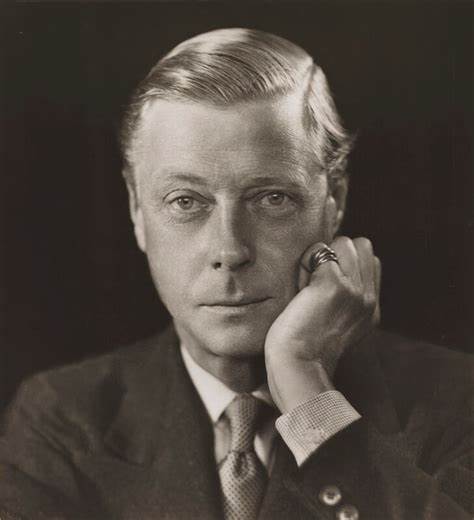
I read an interesting article on-line the other day about the late Duke of Windsor. Born as the heir to the throne of Great Britain, he was trained from an early age. His father, the King, wanted him to learn discipline and honor, so as to be prepared to assume his role. But Edward despised his father’s training. He found his father to be harsh and critical, prim and joyless. And he rebelled. He took little interest in the affairs of state, preferring to focus on his own pleasure. As his father grew older and weaker, Edward was asked to take on more royal duties. He enjoyed making appearances at parties, but despised many of the other tasks– letter writing, or visiting factories or various parts of the Commonwealth. He refused to settle down and marry, until he met Wallis Simpson, who was twice-married, and separated from her second husband. She was also an American citizen.
Edward VIII wanted to defy the laws and traditions of his own nation in order to marry. When this proved to be contentious, he decided to abdicate his throne, marry Mrs. Simpson, and live abroad. Instead, his brother became the next king (George VI), guiding his nation and the commonwealth through the difficult days of the second world war.
For many years, the myth of a king who gave up his throne to be with “the woman I love” has prevailed. But there was more to Edward’s abdication than blighted love. Edward was not incapable of ruling, but he was unfit to rule it well. His lack of dedication to his duties and citizens became evident in the very first crisis. Those who were working with him during his short reign witnessed his lack of care or concern about paperwork, and his selfish insistence on doing what he wanted to do, and not what was expected of him or of benefit to his people. He was a man without discipline and without a clear moral compass https://www.dailymail.co.uk/news/article-417388/Prince-Charmless-A-damning-portrait-Edward-VIII.html.
The Bible is filled with many examples of kings throughout the history of Israel and Judah who also failed to learn discipline or restraint. Their desire to reap the benefits of their position without learning to fulfill their responsibilities led to the moral, and eventually the physical and political collapse of their nations. They did not make a habit of seeking God, or of listening to His prophets. They sneered at good advice, and defied the laws of Moses and the rules God had given for the kings. Some of them worshiped other gods; some even sacrificed their own children to foreign gods or goddesses. They failed to keep the sacred holidays; they failed to read the Word of God; they failed to pray– except as a last resort!
We often perceive prayer as a personal practice– and it is. But how we choose to develop our prayer life may be tied to how we choose to develop the rest of our lives. We don’t need to be rigid and legalistic about it. But we do need to live– and pray– with purpose, if we wish to follow the example of Jesus and grow in our walk with Him. Not only does it impact our life and growth– it impacts our witness and our influence as well. Pursuing prayer in a disciplined way may have a far-reaching impact on our life and the lives of others– even in the generations to come. For more, see the page Why I Keep a Prayer Journal
(Please note: This is a post from a couple of years ago, which has been updated and revised…)
Have you ever doubted? Wondered, “Where is God?” Maybe even wondered if He exists at all? And then someone came along and made you feel wicked and small for having such a thought…”How could you!?”
I know there are people who believe that faith is not really faith if you can have moments of doubt– that true faith never wavers, stumbles, or has tough questions. I don’t think this is Biblical, nor do I think this reflects God’s relationship with us. The Bible is full of “faithful” people who had moments of doubt.
Abraham, when told that he would become the father of many nations, believed, and it was counted as righteousness (Genesis 15:6, Hebrews 11:11, Romans 4:3, etc.) Abraham’s faith was so solid, that he was willing to sacrifice his son, Isaac, the son of God’s Promise! Yet Abraham and Sarah acted outside of absolute faith when they brought in Hagar and tried to start a family on their own. God still blessed Hagar and Ishmael, but they were not part of the fulfillment of God’s plan. And over four thousand years of bad blood between the descendants of Isaac and Ishmael are a sad reminder that Abraham did not trust God absolutely and completely.
King David was a “man after God’s own heart.” Yet David wrote often about his feelings of being abandoned or forsaken by God. (See Psalm 10, Psalm 13, and Psalm 22 among others.) Elijah, within hours of a great victory over hundreds of angry priests of Baal, after a miraculous demonstration of God’s power and faithfulness, hid in despair and asked to die, sure that God had abandoned him to his enemies (1 Kings 19).
Most telling is the statement from Jesus Himself on the cross. “My God, My God, why have you forsaken me?” (Matthew 27:45-46; Mark 15:33-34) Although He was quoting one of King David’s psalms (22:1), the words still ask a very harsh question. Did Jesus Himself doubt God’s presence or His boundless love? (I don’t think so, but it is this kind of statement that often invites condemnation from those who cannot allow for any momentary doubt of any kind.)
I don’t believe any of these moments in the Bible are accidental. I believe God wants us to know that His presence and His faithfulness do not depend on the absolute strength of our faith. I believe it is one of the reasons that Jesus spoke of faith “as small as a mustard seed” (Matthew 17:20). It is not the size or the strength of our faith that determines what God can or will do. It is the size and strength of our faith that causes US to understand what God is doing and to participate more fully with Him. And taking our momentary doubts and questions to God shows a different kind of faith– one that is strong enough to BE tested and triumph. God rewards those who SEEK Him. If we never need to seek, or ask, or knock (See Matthew 7:7), could it be that we are not trusting in Him, but in our own wisdom?
Take heart! Have faith! But don’t be afraid to go through valleys of doubt, or wrestle with difficult questions. And if someone else is struggling–be willing to listen to their doubts and questions, rather than just dismissing them. God does…
“Blessed are those who hunger and thirst after righteousness, for they will be filled.”(Matthew 5:6) I’m looking at the Beatitudes and how they can relate to our prayer life. Today, I’m looking at the fourth in the series, shown above.
I recently found out that I am diabetic. I’m trying to lose weight and eat in ways that will help manage my body’s response to carbohydrates. And I find that when I feel hungry, I seem to crave all the wrong things! I miss pasta and chocolate and a large sized Coca Cola from the drive-thru. I don’t normally crave steamed cauliflower or unsalted nuts when I’m hungry. There’s nothing inherently wrong or “evil” about pasta, or chocolate chip cookies, or even sugary drinks. But they can crowd out the nutrients that my body needs, making me bloated and yet feeling like I didn’t get “enough” to eat. I don’t crave the nutrients– I crave the taste. I don’t hunger for the fuel my body needs; instead, I hunger for the flavors I want, or the quick burst of energy I feel from sugar and carbs.
And the same can be said for Righteousness. Most of us do not truly hunger or thirst for righteousness on our own. We crave comfort, or affirmation, or control of our circumstances. Even in our prayer life– even as we say the words, “Thy will be done”– we are usually asking for our own wishes or desires to be fulfilled. “Help me get this job.” “Change my neighbor’s attitude.” “Fix the problem…” We want to BE righteous, but our appetite leads us to compromise and complacency. The end result is that we feel unfulfilled, even resentful and restless.
Jesus promises that those who hunger and thirst after righteousness will be filled. We will not be left with the gnawing feelings of guilt and shame and regret, or left feeling unfulfilled and dissatisfied. What kind of diet will lead to this “filled” feeling? Chewing on God’s Word! Have you ever noticed how often in the Bible God uses food imagery in relation to His Word? “Taste and see that the Lord is good” (Psalm 34:8). “How sweet are Thy words unto my taste! Yea, sweeter than honey to my mouth” (Psalm 119:103) “Man shall not live by bread alone, but by every word that proceedeth out of the mouth of God” (Matthew 4:4b). And there are dozens of other examples throughout both Testaments.
When I come to prayer wanting more of God and less of my own “cravings,” it changes my perspective– and my appetite. My desire is no longer for convenience or temporary comfort, but to be closer to God– to enter into His Righteousness. My other desires start to change to align with His will. Instead of praying to get a particular job, I begin to pray that God will lead me to do my best at whatever job I have (or that I will eventually get). Instead of wanting my neighbor to change, I will begin to look for ways God wants me to change my response to my neighbor. Instead of just wanting to lose weight, I will begin praying about ways I can honor God in the way I eat (and exercise and take care of my body).
So I need to ask, “What am I really hungry for today?”
I hope that today will be filled with peace, joy, and blessing for anyone reading this. But I know that today will bring bad news for some, pain for others, and hardship for many. Life is filled with struggle, disappointment, failures, and loss. Our first reaction is often to worry, which can lead to more worry, and a sense of urgency, even panic. In many cases, we have neither the resources nor the wisdom to overcome our struggles–even sustained effort or a “lucky break” may leave us without much hope. And the more we worry, the less we accomplish. But telling ourselves (or others) to simply “stop worrying” doesn’t banish worry; sometimes it increases it! Now we worry about worrying too much, or we find new things to worry about.
But there is a time-honored and proven pattern that can help. Jesus spoke of it in His “Sermon on the Mount.” In Matthew 6, He gives us this advice:
“So do not worry, saying ‘What shall we eat?’ or ‘What shall we drink?’ or “What shall we wear?’ For the pagans run after these things, and your heavenly Father knows that you need them. But seek first his kingdom and his righteousness, and all these things will be given to you as well. Therefore do not worry about tomorrow, for tomorrow will worry about itself. Each day has enough trouble of its own.”
The Apostle Paul expanded on this in his letter to the Philippian believers. He told them to be anxious for nothing–that regardless of our situation or circumstances, we should not panic, but pray (seek God’s grace, righteousness, wisdom, and help). But more than that, we should present all of our prayers, petitions, and requests with thanksgiving and praise!
This is not the same as pretending that our struggles don’t exist, or that they are not important, or that we are glad about the pain, uncertainty, or hardship that they bring. Instead it is lifting our eyes to Heaven and finding that God is bigger than it all; that His grace, His strength, His wisdom is sufficient for the next step– for today’s worries–for today’s battles and burdens.
This doesn’t happen naturally or automatically–we must seek, pray, pursue righteousness, ask for help, and continue to stand firm. There are some who point to the words of Jesus, or of Paul as a kind of “magic formula.” If we repeat a few promises from the Bible, or if we pray certain prayers, or convince ourselves and others that we have “enough” faith, God is obligated to change our circumstances and give us the resolution or relief we want. God is not primarily interested in our relief– He is interested in our redemption, our renewal, and our eternal reality. In following this pattern of turning our panic into prayer, and our prayer into praise, He promises that we will experience His peace. Our panic will be transformed–even if our situation stays the same; even if it gets worse before it gets better!
So how do we practice this pattern; how do we train for this transformation?
Start by seeking God with abandon–pursue Him with your whole heart– thank Him for who He is, and for all He has done. It can be helpful to review some of the names of God–I AM, Almighty, Creator, Lord, King of Kings.. Or read a Psalm or find a song that reminds you of God’s character and power. Think of the times when God has been faithful in your own past.
Find something about your situation for which you can be thankful– genuinely thankful. Years ago, when I was young and single, I was laid off from my first full-time job after nine months. Was I worried? Yes! Where would I find another job? How would I pay my bills? But I resolved to start being thankful about all I had learned on the job– I had met new people, learned new skills, purchased a car…God knew my needs for the future, and even though I had to wait another eight months before I found a full-time job, I was able to find temporary work and interview for other jobs in the meantime. And I had friends and family who offered good advice and encouragement along the way. I know some situations are more painful and perplexing than the loss of a job. When I my father died, nothing made the pain less, but I could thank God for Dad’s life and the time we had with him. This is NOT easy, nor is it meant to be…It may not happen for days, or weeks–don’t give up!
Cry out to God– in praise, but also in petition, pain, confusion, confession, and raw emotion. God wants a real relationship with us, and that includes walking with us in the “valley of the shadow of death.” We don’t have to fear evil, or worry about the future, not because it holds no danger or dread, but because we never have to walk alone and defenseless!
Remember this is a pattern to follow, not a pill to swallow–none of this comes easy, and God’s peace is not an instant “fix.” Instead, it is a growing conviction that God is who He says He is– faithful, loving, victorious, eternal, and sovereign. Such peace defies our panic and erodes our worry, leaving us ready to face the battles before us, and move forward through the struggles.









































 Pursuing Prayer