Lullabies and Hallelujahs

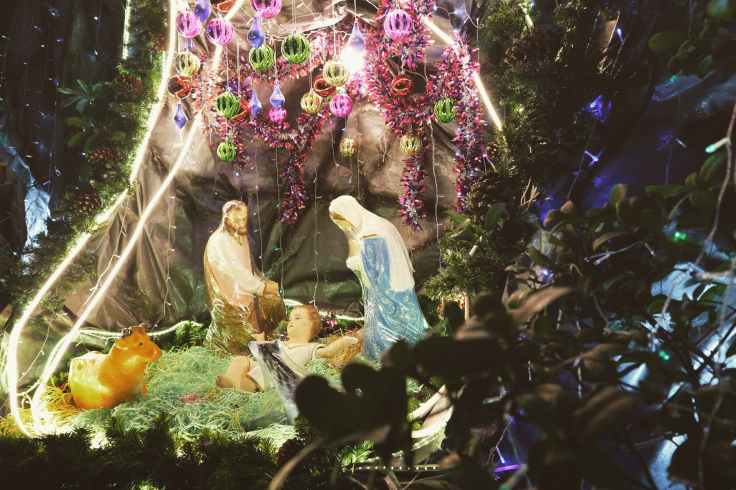
During this season of the year, we hear a lot of “Christmas” music. Much of it is secular music–Santa Claus and magical snowmen, gifts and parties, and the Holiday “blues.” But much of it is related to the real reason for Christmas: the birth of Our Lord. And the number of songs, hymns, cantatas and symphonies related to Christ’s birth is staggering! Popular secular singers record “their” versions of favorite hymns; choirs and orchestras present new songs and ancient melodies. Many of the songs fall into two distinct categories, however. There are quiet lullabies–peaceful and meditative, focused on the infant in the manger; and there are Hallelujahs– joyful and majestic, focused on the wonder of God coming to earth.

I don’t know if there were actually lullabies OR Hallelujahs on that first Christmas. The Bible mentions the visit of the angels, but they were “praising God and SAYING, ‘Glory to God in the Highest..'” We often assume that their praise included singing, but the Bible isn’t specific. But it is interesting to look at the contrast of the quietness of the manger and the Glory of the angel hosts, and hear the contrast in the hymns we raise at this time of year.

Photo by Henlynn on Pexels.com

Lullabies, and quiet songs, like “Silent Night,” or “Away in a Manger” call our minds and hearts to the humility of the Christ child. Babies are cute and engaging. And they are not “silent.” But they do not command authority and majesty. Babies cry out for help. They are needy in a way that God is NOT. And yet…God came in the form of a helpless baby. The God who created the galaxies needed someone to feed and change Him; to carry Him from place to place and rock Him to sleep. “O, Little Town of Bethlehem” reminds us that He came to a cattle shed in a small town, rather than to a palace in the seat of power.

Photo by Blue Ox Studio on Pexels.com

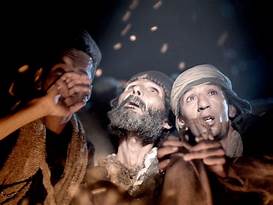
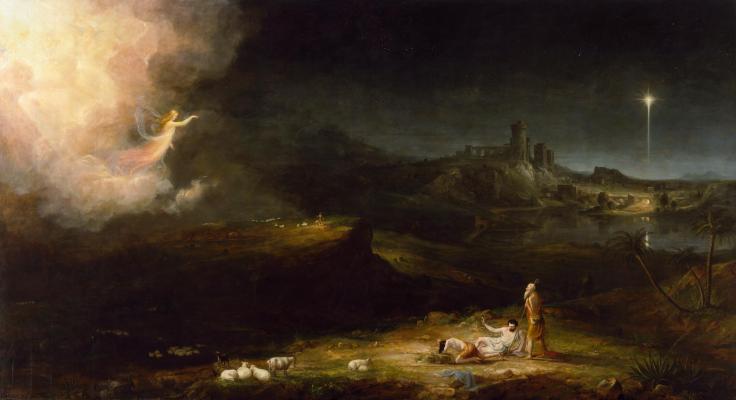
Hallelujahs, like “Joy to the World” and “Hark, the Herald Angels Sing,” remind us that this was no ordinary child. And yet…the angels did not appear IN the manger or even in the little Town of Bethlehem. The Angels were compelled to sing their praises, not to the learned priests, or the courts of power, but to dumb-founded shepherds on a cold hillside. What an explosive visitation! Their praises (whether shouted or sung) shattered the quiet and the darkness. Like a sudden fireworks display, the Glory of God’s servants split the night.

God enters our hearts– sometimes quietly, like the cooing of an infant; sometimes dramatically, like a chorus of angels. God is at work– sometimes in humble moments and ordinary gestures; sometimes in glorious flashes of insight and inexplicable miracles. And this season, our prayers will rise up– sometimes like the humble cries of a newborn baby; sometimes like the soaring songs of angel hosts– prayers of need; prayers of thanksgiving; prayers of awe-struck worship; prayers of simple confession of our own unworthiness, and of God’s sufficiency and everlasting Love. Peace and Glory; lullabies and Hallelujahs; simplicity and majesty– all wrapped up on a manger of hay on one Holy Night.

Photo by Daka on Pexels.com

Christmas is about both the lullabies and the Hallelujahs; the simple light of Truth and the glorious radiance of God’s Holiness.


Joy(?) to The World

Photo by zeno ferenczi on Pexels.com

I don’t know about you, but I sometimes have problems with Advent Season. On the one hand, it’s a season of joy and wonder; a season of anticipation and expectation. But I find myself contemplating…and as the days get darker, earlier, and the snow falls, then melts, leaving everything brown and gray, I can’t seem to hang on to the joy. It slips through my fingers, leaving me thoughtful and even a little depressed.

I also find myself looking at the glitter and listening to the peppy music of the season and feeling as though all the “Merry” in Christmas is just a soap bubble, waiting to burst. I don’t watch much television, but it seems that every year the “holiday” specials and TV ads get more artificial and shallow. “Buy this!” “Turn up the Tunes!” “Wear THIS to the Holiday party!” “Eat this– Drink that!” “Get away from it all!” It’s more about escaping the ordinary, rather than celebrating the extraordinary gift of God’s Son. The more I try to get “into the Spirit” of the season, the more I seem to miss it…

Photo by Henlynn on Pexels.com

It is important to remember that this extraordinary Joy came INTO and THROUGH the ordinary. The angels didn’t announce to the shepherds that they could escape their duties and run off to a vacation cruise; Mary and Joseph didn’t celebrate their first Christmas surrounded by lights and mugs of hot cocoa. The wise men didn’t have a brand new GPS device to help them find their destination, or tasty cookies and fruit baskets to make the journey more “fun.” This “good news of great joy” was the birth of a child– an ordinary event–except that THIS birth was the fulfillment of God’s Promise and the Way, the Truth, and the Life!

Photo by Levent on Pexels.com

Many millions of people today will not have joyful circumstances to make the season “Merry and Bright.” But they can experience true Joy– the kind that comes from Knowing Jesus–and not just for a day or a season, but forever, in spite of difficulties, pain, and struggle. There IS joy in the journey, but it doesn’t always manifest as mirth and comfort.

Photo by Kampus Production on Pexels.com

This season, it is our privilege as Christians to offer a different level of Joy to the World–the Joy of forgiveness; the joy of belonging; the joy of eternal Hope and Peace. It may not be in laughter or singing. It may be in holding a hand at the side of a hospital bed. It may be in sharing tears with those who are suffering. It may be sharing a crust of bread with real thankfulness, instead of a feast with stress. Joy doesn’t have to be complicated. It doesn’t require wrapping paper sugar sprinkles. The best gifts we can give this season don’t have to be filled with merriment and laughter. They don’t have to be expensive or even filled with thoughtful intent. They should be the spontaneous response of love and compassion for those around us. Let’s give lots of hugs, smiles, and small tokens of respect and appreciation this year. After all, God’s great gift– the greatest of all– began as a tiny, wailing infant, hidden away in a spare stable, wrapped in rags. But “Behold!” It is still bringing great joy all over the world. (Luke 2:10)

Photo by Burkay Canatar on Pexels.com

Let’s not trade certain Joy for temporary mirth this season. Reflect on the Reason, and not just the Season!

Go! Tell! Witness! Believe!

15 When the angels went away from them into heaven, the shepherds said to one another, “Let us go over to Bethlehem and see this thing that has happened, which the Lord has made known to us.” 16 And they went with haste and found Mary and Joseph, and the baby lying in a manger. 17 And when they saw it, they made known the saying that had been told them concerning this child.

Luke 2:15-17 (ESV)

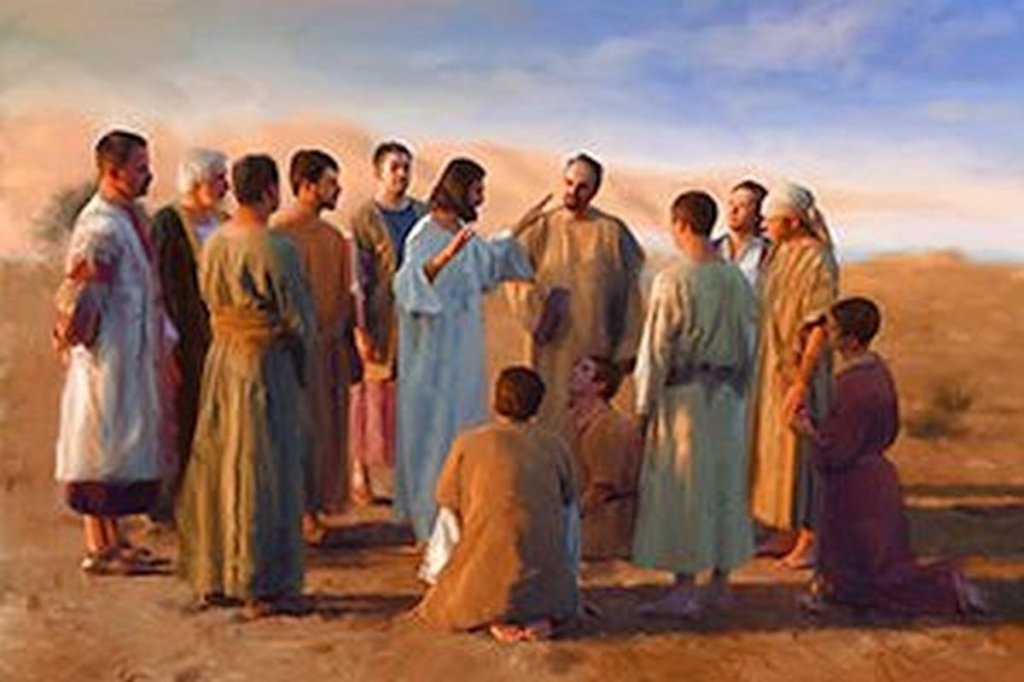
Go! Tell It on the Mountain! The ancient prophets foretold it. The Angels brought the news to the shepherds, who told it to their neighbors: Jesus, the Christ, is born! He is here among us! God in the flesh! What amazing and glorious news! This same Jesus told parables, shared prophecies, and spoke the Truth– and taught His disciples to do the same! Through the centuries, witnesses have spoken words of hope, healing, and salvation to the next generation, taking the Word as they spread throughout the world.

Photo by cottonbro on Pexels.com

In the beginning was the Word, and the Word was with God, and the Word was God…And the Word became flesh and dwelt among us, and we have seen his glory, glory as of the only Son from the Father, full of grace and truth.

 
John 1:1; 14
Photo by Pixabay on Pexels.com


“Good Christian, fear, for sinners here the silent Word is pleading..”

What Child is This?

Jesus, who spoke the universe into existence, came into His own creation in silence as a newborn baby. The angels announced His coming; the shepherds spoke of Him; the Wise Men came to honor Him. But His arrival was just the beginning. In His ministry, He would speak words that echo through the centuries– words of hope; words of warning; words of life and salvation. And He challenges us to speak as well– to share the Gospel; to be His witnesses to the uttermost parts of the earth (see Acts 1:8).

Our words matter. Our words have power– power to build up, and power to destroy. We have opportunities each day to speak Truth, Hope, Joy, Peace, Compassion, Love…or to stay silent. And we must be careful to speak the truth– even when it is inconvenient, unpopular, or risky. We must not compromise by speaking pleasant platitudes or ignoring danger. Truth is not always pleasant–Jesus’s words were not always welcomed; not always comforting. But they brought healing where it was most needed, and hope where there was darkness.

Photo by Ivan Samkov on Pexels.com

And more than words must go out into the world– Jesus didn’t sit in a comfortable corner of a bistro waiting for the hurting and hopeless to come to Him and hear His words. He climbed mountains and crossed lakes; He traveled from town to town; He shared meals and participated in the Synagogue services; He touched lepers and spoke to outcasts. Today, we have amazing opportunities to spread the Good News–technology and media; the ability to meet others in person (COVID permitting!) or via Zoom or Skype or even cell phone; and, in many places, the freedom to speak without fear.

Photo by Daria Shevtsova on Pexels.com

 For God so loved the world that he gave his one and only Son, that whoever believes in him shall not perish but have eternal life.

John 3:16 (NIV)
Photo by Min An on Pexels.com

The Word came down at Christmas. Let’s make sure the Word goes out this Christmas– the Savior has arrived! He is Christ, the Lord! Joy! Peace! Hope! Celebration! Go! Tell it on the mountaintops and in the valleys and across the seas!

The Silent Treatment

Have you ever had someone give you “the silent treatment?” Or have you ever been angry or disgusted and refused to talk to someone? It can be very frustrating. You may ask a simple question– even look the other person in the eye–only to face a wall of silence. Silence of this type can be oppressive. It is less an absence of sound than a presence of something heavy and dark.

Photo by Simon Blyberg on Pexels.com

God spoke through His prophets, messengers (angels), and sometimes, in visions throughout the days of the Old Testament. But then, He was silent. For four hundred years! There were no new messages, no prophetic visions– just a gloomy silence. There was still noise in the world– chaos, confusion, war, debates, chattering, gossip– but no word from God. He had spoken for thousands of years, and His laws and the words of the prophets still stood, promising a coming Messiah, a rescue and a redemption for the nation of Israel. But then, nothing.

Photo by Gabriela Palai on Pexels.com

Imagine how much more glorious it must have been when the angel hosts announced the Messiah’s birth to the shepherds! After such a long silence, they must have nearly exploded with the joyous news! The shepherds, already frightened by the sudden appearance, must have been held in thrall to hear voices from the heavenly realms– something that hadn’t been heard or even heard of for over a dozen generations!

And that’s how it often is–after a period of silence, the sound comes spilling out in a mad rush. Feelings, thoughts, announcements, all waiting to rush out in an explosion of sound and excitement. The silence is over! The heaviness is lifted. The dam has burst, and the words pour out in a great flood.

Photo by Avery Nielsen-Webb on Pexels.com

When Jesus– the Word of God– arrived, He spoke to many. He told parables and spoke words of healing and kindness and even warning. But at His trial, He refused to answer many of the questions that were posed. He dared to give “the silent treatment” to Pontius Pilate and the Pharisees. People who had refused to listen to Him during his ministry suddenly wanted answers. But He had already spoken and told them everything they needed to know.

Not so with His disciples. He spoke to them plainly and promised them a “counselor.” The Holy Spirit would speak, and would teach them how to speak. There would be no more “silent treatment” for those who knew the Spirit. No need for angelic messengers or prophetic visions (though God could still choose to use them as well)–God’s Spirit would dwell in the hearts and minds of His people.

Photo by Sora Shimazaki on Pexels.com

And yet, we often feel that God is “silent” in our own time. But is that really the case?

Photo by MART PRODUCTION on Pexels.com

Have you ever given God the “silent treatment?” How long have you held in resentment or doubt over something God did or didn’t do; a prayer He answered in a way that left you feeling hurt or confused? Is there a wall of silence on your part? It may not even be full silence. Is there some issue or topic you refuse to bring to prayer? Some secret desire you won’t discuss with Him? How does it weigh down the rest of your relationship?

Photo by Anete Lusina on Pexels.com

I have found myself holding things back, keeping silent about things in my life. It stunts my growth and hinders my prayers. But when I finally break my silence, pouring out the full measure of my fears, confusion, and deepest desires, it is like a weight sliding away, and light breaking through the clouds. The joy and relief are overwhelming. (See Psalm 32 https://www.biblegateway.com/passage/?search=Psalm+32&version=ESV) What the psalmist says about sin can apply to doubt, anger, or confusion, as well. Unconfessed and unspoken, it will weigh upon us.

Photo by MART PRODUCTION on Pexels.com

Don’t give God the “silent treatment.” He already knows all that you would keep back from Him. Silence doesn’t “treat” anything– real healing comes from open communication with the Great Physician. Don’t wait four hundred years– or even four hundred seconds! Let the words (and maybe the tears) flow…And don’t be surprised if your silence is replaced with singing!

G.P.S.

Psalm 23:3 English Standard Version (ESV)

    He restores my soul.
He leads me in paths of righteousness
    for his name’s sake.

Photo by Amelie Lachapelle on Pexels.com

Many phones, tablets, even vehicles, come with a GPS– Global Positioning System–which uses satellite technology to tell you where you are. Combined with a satellite navigation system, the GPS helps tell you how to get from point A to point B– mapping out various routes, including estimated travel times, and information about road construction, detours, and traffic patterns. Applications like Google Maps or MapQuest can show you details and even images of the roads on which you are traveling. Such systems and apps can be very helpful, but they are not perfect. A GPS may be a few yards “off,” leading you close to your destination, but leaving you slightly lost and confused. If you type the wrong coordinates or address into a navigation system, you may end up far from where you expected to be!

Photo by Leonardo Gonzalez on Pexels.com

As Christians, we have a GPS– God’s Provision and Sovereignty. God promises to lead us in the paths of righteousness. God’s direction and leadership are sure and good. We still have the responsibility of listening and adjusting our course, however. We can still miss a turn, go off in the wrong direction, or set the wrong coordinates for our destination.

But, unlike a satellite navigator, God’s provision is eternal and supernatural. God knows all the roads we can take, could take, should take, (or shouldn’t take), and will take– He knows every curve, every bump in the road, every traffic jam, and every scenic lookout and rest stop along the way! God’s MapQuest sets us on a course of righteousness– paths that will not only bring us safely to our ultimate destination of eternal life with Him, but do so in a way that brings honor and glory to Him. After all, it’s His reputation at stake as our Shepherd. He is the Good Shepherd– He won’t lead us down the wrong path; He WANTS us to reach our destination. And our full potential!

Photo by Vlad Cheu021ban on Pexels.com

When we travel these paths, with our Shepherd leading the way, we will become familiar with the best roads; able to help others navigate the sharp turns and steep grades we have already traveled. We can share the glory of that sweet stretch of road beside the cool stream, or the view from the hidden rise. And we can share the blessings of being on the road with the one who owns it!

Photo by Drew Rae on Pexels.com

Sometimes, we pray for a different path– a short cut, or a road with more adventure (or less!)–God hears our prayers, and He knows where the road leads. When we look back, we may be amazed– not only at the road God laid out for us to follow, but the roads we didn’t take. We see a short-cut; God sees missed opportunities for growth. We see a detour; God sees the dangerous wash-out we were spared. But if we walk by faith, and not by sight (or intuition, or emotion), we will begin to see the goodness of the path we are on, no matter how difficult or how different from our expectation. And we will begin to pray, not for the path to change, but for wisdom to follow where our Shepherd leads.

Photo by Aleksejs Bergmanis on Pexels.com

The best part of God’s GPS is that no matter how lost we are; no matter which path we have chosen against His good will– God can get us back on course and to the right destination. He can turn our dead-end roads around, help us make the right turns, and help us reconnect with the paths of righteousness.
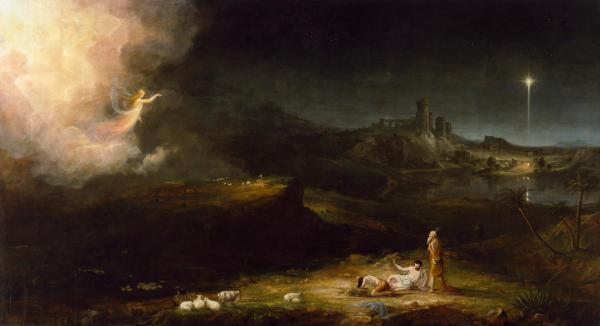
Photo by rawpixel.com on Pexels.com

Whatever path you and I find ourselves on today, I pray that we will turn on our GPS, and follow God’s directions for the road ahead.

The Lord is My Shepherd

Psalm 100:3 Christian Standard Bible (CSB):

Acknowledge that the Lord is God.
He made us, and we are his—
his people, the sheep of his pasture.

Psalm 23 New King James Version (NKJV)
The Lord the Shepherd of His People
A Psalm of David.
23 The Lord is my shepherd;
I shall not [a]want.
He makes me to lie down in [b]green pastures;
He leads me beside the [c]still waters.
He restores my soul;
He leads me in the paths of righteousness
For His name’s sake.
Yea, though I walk through the valley of the shadow of death,
I will fear no evil;
For You are with me;
Your rod and Your staff, they comfort me.
You prepare a table before me in the presence of my enemies;
You anoint my head with oil;
My cup runs over.
Surely goodness and mercy shall follow me
All the days of my life;
And I will [d]dwell in the house of the Lord
[e]Forever.
Footnotes:
Psalm 23:1 lack
Psalm 23:2 Lit. pastures of tender grass
Psalm 23:2 Lit. waters of rest
Psalm 23:6 So with LXX, Syr., Tg., Vg.; MT return
Psalm 23:6 Or To the end of my days, lit. For length of days

http://www.biblegateway.com

The Bible is filled with imagery of sheep and shepherds. Growing up, I lived in the countryside, but we never raised sheep, and I had little experience with livestock of any kind. We had one neighbor who had sheep, however, and he shared a lot of insight into why we should pay attention to what sheep can teach us about ourselves, and our God.

Photo by Trinity Kubassek on Pexels.com

Not only does God use the imagery of sheep and shepherds, He uses examples throughout the Bible of actual sheep and shepherds. Abraham, Isaac, Jacob, the sons of Jacob, David, and the prophet Amos– all were shepherds. When the Messiah was born, the first announcement went to shepherds in the fields, keeping night-watch over their flocks!

Jesus used stories of sheep and shepherds in his parables, as well. There is a lot to understand, and I am not qualified to teach anyone about shepherding, but there are several wonderful principles that don’t require a lot of in-depth knowledge:

  • Sheep NEED a shepherd. There are breeds of mountain sheep that live independently, but the Bible stories speak of domesticated sheep…they are “high maintenance” animals– they need food and water, shelter, protection, and a lot of guidance and supervision! We NEED God–He understands our situations, our weaknesses, and our strengths, far better than we do. He knows the future; He has a plan, and He provides all that we need. We may not see the road ahead–we may not see the green pasture or the still waters where He wants to lead us–but He IS the WAY, the truth, and the life (John 14:6), and we can trust Him to get us there.
Photo by Chama on Pexels.com
  • Sheep need to be sheared. Left unsheared, the sheep’s wool will become matted, filthy, and a potential source of danger and disease. The sheep cannot get rid of its wool on its own. However, once the old wool is sheared off, the sheep is clean, and new wool can grow. Not only does God provide for our immediate needs, He provides for our renewal and growth–physical, emotional, and spiritual growth. Sometimes, that means we need to be “sheared” of habits, people, or situations that have become “matted”, and filthy. We haven’t even noticed the change, and we don’t see the danger. God wants to free us from the “baggage” we accumulate, and help us experience new growth.
  • Sheep depend on others to stay safe, healthy, and fed–there may be “lone wolves”, but there are no “lone sheep”. God will bring us into “flocks”. We learn to eat together, travel together, rest together, live together, and follow our shepherd’s voice together. Trying to be a “lone sheep” makes for a lot of trouble!
Photo by Ekrulila on Pexels.com
  • Shepherds make great sacrifices to care for their sheep– they provide, protect, rescue, heal, guide, and clean their sheep. A good shepherd is watchful, faithful, caring, and gentle, even as s/he must be strong, brave, and fiercely protective, risking their lives (or even giving their lives) for their flocks. Jesus, our Good Shepherd, knows each one of us intimately– He knows how to heal and guide us. He wants us to recognize His voice above all others, and to stay close to Him. He died to redeem you and me!
Photo by Magda Ehlers on Pexels.com

May we trust our Good Shepherd today, and every day. May we spend time acknowledging Him as our loving and faithful Shepherd, and call out to Him– in praise, in adoration, in supplication, and in loving gratitude.

While Shepherds Watched Their Flocks


While shepherds watched their flocks by night,
All seated on the ground,
The angel of the Lord came down,
And glory shone around.
“Fear not!” said he, for mighty dread
Had seized their troubled mind;
“Glad tidings of great joy I bring
To you and all mankind.
“To you, in David’s town, this day
Is born of David’s line
A Savior, who is Christ the Lord,
And this shall be the sign:
“The heav’nly Babe you there shall find
To human view displayed,
All meanly wrapped in swathing bands,
And in a manger laid.”
Thus spake the seraph and forthwith
Appeared a shining throng
Of angels praising God on high,
Who thus addressed their song:
“All glory be to God on high,
And to the Earth be peace;
Good will henceforth from heav’n to men
Begin and never cease!”

Words by Nahum Tate

Why the shepherds? Angels might have appeared to the rulers and priests of Israel, announcing the birth of their long-awaited Messiah, but they did not.  Nor did they appear to the common citizens (and other visitors) in Bethlehem.  We make much of the shepherds being lowly and humble, and that is true enough.  But there were other poor and humble people throughout the land.  And there were “important” people who waited to hear the news.  

Photo by Magda Ehlers on Pexels.com

There is something about shepherds that is close to the heart of God.  All the way back in Genesis– Abel was a shepherd.  The early patriarchs– Abraham, Isaac, Jacob– were all shepherds.  Moses, when God called him, was working as a shepherd.  King David started as a shepherd, tending his father’s sheep, while his older brothers were serving in the army.  The prophet Amos was a shepherd.  Jesus used several parables about and allusions to shepherds and sheep as well.  (See Matthew 18:10-14; John 10 among others.)

Shepherds are humble, yes, but there are other traits that I think are at work in the story of the Nativity– some important, and others incidental:

  • Shepherds watch.  That seems pretty self-evident from songs and passages, but it’s also important.  The shepherds weren’t watching for angels that night, but they were alert, combing the area for dangers, pitfalls, straying sheep, wandering predators…There is nothing in the Bible that says that the angels were invisible to anyone else in the neighborhood; only that the angel appeared to the shepherds and was joined by the hosts of heaven.
  • Shepherds must focus on others.  Much is made of the “lowly” station of shepherds.  But that is the nature of the job.  A “Good” shepherd is one whose focus and efforts are directed at the sheep.  He doesn’t “climb the ladder of success”, “toot his own horn”, “keep banker’s hours”– in fact the shepherds of the Nativity story were the “night shift”, tending the flocks when it was cold, dark, dangerous, and thankless!
  • Shepherds were familiar with “unconventional” birth.  An announcement that Messiah was born in a stable and could be found wrapped in strips of cloth would come as a surprise to shepherds, but not as an impossibility or a cruel joke.  Shepherds (anyone whose livelihood depends on the safe delivery of livestock) would understand and rejoice over new life, even in unexpectedly humble or unconventional circumstances.
  • Shepherds were often “left out” of ceremonies and celebrations, because of their frequent contact with blood and death.  The angel’s announcement had special meaning in the inclusion of shepherds, which was to show that even those who had been deemed ritually unclean were to be included in the “Good news of Great Joy!”
  • The shepherds were “abiding” in the fields.  These were not the temporary visitors thronging to Bethlehem for the census.  They were not the patriarchs of great families living in walled compounds or great estates; neither were they awake in the middle of the night plotting, scheming, or creating havoc.  They were humble, but they were faithfully doing their work.
Photo by Chama on Pexels.com

This Advent season, may we consider the shepherds and learn to be watchful, other-focused, joyful, ready to accept the Good News, and faithful in all that we do and say in response to our Good Shepherd!

Photo by Pixabay on Pexels.com

Go, Tell It on the Mountain


Go, Tell It On The Mountain

While shepherds kept their watching
O’er silent flocks by night,
Behold throughout the heavens
There shone a holy light


Go, tell it on the mountain
Over the hills and everywhere
Go, tell it on the mountain
That Jesus Christ is born.


The shepherds feared and trembled
When lo above the earth
Rang out the angel chorus
That hailed our Savior’s birth;


Go, tell it on the mountain
Over the hills and everywhere
Go, tell it on the mountain
That Jesus Christ is born.


Down in a lowly manger
The humble Christ was born;
And God sent out salvation
That blessed Christmas morn.


When I was a seeker
I sought both night and day
I sought the Lord to help me
And He showed me the way.


He made me a watchman
Upon the city wall
And If I am a Christian
I am the least of all.


Go, tell it on the mountain
Over the hills and everywhere
Go, tell it on the mountain
That Jesus Christ is born.

Photo by Gratisography on Pexels.com

During the Christmas season, we often focus on giving.  And it’s certainly appropriate.  But there is another aspect of Christmas that sometimes gets overlooked– Telling.

Photo by James Wheeler on Pexels.com

Christ came to earth humbly, but he didn’t come secretly.  Angels announced his arrival to the shepherds; stars aligned and shone brightly as a signal to the wise men.  Prophets had foretold his coming for centuries.  John the Baptist even went ahead of Jesus, baptizing and preparing his hearers for the good news yet to come.  The earliest followers of Christ were eager to tell of his words, his deeds, and his glorious resurrection.  Many lost their lives doing so.

Photo by Julian Jagtenberg on Pexels.com

If the birth of Christ was reason to fill the night sky with songs and wonders,  reason enough to send angels and stars, prophets and messengers; what about the news of his life, death, resurrection, and ascension?  Why do we allow this amazing news to sit on a dusty shelf, unopened and unshared?  Or treat it like a secret, good news for only the few, the righteous?

We have the greatest news in all of history– more important than any political scandal, more amazing than the latest technology, more joyous than any other announcement imaginable.  Emmanuel– God WITH US–He came, he lived, worked, spoke, laughed, shared, loved, cried, ate, slept, and died, WITH US.  And he died and rose so that we could continue to live WITH HIM!

Photo by Pixabay on Pexels.com

God didn’t send all the signs and wonders– he didn’t come into the world to be a guilty secret.  And though there is still a risk involved in proclaiming the gospel, it is no less good, and no less NEWS now than it was nearly 2000 years ago.  Let’s TELL it!  SHOW it!  POST it!  SING it out!– Everywhere!

Photo by Janez Podnar on Pexels.com

Father, Thank you for this wonderful news. Thank you for the Greatest Gift–Yourself.  Give us hearts filled with joy and courage, and lips eager to share your grace and love with those we meet.  Help us to be faithful messengers of that grace and love; transparent and true in word and deed.  May every mountain and valley, forest, meadow, desert and ocean ring with the hope and glory of your nativity, your ministry, and your death and resurrection.

Gloria in Excelsis Deo


Angels we have heard on high
Sweetly singing o’er the plains,
And the mountains in reply
Echoing their joyous strains.Refrain:
Gloria, in excelsis Deo!
Shepherds, why this jubilee?
Why your joyous strains prolong?
What the gladsome tidings be
Which inspire your heav’nly song?
Come to Bethlehem and see
Him Whose birth the angels sing;
Come, adore on bended knee,
Christ the Lord, the newborn King.
See Him in a manger laid,
Whom the choirs of angels praise;
Mary, Joseph, lend your aid,
While our hearts in love we raise.
Photo by Anthony on Pexels.com

This has always been one of my favorite Christmas carols to sing.  I love the movement of the melodic line and the harmonies, especially when singing the angels’ chorus:  “Gloria, in excelsis Deo!  Gloria, in excelsis Deo!”
(Glory to God in the Highest Heavens!)

Yet, if we think about it, the angels seem almost to be having a joke.  There is something ironic about hosts of angels praising the glory of God in His highest Heaven, when they are announcing that He is, at that moment, a wailing, helpless infant, wrapped in rags and borrowing a feeding trough for his bed, miles from the warmth and comfort of a home of any kind, let alone the glory of His rightful throne.

Photo by Pixabay on Pexels.com


And there were shepherds living out in the fields nearby, keeping watch over their flocks at night. An angel of the Lord appeared to them, and the glory of the Lord shone around them, and they were terrified. 10 But the angel said to them, “Do not be afraid. I bring you good news that will cause great joy for all the people. 11 Today in the town of David a Savior has been born to you; he is the Messiah, the Lord. 12 This will be a sign to you: You will find a baby wrapped in cloths and lying in a manger.”
13 Suddenly a great company of the heavenly host appeared with the angel, praising God and saying,
14 “Glory to God in the highest heaven,
    and on earth peace to those on whom his favor rests.”
15 When the angels had left them and gone into heaven, the shepherds said to one another, “Let’s go to Bethlehem and see this thing that has happened, which the Lord has told us about.”
16 So they hurried off and found Mary and Joseph, and the baby, who was lying in the manger. 17 When they had seen him, they spread the word concerning what had been told them about this child, 18 and all who heard it were amazed at what the shepherds said to them. 

Luke 2:8-18 (NIV)
Photo by Bich Tran on Pexels.com

And this is how God chose to appear, and chooses to work– confounding the power of the powerful, the wisdom of the wise, and the goodness of the self-righteous.  God does not glorify that which is already a spectacle.  Instead he glorifies the lowly and unqualified things of the world by coming into them, working through them, and reshaping them for His use.

Photo by David Dibert on Pexels.com

And so, may we have eyes, ears, and hands to work in the same way–to raise up, encourage, bless, and honor those who cannot yet see the Glory around them, the Glory God offers to share freely.  May we be the host of God’s messengers to spread the Glorious news of Christ’s gift of life and salvation.  May we be like the shepherds, jubilant in our acceptance of His great news.  And may we be, like the babe himself–humble and kind–bringing Glory to the world around us, no matter how dark or unwelcoming it may appear.  Remember, God himself is with us!

Photo by James Wheeler on Pexels.com

Gloria!  Gloria, in excelsis Deo!

Blog at WordPress.com.

Up ↑