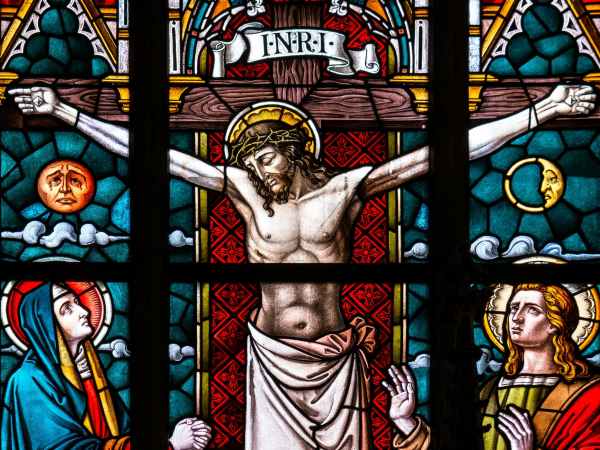
As I write this, it is still Sunday evening. This morning, we sang a classic hymn at church– “Nothing But the Blood of Jesus.” It’s an old hymn, and familiar; we often sing such hymns on auto-pilot and without really thinking of the wonderful words and truths coming out of our throats.
“What can wash away my sin?– Nothing but the blood of Jesus.” “What can make me whole again?–Nothing but the blood of Jesus.” When I come to God in prayer, confessing my sins, it is not my prayer that makes me clean. Nothing I can say or do will give me right standing before God. I am a sinner, and I fall short of God’s glory. I also trespass against His holiness, and even His mercy. I am guilty, and there is no “magic” prayer that will heal me or exonerate me.
Yet I come before a Holy God and make my confession. Not because He doesn’t know that I have sinned. Not because my words will save me. I come because I know that the Blood of Jesus Christ has, and will make me whole and justified. I have no need to hide the truth of my condition, or try to make my own justification or sanctification. Christ has done it all.
Prayers of confession are not for God’s benefit, but for ours. To hide our guilt, or to excuse it, is to despise God’s amazing gift of Grace. When we confess to God, it is not because He wants to humiliate us or cause us additional guilt– though this is often the lie we tell ourselves. God is eager to remove our guilt and to guide us in His righteous ways. But He will not save us against our own will or without our permission. He will not conspire with us to hide our secret sins, or pass the blame on to someone else. To do so would be to submit to OUR will. WE are NOT God, though we sometimes act as though our ways are better than His.
I’m so glad that God is God– that His ways are perfect, and that I can trust Him completely. Even when I fall short, I can trust that God has already paid the price to make things right– something I could never do, and something I find too wonderful to fully comprehend.
Nothing but the blood can save me. And anything other than the blood will fail to set me free. My prayers of confession– no matter how polished or pious or piteous– cannot unlock the mystery of salvation and restoration. But they acknowledge the marvelous reality that it IS FINISHED! God’s Grace is sufficient! Hallelujah!
“And lead us not into temptation, but deliver us from evil.” Matthew 6:13
For over a year now, we’ve been hearing the term “social distancing” in relation to COVID-19. Social distancing generally refers to keeping a “safe” distance from others in public, to reduce the spread of the virus (normally about 6 feet). It may also refer to using a mask whenever you are in a public building, or whenever you interact with someone who is 6 feet away or closer– especially at stores, doctor’s offices, church, school, etc.
Most people accept that social distancing is a temporary measure and meant to help keep you from getting (or giving) the disease. It is not a normal social practice, but one we choose to adopt for the good of everyone around us. However, there are many questions as to the effectiveness of social distancing after more than a year– what about those who have already had COVID, and should have antibodies? Should they be required to wear masks and keep their distance? What about those who refuse to practice social distancing? What about those who practice social distancing to the best of their ability who STILL get COVID?
These are all valid questions. But I want to look at the contrast between social distancing and “spiritual” distancing. We don’t want to “catch” COVID, but how vigilant are we in avoiding the contamination of sin? How often do we distance ourselves from those who claim to be “healthy” Christians while continuing with sinful practices? How often do we remain in situations rife with temptation, or compromise on “little things” in our own lives?
I’m not talking about walking around in a spiritual “bubble,” refusing to interact with anyone who has a sinful past, or with lost souls who need to hear the Good News of Salvation. Nor should we deny and cover up our own faults and failures. But if our lives are supposed to reflect the ministry and teaching of Jesus Christ; if we REALLY want to live the kind of lives that honor Him and lead others to want to honor Him, shouldn’t we be every bit as careful about sin as we are about COVID?
We are instructed multiple times throughout Scripture to “resist” the devil, to “flee” from temptation, to invite the Holy Spirit to “guard” our hearts and minds, and to “do battle” with spiritual foes. We are quick to put on masks before we enter the grocery– are we putting on the Armor of God at the same time?
Social distancing is public, and very visible. We can see who is practicing and who is not. We can judge others just by seeing if they are wearing a mask or keeping their distance. Spiritual distancing is private and largely invisible to the public. But God still sees and knows. I confess, I have been guilty of walking into situations and relationships without “wearing a mask” or putting on my spiritual armor.
10 Finally, be strong in the Lord and in his mighty power. 11 Put on the full armor of God, so that you can take your stand against the devil’s schemes. 12 For our struggle is not against flesh and blood, but against the rulers, against the authorities, against the powers of this dark world and against the spiritual forces of evil in the heavenly realms. 13 Therefore put on the full armor of God, so that when the day of evil comes, you may be able to stand your ground, and after you have done everything, to stand. 14 Stand firm then, with the belt of truth buckled around your waist, with the breastplate of righteousness in place, 15 and with your feet fitted with the readiness that comes from the gospel of peace. 16 In addition to all this, take up the shield of faith, with which you can extinguish all the flaming arrows of the evil one. 17 Take the helmet of salvation and the sword of the Spirit, which is the word of God.18And pray in the Spirit on all occasions with all kinds of prayers and requests. With this in mind, be alert and always keep on praying for all the Lord’s people.
Ephesians 6:10-18 NIV via biblegateway.com (emphasis added).
We should keep our distance from sin and temptation whenever possible, but we must also be ready to “stand firm” and protected by God’s armor, which includes persistently pursuing prayer! We wouldn’t walk into a situation where we knew we would be exposed to COVID without taking any precautions. Why would we deliberately expose ourselves to sinful practices? Why do we make excuses for compromising in our listening and viewing habits? Why do we get involved in fruitless arguments or gossip? Worse, why would we tempt others to be complacent about sin? Why do we stay silent as we watch other Christians struggling? Why aren’t we standing firm, suiting up, and praying “on all occasions?”
Just like with COVID, we can practice spiritual distancing and still fall into the “sickness” of sin. But God makes a two-fold promise–through the death and resurrection of Jesus Christ, the “virus” of sin is defeated and its effects neutralized. Even though we will face a physical death, we can have new and eternal spiritual life through faith by grace (Ephesians 2:8-9; John 11:25, others..) But we also have the forgiveness of sins– the knowledge that God will heal us and redeem the effects of our individual sinful choices when we confess and repent of them.
COVID is not a joke; nor is it harmless. I know from experience. Both my husband and I had it earlier this year. My husband was in the hospital for a week, and is still struggling to regain full health. I still have a diminished sense of smell, and other problems as a result of my illness. But Sin if a far greater threat than COVID. COVID has claimed many lives, but Sin has claimed billions of souls, and robbed them of life and hope.
Let’s keep our distance, wear our armor, and let’s get praying!
I was reading from the book of Judges today, and a curious phrase jumped out at me. The entire book of Judges is filled with the failure of the people of Israel to fully claim their promised inheritance from God. Generation after generation passes, with a cycle of sin, enslavement, and deliverance as God raises up various judges and heroes, like Gideon, Deborah, or Samson.
Already in chapter one, there is a hint of the trouble to come. The book begins with several successful battles after the death of Joshua. The people of Israel consult the Lord, who fights with them in several key battles. But in verse 19, it says: “The Lord was with the men of Judah. They took possession of the hill country, but they were unable to drive the people from the plains, because they had iron chariots.”
Say what? The Lord was with the men of Judah– the LORD! They had taken possession of the hill country– rough terrain that would have been filled with natural barriers, rocky fortresses, and literal “uphill battles.” They had destroyed massive cities like Jericho less than a generation before. They had defeated armies far larger and better positioned. They had defeated giants! And now, suddenly, they are “unable” to drive the people from the plains– because the enemy had chariots of iron?
https://www.biblestudytools.com/commentaries/gills-exposition-of-the-bible/judges-1-19.html I think this commentary says it well. The chariots of iron became the excuse for the Israelites’ unwillingness to obey; to trust in God’s strength instead of their own. After all, it wasn’t that long before in their history when God had drowned the entire Egyptian army, including all its chariots, in the Red Sea.
I don’t think it was about the chariots of iron. I think it was about the plains. I think sometimes it can be more difficult to fight on “the plains.” When God sends us on an “impossible” mission, we must face our own fears and acknowledge our weaknesses– we KNOW we cannot do it in our own power. But when we face an enemy on “equal footing,” we are tempted to trust in our own resources– the toughness of our armor, the skill of our generals, the speed of our horses, and the superiority of our weapons. We hope and expect God to fight for us where we cannot hope to win alone, but we don’t ask for God’s help or protection in areas where we believe our own strength should be sufficient. Israel had a fine army– seasoned veterans of battle. If they HAD iron chariots of their own, victory might have been expected– with or without God’s divine intervention. But victory eluded them, because they didn’t finish the fight!
We do the same thing today–we fail to march into battle because the enemy has “chariots of iron.” Maybe they have more social status, more political or economic power then we have. Perhaps we see that they have the means to make our lives painful “on the plains.” We see their arrogance, and their wealth and success, and we let ourselves be intimidated. We know that God has promised never to leave us or forsake us, but He has not given us chariots of iron to match those of the enemy. We don’t pray for the courage to face their chariots, or the wisdom to trust that the battle belongs to the Lord. Instead, we make excuses for not fighting the battle at all.
The rest of the book of Judges is filled with war, slavery, corruption, death, and evil. The very last verse sums it up: “In those days Israel had no king; everyone did as he saw fit.” (Judges 21:25)
Throughout the story of Creation, a certain phrase gets repeated– “And God saw that it was good..” God’s purpose and will are always to see the good. At the end of the creation process, God saw that it was “very good.” He placed mankind in a garden filled with goodness, peace, safety, plenty, and promise– a garden filled only with Good.
The one tree that was forbidden to mankind was the Tree of the Knowledge of Good AND Evil. Humans chose to know and see and experience evil in an effort to be “like God.” We still recognize Good; but now we are surrounded by evil– lies, greed, hatred, selfishness, bitterness, addictions, compulsions, disease, destruction, and death. We cannot go back to the beginning. We cannot just close our eyes and deny, ignore, or excuse evil in our midst. And we cannot control the consequences of our evil choices. We cannot stop death or reshape the past.
But we must make the choice to look for the Good– to look to the author and creator of all that is good, and true, and noble, and holy. It can be very difficult to do. The voices of this world will continuously call out all that is bad– all our past hurts and present difficulties; all our guilt and shame; everything that is ugly, diseased, unjust, lop-sided, dying, and ruined. And our knowledge of good AND evil will tempt us to justify evil means to “good” ends…
God, who sees the end from the beginning, has looked through time and space, and pronounced His creation “Very Good.” God who redeems and resurrects, renews and transforms, has promised to make all things new in His time. God not only has the knowledge of Good and Evil– He has the power over both. Our efforts to find Good on our own will end in heartache, failure, guilt, and shame. God knows we cannot redeem our own actions, let alone the legacy of evil we’ve inherited from the past. But the Good News is that He has done it for us! Just as He saw that everything was “Good” in the Garden of Eden, He sees the end result of His redemption– and it is “Very Good.” We don’t have to keep trying and failing to achieve what only God can do. We DO have to trust in God’s ability and His willingness to keep His promises!
Through prayer, we carry all that is wrong to the One who can make it all “right.” And, through prayer, we praise God for all the Good– the good that God has created in the past; the good that we choose to see in the present; and the good He has promised that we cannot yet see.
Every year, we celebrate the birth of Emmanuel– God With Us. It is amazing to consider the Love of God that brought Him from His Heavenly throne to a lowly manger stall, the King of Glory contained in the tiny body of a sleepy infant.
But we should be careful not to miss the rest of the story. As wonderful as it is to think that God would love His creation enough to visit among us, to “taste” life as a human, the story gets gloriously magnified as Jesus leaves the manger to enter a ministry. Jesus didn’t just live among us, He healed, taught, laughed, formed friendships, and served among people– many of whom scoffed, scorned, and rejected Him and His message.
And His message was this: God wants– in fact He passionately yearns– to restore the relationship WE have broken. Jesus didn’t come to “taste” human life– He came to GIVE His life as a sacrifice for those who didn’t deserve it, to extend forgiveness to those who had no right to ask for it. The Holy and Perfect God became the guilt and shame of Sin, so that we could be reconciled to Him. He accepted the penalty of Death, so that we could be given eternal life.
This miracle of reconciliation can be difficult to understand. I sometimes get “stuck” in the weight of my past–I know that Christ offers forgiveness, but I sometimes act as though the penalty hasn’t been removed; only suspended. But that’s not what Jesus taught. Like a leper cured of leprosy, I am clean–no scars, no stains, no relapse–all traces of my disease removed. In this world, I will still feel the sting of the consequences of Sin– betrayal, sickness, injustice, even death. But death is no longer my destiny; it is a temporary rest stop on my way HOME.
Jesus didn’t come to “taste” human life; He came to “taste” death– and He came to destroy its power, so that we could know true Life, and live it to the fullest!
Sin isn’t a popular topic of conversation. Most of us would rather talk of victorious living; of accomplishments, righteous thoughts, life choices that “worked out” to our benefit. If we must talk of wrongs, we prefer to speak of “shortcomings,” or circumstances “forcing” us to make bad choices. We point fingers at those who could have/should have helped us, or warned us, or given us better guidance. We may even acknowledge shame or guilt for choices we’ve made, and speak of atonement, or lessons learned.
But God has provided for forgiveness–not a denial of our guilt; not a “free pass” for our actions–something beyond our capacity to give or “earn.” God alone is capable of perfect judgment. He never makes excuses; nor does he accept them. He knows every detail of every choice you’ve ever made–the motivations, the circumstances, the alternatives–and He has the power to pronounce eternal judgment AND eternal forgiveness.
We have a tendency to give partial forgiveness, because we do not have God’s perfect knowledge or judgment. We get trapped in a cycle of guilt and shame, or blame and bitterness, because we want to see a perfect justice that is often missing in our fallen world. We tend to forget the benefits of God, instead focusing on the deficiencies of ourselves and our neighbors.
God forgives ALL our sins–but we must seek that forgiveness and accept it! God heals all our diseases– some of them here and now; others in eternity. God redeems our lives from Hell–something we could never do on our own. God crowns us (read that again!) with love and compassion. He pours His love all over us– lavishly, unreservedly, undeservedly–and raises us up to eternal life.
Why do we fear to confess our sins to such a Loving God? It’s not as though He cannot see or know them. It’s not as though He is powerless or unwilling to forgive them. He wants to remove our sins “as far as the east is from the west” (v. 12) And only He can do this. When we deny or ignore our sins, they are not removed, only suppressed. When we wallow in our guilt and shame, our sin is constantly present in our mind. Only God’s perfect forgiveness can free us to make courageous and compassionate choices, confident in His love and power to heal and guide us in His ways.
Sin is ugly. And its power is too great for us to overcome on our own. Its consequences are deadly, and far-reaching– too great for us to make atonement in a lifetime. But its power is broken in the light of Christ’s crucifixion and resurrection. The sentence is commuted. We are reconciled to the God of Holy, Righteous Perfection. The consequences now belong to Christ yoked with us, working in and through us. We cannot perfectly atone for our actions; but we can give the burden of atonement to the One who can– and the One who can give us His power to bring healing.
Does it ever feel like you spend your days “putting out fires?” Taking care of little problems before they become bigger problems? Never getting a chance to rest or relax before the next crisis hits? Trying to put out a fire that keeps getting out of hand?
Fires can become very dangerous very quickly. Experts advise that we shouldn’t try to stay and fight a fire for which we are not equipped–it puts you and others at far greater risk. There is a simple phrase that can help people survive and escape a house or building fire: Stop. Drop. And Roll. A similar phrase can be helpful in facing the spiritual and emotional “fires” we face: Stop. Drop. And Pray!
Stop! Often when we face trials, our first reaction is to rush in and try to “save” things– ourselves, our loved ones, our possessions, our pride…the list goes on. This is a natural reaction, but not always the wisest course. In the initial panic, we are likely to make poor judgments, and miss warning signs. With the best of intentions, we can make situations worse: maybe we don’t have the skills, the equipment, the authority, or the knowledge to offer salvation or safety. That doesn’t mean that we must walk away from danger, or fail to offer help when we are able to do so. But it means that we must remember that Salvation and Wisdom come from God.
Drop. Fire is an obvious danger, but smoke is a silent killer. We can see fire; we can feel the heat of it. But the smoke can immobilize us long before the flames reach us. Spiritually, we may be able to see obvious sins in others, but ignore the smoke of compromise and apathy in the air all around us. Smoke rises– just like pride, and arrogance, and denial. We need to be “on our knees” –lowly and humble– if we want to keep from getting choked and suffocated.
Pray! Pray with a heart to listen for good advice and obey. Sometimes, we need to stay still and wait; sometimes we need to flee! Sometimes we need to get involved; sometimes we need to walk away. We don’t need to know the next seven or eight steps, however. We need to do the next right thing– even if it seems insignificant in the face of the threat. What we can see is not always where the danger is greatest, nor where the help is most available.
Finally– Don’t wait until you are in danger to practice these steps or prepare for what may lie ahead. There is a popular but unbiblical phrase: “God helps those who help themselves.” But this is NOT what God says! God says that He will help those who humble themselves (Luke 14:11; James 4:10); those who seek Him (Psalm24:6; Amos 5:4); and those who believe (Mark 9:23; John 20:29).
God keeps calling my attention to the book of Jonah. It’s not a very lengthy or in-depth book. It has only four chapters, and it tells a single story of the prophet Jonah and his mission to preach to the people of the Assyrian capital of Nineveh. But it is filled with lessons about prayer, obedience, gratitude, repentance, and Grace. https://www.biblegateway.com/passage/?search=Jonah%201&version=NIV And we learn four important things about God: He sends, He saves, He sustains, and He suspends.
FIrst: God sends. The book of Jonah reminds me of reading Ernest Hemingway. It is compact, terse, and to the point. The very first verse reads, “The word of the Lord came to Jonah, son of Amittai.” There is no other intro, no back story, no conversation between Jonah and God… Yet there IS a back story: elsewhere in the Bible, Jonah is mentioned as a prophet of God. Jonah wasn’t an unlikely choice to take a prophecy to Nineveh. He wasn’t new to the whole “prophet” gig– he wasn’t a farmer or a fisherman or a young shepherd boy. He was an experienced seer and prophet. I mention this because God sends who HE wants to send. He didn’t have to give this message to Jonah. And when Jonah ran away, God didn’t have to chase him down and give him a second chance. There were other prophets who might have delivered the message without any fuss or drama. There were priests, soldiers, merchants, and shepherds who could have done the job (and likely done a better job!) The book of Jonah reminds us that God’s purposes are often multi-faceted. God’s purpose in sending Jonah wasn’t just about the Ninevites– He wanted to work in and around and through Jonah to reveal His character. He also sent the big fish (the Bible never says it was actually a whale), and later a gourd vine and a worm– all to minister to Jonah. They all appear in the story, but only to Jonah, not to any of the others! God will send us–or He will send people (or big fish) TO us. He will send people and things to bless us; and to test our patience! But God sends us what is meant for our good and His glory.
God saves: Each chapter contains an example of God’s salvation– In chapter one, God not only saves Jonah from drowning by sending the big fish; He also saves everyone else on the ship. An entire crew of hardened seamen are stunned by God’s power and grace. In chapter two, God rescues Jonah from the fish’s belly, and gives him another opportunity to fulfill his mission. In chapter three, God sees and hears the pleas of the Ninevites–He withholds His judgment and showers the city with amazing Grace. In the final chapter, Jonah wants to die (twice!), yet God provides comfort, compassion, and correction in response. At the end of this book, in spite of storms and raging seas, prophecies of doom and destruction, dangerous journeys, scorching sun, and disobedience, rebellion, and evil– NO ONE DIES!
God Sustains: God could have rescued Jonah without the “whale.” He could have calmed the storm. He could have caused Jonah to walk on water. He could have created a path of dry land for Jonah to walk on… But God caused Jonah to be in the belly of the fish for three days– a circumstance that Jesus used to foretell His own death and resurrection. God sustained Jonah even in the midst of his bitterness, anger, depression, and rebellion. He gave Jonah a miraculous rescue– one Jonah could have shared with the Ninevites to illustrate God’s Mercy. I find it curious that the King of Nineveh invites everyone to fast and pray, saying “Who knows..” Jonah KNEW! He was a living example of God’s Grace and Power. He could have shared this wonderful news with the people of Nineveh, yet he chose to share only the message of God’s wrath. Jonah had the biggest “fish story” in history, and he chose to keep it a secret! In spite of this, God sustained Jonah’s life– against Jonah’s own wishes! How has God sustained us in moments of crisis, doubt, and infidelity?
God Suspends: What does that mean? Well, in this book, it means several things. God suspends His judgment against the city of Nineveh–in later Bible books, we see that the people of Nineveh and Assyria return to their evil ways. They do not turn completely from their worship of idols and their detestable practices. Within a couple of generations, they experience the total destruction that Jonah predicted. God is Gracious and Merciful; He is also Righteous and Just. Jonah’s mistake was to despise God’s Mercy toward his enemies; the Ninevites’ mistake was to forget God’s Holiness. But God also suspends Jonah’s life– three times Jonah expresses a passive desire to die: he asks to be thrown into the sea (he does not know or expect that God will rescue him); he asks to die after the Ninevites are spared; and he asks to die when the worm destroys the gourd vine. But Jonah’s desire to die goes unfulfilled. God’s purpose is not that Jonah should die, but that Jonah should learn to LIVE and love: love his life; love his God (better); and love his former enemies. Sadly, we never find if Jonah ever learned his lesson. The author of Jonah leaves us “suspended” as well.
Our God sends “whales” to rescue us from our rebellious wandering, and “worms” to take away those comforts that keep us from seeing our real needs. He saves us, even though we don’t deserve a second (or third or thirtieth) chance. He sustains us, even in times of failure. And He suspends us, withholding His wrath and giving us loving compassion and correction. Jonah is not a very lovable character– and that is a great comfort to me in times when I am faced with my own failures and missed opportunities. The people of Nineveh were despicable! They deserved justice and judgment. But God loved Jonah; and He loved the people of Nineveh. And He loves us– more than we deserve; more than we can imagine. He loves the unlovable. He loves the despicable. He loves those who cannot love themselves, and those we are convinced we cannot love.
May we learn a lesson today from the “whale” and the “worm”– we can trust God for Mercy and for Justice. We can trust Him to save and sustain us; to send us and suspend us. And we can rest in His love and care–whether we find ourselves in a raging sea or caught in the scorching heat, or sent on a mission that tests our heart and soul to its limit.
There are a lot of angry people out there. They have ample reason to be angry. The world is filled with darkness, injustice, pain, sickness, violence, oppression..the list goes on. Such things should make us angry. Such things are wrong. They are destructive. They are evil.
But anger, even justified, cannot heal. It begets more anger, and yet more evil in the name of vengeance. Anger alerts us to evil, but it cannot be allowed to fester and corrode all that is good.
God created us with emotions, like anger, but He desires us to bring them under His discipline to become instruments of good. All the way back in Genesis, God cautioned Cain in his anger https://www.biblegateway.com/passage/?search=Genesis+4%3A1-16&version=NIV God did not condemn Cain for his anger, but he warned him not to be mastered by it. Cain did not listen, and in his anger, he committed the first murder. God’s wrath against Cain was swift and terrible– God cursed the ground, so it would not produce for Cain; He drove Cain to wander in the barren wilderness. Even so, God put a mark of protection on Cain, and promised His own vengeance on anyone who would try to kill him. God’s mercy overwhelmed simple retribution. God had the power (and the right) to strike Cain dead. He chose to let Cain live with the dark consequences of his anger.
God understands that we will get angry– He gets angry, too! But God sees beyond anger, beyond the immediate pain and rage that we feel when confronted with evil. God’s ways are eternal and Holy and right.
If we turn to God in our anger– if we cry out to Him and wait for His wisdom, He can turn even our anger and bitterness into something far better– resolve. We can resolve to bring good out of tragedy; we can resolve to work, and sweat, and pray, and stand firm in the midst of the storm. If anger is like fire– swift and destructive, then resolve is like a mountain–enduring and offering shelter, protection, and a fixed reference. Fire can scorch the mountain. But it cannot move it or destroy it.
We are living in uncertain and evil times. Let us acknowledge it; even be angered by it. But then, let us bring our anger, our pain, our confusion– and our hope–to God. As God warned Cain, if we do not do what is right, sin will be crouching at our door, desiring to have us; to destroy us and drive us away from God’s presence. If we deny our anger, if we push it down and pretend that it has no power to touch us, we are playing with fire. But if we bring it to God, acknowledging the struggle, crying out in our pain, God can turn our anger into resolve– steadfast through fire and storm and wind and time. Solidly committed to what is good and right and truly just.
Anger, violence, vengeance–all promise easy justice and powerful change. But once the fire of emotion and action has passed, we are left with ashes and death. But on the mountain of resolve, even the ashes become mixed with the good soil underneath to produce new life and growth. The good endures. The good resolves to endure. Goodness is eternal. Let us seek the good, and seek that God would, beyond our anger, grant us resolve.
There is a sickness in our world. Call it racism, or bigotry, or prejudice. Call it power, or oppression, or tyranny. Trace its roots to fear, to greed, to a lust for power, to pride, to hatred… Expose it as government overreach, police brutality, white supremacy, corruption, indifference to the suffering of others. Protest it with signs, looting, rioting, tear gas, lines of police officers in riot gear, shouting, and anger. Lots of anger.
There is not enough anger in the world to heal it.
Anger is a natural and even God-given emotion. God gets angry; even wrathful. It is right to be angry at injustice and hatred; division, greed, apathy, inequality, brutality, oppression, poverty, sickness, and death– they are unnatural, wrong, maddening.
But anger, even justified anger, cannot heal. It cannot build up, bind wounds, create peace. Anger feels powerful. It is active, dynamic, it tears down and threatens some of the powers that have, in their time, threatened us or those we love. It draws mobs that seem to share our anger– it looks like solidarity, even unity. It makes headlines. It creates “buzz.” It feels righteous and “right.” And it creates change. In the short term, anger “works.” Surging anger forces the oppressor to be quiet, go into hiding, make some small concessions…for now. Maybe they will pass legislation. Maybe they will give lip service to certain ideals. For now.
God understands anger– he even shares anger. Jesus even got angry. But God does not sanction letting our anger spill into vengeance, violence, and retaliation of sin for sin. Our anger does not give us the right to judge others, oppress others, steal destroy, or condemn.
The New Life 17 Now this I say and testify in the Lord, that you must no longer walk as the Gentiles do, in the futility of their minds. 18 They are darkened in their understanding, alienated from the life of God because of the ignorance that is in them, due to their hardness of heart. 19 They have become callous and have given themselves up to sensuality, greedy to practice every kind of impurity. 20 But that is not the way you learned Christ!— 21 assuming that you have heard about him and were taught in him, as the truth is in Jesus, 22 to put off your old self,[f] which belongs to your former manner of life and is corrupt through deceitful desires, 23 and to be renewed in the spirit of your minds, 24 and to put on the new self, created after the likeness of God in true righteousness and holiness. 25 Therefore, having put away falsehood, let each one of you speak the truth with his neighbor, for we are members one of another. 26 Be angry and do not sin; do not let the sun go down on your anger, 27 and give no opportunity to the devil. 28 Let the thief no longer steal, but rather let him labor, doing honest work with his own hands, so that he may have something to share with anyone in need. 29 Let no corrupting talk come out of your mouths, but only such as is good for building up, as fits the occasion, that it may give grace to those who hear. 30 And do not grieve the Holy Spirit of God, by whom you were sealed for the day of redemption. 31 Let all bitterness and wrath and anger and clamor and slander be put away from you, along with all malice. 32 Be kind to one another, tenderhearted, forgiving one another, as God in Christ forgave you.
If you have read this far, some of you will say that I am being unfair– speaking out against protesters, but not against the evil they are protesting. And if I have never spoken out against injustice, if I have never called upon people to seek peace, never lifted my hand to help my neighbors, never encouraged, never offered help, never shared in others’ grief, then I am the worst of hypocrites. Stop reading.
Anger asks us to act NOW– it asks us to abandon patience, prayer, and the promises of God, and take matters into our own hands–in our own power, in the moment, for the moment. And it tells us that we can and should act in the place of God to achieve what we believe to be His ends. Often, it asks us to act with little information, no time to reflect, and at the behest of others, who wish to use our anger to further their ends. Anger tells us that we can force evil people to surrender their power without being corrupted by it. And anger tells us that it has the only solution– the only action– that can bring peace.
Does this mean that no one should be angry? That we should do nothing active in the face of evil? ABSOLUTELY NOT! We should speak truth to our neighbors– not just the truth of our anger, but the truth of our hope for justice, our dependence on God, our love for our brothers and sisters, and our need for Mercy. We must not turn a blind eye to injustice, but we must work toward justice– not just vengeance. We must not sit silent in the face of bigotry, but we must love extravagantly– even those who seem unlovable and unwilling to love us in return. We must not silence those who are angry and hurt, but listen with respect and compassion–as we would wish to be heard.
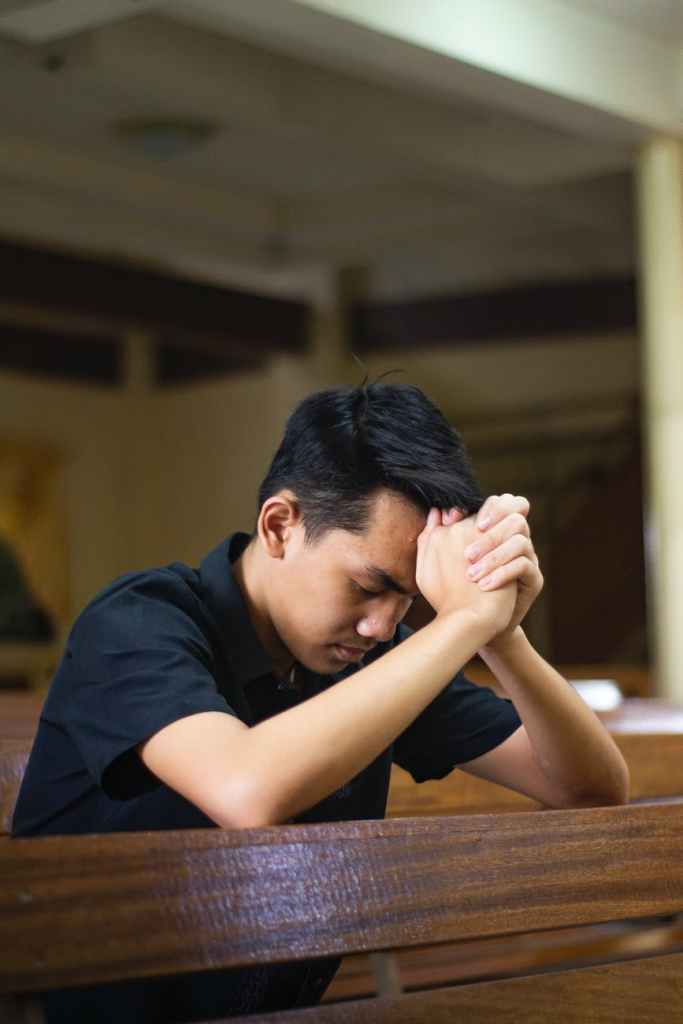
And we MUST pray! Pray for the grieving; pray for our enemies; pray for justice; pray for peace. Pray even when we don’t have the answers– especially when we don’t have the answers. Pray–fervently, feverishly– pray on our knees and as we pace in frustration. Pray like we’ve never prayed before. Pray until we break a sweat; until we hunger and thirst for GOD’S presence on every street corner, and in every household, and at every riot, and every government office. Those who would silence our prayers and hold them in disdain are trying to silence the power of God Himself! They cannot win, but they can keep us from sharing in God’s ultimate victory by marching in a fake war, instead of defending the Kingdom. We must take our anger to God and let Him show us the path to justice, action, peace, and healing. He may ask us to step out in ways we never imagined–loving our enemy; sharing the gospel; standing in solidarity with those we used to fear; forgiving those who have hurt us; asking forgiveness from those we have hurt.









































 Pursuing Prayer