I’ve been looking through the Beatitudes and how they relate to prayer. Jesus said that the pure in heart are blessed, for they shall “see God.” Have you ever spoken to someone who wasn’t looking at you? They looked past you, or around you, or down at their device, but they didn’t attempt to make or maintain eye contact. It can be disconcerting, and even rude. And yet, there are times when, with our divided hearts, we come into prayer without really looking for, or at, God.
At other times, our hearts cloud our vision, giving us a distorted view of God. We harbor sin or guilt, and we see God as unforgiving or unfair. We are holding on to our own will, and we see God as restrictive or demanding.
The pure in heart see God as He really is– Glorious, Merciful, Wise, and Just. They see evidence of His lovingkindness and faithfulness all around them. They see themselves through His eyes– beloved and forgiven–and they see others through the eyes of Grace.
This is not our natural state. We are NOT pure in heart. We are self-centered, self-absorbed, and self-conscious. King David recognized this profoundly when he was caught in his great sin of adultery and murder. In his own lust and selfishness, he had seduced the wife of another man, and when she became pregnant, David arranged to cover up the first sin–by having the man murdered. David was not a notorious scoundrel. He was even called, “a man after God’s own heart.” But when he was confronted with his guilt, David “saw” himself as he really was– not a victim of circumstance, or a martyr to passion, or a king who was above the law, but a man who had committed evil against others, and against a Holy and Sovereign God.
David’s prayer was in line with his vision. Not only did he see himself as he really was; he saw God as HE really is: Holy and Just, but willing and able to restore David’s purity of heart. David’s God is the same today as He ever was. He longs to make us clean; to restore to us the joy of our salvation (see Psalm 51:12), and give us the power to pursue our purpose and leave our past sins behind.
When we desire to “see God,” we must desire this cleansing and restoration of purity. We can pray without it, but we cannot look at a Holy God with an unclean spirit. All we can do is look elsewhere– talking to the wall or the floor. God still hears us, but he wants to have a real conversation; one full of intimacy and understanding.
So, today, will I make “eye contact” during my prayer time?
Recently, I found out that I have developed diabetes. One of the ways to lower my glucose count and mitigate the effects of diabetes is to lose weight– something I’ve been trying to do over many years with little success!
Weight loss can be a tricky thing– the harder I try, the less I seem to lose. In fact, sometimes, I gain weight instead! Part of the process is not to think of it as weight loss, but as a change of attitude and lifestyle. It is easy to get fixated on numbers– calories, carbs, ounces, serving sizes, etc.. But numbers alone don’t tell the whole story. It’s not just what I eat, or the amount, but when, and how, and why. Am I skipping meals? Do I fry my vegetables in butter, or drown them in cream sauces? Do I eat because I am bored, or stressed? Do I exercise? Do I drink enough water?
Prayer can be a tricky thing, as well. It shouldn’t be complicated or stressful, but I can add all kinds of expectations and structures to my prayer life that actually get in the way. I can stress about whether I am praying enough, or too little; whether I am forgetting to pray for someone, or if I’m praying selfishly for a certain situation; whether I am too distracted or tired; the list seems endless.
One of the biggest barriers to prayer comes when we carry the extra “weight” of subtle sins like guilt, fear, doubt, or pride. And just like physical weight loss, the harder we try to deal with it using our own willpower and our own wisdom, the less likely we are to “lose” it. The only way to lose this kind of weight is to confess it– asking God to take it and replace it with a new way of thinking and a new attitude. Instead of focusing on what I need to lose, I need to start focusing on what I will GAIN as I change my eating habits.
My current weight-loss goal is to lose between 15-20 lbs. over the next three months (in time for summer). But my REAL goal is to change my way of cooking and eating, such that I am living a healthier lifestyle going forward. My current prayer goal is to spend more time in prayer (an hour each day). But my REAL goal is to develop prayer habits that further my relationship with God– to continue to draw closer to Him. It’s worth losing old habits and attitudes to gain so much more!
Last Monday, I went into the doctor’s office to get the results of my latest blood test. It had been a while since my last check up, and my doctor told me that I have developed Type 2 Diabetes. This requires that I make some changes to my diet and lifestyle– more veggies, more exercise, less pasta and fewer desserts– and pay close attention to my blood sugar levels. Every day, I have to prick my finger and get at least one drop of blood on a test strip, and feed that into a glucose meter. It takes just about a minute, and just one drop of blood, but it has to happen every day.
Millions of people around the world deal with diabetes, and I am so grateful that we caught it, and that it can be managed with these few changes. But I was surprised at how much I resented the daily “prick.” It is not painless, but it is not difficult, either. Still, I resisted, even when my husband offered marvelous support and help. I know this is part of what it will take to keep me healthy, but oh how I miss the freedom I took for granted just days ago!
It got me thinking of the ritual sacrifices that were set up for the nation of Israel. Every day, animals were not just “pricked,” but slaughtered–their blood poured out and their flesh burned–to represent the atonement necessary for sin. Hebrews 9:22 says that “without the shedding of blood, there is no remission.” There is no way to be made right with God without the shedding of blood. And the blood of rams and lambs, while it represents the atonement we seek, is inadequate to cleanse our souls of the stain of sin. Our own blood is tainted with sin in exactly the way my blood is tainted with glucose. My blood is not only imperfect, it is unpredictable, and even poisonous, if left untreated. And even with the “shedding of blood” every day to check my glucose levels, there is no “remission”; the only way to treat my condition is to have a change– a permanent and drastic change– in my lifestyle. For Sin, there is only the shedding of perfect blood applied to my condition that can make me whole.
Though I have to shed blood every day to check on my blood sugar, I don’t have to shed blood every day for my Sin condition. But I do have to accept that Christ paid–in His perfect Blood– for my soul. He only had to do it once, but because of His sacrifice, I can be renewed every day– empowered to live the kind of life He wants me to live; empowered to grow and make healthy decisions, and righteous choices; empowered to live free of the guilt and poison of being enslaved to Sin.
With healthy choices and medication, I will be able to manage my blood sugar levels as I grow older. And I will never have to feel a “prick” or shed a drop of blood in eternity– there will be no death, and no disease! And all because of the Lamb who was willing to shed His blood for me– and for you! Not just a drop, not just another drop each day, but a once-for-all, extravagant, living sacrifice.
Wilt Thou forgive that sin where I begun, Which is my sin, though it were done before? Wilt Thou forgive those sins through which I run, And do them still, though still I do deplore? When Thou hast done, Thou hast not done, For I have more. Wilt Thou forgive that sin by which I have won Others to sin? and made my sin their door? Wilt Thou forgive that sin which I did shun A year or two, but wallowed in a score? When Thou hast done, Thou hast not done, For I have more. I have a sin of fear, that when I have spun My last thread, I shall perish on the shore; Swear by Thyself that at my death Thy Sun Shall sine as it shines now, and heretofore; And, having done that, Thou hast done, I have no more.
A Hymn to God the Father John Donne, 1623
John Donne
I enjoy studying the poetry of John Donne. https://www.biography.com/writer/john-donne Even though he lived 400 years ago, he wrote about very timeless and personal topics. Donne lived during a time of religious tumult and persecution. Born into a Catholic family, he later converted to Anglicanism and became a powerful preacher, as well as a poet, and lawyer. Throughout his life, he wrestled with deep theological questions of sin, guilt, redemption, and death. Yet he did so with wit, humor, and passion. The poem above, written during a long illness and near the end of his life, is filled with puns on his last name, Donne. Would God’s redemptive work ever be “done” in “Donne?” He struggles with the knowledge that his sins, having been forgiven, must be forgiven again and again. Does God never say, “Enough! I am done!?” What about stubborn sinful habits? What about sins that have led others to sin? What about last-minute, unconfessed sins?
The real question is, “How sufficient is God’s Grace?” Does God sprinkle out Grace sparingly on each sinful act, or does Christ’s blood cover All? Do our stubborn, habitual acts of rebellion pile up to a point where God cannot forgive? Having forgiven us once, twice, seventy times seven– is there a limit to His willingness to pour out Mercy? Theologically, the Bible is clear. The answer is a resounding, “NO.” God will not withhold His Grace from those who have sought it. God will never be “Done” with “Donne.” Nor will He be “done” with any of us who have chosen to follow Him. But in his all-too-human logic, Donne jokingly suggests that though God “hast” done/Donne, He “hast not” done/Donne. In other words, while Donne “belongs” to God– he has confessed his sins, and eagerly seeks to follow Christ, he still wrestles with fears that his small sinful acts prove that God does not fully “have” him– that He still lives separated from God.
But the final sin of the poem is fear– fear that somehow, at the last, Death will prevail, and Donne will “perish on the shore,” rather than be taken into Heaven. He pleads that Christ’s blood (“Thy Sun/Son”) will be sufficient; that God’s promise of eternal life will indeed hold true, and that the work of salvation is indeed “done.” In the end, the poet hopes that “Thou hast Donne.” And he must trust that God’s promises will hold, for “I have no more.” Donne cannot stop death, he cannot do anything to save himself from sin, but he can be “done” with worry and trust in “Thy Sun/Son.”
Photo by Samuel Theo Manat Silitonga on Pexels.com
I am strangely encouraged by Donne’s poem. We all have moments of questioning and niggling doubts. And even though we “Know” the truth, our fears and emotions can play tricks on our mind. But Donne, even while putting such doubts and fears on paper, takes them to the Source of Hope. This is not a poem of accusation or despair. It is an honest and passionate desire to hear God’s calm assurance. And it is part of a long tradition that runs through the Bible. Jacob literally wrestled with an angel of the Lord (Gensis 32), Moses argued with God about going back to Egypt (Exodus 4), David questioned God (Psalm 10); even Jesus asked God, “Why have you forsaken me?” (Matthew 27). But in our doubts and questions, God’s still, small voice echoes, “I will never leave you nor forsake you.” (Hebrews 13:5), “My Grace is sufficient for you.” (2 Corinthians 12:9), and “Neither height nor depth, nor anything else in all creation, will be able to separate us from the love of God that is in Christ Jesus our Lord.” (Romans 8:39).
God’s work is ongoing, but it is also “done”– it is complete, whole, sufficient, and eternal. And even if we occasionally wonder and even question, we can choose to rest in His promises. Just as the poet concluded, if God “hast” done/Donne, “I have no more”– he needed to have no other fear of sin or sin of fear. And through Donne’s poetry, God’s assurance is being passed on– the work continues to be “Donne!”
36 One of the Pharisees asked him to eat with him, and he went into the Pharisee’s house and reclined at table. 37 And behold, a woman of the city, who was a sinner, when she learned that he was reclining at table in the Pharisee’s house, brought an alabaster flask of ointment, 38 and standing behind him at his feet, weeping, she began to wet his feet with her tears and wiped them with the hair of her head and kissed his feet and anointed them with the ointment. 39 Now when the Pharisee who had invited him saw this, he said to himself, “If this man were a prophet, he would have known who and what sort of woman this is who is touching him, for she is a sinner.” 40 And Jesus answering said to him, “Simon, I have something to say to you.” And he answered, “Say it, Teacher.” 41 “A certain moneylender had two debtors. One owed five hundred denarii, and the other fifty. 42 When they could not pay, he cancelled the debt of both. Now which of them will love him more?” 43 Simon answered, “The one, I suppose, for whom he cancelled the larger debt.” And he said to him, “You have judged rightly.” 44 Then turning toward the woman he said to Simon, “Do you see this woman? I entered your house; you gave me no water for my feet, but she has wet my feet with her tears and wiped them with her hair. 45 You gave me no kiss, but from the time I came in she has not ceased to kiss my feet. 46 You did not anoint my head with oil, but she has anointed my feet with ointment. 47 Therefore I tell you, her sins, which are many, are forgiven—for she loved much. But he who is forgiven little, loves little.” 48 And he said to her, “Your sins are forgiven.” 49 Then those who were at table with him began to say among themselves, “Who is this, who even forgives sins?” 50 And he said to the woman, “Your faith has saved you; go in peace.”
The Pharisees in the New Testament seem to spend a lot of time judging and criticizing everyone. They rail at Jesus for healing people on the Sabbath, they grumble about His disciples not following the ritual hand-washing customs, and they are constantly critical of Jesus for “hanging out” with sinners and undesirables. We shake our heads and lament how narrow-minded they were. But I have to wonder what would happen in today’s world if Jesus were walking among us today. Would He “hang out” at our churches? Would He praise those who spend their time pointing out the hypocrisy of others? Would He be a “social justice” warrior?
Many of Jesus’s miracles were done quietly and without pretense. No one criticized “what” Jesus was doing. No one said, “you shouldn’t be healing people,” or, “how dare you turn water into wine.” Instead, they criticized “how” Jesus did His miracles and what He said about Himself, others, and God. In the book of Luke, we have a story that doesn’t even involve a miracle. Jesus was invited to be the guest of a Pharisee. Jesus didn’t turn down the invitation. He didn’t start out criticizing the host or the food. But when a woman crashed the party– a woman known all around town for her sinful ways–and made a scene, Jesus didn’t recoil in horror, order her to leave, or stop her from making a fool of herself. The Pharisee, believing that he had “unmasked” Jesus as a charlatan, concluded that Jesus didn’t “know” what sort of woman she was. But Jesus, breaking His silence, ended up “unmasking” the Pharisee, instead.
Jesus “knew” what sort of woman made such a spectacle of herself–one who needed compassion and forgiveness. Jesus knew exactly “who” and “what” she was. But He also knew who created her, loved her, and wanted to redeem her to become someone better. Moreover, He knew what kind of man Simon (the Pharisee) was. He started out with a parable about cancelled debt and a question. Simon answered the question correctly, but he had missed the point. Simon “knew” the woman was a sinner; he didn’t recognize that he was a sinner, too! Simon thought he was smarter and holier than Jesus. He didn’t know himself, and he didn’t recognize Jesus as God in the Flesh.
How often I make the same mistake! I think I “know” who God wants me to love and honor– those who say all the right words and wear the right clothes and belong to the right church. But if I want to follow in Jesus’s footsteps, I will have compassion on the people who most need it; I will be ready to forgive those who owe me the most; I will spare judgment where I do not “know” all that God knows about someone else.
It is easy to lift up in prayer those I admire; those to whom I am already close. It is more difficult to pray for those who persecute me, or taunt me about my belief in Christ. It is difficult to withhold judgment about why they may dislike me or why they distrust Christians in general. It is tempting to pray for their “exposure” or punishment, rather than their well-being. It may be unpleasant to spend time with them or take them seriously. But it is essential that I do, with God’s help, what I would not do in my own pride and limited knowledge. Otherwise, like Simon, I am showing only how little I love the one who died for me– and the person I choose to hold in judgment and contempt.
I have a lot of work to do in this area. Just today, I read a news snippet about a political office-holder; one with whom I heartily disagree. My first instinct was to pray that she be ousted from office in the next election, and publicly scorned. And perhaps that will happen. But my first priority should be to pray that she would be protected in her current role as public servant, and that God would give her wisdom and discernment in the months ahead. Not because she is a “better” person; but because Jesus died for her. If she were the woman in this story, would I be another Simon the Pharisee? I pray not.
This past weekend, my husband and I participated in “Field Day.” It is an annual Amateur Radio contest, in which operators have 24 hours to make as many unique “contacts” as possible within the U.S. and Canada, using low power and simulating “field” conditions (many operators and clubs literally set up with tents in fields and use only solar or battery power for their radio equipment).
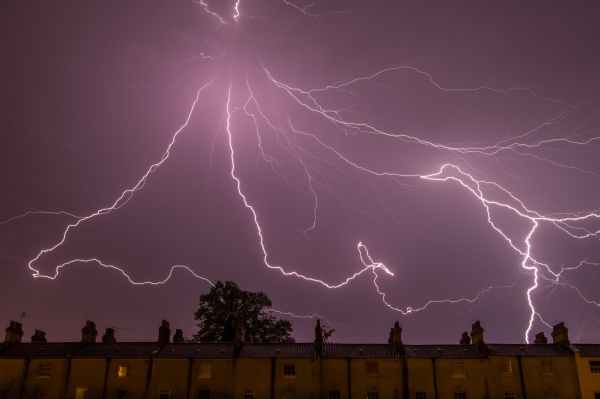
Field Day can be a lot of fun, but it can also be very frustrating. Depending on where and how you set up, the weather conditions, and other random factors, you may end up with very few contacts, and a lot of static! Radio static comes from three main sources– natural electromagnetic atmospheric noise, such as lightning, high winds, and solar pulses; radio frequency interference, when the radio equipment picks up pulses from nearby electrical devices, including TVs, other radios, or even power lines; and thermal noise coming from within the radio device itself.
We chose to set up for Field Day at our radio store, which is located in town, just beneath our apartment. We have several antennas set up on the roof, along with a solar panel and battery, which can power all of our radio equipment. So we met the basic requirements for Field Day, operating the radios on Solar and Solar Battery power, without extra amplifiers and power boosts. We set up two stations, and we were able to make contacts through voice transmission or by Morse Code. But we were not exposed to the weather and discomfort of a tent in the field– we had a refrigerator stocked with food, we had air conditioning and comfy chairs, and we were able to sneak upstairs for a nap in our own bed, if we felt tired.
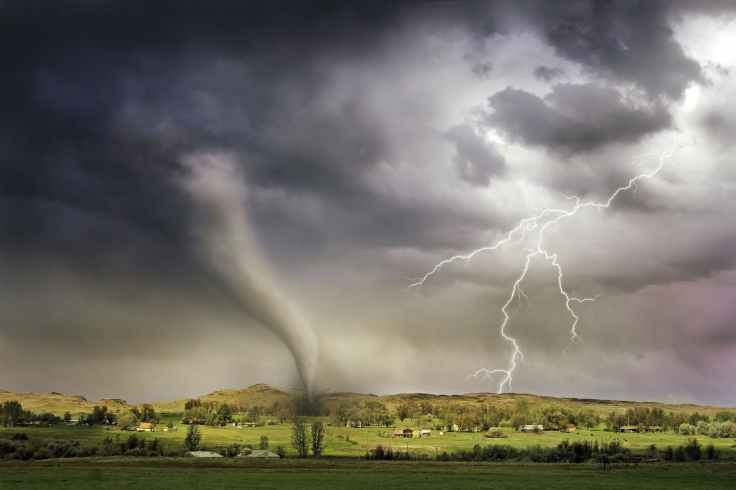
Atmospheric conditions were not so good this year for Field Day– not in Michigan, at any rate. We had a series of extreme storm cells coming through, with torrential rains, thunder and lighting, and a tornado watch, which spanned the first six hours of the contest. We were lucky not to have a tornado touch down, but other areas were not as lucky…
Staying in town also provided some complications– we are surrounded by power lines, neighbors with electronic equipment, street traffic, including cars with loud stereo systems and radios, and our own electronic and radio devices– cell phones, air conditioners, computers, etc.
Finally, we had an ongoing issue with our two radios. If we were using certain frequencies, the two radios interfered with each other. As I was listening to one radio, my husband would try tuning his radio. Suddenly, the noise of his radio could be heard over the sound of other transmissions.
All of this made for a somewhat frustrating contest, but it reminded me of some important aspects of prayer:
Prayer can be “choked out” by atmospheric conditions. If we are not “tuned in” to God’s presence, the noise of other worries, interests, concerns, and even “good” things can cause static. Life struggles, changes in our routine, or the “high winds” of adversity can seem louder than the faithfulness and compassion of the One who never changes and never leaves us. This is one reason we are to make prayer more than a habit or routine– it is to be a lifestyle and a blessed and constant pursuit– regardless of our circumstances or feelings at a given moment.
Prayer can also be derailed by “frequency interference.” If we don’t spend time in deep prayer and meditation with God, listening to His Word, or making ourselves accountable to Him, we will be susceptible to interference from other voices, other philosophies, and other “static” influences. Jesus’ prayer life included many times of retreat and separation from the crowds and stress of His ministry; not because He didn’t love others, but because He loved and honored God more.
Finally, prayer can get lost in the “internal” static of our wayward hearts. The heat of anger, bitterness, selfishness, pride, greed, and lust can keep us from meaningful communication and communion with our Father. Often, we struggle with prayer, because we are hanging on to the “static” of our own desires and fears. King David wrote: “Search me, O God, and know my heart; test me and know my anxious thoughts. Point out anything in me that offends you, and lead me along the path of everlasting life.” (Psalm 139:23-24, New Living Translation, via bible.com)
Field Day is over for another year. We were somewhat disappointed in our performance, but, in the end, it is just a contest– an opportunity to learn and grow in our hobby. While we enjoy being amateur radio operators, and we feel it is an important and worthwhile hobby, it pales in comparison to growing in our Faith and our pursuit of praying and obeying Jesus Christ!
In the middle of our contest this year, we had a singular opportunity– to leave the contest for a few hours and visit a local church where my niece and two of my nephews were getting baptized. It would mean fewer contacts for the contest, at a time when the atmospheric conditions were the best they had been for several hours. After a dismal evening, we could have chosen to focus on our own pursuits. We didn’t have to witness the baptism to rejoice in it. They would have been no “less” baptized, and they had other family and friends there to see it. And going there didn’t make us “better” or more righteous people. But we chose to shut down our contesting activities, pick up my Mom, and join in the happiness of watching three precious young people publicly declare their choice to follow Jesus. And they were among others who made that decision– others whose joy and radiance also filled the church that day.
Field Day is about listening through the static, reaching out, and making contact with others. Yesterday, I was reminded that there is a much more important “Field Day.”
Do you not say, ‘There are still four months, and then comes the harvest’? Behold, I tell you, raise your eyes and observe the fields, that they are white for harvest.
What static is preventing us from making “contact” with those who need to hear the Good News? What static is preventing us from hearing God’s voice? What static is keeping us from seeing the “fields” ready for harvest?
As I write this, it is still Sunday evening. This morning, we sang a classic hymn at church– “Nothing But the Blood of Jesus.” It’s an old hymn, and familiar; we often sing such hymns on auto-pilot and without really thinking of the wonderful words and truths coming out of our throats.
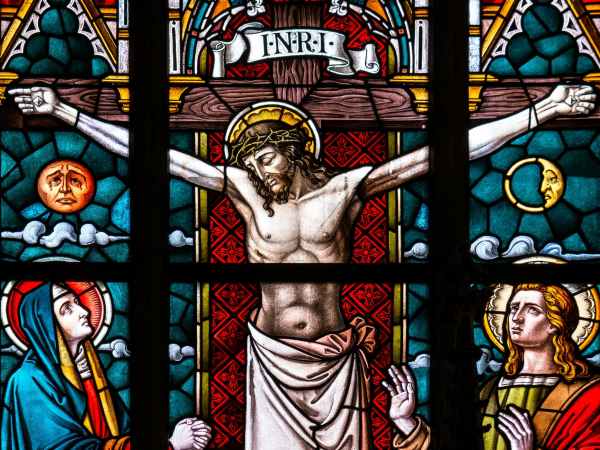
“What can wash away my sin?– Nothing but the blood of Jesus.” “What can make me whole again?–Nothing but the blood of Jesus.” When I come to God in prayer, confessing my sins, it is not my prayer that makes me clean. Nothing I can say or do will give me right standing before God. I am a sinner, and I fall short of God’s glory. I also trespass against His holiness, and even His mercy. I am guilty, and there is no “magic” prayer that will heal me or exonerate me.
Yet I come before a Holy God and make my confession. Not because He doesn’t know that I have sinned. Not because my words will save me. I come because I know that the Blood of Jesus Christ has, and will make me whole and justified. I have no need to hide the truth of my condition, or try to make my own justification or sanctification. Christ has done it all.
Prayers of confession are not for God’s benefit, but for ours. To hide our guilt, or to excuse it, is to despise God’s amazing gift of Grace. When we confess to God, it is not because He wants to humiliate us or cause us additional guilt– though this is often the lie we tell ourselves. God is eager to remove our guilt and to guide us in His righteous ways. But He will not save us against our own will or without our permission. He will not conspire with us to hide our secret sins, or pass the blame on to someone else. To do so would be to submit to OUR will. WE are NOT God, though we sometimes act as though our ways are better than His.
I’m so glad that God is God– that His ways are perfect, and that I can trust Him completely. Even when I fall short, I can trust that God has already paid the price to make things right– something I could never do, and something I find too wonderful to fully comprehend.
Nothing but the blood can save me. And anything other than the blood will fail to set me free. My prayers of confession– no matter how polished or pious or piteous– cannot unlock the mystery of salvation and restoration. But they acknowledge the marvelous reality that it IS FINISHED! God’s Grace is sufficient! Hallelujah!
“And lead us not into temptation, but deliver us from evil.” Matthew 6:13
For over a year now, we’ve been hearing the term “social distancing” in relation to COVID-19. Social distancing generally refers to keeping a “safe” distance from others in public, to reduce the spread of the virus (normally about 6 feet). It may also refer to using a mask whenever you are in a public building, or whenever you interact with someone who is 6 feet away or closer– especially at stores, doctor’s offices, church, school, etc.
Most people accept that social distancing is a temporary measure and meant to help keep you from getting (or giving) the disease. It is not a normal social practice, but one we choose to adopt for the good of everyone around us. However, there are many questions as to the effectiveness of social distancing after more than a year– what about those who have already had COVID, and should have antibodies? Should they be required to wear masks and keep their distance? What about those who refuse to practice social distancing? What about those who practice social distancing to the best of their ability who STILL get COVID?
These are all valid questions. But I want to look at the contrast between social distancing and “spiritual” distancing. We don’t want to “catch” COVID, but how vigilant are we in avoiding the contamination of sin? How often do we distance ourselves from those who claim to be “healthy” Christians while continuing with sinful practices? How often do we remain in situations rife with temptation, or compromise on “little things” in our own lives?
I’m not talking about walking around in a spiritual “bubble,” refusing to interact with anyone who has a sinful past, or with lost souls who need to hear the Good News of Salvation. Nor should we deny and cover up our own faults and failures. But if our lives are supposed to reflect the ministry and teaching of Jesus Christ; if we REALLY want to live the kind of lives that honor Him and lead others to want to honor Him, shouldn’t we be every bit as careful about sin as we are about COVID?
We are instructed multiple times throughout Scripture to “resist” the devil, to “flee” from temptation, to invite the Holy Spirit to “guard” our hearts and minds, and to “do battle” with spiritual foes. We are quick to put on masks before we enter the grocery– are we putting on the Armor of God at the same time?
Social distancing is public, and very visible. We can see who is practicing and who is not. We can judge others just by seeing if they are wearing a mask or keeping their distance. Spiritual distancing is private and largely invisible to the public. But God still sees and knows. I confess, I have been guilty of walking into situations and relationships without “wearing a mask” or putting on my spiritual armor.
10 Finally, be strong in the Lord and in his mighty power. 11 Put on the full armor of God, so that you can take your stand against the devil’s schemes. 12 For our struggle is not against flesh and blood, but against the rulers, against the authorities, against the powers of this dark world and against the spiritual forces of evil in the heavenly realms. 13 Therefore put on the full armor of God, so that when the day of evil comes, you may be able to stand your ground, and after you have done everything, to stand. 14 Stand firm then, with the belt of truth buckled around your waist, with the breastplate of righteousness in place, 15 and with your feet fitted with the readiness that comes from the gospel of peace. 16 In addition to all this, take up the shield of faith, with which you can extinguish all the flaming arrows of the evil one. 17 Take the helmet of salvation and the sword of the Spirit, which is the word of God.18And pray in the Spirit on all occasions with all kinds of prayers and requests. With this in mind, be alert and always keep on praying for all the Lord’s people.
Ephesians 6:10-18 NIV via biblegateway.com (emphasis added).
We should keep our distance from sin and temptation whenever possible, but we must also be ready to “stand firm” and protected by God’s armor, which includes persistently pursuing prayer! We wouldn’t walk into a situation where we knew we would be exposed to COVID without taking any precautions. Why would we deliberately expose ourselves to sinful practices? Why do we make excuses for compromising in our listening and viewing habits? Why do we get involved in fruitless arguments or gossip? Worse, why would we tempt others to be complacent about sin? Why do we stay silent as we watch other Christians struggling? Why aren’t we standing firm, suiting up, and praying “on all occasions?”
Just like with COVID, we can practice spiritual distancing and still fall into the “sickness” of sin. But God makes a two-fold promise–through the death and resurrection of Jesus Christ, the “virus” of sin is defeated and its effects neutralized. Even though we will face a physical death, we can have new and eternal spiritual life through faith by grace (Ephesians 2:8-9; John 11:25, others..) But we also have the forgiveness of sins– the knowledge that God will heal us and redeem the effects of our individual sinful choices when we confess and repent of them.
COVID is not a joke; nor is it harmless. I know from experience. Both my husband and I had it earlier this year. My husband was in the hospital for a week, and is still struggling to regain full health. I still have a diminished sense of smell, and other problems as a result of my illness. But Sin if a far greater threat than COVID. COVID has claimed many lives, but Sin has claimed billions of souls, and robbed them of life and hope.
Let’s keep our distance, wear our armor, and let’s get praying!
I was reading from the book of Judges today, and a curious phrase jumped out at me. The entire book of Judges is filled with the failure of the people of Israel to fully claim their promised inheritance from God. Generation after generation passes, with a cycle of sin, enslavement, and deliverance as God raises up various judges and heroes, like Gideon, Deborah, or Samson.
Already in chapter one, there is a hint of the trouble to come. The book begins with several successful battles after the death of Joshua. The people of Israel consult the Lord, who fights with them in several key battles. But in verse 19, it says: “The Lord was with the men of Judah. They took possession of the hill country, but they were unable to drive the people from the plains, because they had iron chariots.”
Say what? The Lord was with the men of Judah– the LORD! They had taken possession of the hill country– rough terrain that would have been filled with natural barriers, rocky fortresses, and literal “uphill battles.” They had destroyed massive cities like Jericho less than a generation before. They had defeated armies far larger and better positioned. They had defeated giants! And now, suddenly, they are “unable” to drive the people from the plains– because the enemy had chariots of iron?
https://www.biblestudytools.com/commentaries/gills-exposition-of-the-bible/judges-1-19.html I think this commentary says it well. The chariots of iron became the excuse for the Israelites’ unwillingness to obey; to trust in God’s strength instead of their own. After all, it wasn’t that long before in their history when God had drowned the entire Egyptian army, including all its chariots, in the Red Sea.
I don’t think it was about the chariots of iron. I think it was about the plains. I think sometimes it can be more difficult to fight on “the plains.” When God sends us on an “impossible” mission, we must face our own fears and acknowledge our weaknesses– we KNOW we cannot do it in our own power. But when we face an enemy on “equal footing,” we are tempted to trust in our own resources– the toughness of our armor, the skill of our generals, the speed of our horses, and the superiority of our weapons. We hope and expect God to fight for us where we cannot hope to win alone, but we don’t ask for God’s help or protection in areas where we believe our own strength should be sufficient. Israel had a fine army– seasoned veterans of battle. If they HAD iron chariots of their own, victory might have been expected– with or without God’s divine intervention. But victory eluded them, because they didn’t finish the fight!
We do the same thing today–we fail to march into battle because the enemy has “chariots of iron.” Maybe they have more social status, more political or economic power then we have. Perhaps we see that they have the means to make our lives painful “on the plains.” We see their arrogance, and their wealth and success, and we let ourselves be intimidated. We know that God has promised never to leave us or forsake us, but He has not given us chariots of iron to match those of the enemy. We don’t pray for the courage to face their chariots, or the wisdom to trust that the battle belongs to the Lord. Instead, we make excuses for not fighting the battle at all.
The rest of the book of Judges is filled with war, slavery, corruption, death, and evil. The very last verse sums it up: “In those days Israel had no king; everyone did as he saw fit.” (Judges 21:25)
Throughout the story of Creation, a certain phrase gets repeated– “And God saw that it was good..” God’s purpose and will are always to see the good. At the end of the creation process, God saw that it was “very good.” He placed mankind in a garden filled with goodness, peace, safety, plenty, and promise– a garden filled only with Good.
The one tree that was forbidden to mankind was the Tree of the Knowledge of Good AND Evil. Humans chose to know and see and experience evil in an effort to be “like God.” We still recognize Good; but now we are surrounded by evil– lies, greed, hatred, selfishness, bitterness, addictions, compulsions, disease, destruction, and death. We cannot go back to the beginning. We cannot just close our eyes and deny, ignore, or excuse evil in our midst. And we cannot control the consequences of our evil choices. We cannot stop death or reshape the past.
But we must make the choice to look for the Good– to look to the author and creator of all that is good, and true, and noble, and holy. It can be very difficult to do. The voices of this world will continuously call out all that is bad– all our past hurts and present difficulties; all our guilt and shame; everything that is ugly, diseased, unjust, lop-sided, dying, and ruined. And our knowledge of good AND evil will tempt us to justify evil means to “good” ends…
God, who sees the end from the beginning, has looked through time and space, and pronounced His creation “Very Good.” God who redeems and resurrects, renews and transforms, has promised to make all things new in His time. God not only has the knowledge of Good and Evil– He has the power over both. Our efforts to find Good on our own will end in heartache, failure, guilt, and shame. God knows we cannot redeem our own actions, let alone the legacy of evil we’ve inherited from the past. But the Good News is that He has done it for us! Just as He saw that everything was “Good” in the Garden of Eden, He sees the end result of His redemption– and it is “Very Good.” We don’t have to keep trying and failing to achieve what only God can do. We DO have to trust in God’s ability and His willingness to keep His promises!
Through prayer, we carry all that is wrong to the One who can make it all “right.” And, through prayer, we praise God for all the Good– the good that God has created in the past; the good that we choose to see in the present; and the good He has promised that we cannot yet see.





































 Pursuing Prayer