“God Brought You to Mind..”

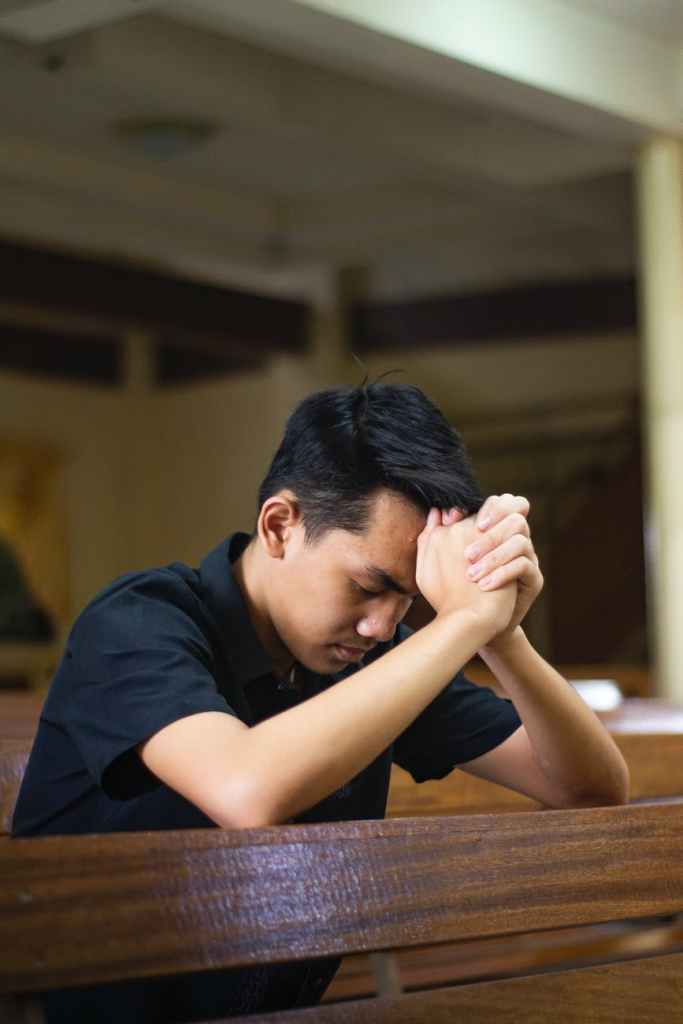
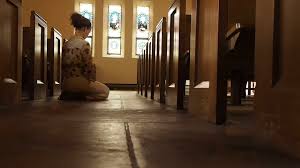
How many times have you suddenly felt the desire to lift someone up in prayer? You have no idea why or what to pray about, just that you should lift them up– in concern, in gratitude, in remembrance…It might be that someone mentioned their name; or you’ve just seen someone who reminds you of someone you knew long ago; suddenly, they are in your mind–an old neighbor or friend, a classmate or co-worker, maybe even someone who hurt you or betrayed you. But you feel an urge to pray–urgently.

Photo by ThisIsEngineering on Pexels.com

Maybe you’ve been on the other end– you get a sense that someone has been praying for you– something that you were dreading turned out to be less scary that you thought, or you had a “near miss” on the highway.. you don’t know who or where, but you know that someone, somewhere just prayed for you.

Photo by Leah Kelley on Pexels.com

God works in mysterious ways. Sometimes we ask others to pray for us; sometimes they let us know that they will be praying for us– but other times, we break into spontaneous prayer for someone “God brought to mind.” We may not know the situation; we may not know the particulars. Sometimes, we don’t even know the names or places– we just know we need to pray for a general group– missionaries, police officers, government leaders, teachers, fathers…

Photo by Keira Burton on Pexels.com

Stories abound of people who have obeyed such urgings– praying for people they barely know, or haven’t thought of for years–only to find that in that very moment, those people were in crisis and in need of help. Such stories help us see the heart of God. God is powerful enough to step in and take control of any situation. He doesn’t “need” us to pray for others in such cases. But He wants to include US in His plan! And by “bringing to mind” those who need prayer, and “bringing us to” the minds of others in our time of need, He reminds us of the importance of interconnectedness and dependence on Him.

Photo by Mary Taylor on Pexels.com

Of course, we should be looking for opportunities to pray for those around us–faithfully, consistently, earnestly. But we also need to be open to the promptings of the Holy Spirit, who works to involve us in His ongoing work. Our hearts and minds may wander or waste time in empty thinking, but the urge to pray is one we should be quick to follow.

A Flash in the Pan

During the era of flintlock muskets, gunpowder was ignited by a spark from a flint striking a plate. The gunpowder was held steady in a small “pan”, and the resulting explosion was supposed to propel the lead shot “ball” or bullet to its intended target. But often, the gunpowder would not explode; it would simply burn out in a brief flash of light, failing to result in a shot, and wasting the powder. This was known as a “flash in the pan.” It came to symbolize an impressive display that accomplished little or nothing of use.

Photo by Dmitrii Fursov on Pexels.com

Years later, prospectors in the California Gold Rush would see a “flash in the pan” as they looked for gold. They would take a shallow pan, dip it in a river, bring up water and silt, dirt, and rocks, and swirl it around. Sometimes, they would see the “flash” of a gold nugget or gold dust. More often, they would see a glint of something else– pyrite, or “fool’s gold” was more likely than a flash of real gold. And, as the water swirled, the tiny flash of gold could disappear amid the eddy of dirt and other dull rocks– remaining just a “flash in the pan.”

Photo by cottonbro on Pexels.com

Early photographers, struggling to bring enough light into their studios, experimented with explosive powders, hoping to get a “flash” of light bright enough to create a better negative exposure, so that their subjects would not have to sit so long in the same position in order to get a clear image. They would mix powders, spread some of them on a shallow “pan,” and ignite them to create a brief, but brilliant, flash of light.

Photo by Suzy Hazelwood on Pexels.com

Our lives may sometimes seem like “a flash in the pan.” Our days are numbered, and our abilities limited. Even our brightest ideas and most explosive actions seem to be swallowed up in the larger scheme of things; our good deeds and noble intentions disappear in the swirling waters of time and the tides of injustice, disease, and evil around us.

But our lives, while brief, can be more than a “flash in the pan.” We are called to be the follow Jesus, the “Light of the World.” Jesus’s life on earth was brief, even by human life expectancy. But unlike a spark that burned itself out and ended in death and darkness, Jesus brought light and life that continues today. And He calls us to use our lives in ways that light the way for others.

Sometimes, our prayers can also seem like brief flashes, producing little of significance. But God hears each one, and it is in His power that our prayers become part of the larger “picture” of His plan.

Praying the Perimeter

I love puzzles–jigsaw puzzles, crossword puzzles, Sudoku, logic puzzles, etc.

This may seem like a strange way to begin a blog on prayer, but stick with me…

Photo by Pixabay on Pexels.com

Puzzles can be fun, but they can also be very frustrating, especially if you approach them with no strategy. If you dump 1,000 pieces of a jigsaw puzzle on a table, and begin by trying to find any two pieces that fit, you may be able to eventually solve the puzzle, but it makes more sense to look for the “edge” and “corner” pieces first, and build a framework. Depending on the puzzle picture, you may also be able to work on colors or patterns that stand out– sky/clouds, a patch of red or blue, a dog in the foreground, etc.

Photo by Magda Ehlers on Pexels.com

The same is true of word and logic puzzles. There is usually a strategy when you approach each puzzle that can help make it easier and more rewarding. Words have patterns of letters– vowels and consonants; logic puzzles depend on deduction– narrowing down the possible by eliminating the impossible. Sudoku, and its cousin, Kakuro, involve simple math and numbers 1-9 in changing patterns. Start with the strategy, and you will find even the most challenging puzzles a little less challenging.

Photo by Dziana Hasanbekava on Pexels.com

Some puzzles seem impossible; and some are beyond my ability to solve, even with the best of strategies. That’s life. We don’t know all the answers, and we can’t always “see” the solution, or make all the pieces fit.

Sometimes, our lives seem like a challenging puzzle. Nothing seems to “fit” a pattern or make sense, and we end up lost and frustrated. Our most basic need is to trust God. But God does not leave us without a strategy. Prayer (along with reading God’s word and keeping in fellowship with other Christians) is part of an excellent strategy. Just like putting the “edge” pieces together in a jigsaw puzzle, praying “the perimeter” of our problems can put them in the proper frame.

What does that mean? Jesus gave us a perfect example in “The Lord’s Prayer.” When His disciples asked Him how they should pray, He started with the “frame.” “Our Father, who art in Heaven, hallowed be Thy Name.” God should be at the center of our life and trust, but He also needs to be the “edge” and framework of our life. There is no problem or worry that is outside of His control and awareness, no need that He cannot meet, and no problem that can take Him by surprise or leave Him frustrated and “stumped.”

Photo by Pixabay on Pexels.com

“Thy Kingdom come, Thy will be done in earth as it is in Heaven.” God already has the right strategy, and solution for our need. We can’t see it; we may not have a clue how to pay our bills, or deal with that devastating diagnosis, or make peace with our enemy–we may never find “the solution” on our own or in our short lifetime. But God sees the entire picture, and He has the power to make all the pieces “fit”– in His time and in His perfect will.

Photo by Levent Simsek on Pexels.com

“Give us this day, our daily bread, and forgive us our trespasses as we forgive those who trespass against us.” Sometimes our “puzzles” seem too big because we try to tackle everything at once, or we try to tackle things from the wrong end. God’s strategy is to rest in Him daily, letting tomorrow’s troubles wait for tomorrow, and letting go of yesterday’s struggles. That doesn’t mean that we don’t make plans or budgets, or that we don’t take responsibility for our health, or the mistakes we’ve made. But it means that we stop focusing on what we can’t control, and focus on the present. Instead of worrying, I can be thankful for what I have right now. Instead of focusing on what others think of me, or the threat they pose, I can concentrate on my own attitude and actions, making sure that I am practicing trust and obedience. Instead of getting angry when things don’t make sense, I can rest, knowing that God knows the end from the beginning.

Photo by Element5 Digital on Pexels.com

“And lead us not into temptation, but deliver us from evil.” God is our “Good Shepherd” (See Psalm 23 and John 10). He “leads us beside the still waters” and “makes us lie down in green pastures.” “He restores my soul.” (Psalm 23:3a) If we let God determine our “edges” and boundaries, we will still have to travel through troubled times and valleys “of the shadow of death.” But we need not fear evil, when we trust that God will deliver us. We need not fear the shadows and uncertainties within the boundaries of God’s will. And even when we have taken the wrong path, and “messed up” the puzzle we are in, God is in the business of redemption and restoration! He will deliver us– if we confess and seek His solution. He will wipe away the “wrong” answers and rearrange the pieces of our life, so that we can find wholeness.

Photo by Miguel u00c1. Padriu00f1u00e1n on Pexels.com

When we develop the pursuit of prayer– daily meeting with God, acknowledging who He is, and seeking His wisdom and grace– we will meet the challenges of life with the right strategy. We will still face the frustration of not knowing all the answers, or not seeing the whole picture. We will still have to deal with struggles, shadows, grief, and pain. But we will have a stronger “framework” and a God-given strategy to help.

Presumptuous Prayers

The Pharisee and the Tax Collector

He also told this parable to some who trusted in themselves that they were righteous, and treated others with contempt: 10 “Two men went up into the temple to pray, one a Pharisee and the other a tax collector. 11 The Pharisee, standing by himself, prayed thus: ‘God, I thank you that I am not like other men, extortioners, unjust, adulterers, or even like this tax collector. 12 I fast twice a week; I give tithes of all that I get.’ 13 But the tax collector, standing far off, would not even lift up his eyes to heaven, but beat his breast, saying, ‘God, be merciful to me, a sinner!’ 14 I tell you, this man went down to his house justified, rather than the other. For everyone who exalts himself will be humbled, but the one who humbles himself will be exalted.”

Luke 18:9-14 ESV (via biblegateway.com)
Photo by sobhan joodi on Pexels.com

“Father, help my neighbor see her sin. Change her heart, Lord Jesus.”

“Heavenly Father, I know it is not your will that I face this diagnosis of cancer. Help the doctors to see their mistake.”

“God, this job opening is a perfect opportunity– I claim this job in Your Name.”

Photo by Luis Quintero on Pexels.com

I’m not saying that the above examples are all about presumption, especially taken out of context, but I think it is easy to fall into a dangerous habit of thinking that our will must also be God’s will, and not the other way around. What if God is waiting for me to reach out in Love to my “sinful” neighbor? What if it is MY heart that needs to be changed? What if God’s plan for my life includes cancer– or a miraculous healing from it? What if my response to cancer is an opportunity to show God’s peace? What if God has a better job, or better timing for that job?

I actually had that experience. When I was first out of college, I applied for many teaching positions– nothing was open the first year, and I ended up working at a public relations firm as a proofreader. I was laid off nine months later– just in time to apply for teaching positions again. The “perfect” job came up at my old high school, where they needed an English teacher. I interviewed well, and thought I had the job. But they went with a teacher who had more experience. So I signed up to do substitute work– not what I wanted, but it paid for my room and board, and not much else. It was late January when I got the call. The other teacher had been chronically ill, and they needed me to “substitute” for the rest of the year, with a possibility of a contract the next year. When I arrived, the classes were in chaos. The students were unruly and way behind in their studies. It wasn’t the “perfect” job– it was difficult. But I prayed– agonizing, humbling, needy prayers. I stayed at that position another seven years. Any I prayed through every day. But what if I had gotten the job at the first try? Would my prayers have been as pure, or would they have been laced with presumption?

Photo by Katerina Holmes on Pexels.com

I pray every day. I read God’s word every day. But I am in need– every day– of God’s mercy, His wisdom, and His Holy Spirit to guide my thoughts. Too often, I presume when I pray– that God will do what I want, that He will see things from my perspective, that He will not ask me to go through hardship or disappointment, or pain.

Our prayers don’t need to be as arrogant as that of the Pharisee in this parable to hold certain prideful presumptions.

Photo by Ian Panelo on Pexels.com

“Lord, be merciful to me, a sinner! Give me strength to face the day ahead, grace to share Your Love with those around me, and eyes to see Your hands at work. Thank you for Your salvation, for Your promises, and for Your faithfulness. Amen.”

Praying in Perspective

I love optical illusions and “trompe l’oeil” drawings and paintings– artwork that either forces the eye to see things as though they are three-dimensional, or fools the eye into seeing something completely different if you look at it from a different angle or perspective. A duck turns into a rabbit, or a hairy face turns into an ape, or a vase turns into two faces…it is not enough to take a quick glance– you are “drawn” into looking deeper, and studying the art from many angles.

What if we approached prayer this way? Sometimes, I pray from a very fixed perspective– my own desires or in my own wisdom– instead of giving my thoughts and worries entirely over to an all-knowing and all-wise God. What if God wants me to see the situation from a different perspective– HIS?!

Photo by Paul Basel on Pexels.com

Instead of instant healing from an injury, what if God wants me to work harder to maintain my overall health as I recover? Instead of mission work in East Asia, maybe God needs me to work in East L.A. (or vice versa). Instead of my child having the “perfect” job, what if God’s plan is for her to be challenged and unsettled for years before finding the most fulfilling career?

Photo by Pixabay on Pexels.com

Jesus gave us excellent examples of praying with the proper perspective. “Thy kingdom come. Thy will be done on earth as it is in heaven. Give us this day our daily bread. And forgive us our debts, as we forgive our debtors.” (Matthew 6:10-12) “..yet not my will, but Thine be done.” (Luke 22:42).

I tend to pray “two-dimensional” prayers. Lord, help me to pray with Your eternal perspective!

“He Didn’t Come For Me…”

I’ve mentioned several times on this blog how much I love the book/movie, “The Princess Bride.”

At one point in this fractured fairy tale, the title character, Buttercup– THE princess bride, is waiting to be rescued by her true love, Westley. She has supreme confidence that he will rescue her from having to marry the evil Prince Humperdink. But Humperdink is equally confident that Westley will NOT come– because he knows that the wicked Count Rugen has (supposedly) killed him! As the stuffy archbishop pronounces Buttercup and Humperdink ,”man and wife,” Buttercup is stunned. She keeps repeating, “He didn’t come for me.” She cannot imagine a future in which Westley does not show up and save the day. Her hopes are shattered, and she walks in a fog to the bridal suite, where she prepares to kill herself in despair.

I don’t want to give away everything, but Buttercup’s plans take an unexpected and miraculous turn before the end of the story.

I was reminded of “The Princess Bride” yesterday morning as I sat with my husband, trying to figure out what was happening with his blood pressure. He and I have been battling COVID, and he spent a week in the hospital. He has been home for several days now, and has been improving steadily, until early Sunday morning, when his blood pressure started rising. There were no other symptoms, and we consulted a doctor, who talked us through a course of action, but there was little to nothing they could do for him at the emergency room, unless he had chest pain, paralysis, or a splitting headache, which would indicate possible heart attack or stroke. We increased his oxygen intake level, kept his legs elevated, and his blood pressure came down.

Photo by Tima Miroshnichenko on Pexels.com

Then, last night, it happened again. No warning; no other symptoms. We made sure he had plenty of oxygen, elevated his legs, continued doing what we had done in the morning. Slowly, the blood pressure reading came back down– still high, but not dangerously so. We’ve prayed for healing– dozens of other family and friends have prayed for healing. Everything seemed to be going fine– why this? Why now?

Photo by Andrew Neel on Pexels.com

It is so tempting to imagine our story will be smooth and predictable– even when we have a struggle or set-back– to believe that better days and easier times are just around the next corner. And when it doesn’t happen the way we hope or expect, we want to question God– “Why didn’t you come?” “Why did you delay?” “Why didn’t you send word that I would have to go through this?”

But God HAS sent word– there are dozens of examples in which God delays, or simply does not send a swift and easy rescue. God promised Abraham and Sarah a son– and then delayed 25 years! On top of that, God asked Abraham to take Isaac, the son of the Promise, to be a sacrifice! God showed up–just as Abraham was about to sacrifice his only son. God rescued Abraham and Isaac from their ordeal, but it was a nail-biter! (See Genesis 12-22)

Photo by Pixabay on Pexels.com

God rescued His people from their slavery in Egypt, and led them straight into a trap! Caught between the Egyptian army and the Red Sea, the Israelites seemed to be sitting ducks. How could they have imagined that God would open the sea so they could cross on dry land? Having been rescued in such a miraculous way, the Israelites should have had absolute confidence in God– but instead, they complained about food, complained about the leadership, complained about the weather–even as they could see God’s presence in a pillar of cloud by day and a pillar of fire by night! God rescued them over and over again in the midst of their struggle (and their lack of faith!). (See the books of Exodus, Numbers, and Deuteronomy)

Photo by Frans Van Heerden on Pexels.com

Daniel was taken into exile as a teenager– over fifty years later, after God had protected him and put him in a place of great power and prestige, Daniel was set up by his enemies and condemned to be eaten by lions. God did not rescue him by removing the lions or overturning Daniel’s sentence. Daniel had no reason to know that God would rescue him at all. But God’s ways are not our ways. God’s way was to shut the mouths of the lions– something ONLY God could do–proving to Darius, to Daniel’s enemies, and to all who heard about it that God was more powerful and more loving than even our wildest imagination. God rescued Daniel through his harrowing experience– and even brought judgment on Daniel’s enemies in the process.(See Daniel 6)

Photo by Skitterphoto on Pexels.com

And the list goes on– Jacob, Joseph, Ruth, Shadrach, Meschach, and Abednego, the prophets Elijah, Jeremiah, Ezekiel, and others, kings like David and Hezekiah, the exiles of Israel, the Apostle Paul, Queen Esther, Simon Peter, Jesus’ friend Lazarus, the martyr Stephen. Many of these people went through famine, disease, prison, death threats, and even death itself! Yet God preserved their stories for OUR benefit. God reassures us that He is the God of the living and the dead– death cannot stop true love (another of my favorite lines from The Princess Bride)! Nothing can separate us from God’s loving and wise and perfect care!

I don’t know what today will bring for David and me. I don’t know if we will have to return to the hospital, or if they can help restore his blood pressure to “normal.” I don’t know if I will have a sudden relapse or complications from COVID. I don’t know what future changes, adjustments, or griefs we will have to bear. But I do know this– God is with us!

Photo by John Ray Ebora on Pexels.com

Sometimes, God rescues us FROM a situation; sometimes He rescues us IN a situation; and sometimes He rescues us THROUGH a situation. We don’t know how God plans to show up and work in our lives over the next weeks. But we know we can trust Him to do what only God can do, and faithfully see us through the rest of our lives.

Photo by Tomas Anunziata on Pexels.com

I pray that if you are facing unexpected difficulties today, that God will cause you to be strengthened and reassured. He loves you. He sees you. He knows where you are, and, better yet, He knows the road ahead!

Where Are You, God?

I’ve missed posting a couple of blog posts this past week. My husband and I have been ill. We both came down with COVID, and my husband ended up in Hospital for a week with COVID-related pneumonia. As I write this, he is scheduled to be released to come home, where he will continue to recuperate. I will be finished with my quarantine period, but I am still recovering, as well.

Photo by Nandhu Kumar on Pexels.com

It can be very tempting in times of sickness or unexpected struggles to ask, “Where are you God, in all this?” And, while some would say it is not appropriate to question God, I think this is a good question to explore. There is nothing wrong with the simple question, if you are seeking an honest answer. Here is part of the answer I’ve received over the past two weeks:

Photo by Olya Kobruseva on Pexels.com
  • Where: I know all the “correct” and spiritual answers– “God is everywhere, omnipresent.” “God is seated on His Throne.” “God is right beside you, and His Spirit is within you…” These are big answers, true and Biblical. But they can be very cold comfort when you see your husband struggling to breathe, or when you are exhausted and frightened. God is omnipresent, but He is spirit– invisible and undetectable through our physical senses. We can “know” He is present, but we can still question His “Presence.”
    But when we are seeking His presence in the question, there are so many wonderful and comforting answers. God IS Everywhere– so that even when my husband is miles away in a hospital room and I am alone in our apartment, God is in both places at the same time, providing rest, wisdom, and healing! God IS on His Throne– orchestrating timing and people to offer their skills, advice, services, prayers, encouragement, and more. David and I have been sick, and even in danger, but God did not abandon us. He provided for us to be able to get David to the hospital at the right time; He provided friends and family to help us– even strangers to pray for us and encourage us. God’s Spirit gave us strength and courage to ask the right questions, make decisions, and trust Him through this process. And God will continue to be working within, and around, and through us as we continue to heal.
Photo by Arnie Chou on Pexels.com
  • Are: We may claim that God is omnipresent and omnipotent– always present and all-powerful– but often when things don’t go according to our plan, we question. Not so much where God is at the present moment, but where WAS He? Why didn’t He stop this from happening? And where will God be tomorrow, when the medical bills start to arrive? Doesn’t He know or care about the aftermath? The fall-out? When will my husband be able to return to work, if ever? How did we get exposed to COVID? Why didn’t God prevent it? How much more will we suffer?
    But once again, God IS omnipresent– not just in space, but in time. God knew this would happen long before we had ever heard of COVID. God has already seen the future play out. He knows the end from the beginning, and every step in between. I tend to get lost in all that I cannot see– past and future, why and how–but God is so much bigger than all that. There is NOTHING that can take God by surprise or cause Him to fail in His plans for us. God spends a great deal of time throughout the Bible reminding us of His promises; many of which are promises of His Presence, His Provision, His Protection, and His Peace. He never promised that our lives would be easy, problem- or worry-free, or boringly comfortable. Such lives don’t shape us or develop our character; they teach us nothing about God or ourselves. God wants us to have an abundant life– a life full of “LIFE”! And that means facing challenges that show us how to trust our Loving Father, and cause us to see the depths and breadth of His Love and Power.
  • You: God is Spirit; He is invisible and indescribable. Yet He is a personal God, and wants a personal relationship with each of us. It is easy to lose sight when I am worried or suffering– I forget the heights and depths of what God has done to pursue that relationship with me– ME! I never have to ask “Where is the God of the Universe?” I can ask, “Where are YOU?!” And even though God is Spirit, He also has a “body”– US! God is in the welcome voice of loved ones, and the hugs (even virtual ones during these days of quarantine) of family and friends. God is in the offers of help and advice from friends and strangers alike. God works through US to bring us together, to encourage, and strengthen, and guide us every day– on good days and difficult days alike.
Photo by Pixabay on Pexels.com
  • GOD: Illness gives one plenty of time to think, reflect, and meditate on God. It is a stark reminder that I am NOT God (and never could be, thankfully), and that God knows and always does BEST, even when I can’t see or understand. I know many thousands of people have not survived their COVID journey– they didn’t recover; they lost their husband or wife or other loved ones. God doesn’t stop being God when we don’t get a “happily ever after” ending. Some day, David and I will each die. We will leave or be left behind by other loved ones. God is still GOOD; He is enduringly FAITHFUL; He grieves WITH us, just as He rejoices with us. He SUSTAINS us, and He REDEEMS us.
Photo by Edu Carvalho on Pexels.com

Where are you, GOD? YOU are everywhere, always, and perfectly where and when and how YOU should be. And I will praise YOU!

And God Saw That It Was Good…

Throughout the story of Creation, a certain phrase gets repeated– “And God saw that it was good..” God’s purpose and will are always to see the good. At the end of the creation process, God saw that it was “very good.” He placed mankind in a garden filled with goodness, peace, safety, plenty, and promise– a garden filled only with Good.


Photo by Cindy Gustafson on Pexels.com

The one tree that was forbidden to mankind was the Tree of the Knowledge of Good AND Evil. Humans chose to know and see and experience evil in an effort to be “like God.” We still recognize Good; but now we are surrounded by evil– lies, greed, hatred, selfishness, bitterness, addictions, compulsions, disease, destruction, and death. We cannot go back to the beginning. We cannot just close our eyes and deny, ignore, or excuse evil in our midst. And we cannot control the consequences of our evil choices. We cannot stop death or reshape the past.

Photo by Harrison Haines on Pexels.com

But we must make the choice to look for the Good– to look to the author and creator of all that is good, and true, and noble, and holy. It can be very difficult to do. The voices of this world will continuously call out all that is bad– all our past hurts and present difficulties; all our guilt and shame; everything that is ugly, diseased, unjust, lop-sided, dying, and ruined. And our knowledge of good AND evil will tempt us to justify evil means to “good” ends…

Photo by Karolina Grabowska on Pexels.com

God, who sees the end from the beginning, has looked through time and space, and pronounced His creation “Very Good.” God who redeems and resurrects, renews and transforms, has promised to make all things new in His time. God not only has the knowledge of Good and Evil– He has the power over both. Our efforts to find Good on our own will end in heartache, failure, guilt, and shame. God knows we cannot redeem our own actions, let alone the legacy of evil we’ve inherited from the past. But the Good News is that He has done it for us! Just as He saw that everything was “Good” in the Garden of Eden, He sees the end result of His redemption– and it is “Very Good.” We don’t have to keep trying and failing to achieve what only God can do. We DO have to trust in God’s ability and His willingness to keep His promises!
Photo by Evgeny Tchebotarev on Pexels.com

Through prayer, we carry all that is wrong to the One who can make it all “right.” And, through prayer, we praise God for all the Good– the good that God has created in the past; the good that we choose to see in the present; and the good He has promised that we cannot yet see.

Photo by Edu Carvalho on Pexels.com

Daring to Dream

I’ve been reading about Joseph in Genesis. He was the favored son of Jacob (Israel), and he was a dreamer. His dreams were spectacularly unpopular with his older brothers, and got him into a world (or a well) of trouble. (See Genesis 37)

Joseph’s dreams were sent to him from God…they weren’t just wishes or imaginings. But they were grand. Joseph had a dream that all his brothers (represented by bales of wheat) bowed down to him. Later, he dreamed that his entire family would bow down to him. He was just 17, and full of the arrogance of youth. His jealous brothers were so outraged, they plotted to kill him. When an easier opportunity arose, they sold him into slavery, instead. (See Genesis 39-45)

Joseph’s dreams seemed to mock him when he arrived in Egypt as a slave. And after spending years building up a sterling reputation with his master, his dreams were dashed again. Falsely accused and unable to defend himself, Joseph ended up in prison. Who would ever bow down before a convict and a slave?

Photo by Jimmy Chan on Pexels.com

Joseph could have become bitter and angry. He could have given in to the frustration of serving those who were willing to let him do all the work and take on all the responsibility, while they got all the credit. But Joseph dared to dream– not the dreams of an arrogant 17-year-old, but the dreams of an honest and God-fearing man. He dreamed that his actions and attitudes mattered– even as a slave; even as a prisoner. He dreamed that God could and would rescue him and vindicate him. He dreamed that God had a purpose for his life– one that depended on Joseph being the best man he could be.

The Bible never records Joseph having visions and dreams in Egypt. But because Joseph had experienced grand dreams as a youth, he was sensitive to the dreams of others. He could have ignored the dreams of Pharaoh’s cup bearer and baker in prison. He could have sneered and laughed at their dreams. He could have told them all about his much grander dreams of old. Instead, he was ready to ask for God’s wisdom to help others interpret THEIR dreams. And in doing so, God gave Joseph the miracle of a dream fulfilled. Along the way, Joseph received life lessons in patience, humility, responsibility, management, integrity, and leadership. Joseph’s brothers–coming to seek grain!– bowed down to him, just as he had once dreamed they would. But they didn’t bow to him as a kid brother; they bowed before Pharaoh’s agent and the second-most powerful man in the entire known world. They bowed before a men who held the kind of power none of them had ever dreamed of. They bowed before a man they might have killed– except for God’s plan. Joseph was sent ahead, trained in the art of management, and perfectly placed to save thousands of lives.

Photo by The Lazy Artist Gallery on Pexels.com

Sometimes our lives seem like a waste– all our dreams have been shattered, either by circumstances or by our own bad choices. But God can take our most cherished dreams and redirect them into something amazing. He has a purpose for your life. It may not seem grand, like Joseph’s youthful dreams, but in God’s hands, it may have an enormous impact. Some days, it may seem like we’re living through a nightmare, but God writes the ending– and He’s already there!

Photo by Andrea Piacquadio on Pexels.com

AMEN!

This year is winding down, and many people are ready to say, “Amen!” It was a difficult year for many, one filled with upheaval, disease, uncertainty, and fear. We are ready to say, “Goodbye, and Good Riddance!”

Photo by Zen Chung on Pexels.com

But when we pray, and we say, “Amen,” it doesn’t just mean “the end,” or “goodbye”. Amen means, “let it be so” or “so be it.” It doesn’t just mean that we are finished speaking to God for the moment. It means that we are giving God the final word– we are turning over all our thoughts, our requests, our praises, our worries, and our questions to God and leaving them in His capable hands.

Photo by Juhasz Imre on Pexels.com

And so it is with the year 2020. We are not sending 2020 on its way, attempting to bury its memories or remove it from history. Even in the pain and uncertainty, there were blessings, and lessons learned this year. But it is time to say, “Amen!” Even so, Lord Jesus, let it be as YOU will. Whatever losses, whatever struggles, whatever blessings we have faced this year, let it be to Your Glory and Honor. And let us accept and even embrace the new year, not just for its difference from the past, but for the plans and purposes You have already put in place. Finally, let us be thankful for the year you have given, and the fact that you have been with us every step of the way, no matter how steep or slippery the road. AMEN!

God is faithful. He is steady, and kind, and good– no matter what temporary circumstances we face. Nothing that happened this past year took our Lord by surprise. Nothing escaped His notice. He did not turn His face away; He did not make a mistake, or forget any of His promises. His timing and His ways may not be the same as ours, but His purposes are eternal and eternally perfect. We can rest in peace and confidence because He is Sovereign and Holy and His mercy endures forever! (see Psalm 136).

Photo by Pixabay on Pexels.com

Can I get an AMEN?!

Let’s look forward to 2021, because God is already there, and we can trust that He will be in control.

Blog at WordPress.com.

Up ↑