All the Same

When I was growing up, my Mom used to say, “I love all my children differently, but I love them all the same.” It didn’t make sense to me at first, but what she meant was that she loved us equally, but also uniquely as individuals. She didn’t treat us exactly the same, because we weren’t the same person, and because our circumstances were different. When my brother was small, there wasn’t enough time or money to do some of the things she did with me or my sister. When my sister and I were young, Mom was older and had less energy to do some of the things she had done with my brother. She punished us in slightly different ways, and encouraged us in slightly different ways, because we responded differently.

Photo by RODNAE Productions on Pexels.com

Mom is human, so even her best efforts weren’t perfect. Sometimes, we felt she treated us unfairly in certain matters. But overall, Mom has lived out her intention to “love us all the same.”

God follows the same principle. He shows no partiality; no favoritism. He sends rain and sunshine on “the just and the unjust.” (Matthew 5:45) He allows us to face sickness, trials, hardships, and disasters, regardless of our status or our relationship with Him. And He allows others, even evil-doers, to prosper and enjoy good health. This can be difficult for some of us to accept. I know many people who believe that they have an “in” with God– a special status that is supposed to keep them “safe” from disappointments and hardships, while punishing those who cross them in some way. But it doesn’t happen like that. God loves us and treats us each differently, according to our unique circumstances and personalities.

Photo by Emre Kuzu on Pexels.com

It is especially difficult to accept this in relation to prayer. God does not promise that, if we pray or if we have dozens of others praying for us, we will be spared pain and suffering, or receive only blessing and favor. This past year, we prayed for many friends and family who struggled with COVID (including David and I!) Many of them recovered; but others died. I just heard some wonderful news about a relative who was supposed to have a biopsy of a tumor on his brain. As he was being prepped for surgery, the surgeon realized that the lump had disappeared– there was nothing to biopsy! Case closed! It was wonderful news, and an answer to prayer. But what about my friend who had dozens praying for him to be healed of cancer? He had been in remission, but his cancer came back and just kept getting worse, and then he died. Does God love my relative more than my friend? Is he a “better” person, or more deserving of health and life? Absolutely not!

Photo by sergio omassi on Pexels.com

When we pray, we pray about what we see and what we understand. But God loves us each as individuals, and with perfect understanding and wisdom that we lack. I may never understand why some of my friends died of COVID or cancer, while others lived. I don’t know why some of the people I love have had to suffer pain and grief and loss, while others have been blessed with good health, opportunity, and riches. But I know this– God loves each one exactly as much as the others, and exactly as much as He loves me. Nothing about who I am or what I do can change God’s love for me– but it can and DOES change my love for Him!

Photo by Luis Quintero on Pexels.com

Praying for those we love, especially those who are suffering, is not a “magic” formula. While God listens to and answers prayer, He doesn’t guarantee that “more” prayers or “better” prayers will change our circumstances or the outcomes of our circumstances. But prayer changes US. It can change our outlook and our attitude. It can change circumstances in unseen ways we cannot measure or imagine. One thing prayer cannot change– it won’t cause God to love us any more or less than He already does. His love is perfect in scope and power. He loves us–“All the Same!”

Praying with Confidence

What does it mean to pray with confidence?

Does it mean that we pray with the sure knowledge that God will give us whatever we ask for?

Photo by Andrea Piacquadio on Pexels.com

22 Then Jesus said to the disciples, “Have faith in God. 23 I tell you the truth, you can say to this mountain, ‘May you be lifted up and thrown into the sea,’ and it will happen. But you must really believe it will happen and have no doubt in your heart. 24 I tell you, you can pray for anything, and if you believe that you’ve received it, it will be yours.

Mark 11:22-24 (New Living Translation)
Photo by Pixabay on Pexels.com

This is a difficult concept– and one I don’t fully understand. But I do believe the following:

  • “Confidence” means: “A trusting, or reliance; an assurance of mind or firm belief in the integrity, stability or veracity of another, or in the truth and reality of a fact.” (from studylight.org) Our trust is not in the power or our own words or in our worth, but in the power of God’s will to act justly, righteously, and in His sovereignty. I cannot ask God to act against His will and have confidence that He will give me what I ask for. Even if I ask for a miracle– like moving the mountain into the sea–I must trust that God will do it because it is part of His plan; not because God must obey my whims.
  • The more I learn of God’s power and love– by seeking Him, following Him, and experiencing His Grace–the more I will ask in confidence and assurance.
  • The more I seek my own will and ignore God’s wisdom, the more I will ask in arrogance and/or doubt.
  • Confidence will change the tone of our prayers from beseeching to believing–instead of asking for an outcome we don’t really expect, we will ask expecting that God already knows the outcome that is best.
  • Confidence doesn’t need immediate results. That mountain may not be moved in an instant. That doesn’t mean that it won’t be picked up and thrown into the sea–perhaps in our lifetime; perhaps in a year; perhaps in a thousand years. We sometimes trust in God’s power and willingness, but we forget to trust His timing.
Photo by Michelle Leman on Pexels.com

We can pray in confidence. In fact, we must learn to pray with confidence! And we can be confident that it will happen!

Photo by Ian Panelo on Pexels.com

3-6 Every time you cross my mind, I break out in exclamations of thanks to God. Each exclamation is a trigger to prayer. I find myself praying for you with a glad heart. I am so pleased that you have continued on in this with us, believing and proclaiming God’s Message, from the day you heard it right up to the present. There has never been the slightest doubt in my mind that the God who started this great work in you would keep at it and bring it to a flourishing finish on the very day Christ Jesus appears.

Philippians 1:3-6 (The Message)
Photo by Alyona P on Pexels.com

We the People

Yesterday and today mark two important milestones in North America. September 16 is Mexican Independence Day, and September 17 is Constitution Day in the United States. On these days, people in our two countries celebrate some of the great things that can be accomplished by “we the people.” The founders of our nations were not perfect, but they fought and worked and came together to make “a more perfect union,” and a brighter future for their citizens.

All around the world, governments are instituted to protect the rights and lives of people– to protect them from danger, to allow them to interact in peace and safety, and to provide for “the general welfare” of all. But governments– even the best–are run by fallible people.

Photo by Hugo Entrepreneur on Pexels.com

The Bible tells a long and complex story of the ancient nation of Israel. Tracing its origins to a single patriarch (Abraham), the family grew to be a powerful nation, ruled first by priests and judges, and then by a series of kings. The nation split into two distinct countries, before being scattered and sent into exile. The story of the nation is chronicled (literally) in the books of 1 and 2 Samuel, 1 and 2 Kings, and 1 and 2 Chronicles. In the books of the prophets, the same message comes from God again and again–Israel and Judah have both fallen into the same idolatry and corruption that doomed the nations they had conquered in former times. Instead of seeking justice for all the people, and providing order and protection, the leaders had become drunkards, liars, thieves, and murderers. They betrayed their allies, made foolish treaties, oppressed the poor and helpless, and celebrated their own cleverness. “We the People” had devolved into “us versus them.” Worship of God had been replaced by worship of a pantheon of foreign gods–worship that involved ritual prostitution and human sacrifice. Family members and fellow citizens were sold into slavery, robbed and beaten, used and abused, and slaughtered–without remorse or fear of retribution. God’s warnings were followed by His justice and punishment, and the demise of both nations, as well as punishment for their neighbors.

Photo by u0404u0432u0433u0435u043du0456u0439 u0421u0438u043cu043eu043du0435u043du043au043e on Pexels.com

Israel’s story, while very detailed, isn’t unique in history. Instead, it is a case study of what can happen when the people abandon unity and the rule of law for division and corruption. It is what happens when “who we are” becomes more important than “whose” we are; when “we” are more important than anyone else–even God. Israel and Judah continued to be religious right up to the point where they were dragged off to exile. They brought offerings and sacrifices, sang songs, prayed, and memorized scripture. Their leaders assured them that God would protect them and continue to let them prosper as their enemies marched up to the gates of Jerusalem. They had not abandoned the worship of God– they had just added idolatry to it. They worshipped their own prosperity, they worshipped gods and goddesses of the harvest, of war, of wealth, and wisdom. They still thought God was great– but not necessarily Sovereign.

Who or what are we worshipping today? What “new” and additional principles have we added to our own Constitution? To the laws of the land? To our way of being good citizens in our respective countries? To the eternal Word of God? When we hear the phrase, “We the People,” does it bring to mind people who look and live differently than us? Does it bring thoughts of justice and unity? Does it humble us?

Photo by Life Matters on Pexels.com

King David, the second, and one of the greatest of Israel’s kings wrote: “Know that the Lord, He is God; It is He who has made us, and not we ourselves; We are His people and the sheep of His pasture.” (Psalm 100:3 NKJV) “We the People,” by ourselves, will scatter and fall into destruction, like sheep without a shepherd.

More Evidence of Things Not Seen…

I have a story of a miracle that happened this past week.

This has been a difficult year for my husband and I. We had COVID back in February, and between hospital bills and David being unable to return to work for several weeks (and then being able to return only part-time), our finances have been rather tight. God has been faithful throughout, so it was a lack of faith that had me in a panic at the end of the week. Several of our monthly bills come due on the 10th each month, and we had only enough money in the bank to make a partial payment on one of them. David got paid on Friday (the 10th!), but that was still only enough to pay two bills. The one bill I was unable to pay was our health insurance premium– not a comfortable choice with our continuing health issues! We would be behind again, as I had paid last month’s bill a couple of days late. I had no idea when we would have enough money to make this month’s payment.

Photo by Mikhail Nilov on Pexels.com

So Friday, we got a statement from our health insurance/health share network. I was afraid to open it. It wasn’t our regular monthly statement, and it was on pink paper, which generally means a warning about a past due account, or worse, a cancellation notice. I was sick with worry– so much so that I put the statement aside, afraid to open it and read the worst.

Photo by Andrea Piacquadio on Pexels.com

By Saturday night, I was frantic. I couldn’t sleep, wondering and worrying. I “knew” that God was aware of our situation, and that He was in control. I also knew that another big bill would come due on the 15th– with no money in sight. I cried, and pleaded with God to help me trust Him, and to meet our needs.

Photo by Alex Green on Pexels.com

At that point, I heard a clear prompting from the Holy Spirit to find the statement and open it. How could I say I trusted God when I was too scared to even look at the situation? I found the statement and took it into the kitchen to open it and look, without waking my husband. My hands shook as I unfolded the pink paper.

Photo by Castorly Stock on Pexels.com

And as I read, I cried– this time tears of joy and repentance as I read the short note and saw the attached check. Our insurance comes through a health share network. The members of the network pay a base fee each month and can send extra money to help other members in need. Their generosity meant that a check– more than enough to pay our own monthly premium and the other looming bill on the 15th– had arrived just when we most needed it. My fears were turned to praise in an instant as I SAW what God had done, instead of seeing what I dreaded.

God didn’t send us thousands of dollars to meet all our desires. But He sent, through the faithfulness of strangers, enough to meet our needs, and, more importantly, enough to remind us of His power to provide and His grace to meet our spiritual needs.

I know God answers prayer. I know it because the Bible says so. I know it because I have seen it in the lives of others. And I know it from personal experience. I know that, even if that pink notice had NOT been an unexpected miracle, that God was still present, waiting for me to trust His wisdom and timing.

Photo by Munmun Singh on Pexels.com

“Faith is the substance of things hoped for; the evidence of things not seen”..(Hebrews 11:1). This weekend, what I imagined I saw through the eyes of doubt was really evidence of God’s great faithfulness. I just needed to open the eyes of faith– and open the evidence that was right before me all along!

The LORD God Almighty Is His Name

He who forms the mountains, who creates the wind, and who reveals his thoughts to mankind, who turns dawn to darkness, and treads on the heights of the earth— the LORD God Almighty is his name.

Amos 4:13 NIV (via biblestudytools.com)
Photo by Quang Nguyen Vinh on Pexels.com

To whom do you pray? I know many people who address their prayers to “Our Father.” Others pray to the Name of Jesus, or to “Abba,” or even through a saint. I’ve heard some even use terms like “Daddy God,” or “The Man Upstairs.” But the One who hears our prayers, the Triune God of the Universe, is altogether Holy, Righteous, Sovereign, and Supreme. We forget that or diminish that to our peril.

Photo by Tima Miroshnichenko on Pexels.com

That doesn’t mean that we cannot draw near to our Creator– in fact, He wants us to call on Him and commune with Him. But He is more than just another someone we can talk to. He sees us– and He sees through us! We may be able to “fool” our friends and even our family with a false smile or half-attentive listening, but God is not fooled by our appearance or our shallow actions.

Photo by Dids on Pexels.com

The people of Israel, during the time of Amos’s writing, had formed a bad habit of “fake” worship. They prided themselves on their rituals– morning sacrifices, tithes, offerings, etc. They were religious– on the surface. But their lives were filled with greed, selfishness, corruption, pride, and apathy. They not only knew there was injustice all around them, they were willing participants!

They had pushed a loving and merciful God to His limits. He had sent plagues, famines, war, and other disasters to humble His people and shake them out of their sinful stupor. Hard times can bring people together; disasters can cause them to turn their eyes to Heaven; to ask for help, and to offer help to their neighbors. But these stubborn people used hard times to take advantage of those who were already in trouble– the rich watched in comfort and disdain as their countrymen starved. They cheated and hoarded while others were dying.

Photo by George Webster on Pexels.com

Sadly, the Israelites of Amos’s time are not so very different from people in our own time and countries. God’s warnings and pleadings don’t sound out of place in 21st century America. Or Europe. Or anywhere else. We have a form of worship– people who brag about their Mega-churches with worship orchestras, bistros, indoor playgrounds for the kids, light shows, and more; people who attend every “Christian” concert that comes to town, or attend retreats and seminars. And there’s nothing overtly “wrong” about such worship. But it has to translate into WORTH-SHIP–recognizing that God is not just another superstar; that His House is not just a place to be entertained or meet other “nice” people. That His Word is not just a bunch of stories about “other” people who messed up, with a list of suggestions on how to live a “better life now.”

Photo by Karolina Grabowska on Pexels.com

He who forms the mountains, who creates the wind, and who reveals his thoughts to mankind, who turns dawn to darkness, and treads on the heights of the earth— the LORD God Almighty is his name.” May we never forget or take for granted WHO God really is. And may we always recognize His Worth and Majesty. May we be quick to listen and obey Him, and quick to repent when we go astray. That’s what He was asking through Amos and the other prophets– that’s what He asks of us today.

Celebrate Variety

It’s growing and harvesting season in our area for many vegetables. Gardens have been spilling over with zucchini, cabbages, carrots, summer squash, onions, green beans, peas, tomatoes, potatoes, sweet corn, and much more. Similarly, the flower gardens are blooming with every color and variety imaginable– bright yellow sunflowers, tiny blue and white blossoms, and red cardinal flowers. I’m amazed at the variety of wonderful things God designed for us.

Photo by Solare Flares on Pexels.com

Did you know there are dozens of different varieties of just carrots?! Orange, yellow, purple, red, white, long and skinny, or short and fat, rounded ends or tapered…and that doesn’t begin to cover varieties of tomatoes, potatoes, squash, etc. Not to mention fruits, nuts, grains, herbs, flowers, fungi, and bark that are edible. Plants of every size, color, shape, taste, and texture. And many plants have other uses– medicine, fibers for clothing and rope, dyes, wood for building or burning as fuel, oils, and so much more.

Photo by Mike on Pexels.com

And that’s just the plant world. There are millions of different varieties of insects in the world, and animals ranging from bats to butterflies, pandas to pigs, geese to giraffes, wolves to whales, ocelots to octopuses, and ponies to platypuses.

God could have provided only grass or leaves for us to eat, instead of giving us such a variety of tastes and textures for our nourishment. He could have made all trees look alike with the same texture of leaves/needles, and wood. He could have made just one kind of fish to swim the lakes and oceans. In the same way, God could have created us to act and look just the same. But God loves variety. He loves for us to discover and celebrate all the uniqueness of His creation– including our neighbors and family and friends.

Photo by cottonbro on Pexels.com

We have a tendency to look down on or make fun of differences– we say that some people are a little “corny,” while others are just plain “nuts,” or go “against the grain.” But the truth is, God designed each of us to reflect His nature in all Its infinite, glorious variety. We shouldn’t try to be someone else, or belittle someone else for not being just like us. Instead, we should reach out and celebrate those fellow “human beans” who carry a unique imprint of God’s image.

Photo by Meruyert Gonullu on Pexels.com
Genesis 1:27-30 NIV
Photo by Ron Lach on Pexels.com

Even the Queen Has to Pray

I’m not talking about the current Queen of England–though it’s my understanding that she must, and does, pray as well as the rest of us. Sometimes we forget that even royalty have very human needs, and their power and authority, while greater than ours, is limited. God is still the ultimate authority. Instead, I’m thinking about the old testament Queen Esther/Hadassah.

Queen Esther’s position was one of great power– and of great peril. Her husband, Ahasueras, the King of Persia, had chosen her from among a host of women to replace the disgraced Queen Vashti. But Ahasueras was not a man of character and integrity. Vashti’s disgrace came after the King had been banqueting and drinking for a solid week, and this after six months of entertaining other heads of state! Ahasueras left the running of his kingdom in the hands of his ministers–even Vashti’s dismissal and Esther’s elevation were at the suggestion of the King’s counselors (though the King made the particular choice of Esther over all the other contenders). Ahasueras was unpredictable, capricious, vindictive, hot-headed, and easily led. He also had “unlimited” power– his word was, literally, law.

Even though Esther had risen to a place of prominence and (limited) power, she still faced danger, in the guise of her husband’s Prime Minister, Haman. Haman’s power was second only to the king, and he intended to use that power to rid himself of his enemy, Mordecai, a Jewish exile, who just happened to be the foster-father and cousin of Queen Esther! Not content with simply having Mordecai executed, Haman suggested to the gullible King Ahasueras that all the Jewish exiles throughout the kingdom should be slaughtered and plundered within a single day.

Queen Esther’s only option was to get the king to reverse his own edict– even if she managed to escape the genocidal plot, her silence would spell the doom of the entire scattered nation of her own people. Queen Esther could not trust in her own limited authority, nor in the beauty that had brought her to the throne. Only God could capture the heart and mind of such a king. Queen Esther began to pray.

And she didn’t just fall on her knees in silent despair She asked others to fast and pray for three days before she would approach the king. And she paved the way with another banquet, during which she flattered both the king and his arrogant prime minister before pleading for her life and the lives of her countrymen.

Esther’s beauty and grace alone were no match for Haman’s treachery. But God knew the end of this story from the beginning. Esther was in grave danger, but she was also in God’s loving and all-powerful hands. Esther is remembered for her bravery and poise in the face of Haman’s diabolical plotting, but also for her dependence on God’s power over her own.

What dangers will we face today? If Queen Esther needed to pray– and ask for prayer– in her situation, how much more should we be willing to do so in ours?!

Photo by Michelle Leman on Pexels.com

Who’s On First?

One of the classic comedy routines of the 20th century was a skit by Abbott and Costello, called “Who’s on First?” It’s all about mistaken identities and confusion, when the roster of players on a baseball team contains unusual names and nicknames that sound “question-able”.

I love baseball, and comedy, but the routine should make us do more than laugh. One of the big problems we face is that we often don’t know “who” is on first (or second, or in left field) in the game of life. We tend to become spectators, and fans, but we don’t always know the names of the players, or what position they play. We watch as players–celebrities, government power brokers, athletes, etc.–come and go on the “roster.”

Photo by Andrea Piacquadio on Pexels.com

And it can filter into our prayers. While we look at the line-up of human “players” around us, we can forget that God is in charge of the outcome of the “game.” God knows exactly “who’s on first,” and who will be there at the bottom of the fourth. He knows who will strike out in the third, who will hit a grand slam in the fifth, and who will drop the ball in the sixth. While we watch the players and bite our nails when the bases are loaded and there is a full count, God already knows the next pitch.

Photo by Liza Summer on Pexels.com

We may not understand why “Who” is on first, instead of someone else. Sometimes, we see people rise to a position only to abuse their power and oppress others. We may question “Why?” as well as “Who?” Sometimes, we may ask, “How?” “How could God put them in the line-up?” And the only answer I can offer is, “I don’t know.” God’s ways may not make sense to us in the moment. We may never understand the How or Why of our lives or circumstances. But God sees the whole picture, and His ways are not our ways. His understanding is far greater than ours.

Finally, we need to make sure that we are more than just spectators. Watching from the sidelines may seem safer, but we won’t really learn how to pray if we never learn how to “play.” God loves prayer warriors, but He commands us to be “doers of (His) Word.” (James 1:22-25) If we are just listening from the sidelines, we will continue to be confused and frustrated– in our praying and in our living!

We may not always know “Who’s on First.” But we should take comfort in knowing “Who IS First.” No matter who takes their position as shortstop or who is throwing the pitches, God is always sovereign. No matter who seems to be “winning” the game, God has already determined the outcome of the ultimate “World Series.” We can pray with confidence, knowing that, with God as our manager, Christ as the umpire, and the Holy Spirit as coach, we have the winning team!

Photo by Tima Miroshnichenko on Pexels.com

To Bow; To Kneel…

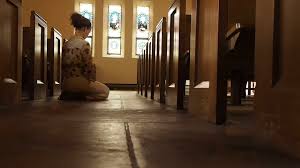
There is no one “right” way to pray–God listens to our heart, whether we are standing, sitting, bowing, lying prostrate, or running! However, kneeling or bowing before God shows our heart attitude. And I think it is important to talk about it a little here.

Photo by Ian Panelo on Pexels.com
  • Bowing or kneeling shows deference. A person bows or kneels before a sovereign or dignitary, someone of rank and importance, or someone in high authority. 9 Therefore God also has highly exalted Him and given Him the name which is above every name, 10 that at the name of Jesus every knee should bow, of those in heaven, and of those on earth, and of those under the earth, 11 and that every tongue should confess that Jesus Christ is Lord, to the glory of God the Father. (Philippians 2:9-11 NKJV)
  • Bowing not only demonstrates God’s superior position, but reminds me of my own position before Him. It is a humbling position to kneel; to bow one’s head; to become smaller and cast one’s eyes down. If there is pride lurking in my heart, bowing may not come easily…
  • To bow or kneel forces us to stop, and puts us in a position for prayer. It forces us to turn away from distractions and from comfort. I can pray in any position, but I don’t generally kneel to do household tasks, or bow to take a phone call. Even if I am not in a position to physically kneel or bow, I can put aside distractions, and take a heart and mind “stance” of prayer.
Photo by Tima Miroshnichenko on Pexels.com
  • Throughout the Bible, we are encouraged to bow or kneel when we pray– it is one among many stances of worship we are to take when approaching God’s throne. (see also Romans 14:11, Isaiah 45:23, Revelation 5:13, and Psalm 95:6-7)

https://www.gotquestions.org/bowing-kneeling-prayer.html

  • Kneeling or bowing sets us apart. That is not to say that we should make empty postures to make ourselves look virtuous. But neither should we be afraid to bow our heads, or reluctant to kneel, if we feel led to do so. This is especially true when we are at home or in church. It may NOT be appropriate to kneel in the breakroom at work or bow your head while driving– but if bowing or kneeling at church or in your own home makes you feel uncomfortable (other than for physical limitations), because someone “might” see you, there may be another heart issue at stake.

Today, as I come before my creator, I will kneel in reverence, bow in humility, and worship Him in word and action.

“God Bless…What’s His Name”

In the movie, The Sound of Music, a young woman named Maria is asked to leave her life in a convent to become a governess of seven children belonging to a widowed Navy Captain. After a hectic first day, she settles in for her evening prayers. She lists by name all the people she wants God to bless; but as she goes through the unfamiliar names of the seven children, she realizes she has forgotten the name of the younger, “incorrigible” boy. After a short struggle, she simply asks God to “bless what’s his name.” That evening, a storm comes up and soon three frightened girls come running to Maria’s room, and happen to mention the boy’s name– Kurt. “That’s it. Kurt. God Bless Kurt!” A short time later, Kurt, his brother, Freidrich, and the other girls show up, and they all end up bonding and singing through the storm. It’s a nice movie scene, but it also teaches us a lesson about prayer.

Maria’s lapse reminds us that even when we try to include everyone, we often forget a person’s name, or forget one member of a larger group. Sometimes, we forget that we already mentioned someone else, and count them twice. It happens. When I was a teacher, even with my roll call list, sometimes I would make mistakes as I hurried through the task to get to a lesson. As I get older, I find it’s common for me to see a person’s face, and not be able to remember their name. And, disconcertingly, I often see a name and cannot remember the face! (“God bless Kurt…whoever he is.”)

Photo by Katerina Holmes on Pexels.com

God knows the weaknesses and limitations of our minds. While it would be irresponsible to pray “God bless what’s his name” every night, and never try to call Kurt by name, it is important to lift up the “what’s his/her names” in our lives, trusting that God knows their names, their needs, their hearts, and their unique place in His plans. The very fact that we remember some essence of their personality or presence is enough to make them worth lifting up to the one who knows them far better. And perhaps someone else, who has forgotten your name, but not your value to the Father, is lifting you up in this very moment!

Maria’s prayer also reminds us that it is important to pray for individuals BY name (when we remember). We can pray for nations, groups, civil and corporate bodies, and churches, but when we pray for individuals, calling them to mind and heart, we are continuing a prayer that stretches through time and around the globe. This prayer– this list of names and remembrance of faces and spirits– began with Jesus and His disciples, and continues unbroken over centuries. It is a single prayer, tying together brothers and sisters in Christ who are otherwise divided by language and distance, time, and tide. Children saying their bedtime prayers; aged saints at their morning devotions; mothers lifting up their precious children; fathers lifting up their neighbors; missionaries lifting up their persecutors–throughout generations–this prayer is a continuous offering, like incense, rising to the throne of grace.

Photo by Luis Quintero on Pexels.com

God Bless Kurt. God Bless Gretl, and Fabiani, Yayoi and Bruno. God Bless You. And God Bless “What’s-her-name.”

Blog at WordPress.com.

Up ↑