Of Incense and Vapors..

Sometimes, prayer seems like a vapor–something that rises without substance, only to evaporate. We say our prayers and wait for an answer. And the Bible describes prayer like incense. It rises to God as a sweet fragrance. https://www.biblegateway.com/passage/?search=Revelation+5%3A8&version=ESV But incense and vapor dissipate and evaporate without a visible trace. They have no form or solid substance. Is prayer equally fleeting and amorphous? Is prayer “real,” if we can’t see it working?

Photo by Jan Kroon on Pexels.com

And yet…

Photo by eberhard grossgasteiger on Pexels.com

Vapors rise and mix with other vapors. They are carried on the wind. They form clouds, and the waters return to the earth as rain and snow. And incense diffuses and leaves its scent throughout a building long after it is burned. We know that incense has been burned. We know that water has evaporated. And we know that they are “present” even if we can’t see or touch them.
Photo by Flickr on Pexels.com

Prayers– especially prayers lifted in petition–rise away from us. They are meant to disappear from our view. Our focus should not stay on the visible troubles we lift up in our prayers, but on the invisible and all-powerful God who receives our cries. And as prayers rise, they are gathered and formed by God into clouds of blessing. The rain will fall where God wills it, to water thirsty souls, bring healing, and be lifted up in new prayers. The incense of our prayers will permeate the world with the fragrance of God’s love, even as they ascend to His throne.

Photo by Luis Quintero on Pexels.com

This is part of the mystery of prayer. Just as God designs water to be lifted up and returned to the earth hundreds of miles away; just as He designs fragrance to spread without any visible evidence, so He has designed prayer to work in unseen and unpredictable ways. God delights in our participation in this mystery. He invites us to be part of the process of spreading His beauty and glory throughout the world!

Photo by Evgeny Tchebotarev on Pexels.com

Mustard Seeds..

He said to them, “Because of your little faith. For truly, I say to you, if you have faith like a grain of mustard seed, you will say to this mountain, ‘Move from here to there,’ and it will move, and nothing will be impossible for you.”

Matthew17:20 ESV (via biblehub.com)

Faith is a vital part of life, and especially a life in pursuit of prayer. If I don’t believe that God exists, and that He rewards those who earnestly seek Him (Hebrews 11:6) then my prayers are little more than wishes made on a star or empty dreams.

Photo by sobhan joodi on Pexels.com

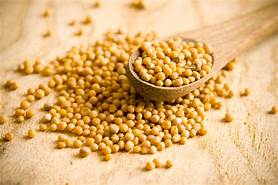
During Jesus’ ministry on earth, He lamented often that His disciples had so little faith. And yet, He said that if they had “faith like a grain of mustard seed,” nothing would be impossible. In fact, Jesus used seeds in a lot of His teaching. He talked of seeds scattered on different types of soil; mustard seeds growing into large plants; seeds in good soil yielding exponentially large harvests. There is something about seeds that can teach us about the nature of faith. And, according to Jesus Himself, we need to learn about and practice faith in greater measure!

Photo by Karolina Grabowska on Pexels.com

So what are some of the seed lessons we still need to learn?

  • Seeds start out small. Jesus used a mustard seed, mentioning that it is one of the smallest of all seeds. So often, we want to start out “large” in our faith. We see our doubts as failure, rather than immaturity. We see our slow growth as weakness–and it is! It is that very weakness that God wants to use to show HIS strength. When Jesus “lamented” that the disciples had so little faith, He wasn’t condemning them– instead He was pointing out that faith is a process–that seeds GROW into larger plants.
  • Seeds do not produce plants unless they are planted! I see websites and Christian bookstores selling jewelry featuring a small glass case with a tiny mustard seed inside. It’s a nice reminder of Jesus’ teaching about faith, but carrying around a mustard seed is NOT the same thing as having faith like a mustard seed. Faith that is never planted and rooted in good soil will remain nothing more than a seed– useful as a piece of decoration, perhaps, but dormant and unproductive. If I have faith “like a mustard seed” in money, or power, or in my own wisdom and skills, it is no more effective than if I throw it on the sidewalk, wear it around my neck, or put it in my pocket.
Photo by Torsten Dettlaff on Pexels.com
  • Seeds need soil, light, and water. Faith doesn’t grow in isolation. I need to listen to others, share with others, and, most of all, live in the good soil of God’s word. I need to pray for others– and I need the prayers of others! I need to talk to God daily; but I also need to read His words to me daily!

  • Seeds are designed to produce a harvest– fruit, grain, trees, and new seeds! I get distracted, thinking of how faith impacts MY life and my Christian walk. God wants me to grow stronger in my own, yes. But He wants my faith to be multiplied by being visible. Even a root vegetable sends a shoot or a plant above-ground, so there is evidence of growth underground. In doing go, the original seed will disappear! There are days when I cannot see my “mustard seed.” But that is (I hope) because the seed is becoming a mustard plant– producing evidence of God’s sustaining power and love, and providing “seeds” for others to plant.
Photo by icon0.com on Pexels.com

There are days when my faith may feel small and dead. But I need to remember that the power is not in the “seed” of faith– no matter how small; no matter how large its potential–it is in planting that seed and letting God’s power transform a seed into fruit that will last!

Photo by Pixabay on Pexels.com

More more on this topic, see:https://www.crosswalk.com/faith/bible-study/what-does-jesus-mean-by-faith-as-small-as-a-mustard-seed.html

Praying in Perspective

Have you ever seen a photo collage–a large picture made up of hundreds or thousands of tiny photos? If you stand back, you can see a large picture– a face, or a landscape, perhaps–but when you get closer, you can see the many smaller photos that make up the details.

Photo by Brett Sayles on Pexels.com

Prayer is like that. Each of us is a tiny details in the grander scope of the world’s population. Millions of people are praying at any given time on any given day. And we don’t see all of the others– sometimes we don’t see or hear or think of anyone else as we pray. But God sees and hears them all–moreover, God weaves and blends our prayers into something amazingly more than meets our awareness. Prayers of thanksgiving add a dash of bright color; prayers of anguish sound a minor tone; prayers of confession rise like incense, and prayers of worship wrap around all the colors and sounds and scents.

Photo by Pixabay on Pexels.com

Yesterday, I was feeling very depressed and small. It was difficult to pray. My perspective was off, and I could only see my own problems and emotions. Prayer helped change my perspective. As I spoke to God; as I thought about His power and omniscience, I began to see that I WAS small–but my God is enormous! And while He sees the entire picture– all places and times and peoples–He also looks on every tiny detail. He knows my name; He knows my every thought. He knows my needs and my desires; He knows my weaknesses and my unique gifts– gifts He has given! Even if no one else noticed, God would be able to pick out the smallest detail in His amazing creation, and bring it into perfect focus.

See Isaiah 55

Holy Terror

It’s the end of October, and tomorrow will be Halloween. Stores and houses around the neighborhood are decorated with frightening figures of skeletons, witches, ghosts, and gravestones. Some of my friends love this time of year, and they look forward to binge-watching movies about zombies or vampires– anything scary, spooky, or terrifying.

Photo by Toni Cuenca on Pexels.com

I don’t like Halloween. I don’t like scary movies. But I believe in the value of fright. Life is filled with things–natural and supernatural– that fill us with real fear. And that is as it must be in a fallen world. Sin and death, evil and darkness, fires, earthquakes, violence and plague–they are real and should produce both fear and caution. The Bible is not silent or dismissive of such things. God’s laws warn against evil spirits, calling on the dead, consulting with witches, fortune telling, even giving in to anger, envy, and hatred. God’s laws also provide for hygienic practices to ward off disease and plague.

Photo by Mike on Pexels.com

And yet, the Bible also gives hundreds of warnings against giving in to fear and letting it control our lives. We are to be cautious and wise where fear is concerned. Over all, we are to remember that God is bigger and more powerful than our fears. God can calm storms, put out fires, even conquer disease and death! There is no power, no force, no terror, that can overwhelm God, or touch those under His protection.

Photo by Pixabay on Pexels.com

Terror holds no power in God’s presence. Therefore, if we know God, we can experience no true terror. But where there is no God, terror will reign. It’s like the saying: “No God; No Peace–Know God; Know Peace”. Terror comes with darkness, with chaos, with lawlessness and loneliness.

Photo by Skitterphoto on Pexels.com

There is only one other kind of terror– a Holy Terror. We can be terrified by the awesome Holiness of God. It is altogether more powerful and alien than anything we can even imagine. Even for those who know God, there is the knowledge that God is GOD, and we are not worthy to look on His face or enter into His presence on our own. Normally, when we think of terror, we think of things that are very unholy–evil things; supernatural forces of darkness. Yet Holiness can also inspire terror because it causes us to see our own unworthiness; our own sin and failure. I am reminded of the “face-melt” scene from Raiders of the Lost Ark– Nazis, who have been fearlessly and relentlessly pursuing the Ark of the Covenant, believing that it holds supernatural powers they can use to gain power over life and death, are suddenly and horrifically destroyed when they gaze inside–as they come in contact with the very Glory of God, their terror is absolute, and they are destroyed by its presence.

Photo by samer daboul on Pexels.com

This season, may we celebrate that God, in His awesome and mighty power, constantly reminds us that we can “Know” Him without fear; instead of running, cowering, or melting, we can come to Him with confidence and joy! And in doing so, we can face any other terror, knowing that God is with us, and for us, and even filling us with His peace! We need not be filled with Holy Terror– instead, we can be filled with the Holy Spirit!

Photo by Pixabay on Pexels.com

Amen!

It’s the last word in the Bible. It’s normally the last word of our prayers. It is frequently used by the congregation during a particularly inspiring part of a sermon.

Photo by Binti Malu on Pexels.com

But what does it mean to say, “Amen!”? The original Hebrew word means, “so be it,” or “let it be so.” It is spoken to express confirmation, solemn ratification, or agreement. Saying, “Amen!” is saying that we agree with the words the pastor has spoken, or the words that someone else has just prayed. But, ultimately, it is confirmation that we agree with what God will choose to do, and how He will choose to answer the prayer or speak to us.

Photo by Flickr on Pexels.com

When we say, “Amen,” we are letting go of our will and trusting our prayers, our thoughts, our feelings, and our desires to God’s hands. God is sovereign. He can do anything He wants, regardless of our desires or plans; regardless of our feelings or our actions. He can thwart our plans, upset our circumstances, and set His face against us. But that’s not HIS desire. He wants our willing cooperation and approval. He doesn’t need it, but He desires it. He wants to hear us echo His heart, and respond to His loving care with a hearty “Amen!” Not because He needs it– but because WE need it. We need to rest in His sovereign power instead of trying to fight blindly against our circumstances. We need to wake up and act in accordance with His design, instead of wasting time in apathy and disdain.

Photo by Andrea Piacquadio on Pexels.com

But “Amen!,” like any other word, shouldn’t be used lightly. “Can I get an Amen?” “In Jesus’ name, Amen” These are solemn oaths. “Amen” isn’t just a word of cheer or enthusiasm. It is an acknowledgement of God’s right to rule our lives. Even when it brings testing; even when it involves struggle and pain. All the time, God is in charge, and His ways can be trusted. “AMEN!”

I Don’t Know Why…

I don’t know why…
God didn’t stop the bullet that took the life of a seven-year-old girl in Chicago last weekend;
God allowed for miraculous births in the same weekend in multiple hospitals around the world.

Photo by Pixabay on Pexels.com

I don’t know why…
Hundreds of people flocked to my hometown to defy social distancing measures and put others at risk of COVID-19 so they could drink and splash around in the shallows of a small lake. I don’t know why they left garbage and excrement in the lake and in people’s yards and in the high school parking lot.
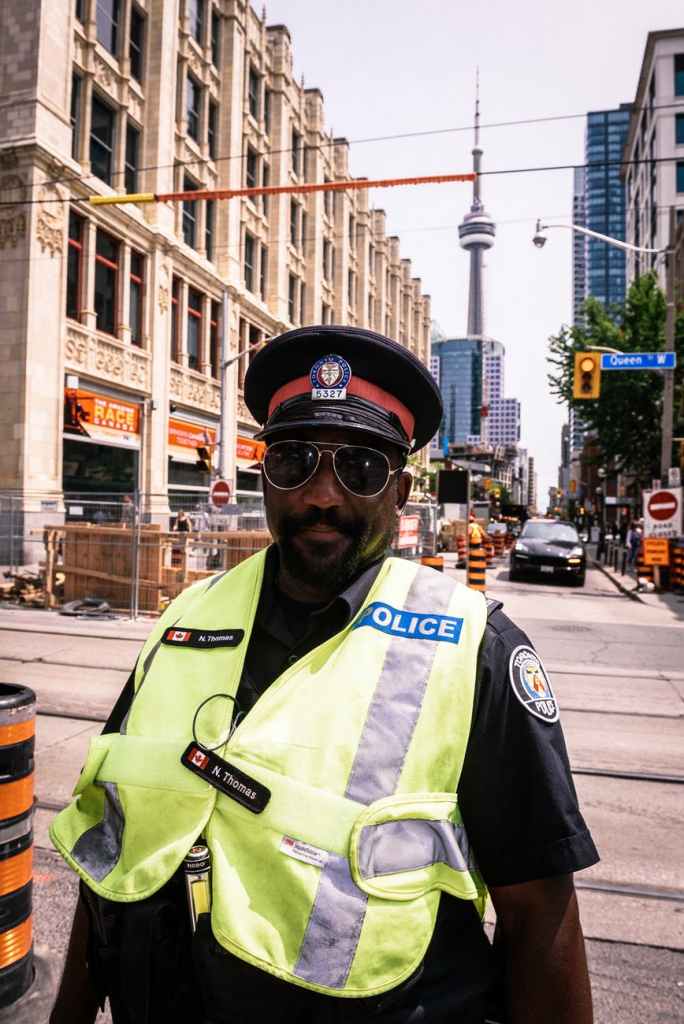
Thousands of men and women risked their lives to maintain order and serve the public–donning their uniforms and braving the heat and the chaos to serve people who despise them, spit on them, defame them, and vilify them.

Photo by Harrison Haines on Pexels.com

I don’t know why…
God made snakes. And mosquitoes. And moles. And giraffes.

Photo by Pixabay on Pexels.com

I don’t know why…
On some days God feels so distant and silent; and other times He seems to be surrounding me and permeating me and holding me tight. I don’t know how His word can sometimes feel stale and sometimes cut right through me. I can’t fathom how God can be everywhere—every-when! That He knew me before all the history books and ancient empires and cities and shipwrecks and wars and all the stories I take for granted were even imagined…that He knows me now– every thought; every cell; every hair, every breath…that He knows me a million years from now. I don’t know why He chose to make me, and preserve my life, and bless me with days and hours, with friends and family, and teachers and tasks, challenges and changes.

Photo by Quang Nguyen Vinh on Pexels.com

I don’t know why.
I don’t know how.

But praise God, I know WHO.
I know who made me. I know who holds me. I know who has the power to make good come from even the worst circumstances. I know who wins the ultimate victory over death and sin and disease and destruction.

And He walks with me and He talks with me—And He tells me I am His own!

A Legacy of Faith

Psalm 112 English Standard Version (ESV)

The Righteous Will Never Be Moved

112  Praise the Lord!
Blessed is the man who fears the Lord,
    who greatly delights in his commandments!
His offspring will be mighty in the land;
    the generation of the upright will be blessed.
Wealth and riches are in his house,
    and his righteousness endures forever.
Light dawns in the darkness for the upright;
    he is gracious, merciful, and righteous.
It is well with the man who deals generously and lends;
    who conducts his affairs with justice.
For the righteous will never be moved;
    he will be remembered forever.
He is not afraid of bad news;
    his heart is firm, trusting in the Lord.
His heart is steady; he will not be afraid,
    until he looks in triumph on his adversaries.
He has distributed freely; he has given to the poor;
    his righteousness endures forever;
    his horn is exalted in honor.
10 The wicked man sees it and is angry;
    he gnashes his teeth and melts away;
    the desire of the wicked will perish!

My grandmother would have celebrated her 108th birthday today. I’m confident that she IS celebrating today– but she no longer has to count birthdays, or worry that this one might be her “last.” She passed into eternity more than 25 years ago. But she and my grandfather left a legacy of faith, hope, integrity, and prayer that lives on. It is a quiet legacy– my grandparents were not “important” people–they worked hard, lived a simple lifestyle, and never made a showy practice of their faith. But they lived it in such a way as to leave others with a glimpse of what steadfast faith looks like.

Grandma was born just a few short weeks after the sinking of the Titanic. She lived through two World Wars (one of which kept her separated from her husband, working in a factory, and raising two young girls). She lived through times of war, times of riots and uncertainty, and times of disease and pain. She knew what it was to struggle and lose. She was born before women could vote. She and my grandfather lived through the “Great Depression,” picking up whatever odd jobs they could, and sometimes not having enough for rent or food. But she also knew incredible joy and satisfaction. She knew what it was to be loved and to give love. She knew the joy of seeing a job to completion, and of using her talents and skills to help others. Most of all, she and grandad shared an incredible faith– one that had been tested many times– in God’s goodness, His provision, and His faithful protection. They lived in circumstances that would cause many to fear. But I never remember Gram being frightened–she wasn’t oblivious to bad news and difficult circumstances–but she faced them with confidence and resolve, the kind that gave hope and courage to everyone around.

My grandparents moved a lot. I mean, A LOT! They probably moved 50 times (at least) during their 62 years of marriage. Sometimes, they moved because Grandad had “itchy feet.” He liked change; he liked to have new projects to tackle; he liked to feel “free.” He loved moving into a “fixer-upper,” or renting a place with a run-down yard. But sometimes, they moved because they had to. They moved a lot– but they were never “moved” from each other, from their family, or their faith. They didn’t lose hope; they didn’t shift opinions based on their circumstances; they didn’t break promises or end friendships.

Photo by Ketut Subiyanto on Pexels.com

Psalm 112 gives a wonderful description of a “righteous” person. Not a self-righteous person, and not a perfect person (as none of us are perfect). But it is a great picture of the kind of legacy my grandparents left behind. They were generous– not just with money, but with gifts, work, time, hospitality, and words of encouragement and hope. They were rock-solid in their integrity– they went above and beyond not to cheat or lie or complain or shirk duties. In all their struggles (and in their good times) they never lost sight of God’s Goodness and Sovereignty.

My prayer today is that I would pass along such a legacy; such a witness. God is faithful, He is good, loving, and kind. He is never far from those who call on His Name, and He is able to deliver us from all our struggles. I am so grateful that, in addition to all the other blessings I take for granted, God gave me amazing grandparents. I hope He brings such people into your life today, and equips you to be such a legacy-builder, as well!

Aromatic Prayer

We have a tiny herb garden. It’s just a couple of plants each of a few different herbs– basil, rosemary, parsley, chives, etc., in small planters on our back stoop. Just enough to have fresh herbs for cooking. They smell really good when I go out to water them, or clip some to add to chicken stew or spaghetti sauce or noodles and butter.

Photo by Markus Spiske on Pexels.com

They add flavor and color, too, but it is the smell that grabs the attention and brings immediate joy.

Our prayers are supposed to be like that, too. The Bible compares our prayers to incense with a pleasing aroma. God delights in the fragrance of our prayers.

Photo by Emre Kuzu on Pexels.com

That seems reasonable for prayers of praise, but what about prayers of pain? How can such prayers bring joy to God?

Photo by sergio omassi on Pexels.com

When I water my herbs, they give off a pleasing aroma. But when I chop and crush the herbs to use them, the scent is stronger, the flavor richer, as the plants give all they have to the dish. Left in their planters, they will grow tall, but they will not be useful. They will smell good, but they won’t fulfill their greater purpose.

Photo by Ric Rodrigues on Pexels.com

God wants our praise– certainly. And He is worthy of it–completely. But God also wants our chopped, crushed, bruised, torn, and painful prayers of need and brokenness. He wants us to trust Him to make even our groans and cries for help into fragrant offerings.

Our Father…

I have known some excellent fathers– including my own father and my husband. Fathers who do their best to provide for, pray for, protect, and prepare their families. Fathers who show patience, perseverance, wisdom, and selflessness.

But I know this isn’t the case for everyone. I have also known some wicked fathers– fathers who are physically, verbally, and mentally abusive toward their wives and children. Fathers who abandon their responsibilities, and leave behind a legacy of need, chaos, anger, and despair.

Photo by Pixabay on Pexels.com

Throughout the Bible, God is portrayed as a Father. Not as a “man”– Jesus took on flesh and became a man– but the Triune God exists as Father, Son, and Spirit. God has all the characteristics of a perfect father. God also embodies all the characteristics of a good mother. But there is something about Fatherhood that God particularly wants us to learn and understand.

Photo by Pixabay on Pexels.com

When God chose Abram for His special covenant, Abram’s name meant “exalted father.” But Abram was childless. God chose someone whose name had no meaning (or an ironic meaning), and changed it– not a lot–he added an “ah”, so that Abraham’s name meant “father of many” or “father of multitudes.” I don’t think it was any accident that God chose a man named “Abram,” or that He changed his name only slightly. God chose Abraham, not because he was a father, but so that he could become a father– to many! It was as a father (to Isaac, but also to Ishmael and all his other sons and descendants) that Abraham was exalted and revered.

Photo by Luis Quintero on Pexels.com

But Abraham was not a perfect father– far from it! God gave us the story of Abraham, and drew attention to Abraham to help us learn the importance of GOD as our Father. Abraham was willing to give up his heir– the son of God’s promise– because Abraham was a “son” of God before he was a father to Isaac. https://www.biblegateway.com/passage/?search=Genesis+22&version=NIV

Even though I have known some excellent fathers, I know of only one who is perfect. And He isn’t someone else’s father, that I should be envious, or discouraged. He isn’t only “my” father, that I should be smug. He isn’t my father by birth, that I should make little of His sacrifices or His promises– they are not given out of duty or a sense of genetic obligation. He is OUR Father– He invites all of us to become His children. He lavishes love and grace, sheds tears and aches, sacrifices and pursues, rejoices and grieves– for and with every soul.

Photo by Josh Willink on Pexels.com

When Jesus taught His disciples to pray, He wasn’t giving them a rote prayer to memorize, but a pattern. https://www.crosswalk.com/faith/prayer/the-lords-prayer-be-encouraged-and-strengthened.html If you look through the Gospels at Jesus’ other prayers you will see it–He always begins by addressing His Father. For the group of disciples, He began with “Our Father.” Jesus, who could have claimed sole son-ship, made it clear that He (as Son with the Father and Spirit) desires this amazing relationship– more than power, more than honor, more than life! And God the Father is not a man or a mere mortal– He is Holy, Perfect, Eternally Loving and Eternally Sovereign!

Photo by Lgh_9 on Pexels.com

What a wonderful thought for Father’s Day this year– no matter what kind of earthly father(s) we have known!

Time Flies

Yesterday had 24 hours, the same as every other day. Yet it seemed to zoom past, leaving me “behind” in getting my blog ready for today. So here I am, writing “under the gun” so that I can publish today.

Photo by Ivan Samkov on Pexels.com

Blogs like this don’t have “deadlines” in the sense of print publications or broadcasts. I don’t have advertisers or managers demanding that I have content by a certain time or date. There are no editors to determine the length of any particular blog post. This one is likely to be shorter than most, in fact. And God isn’t standing by waiting to scold me for being late today. It is my own sense of expectation that gives me grief.

But God has placed all of us in time and space with a purpose. We do not have the power to “stretch” time, to reclaim it, or to bargain for more of it. Time “flies”–and what we do in the time we have flies, too. And He wants us to give our time to Him first of all.

Photo by Rakicevic Nenad on Pexels.com

Falling behind on a blog entry is not a life-or-death matter. Falling behind in life is another matter.

I pray that today will be a productive day, a restful day, even a challenging day– and that, as it flies by, we will fulfill God’s purpose in it. And He’ll take care of the timing!

Blog at WordPress.com.

Up ↑