Journaling Prayer

Full disclosure– I’m not any type of expert on either prayer or journal writing.  But I do keep a prayer log of sorts, and I want to share how that works for me, and why I think it is helpful.

My prayer “journal” is actually a set of four standard notebooks I picked up on sale about two and a half years ago at an office supply store.  Each notebook has 100 pages.  I have labeled each page with a day (February 12, for example) at the top– three months to each notebook.  Below the date, I list people I know who are celebrating birthdays or anniversaries that day, as well as people who died on that day.  Below that, I save space for urgent prayer requests as I become aware of them.  To the side, I list a place (a country, city, or community) to pray for that day.  In the front cover or each notebook, I have a list of focus areas to pray for each day of the week, as well– things like family, leaders and authority figures, cultural issues, missions, etc.  The back side of each page is left to record answers, results, and updates.

The journal/notebook approach is not meant to lock my prayer life into a fixed routine; it is not a checklist of what I must pray for each day (and nothing else or added to everything else).  I don’t take the notebook with me everywhere– instead, I have a small notepad in my purse to jot down thoughts or requests. Sometimes, I record these in the larger notebook later, but not always.  I review the journal once a day, but I pray throughout the day– sometimes raising the names and places in the journal, other times people or situations as they come to my heart or mind.  The point is not to make an unnecessary burden of prayer.  The point is to remind me that prayer is a pursuit–an ongoing discipline as well as an intimate pouring out of my heart to God.

I’ve come to delight in turning the pages to see:

  • who is having a birthday/anniversary today– who might be encouraged with a FB post, a call or card or e-mail message
  • where in the world can I lift up people I may or may not know?  There are enough days in the year to pray for every country in the world, every U.S. state, and several major world cities or local communities–and while my list is in alphabetical order, I could have organized by geographic location, or simply listed random places for each day.  Some days, the places are familiar; other days I am inspired to look up information on places like Burkina Faso or find out more about West Virginia…
  • what was I praying about a year ago? Often, I find that my prayers have fallen into a particular pattern– and maybe I need to redirect my focus. Have I been mostly coming to God with burdens, or do my prayers reflect a heart of worship? Humility? Dependence on Him?
  • how faithful God has been over the years! Maybe there’s a burden that I’ve been praying about over many months or years, but far more often, I have forgotten the “urgent” need I was praying about just a few months ago–God answered in ways I did not anticipate. And those requests that are still “unanswered?” God HAS an answer. I just don’t know it yet.


Does the journal make me a better person or a better pray-er?  Well, prayer isn’t a competition, so while I would hope that it helps me develop perseverance, compassion, faithfulness, hope, trust, and wisdom in the practice and pursuit of prayer, it doesn’t make me or my prayer life “better” than someone else’s.  It is, however, a tool that is helping me chart the progress in this pursuit, and so I recommend it based on that experience.

If you feel (like I did for so many years) that your prayer life is haphazard and you want to grow in prayer, I encourage you to start with a simple journal– you don’t have to write out every thought or every request.  You don’t have to have a plan for every day.  But keep a remembrance of your prayer life –even a single item each day for a week, or a month–to look back on, and to move you forward.

For more detailed information, see my page about prayer journaling. Or do a search for “prayer journals.” You may find a system that works better for you– not because prayer needs to be systematic, but because prayer is a journey, and every journey can benefit from a journal!


The Lost Art of Saying Grace

“God is great, God is Good…”
“Come, Lord Jesus, be our guest…”
“For what we are about to receive…”
“Bless us, O Lord, and these, Thy gifts…”

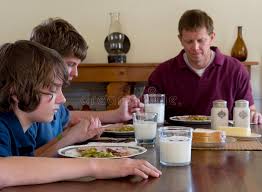
Saying grace at the family dinner table used to be a tradition.  So much so, that it has been made fun of several times in the movies and on television.  Some families recited a favorite prayer; others selected a family member to do the honors.  Some families held hands; some closed their eyes; some stood.  But NOBODY touched their plate until the Amen.

Grace has fallen out of favor in recent years.  Some families still practice it for the holidays or special occasions, but many of us have lost the art of saying grace.  In fact, many of us no longer have a family dinner table.  Some of us eat, sleep, and live alone; others share a house, but rarely a meal, and never a grace.  I would like to think that many of us WOULD say grace more often if  we made time and effort for it, but many others actually hold grace in contempt, calling it old-fashioned; a senseless ritual, or a meaningless tradition.

I want to look a little more closely at grace– how and why we say it, and what it means (or should mean) as part of our daily walk with God.  Calling grace a meaningless tradition may sound harsh, but it may also be a valid criticism.  If “Come, Lord Jesus…” could be replaced with “Gentlemen, start your engines…”, then it might be time to rethink the entire practice.  Similarly, if we dust off grace, only to say it for company, or to show that we still acknowledge tradition and have “good manners”, we’re missing the point.  Grace should be more than just a moment to bow our heads, say a few familiar words, and dig in…grace has become laughable and spoof-able precisely because it has become senseless, formulaic, awkward, and grudging.

I am a big fan of Jimmy Stewart. And this short clip from the beginning of the movie Shenandoah is a prayer said sarcastically by a bitter man who lost his wife and promised her that he would continue to raise their children in a “Christian” home, in spite of his own anger against God. (He later has a change of heart in the movie.) There are many other film and TV scenes that make fun of saying grace without any remorse, repentance, but with a heavy dose of disdain.

I read a tragic statement by someone who claimed that saying grace is actually “graceless”– tactless and inane.  The writer suggested that when we thank God for food, we are really thanking him for feeding us, and choosing to bless us, as he allows others to starve– that saying grace makes us feel more special/less guilty in light of social and economic inequities, which he blithely allows.  In other words, saying grace, in this person’s opinion, makes us arrogant and apathetic to the condition of others, while giving an unjust God undeserved thanks.

I would posit that it should be just the opposite.  I suppose there are many who pray with the arrogant mindset suggested above, but their mindsets and their hearts are not mine to judge.  True grace is not about the recipient of the grace, or the other potential recipients of grace, but about the giver–God– and his worthiness to receive our sincere thanks.  If I believe that God is indeed unjust, then it makes little sense to feel “blessed” or “special” at all– an unjust God is also capricious and unreasonable is not likely to be impressed or swayed by my smug “thank you,” anyway.  So not praying doesn’t make me any less arrogant or apathetic toward others, nor does it move me to be more grateful or more generous than one who prays.  It merely passes the blame for all injustice to God, leaving me off the hook, and making me feel more just than God.

tablegrace

However, if God is loving and gracious, promising perfect justice in his time, and forgiveness to those who seek him; a God who promises to be close to the poor in spirit, those who hunger and thirst for righteousness, and who are broken and contrite; I am not thanking him for who I am, for what I have, or for what I think he should do.  I am thanking him for who he is and for what he has chosen to give.  Some days, I may NOT have a lot to eat, or pleasant surroundings. I may be the victim of injustice done by evil people. But I can still thank God for what I DO have and for who HE is. And on those other days, in thanking him for the very things I would take for granted, I am reminded that blessings are not given for me to boast about or hoard, but to share with others.  That’s what saying grace SHOULD do–cause us to reflect on God’s goodness, our true neediness, and our call to share God’s blessings with a needy world.

Grace is also an invitation– asking God to be part of every moment of our day.  According to his Word, he’s always present, anyway.  But grace is a way of acknowledging and welcoming that presence.  And that invitation isn’t limited to Thanksgiving or Sunday dinner with the whole gang.  That invitation can be made anywhere, by anyone, at any meal (or snack, or midnight raid on the fridge!)

Is God welcome at our dinner table?  Does he share in our drive-thru breakfast, or our trip to the deli?  Do we allow him to join us at the restaurant, where others might overhear and find us quaint and old-fashioned?  Does he sit with us in front of the TV or computer as we absent-mindedly munch on a sandwich?  Grace isn’t about our goodness, our riches, or worthiness to enjoy God’s blessings.  Grace is about a gracious God who has poured out blessings on a graceless and fallen world; a God who loves us all equally and offers to give us something more precious than food– freedom, forgiveness, and family–forevermore.

gracelady

“God IS great; God IS good; Now we thank him for our food.”
“Come, Lord Jesus, be our Guest; let this food to us be BLESSED”
“For what we are about to receive, may the Lord make us TRULY grateful.”
“Bless us, O Lord, and these, THY gifts, which we are about to receive from THY bounty. Through Christ, our Lord. Amen.”
“Dear Heavenly Father, thank you for this day and this food. Bless it to our good and to your glory. May all we say and do bring honor to Your Name. Amen.”


In Everything Give Thanks

So many times my prayers do not reflect a grateful heart, but a needy one.  Giving thanks is easy in those miraculous moments, and those special times of reflection and rejoicing.  It is not so easy during times of stress, suffering, and waiting.

God blesses those who are “poor in spirit”; he is close to the broken-hearted, the weary, and the afflicted.  Yet he asks us to give thanks always and in all circumstances.  Many people see this as unreasonable, egotistical, and tyrannical on the part of God– that somehow, he needs our constant and abject praise.  But what if this command is for OUR benefit? Let’s break this down:

IN everything– Not for everything.  We don’t thank God FOR the death of a loved one, or the loss of a home, or an injustice done to us.  But we can and should thank God for being sovereign throughout all the circumstances of life; for conquering death, for providing help and hope in our times of need; for promising both justice when we have been wronged, and grace when we have been unjust in our turn. There is never a time when we CANNOT be thankful–though there are many times when it is difficult, or when we choose not look beyond our pain.


EVERYTHING–Not just the “big” things– everything.  We can be thankful for teeth, for dishes to wash, for traffic, for the way the moon hangs in the misty darkness, for a puppy’s eager greeting, for finally understanding our math homework, for the memory of a loved one, for the song that keeps playing in our head.  Sometimes it’s not the actual thing, but what it represents that causes gratitude to well up and turn our hearts back to God.  If we wait for “something to be thankful for”, we’ll often miss those things right in front of us.
GIVE– Giving thanks is an action, not just a reaction.  It is a choice; a mindset.  We learn to say “Thank you” as children.  Our parents pound it into our training as “etiquette” or “manners”, but everyone can tell when a thank you is genuine.  Saying “Thanks” is not  the same as giving Thanks.  Actions speak much louder than mere words, and our choices in the moment are a reflection of our true character and not just “good training.”

THANKS– not just the word, but the concept.  Even in my neediest moments, as I pour out a suffering, exhausted, wounded, and broken heart, I do so because I have a God who is THERE– a God who listens, who cares, who never leaves me alone and hopeless.  I may feel overwhelmed, abandoned, even battered in those moments.  But those awful moments do not define my life, nor do they characterize my walk with God.

This morning, I woke up–a small and underappreciated miracle– I am alive!  I opened my eyes– I can see!  I looked up and saw a roof over my head–I have shelter!  I turned over and got out of bed– I can move!  I have a bed, mattress, pillows, sheets…a bedroom!  I brushed my teeth and washed my face– running water!  Teeth!  A toothbrush!  A  wash cloth! Skin!  A bathroom–indoor plumbing!   I saw a stack of bills on the table– I have electricity! Heat and air conditioning!  A table!  Money to pay bills!…I’m writing this on a computer with wireless internet in my apartment!  All these things are precious gifts from God.  I can be grateful, and give Him the thanks He deserves, or I can choose to ignore the blessings, or take the credit myself.

And what if I wake up tomorrow and I can’t see?  What if my blessings all disappear– no house, no running water, no food or internet; no money, no family?  Giving thanks is still a choice.  I can choose to be thankful for who God is, and for what he has chosen to give me– or I can choose to be angry and envious and bitter.  Some of the most grateful people I have ever met are those who have struggled with difficult circumstances– poverty, pain, loss, injustice–and yet they have chosen to look beyond those circumstances to give praise to God.  Some of the most miserable people I’ve met are those who choose to look at their blessings with contempt; those who deny God’s goodness and choose to see only what they want but don’t have.

David and I recently closed our store.  We had been open for 12 years, and we enjoyed having a business.  But times change; our circumstances have changed; the economy has changed, including shopping patterns.  After 12 years, this feels like a great loss.  Yet, God is faithful.  We met a lot of wonderful people, and we were able to provide goods and services to many within our community.  

What happens next is uncertain– to us.  But God knows exactly what options we have, and we trust that He will give us wisdom as we move forward.

And in everything, we will give thanks.  And I’m so grateful that we can offer prayers of praise, of petition, of pain; prayers for people and places and priorities; prayers in the uncertainty, and in the unfolding of what is to come.


“Your Mission, Should You Choose to Accept It…”

Anyone old enough to remember the old TV show, or anyone who has seen the movies with Tom Cruise, will recognize the title quote from Mission Impossible.  A message, containing details of a top secret mission, would be sent to an agent of the CIA.  After the message had been delivered, it would self-destruct, and the agent would set out to save the world from terrorists or other worldwide threats.  It made for exciting entertainment– speeding trains, double agents, close calls with assassins, death-defying stunts, and lots of explosions– all happening in exotic locations around the world.

Prayer doesn’t usually involve death-defying stunts or explosions, but in can involve a mission, and exotic locations.  As I started keeping a prayer journal, I wanted to pray for people around the world– except I’m not a world traveler.  I’ve never been to Fiji or Burundi, Greenland or the Gobi Desert.  I know some missionaries who have lived or are living overseas, and their newsletters are helpful and personal– I can pray for them, for their fellow workers, and for their neighbors and friends and circumstances across the globe.  But I wondered, couldn’t I do more?  What if I set aside one day for every country on earth– to pray for that country and its people even once a year?  That might seem like an impossible mission.  How can I pray effectively for a country if I don’t even know where it is or how to pronounce its name?  Thankfully, I have a lot of help.  The internet is a great resource for finding out about countries, especially those in the news.  But one of my favorite resources is the CIA!pexels-photo-319968.jpeg

The Central Intelligence Agency of the United States of America is not just in the spy business.  They collect “intelligence”– facts about our world and every country in it–maps, statistics, flags, forms of government, populations, literacy and mortality rates, and so much more. https://www.cia.gov/the-world-factbook/
By visiting their site, you can find out more about any country in the world, and use that information to pray for very specific needs–countries that have been ravaged by war, disease, faltering economies; those countries facing turmoil from burgeoning immigration or sectarian violence.  You can find out the official language(s) of any country, the approximate breakdown of religious affiliation, the percentage of the population that suffers from obesity, illiteracy, or poverty– even some of the history and social structure. Are there major rivers or mountain ranges in that country?  What natural resources do they have (or not have).

knowledge-book-library-glasses-159743.jpeg

As I put together a yearly prayer journal, I realized that there are actually more days than countries. But that’s ok. In a single year, I can pray for every nation, but I can also lift up each state in the U.S., every Canadian province, and several major world cities! I can even pray for continents and oceans and focue on one geographic area every day!

I don’t spend hours poring over each country, city, state or continent each day– sometimes, I just lift up that area by name, knowing that God already knows the needs and situations in each place better than I ever could (even with the help of drones and spies).  But when I have the time, I like to learn more about the amazing diversity of peoples, languages, cultures, and circumstances around the world.  It reminds me that God has all of them in his hand, on his mind, and in his heart at all times.  It’s a big world out there, though it often seems to be shrinking.   God is Bigger!  There are a lot of tragic circumstances and heartbreaking issues around the world.  God is still Sovereign!  There are millions of people in remote and forgotten corners of the world– God sees and cherishes all of them!

I still have my “first world” problems, and personal issues to bring to the throne of Grace, but what a privilege to be able to lift up others– people I have never met in places I will never be able to visit–knowing that I can have a tiny part in the work God wants to do in their lives, as well as in mine.

The Weight of Words

Words have weight– I’m not talking about thousand-page novels or multi-syllable legalese terms– some words simply weigh heavier on the mind and heart than others.  Some everyday words spill out like dust motes carried on a light breeze.  They hang suspended in midair, without any set purpose or destination, and finally settle, forgotten, until someone sweeps them away.  Other words explode, sending shards and pellets at unwary targets.  Some words thunder like falling rocks in an avalanche of guilt or anger or hatred.  And some rare and precious words have the weight of a quilt or a hug, or an arm lifting you up when you are falling.

pexels-photo-531290.jpeg

One of the amazing things about prayer is that as we pour out our words before the Savior, the weight of our words is lifted off our hearts and minds and given to him to carry– the weight of the guilt, the weight of worry, the weight of grief, the weight of anger, the weight of hurt.  Not only does God take on the weight of our words (and our pain and guilt), but he makes sense of it all– maybe not instantly, or in the way we imagine– but he brings order and goodness out of our chaos and burden.


pexels-photo-312839.jpeg


And those everyday words swirling around like dust fall into the light, where they shine like gold dust in His presence.  When we bring everything to God, he transforms it; he transforms us.


pexels-photo-632722.jpeg

Our words have weight in prayer.  And our words to others have weight, as well.  Today, I want to weigh my words carefully.  Are my words burdening others, or helping them lift a load of care?  If I had to carry the weight of my words– my criticisms and clever put-downs, my accusations and angry tantrums, my bragging and comparisons– would I be dragging them behind me with joy and pride?  What if, instead, my words were filled with the weight of shared laughter, encouragement, hope, and compassion?  What if my words held the weight of truth and kindness and peace?pexels-photo-210012.jpeg

Would it change the weight of my prayers?pexels-photo-64113.jpeg

An Encouraging Word

It can be a dog-eat-dog kind of world out there.  Every day, I hear of people who are facing difficult and trying circumstances– health issues, loss of a job or home, loss of a family member or close friend, depression, oppression, harassment, rebellious or estranged children, abuse, academic failures, exhaustion from being provider, caregiver, etc.– even just daily stress.  It can really take a toll.  But it becomes even more difficult when we isolate ourselves.

When I get stressed, I tend to withdraw.  I don’t want others to think of me as a failure, or to think less of me in my struggles.  But this is one of the worst things I can do.  First, it means more worry and stress because I’m bearing the burden alone!  Second, it forces me to cover up my level of anxiety or depression be pretending that things are fine when they aren’t.  That would all be bad enough, but it gets worse.  Isolating means my focus turns inward– my problems become bigger, not smaller;  I’m so close to the problem, I’m not able to “look outside the box” for solutions, because my box keeps closing in on me.  I can’t see beyond my circumstances to understand if they are temporary, or if they necessitate some life changes on the other side of whatever crisis I’m dealing with.  And, worst of all, the only voice I listen to is my own, rehearsing and reminding me of the difficulties or failures I’m facing. What opportunities do I miss, not only to hear an encouraging word, but to share one with someone else?!

pexels-photo-936048.jpeg

We all need an encouraging word now and then; a voice telling us that we are not alone; that all is not lost; that there is hope.  I have been blessed with wonderful family, friends, and neighbors who are great about encouraging me, even when I try to shut them out or pretend that everything is grand.  Sometimes that encouragement comes through conversation; sometimes a card or text message or a shared piece of scripture; sometimes it comes through prayer.  I may not even know who prayed, or what words they used until days or weeks later, but their faithfulness in praying has become a lifeline when I feel isolated and overwhelmed.

This does not negate my need to pray and ask God for wisdom, healing, or strength for myself, nor does it suggest that God doesn’t answer my prayers.  Instead, it shows a pattern– God often answers our prayers by incorporating and using those around us.  God’s goodness and his love are shown best in teamwork.  We run the race to win, but we race together as teammates, not competitors.  We share sorrows, struggles, and joys. We come alongside; we lift others up, and they lift us up in return.

Encouragement does so much, we sometimes underestimate its power.  In a world of sniping, criticism, name-calling, and finger-pointing, encouragement does the following:

  • It lets someone know that they are seen and heard– that they are being noticed, thought of, and valued.  This shouldn’t be uncommon, but in a world where we are connected to so many be technology, and to so few face-to-face, it is HUGE!
  • It give us perspective to realize that we are not alone in our problems and not unique in facing difficulties.
  • It reminds us that hope and help are gifts to be shared, not something we must earn.
  • It gives us a purpose and a mission to be part of God’s redemptive work– Jesus gave encouragement and hope to those who needed it most, not to those who “deserved” it.

It can be a dog-eat-dog world out there, but we are not dogs.  We are children of the King.  Let’s send out some encouraging words today!

A word fitly spoken is like apples of gold in a setting of silver. (Proverbs 25:11 (ESV)

pexels-photo-416443.jpeg

Also see James 5:13-16 on praying for one another.

As Far as the East is From the West..

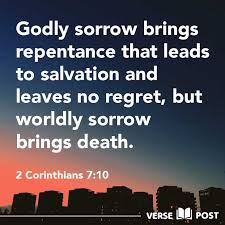
In blogging about prayer and in keeping a prayer journal, there is one type of prayer I don’t dwell on very often.  Prayers of confession and repentance are very important, but I don’t  include them in my journal and I don’t spend much time analyzing them.  It’s not that I want to ignore them or that I want to give a false impression that I don’t say them.

arrogant

I’m a saint–but only in the sense that Christ’s blood is my atonement and my only hope of salvation.  He who started the work is still working, and there’s a lot of work yet to be done.  So, while I include prayers of confession and repentance in my practice of pursuing prayer, I don’t write them down or share them publicly.

Photo by Mikhail Nilov on Pexels.com

Here are some of the reasons I don’t spend more time talking about confession:

trueconfessions
  • Confession is not meant to be a public spectacle.  It is generally private and very personal between an individual and God.  Apologies may be public, and repentance may include public atonement or recompense, but those are not prayer; rather they are the actions taken in conjunction with  and as a result of prayer and confession.
  • Confession is fundamental– it’s not a prayer option, or a stylistic preference–every one of us has sinned, and we all need to admit to our sins, bring them before the throne of God’s grace, and ask for his forgiveness.  Hiding sins, denying sins, or lying about them will get in the way of all our other prayers.
  • Writing about past sins keeps them alive and keeps the focus on me and on my faults, rather than on God and on His Grace.
  • Making confession public has a tendency to devolve into gossip and self-justification.  Descriptions of my sinful actions will necessarily be from my incomplete and very biased point of view.  Other people can be misrepresented and hurt.
  • But the last reason is my favorite– I don’t waste time writing down and discussing past sins because GOD HAS FORGOTTEN THEM!  Writing them down, rehearsing them, analyzing them–even analyzing how I might approach confession won’t change God’s response:

10 he does not treat us as our sins deserve
    or repay us according to our iniquities.
11 For as high as the heavens are above the earth,
    so great is his love for those who fear him;
12 as far as the east is from the west,
    so far has he removed our transgressions from us.

Psalm 103:10-12 New International Version (NIV)
  • The key is that we DO confess– humbly, consistently, and with a heart of true repentance.  What follows is a free and forgiven conscience, no longer weighted down or pulled off focus by guilt and doubt.
pexels-photo-941693.jpeg

“Hallowed Be Thy Name…”

Christians have a lot of confusing “jargon”.  If you grew up in the church, there are certain words and phrases that are supposed to be intuitively understood.  If you didn’t grew up in the Bible Belt, or in an old-time church, you may feel like you’ve been dropped into a parallel universe where people speak the King’s English– but it’s King James’ English!  Words that would fit neatly into a Shakespearean monologue are flung at you:  “Thou shalt not,” “graven images”, “begat”, “beseecheth”, “whosoever believeth,” “Hallowed be Thy Name.”

As a child, I used to think the phrase was “hollow-ed be thy name”– it was confusing.  Why would God want his name emptied and hollow?  Why would I do that?  Of course, it was explained to me that “hallowed” meant holy, or honored, or revered.  That made more sense, but I think in some ways we have done more “hollow-ing” and less “hallow-ing” of God’s name in our churches lately.

church-bank-wood-benches-161060.jpeg

And it’s not just the argument I hear a lot about actual language usage.  I hear some people complain about those who pray to “Daddy God” or “Papa God” or those who use “OMG” when they text, or “Jeesh!”  To me, these are “splinter” arguments (another Christian jargon term, referring to Jesus’ example of someone trying to pick a splinter out of someone else’s eye when they have a plank in their own!).  That’s not to say that we shouldn’t be careful about the words and names we choose, especially around those who do not know Jesus personally. But the core issue isn’t the vocabulary, but the attitude. The real trend I see is that we are losing our attitude of AWE in God’s presence.  We use words, and carry attitudes that devalue the one who is most worthy of our absolute best.  Or, we try to put ourselves, our own efforts, and our own attitudes in His place. God IS our Father. He is not “the man upstairs,” or “the Big Guy,” or “Daddy-O.” He is not our “pal” in the sense of any other human acquaintance. He is the Lord of the Universe! But we can call Him “Lord, Lord” and still not have a relationship with Him (see Matthew 7:21-23). Using “religious” sounding language doesn’t make us any closer to God in our heart, and it certainly doesn’t fool Him!

arrogant

God wants a relationship with us; he loves us with an extravagant, boundless, and everlasting love.  He doesn’t want us to run from him in fear or hide from him behind big, empty, but important-sounding words.  In fact, in his time on Earth, Jesus walked side by side with his disciples, he ate with people, embraced his friends and family, danced, burped, wiped his nose,  held children on his lap, laughed, and lived among us.  But he is eternally GOD.  Yahweh– the LORD–I AM.  Almighty, all-powerful, omniscient and completely HOLY.  And his Name is to be revered.

When we say that we follow Christ;  when we call ourselves Christians, we bear that name– we take on that Hallowed name–we strive to be ambassadors and representatives of the name which is above all names.  This isn’t just about saying his name, “Jesus”, “Father”, “Savior”, “Heavenly Father” in a less-than-honorable fashion.  It’s about how we represent His Name as his ambassadors.

girl-praying-hands-eyelashes-41942.jpeg

We’re not perfect; we will not always live up to the Name we carry– that’s part of the Gospel message–Jesus came to show us how we ought to live, and to give us victory over the reality that we can’t do it in our own flawed state.  But in praying “Hallowed be thy Name,” we are not asking for God’s name to become more honorable.  We are asking God to give us the wisdom, the power, and the desire to bring him the honor and worship he so rightly deserves.  And that only happens when we live transparently, humbly, and in a manner worthy of His Name.

“Our Father, who art in Heaven, Hallowed be Thy Name…”

You’ll Never Pray Alone!

I attend a mid-week prayer meeting. Sometimes we have a dozen or two in attendance. The other day, we had just five. But God shows up every week! There is a mystical, spiritual quality in communal prayer– voices raised in praise, thanksgiving, and intercession; voices raised in agreement, in harmony, and in support. We spend nearly an hour in prayer; some stay after to pray longer, some stay silent for most or all of the hour, just listening and giving spiritual support by their presence. We also spend some time reading scripture, sharing updates on missionaries and community outreach programs, or updates on requests from previous weeks. And, in listening to others pray, we can “hear” their hearts and get to know them a little better. But this is not meant as a social hour. We are there for one purpose– to pray. It is a commitment to pray faithfully, to pray consistently, and to pray humbly and gratefully.


Photo by Tima Miroshnichenko on Pexels.com

We are blessed to have the opportunity to gather publicly and freely to pray. But what about those who cannot? Not everyone has the freedom in their weekly schedule to attend our prayer meeting (or other meetings that might be scheduled throughout the community). Not everyone lives in an area where public prayer is safe and encouraged. Some people are shut in. Some face persecution for their faith– public gatherings increase the risk of violence and arrest.

Photo by SHVETS production on Pexels.com

Most prayers happen in seclusion and isolation. And sometimes, this can lead us to believe that personal prayer is a small thing. One silent prayer in a room somewhere in Michigan may seem tiny and frail. It can seem puny and ineffective. And praying in isolation or under threat can feel even smaller and lonelier. We trust that God hears us, but we can feel so weak, so ineffectual. We long for support and communion. Praying in a group “feels” stronger, and more “important,” surrounded by fellow believers and hearing the voices chiming in with praise and heartfelt requests.

I value and appreciate meeting and praying with other believers, but most of my prayers are personal– said in silence in my own home. I pray by myself, often with my Prayer Journal in front of me; sometimes, just lying in bed, or sitting at my workspace. Yet, I never pray alone! Jesus, in The Lord’s Prayer, taught His disciples to pray to “Our Father.” But He must have known that they would also pray personal prayers. He did not teach them to say “My Father,” or “My God.” Surely, when we are alone, we can use those terms (as Jesus Himself did in the Garden of Gethsemane). But I think Jesus was acknowledging that God “inhabits the praise of His people” (Psalm 22:3)– and that when we pray, we are mystically and spiritually joined with God– Father, Son, and Spirit– and also with the family of other believers. And their prayers join with ours. When I pray, alone in a darkened room or closet, I may be physically separated from believers in Pakistan or Colombia, but I am spiritually linked with them (and they with me) in ways I don’t fully comprehend. I can’t hear their prayers; I can’t understand their language, and I don’t know their needs. Nor do they know mine. But God knows them all, and knits them all together in ways that bring Glory and Honor to Him! Praying with our Wednesday group (or any time I pray with other believers) helps me better feel this connection, but it goes beyond what we experience in corporate prayer. None of my “puny” prayers is lost in the fugue of a hundred thousand other prayers prayed in that moment– instead, they blend in with other silent cries and unspoken expressions of praise from all over the globe. They rise up like the notes of a never-ending symphony!


Photo by cottonbro on Pexels.com

Prayer is so much more powerful and deeper than we imagine! Today, let’s pray–together–knowing that whatever our situation or circumstance, we will never pray alone!

Turn, Turn, Turn

Back in the 1960s, Pete Seeger “wrote” a new folk song, later recorded by a group called The Byrds.  All but the title and the last six words of the song were taken directly (though the word order was changed) from the book of Ecclesiastes.  Essentially, Pete Seeger wrote seven words and some music; the rest was written by King Solomon almost three thousand years ago!  Learn more about the song here…

timelapse photography of stars at night
Photo by InstaWalli on Pexels.com

When God created the world, he instituted times and seasons– day and night; winter and summer; weeks and months.  We are bound by time while we live here.  Sunlight and darkness help determine when we are active or sleeping (less so since the advent of electric lighting); summer and winter (or rainy/dry seasons) determine when we plant or harvest, what we wear, how we travel, and what activities we plan.

snow nature forest winter
Photo by Pixabay on Pexels.com

But Solomon reminds us that there are also “seasons” that don’t depend on the weather or the amount of light filling the horizon.  There is a time to be born and a time to die; a time for laughter and a time for weeping; a time for war and a time for peace.  Our world is not static– it is filled with changes, and times for turning away from one thing and facing another.

For everything there is a season, and a time for every matter under heaven:

a time to be born, and a time to die;
a time to plant, and a time to pluck up what is planted;
a time to kill, and a time to heal;
a time to break down, and a time to build up;
a time to weep, and a time to laugh;
a time to mourn, and a time to dance;
a time to cast away stones, and a time to gather stones together;
a time to embrace, and a time to refrain from embracing;
a time to seek, and a time to lose;
a time to keep, and a time to cast away;
a time to tear, and a time to sew;
a time to keep silence, and a time to speak;
a time to love, and a time to hate;
a time for war, and a time for peace.

Ecclesiastes 3:1-8 (ESV)
Photo by Jenn on Pexels.com

Our prayers will change with these seasons– prayers of wonder and prayers of wondering why; prayers of great boldness and reluctant, halting prayers; prayers that come from joy, and those that come with wracking grief.  There will be seasons of chaotic busyness, and seasons of loneliness and long hours; seasons when we help lift the burdens of others before our own, and seasons where others help us lift burdens we cannot bear alone.  There will be seasons of fierce, pounding spiritual warfare, and seasons of relative peace and rest.

green grass field during sunset
Photo by Brett Sayles on Pexels.com

Solomon lays out the concept, but I like Pete Seeger’s addition of the phrase, “turn, turn, turn.”  It reminds me that the seasons of my life will change, but I need to change as well.  I need to turn, first of all, to see where God is working in my life and the lives of others– that’s where I need to be and where I need to be focused.  God will never leave me nor forsake me, but He loves me too much to “leave” me in a rut– He needs me to move on and finish the race He has set out for me.  Change can be difficult, but without it, there is no growth!

Photo by jonas mohamadi on Pexels.com

Second, I need to turn from habits and activities that are “out of season”–young parents will have a completely different way of mapping out their time, including time for prayer and Bible study, than empty-nesters.  People in mourning will have a different approach to prayer and worship than those who are in a season of celebration.  There is a season to break down–to end bad relationships and turn from bad habits–and a time to build up healthy relationships and habits.  There is a time to speak– to share prayer requests and spend time in corporate prayer; to ask questions and persist in our requests.  But there is also a time to stay silent– to meditate and listen more than we talk; to be still and know, instead of pace and ponder.  I don’t wear a heavy coat in the middle of summer or run barefoot in the snow– I need to turn in alignment with the season I am passing through.

barefoot basket blooming blossoming
Photo by Pixabay on Pexels.com

Finally, I need to turn away from temptation and sin.  God gives me the power, through His Spirit, to turn and walk away from the quicksand of complaisance, the tidal waves of desire, the live wire of unchecked rage, or the bottomless pit of envy, but I must turn away from them.

This life is full of seasons and change– some good, some dangerous.  But God is outside of time and seasons.  He provides endless variety, but He never changes His essential nature.  No matter where we turn, He can be found!

photography of maple trees
Photo by Johannes Plenio on Pexels.com

Blog at WordPress.com.

Up ↑