In the Gospel of John, there is the curious story of Lazarus. Lazarus and his two sisters, Martha and Mary, were good friends of Jesus. There are other stories throughout the gospels of Jesus interacting with this family. But this story appears only in John’s gospel, and it contains some details that raise several questions.
The story begins with an urgent message. Lazarus is gravely ill, and the sisters send word to Jesus to come quickly. Yet Jesus seems to dismiss the message, saying that it is not a sickness that will end in death, and he lingers two days before he decides to begin the journey toward Bethany. There is no sense of panic or urgency in Jesus’s response. And, though it says he loved Mary, Martha, and Lazarus, he seems unmoved by their obvious distress.
When Jesus finally arrives, Lazarus has been dead for four days. The two sisters both mention, with some bitterness, that if Jesus had come sooner, their brother need not have died. Jesus never gets defensive, but he challenges the sisters about their faith. In his exchange with Martha, he says that her brother will rise again. She agrees that he will rise again in the resurrection at the end of time. But Jesus redirects her faith–“I am the resurrection, and the life: he that believeth on me, though he were dead, yet shall he live: And whosoever liveth and believeth in me shall never die. Believest thou this?” (v. 25b-26). Her statement of faith, in spite or her grief and bitterness, prompts her to act. She goes to find her sister and bring her to the Savior, that she might be comforted.
Martha’s faith is small comfort in the circumstances. Her brother is still dead. His body lies rotting in a nearby cave. Her faith is fixed in the distant future, even as the author of Life and Eternity stands next to her. Her belief is wispy– more of a wish or a dream than the solid God-in Flesh standing before her.
Yet Jesus chose to use this seeming defeat as a showcase for His power to give life and resurrection. Many people who saw this were transformed and put their trust in Him. Others saw Jesus’ growing ministry as a threat to their own power and authority. They reacted with fear and even anger, that Jesus would bring the miraculous into their well-ordered normality. The Pharisees, including the chief priest, Caiaphas, determined that Jesus must die in order to “save” them from the Romans. Instead of seeing Him as the agent of their eternal salvation, they saw Him as an obstacle to their limited “freedom” to operate under the Roman oppression.
What is my faith like as I pray today? Do I believe that God “could’ve” or “should’ve” solved a problem in my past? Do I believe that God is not acting fast enough or decisively enough? Do I have a wispy faith that God will make all things right in Heaven, but is uninterested in the “here and now?” Do I believe that God’s answers might upset my life or cause me to “lose” control?
God, as you challenge my faith, help me to declare even my weak and imperfect belief; help me to act on it, and bring others to you for comfort. For in doing, so, I may be preparing the way for an incredible miracle– for revival and renewal; for the glory of Your great Name! And help me to see your answers through eyes of faith, and not fear of the unknown. Help me to trust you for the future I cannot see– a future that is in your capable and loving hands.
“Times are tough!” I hear many people complaining about the economy lately. And they have good reason– gas prices, food prices, housing prices, taxes– everything is getting more expensive, and wages or other sources of income just aren’t keeping up.
While we may worry about the current economic conditions, we need to step back and look at a different economy– God’s economy.
This weekend, I wrote out checks and paid bills. I even put some money in the offering at church. But God doesn’t look at the amount of money I paid or gave away, how much I spent or saved, earned or invested. He’s aware, of course, of such things, but God looks at a different “bottom line.” God cares how I spend or save money, whether it’s pennies or thousands of dollars. But He also cares how I spend my time and energy. And my life is “richer” than just the money in my bank account or the things in my house.
God doesn’t give us everything we want– He loves us too much for that. Life isn’t about having the most “toys;” it isn’t about having the easiest or most entertaining experiences. It isn’t about “winning” and having “more.”
I have noticed that the happiest people are often those who have had to struggle the hardest. In God’s economy, it is His pleasure to give more than we can ask or imagine– but often in ways we would never expect. (see Ephesians 3:20-21) In God’s economy, I am rich. Not because of anything that I have done, or earned, or because I was born to a wealthy family or because I won the lottery. I am rich because of what God has done. And if I am tempted to doubt that, I can begin listing all the blessings of God– and I will run out of space and time!
God has given me life. I didn’t choose to be born. I did not have the power to create myself. But God made me unique among all the people who have ever lived. He gave me a body, a mind, a soul, and a spirit. He gave me thoughts and dreams and opportunities to grow and enjoy life.
God gives me hope and purpose and a reason to live. Life can be difficult. It can be painful. It can be tempting to see only the darkness, the grief, the regrets. But it can be beautiful. It can be almost painfully beautiful, sometimes. What a gift. And what a gift God offers in each new day. A new chance to hope. A new chance to strive. A new chance to make a difference.
God has given me family and friends. And sometimes, that can be a struggle! We aren’t perfect, and we don’t always see eye to eye. We step on the toes or we step on the feelings of others. But we also make each other laugh. We make each other stronger. We help each other grow. We enrich the lives of others, and others enrich our lives in return.
God has given me His word– His promises; His love-letter; His wisdom; His counsel; His power to shape my story. And yours! The Bible is not just a collection of stories or words. It is Truth. It is Grace. It is how we can KNOW the riches God has for each of us.
God has given me His Salvation. No matter what today brings; no matter what has happened in my past– whether things I have done, or things that have been done to me–God sees me as His child. And if I believe in Him; if I trust Him to be who He says He is– my Father, my Savior, my Lord–He will throw my past and my guilt “as far as the east is from the west”(see Psalm 103:12). I am debt-free! And I will inherit all that God will share with His children throughout eternity!
And God has given my His Presence. I am never alone. I am never forsaken or forgotten. NEVER. (Hebrews 13:5) If I am sitting in despair on an ash heap, seeing no hope and no future, God is sitting there with me, waiting for me to see Him, and accept that He is more than “enough” to get me through.
And with such riches, I can follow God’s lead and be generous in return. I don’t have the power to give life, but I can celebrate it, advocate for it, protect it, and remind others of its beauty and promise.
I can encourage others– with acts of service, with a smile, by faithfully lifting them up in prayer. What if we thought about hugs as endowments? What if, in God’s economy, every hug you give is worth $2,000? What if every prayer is like investing in a bank account? What if your smile is worth a fortune to someone today? I can be a friend to someone who feels unseen or unheard. I can share a conversation with someone who feels lonely. I can share a burden for someone who just needs a helping hand.
I can share God’s promises. I can share His wisdom. I can share His compassion. I can share His Mercy and Grace with those who least expect or “deserve” it. I can share my hope and my joy. I can help someone look up and look beyond a bad day. And where there is suffering and pain– I can share that, too, knowing it is part of God’s good economy. And maybe, as I offer my presence, I can help someone else see the presence of God sitting there with us both!
You may not feel very rich today. And in this world’s economy, you may be in great need. God may not shower you with cash or assets in the present moment. But God has promised to give you everything you truly need for life and Godliness (2 Peter 1:3-4)
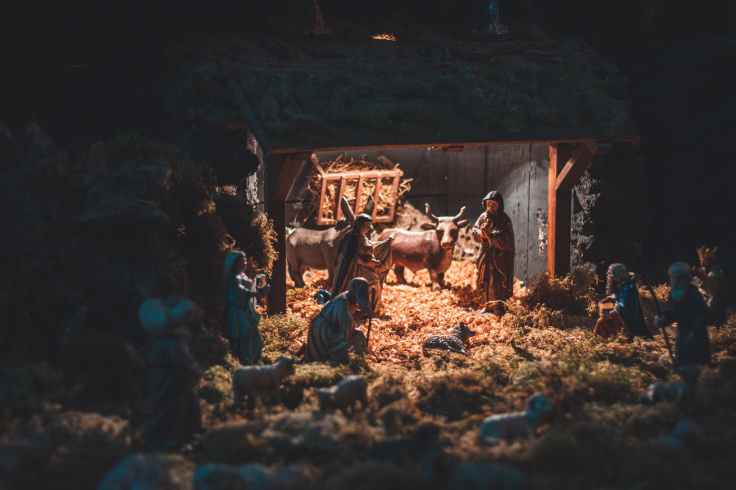
‘Tis the season for Christmas Music– hymns and carols, ancient songs and modern tunes celebrating the Advent and Birth of the Lord Jesus. Joyful, passionate, somber, or even a bit silly, such music can lighten our spirits, and remind us of the incredible gift of God– Emmanuel–His very presence among mankind.
Christmas lyrics often use wonderful imagery to retell this amazing story. The Bible accounts tell of shepherds, angels, wise men, and stars– the songs give us the immediacy of a dark night– “silent”, “still”, “earth as hard as iron; water like a stone”, “a midnight clear”, “half-spent was the night”…
Most of us live in a world that rarely gets so dark. If we live in a town or city, we are surrounded by street lights, security lights, even night-lights in the hallway. Even so, we have a feeling for how the midnight and early morning hours seem darker, colder, quieter, and more dreary than any other time. And there is a significance in remembering that Jesus came to earth in the midst of literal and metaphorical darkness, “when half-spent was the night.”
God is Omnipresent– it is not as though God leaves us when all is merry and bright– but His presence is often most keenly sought, and unexpectedly found, in darkness and distress. When all seems bleak, cold, and hopeless, Jesus comes silently, small and fragile as a baby, bringing light, hope, joy, and peace. He comes when the night is “half-spent”– when the darkness is deepest, the silence weighs heaviest, and the cold is most bitter; when hope and light seem lost.
Jesus’ Advent came after four hundred hears of silence. Prophets, such as Isaiah, Zechariah, and Micah, had spoken of Messiah rescuing Israel from captivity. But the years had passed, and Rome ruled the Jewish people with an iron fist. God had stayed silent, and hope seemed remote. Rome would continue to rule the world for another four hundred years. But when Messiah arrived, He didn’t come to break the power of Rome. He didn’t come at the end of that particular “night”; rather, He came when the night was “half-spent.” He came gently, quietly, and humbly. He came to deliver Israel from something much darker, colder, and deadlier than a foreign occupation. Jesus, through His life and death and resurrection, came to deliver Israel, and the rest of the world, from the power of sin and death.
All the promise of deliverance and salvation that came in the middle of that bleak night so long ago, remains for us to celebrate– even in the middle of our “half-spent” nights.
We may not see the dawn in the middle of our struggles. We may not hear the angels singing or feel the warmth of the new day coming. But because of this “Rose e’er Blooming”, we can rejoice. We can find hope and peace in the present night, knowing that Emmanuel is with us! Like a lamp in the night, He will stay with us as we travel through the present darkness. After all, “Thy WORD is a lamp unto my feet and a light unto my path.” (Psalm 119:105) Jesus is the Living Word of God, and thus, our living light!
I had to fast overnight for some bloodwork I had done this morning. No food for 12 hours; no water for 8 hours before the blood draw. It shouldn’t seem like such a difficult thing, but at 9 or 10 p.m., I imagined I smelled food. My mouth watered– and then it felt dry. I felt woozy and weak. Surely I could have just a cracker or some orange juice, right? But no, I finished the fast and rejoiced to eat breakfast after the blood draw was complete. And simple scrambled eggs tasted sooo good! Oddly, I have often gone several hours without food and without all the imagined side effects I felt last night. The actions were the same, but the focus was on what I was doing, not what I was missing.
Fasting has become popular in recent years. I know several people who practice intermittent fasting for weight loss and other health benefits. Others fast for religious reasons (other than prayer); some people give up certain foods ritually, for Lent or other festivals. Some even fast in dangerous ways (anorexia, etc.) Fasting is usually about our relationship (sometimes an unhealthy relationship) with food.
Prayer, on the other hand, is all about our relationship with God. And when the Bible speaks of Prayer and Fasting, it is also about our relationship with God. The Bible gives many examples of fasting– even “extreme” fasting. Moses, King David, Jesus, and the Apostles all practiced it. Sometimes entire groups (churches), cities (Nineveh–see Jonah, chapter 3), and nations (Israel/Judah) fasted. The Bible also gives us many reasons to do fasting, including repentance of personal or national sin, deep personal struggles, and focusing on a single issue, such as the unsaved, the persecution of fellow Christians, seasons of famine, or ongoing injustices. But the Bible isn’t specific with guidelines and rules about fasting, because, like prayer, it is primarily a pursuit. It’s not about the extremes or the number of days, or the amount of food we “give up.” It is about the pure pursuit of God’s sufficiency. God is not impressed by whether we fast for one day or forty; He does not count the number of calories we might have consumed or the amount of weight we lost. He doesn’t measure the strength of our will power or our “success.” He isn’t impressed by posturing and virtue signaling. What He does ask is that we pray with complete focus and integrity, without the distractions that food, entertainment, and even sleep can sometimes become.
We can fast for hours or days– miss one meal or fifteen–and still “miss” the blessing of prayer, because we are focused on what we are doing (or not doing) instead of focusing on what God is doing. We can also “fast” in ways that have nothing to do with food– turn off the TV or phone, retreat from crowds and busyness, even “fast” from sleep! The point is not that WE are “better” for fasting, but that fasting is “better” for US!
Today, consider a small “fast”– replace a coffee break, snack, meal, hour of social media, or that extra 15 minutes of sleep with some time alone and wholly abandoned to God. Not only will we come away refreshed and not “missing” whatever we traded, but we will more fully enjoy those same activities or foods when they take their rightful priorities. Remember, prayer and fasting is not a contest or a ritual, it is a pursuit and an adventure! Enjoy it!
Some thoughts:
1) Fasting is as individualized as praying. There is no perfect “formula.” But there are several helpful suggestions. You can set a time limit (one day; 12 hours, etc. without food or a certain activity) or a food/activity limit (only one meal a day for seven days, only one television program per night for a week). You can plan days or weeks ahead to fast for a definite period, or you can decide spontaneously to start fasting until you feel led to stop. One caveat– Fasting is not a game. It IS a commitment, and shouldn’t be done without a real desire to get closer to God.
2) Having said that, fasting isn’t about your will power, or success/failure. Sometimes, circumstances will prevent you from completing a planned fast. Certain health issues or family situations may prevent you from fasting for a day or more. Sometimes you will fall short of the goal you set. Don’t let that stop you from trying again, or trying differently. God isn’t about perfection on your part– He IS about helping you grow stronger and more complete as you continue to walk with Him.
3) Fasting is personal. It isn’t about looking virtuous, posting about your struggles, or comparing yourself to others. (See Matthew 6:16-18) That doesn’t mean it can’t be done as a group. But group fasting should be about a single focus or topic, not about making everyone in the group conform to a preconceived expectation. There is great encouragement to be found in praying as a group, and some encouragement in fasting as a group, but remember, fasting is between you and God, not you and the group, or you and all your Facebook friends.
NOTE: At least once a month this year, I want to offer some practical suggestions on how we can better pursue a life of Prayer and living the Christian Life. I hope this post gives each reader something to consider.
When I was much younger, I was a huge fan of the Monkees. I loved their TV show, and their songs. One of my favorites was called “I’m a Believer!” It’s a catchy tune about instant infatuation– “Then I saw her face; now I’m a believer!”
YouTube video of “I’m a Believer!” (Written by Neil Diamond; performed by The Monkees)
Years after it was a hit song on the radio, it was used in the soundtrack of the movie “Shrek!”, where it found another generation of listeners. The tune is over fifty years old now, but I still think the tune is catchy, and I love to sing along when I get the chance. However, when I hear the phrase “I’m a Believer!” it means something immeasurably more than just a great pop hit..
It can be very easy to fall into the thinking behind this song. We all are looking for something positive to believe in– Love, music, friendship, success, religion. We all want to be believers in “something” beyond the mundane and the present. And we want a belief that will uplift us, sustain us, and make us want to sing along.
But singing about belief and having a real, sustaining Faith are not the same. The singer of the song claims that he wouldn’t leave– couldn’t leave– the object of his affection. Yet most infatuations are temporary. This love hasn’t matured and been tested by hardship and trials. We can feel good about new “love” in the moment, but we can also be disappointed and betrayed by it. Believing in romance and happily-ever-after can make us feel like singing, but the feeling cannot sustain us through grief and pain. Songs and movies may have a sappy, happy ending, but real life is a struggle.
Faith– real faith in a real and Loving God–is different. We may still be inspired to sing and worship, but we will also be inspired to serve and persevere in good times and bad. It brings strength and lasting peace. And it doesn’t depend on seeing God’s face– it is knowing that He is present, even in the darkest moments; knowing that our lives are in His hands, in spite of our circumstances or surroundings. True faith doesn’t even depend on the strength of our will to believe. It will survive momentary doubts and struggles, until there is “no doubt in my mind” that can triumph! And we can rest assured that God will keep HIS promise never to leave us. That’s what brings me hope and joy when I say, “I’m a Believer!”
It’s fun to sing along with The Monkees, or dance along with the characters in Shrek, but genuine Faith sounds more like this:
4-5 Celebrate God all day, every day. I mean, revel in him! Make it as clear as you can to all you meet that you’re on their side, working with them and not against them. Help them see that the Master is about to arrive. He could show up any minute! 6-7 Don’t fret or worry. Instead of worrying, pray. Let petitions and praises shape your worries into prayers, letting God know your concerns. Before you know it, a sense of God’s wholeness, everything coming together for good, will come and settle you down. It’s wonderful what happens when Christ displaces worry at the center of your life. 8-9 Summing it all up, friends, I’d say you’ll do best by filling your minds and meditating on things true, noble, reputable, authentic, compelling, gracious—the best, not the worst; the beautiful, not the ugly; things to praise, not things to curse. Put into practice what you learned from me, what you heard and saw and realized. Do that, and God, who makes everything work together, will work you into his most excellent harmonies. 10-14 I’m glad in God, far happier than you would ever guess—happy that you’re again showing such strong concern for me. Not that you ever quit praying and thinking about me. You just had no chance to show it. Actually, I don’t have a sense of needing anything personally. I’ve learned by now to be quite content whatever my circumstances. I’m just as happy with little as with much, with much as with little. I’ve found the recipe for being happy whether full or hungry, hands full or hands empty. Whatever I have, wherever I am, I can make it through anything in the One who makes me who I am. I don’t mean that your help didn’t mean a lot to me—it did. It was a beautiful thing that you came alongside me in my troubles.
Philippians 4:4-22 (The Message)
I have been blessed with the opportunity to do a couple of short-term mission trips. I am not a “Missionary” in the traditional sense. I have not left friends and family behind to move to a new culture or live among strangers for years to spread the gospel. I basically took some working vacations, met dozens of wonderful new friends, learned about the work they are doing in their community, and joined in helping them with a couple of small projects (painting, sorting donated clothes and shoes, working in the school, helping organize a library, putting together scrapbooks, etc.) I was able to go back and visit five times over a dozen years and watch as the children grew up, the school added on, the staff changed, and the mission work focus became broader and more community-focused.
Two things about visiting the mission field– you meet amazing people and you hear amazing stories. Some people will become life-long friends. Some people teach you and touch you in unexpected ways, even if they cross your path only on a single day. Some stories make you re-evaluate all the things you take for granted. Some stories leave you laughing or crying along with your new friends. Some just leave you speechless.
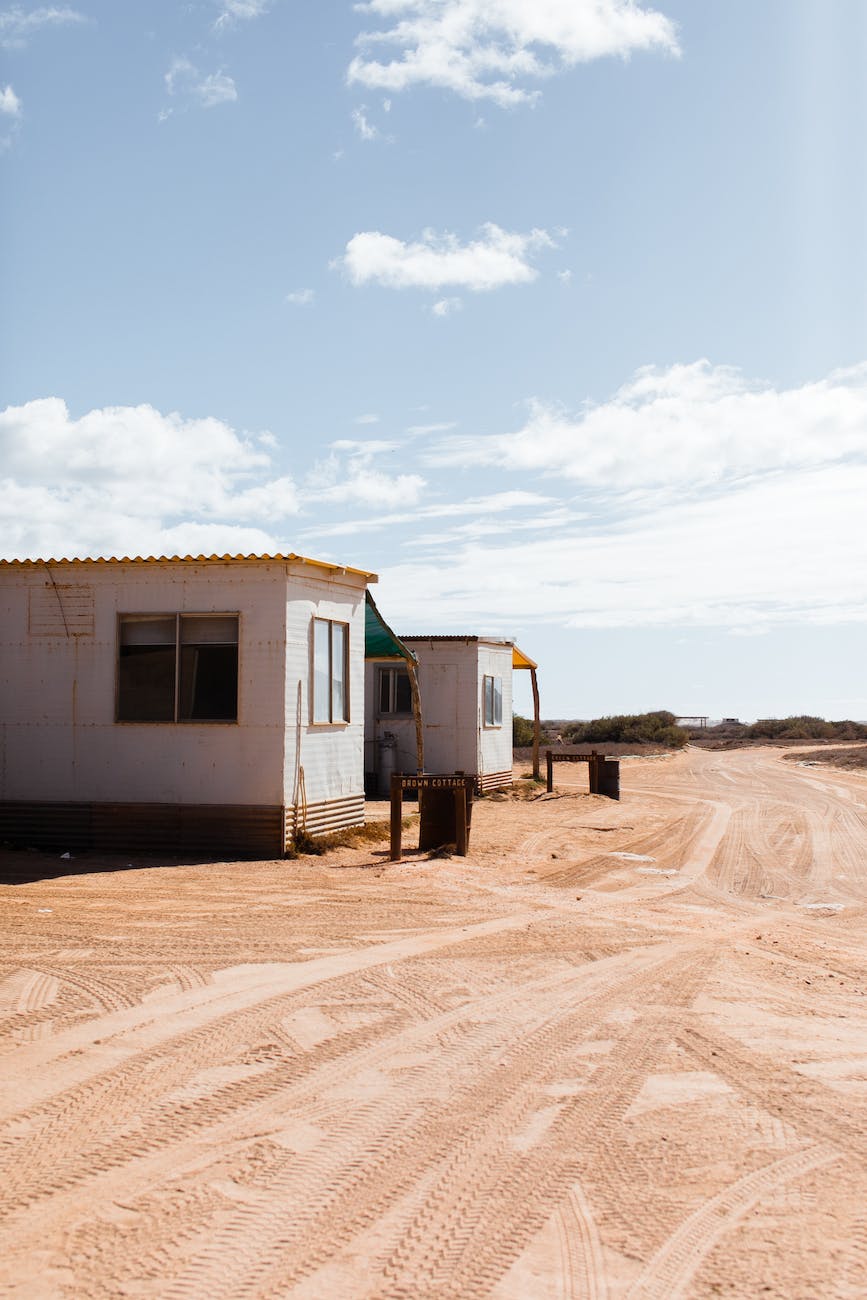
One such story happened on my first visit. We went on a “field trip” to see a developing community not too far from the border between the Dominican Republic and Haiti. Hundreds of Haitian refugees had flooded into the D.R., and at least two mission groups from the U.S. and Canada were working to provide housing, healthcare, and schooling for homeless families. Several teams of workers had already started building small cinder-block houses, a couple of bath houses/bathroom facilities, etc. in an area that used to be a sugar cane field. The houses were serviceable, and had basic electricity and running water. However, the water was only good for washing, not for drinking. The houses were close together, with very small plots for gardening, but the land was rocky and dusty. There was a centralized “administration” building, with a small clinic and other basic community services, a small elementary school, and a small chapel. Most of the homes had an electric light bulb hanging from the ceiling, but no other appliances. Meals were still cooked over a small open fire in the main room of the house. Cots or bed rolls took up most of the other room. The bathrooms were in the communal bath houses.
Not the actual location, but this is not too different from what the first houses were like– very basic.
I set the scene above so the circumstances are clear. These families were happy to be alive, and to have any shelter at all, but they were not living in luxury, nor were they moping and in despair about their condition. Part of our visit was to bring awareness to what efforts were already underway, and what needs were still outstanding. Medicine was scarce; many of the families had at least one person who was HIV positive, and many of the others had issues resulting from malnutrition and untreated childhood diseases. Jobs were hard to come by– the sugar cane plantations and rum factories had a history of exploiting their workers, and very few other jobs were open to Haitians who either didn’t speak the language or had no work permit/official identification. The mission organizations were not set up to provide jobs, income, or food and water. They were surviving on donations, which were sporadic and usually consisted of non-perishable items like clothes and hygiene items (toothpaste and soap).
Into this scene, the mission had received a princely donation of several hundred pairs of flip-flops. One of the bigger department store chains in the states and an overstock of black and white flip-flops– different sizes, but all the same style and colors. There were enough that everyone in the community could have a new pair of shoes! However, after the shoes were distributed, the administrators noticed that people were still going around barefoot. Very few of the people were wearing the new shoes. Finally someone asked if there was a problem with the shoes.
The answer they received is the heart of the story, and a lesson I have never forgotten. The people were very grateful for the shoes. But their greater need wasn’t for shoes. God had heard their prayers and supplied their need. Several enterprising members of the community had bundled dozens of pairs of flip-flops, carried them nearly eight miles into the nearest beach-front town, and found a spot along the beach where they sold the shoes to foreign tourists. Other groups did the same thing. Using the money from the sale of the flip-flops, they bought bottled water and produce at other roadside stands, carried them back to the community. This way, such items would be readily available while they waited for crops to grow in their gardens or a closer source of drinking water could be found.
On a later trip, we visited this community again. There were flowers, gardens, and two or three “colmados” (Dominican-style corner markets), which had grown out of two or three houses being torn down and reassembled. The community was flourishing. The “administration” center was still used mostly as a clinic and community meeting center, but some of the community members were administrators there. The school and church had grown, and there was now an arts and crafts center; community members were making candles, necklaces, wood carvings, and other items for sale at the beach, where they now had an established booth. God had used hundreds of unwanted, discarded shoes to supply an opportunity for people to work together and build a thriving community. There are still issues– health issues, domestic issues, economic issues– plaguing this settlement. But it is now “home” to hundreds of families who once had nowhere to go, and it is a beacon to surrounding communities, giving hope to hundreds more in the area. And, while some of the community members still go barefoot, most have shoes– shoes they chose and bought and paid for with their own money!
I’ve told this story before, because it is such a strong lesson in looking for and making use of every opportunity. God’s gifts are never wasted on us IF we choose to see them as gifts. Even our abundance– our “leftovers” and “overstocks” can benefit others in ways we might never imagine. And our efforts– even small ones taken in the midst of struggles– will pay dividends when we trust in God to supply our true needs.
I’ve been posting a lot lately about going through my Mom’s “stuff.” Mom was a saver– a pack rat– a hoarder, really. She kept boxes and piles of useless things. But she also kept things that have value to those she left behind. My siblings and I have found old photographs, momentos, letters, documents, etc., that bring the past alive again..not just our past, but our family roots going back generations.
My mother with her mom and younger sister c. 1944
What prompts us to keep such memories; to hold tightly to faded papers, worn objects, shadows of days gone by? Sometimes, it is an unhealthy focus on past memories– good and bad– that keep us in the grip of “glory days” or old and festering wounds. But there IS a value to keeping a record of the past.
When I was young, we had dozens of books around the house, including Bible Story books. The stories of Abraham and Sarah, Isaac, Moses, Samson and Samuel, King David, Queen Esther, Elijah, and then Jesus, his disciples, the Apostle Paul…they were mesmerizing– and very instructive! God didn’t just give us Ten Commandments and a list of rules to follow. He left us with a rich tapestry of stories of real people, and their very real adventures. He has given us Parables, and Psalms, Prophets and Promises– the Bible is a living book that speaks to each new generation with timeless truths. I learned about the Faithfulness of God, His Holiness, and His Mercy in those pages.
The stories and photos that get passed down in families can also be instructive. I now have a baby picture of the grandfather I never got to meet, as well as a photo of him as a young man, and another candid shot of him wearing a milk bucket on his head (He was a dairy farmer)! I can see and sense his humor and love of family in new ways, and appreciate the way his life and early death helped shaped my own dad’s life. I have letters my great-grandparents wrote to each other when they were first married and starting their family. I have some of Mom’s letters when she was struggling as a single mother on a limited income. Many of these items I will keep–not only as a reminder of the past that shaped me, but to pass on to future generations. Other photos, letters, and objects have been given to certain other family members– it is part of the legacy THEY will pass on. Still other items I will let go– they have served their purpose and other items will take their place.
The little country church I attended as a child.
It has been tempting, with the amount of “stuff” that my Mom kept, to just throw everything out. Much of it has to be cleaned off, sorted, identified– and room must be found to keep it! So I also have to look around at what I have been hanging on to, and ask, “Why?” What lessons to I want to pass on? What objects tell an instructive story about my life? What impact will I have on others in the years to come?
One of the most difficult things to go through are the photos and letters my Mother kept. She kept nearly every letter and greeting card she ever received. They meant that much to her. Not the actual cards and paper– the thoughts, the love and connection–the people they represent were her greatest treasures on this earth. And I can’t keep them all. I don’t have space, and many of the people are strangers to me– her elementary classmates, co-workers from years gone by, great-aunts–people long since dead and, with my mom’s passing, forgotten by most. But I will keep some, because they are a testament to Mom’s love of others– her deep and abiding love for everyone who touched her life, and allowed her to touch theirs. I have thrown out, recycled, or given away many of Mom’s clothes and books, and I’m working to give away the thousands of unused greeting cards she had stockpiled but never sent. But most of all, I will keep the stories– stories of God’s faithfulness in her life; stories of how He worked in and through her life to touch hundreds of others; stories of how God’s Love blooms in the simple acts of kindness and baby steps of Faith; in the ordinary joys and tears and minor miracles of daily life.
And I will hold tightly to the stories of my childhood– of Moses and the Burning Bush; of Jesus the Good Shepherd; of David trusting God to face Goliath; of the women finding an empty tomb on the first Easter Morning. One of the pictures I inherited is a print of Jesus on the Road to Emmaus. Two men are walking along, talking to a third man. Such a simple act. Such an ordinary occurrence. But this is no ordinary walk– the man in the middle is the Risen Christ–the One who conquered death to bring eternal life to the two unsuspecting travelers. The print hangs on my wall now. The print itself is not of much material value– but the story! That is worth my life– to keep, to share, to cherish, to proclaim to those yet to come!
At least once a month this year, I hope to include a post on helpful tips to improve our pursuit of prayer. These are tips I’ve gathered over the years, and it helps me to remember as I write about them.
Today, I want to talk about starting and finishing well.
Beginning prayer with a Hallelujah helps focus my attention where it should be– on God! Too many times, I start praying with a “need” mindset. I’m focused on a need or a situation in my life or the lives around me. But the greatest “need” I have is to lift my eyes and focus on the ONE who is higher and greater and more powerful than any situation; the ONE who can satisfy every “need” and bring justice, restoration, and hope to any situation.
I have learned two different acronyms for prayer over the years– ACTS and PRAY. ACTS stands for Adoration, Confession, Thanksgiving, and Supplication. PRAY stands for Praise, Repent, Ask, and YES! (action). In both, the first step is to bring praise and adoration to the One who is worthy of it.
Sometimes, this is easy to do. Sometimes, it is painful. When I am stressed, worried, grieving, or convicted, my focus is inward and downward– and I can spiral into depression, isolation, and fear. The last thing I want to do is turn my focus away. God’s glory and righteousness can be blinding in the face of dark depression and despair. And yet–
Start small. Begin with one aspect of God’s character that you have experienced– His Grace, His Faithfulness, His Love. Meditate on it. Express it. Expand on it. Recall some of the specific ways in which God has been gracious, faithful, or loving. Think about some of God’s other attributes– His wisdom, power, omnipresence; His eternal nature, His creation. Soon, it becomes easier to speak, and even sing, His Praise!
Often, this will lead naturally into confession and repentance. When we begin by focusing on God’s greatness, His Holiness, and His majesty, our worries show themselves for lack of faith; our needs, while still real, reveal opportunities for God to “show up!” and for us to learn new depths of His character IF we are humble, obedient, and willing to learn.
Praise and Adoration are important first steps in prayer. But it is equally important to end our prayers well. Sometimes, our “Amen” is muted as our focus returns to our requests. And sometimes, it can be difficult and even painful to say “Amen!” I KNOW God is all-gracious, all-knowing, and all-powerful. But I also know that I don’t have enough money to pay the latest bill, or that I have been diagnosed with an incurable disease, or that my son or daughter is still lost. And I know that God may be asking me to walk through the valley of the shadow of death. He will be beside me, but He’s not going to remove the shadow or the valley to make it easier.
Over the years, I have found that it is better to wrestle IN prayer than to end with a half-hearted Amen. I must go back to Adoration; find my Thanksgiving, reclaim my Yes, Lord! before I say, “AMEN!” Otherwise, I am like the double-minded person in the book of James: being tossed like a wave in the ocean and filled with petty doubts in spite of my knowledge of God’s goodness.
End your prayer on a high note today. Remember to sandwich requests and concerns between hymns of praise and odes of thanksgiving. “Amen” should always echo our “Hallelujah!”
Some fears are understandable. Some fears are even logical. Some are not. I wouldn’t say that I am “afraid” of most things. I don’t spend hours of my life being afraid of unlikely events, like being struck by lightning or choking to death on a cracker. I have a healthy fear of electricity and fire. I don’t tempt fate by walking along the edge of cliffs or hanging out of thirty-story windows (both of which are rare where I come from, anyway) . But I have two phobias– irrational fears–that plague me. The first is my fear of snakes. My fear of snakes has not ruined my life, but it has caused me to limit activities– mostly nature walks– where I might be exposed to seeing a snake. I avoid the reptile house at the zoo; I avoid visiting places where snakes are more common. I don’t like to see pictures of them; I don’t watch “snake” movies.
The second fear is more irrational and causes more problems in my daily life. I am afraid of phones. This doesn’t mean that I cannot make a phone call, or ever answer the phone. But if anyone asks about the best way to contact me, I always suggest e-mail, texts, or other forms of communication. I don’t like hearing the phone ring. I don’t like making calls. I don’t like answering calls. And it has little to do with who is on the other end. It has much more to do with the medium. I can’t see the other person’s face; I can’t predict whether or not the other person is busy or distracted; whether they want a quick answer or a lengthy talk; whether the conversation will end well or leave one (or both) of us at a loss. People call at their convenience–not at the convenience of the person at the other end. Are they in the middle of cooking dinner? Taking a shower? Having an important conversation with a spouse or child?
But if I determine never to make or receive a phone call, I will miss other important conversations– family members who live far away; business that cannot be conducted in person; appointments that need to be set up; news about births, deaths, hospitalizations, even prayers and prayer requests.
I say all this because I knew there are some people who have a phobia about prayer. They are afraid to pray– not just in public, but even privately. They fear that they will say the wrong thing, or that they will “bother” God with their petitions. Some fear that God will not hear their prayer or that they will not get an answer. Some are afraid that they will “get what they pray for”– that God will hear their prayer and answer it, but that the answer will involve change, hardship, or pain that they were hoping to avoid. Some fear that their prayers will not be “good enough;” that God will misunderstand their motives or be offended by their words or their lack of knowledge. Some people are afraid of God– that He will reject them and their prayers because of something they have done or the way they have lived in the past.
Prayer is not meant to be intimidating or difficult. It is healthy to have awe for God. Even “fear” of God– He holds the power of life and death; He cannot be fooled or mocked or bargained with; He knows everything about us, including our thoughts and our past–God is not to be trifled with, even in prayer. But God invites us to pray. He calls us to come to Him; He seeks our fellowship, no matter what we’ve done or what words we string together. There is no magical “prayer formula”– no phrases or special “religious” words or a certain ritual or routine– that we must use to be heard. God– who formed the universe and keeps it running– is never too busy or too distracted to listen to us. Even groans and whimpers are important to Him.
Don’t be “afraid to pray.” And don’t let a fear keep you from praying. Pray through the fear– draw near to God– and He has promised to draw near to you.
Many years ago, I prayed to God, that He would increase my patience. I had well-meaning people– even pastors and other Christians– who told me not to do it. They were afraid that God’s answer to such a prayer would bring difficulty– that God would answer my prayer by making me go through hard times to learn patience. And He did just that. I wanted to be married and have a family–and I spent nearly 30 years waiting and learning patience! But I would not go back and undo those years. God answered my prayer and He gave me a wonderful husband and family– in His time. Sometimes in those decades of wondering and hurting, I had pain. But I also had many blessings in singleness–opportunities I had never planned on, changes in perspective, unforeseen experiences and relationships that, I think, prepared me to be a better person and a better wife than I would have been at age 18 or 20.
My prayer for patience was something I felt strongly about– and patience is a Godly thing; it is an aspect of the fruit of the spirit (Galatians 5:22-23). I wasn’t praying for money or fame or a life without struggles. In fact– I wasn’t praying that God would “make me” patient. People who believe that my years of waiting for a husband were the direct result of my prayer for increased patience assume that God changed the circumstances of my life to force me to learn a lesson. But what if God changed my desires to match my circumstances? What if, knowing that I would marry after age 45, God put that prayer in my young and impatient heart? If I hadn’t asked for patience, would I have taken matters into my own hands and tried to “make” a family in my way and my time? Would I have experienced more pain– and brought pain to others– if I hadn’t learned patience?
God knows what we need. He knows that there WILL be trouble and hardship in our lives. And He knows that we can survive, and even thrive, in times of trouble, because He will be there with us. Nothing about prayer should make us afraid. Nothing about God’s answers should cause us not to seek His face. He loves us extravagantly; He knows us intimately; He controls and safeguards our future with perfect power.
My prayers will not change the world. Read that again, because it is important to come to grips with certain realities, and with certain half-truths. My. Prayers. Will. Not. Change. The. World. BUT…
We have a great tendency to think in extremes. And the subject of prayer is no exception. Either our prayers seem powerful or they seem empty. But we live in a world of limitations, a world of boundaries. I can do small things– things that make a small difference. I can help a neighbor. I can give out of my abundance. I can exert whatever power or influence I might have. I can write or speak in an effort to persuade.
But I can’t move mountains. I can’t fix a broken soul. I can’t end wars or stop famines or control the wind and waves. And my prayers cannot FORCE God to bend to MY will; to act as I see fit, or in My timing. It is not my actions or my wishes or my words– even in prayer– that will ever change the world.
Sometimes, others will see this as failure. They will say that prayer is ineffective, or weak, or no more than wishful thinking. They see it as an abdication of power– asking God to do something instead of taking action. And that kind of faulty thinking can take root and cause me to stop praying as fervently or as faithfully as I once did. It might make me doubt God’s goodness or His willingness to hear me, or to bless others. Worse, I may see His blessing of others as a slight to my own prayers and pains. I may see my prayers as a waste of time, and I may place more value on striving and struggling and fighting over the power of Faith and Obedience.
Keep Praying!
The truth is that God is the only one who has both the power and the wisdom to save the world– and us– from all the problems we see around us. And the other truth is that HE is the one who invites us to pray as an act of communion with Him IN all his power, wisdom, mercy and love. Our “small” prayers are tied to a Great and Mighty God!
My prayer will not CAUSE God to change circumstances, but it WILL involve me in the process of change– it will allow me to confirm and acknowledge God’s work as it unfolds.
My prayer may not result in immediate change of my circumstances or in the face of great disasters. But it will result in a change in ME. And it will result in changes I can’t even begin to imagine– changes that may unfold over generations; changes that may multiply ten-thousand-fold! Prayer will put me in a place where God can more easily mold me and shape my character to endure and thrive and even ACT in ways that make a positive and lasting difference.
Even prayers of worship and thanksgiving, that may seem to go in only one direction– we have no idea how God uses such prayers to pour out His greatness and worthiness on those of us who are unworthy. God’s ways are mysterious and unpredictable– but they lead to unexpected miracles and unmerited blessings.
Keep praying in the face of doubt. Keep praying in the face of exhaustion and pain. Keep praying in the face of persecution and misunderstanding. God is listening. God is at work. And others are watching and listening, too. Your prayers may be the inspiration to someone else who is struggling. Your prayers may be the seed that is being planted in the very person who is persecuting you. Your praise may be the fuel that will start a fire elsewhere in the world!