Holy, Majestic, Awesome God!

5-9 So don’t lose a minute in building on what you’ve been given, complementing your basic faith with good character, spiritual understanding, alert discipline, passionate patience, reverent wonder, warm friendliness, and generous love, each dimension fitting into and developing the others. With these qualities active and growing in your lives, no grass will grow under your feet, no day will pass without its reward as you mature in your experience of our Master Jesus. Without these qualities you can’t see what’s right before you, oblivious that your old sinful life has been wiped off the books.

2 Peter 1:5-9 (The Message) (emphasis added)
Photo by cottonbro on Pexels.com

I think one of the hallmarks of a Christian is not knowledge about God, but personal experience of God. And one of the signs of such experience is a reverent wonder– an overwhelming AWE– of God. Of who He is and how He works, what He has done, and what He has promised to do. As we grow in faith, good character, understanding, discipline, and patience, we are ready to absorb the absolute WONDER of this majestic, mighty, amazing God we serve. We revel in our own personal experience of Salvation, but we also begin to see the magnitude of God’s Grace, His Power, His Wisdom and His Holiness.

Photo by Min An on Pexels.com

Many of the ancient prophets tried to describe their encounters with God’s presence. Daniel and the Apostle John were paralyzed and prostrate when visited by angels. Paul was blinded by the light. Moses’ face had to be covered after being in God’s presence. because his face was so radiant. Isaiah was struck dumb. The list goes on… We may not experience the presence of angels or receive prophecies like they did, but we can experience a sense of ecstasy in contemplating our marvelous Lord and Savior.

One prophet who had such an experience was Habakkuk. Habakkuk lived in perilous and evil times. His nation was in rebellion toward God’s law, and its citizens, from the leaders and priests to the farmers and townspeople, were paying lip-service to God while prostrating themselves to foreign gods and foreign countries. The leaders lived in splendor, while many of their own people starved, or were sold into slavery. Habakkuk, in frustration, prayed to God, pleading for relief from evil, and judgment for the righteous. He had faith, was of good character, understood the law, had developed discipline, and had a passionate patience– but his patience was mixed with frustration. “How long must I wait to see justice and reform?” “How long will my people keep seeking help from wicked foreigners?” “When will we be free of oppression?”

Photo by Wallace Chuck on Pexels.com

Habakkuk was not just whining. He had a heart for his own people, and wanted to see what God would do. God’s answer was not what Habakkuk was expecting. God promised justice and redemption– but only after invasion, more oppression, and exile! God was sending a vast and merciless army to crush not only His own people, but all the wicked nations in whom they had placed their trust. God was going to “pull the rug out” from under the entire region. But then, He would punish the invaders, wiping out their power and restoring His people to their own land.

What was Habakkuk’s reaction to such news? At first, he was stunned; then confused. But in a very short time, his horror turned to worship. He resolved to stand at his watch; to station himself on the ramparts to see God at work. And as he waited, his perspective changed. God DID see the injustice and wickedness; the violence, lies, and betrayal. God had a plan– a plan so much grander and glorious in scope– a plan that had been in place from long before Habakkuk was born; long before his complaint. It was a plan that would not leave wickedness unpunished, but would bring justice in its proper time, and allow for redemption, restoration and renewal.

Photo by Frank Cone on Pexels.com

Habakkuk’s prayer (chapter 3) is a marvel of praise and worship:
“His glory covered the heavens, and his praise filled the earth. His splendor was like the sunrise; rays flashed from his hand where his power was hidden…” (v. 3b-4)
“You split the earth with rivers; the mountains saw you and writhed. Torrents of water swept by; the deep roared and lifted its waves on high. Sun and moon stood still in the heavens at the glint of your flying arrows, at the lightning of your flashing spear… (v.9b-11)
“I heard and my heart pounded; my lips quivered at the sound; decay crept into my bones, and my legs trembled. Yet I will wait patiently for the day of calamity to come on the nation invading us. Though the fig tree does not bud, and there are no grapes on the vines; though the olive crop fails, and the fields produce no food; though there are no sheep in the pen and no cattle in the stalls, yet I will rejoice in the Lord. I will be joyful in God my Savior. The Sovereign Lord is my strength; he makes my feet like the feet of a deer; he enables me to go on the heights.” (v. 16-19a NIV)

Photo by Orlando Vera on Pexels.com

How often does my heart pound and my lips quiver as I contemplate our Awesome God? How often am I joyful in God my Savior– especially in the midst of expected hardship and continuing evil around me? How often do I limit my sight to what is immediately before my eyes, instead of looking up at the one who holds every moment of the past and future; who controls the vastness of millions of galaxies, yet also sees each individual hair on 7 billions human heads, knows every grain of sand in the desert, and every drop of water in all the oceans; who tracks every molecule in the universe, but knows me by name?!

Photo by Snapwire on Pexels.com

May today be a day filled with reverent wonder, as we consider the Holy, Majestic, and Awesome God who has the power to redeem, inspire, and strengthen us for whatever lies ahead.

The Blessings of a Faithful Grandmother

Yesterday, my wonderful maternal grandmother would have celebrated her 110th earthly birthday. I have so many happy memories of times spent with her– of shared laughter and tears, walking barefoot through many yards and gardens, “overnights,” looking through her button tin, or her old jewelry box, helping her make homemade egg noodles, or cherry pie… But more than all these, I remember the feelings of peace, joy, and unconditional love whenever she was near.

My Grandmother, Beulah B.

Gram was one of the wisest persons I ever knew. She was patient and kind with everyone. I cannot remember ever hearing her say a spiteful or sarcastic word. She had a quiet sense of humor, and made everyone feel welcome and valuable. She was generous– not just with gifts, but with time and attention, especially for children. She was a hard worker, but she never seemed to look frenzied or “overworked.”

She and my grandfather were married for almost 63 years. She lived with him through many difficult times– during the Great Depression, there were many times when they could not be sure where they would live or what they would eat. Many nights were spent sleeping in spare rooms with family members. Grandad went to war in 1942, and Gram “held down the home front”– taking care of two little girls, and working the night shift as a riveter, while living with her parents. Things were better financially after the war, but Gram kept working– this time as a secretary. She and Grandad still moved around a lot–rented homes, apartments, mobile homes–each time making it look and feel better than it had ever been, or ever would be again. Gram planted flowers everywhere; Grandad collected animals. At the time of her death, Gram and Grandad were living in a rented house– the very house where Gram had been born 82 years earlier!

Gram’s given name was Beulah, named for her paternal grandmother. Her name means “married.” And Gram lived up to her name, and all it suggests. She was faithful, fruitful, and a wonderful companion and champion in her marriage. When she died, my grandfather was lost without her. We nearly lost him that very day. He only lived another four months after she passed.

If I had to choose a word to describe Gram, above all others, it would be faithful. She was faithful in everything she did– faithful to her marriage, faithful to her children and extended family, faithful at work, and faithful to God. Gram’s Bible was worn, and old, but she lived out its pages every day. Her trust in God was absolute– and it had been tested through all the hard times she had experienced. She KNEW she could trust in God’s provision and timing, because she had experienced it first hand. She did not make a fuss about her deep faith, nor did she ever deny the source of her peace and strength. Her life was not easy, but it was bountiful!

Today, as I reflect on her legacy, I am so grateful for her quiet example in my own life, and in the lives of others. I pray that I may leave such an impression before I pass on– that someone will be inspired to a lasting faith and find joy in their life’s journey because I have been faithful. Below is one of her favorite hymns: (I especially enjoy the piano in this clip, because it is close to how my Gram would have played it!)

Risky Prayers

When I was a teenager, I read about Solomon and how he prayed for wisdom. God granted his request, and made Solomon the wisest ruler in Israel’s history. He also blessed Solomon with riches and fame, peace, and power. (see 1 Kings, chapter 3) I thought about what I should pray for in my own life– what attribute would I need as I became an adult, a wife, a parent, etc. I prayed for patience.

Photo by John Ray Ebora on Pexels.com

When I said that I wanted to pray for patience, several wise and respected adults cautioned me NOT to pray such a prayer! “You know what will happen…God won’t “give” you patience…He’ll bring all kinds of things into you life to “teach” you patience. You never pray for such things. It’s like asking for trouble. Be careful what you pray for.”

Photo by Paul Theodor Oja on Pexels.com

Looking back almost 40 years later, I would have to say that God answered my prayer. And, as I was warned, He allowed things to come into my life to try my patience and develop my patience. I remained unmarried until I was 46. I never had children of my own. Perhaps some people would wag their finger and say, “See, I told you so.” But I would not change my prayer or change my life’s circumstances. God’s answers were not what I expected, but His ways were better than my expectations. I wanted patience so that I could better handle life’s little ups and downs– so I could be the kind of wife and mother who was always composed; always at peace. Instead, I worked with teenagers and toddlers– many of whom knew very little peace at home. I wasn’t perfectly composed. Sometimes, I yelled at my class, or lost my temper with colleagues. Sometimes, I had to deal with crises–students who died in tragic accidents or by suicide; toddlers at story time whose parents were going through divorce or facing cancer. And all the while, I waited for the husband and family of my hopes and expectations.

Photo by Katerina Holmes on Pexels.com

I had prayed for patience– and I found it ONLY when I depended on God. All those years I was single and working with “other people’s” children, I learned to lean on God’s timing and wisdom. Even through the pain and tears, and wondering why God seemed silent and my dreams seemed to be out of reach, God was there, listening to my cries, giving me strength to keep going. And He is still doing the same for me now. My circumstances and expectations didn’t change who God was. But they helped shape who I was becoming, and who I am today.

During this time, I also watched peers who seemed to “have it all.” They had beautiful families, beautiful houses, handsome husbands, and fast-track jobs. But underneath, they were lonely and unfulfilled. Many of them ended up divorced, disillusioned, or burned-out. Some of them have turned (or returned) to God; others still struggle, trying to do everything their own way, and trying to juggle too much alone.

God doesn’t demand that we pray “risky” prayers. But when we choose to follow Him, we will have to take some risky steps. We may have to let go of our expectations; we may have to go through rejection and hardship. But what God has in store for us is worth the risk.

I’m not wealthy or famous. I wouldn’t recommend that everyone pray for patience, or wisdom, or some other virtue, thinking that God will make life easier or richer. (I think that’s what worried some of the people who “warned me off” praying this way.) But if you want to know God in a richer, deeper way, it will require a leap of faith.

Photo by ZaetaFlow Sec on Pexels.com

What “risky prayer” have you been putting off? Today is a perfect day to take that next step. I promise, you won’t regret it.

Think on These Things…

Finally, brothers and sisters, whatever is true, whatever is noble, whatever is right, whatever is pure, whatever is lovely, whatever is admirable—if anything is excellent or praiseworthy—think about such things. Whatever you have learned or received or heard from me, or seen in me—put it into practice. And the God of peace will be with you.

Philippians 4:8-9 (NIV via biblegateway.com)

Sometimes I have to ask if I have a “Hollywood Musical” kind of faith: the kind that breaks into song and dance in the face of trouble, and expects all of life’s problems to be solved by sheer optimism and a catchy tune. But life is full of real problems– ones that cannot be “solved” by putting on a determined smile and skipping down a Yellow Brick Road or twirling through the Alps. In fact, most of life’s problems are bigger and darker than my ability to sing or dance or even think away. I can’t sing away cancer. I can’t end injustice just by whistling a happy tune. I can’t dance my way through mass shootings, economic downturns, famines, or war.

Photo by Anna Kester on Pexels.com

But I CAN choose my attitude– every day, no matter what my circumstances. I cannot ignore realities around me, but I can control HOW I view them: I can choose how much of my attention and energy I spend on negative things, and the perspective from which I view the world around me. Positive thinking won’t make problems disappear, but it will determine my response to circumstances– even unexpected ones.

Photo by Ron Lach on Pexels.com

The Apostle Paul wrote of this to the church in Philippi. Paul himself was facing very difficult circumstances– imprisoned, awaiting a sentence of death, in poor health–circumstances that would cause most people to be depressed. But Paul was sending encouragement and hope and words of joy and peace to his friends.

Notice the difference, though, between the “power of positive thinking” espoused by Hollywood, and the Power of Faith that Paul practiced. Hollywood tells us to think of our “favorite” things–kittens and mittens and snowflakes and schnitzel. Such thoughts can bring us a temporary measure of comfort and reassurance, but they cannot give us the power to endure a constant onslaught of negative viewpoints and bad news. Paul, in contrast, asks us to think of higher and bigger things– GOD’S favorite things! And he gives us the imperative–this isn’t just a “helpful hint,” meant to make us feel better for a moment. This is a consistent practice; whether the sun shines and the birds sing, or the “dog barks” and the “bee stings.” And, though they are divided into two separate verses, there is a second part of the imperative–we are to put into practice what we have learned. We need to be positively active, as well. We need to BE true and noble and pure; we need to share and promote all that is lovely, admirable, and praise-worthy.

Photo by Pixabay on Pexels.com

Just thinking about “nice” things won’t change the world. Just thinking positive thoughts about ourselves or reciting positive thoughts to ourselves won’t necessarily lead to positive results. But training ourselves to think “above and beyond” our circumstances; to think about the positive ways we can respond to them; and preparing to actively pursue positive actions, no matter what– these steps put us in a position to be used by God to create positive change.

Photo by Mary Taylor on Pexels.com

Praying the attributes of God will automatically help us to think of all that is true and noble and pure– because God IS all that is true, and majestic, and holy. Remembering all that God has done– throughout history and in our own lives–will remind us how even small acts of faith can make a difference in a cold, dark world.

Photo by Jonathan Petersson on Pexels.com

And let’s not forget the end of verse 9– “And the God of peace will be with you.” Never forget the positive promise of God’s abiding presence in all of our circumstances. Not only will he give us joy and peace, he will give us the power to endure and prevail!

Where Are You, God?

I’ve missed posting a couple of blog posts this past week. My husband and I have been ill. We both came down with COVID, and my husband ended up in Hospital for a week with COVID-related pneumonia. As I write this, he is scheduled to be released to come home, where he will continue to recuperate. I will be finished with my quarantine period, but I am still recovering, as well.

Photo by Nandhu Kumar on Pexels.com

It can be very tempting in times of sickness or unexpected struggles to ask, “Where are you God, in all this?” And, while some would say it is not appropriate to question God, I think this is a good question to explore. There is nothing wrong with the simple question, if you are seeking an honest answer. Here is part of the answer I’ve received over the past two weeks:

Photo by Olya Kobruseva on Pexels.com
  • Where: I know all the “correct” and spiritual answers– “God is everywhere, omnipresent.” “God is seated on His Throne.” “God is right beside you, and His Spirit is within you…” These are big answers, true and Biblical. But they can be very cold comfort when you see your husband struggling to breathe, or when you are exhausted and frightened. God is omnipresent, but He is spirit– invisible and undetectable through our physical senses. We can “know” He is present, but we can still question His “Presence.”
    But when we are seeking His presence in the question, there are so many wonderful and comforting answers. God IS Everywhere– so that even when my husband is miles away in a hospital room and I am alone in our apartment, God is in both places at the same time, providing rest, wisdom, and healing! God IS on His Throne– orchestrating timing and people to offer their skills, advice, services, prayers, encouragement, and more. David and I have been sick, and even in danger, but God did not abandon us. He provided for us to be able to get David to the hospital at the right time; He provided friends and family to help us– even strangers to pray for us and encourage us. God’s Spirit gave us strength and courage to ask the right questions, make decisions, and trust Him through this process. And God will continue to be working within, and around, and through us as we continue to heal.
Photo by Arnie Chou on Pexels.com
  • Are: We may claim that God is omnipresent and omnipotent– always present and all-powerful– but often when things don’t go according to our plan, we question. Not so much where God is at the present moment, but where WAS He? Why didn’t He stop this from happening? And where will God be tomorrow, when the medical bills start to arrive? Doesn’t He know or care about the aftermath? The fall-out? When will my husband be able to return to work, if ever? How did we get exposed to COVID? Why didn’t God prevent it? How much more will we suffer?
    But once again, God IS omnipresent– not just in space, but in time. God knew this would happen long before we had ever heard of COVID. God has already seen the future play out. He knows the end from the beginning, and every step in between. I tend to get lost in all that I cannot see– past and future, why and how–but God is so much bigger than all that. There is NOTHING that can take God by surprise or cause Him to fail in His plans for us. God spends a great deal of time throughout the Bible reminding us of His promises; many of which are promises of His Presence, His Provision, His Protection, and His Peace. He never promised that our lives would be easy, problem- or worry-free, or boringly comfortable. Such lives don’t shape us or develop our character; they teach us nothing about God or ourselves. God wants us to have an abundant life– a life full of “LIFE”! And that means facing challenges that show us how to trust our Loving Father, and cause us to see the depths and breadth of His Love and Power.
  • You: God is Spirit; He is invisible and indescribable. Yet He is a personal God, and wants a personal relationship with each of us. It is easy to lose sight when I am worried or suffering– I forget the heights and depths of what God has done to pursue that relationship with me– ME! I never have to ask “Where is the God of the Universe?” I can ask, “Where are YOU?!” And even though God is Spirit, He also has a “body”– US! God is in the welcome voice of loved ones, and the hugs (even virtual ones during these days of quarantine) of family and friends. God is in the offers of help and advice from friends and strangers alike. God works through US to bring us together, to encourage, and strengthen, and guide us every day– on good days and difficult days alike.
Photo by Pixabay on Pexels.com
  • GOD: Illness gives one plenty of time to think, reflect, and meditate on God. It is a stark reminder that I am NOT God (and never could be, thankfully), and that God knows and always does BEST, even when I can’t see or understand. I know many thousands of people have not survived their COVID journey– they didn’t recover; they lost their husband or wife or other loved ones. God doesn’t stop being God when we don’t get a “happily ever after” ending. Some day, David and I will each die. We will leave or be left behind by other loved ones. God is still GOOD; He is enduringly FAITHFUL; He grieves WITH us, just as He rejoices with us. He SUSTAINS us, and He REDEEMS us.
Photo by Edu Carvalho on Pexels.com

Where are you, GOD? YOU are everywhere, always, and perfectly where and when and how YOU should be. And I will praise YOU!

When Christmas Wasn’t Merry

I know several people who had a very Merry Christmas this year. Some of them flew to exotic locations and spent Christmas on the beach, or in a big city with lights and dozens of family members. Some of them spent a cozy Christmas in a cabin with roaring fires and glittering snow-covered trees, eating sumptuous meals and unwrapping expensive gifts.

Photo by Pixabay on Pexels.com

But most of the people I know spent a Christmas that wasn’t “post-card” perfect. Some of them were alone in a small apartment with no presents and no heat. Some were working at a job they hate because they had no other option. Some were grieving loved ones lost in the past months. Some of them are facing economic mountains– debt, job loss, medical bills or taxes they cannot pay, no money for rent or groceries… Some are battling cancer or alcoholism, anger, or fear. Some are estranged from their families, or separated from loved ones because of COVID, or deployment, or divorce. And some are facing persecution, starvation, homelessness, disease, or war.

Photo by Levent on Pexels.com

Christmas comes, whatever our circumstances– and so does the Christ Child. Jesus didn’t come to the earth to bring us all “better” circumstances or worry-free holidays, but to deliver us from eternal death, and equip us to endure the circumstances we face in life. Jesus himself came in chaotic and stressful circumstances, and He came, knowing that He would face rejection, hatred, injustice, and death on a cross.

Photo by Alem Su00e1nchez on Pexels.com

There are millions of people who spent a “Merry” Christmas and missed the whole point. Some of us indulged in a gift-giving frenzy that left others in the cold. Some of us allowed envy, fear, greed, or bitterness to color our Christmas. In the process, many of us lost sight of the true gifts of Christmas– Peace, Joy, and Goodwill. In fact, “His divine power has given us EVERYTHING we need for a godly life through our knowledge of Him who called us by His own glory and goodness.” (2 Peter 1:3)

And these gifts are not temporary, like earthly Christmas gifts. They are always available, and they never break, expire, or grow dim. My prayer for this year(and the year to come) is that we all may find–and share!– these eternal and astounding gifts, this “inheritance that can never perish, spoil, or fade…kept in heaven for you” (1 Peter 1:4)

Photo by Porapak Apichodilok on Pexels.com

Christmas Day may not always be merry in this life, but because of Christmas we can face an eternity that will never disappoint, and we have a living Hope that can carry us through even the darkest hours!

I Will Give You Rest..

I love revisiting the promises of God. But I have to be careful not to make God’s promises into something they are not.

In Matthew 11, Jesus gives a promise– “I will give you rest.” But sometimes, I read more (or less) into this promise than Jesus meant.

28 “Come to me, all you who are weary and burdened, and I will give you rest. 29 Take my yoke upon you and learn from me, for I am gentle and humble in heart, and you will find rest for your souls. 30 For my yoke is easy and my burden is light.”

Matthew 11:28-30 (NIV) via biblegateway.com

First, Jesus bids us come to Him. There are times I want rest, but I want it on my terms– I want ease, comfort, rest, and renewal in the middle of my own plans, activities, and even rebellion. When we pray, we need to come to Jesus, not demand that He come to us.

Photo by Artem Beliaikin on Pexels.com

Next, Jesus offers rest to those who are weary and burdened. Similarly, Jesus said He came to save those who were lost, NOT those who already saw themselves as justified. If I come to Jesus asking for perpetual rest– never willing to trust Him when He asks me to exert myself or carry a burden–I will never know complete rest or fulfillment in Him.

Photo by Garrett Morrow on Pexels.com

In the very next verse, Jesus offers a yoke– certainly not a symbol of rest for most of us!–and He offers to teach us to find rest. Rest is not a gift like grace or love, even though Jesus “gives” it to us. Rest is a reward. And Jesus makes it clear that He will be with us every step of the way as we work and rest in Him. A yoke has many bad connotations– slavery or bondage, burdens, toil, and hard labor in the hot sun–but it can also have a positive meaning. Oxen who are yoked together share the load– with the lead ox taking the brunt of the burden, and the yoke-fellow carrying a lesser share. Imagine one ox trying to pull the load alone! Yet that is what many of us are doing– trying to carry the weight of the world on our shoulders and pushing away the One who wants to share our load and lead us in the best and most restful paths.

We don’t do much work with teams of horses or oxen in my community. We have powerful machines that make quick work of heavy loads– our burdens have less to do with loads of grain or logs, and more to do with mental and emotional stress. But Jesus reminds us that He is “gentle and humble in heart”–that the rest He promises is rest for our souls.

Photo by nappy on Pexels.com

What a wonderful promise in these turbulent times! Will we take up this offer? Will we claim this promise of our Loving Father to share our burdens and bring us to a place of rest?

A Legacy of Faith

Psalm 112 English Standard Version (ESV)

The Righteous Will Never Be Moved

112  Praise the Lord!
Blessed is the man who fears the Lord,
    who greatly delights in his commandments!
His offspring will be mighty in the land;
    the generation of the upright will be blessed.
Wealth and riches are in his house,
    and his righteousness endures forever.
Light dawns in the darkness for the upright;
    he is gracious, merciful, and righteous.
It is well with the man who deals generously and lends;
    who conducts his affairs with justice.
For the righteous will never be moved;
    he will be remembered forever.
He is not afraid of bad news;
    his heart is firm, trusting in the Lord.
His heart is steady; he will not be afraid,
    until he looks in triumph on his adversaries.
He has distributed freely; he has given to the poor;
    his righteousness endures forever;
    his horn is exalted in honor.
10 The wicked man sees it and is angry;
    he gnashes his teeth and melts away;
    the desire of the wicked will perish!

My grandmother would have celebrated her 108th birthday today. I’m confident that she IS celebrating today– but she no longer has to count birthdays, or worry that this one might be her “last.” She passed into eternity more than 25 years ago. But she and my grandfather left a legacy of faith, hope, integrity, and prayer that lives on. It is a quiet legacy– my grandparents were not “important” people–they worked hard, lived a simple lifestyle, and never made a showy practice of their faith. But they lived it in such a way as to leave others with a glimpse of what steadfast faith looks like.

Grandma was born just a few short weeks after the sinking of the Titanic. She lived through two World Wars (one of which kept her separated from her husband, working in a factory, and raising two young girls). She lived through times of war, times of riots and uncertainty, and times of disease and pain. She knew what it was to struggle and lose. She was born before women could vote. She and my grandfather lived through the “Great Depression,” picking up whatever odd jobs they could, and sometimes not having enough for rent or food. But she also knew incredible joy and satisfaction. She knew what it was to be loved and to give love. She knew the joy of seeing a job to completion, and of using her talents and skills to help others. Most of all, she and grandad shared an incredible faith– one that had been tested many times– in God’s goodness, His provision, and His faithful protection. They lived in circumstances that would cause many to fear. But I never remember Gram being frightened–she wasn’t oblivious to bad news and difficult circumstances–but she faced them with confidence and resolve, the kind that gave hope and courage to everyone around.

My grandparents moved a lot. I mean, A LOT! They probably moved 50 times (at least) during their 62 years of marriage. Sometimes, they moved because Grandad had “itchy feet.” He liked change; he liked to have new projects to tackle; he liked to feel “free.” He loved moving into a “fixer-upper,” or renting a place with a run-down yard. But sometimes, they moved because they had to. They moved a lot– but they were never “moved” from each other, from their family, or their faith. They didn’t lose hope; they didn’t shift opinions based on their circumstances; they didn’t break promises or end friendships.

Photo by Ketut Subiyanto on Pexels.com

Psalm 112 gives a wonderful description of a “righteous” person. Not a self-righteous person, and not a perfect person (as none of us are perfect). But it is a great picture of the kind of legacy my grandparents left behind. They were generous– not just with money, but with gifts, work, time, hospitality, and words of encouragement and hope. They were rock-solid in their integrity– they went above and beyond not to cheat or lie or complain or shirk duties. In all their struggles (and in their good times) they never lost sight of God’s Goodness and Sovereignty.

My prayer today is that I would pass along such a legacy; such a witness. God is faithful, He is good, loving, and kind. He is never far from those who call on His Name, and He is able to deliver us from all our struggles. I am so grateful that, in addition to all the other blessings I take for granted, God gave me amazing grandparents. I hope He brings such people into your life today, and equips you to be such a legacy-builder, as well!

I Can Do All Things..

I know many Christians who cite Philippians 4:13 as their favorite verse: “I can do all things through Christ who gives me strength.” And while this is a powerful verse, and holds great promise, I think it has been misused and taken out of context too often in recent years.

The Apostle Paul wrote this– from a prison cell as he awaited trial and a likely sentence of death! And this thought is a summary statement. It follows a list of circumstances in which Paul had experienced needs, and questions, and setbacks, and lack of provision.

Photo by Nandhu Kumar on Pexels.com

In this season of “sheltering in place,” I have a new appreciation for Paul’s letter. I am not in jail, but there are many restrictions (temporary, but seemingly endless) on where I can go and what activities I can pursue in light of the COVID-19 pandemic. I cannot “do all things” in any normal sense. My family could not gather for Mother’s Day this year. We cannot have friends over for a meal, or take our grandchildren to the movies, or meet together for a traditional church service on Sundays. I cannot open my little shop to customers. I can’t go and get a haircut or hang out at the bakery or coffee shop.

Photo by Cliff Booth on Pexels.com

And there are others who are struggling, not just with restrictions, but with increased expectations. They cannot “do all things” to help a dying patient, or stop the spread of infection in their nursing home or hospital ward. They cannot answer frenzied questions about timelines and protocols. They cannot work effectively from home and still be available to their children as both parent and surrogate teacher. Or, they cannot meet the needs of their students without face-to-face interaction.

But Paul is not talking about the mere completion of a worldly task, or achieving a personal goal. Paul isn’t suggesting that he (or anyone else) can do anything and everything he might want to do or that others might wish him to do. He has just finished talking about times of lack, of wants and needs and facing uncertainties. Paul did not (even with Christ’s help) skip lightly around Asia Minor, making friends and influencing people.

Photo by Ylanite Koppens on Pexels.com

So what DID he do? What did he mean by “all things?”

Paul speaks often throughout his letter of “running a race.” Paul learned that in all circumstances, with whatever resources, whatever restrictions, and whatever obstacles, he could “run” his race. Under persecution or in times of great success; in times of plenty, or in times of hunger; in prison or on the road (or seas); in Jewish synagogues or Greek amphitheaters; alone or in crowds– Paul could worship God. He could proclaim the Gospel. He could spread the love and grace of Christ Jesus. If he couldn’t travel, he could still speak. If he couldn’t speak, he could write. If he couldn’t write, he could pray. He could do “all things” that were necessary to accomplish his one goal– to run the race; to finish strong; to live a life of purpose and worship.

Photo by Pixabay on Pexels.com

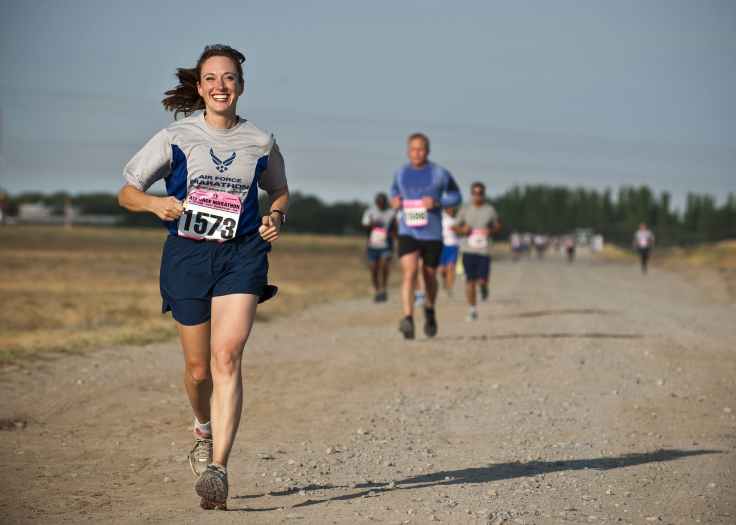
May we do the same today, through Christ, who gives us strength. I may not be able to gather with friends, but I have the blessing of being able to call, or e-mail, or IM, or send encouragement. I can still write this blog. I can still pray– in fact I have more time to do so! I can do “all things” that will fulfill my purpose and bring honor to God. And so can you. What a privilege–no matter where we are or what our circumstances!

Photo by Porapak Apichodilok on Pexels.com

My Cup Runneth Over

“Are you the type of person who sees the glass half-full, or half-empty?” Amateur psychologists like to ask questions like this, to determine if others are optimists or pessimists. But what happens when you realize your cup or glass is really full to overflowing?!

Photo by Bran Sodre on Pexels.com

Often, we look at our lives and circumstances with a pessimistic attitude. “I’m stuck at home during the pandemic– I can’t be with my friends, I can’t visit the gym, I can’t go to work..” We think of our “full” lives just weeks ago, and we miss all the things we took for granted– even the things we were complaining about before! And we worry and panic about tomorrow, or next week, or later today! But this is not God’s view. All that we are “missing” right now, God knows. He knows what we need, what we want, and what is best for us to have (or not have) during these days. Even if we are suffering from COVID-19, or waiting and praying for a loved one who is isolated and struggling, God knows. He listens for every breath– even the labored ones; He knows all that has come before this moment, and all that will happen in the next. If our glass is truly half-empty, we need only ask, and God will give us wisdom, patience, strength, and whatever He knows we need for the next breath; the next step.

Photo by Bia Sousa on Pexels.com

Sometimes, we carry an overly optimistic mindset–taking pride in our half-full glass, and not allowing God to finish filling it. We sit safe in our houses, confident that we will survive any threat and defeat any enemy, especially a tiny virus. We don’t need God’s help; His abundance of wisdom and grace. We’ve got everything covered with our half-full arrogance. But this is also not God’s view. God doesn’t want to fill our cup so that we can be smug and self-satisfied. God wants to fill us to overflowing, so that we can bless others, and see the incredible riches of His mercy and love! Some people look like they are “half-empty” from the outside– they are poor, or tired, or weak– but they are overflowing with God’s love; gushing with grace, lavish with love, exuding excitement, and overflowing with joy. Meanwhile, the optimist who is smug and self-serving, may seal up her “half-full” glass, refusing to share her hope and joy with others who need it.

Photo by Andrea Piacquadio on Pexels.com

God is never stingy with His riches. Paul reminds us that God’s Grace is sufficient https://www.biblegateway.com/passage/?search=2+Corinthians+12%3A6-10&version=NIV, that God can meet all our needs out of His abundance https://www.biblegateway.com/passage/?search=Philippians+4%3A19&version=NIV, and that God is able to do more than we can possibly imagine https://www.biblegateway.com/passage/?search=Ephesians+3%3A20-21&version=KJV; the Apostle James writes that every good and perfect gift is from above https://www.biblegateway.com/passage/?search=James+1%3A17&version=ESV . However, we must be open to accept them, and open to share them with those around us! This is especially true when God’s riches may be hidden by clouds of doubt, worry, and fear.

Photo by Alin Luna on Pexels.com

So today, I need to see, not whether my cup is half-full or half-empty of energy, or money, or health– I need to see where my cup is overflowing with God’s Grace, His Peace, and His Love!

Blog at WordPress.com.

Up ↑