St. Francis Visits a Contemporary University…

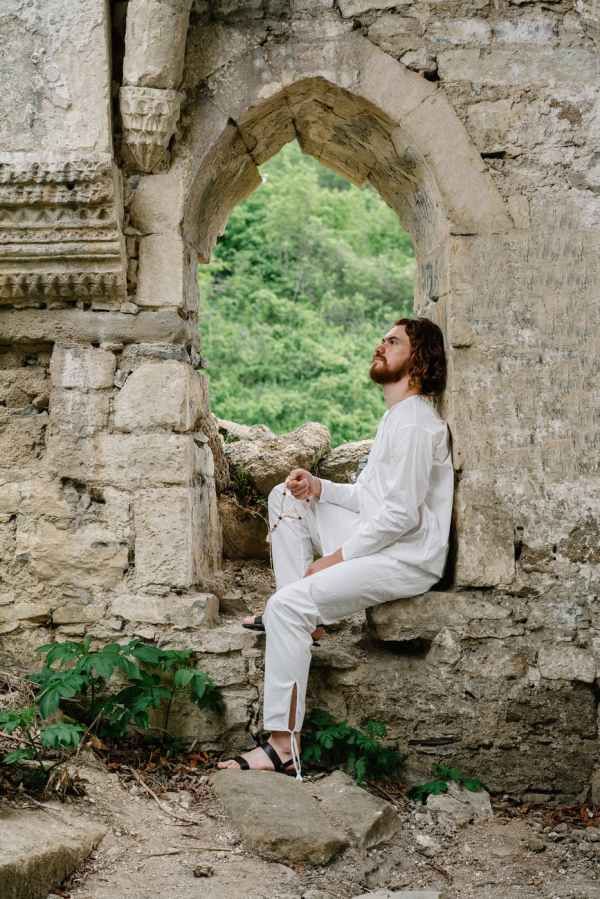
St. Francis was allowed to visit a 21st century university, which housed a chapel bearing his name. He was both honored and confused by the opportunity. Walking about the campus, he was amazed at the number and variety of students rushing to and fro; they were not looking at the grounds or the sidewalks or at each other– they were focused on their devices. It was a noisy campus, full of the sounds of buses and other traffic, music and podcasts playing, people arguing… Finally, St. Francis arrived at “his” chapel. It was a beautiful building, quiet and simple in its design. It was empty, except for a single student, saying her prayers. At the entrance, there was a plaque with a well-known prayer:

Photo by Keira Burton on Pexels.com

Lord, make me an instrument of Your peace; 
Where there is hatred, let me sow love; 
Where there is injury, pardon; 
Where there is doubt, faith; 
Where there is despair, hope; 
Where there is darkness, light; 
And where there is sadness, joy. 

O Divine Master,
Grant that I may not so much seek
To be consoled as to console; 
To be understood, as to understand; 
To be loved, as to love; 
For it is in giving that we receive, 
It is in pardoning that we are pardoned, 
And it is in dying that we are born to Eternal Life. 
Amen.

Photo by MART PRODUCTION on Pexels.com

Francis took a seat, absorbing the peaceful stillness, yet wondering at his assignment. Why had he been sent here? Why this moment in time? Taking his cue from the student, he also spent some time in prayer. Then he walked back outside.

He was struck again by the students– they were everywhere, but they were isolated. No one noticed him or stopped to speak. He tried to talk to someone–anyone–but they were all busy and not inclined to pause or interact. He noticed a coffee house across the street. Carefully avoiding speeding buses and weaving bikes, he crossed and entered the shop. It was a little quieter than the commons, but most of the customers were sipping their drinks and staring at screens–personal devices or the huge screen above the counter, streaming the latest news. War, scandal, protests, mud-slinging politicians, all made their appearance, only to be replaced by a commercial break and the next headline. No one stopped in horror at the litany of injustice, death, greed, or duplicity. They simply sipped their lattes and went back to scrolling through their Instagram accounts.

Photo by Valeri Mak on Pexels.com

The door opened to admit the student he had seen earlier in the chapel. She glanced up at the big screen, shook her head, and ordered a coffee. She found a table, and sat down. The coffee house was busy; it was the last empty table. She smiled as another student came in. She invited the other student to sit with her. She started a conversation. At first, the other student was jumpy and disinclined to talk. But soon, the two students were chatting. The sound of it attracted attention. Some customers were bothered by the new noise; others were intrigued by the sound of real conversation– even laughter! Two other students brought their chairs and drinks over and joined the conversation. They spoke of missing their families, of struggling with certain classes, and enjoying others. They spoke of future plans, and the obstacles that stood in the way. They spoke of fears for the future, as well. Francis noticed that one student listened from a distance, but did not join the others. He seemed weary and despondent. Francis walked over and asked if he could just sit at his table for awhile. The young man was startled, but said, “Suit yourself.”

Photo by cottonbro on Pexels.com

Francis sat in silence, his head bowed. Finally, the young man spoke quietly. “I saw you watching that girl. Just a word of warning– she’s a nut job. She comes in here about once a week, talking nonsense. She’s not even a student here.”

“And yet, I saw you were also watching her. She intrigues you.”

“I don’t know how she does it. She comes in here, talking about love and joy and faith, and people listen to her. They eat that stuff up. Don’t they know it’s all garbage? Look at the news! But she comes in, all smiling and happy– she’s crazy.”

“But she still intrigues you. Could it be that she is at peace, and you are not?”

“Peace?! Peace is nothing but an illusion. Power is what counts. Action. Look at her– she’s not doing anything to make the world better, and yet she acts like she’s got all the answers. It’s sickening!”

“Why do you keep watching her?”

“I don’t even know. She’s so stupid. She’s all wrong, and she acts like everything is fine.”

“Have you spoken to her? How do you know what she thinks and feels?”

“I’ve told you. She’s crazy. I don’t want to talk to someone like that.”

“Are you afraid?”

“Afraid of what?”

“That she’s not as crazy as you think. That she might laugh at your thoughts, the way you laugh at hers. That she won’t talk to you, like she talks to the others… Maybe you’re afraid of what you would say.”

“What do you mean?”

“What would you say to her if she spoke to you? Would you listen, or would you argue? Would you wipe the smile off her face and take away her joy and faith? Would you make the world a better place by winning your argument with her?”

Photo by ZHANNA TIKHONOVA Tt on Pexels.com

The young man was at a loss for words. He suddenly noticed that other conversation had stopped. People were looking at him– even the young woman he had been talking about. His face turned red, and he jumped out of his seat and dashed out of the coffee house. The group dispersed, and Francis was left alone with the young woman.

“He may be right, you know,” she said with a wry smile. I don’t think I do enough to make the world a better place. I just sit and talk with people, and listen, and pray. It’s not much. Not enough to make a real difference.”

Photo by SHVETS production on Pexels.com

Francis put a hand on her shoulder and shook his head. “It is enough in God’s economy to be available. To be humble and willing and faithful. Keep up the good work. And may God bless you.”

Be Careful What You Pray For…

When I was a young woman, I prayed for patience. Several well-meaning friends and family tried to tell me that this was a mistake. “Be careful what you pray for,” they said. It was their belief that, if I prayed for patience, God would send situations into my life that would force me to be patient. God doesn’t “give” patience, they warned–He merely teaches us to be patient.

Photo by Anna Shvets on Pexels.com

I wanted more patience, in preparation for marriage and children; I wanted to be a patient wife and mother. But I was unprepared for this reaction of others. DON’T ask God for something good? Isn’t patience (long-suffering) one of the attributes listed as the “Fruit of the Spirit?”(Galatians 5:23-24) Why should I hesitate, or fear to ask God for something that will help me serve Him better?

Looking back, I suppose some of those same friends and family might say, “I told you so!” I’m sure they wanted a happy and easy future for me– one that didn’t include some of the challenges that I have had to face. And in their eyes, I was “tempting fate” to draw attention to my lack of patience. On the surface, it probably looks like that’s exactly what happened. I never had any children; I didn’t marry until I was in my mid-40s, and I have learned patience in many areas through many challenges.

Photo by Liza Summer on Pexels.com

But that’s just one perspective. What if I hadn’t prayed that prayer? Would God have let me drift through life without “needing” more patience? Would I have “avoided” the years of loneliness and lack of children? Would I have married and had a family and lived happily ever after without having to learn patience? Would my life have been totally different? Or would my circumstances have been the same, except that I never would have learned patience–never sought to become more patient during the same trials and challenges? What kind of life might I have had WITHOUT patience?

Photo by Liza Summer on Pexels.com

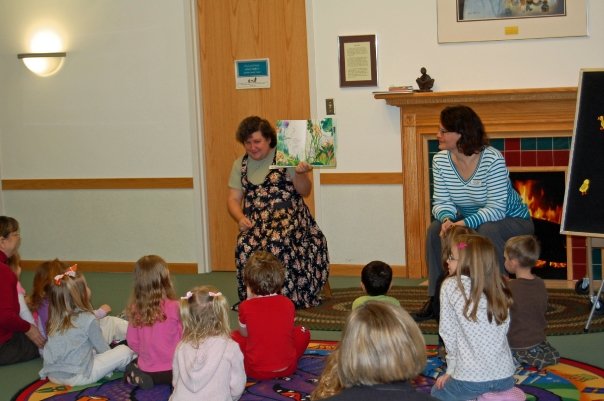
During the years that I was single, I worked full-time in youth-oriented jobs– teaching and serving in the youth department at a library. I learned patience by disciplining teenagers, cleaning up after toddlers, answering the same questions twenty times a day, and dealing with obstinate parents! I suffered with my students when one of their classmates died; and when it happened again the next year. I agonized with my student who chose to keep her baby after those close to her wanted her to have an abortion. And I rejoiced with her when she brought her son to visit me a year later. I suffered the frustration of parents whose children were rebellious, or had learning issues, or had been diagnosed with autism or ADHD. But I also endured the long nights when I had no little ones to tuck in or talk to (and learned to be thankful for the nights I didn’t have to deal with fever and sickness, or arguing–again– about the rules of the house!) But in the course of my work, I connected with hundreds of children and teens. They were never “mine” to hold or scold or say, “I love you”, but they touched my life, and I hope that I touched theirs as well. I didn’t choose my career path knowing that I would never become a “mom.” But I needed (and learned) patience in the process. I learned patience in the years I spent single–and I learned to appreciate my husband in ways I wouldn’t have as a young woman.

Story hour at the library c. 2009.

There IS some truth to the phrase, “Be careful what you pray for.” When we pray, we should pray for things that align with His will– like wisdom, patience, courage, or peace. We should not pray for things that contradict His will– instant popularity, wealth without work, or relationships or circumstances that dishonor Him. We should also be prepared for God to answer in the way He deems best–which may not look or feel like what we desired. It was His best for me not to marry young or have children of my own. He has since blessed me with a wonderful husband and step-children and grandchildren. But He might have chosen not to. And I would still thank Him for the life I have led. It’s been fantastic. I’ve met amazing people, had amazing opportunities, and traveled to wonderful places. I don’t feel like God ever “punished” me for asking for patience– instead, I feel that He has more than answered my prayer. That doesn’t mean that I have learned to be perfectly patient in every situation (just ask my husband!) But God is eternally good and faithful to give us what is in our best interest– if we ask, AND if we trust His answer more than our expectation. (see Hebrews 11:6; John 17; 1 Peter 5:7)

Photo by Tima Miroshnichenko on Pexels.com

Don’t be too afraid or too proud to ask God for any good thing. God will not only give you what you need, He will be with you every step of the way as you learn and grow, and develop into the person He wants you to be!

Always Remember, Pray, Give Thanks

The Apostle Paul is consistent in opening most of his letters with a phrase that uses the same four key words– Always, Remember, Prayers, and Thank. The order of the words may change, but the idea stays the same. Paul is always remembering others, always praying for them, and always thankful to God for them.

Photo by John-Mark Smith on Pexels.com

Paul uses similar phrasing whether addressing individuals, like Timothy or Philemon, or church groups, like the Ephesians or Philippians. But the message is always very personal. He is not saying a general “Thank You” to God for people “like” Philemon, or “like” the church in Ephesus. He is remembering shared burdens, shared laughter, shared experiences, and thanking God for those deeply held memories. He is lifting up individual burdens, such as the on-going disagreement between Euodia and Syntyche in Philippi (Philippians 4:2), or Timothy’s stomach problems (1 Timothy 5:23).

Photo by RF._.studio on Pexels.com

It is easy, and costs nothing, to pray generic prayers for a large, faceless mass of strangers. It is easy to love humanity from afar. It is another thing to enter into another person’s “messiness” and “bear one another’s burdens” (Galatians 6:2); to remember struggles and sacrifices made on behalf of others (or to remember being the one in great need of another’s sacrifices). Life– abundant, vibrant, and glorious–calls us to get involved. Not just from the sidelines, not just when it’s convenient, but “always.”

Photo by Helena Lopes on Pexels.com

Prayer calls us to be involved. That doesn’t mean we can’t pray “general” prayers– for peace in foreign lands, or and end to drought or hunger, etc. But we must not neglect “wrestling” prayers–prayers for our unsaved loved ones, prayers for persecuted believers (whether next door or around the world), prayers for our community workers, and prayers for those who are in need. Nor should we neglect prayers of remembrance and thanksgiving for those who have come into our lives. Finally, we need to be willing to let individuals KNOW that they are being remembered, prayed for, and appreciated.

Photo by Design Killer on Pexels.com

One of the greatest blessings I know is remembering all the special people who have crossed paths, shared the journey, and borne shared burdens with me, and knowing that each person, each memory, each moment, is eternally and infinitely precious to God! What a privilege it is to share good times and even “battle scars” with so many amazing, unique, beloved people! What a privilege to lift them up before the throne of grace!

Prayer and Pizza-making

Maybe it’s just because I was hungry, but I started thinking about making a pizza from scratch, and how it can be like praying…I know it’s kind of a stretch, but stay with me..

Photo by Daria Shevtsova on Pexels.com

  • Faith/Crust–every pizza has to have a solid crust–and making crust from scratch usually involves stretching and pulling, flattening and forming it to make a round(ish) base for the toppings. Prayers rely on a solid foundation of faith. Even if it is a “thin” crust, faith is what gives us the confidence to approach God with our thoughts and thanks, our confessions and our concerns. Our faith is often stretched and pounded by circumstances, and it gets strengthened in the fires as God refines us.
Photo by Athena on Pexels.com
  • Salvation/Sauce– right there with the crust comes a sauce. It is usually red (tomato-based) or white (cream-based). I am reminded that our faith, and our ability to approach God freely is “covered” by the shed blood of Jesus Christ. Our sins, though scarlet, are made white as snow. Whatever weaknesses we have– even our small or weak faith, are “covered”– God pours and spreads His grace and salvation over us. Jesus advocates for us every time we pray.
Photo by Pixabay on Pexels.com
  • Content of our Prayers/Toppings–pizzas come in all types of varieties. I’ve had pizzas with goat cheese, tomatoes, onions, shrimp, smoked sausage, carrots, blueberries, ham, scrambled eggs, spinach, olives, gravy, cornmeal, mushrooms, grilled chicken, dried beef, taco meat, cocktail sauce…just not all on the same pizza! My point is that our prayers are as unique and individual as we are. Some of us pray “single topping” prayers– raising a special concern that God has laid on our heart– all day long, or for days or years on end. Some of us pray “scattershot” prayers– a little of this and a little of that as things come to mind. Some of us pray “house favorite” prayers– we follow a formula or a pattern in many of our prayers. But each prayer gives off a delicious aroma– each one has a unique combination of flavors, textures, and pleasing smells as they are offered up to the Father.
    And we prepare our toppings/our individual prayers…our thoughts may be chopped up, diced, sliced, and spread around. They may get layered and mixed up and melded.
Photo by Italo Melo on Pexels.com
  • Meditation/Baking– I’ve had fruit and vegetable pizzas that are served “uncooked” (except usually the crust has been pre-baked), but most pizzas have to go in the oven before they can be eaten. Some prayers are spoken in public or “in the moment,” but God wants to spend some time alone with us– even if it is in a “hot” oven for just a few minutes! Taking time to immerse ourselves in God’s presence not only refreshes us, it gives us time and space and openness to hear God’s voice; to catch a glimpse of His vision for our day; to close our eyes and ears to distractions and false promises, guilt and self-justification.
Photo by Pixabay on Pexels.com
  • Reading/Recipe–great pizzas don’t just happen by trial and error. Even though I love to experiment with different toppings and different seasonings–even different crust variations–if I don’t follow a recipe, I can ruin an otherwise great pizza. If we’re not reading the Bible regularly, we can begin to fall into bad prayer habits– selfish or prideful prayers, praying in the wrong spirit (bitterness or anger), even praying in ways that don’t recognize God for who He is.
Photo by Buenosia Carol on Pexels.com
  • Serving/Serving! Pizzas are not meant to be created and left to sit and grow cold or moldy. Prayers offered up without obedience and active service don’t nourish anyone. Prayer should nourish our souls– we should be strengthened, changed, and experience growth. And God is gracious. Even if our prayer life has grown “cold”– well, cold pizza is still really good!
Photo by Narda Yescas on Pexels.com

So build a great pizza/prayer today (and throughout the day). “Taste and see that the Lord is Good” (Psalm 34:8)! Come back tomorrow and repeat!

Mama Said There Would Be Days Like This..

Yesterday was a roller-coaster ride–pain, annoying interruptions, difficult encounters, successful ventures, bad moods, beautiful skies. And I almost forgot to write this post. It was just one of “those” days.

I am comforted by three things, though:

God’s love is never a roller-coaster. It is steady, eternal, and extravagant. Even on days when I can’t feel it or turn my back on it, God’s love surrounds me. No matter what the circumstances; no matter what I’ve done or what’s been done to me, God’s love never changes– it never falters, it never diminishes. He loves me just as much as he would on a perfect day; just as much as He has on my “better” days. God’s love is not based on what kind of day I might be having. It is based on WHO HE IS!

Photo by Francesco Paggiaro on Pexels.com

Jesus had days like this, too– he KNOWS what I’m going through. He knew pain, frustration, misunderstandings, betrayal, loneliness, grief, joy, struggle, success, and even “failure” (at least in the eyes of those around him). Some days, it feels like no one understands; that no one wants to listen. Jesus was a great listener during his time here; better than any of his friends or family. And when no one wanted to listen to Jesus, he simply found time to get away and talk with the Father. What a great example for us to follow. Better yet, Jesus is always on call to listen and advocate FOR us to the Father. And the Holy Spirit gets involved, too, helping us find words and expressions when we pray. God made us. He understands our weaknesses. He doesn’t condemn– He stands ready to help!

Photo by Matheus Bertelli on Pexels.com

God is Alpha and Omega. He is eternal, and He is God of the Past, Present, and Future. Today may be an awful day– or a wonderful day. Tomorrow is a mystery to us. Yesterday tends to haunt us. But God is present in all three times at once. Nothing takes Him by surprise or causes Him to wallow in worry or regret. And that should give us courage to live in the present (even if it seems chaotic or frustrating), knowing that God’s plans and timing are for our Good. Even if we “mess up” in the present, God has the power to redeem and renew our future– if we let Him.

Photo by Andrea Piacquadio on Pexels.com

My wise Mama told me there would be days like this–she knows from experience. And she also knows all the ways God is ever-present and ever-ready to give wisdom, courage, and comfort. Today, I want to pass along a little of that wisdom– just like she passed it on to me. I hope your day is not the kind of roller-coaster I had yesterday. But even if it is: God Loves you, He knows what you’re going through, and He is eternally present and powerful to give you all that you need to get through.

Photo by Jonas Ferlin on Pexels.com

El-Roi–The God Who Sees…

Do you ever feel invisible? One of the common complaints among depressed people is that they feel as if no one sees them. “No one would notice if I just disappeared..” “No one really notices me…I just fade into the background.” “I always get passed over; pushed aside; ignored…” “Everyone just seems to look right through me. It’s like I don’t even exist.”

Photo by Engin Akyurt on Pexels.com

In a world of 7.8 billion people, https://en.wikipedia.org/wiki/World_population#:~:text=In%20demographics%2C%20the%20world%20population,more%20to%20reach%207%20billion. it’s easy to see why someone might be tempted to feel that way. But it isn’t true. No one exists in a vacuum. Even when it feels like we are being ignored or dismissed or forgotten, someone is always watching.

Photo by Mike Chai on Pexels.com

Hundreds of years ago, Hagar, the slave girl of Abraham’s wife, Sarah, believed herself to be abandoned and alone. She had been used by her mistress as a pawn in a scheme to give Abraham a son. Hagar was able to do what Sarah could not (get pregnant by Abraham), and she let it go to her head. But she was still a slave. When Sarah complained to her husband, Abraham reminded her that she still had power over Hagar. Sarah used that power to mistreat Hagar, causing her to run away into the wilderness. But God was watching. The “angel of the Lord” not only saw Hagar– he found her beside a spring and called out to her by name. He asked why she was in the wilderness, and then gave her a promise– that her descendants would become too numerous to count! In response, she gave God a name– El-Roi– “the god who sees me.”

Photo by Pixabay on Pexels.com

The Bible is filled with stories of people–sometimes warriors and kings, but often ordinary, even lowly, people: slaves, younger siblings, nameless servants–who are seen and chosen by God for His Glory, to play a special role in history. God sees them all; He knows them all by name (even if their names are not recorded in the Bible!) He knows each person’s strengths and weaknesses; He knows everyone who will cross their path, how their story began, and how their story will end.

Photo by Ivandrei Pretorius on Pexels.com

We can take great comfort in knowing that God sees us. There is nothing hidden from Him– when we are slighted or mistreated; when we are the ones wronging others…He knows our thoughts and emotions. He knows our strengths and weaknesses (better than we know ourselves!) He understands– even when we don’t–what’s happening in and around us. God sees us exactly as we are– and He already knows all that we can become! Hagar could see that she was a pawn. She could see herself giving Abraham a child when Sarah had not. But God didn’t see her as “just” a slave girl or “just” a pregnant woman. He saw her her as a young woman in distress; as a woman with unique hopes and dreams, aches and disappointments; and as the ancestress of millions upon millions of people– unique people, each one loved and seen and known intimately by their creator. He saw her as someone worthy of being found and called and reassured. And even though God sent her back into a difficult situation, He kept His eyes on her, and came to her rescue again years later.

Photo by Pixabay on Pexels.com

On days when you feel invisible, or forgotten– when it seems that no one would notice your absence– remember Hagar’s experience with El-Roi– “The God who Sees.”

When God Gives You Lemons…

There is a saying–“If life gives you lemons, make lemonade!” In other words, if your life circumstances are “sour,” you should look for ways to make your circumstances into something sweeter.

Often, it seems like God gives us lemons–even when we pray and do what we know is “right,” it seems like our circumstances get no better. In fact, sometimes, they get annoyingly, frustratingly worse. But God does not abandon us; He doesn’t sit back and laugh at our frustration, or leave us to flounder in chaos with no hope. Sometimes, our circumstances are opportunities for God to make lemonade.

Photo by Pixabay on Pexels.com

When God rescued Israel from slavery in Egypt, He did not lead them directly to the Promised Land. Instead, He led them through the wilderness and to the shores of the Red Sea. There, they were trapped by the Egyptian army, complete with horses and chariots and trained warriors. But God’s plans were bigger than the armies of Egypt, and bigger than the sea. God made a path of escape through the sea, and used the very same sea to drown the enemy!

Photo by Polina Zimmerman on Pexels.com

What a miracle! But it wasn’t long before the people began complaining about “lemons” from God–the complained about the food, the journey, the scenery, and their leader, Moses. Even when God did many more miracles– bread from Heaven, meat from the sky, water from the rock, divine intervention in battles– the Israelites were still complaining about all the “lemons” in their life, and longing to go back to Egypt and slavery!

Photo by Juan Pablo Serrano Arenas on Pexels.com

There are seasons in life when it seems like God is giving us lemons–a job loss, an unexpected illness, a wayward daughter, a house fire, civil unrest… Struggles and pain will come into our lives; we should not pretend otherwise, or seek to deny them when they come. And God does not expect us to “make lemonade” all on our own. But He may allow us to be squeezed a bit; He may send the lemons today, and sugar next Monday. He may not give us a fancy carafe and cute little teacups. But He will give us all we need to make lemonade if we are prepared for the task. And usually, He will give us more than enough to set up a lemonade stand and serve others!

Photo by PhotoMIX Company on Pexels.com

Several years ago (2005), I had the opportunity to visit a settlement of Haitian refugees in the Dominican Republic. Multiple mission groups had banded together to provide basic needs– shelter, basic medical services, toilets and showers, etc. Service teams from Canada and the U.S. had come in to build two-room houses and set up a small clinic and school. Donations had come in– clothing, bedding, toothbrushes… Thousands of Haitians had been displaced after a bad hurricane season and massive flooding, and this refugee camp was home to nearly 150 families. Even with the donations, there were shortages– there was running water, but it wasn’t potable. There was rice, but few vegetables and very little meat. Aspirin and antibiotics were rationed, and most of the children were thin, and sad, half-clothed in rags and bare-foot.

Photo by Tamba Budiarsana on Pexels.com

In the midst of all this, there was a miraculous donation– of flip-flops! Literally thousands of pairs of flip-flops–brand new overruns: different sizes, but all the same colors and style–more than enough for every person to have a pair. God had given the people of this settlement a LOT of lemons. Shoes were well and good, but the people needed water… The shoes were distributed– there were even a few left over. But about a week later, it was observed that most of the people were still walking around bare-footed. What had happened to the donated flip-flops? Were the people ungrateful? Were they too proud to use the new shoes? Too fearful?

Photo by Leonardo Rossatti on Pexels.com

Not at all! These amazing people trusted that God could help them turn lemons into lemonade. They loaded the flip-flops into large bags, carried them (bare-footed) on their backs into town (the nearest town was nearly 10 miles away, but it was on the coast and attracted many tourists), pooled what little money they had to rent a booth at the beach, and SOLD the flip-flops. The money they made from the sale of the flip-flops purchased five-gallon jugs of drinking water. The jugs were carried back from town and shared among the members of this growing community. As they continued to sell the donated flip-flops, they purchased other small items– packets of laundry detergent, fly swatters, plastic dishes and cups–and established a small colmado (local store) within their own community. When I was able to visit again a couple of years later, the refugee camp was a thriving community– many of the houses had been painted, and had gardens and picket fences, on which clothes were drying in the sun. And while some children were still running in bare feet, many others had shoes. Some of the shoes were ragged and some were mismatched, but the children were happy and healthy. In the middle of the community, there was a beautiful church. Inside, there was a woman sweeping and singing songs of praise.

I share this story because it both encourages me and shames me. In this season of “lemons”– COVID-19 and violent unrest in my country– I have a choice. I can complain like the children of Israel. I can pray for God to take away the lemons; I can beg for Him to send me lemonade. Or I can look around for opportunities to use what He has provided– graciously provided– and sing His praises as I make lemonade.

Photo by Luis Quintero on Pexels.com

God, grant me the eyes to see your provision amid whatever challenges I face today. THANK YOU for the lemons you have given me today, and, when I am squeezed, help me to become a sweet and refreshing reminder to others of YOUR Grace and Joy.

Peace Like a River…

When peace, like a river, attendeth my way,
When sorrows like sea-billows roll;
Whatever my lot, Thou hast taught me to say,
It is well, it is well with my Soul.
(It Is Well with My Soul–Horatio Spafford)

…He leadeth me beside the still waters. He restoreth my Soul–Psalm 23:2b-3a)

Photo by Pixabay on Pexels.com

When Horatio Spafford wrote the poem that later became this famous hymn, he was not writing from a place of peaceful circumstances. He had suffered a series of financial and heartbreaking personal losses (https://www.christianity.com/church/church-history/timeline/1801-1900/horatio-spafford-it-is-well-with-my-soul-11633070.html). He knew very well that our lives will be blessed by pleasant and peaceful times, and tossed about during storms and waves of loss and despair. But through it all, God’s presence is the source of our strength and hope.

Photo by Collis on Pexels.com

Our Shepherd leads us where we need to go. He gives us everything we need. But He doesn’t give us only ease and pleasure and rest. Such a life leads to complacency, apathy, and spiritual atrophy. He makes me to lie down in green pastures; He leads me beside the still waters– He restores my soul. Even though these thoughts come in two separate verses, I think there is a close link between the phrases. We need rest; we need restoration. And we find it when we are drinking deeply from the “still waters”– cool and clear and life-giving waters–the “living water” that only Jesus provides. We are often attracted to swift water– white water rafting, ocean surfing, waterfalls, sailing, etc. Moving water is exciting and full of energy. But it can be overwhelming to fight against the current or the power of falling, churning, running, or raging water. Without being anchored to something stronger than the waves; without help to overcome the pull of the current or a way to get to shore safely– we would be lost.

Photo by Guy Kawasaki on Pexels.com

Storms and tides will be a part of our life– there will be dangers, and toils, loss, and unexpected heartaches. Sometimes, they come from our own foolish choices; often, they come because we live in a broken and fallen world filled with diseases and disasters beyond our control. God doesn’t lead us into storms just to leave us there, flailing and treading water with no end in sight. His goal is to lead us to the still waters and to restore our souls. The same river that contains white water will reach a peaceful valley, where it will run deep and wide and slow– perfect for restoring our souls and reviving our hearts.

Photo by Kaique Rocha on Pexels.com

It is a comforting thought that God, our Shepherd, will lead us beside still waters. But that is not always our lot. God’s promise is not that we will always have quiet, calm waters in life. God’s promise is that He will lead us safely through even the raging storm– and that His presence will provide a peace that defies our temporary surroundings and our trying circumstances.

I Shall Not Want..

Of all the 150 Psalms in the Bible, Psalm 23 is the most well-known. It speaks of our Lord as a Shepherd who takes care of us, leading us to green pastures and calming our fears even in the valley of the shadow of death. But these four words in the very first verse, though comforting to many, have also been a source of grief to others. If the Lord is my Shepherd, I should have no reason to want. But what if I still have wants? Unanswered prayers? Struggles and trials and lacks?

Photo by Ken Ozuna on Pexels.com

Let’s look at the phrase carefully. “I shall not want” is the wording in the King James (English) version of scripture. More modern translations render the phrase as “I lack nothing (NIV),” “I have what I need (CSB),” or other variations of “I shall not want.” Let’s stick with “I shall not want,” and look at it word by word.

This Psalm is very personal. The Lord is MY Shepherd– I shall not want. This is between me and my Shepherd. I may be tempted to look around and compare, to want what someone else has, even if I don’t need it; even if it isn’t good for me. But when I depend on my Shepherd to provide, I can trust that whatever comes, He knows what I want and what I need. He knows what is best. Therefore, I shall not worry or wonder or want.

Photo by kailash kumar on Pexels.com

I am a former English teacher, so the verb “shall” interests me here. “Shall” and “will” are sometimes used interchangeably in English, but they are not exactly the same. “Shall” is not used much, but it indicates a future condition, or a condition that is ongoing into the future. It is not the active verb in this phrase, but rather the indicator of when that action (wanting, lacking, needing) will take place and how. The difference between “shall” and “will” in this case is not one of action, or time, but of volition. “Will” indicates a conscious decision– I “Will not want” means I will determine the action and outcome–without a Shepherd’s guidance or provision. I “Shall not want” means the outcome is determined by my Shepherd (in this case), not by my own volition or actions. There may be things I “will” still want– if I’m trying to go my own way and depend on my own wisdom and abilities, but that doesn’t change my condition–God has provided. God has given. God WILL continue to provide.

Photo by Jigar Maru on Pexels.com

“I shall NOT want”– I may desire something else; I may not have what others have; I may be poor or sick or sad. I may respond to my circumstances with grumbling, doubt, anger, envy, greed, or disbelief. But I can also respond with trust, gratitude, wonder and worship, knowing that God sees me, knows me, and cares for my always. God doesn’t force me to respond positively to hard times– the Psalmist doesn’t say, “The Lord is my Shepherd, I shall be grateful,” or “I shall never complain.” He doesn’t say, “The Lord is my Shepherd, I shall have whatever gives me pleasure or makes my life easier.” Rather, he gives us a true picture life– I will NOT have everything I wish for; I will NOT understand or take pleasure in all the circumstances of my life, but I shall NOT be abandoned, left alone and without help or resources, lacking any source of hope, joy, peace, or love.

Photo by Denniz Futalan on Pexels.com

Finally, we come to the word “want.” In this context, it is meant to signify lack– I shall lack for nothing; I shall not be without (God who provides). And this is where many people struggle with the verse; with the Psalm; with the Shepherd Himself. We DO lack– many things. We lack money to pay the bills, we lack in our relationships, we lack perfect health, we lack patience…the list is endless. We “want” for many things. And we read Psalm 23, and it seems to mock us. If God is our Shepherd, why do we lose loved ones to disease? Why do we have to declare bankruptcy? Why did our spouse file for divorce? Why can’t we break that bad habit or addiction? Why do we see “good” people suffering? Doesn’t God see or care? God doesn’t give us easy answers. He doesn’t promise ease and comfort in this fallen world. But He is with us, not matter where, no matter what, no matter how we got there. And He promises to renew, restore, and redeem all that we lack in the present– perfectly and forever after.

Photo by rawpixel.com on Pexels.com

I shall not WANT. I shall suffer in the present– loss, pain, confusion, heartbreak, disappointment, failure. But I am not without– not without God’s presence in this world, and not without His promise of justice, mercy, hope, and love now and in the world to come. I am still a sheep–I have needs, I make unwise decisions, and I don’t have the ability to see or defend against the dangers of this world. But I have a Shepherd– all-knowing, all-powerful, and extravagant in Love and Grace. I will depend on Him. I will call out to Him. I will follow Him. And I shall not want!
The Just and the Unjust

“God isn’t Fair!”  I hear this often from angry and bitter people who have suffered losses or disappointments in life.  Some of their losses are heavy and come with great pain– loss of a child, loss of a home, loss of health…these are legitimate losses, and there are no conclusive, comprehensive or comforting answers.  In fact, in many ways, God is NOT “fair”– as we usually define “fair.”  God sends life, health, happiness, sunshine and rain to both the “just” and the “unjust”; to both rich and poor, tall and short, ugly and good looking, gracious and annoying, kind and cruel…  Tragedy strikes at random, some are touched by it, others seem to be plagued by it, and still others skate through life unscathed.

God may not seem “fair”, but let’s look at it from another angle.  God sends rain and sunshine on the just and the unjust.  He sends gifts, and we use, abuse, accept, or reject them.  Circumstances and outcomes are not always pleasant, but does this mean they are “bad?”  And when they are easy, and comfortable, does this always make them “good?” Good people have to endure tragedy– this is usually what we focus on when we talk about God being “unfair.”  And we generally put ourselves in the “good” category.  Why should we have hardship and pain, while “bad” people seem to get a “pass?”    Shouldn’t bad things only happen to bad people, while good people enjoy only good things?  Sounds “fair”, doesn’t it?

But what happens when the world operates on that principle?  If “bad” people are the only ones who get sick, then they deserve to be sick– not healed.  If “bad” people are the only ones to experience poverty, then we don’t need to help the poor or the needy.  Good people should be rich and healthy.  But what if we are sometimes good, and sometimes selfish?  Do we deserve to keep all that’s good if we misuse it, or lose all that’s good if we go astray and then repent?  Is that fair?!  Where is the motivation to cure diseases, share resources, or enforce laws?  Who decides whether your “good” idea is “good” for everyone around you?  Who can ascend to heaven and tell God what is “fair?”

God created us in His image, and that means that we have a spirit that longs for justice and fairness.  It’s how we recognize evil and injustice.  But sin clouds our eyes, and poisons our world–pollution doesn’t just hurt the people who pollute; arson doesn’t just burn the arsonist; drunk drivers don’t just hurt themselves; and so on.  We don’t look at the evil or thoughtless or “unfair” things we have done or said that went unpunished or unnoticed.  And we discount all the unmerited blessings that have come our way– God is often “unfair” in our favor!  We don’t complain about that.

God is not the author of “unfairness”, though He allows it.  And, while I can’t explain away pain and suffering when they occur, I know two things:

God is Gracious– If God’s justice were not tempered by mercy, every mistake, every sin, would be unforgivable and eternally ours to bear.  Every random thoughtless action, and all its consequences, would weigh us down forever.

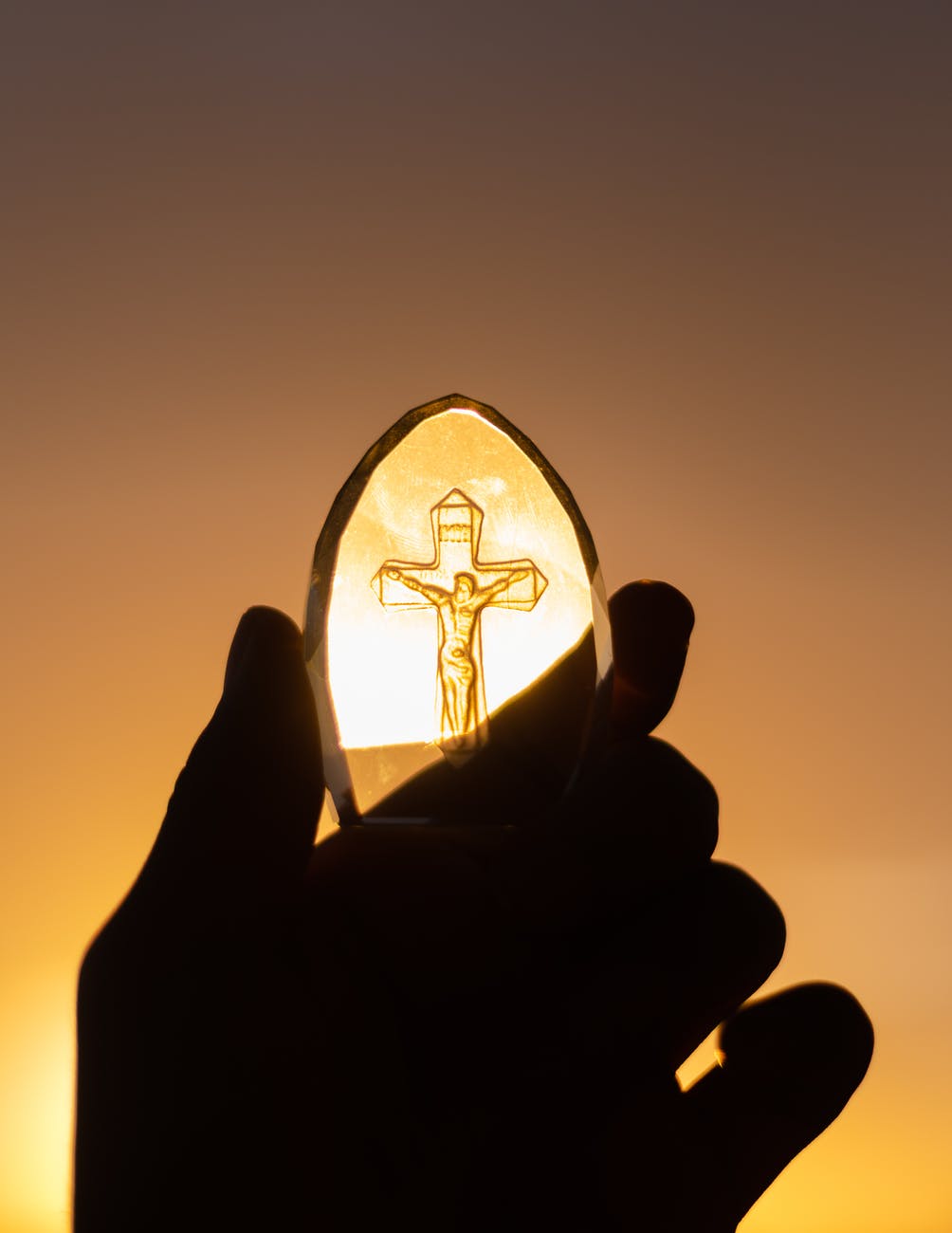
God is Just–Jesus’s death was about redemption and restoration– He didn’t just die to “save” you from hell– He died to restore you to the person and position for which you were created– whole, pure, unstained and uncorrupted.  This wasn’t “Plan B”– this was His eternal plan, and it includes perfect justice and perfect restoration.

cross jesus summit cross
Photo by Pixabay on Pexels.com

Knowing these things does not take away the pain of the present.  It does not make suffering easy; it does not erase the loss.  But it can allow us to take the next step, and the next, on our journey.  Rain or shine.


Blog at WordPress.com.

Up ↑