
Be Still and Know…

Psalm 46
For the director of music. Of the Sons of Korah. According to alamoth. A song.
God is our refuge and strength,
    an ever-present help in trouble.
Therefore we will not fear, though the earth give way
    and the mountains fall into the heart of the sea,
though its waters roar and foam
    and the mountains quake with their surging.
There is a river whose streams make glad the city of God,
    the holy place where the Most High dwells.
God is within her, she will not fall;
    God will help her at break of day.
Nations are in uproar, kingdoms fall;
    he lifts his voice, the earth melts.
The Lord Almighty is with us;
    the God of Jacob is our fortress.
Come and see what the Lord has done,
    the desolations he has brought on the earth.
He makes wars cease
    to the ends of the earth.
He breaks the bow and shatters the spear;
    he burns the shields with fire.
10 He says, “Be still, and know that I am God;
    I will be exalted among the nations,
    I will be exalted in the earth.”
11 The Lord Almighty is with us;
    the God of Jacob is our fortress.

When I am tempted to fret or worry, I like to read through Psalm 46. I love the way the psalmists use hyperbole to shrink fear and maximize faith– God is an “ever-present help”, we will not fear, “though the earth give way, and the mountains fall into the heart of the sea”, “He lifts his voice, the earth melts!” And I love that the phrase is repeated– “The Lord Almighty is with us; the God of Jacob is our fortress.”

There is so much to unpack in just 11 verses of psalm! But I want to stick to two that always stand out to me.

First, the phrase, “the God of Jacob.” God is the God of Abraham, Isaac, and Jacob. He is the God of Moses, the God of Israel, the God of David…His titles are many. But in this case, He is the God of Jacob. NOT the God of Israel– even though God changed His name. No, He is the God of Jacob– the “heel grabber,” the son who stole his brother’s blessing and tricked his brother out of his birthright– the same Jacob who fled his homeland and worked for twenty years for his duplicitous uncle Laban. This is not the God of the victorious, but the God of those who have had to learn the hard way. He is the God of the one who has acted unjustly, and the God of one who has been treated unjustly. He is the God of the one who wrestles and demands a blessing, the God of the second son, the disappointed husband, and the grieving father. THAT is the God who is with US when we are in trouble and feeling overwhelmed by our own past mistakes, or our own inadequacies, or our unfair circumstances.

Secondly, the phrase “be still and know that I am God.” This same God who wrestled with Jacob, who blessed him in dramatic fashion, was the God who was with him through all the long and lonely night watches as a shepherd. Jacob, with his two wives, their two servants, and all thirteen or more of his children (12 sons and at least one daughter, Dinah)–spent a lot of his time surrounded by noises, nagging, responsibilities, and discord. Yet he took time to ‘be still.” And, though it took many years, and often came “the hard way,” Jacob did learn to “know” his God. He learned to trust that God would protect him, guide him, and bless him– and the generations that would follow him!

I am so grateful for this Psalm to remind me of God’s everlasting presence, His power to save and protect, and His sufficiency for every circumstance in my life. I’m so glad that the “God of Jacob” is the same God who sees me, loves me, and rescues me. I’m humbled to know that I don’t have to be clever enough or brave enough, or “righteous” enough to earn God’s help. I’m glad that the Lord Almighty is always with me. (see Hebrews 13:5) However, I still struggle to “be still and know…” I want to know by doing; by studying and making things happen. But to know God– to really know Him– I have to be still, to wait in silence and anticipation, to trust in what I cannot see and cannot do in my own power. I have to know Him as the Almighty, Omnipotent, Sovereign God that He is, rather than a God of my own imagination or the God I hear about or read about from someone else.

What a mighty God! The God of Jacob is MY fortress! And in stillness, meditation, and trust, I can KNOW Him!

Chasing Epiphany

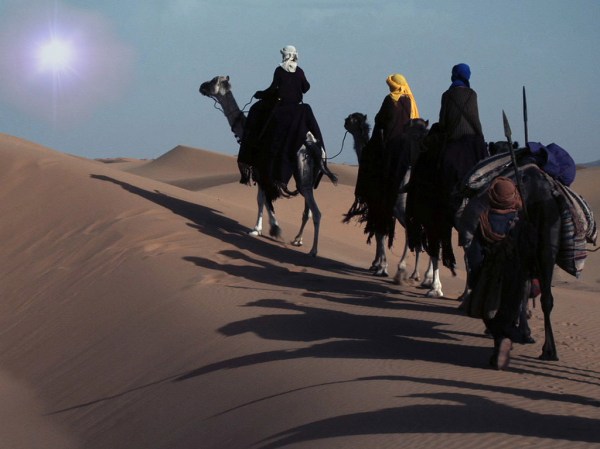
Today marks Epiphany– the day traditionally celebrating the arrival of the Magi to see the Baby Jesus. (Matthew 2:1-12) The Bible does not give us many details about the Wise Men. We don’t know if there were three or thirty. We don’t know if they all came from the same region, or if they came from many different nations and regions and met up along the journey. We only know that they had studied the skies; having seen a new and very bright star (or comet or conjunction of stars), they plotted its course across the sky and “followed” it to Israel– first to Jerusalem, and then to Bethlehem. They brought gifts fit for the king they expected to meet.

What a surprise it must have been for them to reach Jerusalem. After many days (weeks? months?) of travel, they arrived, only to be met with shock and confusion by the leaders and wise men of Israel. Hundreds of prophesies pointed to the birth of Messiah, yet the Jewish leaders were oblivious to His arrival, almost under their very noses! They were not ignorant of the prophesies– they “knew” that Messiah would be born in Bethlehem. Yet, they showed no interest in traveling with the other wise men to meet their own redeemer. Instead, they sent the foreigners to pay homage, while they plotted in Jerusalem to help Herod kill hundreds of innocent infants. These are the same priests, prophets, and wise men who had been studying, praying for, and waiting for the arrival of Messiah for hundreds of years. How could they have missed it?!

Photo by Andrea Piacquadio on Pexels.com

Epiphany is not just the name for this day of the Kings with their three gifts of Gold, Frankincense, and Myrrh– it is a word that tells of a sudden realization or understanding of the essence of a truth. But how often do we chase an epiphany–pray for answers, or memorize scripture–only to miss the point? How often are we focused on the pages of history, or our computer screens, only to miss the wondrous star in the sky? Are we, like the Jewish leaders of their age, missing the Epiphany?

God is ready to show us the miracle of His Mercy, the sufficiency of His Grace, and the depths of His great Love– are we chasing an Epiphany that is right under our noses? Let’s be ready to look up, to follow the star, and to be amazed!

Running the Race

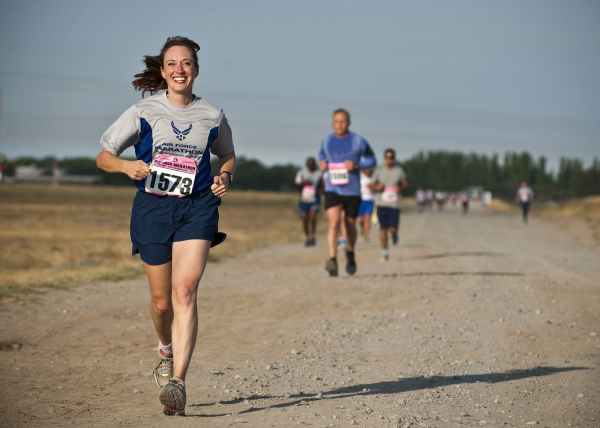
I am NOT a runner. If you ever see me running, I’ve either just encountered a snake, or there’s a wild animal chasing me. So I don’t know a lot about running a marathon, or even a 5-or 10-K race. Even in my daily life as a Christian, I prefer to use the term “Christian Walk!” But the Bible uses the imagery of a race to describe the Christian life. In our pursuit of Christ-likeness, including our pursuit of prayer, we need to think like a runner.

Photo by RUN 4 FFWPU on Pexels.com

For those of us who don’t run, this may pose a bit of a challenge, but the Bible gives us clear principles that provide good guidance.

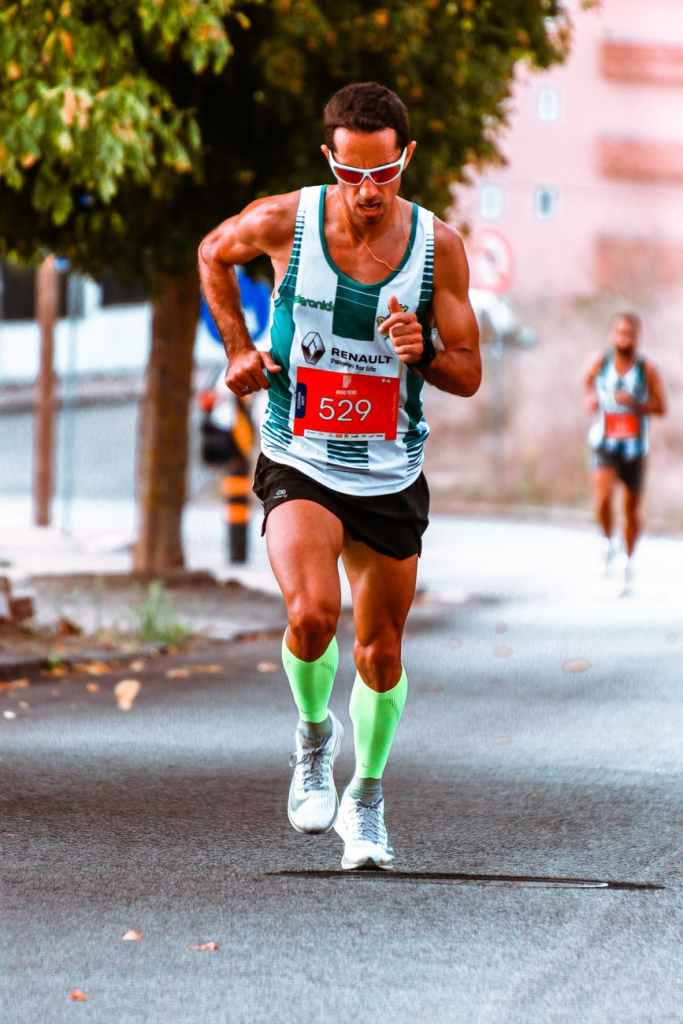
  • Keep moving forward: “12-14 I’m not saying that I have this all together, that I have it made. But I am well on my way, reaching out for Christ, who has so wondrously reached out for me. Friends, don’t get me wrong: By no means do I count myself an expert in all of this, but I’ve got my eye on the goal, where God is beckoning us onward—to Jesus. I’m off and running, and I’m not turning back.” (Philippians 3:12-14 The Message) Runners don’t worry about what is behind them. They are focused on the goal– reaching the finish line. We need to stop focusing on our past, or the anxieties about the road ahead, and keep our focus on the ultimate goal.
Photo by RUN 4 FFWPU on Pexels.com
  • Travel light/Get rid of the baggage: “Therefore, since we are surrounded by such a great cloud of witnesses, let us throw off everything that hinders and the sin that so easily entangles. And let us run with perseverance the race marked out for us..” (Hebrews 12:1 NIV) What is weighing me down, that I need to let go of, if I want to keep running with endurance? I wrote earlier this month about the expectations attached to the “model” woman in Proverbs 31. Expectations, guilt, unforgiveness, shame, wanting to please other people, even our own self-talk can weigh us down, slow us down, and wear us out. It’s time to let go!
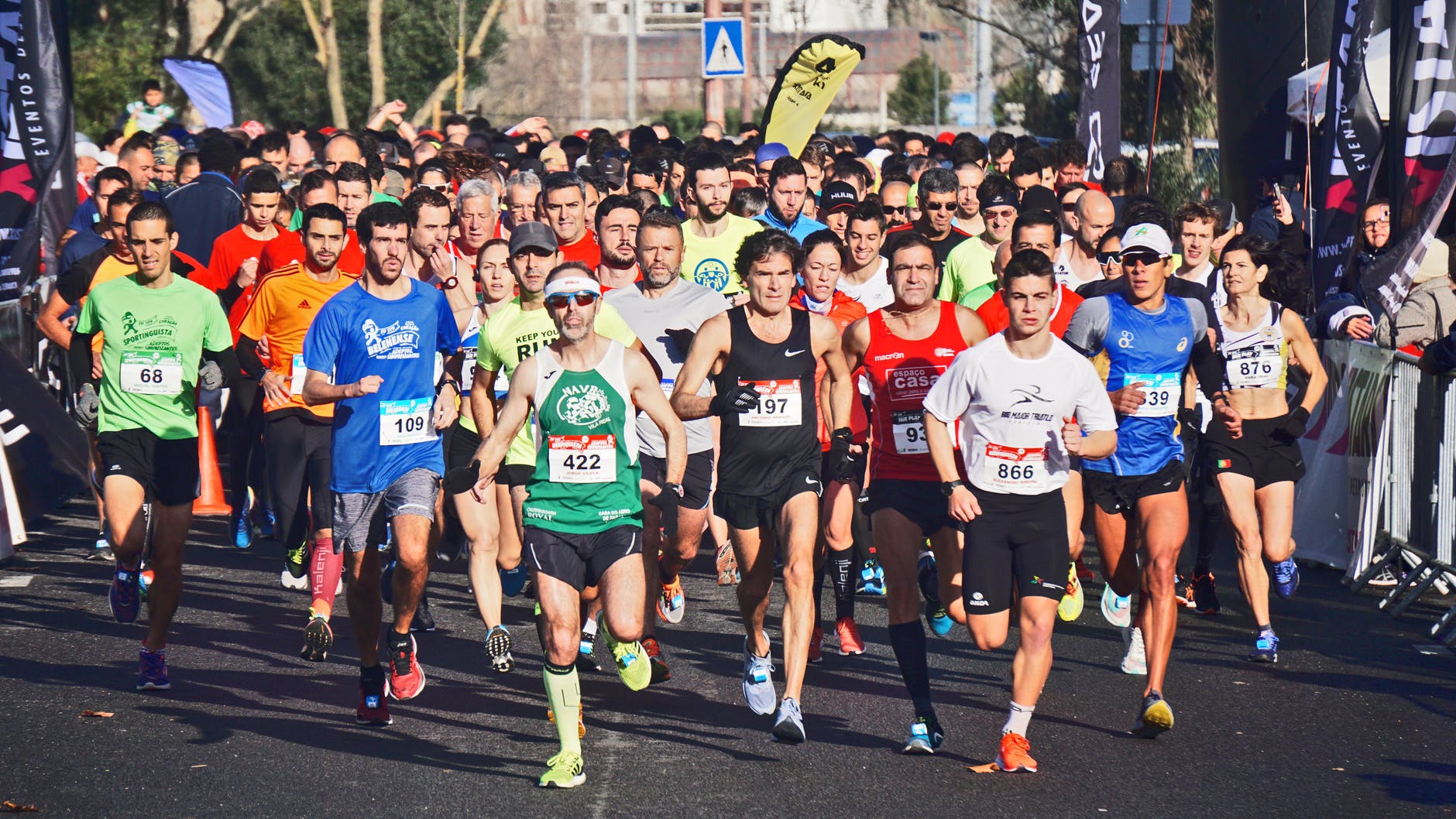
Photo by RUN 4 FFWPU on Pexels.com
  • Run with the pack: Running alone can be good for meditation, but we need the challenge and the encouragement of others if we want to train and grow stronger. Reconsider the passage I quoted above in its larger context: “Therefore, since we are surrounded by such a great cloud of witnesses, let us throw off everything that hinders and the sin that so easily entangles. And let us run with perseverance the race marked out for us, fixing our eyes on Jesus, the pioneer and perfecter of faith. For the joy set before him he endured the cross, scorning its shame, and sat down at the right hand of the throne of God. 3 Consider him who endured such opposition from sinners, so that you will not grow weary and lose heart. (Hebrews 12:1-3 NIV–emphasis added) We need to surround ourselves with companions, role models, teachers, friends, and others who can encourage, sharpen, comfort, and help us in our pursuit. And we need to remember that NO challenge or opposition we face is unknown to Christ. He is our ultimate role model, and, along with the Holy Spirit, our greatest coach!
  • Run/train with purpose: “25 Everyone who competes in the games goes into strict training. They do it to get a crown that will not last, but we do it to get a crown that will last forever. 26 Therefore I do not run like someone running aimlessly; I do not fight like a boxer beating the air.” (1 Corinthians 9:25-26 NIV) I know many people who “know” a lot about the Bible; they’ve grown up in the church or attended seminary; they’ve memorized scripture or studied theology– only to leave the church and their faith. I know many others who have a “faith” that bears little resemblance to the Bible’s teaching– it is based mostly on their “feelings” about God and a “truth” that is relative to their circumstances and changing emotions. Pursuing the Christian life involves discipline– being a disciple–and that involves all areas of life– studying the Bible, and putting it into practice. It’s not enough to “know” about doctrine or to “feel” like a Christian. We must pursue Christ-likeness in our words, prayers, habits, relationships, etc..
Photo by RUN 4 FFWPU on Pexels.com
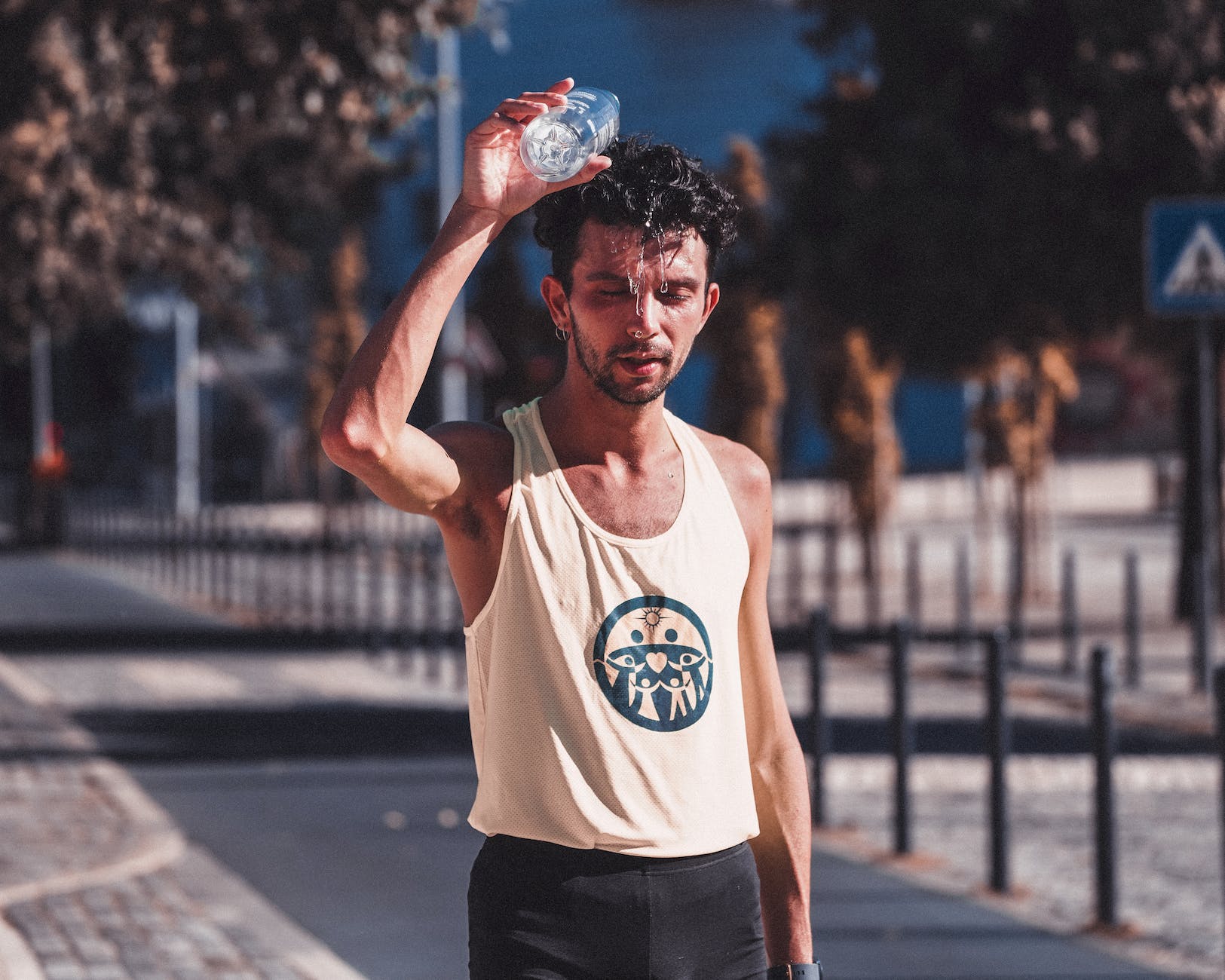
  • Don’t run on “no fuel.” “29 He gives power to the weak, And to those who have no might He increases strength. 30 Even the youths shall faint and be weary, And the young men shall utterly fall, 31 But those who wait on the Lord Shall renew their strength; They shall mount up with wings like eagles, They shall run and not be weary, They shall walk and not faint.” (Isaiah 40:29-31 NKJV). It is tempting to run on an empty stomach (see traveling light above), or to start running without stretching or warming up. Anything we do in our own wisdom and power– even “good” things like prayer and Bible study, can leave us empty and worn out. We need to come back to our source of wisdom and power–(See Hebrews 12: 2-3 again!)
Photo by RUN 4 FFWPU on Pexels.com

Running a race isn’t easy. Walking through life is a challenge, too. Pursuing Christ-likeness in our habits, including our prayer life, takes dedication, discipline, guidance, and endurance. But God is faithful to provide all that we need to finish the race and gain the prize!

Does Prayer “Work?”

I have a friend who is very keen to study if prayer “works.” His theory is that if someone were to measure the number of prayers said in various regions of the world during the COVID-19 pandemic, and compare those numbers to the rates of infection, numbers of deaths, etc, for the same regions, one could “prove” whether or not prayer is effective.

I don’t think my friend is being sarcastic or overly cynical– I believe he is sincere in wanting to study prayer. I accept his desire to study prayer–to quantify it, even to “prove” it, or legitimate it for those who are skeptical. Unfortunately, he wants to study it as an observer, and not a participant, and he wants to conduct a physical study of a metaphysical practice.

Photo by Ali Arapoğlu on Pexels.com

Scientists are conducting several studies during this time, to see what “works.” Does social distancing “work” better than building up “herd immunity?” Is there a treatment that works better, or faster than others? Can we develop an effective vaccine? What practices– social, hygienic, medical, political– might help mitigate the spread of future viruses? Even these studies will not be definitive. The results will depend a great deal on methodology, and the conclusions will be open to interpretation.

Photo by Lukas on Pexels.com

There are additional problems in studying whether or not prayer “works” or not, because prayer is metaphysical. Here are just a few of the “measurement” problems:

  • How do you measure prayer? By length of time? Number of words used? The number of prayers prayed by each person over a certain period of time?
  • Do you count ritual prayers? Mantras? Meditation? Unspoken “thought” prayers? Recitations? Prayers spoken “in tongues” or in ecstatic states?
  • Do you count corporate prayer as a single prayer or by the number of people in the group?
  • What about social media? Do you count all the people who say they will send “thoughts and prayers?” Do you count those who say they “will pray,” or only those who are “praying,” or “praying now.”
  • If you are testing by geographical region, how do you account for people who are praying for others around the world?
  • How do you measure the efficacy of prayer (as opposed to other factors)? If a region has a higher mortality rate, even though many people prayed, does that mean that prayer “doesn’t work?” Or does it mean that the mortality rate would have been even more devastating (given other factors) without prayer?

More than just measurement problems, there are problems with the very nature of prayer that make such a study impossible:

  • Even if you could come up with a standard definition of “prayer” in order to get a count, prayer is not a physical substance or action. Prayer is not a “cause and effect” exchange. It is communication. If ten people say the same thing at the same time to the same person, it is not necessarily “more effective” than a single person-to-person exchange. If a thousand people pray to the same “god” who is not a god–“Mother Nature” or “The Force,” for example, it cannot be compared to a single person praying to a Loving and All-Powerful God.
  • God’s ways are not our ways. If we are measuring for one thing, God may be working for a different, unseen outcome. If more people contract the virus during the “study period”, we see that as “failure.” But God may be preparing that region to build up a resistance or immunity for a future outbreak. God answered prayer in a mighty way that we won’t see immediately. I have known a great many people, and prayed for a great many people who have not received physical healing in this world. They have suffered. They have died. But that doesn’t mean that prayer “didn’t work.” Their sufferings and eventual deaths have often brought about unbelievable works of God– salvation, families restored, friends discovering renewed purpose, strengthened efforts to fight disease, injustice, poverty, etc., and communities coming together in unity and hope.
  • Prayer is not about measurable results. Prayer is a heart-cry to a caring Creator. It doesn’t just involve asking for healing or miracles or “wish fulfillment.” Prayer involves thanksgiving, worship and adoration, repentance and confession, sharing burdens, asking questions, and building an eternal relationship with God Almighty.
  • In the end, any study results will be interpreted differently by different people. Some people will be convinced by numerical comparisons to re-consider their view of prayer. Others will never be convinced, no matter how much “evidence” someone else presents.

Prayer isn’t like taking an aspirin, or holding a protest rally, or doing research for a cure. Prayer isn’t about “winning the battle.” It isn’t about “what works.” It isn’t about “what” at all. It’s about WHO.

Photo by Luis Quintero on Pexels.com

God “works.” God is sovereign, loving, and wise beyond what we can imagine. His ways endure. And He has vanquished the power of death and disease. Yes, it can still touch us in the here and now, spreading havoc and pain and mourning. But it will never triumph over Hope, and Life, Truth, and Faith. And when we pray, we connect to the source of all that is Eternally victorious! Beyond ANY measure!

Blog at WordPress.com.

Up ↑