This has been a season of death and loss for us, but where is the sting? Mom passed just over a month ago, but where is the gnawing ache of loss?
Because of Easter, we remember that Death is swallowed up in victory, and His Divine Power gives us Everything we need for Life! (2 Peter 1:3) Have we had moments of grieving this past week (and month)– Yes. But we choose to focus on the larger picture. Easter isn’t just a day to celebrate something miraculous in the past or the distant future. It is a very present reality that changes EVERYTHING. Death is not the end. Failure is not the end. Our weakness is not the end. Good Friday was not an end. Easter (and every day since!) is a new beginning. It is the promise of life– not just eternal life in heaven, but abundant Life here and now. There is a purpose to life– to the joy and the pain, the grief and the struggle, the search for answers and the even the questions that remain. There is hope and there is renewal. There is a reason to get up, a reason to fight, a reason to cry, a reason to sing, and a reason to rest. Most of all, there is a reason to LOVE and rejoice in being loved!
YOU are loved! Extravagantly, eternally, without limit or condition. And yes, it seems too good to be true, too simple to accept, maybe even too frightening in its intensity. But it IS true. It IS that simple. It IS that complete and perfect. And it is a free gift for all who will accept it and live in it. Please let this Easter fill your heart with the Good News that You are loved– to death and back– by your gracious creator.
“I have told you all this so that you may have peace in me. Here on earth you will have many trials and sorrows. But take heart, because I have overcome the world.” John 16:33
One of my favorite movies is “The Princess Bride.” The title character begins the story as a young, beautiful, wealthy, and spoiled young woman. She falls in love with the young farm boy who works for her father. The young man leaves to make his fortune, but word comes that he has been captured and killed by pirates. In utter despair, the young woman allows herself to become engaged to a spoiled and wicked prince. She has allowed her grief to consume her, and she cares nothing for the prince, his wealth or power, or even her own future. Before she can be married to the prince, she is kidnapped by villains, and “rescued” by a mysterious pirate. Instead of being grateful, she curses the pirate, telling him that he could never understand her great loss and pain. His answer, harsh, glib, but to the point, is to say that “life is pain, Princess. Anyone who tells you differently is selling something.”
There are certain truths in life that we would avoid if we could– death, pain, sorrow, grief, suffering, and Sin–we don’t want to hear the harsh reality of our situation. We don’t want to suffer or hurt at all; much less to discover that our suffering is commonplace or universal. Everyone will taste death; everyone will face pain and grief and suffering in this life. Everyone will suffer as a result of Sin– our individual actions have consequences, as do the cumulative actions of our culture, our ancestors, and the entire human race. Life isn’t always good, or fair, or just, or comfortable. This is a harsh truth, but it IS the truth. We will face injustice– no matter who we are. We will face suffering, illness, and death. We will face loss–loss of a loved one, loss of a job, loss of a marriage, loss of health, loss of freedom or autonomy. We will not always win. We will not always get what we want. We will not always get justice in this life.
There are four common techniques we tend to use to avoid facing harsh truths– denial or avoidance, anger, bargaining, and depression or despair. Many people know these terms from the Kubler-Ross studies on patients with terminal illnesses and the five “stages” she identified as they came to terms with their impending death. https://psychcentral.com/lib/the-5-stages-of-loss-and-grief/ The fifth “stage” was acceptance. The five stages have been applied commonly to other forms of grieving and loss, including the loss of a loved one or the break-up of a marriage. While most of us go through some or all of these stages when we face suffering, we don’t all go through them the same way or even in the same order.
Many of us live in avoidance and denial– rushing headlong into meaningless pleasure, self-medicating with alcohol or drugs, staying busy with the pursuit of wealth or power, moving from place to place or relationship to relationship. Others wrap themselves in anger– blaming everyone else for their pain, seeking revenge, driving away those who want to help. Anger may feel productive, but it limits our scope of vision and keeps us focused on the pain inside. Still others try to bargain. Some seek to avoid aging, diminished health, or death by trying every new diet or fitness routine. Others try to avoid guilt, pain, or disappointment by trying to be righteous enough to earn a supernatural blessing or “good karma.” Still many others wallow in depression and despair, lost in the swamp and mist, sinking into a pit of their own feelings. Like those who live in denial, they avoid the difficult choices that would lead to life, instead letting life wash over them and draining them of energy and joy.
These reactions are normal and human. Harsh truths hurt– they shock us, overwhelm us, shatter our trust, even shake our faith. But they ARE true. We cannot change our circumstances by running away, raging at everyone around us, or giving up. We cannot go back in time and “undo” the tragic circumstances of our lives. And our reactions have their own consequences. They cannot negate the past or change the present. They can only impact the future.
But there is another truth: God has not left us without resources, even for the harshest realities we face. Even when we are in despair, or angry, or in denial, God can give us peace and strength to go on. God isn’t “selling something” to make the pain go away or make our life “trouble-proof.” Jesus never offered a comfortable life to His followers. In fact, He promised that our lives would be filled with trouble and pain and sorrow! Christians who claim that they never face fear, or failure, fury or frustration, loss and sorrow– they are “selling” a false gospel. The Good News isn’t about avoiding pain or sorrow. It is about OVERCOMING them! Jesus faced and conquered death on a cross! He could have avoided it– He could have been angry at those who betrayed Him–He could have stayed buried in despair and failure. But He arose! We don’t worship someone who has never wept, or faced betrayal or loss. Jesus is the Way, the Truth, and the Life (John 14:6)– if anyone knows the harsh truth, it is the one who IS Truth! And this Truth hurts– He hurts to see us grieving; He hurts when we reject Him to go our own way; He hurts even as He allows us to hurt. And He offers us His Grace to survive and thrive– not an escape, but a victory!
Faith, prayer, worship, promises– these are not God’s way of helping us escape the reality of harsh truths. They are His tools for helping us to overcome and be victorious in the face of trials and setbacks, grief and pain, even death! A life of faith isn’t a life of denying the harsh realities of life, nor is it a prescription for avoiding life’s hurts. Even the faithful will someday have to taste death. Even those who pray and praise will often do so in tears of anguish and even momentary doubt. But they will reach the peace of acceptance as they wrestle with the seasons of pain, knowing that God promises healing and joy and justice– in His perfect will and timing! As Princess Buttercup discovers in “The Princess Bride”– “Death cannot stop true love!” And it cannot stop the Truth that IS Love!
“Life is pain…” In THIS fallen and broken world. But we can take heart–Jesus has overcome this world. He has won victory over sin and death, pain and loss. And He gives abundant life. Life that transcends disease, disappointment, and even death.
This past month has been tiring for me. I’ve been clearing out two “estates.” My mother died at the end of last month. She was a hoarder– she saved everything, and it was kept in piles and drawers and closets. My brother, sister, and I (and our families) must sort through all the “junk” to find things of importance or value, and decide how to share it, dispose of it, or give it away. Old books, old clothes, old papers– some have sentimental or material value. Others have been exposed to mildew or they’ve been torn or damaged or stained. Mom had a big house, and she had lived there for over 60 years, so the piles are tall, deep, and everywhere!
At the same time, we had a loss in my husband’s family that required that we clean out the family homestead. This home had been in the family for over 5 generations, and included a farm and workshop, complete with machinery, vehicles, and furniture that had to be removed in less than 30 days! While not as cluttered with old papers and clothes, this estate included bigger, bulkier items, often covered with grit, grime, oil, and dirt.
We had to finish up with the old homestead earlier this week. And we are exhausted. I have found it difficult to concentrate on this blog, on Bible study, on personal prayer time, and just getting “normal” things done around the house. I’m sore, I’m trying to fight off an early Spring cold, and I’m mentally and emotionally drained.
God has sent wonderful reminders of His comfort, His strength, His peace, and His care in the past few weeks. My prayers may have been hurried or shortened lately, but I can FEEL the prayers of others on our behalf. As tired as we have been lately, we have also been blessed. Wonderful family (even under difficult and trying circumstances!), kind and helpful friends, unexpected (and much needed) resources–God has not left us to face this season alone.
It is not God’s will or His plan that we should exhaust ourselves. That doesn’t mean that He won’t allow us to travel through periods of stress, work, grief, pain, or even temporary exhaustion. Jesus himself stayed in the wilderness for 40 days without food. He was exhausted and hungry when Satan tried to tempt Him to turn His back on the Father. Satan’s temptations are no different today. He tempts us with empty promises of ease and rest– IF we depend on someone or something other than God! He tempts us with the idea of fame and fortune– IF we abandon God’s provision and His purposes. He tempts us with immediate solutions–IF we stop waiting on the Lord to come to our rescue.
The Test
4 1-3 Next Jesus was taken into the wild by the Spirit for the Test. The Devil was ready to give it. Jesus prepared for the Test by fasting forty days and forty nights. That left him, of course, in a state of extreme hunger, which the Devil took advantage of in the first test: “Since you are God’s Son, speak the word that will turn these stones into loaves of bread.”
4 Jesus answered by quoting Deuteronomy: “It takes more than bread to stay alive. It takes a steady stream of words from God’s mouth.”
5-6 For the second test the Devil took him to the Holy City. He sat him on top of the Temple and said, “Since you are God’s Son, jump.” The Devil goaded him by quoting Psalm 91: “He has placed you in the care of angels. They will catch you so that you won’t so much as stub your toe on a stone.”
7 Jesus countered with another citation from Deuteronomy: “Don’t you dare test the Lord your God.”
8-9 For the third test, the Devil took him to the peak of a huge mountain. He gestured expansively, pointing out all the earth’s kingdoms, how glorious they all were. Then he said, “They’re yours—lock, stock, and barrel. Just go down on your knees and worship me, and they’re yours.”
10 Jesus’ refusal was curt: “Beat it, Satan!” He backed his rebuke with a third quotation from Deuteronomy: “Worship the Lord your God, and only him. Serve him with absolute single-heartedness.”
11 The Test was over. The Devil left. And in his place, angels! Angels came and took care of Jesus’ needs.
Matthew 4:1-11 (The Message)
I’m tired today. But God knows better than I do how to give me rest, how to “recharge my batteries,” and how to guide me through the days ahead. I don’t think God is “testing” me in the same way He allowed Jesus to be tested. But I think He has allowed me to experience a season that is testing me. Will I keep looking for Jesus in my weariness and grief? Will I be tempted to find my rest in someone or something other than Him? Will I recognize the resources and help He sends during this time? One of the things He has provided is this blog– a chance for me to stop, reflect on, and write about what’s going on. I’m tired, but I’m also being held in God’s Almighty and capable hands. God has provided helpers, counselors, friends, and family to lean on, and who can lean on me in turn. God has laid out His promises for a bright future and eternal Joy, Peace, and Rest. God has given me a moment to reflect on His Goodness! Now, back to work for today!
In the Dr. Seuss classic, “How the Grinch Stole Christmas!,” the bitter and devious Grinch tries to “steal” Christmas from the village of Whoville. He steals all the things the Whos of the village seem to need in order to celebrate a holiday he hates. He hates their gift exchanges, their feasting, their singing, and their general happiness, all of which serve to remind him of his own loneliness and gloom.
With mounting glee, the Grinch proceeds to pile up his hoard of goodies– presents, decorations, food, anything that could serve to make the holiday cheery and bright. He loads up all his stolen loot and takes it to the top of a mountain, where he plans to dump it. But first, he stops to savor the shock and pain he expects to hear as the Whos discover that their holiday has been ruined. He waits in the cold of a clear dawn to hear wailing and lamenting, but the sound he hears instead is singing…the Whos have come together to sing a hymn of gratitude and peace. There is no lamenting; there is no distress. Instead there is a peaceful acceptance that the new day has brought joy and goodwill that has nothing to do with all the trappings of celebration.
He hadn’t stopped Christmas from coming. It came! Somehow or other it came just the same. And the Grinch, with his Grinch-feet ice cold in the snow, Stood puzzling and puzzling, how could it be so? It came without ribbons. It came without tags. It came without packages, boxes or bags. And he puzzled and puzzled ’till his puzzler was sore. Thenthe Grinch thought of something he hadn’t before. What if Christmas, he thought, doesn’t come from a store. What if Christmas, perhaps, means a little bit more.
The first Christmas came without any of the festive trappings we’ve added over the years. There were no groups of cheery carolers; no jingle bells and tinsel; no greeting cards or candy canes. Jesus came in the dead of night, in the midst of chaos and terror, as people were groaning under the oppression of an invading empire, being forced to travel long distances to be counted and taxed by their oppressors. There were no Christmas parties, no brightly decorated trees, no stockings filled with treats, no cookies and cocoa on a cold night. The gifts would come later– and they would be followed by death threats and exile! But Jesus came! He came just the same!
This year, Christmas will come– with or without ribbons or tags. Christmas will come to those who are homeless, and those who are lonely in palaces and mansions. Christmas will come in spite of efforts to erase the holiday from our culture. It will come just like the dawn of each new day– quiet in its wonder and glorious in its simplicity. Christmas doesn’t come wrapped in shiny paper or announced with blaring horns and neon lights. Christmas comes just as Christ came so many years ago–wrapped in rags, laid in a straw bed on a cold, dark night; announced to simple people going about their business, signaled by a single star ignored by most, wondered at by others. Christmas will seep into the hearts and eyes of those with child-like faith and willing to sing when things are darkest.
God chooses to come in simplicity– He creeps like the dawning day; He sighs like a gentle breeze; He comes as a harmless infant, or a wandering teacher and healer. And when our Christmas Day comes without ribbons and boxes or feasting and lights– it will come just the same. Christ will enter darkened hotel rooms and alleys, He will sit beside hospital beds and in makeshift refugee shelters. He will sneak into homes where Christians huddle in secret, and He will knock gently on the doors of the lonely and the lost. Because Christmas DOESN’T come from a store. It doesn’t come from our bounty and our glittering decorations. It comes from the heart– the heart of God, who SO loved the world, that He came! And He will come this year, just the same!
Yesterday was the first Sunday of Advent. Four weeks later, we will have Christmas Day. For some, the time will pass in a frenzy of shopping and wrapping– the time will fly by! For some, the time will pass in meditation and reflection– it may seem to crawl. For some, the time will pass with no difference from any other time of year. For most of us, there is a sense of anticipation…we are waiting for something: the “Christmas Spirit,” the festivals and events, the time spent with loved ones far and near…
Christmas, more than any other day, brings this sense of expectation. We sing songs, listen to stories, reach out to friends and neighbors– all in anticipation of a single day. And sometimes, the anticipation and expectation exceed the realities of the day. We feel disappointed in the gifts, or the weather, or the circumstances. But our anticipation shouldn’t be about the single day on the calendar. Christmas is so much more than just a day, or even just the “spirit” of the day.
We don’t know the actual, historical day when Christ entered human history as a baby. As the Gospel of John relates– “In the beginning was the Word, and the Word was with God, and the Word WAS God.” (John 1:1) But this Word, this Only Begotten Son of the Father, this second person of the Trinity, DID enter human history as a member of the human race. He came and dwelt among us, His creation. He walked and talked, ate and slept, worked and wept, lived and died as a man. The Lord of All Creation tasted freshly baked bread and felt the first raindrops of Springtime. The King of the Universe wiggled His toes in the sand, and wiped sweat from His brow. The Lamb of God shared belly-laughs with His friends over a shared joke. The Lion of Judah wept over the death of His friend. The Author of Life knew what it was to die, abandoned and betrayed.
None of this is anticipation for us, as it was for the prophets of old. It is history. Christ has already come. He already lived a life of compassion and grace, wonder and weariness, agony and anticipation, and, most of all, Love. “For God so loved the world that He gave His only begotten Son, that Whosoever believeth in Him should not perish, but have everlasting Life.” John 3:16 Christmas for us is not about anticipating Christ’s arrival. Christmas is the celebration of what that arrival means for us all these years later and forevermore. And we can celebrate all the wonder of Christ on any day of the calendar year. But there IS real anticipation at Christmas– the anticipation of Eternal Life and Christ’s triumphant return. Just like the prophets waited and wondered, we wait in Hope of a glorious reunion.
Christmas, December 25, 2022, may be a disappointing day–it may be dreary, gloomy, lonely, or disappointing in its circumstances. It may bring us bad news, or heartache. But it will also bring us another opportunity to rejoice– to rise above whatever circumstance brings to focus our thoughts forward and upward, where Christ, who once came as a baby, now reigns and rules and waits– anticipating the same reunion that brings us hope and healing.
One hundred four years ago today, on the 11th hour of the 11th day of the 11th month or 1918, the warring nations of Europe and the World fell silent as an Armistice was signed ending the “Great War” (later known as World War I). The War had been devastating in its scope and violence. Millions of people lost their lives; millions more were wounded and permanently scarred by the fighting. Entire cities had been leveled; farms and villages had been ravaged, and economies would take decades to recover.
“The War to End All Wars” did not. It was a failure in almost every regard. Bitterness built up in the decades between 1918 and 1938, spilling into another devastating war. All the noble efforts to promote peace and unity broke down. All those lives sacrificed in the hope of bringing lasting peace were lost, seemingly in vain. And for the soldier who survived, there was continued hardship, struggle, and often, life-long pain and suffering.
Today, we honor those who have risked their lives to serve their county/countries. Soldiers, medics, chaplains, and innocent civilians who risk their lives do so for a reason. Often, we lose sight of the reasons after so many years, but the primary reason for most soldiers is the protection of loved ones back home and fellow soldiers in the fight. Many of us live lives of comfort and safety, little knowing the dangers of war, famine, and extreme hardship. But soldiers know a life of privation, courage in the face of fear, and the searing loss of violent death. And most of them know this life as a voluntary sacrifice. They willingly lay down their lives, both figuratively and sometimes literally, to save, protect, and improve the lives of others. It is fitting and right to honor such commitment and sacrifice.
Jesus, when speaking to His disciples at the Last Supper, said, “This is my commandment, that you love one another as I have loved you.Greater love has no one than this, that someone lay down his life for his friends.You are my friends if you do what I command you.” (John 15:12-14 ESV) After all these years, many of us look at these verses as a moral principle, but not as a commandment. Jesus did not say, “I would really like it if you would love each other sacrificially,” or “I would prefer if you treated each other the way I treated you.” He gave it as a command that we love as Jesus loved.
So that begs the question, “How did Jesus love His disciples?” Ultimately, He DID lay down His life, paying for their sins (and ours) through His death on the cross. There has never been a greater sacrifice, not on the battlefield, not in public service, nowhere in Heaven or on Earth. But Jesus also gave us several examples of “sacrifice” in His life with the disciples. He served. He forgave. He loved. He nurtured and taught. He listened.
It used to be popular to compare Christians to soldiers– to promote service, sacrifice, and discipline in the Christian walk. This has largely fallen out of fashion, as society has diminished the role of the soldier, and the respect it used to give them. But the Apostle Paul used the comparison often, even listing the Christian’s “armor” in Ephesians 6:10-18. We should put on the belt of Truth, the breastplate of Righteousness, the shoes of the Gospel of Peace, the shield of Faith, the helmet of Salvation, and the Sword of the Spirit, which is the Word of God. Of course, we are not commanded to kill, main, or promote warfare and destruction. But we ARE called to be prepared to die for– and LIVE for– the cause of Christ. We are to train, prepare, and stand firm in the Faith. More that that, we are commanded to serve– even sacrificially– our brothers and sisters; we are to be willing to lay down our lives for others.
Today, as we reflect on the sacrifices made in the past, let us renew our commitment to love like Jesus, to serve like soldiers, and to stand firm in our commitment to the One who paid the ultimate sacrifice for us. And, especially in a world that does not know peace, let us pray for those who are touched by war, famine, hardship, violence, and loss. Let us work to bring peace, forgiveness, and practical help to those around us who suffer.
But I say to you, Love your enemies and pray for those who persecute you,
Matthew 5:44 (ESV)
The obvious answer to the question in the title is that Jesus commands it. But what practical and spiritual reasons are there for such a counter-intuitive action? Jesus himself continues:
43-47 “You’re familiar with the old written law, ‘Love your friend,’ and its unwritten companion, ‘Hate your enemy.’ I’m challenging that. I’m telling you to love your enemies. Let them bring out the best in you, not the worst. When someone gives you a hard time, respond with the supple moves of prayer, for then you are working out of your true selves, your God-created selves. This is what God does. He gives his best—the sun to warm and the rain to nourish—to everyone, regardless: the good and bad, the nice and nasty. If all you do is love the lovable, do you expect a bonus? Anybody can do that. If you simply say hello to those who greet you, do you expect a medal? Any run-of-the-mill sinner does that.
If we are following Christ and asking His Spirit to help us grow in Godliness, we should be acting– and reacting– like God. God makes the sun shine and the rain to fall on everyone. He is Mercy and Grace personified. That takes away nothing from His ability to exact justice. But His true desire is to show mercy– and that includes mercy THROUGH us!
But there are other good (and related) reasons to pray for our enemies.
Such prayers put things in perspective. If I focus on the injustices that my enemies have done (or continue to do), they become larger than God’s power to restore and redeem. If I focus on God’s power, the injustices, while still real, take their proper place. God is bigger; God is greater; God is wiser; God is Sovereign.
Such prayers remind me that I am not immune from causing pain and distress to others. It is natural for us to see our enemies as completely different from ourselves. “They” are evil, callous, and deserving of punishment. But, if we are honest– we are also deserving of punishment. We, too, have been callous, careless, selfish, angry, or bitter with someone, somewhere, at some time. God has dealt with us mercifully. How can we be grateful for His mercy and fail to pray for others who need it?
Praying for our enemies may not change them, but it will change US. Praying for my enemies forces me to release my anger and bitterness, so that I don’t become trapped in a cycle of letting my enemy become my obsession or even my role model. I say this from negative experience; NOT praying for someone I considered my enemy led to me say and do things that were unkind and vicious– because I thought she “deserved” the same treatment she had given me and others. One day I woke up and realized that I was slowly becoming like her– letting her behavior determine who I was in return: suspicious, hard-hearted, critical, and vindictive.
Praying for others reminds us that our true enemies are not other people. Once again, it is easy and natural to create a monster out of the person who is our “enemy.” They have often caused very real and very intense pain and suffering– personal, physical, psychological, emotional, financial, and sometimes chronic and catastrophic–sometimes, they show no remorse; sometimes, they refuse to accept responsibility for their actions. God knows all this. He sees all this. He aches for our pain– and for their rebellion. But the root cause is not a person– no matter how involved they are in delivering the pain. The real cause is Sin and Brokenness. That’s why WE can’t fix it. That’s why WE don’t have the power or authority to administer righteous judgment over it. And that also means–
Such prayers can free us of the burden of guilt, shame, bitterness, and hurt of the past. That doesn’t mean that we must deny the very real hurt we have felt. But we no longer have to be bound and shackled by it. When we can lift up our enemies and our past, and give them to God– really let go and give them to Him–He will carry that load, and let us run the race before us.
One caveat here. Loving your enemy; praying for them– these are not the same as believing their lies or consenting to their abuse. There may be people in your life that you must pray for– from a distance! You can love someone, and still set clear boundaries to protect yourself and others. God will never abandon us. But He doesn’t call us to enable others in their evil actions. This is especially true in cases of domestic violence. Love your enemy, but get help and healing. And continue to pray!
This coming Monday we will be celebrating Memorial Day in the U.S. It is a day to remember those who gave their lives in battle, defending our nation, our people, and our way of life over the course of almost 250 years. We decorate the graves of fallen soldiers with flowers and flags and plaques honoring their sacrifices. It is a strange sort of “holiday.” We don’t like to think of wars and battles– we ache for those who are terrorized by wars in the current days. We don’t celebrate war and violence– our highest goal is to achieve and preserve peace and safety. And it can seem somewhat morbid to “celebrate” the fallen soldiers of bygone days.
But we are not celebrating their deaths. We are celebrating the causes for which they fought and died. We celebrate freedom, and justice; the rights of individuals to pursue liberty and fulfill their dreams. These are causes worth fighting for, and yes, even dying for. We mourn the loss of life, and we grieve the necessity of fighting and struggling to preserve basic rights. But we are grateful for and humbled by the examples of those who have shown the courage and strength to give their all. We honor these sacrifices when we decorate the graves of fallen soldiers, or hold services and memorials at cemeteries. It is not meant to be a time of joyful celebration, but a time of solemn reflection and humble gratitude.
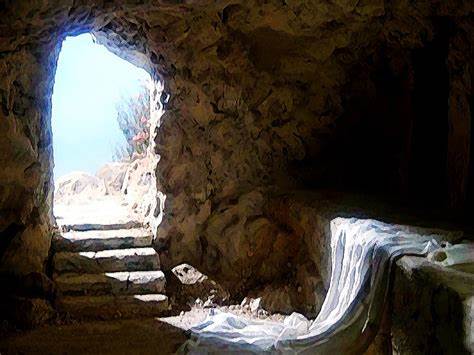
But Memorial Day can also be a time of reflecting on an empty grave– that of Jesus Christ, who gave His all for a cause even greater than liberty and justice in a particular nation or time or for a particular group of people. Jesus gave His life to reconcile an unholy human race with a Holy and Righteous God. He fought against Sin and Death, and conquered them both. And we cannot decorate a grave to honor His sacrifice, because, unlike all the soldiers we honor next week, Jesus did not just preserve a cause or a way of life– He became Life for us. His grave is empty as a symbol of Death’s defeat!
It was Jesus Himself who said, “Greater love has no one than this, that one lay down his life for his friends.” (John 15:13 NASB) Soldiers who lay down their lives often do so to save the lives of their comrades at arms– their friends and fellow warriors– as well as their countrymen and women, their neighbors, and their families. And it isn’t just soldiers who give their lives. Recent news stories tell of teachers, police officers, and other individuals who have sacrificed their lives for the sake of innocent shoppers, students, and neighbors. Such sacrifices are tragic, but they are also heroic, and deserving of our acknowledgement.
We take time to honor those who died for a cause. How much more should we honor the One who died to bring eternal freedom and life to each one of us! And how much more should we be willing to give our lives for the sake His Kingdom! There is no greater love that we can show.
Yesterday was Easter (in parts of the world)–the celebration of Christ’s resurrection and victory over Sin and Death. We have much to celebrate. But we also have a mission. We have the assurance of eternity in Heaven, but in THIS world, Jesus warned us, “you will have trouble.” (John 16:33). We will be misunderstood, mocked, and persecuted. We will have to face the temporary consequences of living in a fallen world– anger, greed, abuse, violence, betrayal–even bad weather and natural disasters!
In giving the Beatitudes, Jesus turned common expectations upside-down. Blessed are the poor in spirit; blessed are the meek; blessed are those who are persecuted for righteousness’ sake… We don’t consider poverty, powerlessness, suffering and persecution blessings to be desired. Yet Jesus, the One we follow, gladly endured all of these for our sake! Notice that the “blessing” is the same here as in the first of the Beatitudes– “for theirs is the kingdom of heaven.” The Kingdom of Heaven is not reserved for those who are victorious in their own power or through force of will or extraordinary effort. But it is reserved for those who persevere in the face of evil–those who lean, and those who rest, and those who stand IN THE POWER of God.
Notice, too, that we are blessed if we are persecuted “for righteousness’ sake.” There is no blessing for suffering due to our own stubbornness or foolishness. There is no blessing for those who are persecuted for their own pride and judgmental nature and unforgiveness toward themselves or others. (see 1 Peter 3) https://www.biblegateway.com/passage/?search=1+Peter+3%3A8-17&version=CEV
We live in a culture that celebrates “victimhood.” Those who suffer injustice– even perceived of implied injustice–are considered to have a special status. Those who claim to have been offended or hurt by individuals or groups often demand recognition for their “bravery” or retribution for their suffering. This happens even among certain Christians, who claim to be “persecuted,” when they are merely suffering the consequences of their own hubris and self-righteous posturing. This is a monstrous injustice to fellow Christians who are truly suffering persecution “for righteousness’ sake.”
My prayer today is that I will emulate the example of Christ– that I will serve, humbly, willingly, sacrificially, enduring any persecution that comes as a result, and lifting up fellow Christians who are suffering, as well as their persecutors! For righteousness’ sake– for the sake of the Kingdom of Heaven.
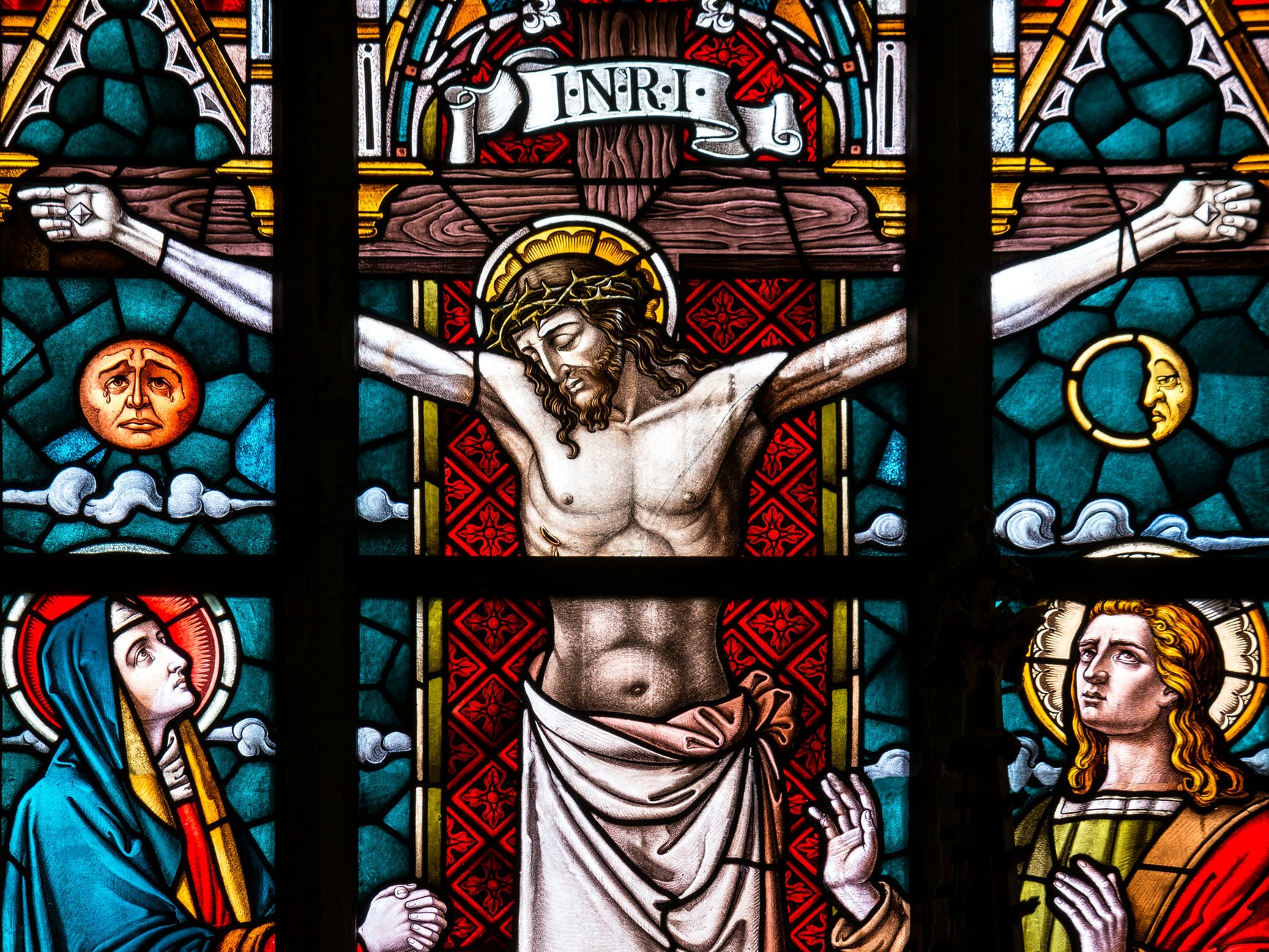
Today is a reminder of violence. “Good Friday” is filled with reminders of torture, injustice, and brutal death on a cross. There is almost nothing about this day that suggests “Peace.” And yet, it is because of this day, and this cruel and violent death, that WE can have peace with God. Jesus made peace for us by suffering at the hands of corrupt and brutal men. He could have fought back. He could have called down legions of angels to avenge each cut and bruise He suffered. With a breath or a single word, He could have slain the entire Roman Empire, freed the nation of Israel, and claimed victory and “peace.” He could have avoided the violence of beatings and death. He could have appealed to Pilate, who already was inclined to release Him. He could have argued with the Sanhedrin, or said whatever they required to secure His pardon and avoid the cross. He could have run away in the Garden, and stayed hidden and given up His ministry for safety and “peace.” But He didn’t. He didn’t fight back, He didn’t argue, He didn’t plead. He healed the ear of one of His arresting officers. He welcomed one of the thieves crucified next to Him into the Kingdom of God. He made provision for His mother’s well-being. He forgave those who accused Him and crucified Him–even from the Cross!
Jesus said that those who make peace will be called the children of God. Not those who seek peace– those who make peace. There is a difference. We tend to seek peace through avoidance. We isolate, insulate, hibernate and alienate, all in attempting to find peace. We avoid conflict. We avoid attachments that might cause us heartbreak or betrayal. Even in our prayers (and I’m speaking from personal experience), we ask for peace without pain or involvement. We want God to shower us with peace and protection, but we don’t ask for the courage or the strength to “make” peace.
Making peace involves reaching out, taking risks, being willing to suffer misunderstanding, conflict, and injustice. It means that we will “take up our cross” and be willing to die to our own comfort and safety for the sake of Christ. That does not mean that we are to be combative, aggressive, abusive, or contemptuous. But, like Jesus, we are to stand firm, even as we offer open arms to those who disagree with us, mock us, even persecute us. True peace is a gift–first from God, and passed on to others who do not deserve it. It is a gift of Grace and Love. The Children of God should be makers of peace, not avoiders of conflict. We need to meet violence and aggression with strength of purpose and positive action. And that should be reflected in our prayer life as well.