The Lord Has Taken Away…

20 Then Job arose and tore his robe and shaved his head and fell on the ground and worshiped. 21 And he said, “Naked I came from my mother’s womb, and naked shall I return. The Lord gave, and the Lord has taken away; blessed be the name of the Lord.”

Job 1:20-21 ESV (via biblegateway.com)
Photo by Pixabay on Pexels.com

The book of Job presents us with a startling picture. Job is a godly man; a righteous man; a man of faith and good works. And yet, God allows him to experience loss upon loss– Job loses everything, short of his life and his nagging, bitter wife. His first response is praise and worship! But as the losses sink in; as the pain and agony and grief continue, Job questions God’s justice and wisdom. Job, like us, wants answers that make sense. He is willing to suffer– even greatly–IF he can see the purpose of his suffering, and justify it to himself.

Photo by RODNAE Productions on Pexels.com

We are getting ready to celebrate Thanksgiving tomorrow in the U.S.– a day when we celebrate what God has given us. We normally celebrate family, health, good food, material blessings, etc. We celebrate abundance and comfort; peace and plenty; family and freedom. But his year, our celebration will be quite different. The Lord has taken away…

Photo by Karolina Grabowska on Pexels.com

Some of us have lost jobs, or we’ve lost our good health to COVID or related factors, or we’ve lost loved ones, often without the chance to say our final “goodbyes”. Millions of us have lost the ability to move about freely and conduct “normal” errands and activities. Schools and businesses are closed or operating from a distance. Families and friends have been kept apart. Much that gave us comfort and happiness has been “taken away” this year. And God has allowed it all to unfold. He has not “taken away” this disease or its consequences. He has not “taken away” floods, or fires, or hurricanes. He has not given us answers or explanations.

Photo by Collis on Pexels.com

Job’s initial praise turns to questioning. While he does not “curse God and die,” as his wife suggests, Job spends his time wondering, “Why me?” His friends try to find answers– “you must have done something to deserve this, Job.” Because God does not “punish” the righteous. It isn’t logical; it isn’t fair; it isn’t just.

Photo by Alem Su00e1nchez on Pexels.com

Except that God laid on His own Son– on Himself– the guilt and punishment for all those who are unrighteous. What Job went through–unknown and unseen to him and his friends–was a glimpse into what God Himself would suffer. Christ lost everything–INCLUDING his life– in order to bring salvation to all those who are willing to believe and receive it. Christ was willing to give away His dignity, His power, His friends and family, and His life. And the Lord allowed it all to be taken.

Photo by Andrea Piacquadio on Pexels.com

Many people read the story of Job– his loss and all his questions and complaints–and conclude that God is not fair or just. They find Him to be capricious and unwilling to ease Job’s suffering or answer his questions. They conclude that God is wicked and unworthy of Job’s praise or trust.

But to do so is to ignore the end of the story– God DOES “answer” Job; He gives Job a chance to justify himself and bring his case. And more than that– He gives Job more than he had before. Job ends up with more children to love, renewed health, and even more wealth than he lost. https://www.biblegateway.com/passage/?search=Job+42&version=CSB And the same is true of Jesus Christ. Because of His “loss,” the world has gained the priceless gift of Salvation by Grace. Christ has become the first of millions to taste victory over death and enter into eternal life. https://www.biblegateway.com/passage/?search=1+Corinthians+15%3A20-23&version=NIV

Loss and grief still exist in this world; disease and suffering and hardship still plague us this year. But we have SO much to celebrate at Thanksgiving. When the Lord “takes away,” it is not because He is capricious, or jealous of our wealth or happiness. It is not because He is unkind or uncaring. At just the right time, and forever more, the Lord will Give without end– lavishly, extravagantly, abundantly. Nothing He takes away in this life– even a cherished love one–is beyond all hope of comfort, redemption, or restoration. Our losses cannot compare to the riches of His Grace and Love. This is a great mystery, but as Job discovered, God WILL DO IT!

Photo by mentatdgt on Pexels.com

Blessed be the name of the Lord! Let us Thank and Praise His Holy Name!

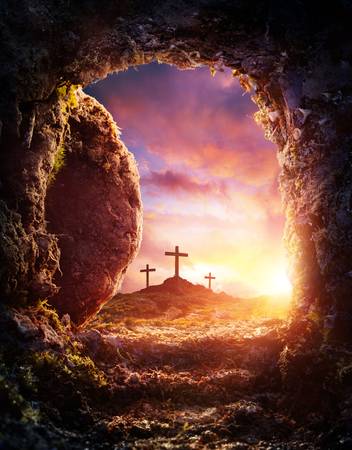
The Empty Tomb


We are living in dark days– days of death counts, and dire predictions; of fear and grief and chaos. Masks, social distancing, angry outbursts, collapsing economies, job loss, political unrest, disease, plague–we are in the grip of a global pandemic. “Bring out your dead.” It’s a phrase from hundreds of years ago, and the horrors of other plagues and other disasters. Tombs, graveyards, skulls and visions of death abound. And yet, as Christians, we celebrate an empty tomb…

Photo by Matthias Zomer on Pexels.com

It’s been over a month since many Christians celebrated Easter (and almost a month for Orthodox Christians). How soon many of us forget the power of the resurrection. Our world is gripped with fear and anger. But we should be gripped with hope and healing. We celebrate an empty tomb– a testament to the victory of life over death, and hope over chaos!

Photo by Felix Mittermeier on Pexels.com

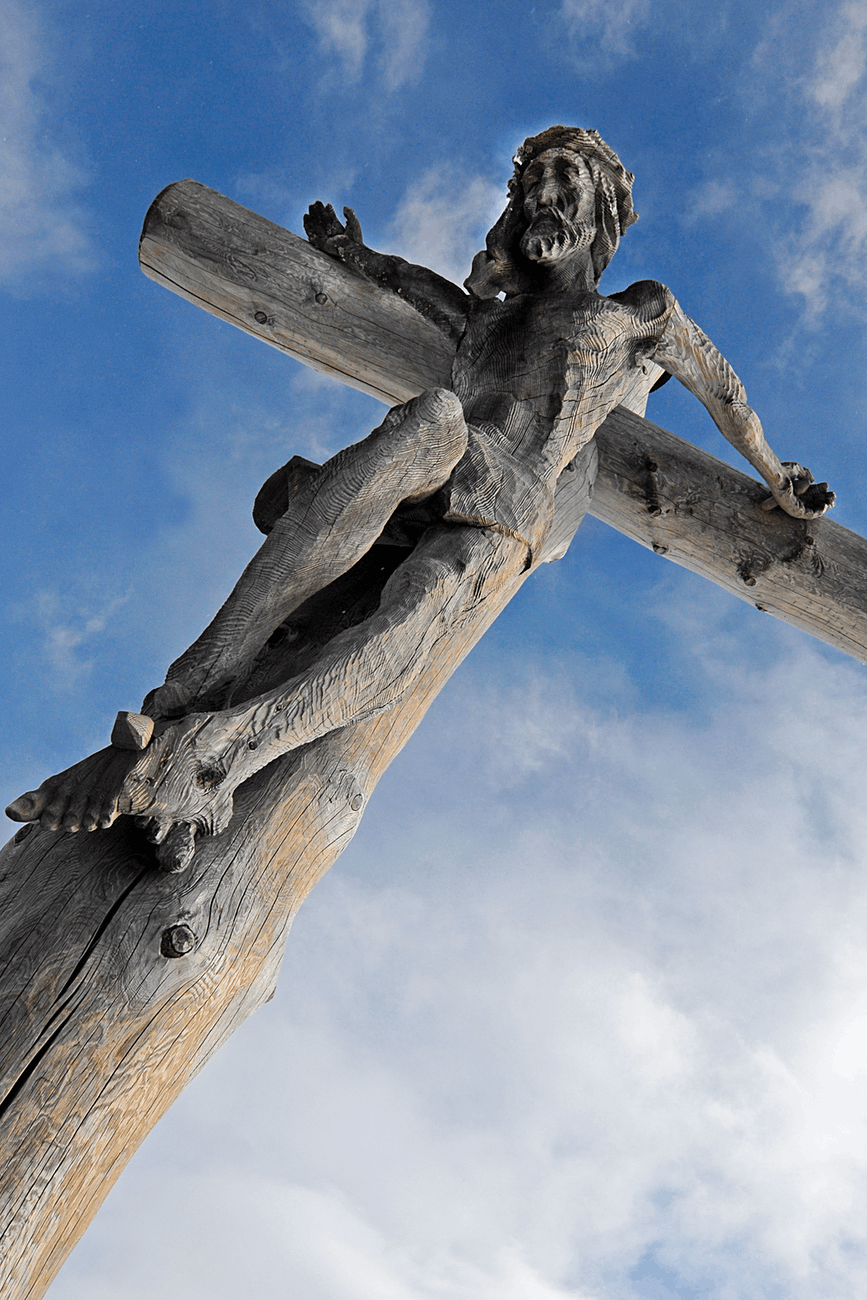
Even when we use the symbol of the cross, it is not about Christ’s death, but his ultimate victory that we celebrate. Jesus himself even referred to the cross in these terms in John 3:

“Just as Moses lifted up the snake in the wilderness, so the Son of Man must be lifted up, that everyone who believes may have eternal life in him.”

John 3:14-15 NIV via http://www.Biblegateway.com

Jesus is speaking with Nicodemus, a Pharisee and religious teacher. He is referring to an historic incident in the wilderness, when the Israelites had rebelled (once again), and the Lord sent venomous snakes among them. Nicodemus would have known about this incident, but Jesus presented it as more than just history– it was a foreshadowing of God’s perfect plan of salvation! https://www.biblegateway.com/passage/?search=Numbers+21%3A4-9&version=NIV God had Moses make a bronze snake to be lifted up on a pole. When the people looked up and saw the bronze snake, they could live. In just such a way, when Jesus was “lifted up” on the cross, he didn’t just die. He battled death to bring life to anyone who “looks up” and believes.

That ancient symbol of a snake on a pole is used by physicians to represent healing. The ancient symbol of Christ on the cross is used to represent redemption and eternal life. Combined with the reality of an empty tomb, we can celebrate life in the midst of any circumstances.

These are difficult days–even with the hope of eternal life, we still have to face the sadness and grief of death, the confusion and hardship of economic chaos, and the uncertainty of what tomorrow will look like– socially, politically, economically, and physically. But we need only “look up” and beyond our circumstances to be reminded that this is not the whole story. There is an empty tomb– ours! There is victory–ours! Won for us by the perfect plan of God, and the perfect obedience of Jesus Christ.

Photo by 3Motional Studio on Pexels.com

Look up– and Live!

Resent, Relent, or Repent…

We’re getting ready to enter the Lenten season–six and a half weeks of reflection and preparation before Easter. Lent is not a celebration in the traditional sense– it is solemn and reflective, personal and, sometimes, painful. It is a time of getting “real” about our sinful condition. The Bible says we have all fallen short of the Glory and Holiness of God (Romans 3:10) and deserve God’s wrath. The natural consequence of sin is death (Romans 6:23), and permanent separation from the goodness of God.

Photo by Engin Akyurt on Pexels.com

There are many ways we can react to this reality. I know many people who resent God’s Holiness and His laws. They do not want to face God’s righteous judgment; they believe that God’s laws are cruel and unjust, and that they do not have to answer to anyone greater then themselves.

Others want to bargain with God. They feel that if they relent– if they set a goal to do more good than harm, if they strive to be better than “the next guy”–God will weigh their good deeds in the balance and judge them in comparison with how bad they “might have been.”

Photo by mentatdgt on Pexels.com

But God doesn’t judge on a curve– He doesn’t judge us by our measure, but by His. And none of us “make the grade.”

If that were the final word– the end of the story– there would be no reason to relent, and it wouldn’t make any difference if we were resentful. But God, from the very beginning, designed a different outcome. His judgement is just, but it is not without hope or remedy. God Himself has given us the chance to change– to repent. Repentance is agreeing with (not resenting) God’s judgment, and responding (not bargaining) with changed behavior and a changed attitude.

Lent begins when we confront the great gulf between God’s Holiness and our sinfulness. It stretches through the realization that sin and its consequences surround us, hem us in, and poison our world. It is a time of sadness and gaping loss, when we long for healing, for hope, and for a home we’ve never seen. It is a time for reflecting on the cost involved–not just in human suffering, but in God’s suffering as a human. God, who could have, in His righteousness, destroyed even the memory of mankind, chose to share our sufferings– hunger, cold, exhaustion, rejection, heartbreak, betrayal, death– to that we could be delivered into everlasting life.

Lent ends as we remember Jesus’ death and burial– His ultimate sacrifice for our debt. It ends with a shattering trumpet-blast of hope and joy on Easter Morning. Our sadness and loss is NOT the end– Sin’s power and poison are illusory. They have no power over our Great God.

Photo by Pixabay on Pexels.com

It can be tempting to respond to our present circumstances with resentment. It can be tempting to relent in our rebellion– trying to bargain with God, and minimize the cost He had to pay, trying to pay the price ourselves with a show of good behavior and a superficial devotion.

But God’s great Love and Mercy should draw us to worship and true devotion. As we reflect on the great gulf between sin and holiness, it should cause us to gladly repent– to lay on the altar all the substitutes and lesser things that keep us from full communion with the Lover of Our Souls.

Photo by sergio omassi on Pexels.com

Our prayers during this season may be difficult. They may be filled with grief, loss, and pain. But they may also be filled with hope and joy as we anticipate the gift of Grace. And they should be filled with praise. After all, Lent is a season; a season to reflect, a season to repent, a season to mourn, but a season with a beginning and an end; a season that gives way to celebration and a sure hope of resurrection!

I Heard the Bells on Christmas Day


I heard the bells on Christmas day
Their old familiar carols play;
In music sweet the tones repeat,
“There’s peace on earth, good will to men.”
I thought how, as the day had come,
The belfries of all Christendom
Had rolled along th’ unbroken song
Of peace on earth, good will to men.
And in despair I bowed my head:
“There is no peace on earth,” I said,
“For hate is strong, and mocks the song
Of peace on earth, good will to men.”
Then pealed the bells more loud and deep:
“God is not dead, nor does He sleep,
For Christ is here; His Spirit near
Brings peace on earth, good will to men.”
*When men repent and turn from sin
The Prince of Peace then enters in,
And grace imparts within their hearts
His peace on earth, good will to men.
O souls amid earth’s busy strife,
The Word of God is light and life;
Oh, hear His voice, make Him your choice,
Hail peace on earth, good will to men.
Then happy, singing on your way,
Your world will change from night to day;
Your heart will feel the message real,
Of peace on earth, good will to men.

Words by Henry Wadsworth Longfellow, with alterations and *additional text by Harlan D. Sorrell.

Some Christmas Carols are the joyous outpouring of Christmas cheer, filled with the laughter of wonder of the season.  Others are forged in pain and doubt that has been turned to the light of hope and renewal.  Such is the story behind this hymn. http://suvcw.org/mollus/art005.ht

Photo by Pixabay on Pexels.com

The famous American poet, H. W. Longfellow had lost his wife in a tragic fire just three years before he nearly lost his son in the horrors of the Civil War.  When his son was severely wounded in battle, Longfellow went to the military hospital, and, when he could, he transported his son home, knowing the journey would be painful and the outcome might not be a happy one.  (His son lived, but never recovered fully– see the article above.)
As he sat with his wounded son over the Christmas season, he could hear the bustle and chatter, and the bells ringing from the church steeples, announcing the good news of Christmas.  As his pain and bitterness churned, he wrote about it, and about how his heart was turned from bitterness to hope. (See the original poem here:   https://www.hymnsandcarolsofchristmas.com/Poetry/christmas_bells.htm

Photo of C. A. Longfellow

Christmas is a time of warmth and good cheer for many–the ringing of bells, the singing of merry tunes, the tinsel and glitter of decorations–but for others, it is a time of deep soul-searching.  “My life is a mess.  I have suffered greatly.  There is no Peace On Earth!”  Yet, the hope and promise of Christmas rings out greater than the darkness and the blast of gunfire, the angry outcries and the weeping of those in grief.

How can this be?

Christmas reminds us that our circumstances, though very real and very painful, are confined to this time and space.  They are temporary– not in the sense that we will forget our pain or loss– but that we can still experience hope and joy  and healing in their midst.  “The Wrong shall fail”–there will still be evil in the world, injustice, hunger, abuse, sickness–wrong will still exist, but it does not have the power to define us, to enslave us and take away our ability to do good.  “The Right, prevail”–God’s promise of Messiah (among several hundred other prophetic promises!) has been fulfilled.  God is Faithful.  God’s word endures.  God’s Justice Will Be Done, and there will be “Peace on Earth, Good Will to Men.”

Photo by Magda Ehlers on Pexels.com

Christmas also reminds us that it is just in those very small things– the tolling of bells, being able to hug your child,  to share memories of loved ones who are no longer here, being grateful for small gifts, giving a word of encouragement–that hope and joy are spread like ripples of water and echoes of sound.  Christ’s birth was humble, but it was heralded with the hosts of angels from the highest heavens. 

Photo by Oleg Magni on Pexels.com

My prayer today is that we would listen for the true message of Christmas, and that we would echo and repeat the message– even if it seems that we are being drowned out by sirens and protests, or silenced by those who are hurting and cannot hear the sweetness in the music of the season.

The Just and the Unjust

“God isn’t Fair!”  I hear this often from angry and bitter people who have suffered losses or disappointments in life.  Some of their losses are heavy and come with great pain– loss of a child, loss of a home, loss of health…these are legitimate losses, and there are no conclusive, comprehensive or comforting answers.  In fact, in many ways, God is NOT “fair”– as we usually define “fair.”  God sends life, health, happiness, sunshine and rain to both the “just” and the “unjust”; to both rich and poor, tall and short, ugly and good looking, gracious and annoying, kind and cruel…  Tragedy strikes at random, some are touched by it, others seem to be plagued by it, and still others skate through life unscathed.

God may not seem “fair”, but let’s look at it from another angle.  God sends rain and sunshine on the just and the unjust.  He sends gifts, and we use, abuse, accept, or reject them.  Circumstances and outcomes are not always pleasant, but does this mean they are “bad?”  And when they are easy, and comfortable, does this always make them “good?” Good people have to endure tragedy– this is usually what we focus on when we talk about God being “unfair.”  And we generally put ourselves in the “good” category.  Why should we have hardship and pain, while “bad” people seem to get a “pass?”    Shouldn’t bad things only happen to bad people, while good people enjoy only good things?  Sounds “fair”, doesn’t it?

But what happens when the world operates on that principle?  If “bad” people are the only ones who get sick, then they deserve to be sick– not healed.  If “bad” people are the only ones to experience poverty, then we don’t need to help the poor or the needy.  Good people should be rich and healthy.  But what if we are sometimes good, and sometimes selfish?  Do we deserve to keep all that’s good if we misuse it, or lose all that’s good if we go astray and then repent?  Is that fair?!  Where is the motivation to cure diseases, share resources, or enforce laws?  Who decides whether your “good” idea is “good” for everyone around you?  Who can ascend to heaven and tell God what is “fair?”

God created us in His image, and that means that we have a spirit that longs for justice and fairness.  It’s how we recognize evil and injustice.  But sin clouds our eyes, and poisons our world–pollution doesn’t just hurt the people who pollute; arson doesn’t just burn the arsonist; drunk drivers don’t just hurt themselves; and so on.  We don’t look at the evil or thoughtless or “unfair” things we have done or said that went unpunished or unnoticed.  And we discount all the unmerited blessings that have come our way– God is often “unfair” in our favor!  We don’t complain about that.

God is not the author of “unfairness”, though He allows it.  And, while I can’t explain away pain and suffering when they occur, I know two things:

God is Gracious– If God’s justice were not tempered by mercy, every mistake, every sin, would be unforgivable and eternally ours to bear.  Every random thoughtless action, and all its consequences, would weigh us down forever.

God is Just–Jesus’s death was about redemption and restoration– He didn’t just die to “save” you from hell– He died to restore you to the person and position for which you were created– whole, pure, unstained and uncorrupted.  This wasn’t “Plan B”– this was His eternal plan, and it includes perfect justice and perfect restoration.

cross jesus summit cross
Photo by Pixabay on Pexels.com

Knowing these things does not take away the pain of the present.  It does not make suffering easy; it does not erase the loss.  But it can allow us to take the next step, and the next, on our journey.  Rain or shine.


Blog at WordPress.com.

Up ↑