Prayers for Healing

My family has prayed for years that my sister-in-law would be healed. She fought a pitched battle with cancer at the same time as she suffered from severe rheumatoid arthritis. Her bones and body were twisted, and she was in a lot of pain. Several days ago, she “lost” her battle and died at age 62. God didn’t give her the miraculous healing we hoped for. God let her suffer for years and then took her from us.

But is all that really true? Did she really “lose”? She lost the daily struggle of her earthly life. She lost the future years with her grown children, her siblings, her nieces and nephews, cousins and friends. And yes, God took her away from those of us who remain to mourn her passing from this life. But she is reunited with her husband and her father, and all those who died before. She is in the presence of the baby brother she never met. Most of all, she is standing, pain-free and glorified, before the very God who heard every prayer, felt every ache, and saw every tear drop.

Healing doesn’t always look like we imagine. Years ago, a close friend of ours got a diagnosis of non-Hodgkins Lymphoma. She underwent experimental treatment and it went horribly wrong. While it killed many of the “bad” cells, it also killed some of her healthy cells and muscle tissue along her neck and throat. She eventually lost the ability to talk, to hold up her head, and to swallow solid food. She seemed to waste away right before our eyes. We all prayed for her to be healed and to have good health restored, but her decline was slow, agonizing, and final. Another friend, a schoolmate, died of cancer a few years ago, after hundreds of people had prayed for her healing. She had great faith, and great hope that she would be cured. But she, too, died. In spite of all the prayers, in spite of her great hope. Three precious women of faith; three lives cut short by pain and senseless suffering.
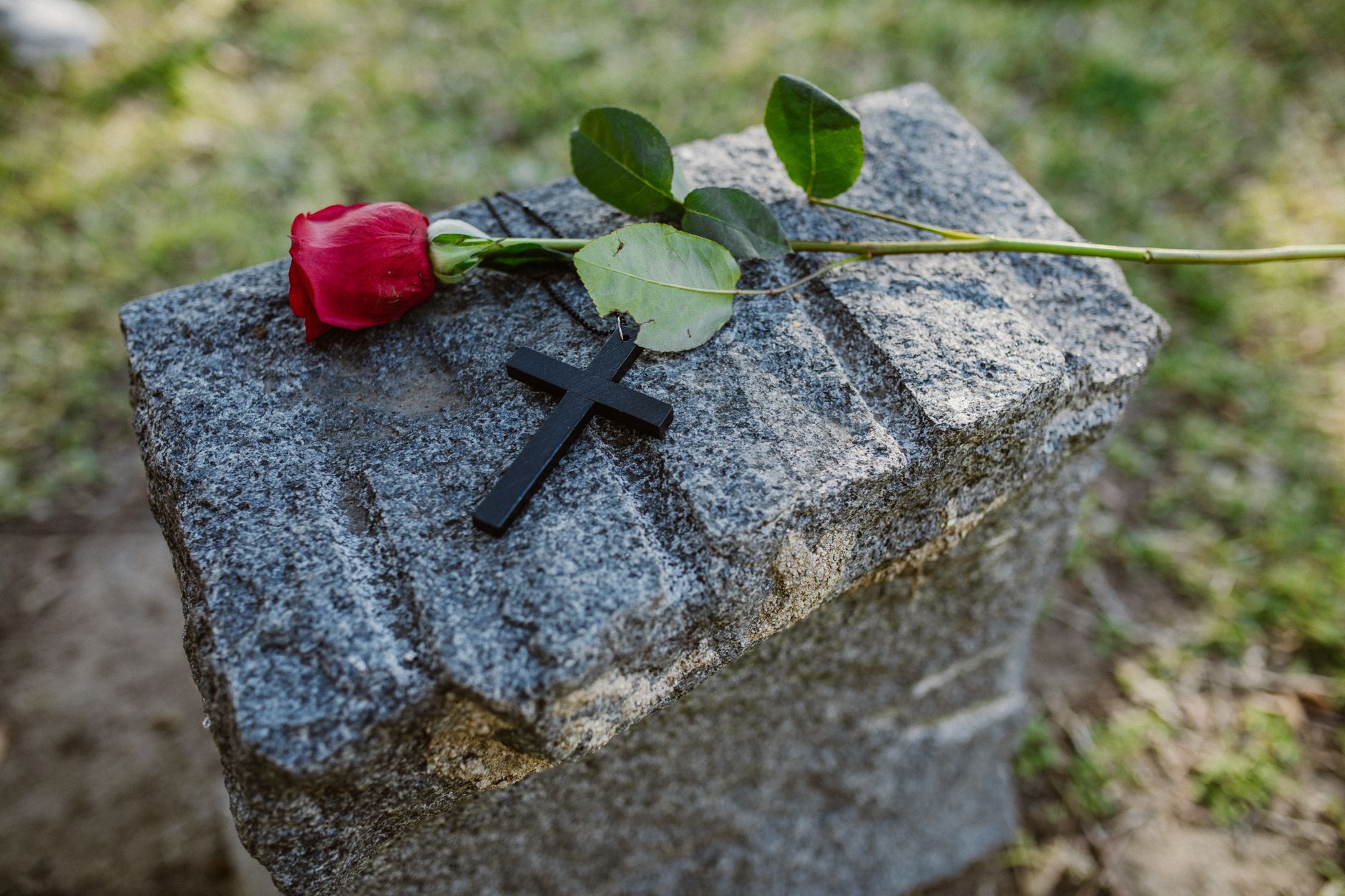
Pain and suffering challenges (and sometimes destroys) faith. But faith can also be strengthened, refined, and purified by suffering– whether we are suffering physically or mentally, suffering injustice or persecution. God does not abandon us in our struggles, and our pain does not bring Him pleasure. We may question why we suffer; we may even question why God allows suffering to continue. But God never leaves us. Even when we don’t feel relief; even when we don’t hear His voice.

Wendy, Jean, and Lena are great examples of women whose faith allowed them, even in the worst suffering, to feel joy and hope. They may have had moments of doubt, fear, or even anger. But each new day brought forth praise– praise for God’s love, for His beautiful creation, for His faithfulness in the past, AS WELL AS in the midst of their suffering. They saw God clearly– perhaps even more clearly– for their struggles. And they inspired others to hope and to rejoice! They endured much. They “fought the good fight and kept the faith” as Paul said in one of his last letters to Timothy (2 Timothy 4:7-8).

I hope that I write words that are true, encouraging, and strong. I’ve read beautiful tributes to God’s faithfulness from many other people as well. But words spoken by those who suffer speak more clearly and powerfully than words written in ease or quiet contemplation. Sometimes, they scream. But they make a deep and lasting impact on those who hear. And then those words testify to God’s glory and love…they echo for generations to come.

God absolutely answered every prayer we prayed over Wendy and over others who have suffered. His healing is not always what we want or expect. But it is eternal, powerful, and glorious. I fully expect to see Wendy (and so many other) completely healed and glorious someday. And all the grief, all the unanswered questions, all the “what ifs…” that I wrestle with now will be wiped away in an instant.

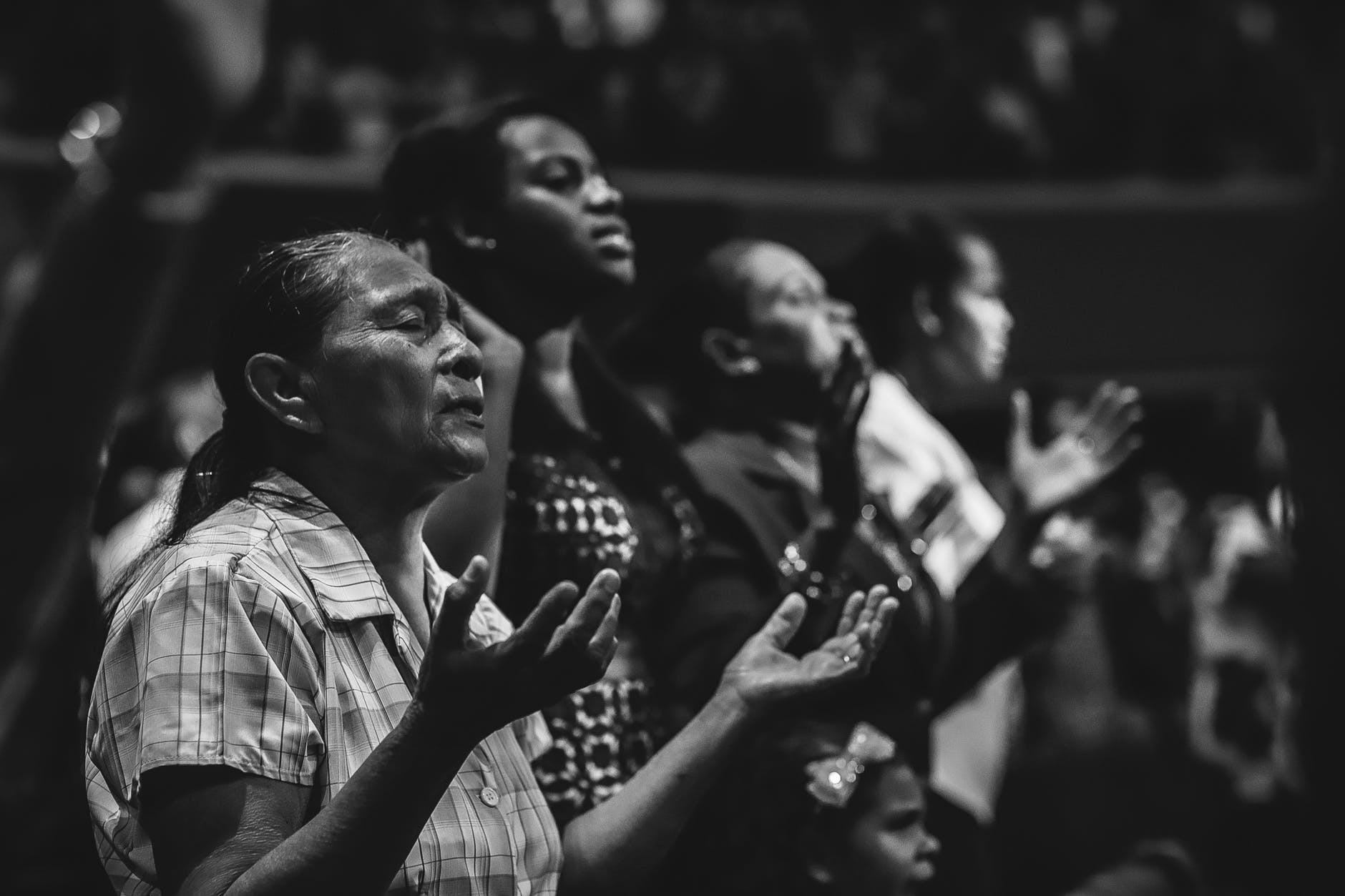
We are blessed to pray for those who need healing. And, in some cases, God answers with miracles we can’t explain. Sometimes, He answers with pain and grief we can’t explain. But we continue to pray. Because healing, whether in this life or the next, is something only God can do perfectly. He heals broken bodies, grieving hearts, and troubled minds. He heals the past, redeems the present, and promises a glorious eternity with Him!

Praise Be to Jehovah Rophe– The God who heals!

Where Does My Help Come From?

I read an on-line article the other day https://www.verywellhealth.com/perils-of-using-the-internet-to-self-diagnose-4117449 about people using the internet to find medical information, rather than seeing a doctor. The article focuses on self-diagnosis, and the dangers of using only on-line sources to diagnose and treat a chronic medical condition. But I was astonished to note that over two-thirds of American adults (according to various studies) are using the internet to get at least some of their medical advice, and many of them prefer to get their medical information in this way. Why is this?

I think there are several factors, many of which are not discussed in the article:

  • Convenience–The internet is easy, quick, and convenient. I can look up medical terms, symptoms, treatment options, find testimonials and comparisons of various medications and procedures all at the touch of a few buttons, all from the privacy of my own home. I can stay in my pajamas!
  • Cost (in both time and money)– I can save hours of sitting in waiting rooms and thousands of dollars by seeking help from the internet. I don’t need to “waste” time or money on multiple appointments in multiple locations with multiple specialists. I don’t need to spend more on medication if the internet offers alternative treatments.
  • “Confirmation Bias”– the article does discuss the idea that using the internet often helps us achieve a sense that we “know” ourselves better than our health care provider– that the information on the internet can be customized to confirm our already-held beliefs about what is wrong and how to treat it. And we can find on-line groups and sites that will confirm and support whatever we already believe about our health or treatment options, or steer us toward a course of treatment that more closely aligns with our established preferences and habits.
  • Community–One of the positive points about using the internet is that we can connect with a community of others who also suffer from similar chronic conditions. We can receive support and advice from people near and far, and connect with resources that would otherwise be unknown to us, given by those who seem to understand and sympathize.
  • Credibility–The article does NOT go into much detail about this, but many Americans (and I suspect others) no longer have a blind trust in the medical profession. Even once respected institutions, such as the National Institutes of Health, the Center for Disease Control, and the World Health Organization have lost much of their status and credibility due to their handling of COVID and other recent medical crises. We no longer trust the “experts” to give us the best medical advice. We are looking for someone (anyone) who seems to have a better answer–one that doesn’t require us to trust where we have felt disappointed or hurt.

Of course, this poses danger and risk to anyone who is trying to “go it alone” in their medical journey. We risk getting it wrong and causing more harm– even risking our lives. We may end up spending more time, energy, and money “fixing” the damage we cause by trusting the wrong people, and end up confused, frustrated, and angry at ourselves and everyone else we trusted to help us. Even “support” groups have been known to give false encouragement and even prey on people or families who are struggling with chronic illness.

But this article also reminded me that we can risk our spiritual health in the same way– going it alone instead of getting connected to a local church, or substituting on-line articles and blogs (even this one!) for daily personal prayer and Bible study. How does this happen, and WHY?

  • Do we find it more convenient to pick and choose our counsel from the abundance of resources available on-line? Do we only want to read or listen to those who tell us what we want to hear? (See 2 Timothy 4:3-5)
  • Are we trying to “cut corners” in the cost of being a Christian? Do we find it too much to spend time in church, wrestle with questions, accept correction from others, or ask for help?
  • Are we worried about “fitting in” or are we trying to create a “holy huddle” of like-minded people, regardless of our call to be part of the “Body of Christ?” (see 1 Corinthians 12:12-30)
  • Have we lost faith in the Church because of past encounters with others, or the attacks of unbelievers? Do we find it easier to “customize” our spiritual life, closing ourselves off from the kind of challenges that cause us to grow, and falling into a comfortable compromise?

The internet can be a wonderful tool, allowing us to share encouragement, testimonies, warnings, and valuable information globally with a few keystrokes! But it is not without risks. Ultimately, we need to trust, not the makers of websites, or the self-proclaimed “experts” of the world, but in the Sovereign God– the Maker of Heaven and Earth, the one who holds the future of our health (both physical and spiritual) in His Almighty Hands!

Trust in the LORD with all your heart and lean not on your own understanding;
In all your ways submit to Him, and He will make your paths straight.

Proverbs 3:5-6 (NIV)

I lift my eyes toward the mountains.
Where will my help from from?
My help comes from the LORD,
The Maker of heaven and earth.

Psalm 121:1-2

My prayer today is that we would look beyond the mountains of information we find on the internet, and fix our sight and our trust in God for our daily bread, our health, and our future. May we rely on His wisdom to help us seek the right counsel, and to learn, even from our sufferings, that His Presence and His Promises are eternal, sufficient, and sure!

I Love to Tell the Story

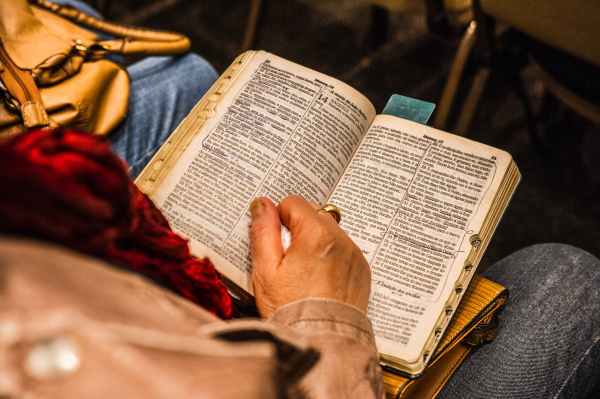
I’ve mentioned this before, but many of my childhood memories of church revolve around old hymns, sung with more gusto than musicality– joyful noises, just not always faithful to the notes. But they were faithful to the Word, and the Worship of Christ. I will always be grateful for that heritage.

Photo by Pixabay on Pexels.com

In the more informal services on Sunday nights or Wednesday nights before we settled in for prayer, the worship leader would often ask for members of the congregation to call out the number of any random hymn. We would (attempt) to sing it, often a capella, just the first verse, or maybe the first and last. It gave people a chance to sing an old favorite, or a hymn we hadn’t sung in awhile. Sometimes, a brave soul would find a “new” hymn– one no one (or almost no one) had ever heard. Occasionally, the evening church hour would revolve solely around this worship model– a hymn-sing service. It’s a dying practice, and one that deserves to be preserved. My church has done it a few times over the past years, a local chapel does it once a month, and Bible Study Fellowship in our area begins with hymn-sing every week. It’s a great way to learn old hymns, long-forgotten choruses, and treasured truths of doctrine set to music.

Photo by Luis Quintero on Pexels.com

But I digress. As a child, I liked this spontaneous activity, except for one thing. I knew that if Mr. Teeter opened the hymnal and started to clear his throat, that he would suggest the same hymn he always picked. It never seemed to vary– ever. Mr. Teeter was one of the older men of the church. He was in his seventies, short, with wisps of white hair, wise and twinkling eyes, and a big, red nose like a strawberry, which he often blew–loudly–into his pristine white handkerchief. He always came to church in a suit, complete with a hat, which had its own special spot on the hat rack in the entryway. I could not imagine him any other way. And every time he had the opportunity, he would choose to have us all sing, “I Love to Tell the Story.”

I wasn’t much impressed with the song. It seemed old-fashioned. It was simple. It had no soaring musical passages– sometimes, it even sounded whiny to my young ears. I dreaded the thought that we would sing it (yet) again. I would try to get my hand up and choose another hymn, any other hymn, before Mr. Teeter could clear his throat. I did not understand why he never seemed to want to sing other hymns– I knew he liked “Standing on the Promises,” “Blessed Assurance,” even “Leaning on the Everlasting Arms!” But, while he could be stalled for one or two other numbers, he would eventually call out the dreaded number, and we would sing at least one verse. It’s not that I hated the song, and I certainly had respect for Mr. Teeter, but I just couldn’t figure out why THIS song? Why EVERY time?

Photo by Pixabay on Pexels.com

Just a couple of years before his death, Mr. Teeter gave his salvation story in front of the church. Many of us had never known about his wild early years; his drinking or his rebellion against his family and the church. Many of us assumed he had always lived a quiet, rather pious life. He radiated the peace and wisdom of a man who walked daily with his God. And then, he told of his fascination with this old hymn. He liked the very simplicity of it–his life wasn’t based on some grand theological argument, or a complicated list of heroic actions he had achieved to win his salvation. His life–his born-again, wonderful, eternal life– was because someone had told him an old, old story, he had believed it, and that had made all the difference. That simple old story has been the same since the beginning– God made the world, mankind sinned and fell short of God’s glory, God sent His Son to pay the price of that fall, and Jesus’ death and resurrection allows anyone who believes to be adopted as a son or daughter of God. And though Mr. Teeter knew the old story inside and out, and lived it, he never tired of it. He was “hungering and thirsting” to hear it again!

Whenever I hear this song now (or suggest it), I think of Mr. Teeter singing with saints and angels, his quiet voice full of emotion, his eyes filling with tears of gratitude and worship, as he gets his request–“and when, in scenes of glory, I sing the new, new song, ’twill be the old, old story that I have loved so long. I love to tell the story; ’twill be my theme in glory to tell the old, old story of Jesus and His love!”

Blog at WordPress.com.

Up ↑