In This World You Will Have Trouble…

When will the violence end?  How long, O Lord, must we wait for justice?  Why did you allow this to happen?

And it has happened again.  A school-related shooting, this time in Minneapolis, Minnesota.  News feeds were filled with information, speculation, analysis, and commentary for days after the incident.  A week later, the fury seems to have moved on, and the fate of the two murdered children, their families, and the other wounded victims of the shooter’s rampage are dwarfed by the cries of those with a political agenda.  Some are raising concerns over gun control; others want to look at the effect of puberty blockers and other treatments used for those in the trans community. Everyone looking for a quick explanation and a quick solution, so that this “never happens again.”

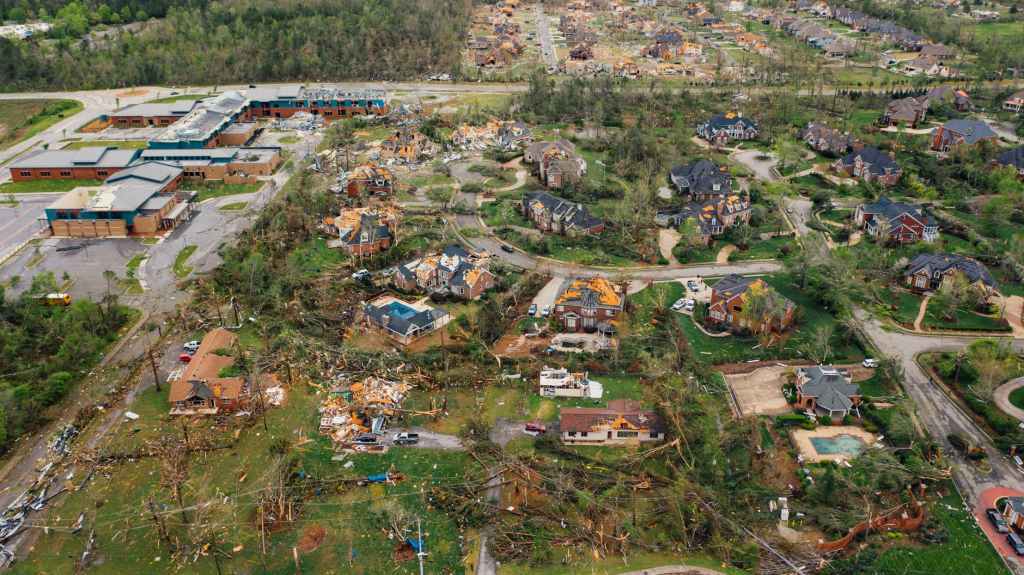
Senseless violence, natural disasters, sudden tragic circumstances, still have the power to shock us, overwhelm us, shake our confidence, our composure, our beliefs.  Most of us want to believe that we live in a predictable world, a safe and orderly world, a world that has been tamed, and groomed, and civilized.  And we don’t want those beliefs shattered with the truth– life is unpredictable, filled with tragedy, evil, and danger, and it will end in death.  I’m not saying this as a cynic or a pessimist– life is also wonderful, filled with love, laughter, achievement, delight, and eternally precious.  But why are we so deeply disturbed to face the truth about our troubled world?

I believe it is due, in part, to the recognition that this is a fallen world.  It was not made for evil and tragedy and death, but every tragedy reminds us that the whole earth groans for restoration to what it was always meant to be.  The echo of Eden, and the hope of Heaven live in us, and the reality of our lost state cannot be denied when tragedy strikes.  The pleasant facade of the triumph of reason and humanity cracks, and we are forced to see that evil resides next door, down the street, across town, perhaps even in our own hearts and minds.

I love the movie “The Princess Bride” (ask any of my friends–I can quote whole scenes!), but when I first saw it in the theater, there was one line that struck me like a punch in the stomach.  The Dread Pirate Roberts (a.k.a. Westley) kidnaps/rescues Buttercup from her original captors, and after she tells him of the pain and desolation of losing her true love, he doesn’t comfort her by revealing that he is, indeed, her own sweet love, still alive and well.  Instead, he says, “Life is pain, highness.  Anyone who tells you differently is selling something.”   Wha-what?!   What kind of lover, when confronted by that kind of tragic outpouring, says something so callous?  To quote another line from the movie, “Why don’t you give me a nice paper cut and pour lemon juice on it?”  But Westley is not heartless.  The line is memorable, both because it is jarring in its context, and because we recognize that it holds a truth.  Anyone who tells you that this life will be free of pain and suffering IS selling something.  In the movie, Humperdink is “selling” the idea that he is going to make Buttercup a princess and marry her, and they will live happily ever after; all the while planning to kill her.  In today’s world, there are people trying to sell us ideas– that they “have it all figured out”; that truth and justice and morality  and even a person’s worth and value are all relative; that God doesn’t exist or that he doesn’t care; that evil is a figment of our imagination, or that human institutions can create a perfect society and “save” the planet from other human activities and institutions.

Jesus tells us in John 16:33 that in this world, we will have trials, trouble, tribulation, and/or suffering (depending on which version you read).  Not because God doesn’t care; not because he is incapable of stopping tragedies, but because we (humankind) have turned away from God, and the consequence of our rebellion is tragedy and death.  He doesn’t tell us this because he is callous or insensitive or cynical.  In fact, in the next phrase, he tells us to take heart, and to be of good cheer, for he has overcome the world.  HE has overcome the world, and in doing so, he has given us hope, and peace, and strength– not to avoid or deny tragedy, but to overcome it, and to triumph over it.

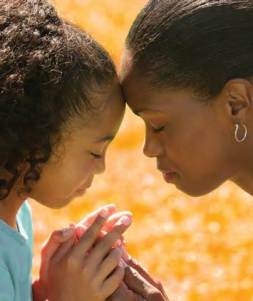
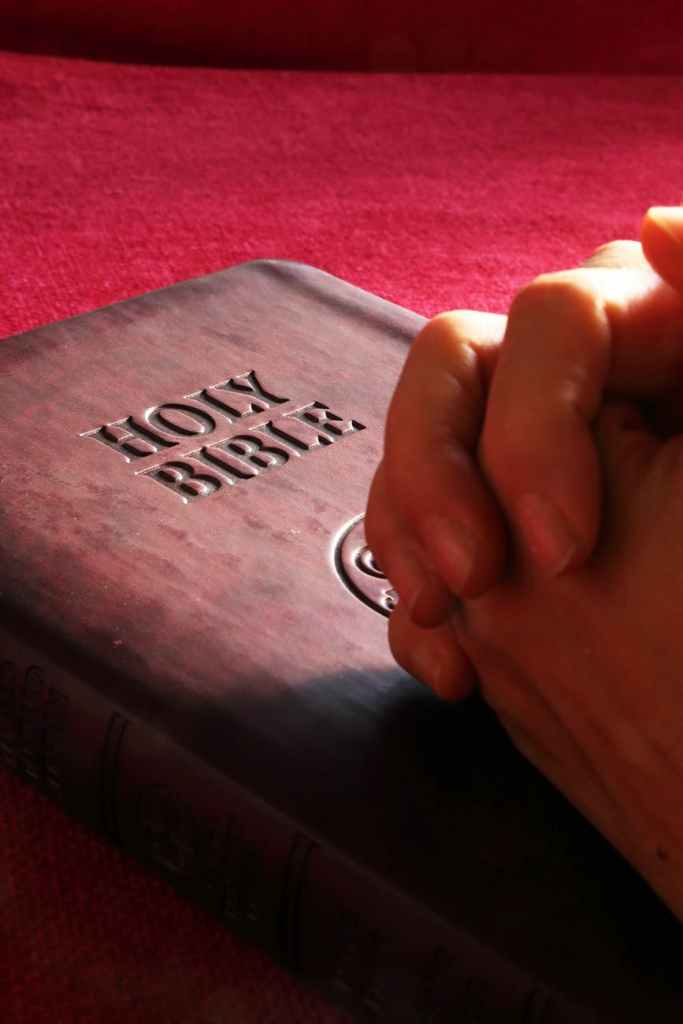
How does this relate to the pursuit of prayer?  Prayer is not a magic panacea in times of trouble– it isn’t a chocolate-coated miracle pill.  Prayer (and sharing thoughts and prayers with those who are suffering) doesn’t make the suffering disappear– it doesn’t lessen the horror or the evil of an event, and it doesn’t guarantee that future hate, violence, injustice, or tragedy will disappear or even diminish.   But prayer reminds us that evil will not always triumph; that it need not overwhelm us, paralyze us, or defeat us.  I believe it can bring us from being “mostly dead” in despair, fruitless rage, divisive finger-pointing and fault-finding, “inconceivable” arguments, vengeful fantasies, and conceited self-indulgence, back to abundant life in Christ, and renewed courage to do what is kind and loving, even in the face of evil.  Prayer should also restore our focus on what is good, and noble, and true, so that we can be equipped to fight for what is right, instead of just ranting against what is wrong.

Finally, brothers and sisters, whatever is true, whatever is noble, whatever is right, whatever is pure, whatever is lovely, whatever is admirable—if anything is excellent or praiseworthy—think about such things.– Philippians 4:8

I pray, in the wake of this newest tragedy, that God would show me where I am wrong in my thoughts and actions toward Him and toward others; that he would surround those who are suffering pain and loss, giving them comfort, strength and renewed purpose in the days ahead; that he would lead us to have the tough conversations, and take the right steps to bring renewal, restoration, hope, and healing to our communities and our land; and finally, that we would listen to, and acknowledge the truth, and take heart as we focus on the One who has overcome the world.

It’s Not Enough!

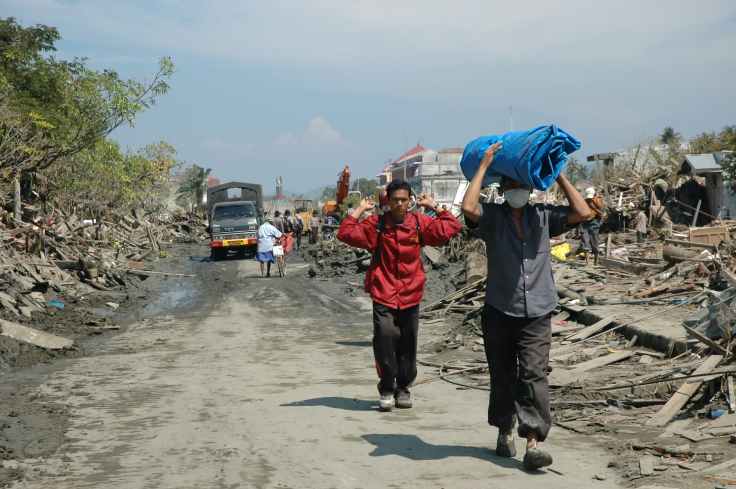
Often, when there is a disaster– especially one that seems preventable and senseless, like a mass shooting or a horrible crash–thousands of people reach out with “thoughts and prayers” for the victims and their families. And, predictably, others will angrily comment that thoughts and prayers are “not enough.” What good are thoughts and prayers in the face of senseless violence or preventable dangers? Shouldn’t we be driven to action? Shouldn’t we focus our efforts on justice or working to guarantee that such disasters can never happen again?

Such anger is natural, and such sentiments may seem more virtuous than offering nebulous emotional support. What, after all, can thoughts and prayers really DO in the face of evil, injustice, pain, and grief?

Well, I can’t speak for “thoughts”, but I have studied prayer for most of my life. I would offer the following words about the effects of prayer:

  • First, prayer reminds me that I am NOT in control of my circumstances– only my reaction to them. I cannot control what happens, what HAS happened, or what WILL happen. And my anger will not change what has already happened, nor will it prevent future disasters from happening. And while I may not be able to prove to others that prayer CAN prevent future disasters or heal present grief, I have known it to do both in my life and in the lives of others.
  • Second, prayer reminds me that there is Someone Bigger than me– Someone Bigger than my circumstances– who has the wisdom and the power to do what even thousands of well-meaning people cannot. Thousands of people coming together can make a difference over time, but God can do miraculously more than we can imagine!
  • Third, praying for others is something I CAN DO— anywhere, anytime– across distances, cultures, time zones, and circumstances. Prayer doesn’t cost anything. It doesn’t require that I have specialized skills or access to physical resources. It may not seem very active, like ranting or screaming, marching or protesting, but it isn’t the same as inaction or apathy.
  • Lastly, praying for others is a first step in helping others. My prayer alone may not seem like “enough”, but prayers have a way of multiplying, and inspiring, and intensifying in positive and impactful ways.

But more than just talking about the effectiveness of prayer, I’d like to pose a couple of questions for those who dismiss prayer as “not enough.”

  • What are you offering (instead of prayers)? Will your thoughts, plans, and actions have immediate or eternal results? Do you have the solution to all the world’s problems? Will you be able to control what happens in the future, or make sense of what has happened in the past? Will your solutions be perfect– no unintended consequences or necessary casualties?
  • If you are so angry about others praying, why waste your energy complaining about it? Go ahead with your own solution/reaction/plan.
  • Is your solution “enough?” Is your anger “enough?” Are your good intentions “enough?” Ultimately, you must wrestle with the existence of evil and injustice in this world. Senseless things happen. Good people suffer, and guilty people enjoy “success.” And nothing we offer is ever “enough” to change the world around us.

Our efforts and actions will never be “enough.” But prayer taps into the reality that God IS ENOUGH. His Grace is sufficient; His Love endures forever; His wisdom is higher than ours, and His power is boundless. He doesn’t always remove us from the chaos and suffering of this world, but He redeems us, and He enters into the circumstances of our own suffering and grief. He gives us courage, strength, hope, and a sense of purpose that goes beyond what we can find in ourselves.

Vending Machine Prayers

As I write this, my mom is dying. We don’t know how much longer she has, but we’ve asked for prayers as she takes this journey toward death and resurrection. These are sometimes difficult prayers to make. We don’t like to see Mom suffering, but we don’t like the thought of separation through death, either. Our initial prayer would be for complete healing. But that’s not realistic, given that Mom has heart failure and is almost 90 years old. That doesn’t mean that God cannot or would not grant total healing. But we aren’t expecting that kind of miracle when we pray today.

Photo by Andrea Piacquadio on Pexels.com

For some people, our prayers seem meaningless. One of my classmates from school reacted to my request for prayer by saying, “I just wish that prayer DID something…” I take this to mean that if we don’t get a miraculous outcome, she believes our prayers are wasted. I hope I’m misinterpreting here, but I know that this is a common criticism of prayer in tough times. It seems that every time there is a natural disaster, or a mass shooting, people who offer “thoughts and prayers” are roundly criticized for praying “instead” of “doing.” As though the two are mutually exclusive. As though prayer is an empty gesture in the face of disaster and distress. As though there is no hope, no comfort, and no help in praying.

There are others who will assert with complete confidence their belief that God will answer any prayer for a miracle, simply because they ask it “in Jesus’ Name” or because many people are praying for the same outcome. I call these kinds of prayers, and attitudes about prayer, “Vending Machine Prayers.” It is the belief that prayer must produce an immediate and positive outcome, or it is “broken” or invalid. If you don’t get what you were expecting, you must have prayed “wrong,” or didn’t have “enough” faith. Or your prayer just didn’t “work.” When someone puts money into a vending machine, and presses a button or punches in a code or pulls a knob, and they don’t get the expected item, some of them will kick the machine, or curse. Or they will try again, carefully trying to get the “right” result. Vending machines are inanimate objects designed to give a satisfactory consumer experience. If the coins or bills “jam,” if the knobs or buttons malfunction, if the product gets “stuck,” or isn’t available, the consumer feels cheated. Sometimes, they can get their money returned, but most often, they go away angry and unfulfilled.

God is not a vending machine. He is not “designed” to serve us or give us satisfaction. There is nothing we can “insert” in our relationship with God –even sincere prayer–that obligates Him to give us what we desire. God chooses to answer prayers in whatever way He knows is best for our eternal and overall well-being. God still gives miracles. I’ve seen it and experienced it. In fact, we could have lost Mom several years ago, when her heart failure put her in a similar state. God provided a miracle in the form of heart valve replacement surgery–and a cancellation that moved her surgery schedule forward before her condition was too far gone. I’ve seen people healed of cancer– and people whose prayers for healing ended in their rapid decline and death. But none of those prayers were wasted. Not one. God was working– sometimes on the sidelines, strengthening family members to deal with grief; sometimes providing testimonies to those with doubts and questions; sometimes planting seeds that would bear fruit years later in the lives of those left behind–sometimes God was working “sideways,” as He did with Mom years ago to give her several more years of life, even though she wasn’t completely healed, to grow and prepare for this next step and testify to God’s sustaining power.

God is not apathetic, and He certainly isn’t “happy” about Mom’s decline and her impending death. He shares our sufferings and our sorrows. But God knows and sees the “rest of the story!” Jesus wept over the death of His friend Lazarus, even though He knew that Lazarus would be raised back to life. Jesus was sharing the deep grief over the loss and sorrow felt by all of His friends, just as He rejoiced with them as Lazarus walked home from the tomb! (See John 11 for the whole story.) God doesn’t delight in death. He is the author of LIFE. But He is very present through every stage of life– even that last bitter taste of death we all must experience. And just as we pray for God’s miraculous presence, we pray for His guiding, comforting, and hopeful presence in ALL situations.

Prayer DOES something! Even if we don’t see immediate changes in situations; prayer changes US. It changes OTHERS. It changes our priorities and perspectives. It draws us close– to each other and to the One whose Love is Eternal and unchanging.

116 I love the Lord, because he hath heard my voice and my supplications.

2 Because he hath inclined his ear unto me, therefore will I call upon him as long as I live.

The sorrows of death compassed me, and the pains of hell gat hold upon me: I found trouble and sorrow.

Then called I upon the name of the Lord; O Lord, I beseech thee, deliver my soul.

Gracious is the Lord, and righteous; yea, our God is merciful.

The Lord preserveth the simple: I was brought low, and he helped me.

Return unto thy rest, O my soul; for the Lord hath dealt bountifully with thee.

For thou hast delivered my soul from death, mine eyes from tears, and my feet from falling.

I will walk before the Lord in the land of the living.

10 I believed, therefore have I spoken: I was greatly afflicted:

11 I said in my haste, All men are liars.

12 What shall I render unto the Lord for all his benefits toward me?

13 I will take the cup of salvation, and call upon the name of the Lord.

14 I will pay my vows unto the Lord now in the presence of all his people.

15 Precious in the sight of the Lord is the death of his saints.

16 O Lord, truly I am thy servant; I am thy servant, and the son of thine handmaid: thou hast loosed my bonds.

17 I will offer to thee the sacrifice of thanksgiving, and will call upon the name of the Lord.

18 I will pay my vows unto the Lord now in the presence of all his people.

19 In the courts of the Lord’s house, in the midst of thee, O Jerusalem. Praise ye the Lord.

Psalm 116 KJV (emphasis added)
Photo by Tima Miroshnichenko on Pexels.com

There are dozens, if not hundreds, of people praying for my Mom (and all of us who love her so very much). And probably, there are some “vending machine” prayers among them. That’s ok. God hears them all. And I am so very blessed by them all. Because prayers DO SOMETHING AMAZING. They rise to a God who sees, who hears, and who LOVES unconditionally, eternally, and perfectly! We’re actively trying to do what we can do to make Mom comfortable and seeking treatment that will ease her last days, but we depend on God’s touch, His healing, His timing, and His good will to see us all through and keep us in perfect peace.

In the Bleak Midwinter

It’s not actually midwinter just now. In fact, “winter” won’t officially begin for another few days. But it has been bleak around here.

Photo by Tan Danh on Pexels.com

I suffer from seasonal depression. In spite of the joy I know I should feel during this season; in spite of all the reasons I have to BE joyful, I have been in a funk. I’ve been physically ill, but even more, I’ve been mentally drained and emotionally overwhelmed for over a week. I’ve missed posting a couple of days recently, because I feel hypocritical writing about Christmas.

Photo by Laura James on Pexels.com

But I choose to write tonight about the enduring power of prayer. There are people praying for me, not because I’ve said anything about my condition, but because they are faithful in praying for people, and I happen to be one of them. The clouds are beginning to lift and I’m finding it easier to feel what I already know– that God is in control; that He cares; that He has a purpose beyond the sadness. It’s why I’m so passionate about praying and keeping a prayer log or prayer journal. I am one of those who pray for others, and I am one of those who are being prayed for–we lift each other up, even when–especially when–we don’t fully understand why.

Photo by Arina Krasnikova on Pexels.com

Some may ask, “How can you say that prayer works if you are depressed? Doesn’t that just prove that prayer isn’t working?” Some people mock the power of prayer in the face of “bad” circumstances. The recent school shooting in my home state of Michigan, or the recent spate of tornadoes in Kentucky and other states are prime examples. Sincere people of faith are being mocked for saying that their “thoughts and prayers” are with the people who are suffering. Mockers say that thoughts and prayers are meaningless–otherwise, prayers should have prevented the events in question from ever happening. In the aftermath, only actions are of value.

Photo by Kelly L on Pexels.com

In the face of disaster, distress, or depression, prayers may seem small and even meaningless. Most prayers don’t pack the power of a tornado, nor elicit such an immediate and dramatic response. My depression didn’t suddenly disappear the moment someone began praying for me; those whose homes and lives have been turned upside-down in the past days and weeks didn’t wake up this morning to find that it was just a bad dream. And prayer should be accompanied by thoughtful and compassionate action. But prayer heals– and healing takes time. God chooses to use the prayers of others to seep into our lives; to fortify us and draw us together. Actions may change the circumstances, but prayer changes the person. Prayer reaches beyond the circumstances and the limitations of our human nature.

So today, I will pray. Through the “funk,” through the pain, through the confusion and chaos of a troubled world, I will choose to pray. For those individuals listed in my journal; for those whose needs are posted online or made known to me some other way; for those whose names and faces come to mind throughout the day. Because it is God’s way. Because others are faithfully doing the same. Because, in the end, it brings joy and peace. Even when–especially when– things seem so bleak.

“Thoughts and Prayers”…Revisited

One of the reasons I began a blog about prayer over eighteen months ago was in reaction to a scathing op-ed article about prayer written in the wake of a mass shooting. Well, here we are again. Two highly publicized (and several “smaller”) mass shootings occurred over the last week in the U.S., and the outrage and anguish is overwhelming and completely understandable. The senseless violence and subsequent loss of life stops us in our tracks. Why? Why would anyone do this? How? How could this happen? In the wake of such evil, millions of people rush to distance themselves from such evil; many of them resort to angry protests and calls for action. Many point their fingers at this leader, that group of people, that philosophy, that industry–any entity (other than oneself) that can be held responsible and made to “pay.” Many offer earnest condolences for the families of the victims– often with the phrase “thoughts and prayers.”

Photo by Kat Jayne on Pexels.com

But what good are any of these responses? Nothing we say or do can turn back time and undo the events of the past week. No amount of protesting, legislating, avenging, or moralizing will guarantee that everyone lives in peace and safety as long as evil lurks in human hearts– whether by vigilante gun violence, war, terror attacks, economic and political unrest, rioting, looting, domestic violence, brutality, assault, murder, or suicide. “Banning” guns (or “assault weapons”, “military-style” weapons, etc.) sounds like a sensible action to take, but it is not practical in the face of evil people who will not follow the law, and corrupt governments who will not enforce the law, or worse, who use their power to oppress their own citizens.

Finding, and even punishing a scapegoat may make us feel morally superior and bring a false sense of closure, but it will not break the cycle of anger, hatred, injustice, or lack of respect that is at the root of violence.

But there is something equally repugnant about hearing the phrase “thoughts and prayers”, no matter how earnestly it may be expressed, in the wake of inhuman tragedy. The “thoughts and prayers” of strangers have no warmth, no solidity, no promise, and no strength. They are wisps and vapors of selfish and graceless bystanders, who want to ward off the evil that has befallen someone else. They are nothing more than a pseudo-spiritual appeasement offered to the nameless, faceless fates.

Photo by Pixabay on Pexels.com

And the greater tragedy is that such empty phrases, expressed as reactions to great evil, cheapen the very real power that should be found in the pursuits of thinking/meditating and praying.

Prayer is not a knee-jerk reaction to bad news. It is not a gesture meant to signal to others that you are beyond the touch of whatever forces have just hurt someone else, or that by your thirty second of piety you can alter the consequences of a catastrophe or change the course of the future.

Where were the “thoughts and prayers” of others two weeks ago? Where will they be tomorrow or next week? What quality of “thoughts and prayers” go out to the families of victims whose names we have not even bothered to learn? Such superficial public expressions, sent with seven teary-eyed and five or six high five/praying hands emojis, mean very little to anyone except the sender. They change nothing from the past, and offer nothing going forward.

Photo by Pixabay on Pexels.com

I am as guilty of this kind of meaningless virtue-signaling as anyone. I want to feel as though I can, by such empathetic expressions, encourage and strengthen those who have been touched by horror, tragedy, survivor’s guilt, trauma, grief, etc. But I can’t. Nor can my anger, frantic attempts to “fix the world”, or brilliant analyses of all the root causes of violence prevent the next bombing, drive-by shooting, hijacking, arson, political uprising, or disappointing election result. I cannot change the hearts or minds of those with whom I disagree. I cannot “make” a better world.

But that is why I write this blog. It is through a lifestyle of prayer– real prayer, difficult and sometimes agonizing prayer, joyful and grateful prayer, pleading and gut-wrenching prayer, consistent and obedient prayer–that I engage with the only One who CAN bring hope, justice, change, renewal, and salvation to this world. And it is through a lifestyle pursuit of prayer–daily seeking God’s face, asking for His wisdom, accepting His mercy when I fail, reflecting on His character, acting in obedience–that He can change me. That power, that hope, and that renewal is available to ANYONE who will ask. It sustains us when tragedy strikes, and it empowers us to offer far more than empty “thoughts and prayers”– it causes us to pray, not just after a tragedy, but unceasingly– not just for our own comfort and safety going forward, but for the well-being of our enemies, not just for those who look like us or think like us, but for those who scream at us and tell us to stop already with the “thoughts and prayers!” That power causes us to seek peace where there is hatred, justice where we find corruption, and humility when we are surrounded by narcissism.

Photo by Pixabay on Pexels.com

And if we are not doing those things– if we are not tapping into that power– we should be taking a closer look at those “thoughts and prayers” we are hiding behind.

The prophet Jeremiah lived in violent times. His city was besieged by the Babylonians, and his king was a prisoner in his own palace. God had sent messages of judgment and punishment for the entire nation. Jeremiah prayed diligently, and spoke out against the injustice, pride, and idolatry all around him. In response, he was arrested, beaten, thrown into a pit, and abandoned. God even told him to stop praying for his countrymen, because they were unwilling to accept the truth about their condition, or prepare for the punishment to come. But in the middle of the violence and bad news, God offered hope and promises of restoration, justice, renewal, and peace. He also gave this warning to Jeremiah, that he should stand firm– he should, by his example of consistent obedience and hope– influence others, NOT let himself be influenced by the anger and arrogance of those around him.

Lord, I need to stop offering cheap thoughts and empty prayers that do nothing to honor You and little to help others. Give me the strength and grace to stop reacting to tragedy by reflecting the anger and self-righteousness around me. YOU are my hope, and the best hope I can offer to anyone else. Help me to serve others in truth and love, not judge them, dismiss them, or honor them above You. Help me to seek and stand for justice that is consistent with Your character and Your word, even if I stand alone.

Blog at WordPress.com.

Up ↑