Prayers in the Pendulum

I’m late in posting an entry today– it’s been a day of swinging in the pendulum.  Not in a personal sense, but in praying for friends and family.

We all have “pendulum” days (or weeks, or even hours)– times where we are carried, pushed, swung, or banged about by life’s circumstances.  Moments where time stands still– sometimes in astonishing joy, and sometimes in soul–stomping grief.  Then comes the rush of being pulled by forces beyond our control– up, and down, across, and through the arc.  I’ve been hearing from friends all day, sharing those moments, and asking for prayer.  In the space of an hour, I’ve prayed for those who have just lost loved ones– a mother, a sister, a son– and those who are celebrating– an engagement, a birthday, a new home.  I’ve prayed for those whose lives are in the balance– in ICUs and in the womb.  Cancer, anniversaries, new puppies, pneumonia, a new job, a vacation, a car accident…

When we pray for others, we share those joys and heartaches– together, we swing through the arc of tragedy and triumph, even if we don’t all feel the full impact.  We become like the balls on the pendulum swing; absorbing and sharing laughter and tears not fully our own. But by doing so, we provide both energy and equilibrium.  Shared joys are multiplied; shared pain becomes bearable.  Prayer breaks through the isolation or the intensity of the moment, and keeps us grounded, or keeps us from shattering.   It reminds us that even in these defining and refining moments, life is not static.  And the momentum pulses through us in our connectedness.

Yet prayer goes one step further– it brings triumph and tragedy to the God who is above, beyond, around, and amidst the circumstances, the chaos, and the emotional highs and lows.  Our voices, raised together in laughter or grief, exasperation or anticipation, ascend to the one who came and lived and laughed and cried among us– to Jesus, whose arms are fully extended to embrace us wherever we are on the pendulum.

pexels-photo-227390.jpeg

Praying for Peace

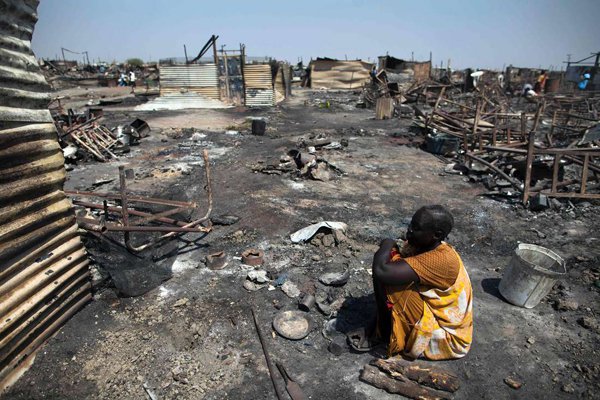
A few years ago, I was introduced to a man from South Sudan, who had come to the U.S. for a missions conference.  Earlier in the evening, he had shared a report on conditions in his region– all the horrible details you dread hearing–displaced families, homeless refugees, orphaned children, shortages of food, clothing, shelter, blankets, and medicine, constant fear of being attacked by one side or another in the ongoing conflict.  Throughout his report, he emphasized the sovereignty of God, and his hope that he and his team could continue to help those most in need.  As I got a chance to speak directly to “Robert” *, I told him that I would pray for peace to come to his region.  I was shocked when he stopped me.  “Please don’t pray for peace,” he told me.  “Pray instead that God would give us the resources and the strength to be faithful and to keep helping.”
south sudan

Then he explained.  It wasn’t that he didn’t want peace to come, but he wanted me to pray for whatever God willed for his region.  The Kingdom of God, not earthly peace, was his highest priority and his greatest urgency.  Because of the circumstances of war, people were desperate.  Their world had been turned upside-down, and they were in great need.  But war had also opened up opportunities– not only opportunities to help those in need, but opportunities to show the Love of Christ as it had never been known to the people there.  The people who were coming to refugee camps were meeting, sometimes for the very first time, people from other villages, other cultures, and other faiths– people they had considered enemies.  Suddenly, they were seeing these enemies as fellow sufferers, fellow human beings with the same injuries and losses, needs and longings as themselves.  They were also “seeing through” some of the lies they had believed about “the others” in their midst.  Their circumstances were desperate, but their biggest need was for hope and help.  Help was coming from around the world– United Nations’ agencies, The Red Cross, Doctors Without Borders, and several Christian relief and medical organizations.  These groups had been kept out during peacetime and even in the early stages of fighting.  Not only were they able to help with immediate relief; they were able to provide medical care for victims of AIDS, and childhood diseases, care that had long been denied.  Along with practical help, though, these groups were providing hope– hope to rebuild, hope in the midst of despair and chaos, hope of eternal life and a relationship with God.

“Robert” was not saying that he didn’t long for peace, or that peace would be a bad thing for the people of South Sudan.  Of course not.  But the greatest need was not for an immediate end to fighting– it was for the kind of peace that only God can bring.  As far as I know “Robert” is still working with refugees and displaced families in South Sudan.  The work is difficult and often heartbreaking.  Resources are stretched, and chaos still haunts the land.  But progress is coming– slowly, but surely.  Lives are being changed, reclaimed, and renewed.   And I pray that he and his team are being strengthened and encouraged even as their circumstances continue to be desperate.

pexels-photo-752473.jpeg

I share this story because I am still learning that Prayer isn’t about what I want or think is best; it isn’t about getting my way, or asking for the easy “fix” or the happy ending.  It’s about seeking God’s will, His way, His answer, His timing, and His grace.  Suffering, whether we are experiencing it or hearing about it, reminds us that we live in a fallen and dying world.  We long for peace.  We long for healing.   We long for rest and comfort and happiness.  But in this world, there will be trouble and injustice, death and disease, pain, suffering, betrayal, and unanswered questions.  We don’t understand God’s timing, his plan in allowing innocent people to suffer the cruelties of war or poverty.  And if we are living in peace and comfort, it makes us feel guilty and even fearful– why them and not us?  When might we face unexpected hardship?  So we ask God to remove all the discomforts, the struggles, the pain.  It is not wrong to want healing and peace and all the other good things– we should seek justice and mercy and peace and joy.  But we also need to recognize that God may choose to bless us in unexpected ways through our hardships and agonies.  And he may be calling some of us to take action– to be His hands and feet– to reach out with the resources he has given us to help others.  He doesn’t love those others less; he doesn’t love us more– he loves to see us love each other in His name!

God’s ways are not my ways; his timing isn’t the same as mine– it is better.  It is perfect. In the end, there will be peace in South Sudan.  There will be Peace on Earth. There will be healing and justice, and peace and joy.  There will be answers for all the questions, and happy endings.   But in the meantime, may God give all of us the strength and resources to help those in need, the faith and discipline to keep going in the midst of chaos, and the wisdom to make peace and spread love wherever and whenever we can.


*Because “Robert” is a Christian worker in an area of intense persecution, his true identity is being protected.  Please pray for all those who are risking their lives and livelihoods to live, work, and worship as Christians throughout the world.  And be thankful if you live in an area where you risk little or nothing to proclaim the name of Jesus Christ.


Prayer In the Digital Age

Wilt thou love God, as He thee? then digest,
My soul, this wholesome meditation,
How God the Spirit, by angels waited on
In Heaven, doth make His Temple in thy breast.
The Father, having begot a Son most blest,
And still begetting (for he ne’er begun),
Hath deigned to choose thee, by adoption,
Coheir to His glory and sabbath’s endless rest;
As a robbed man which by search doth find
His stol’n stuff sold must lose or buy again,
The Son of glory came down, and was slain,
Us whom He had made, and Satan stol’n, to unbind.
‘Twas much that man was made like God before,
But that God should be made like man, much more.
John Donne, Holy Sonnets 1633, No. 11


In the Garden

1 I come to the garden alone,
While the dew is still on the roses;
And the voice I hear, falling on my ear,
The Son of God discloses.

Refrain:
And He walks with me, and He talks with me,
And He tells me I am His own,
And the joy we share as we tarry there,
None other has ever known.

2 He speaks, and the sound of His voice
Is so sweet the birds hush their singing;
And the melody that He gave to me
Within my heart is ringing. [Refrain]

3 I’d stay in the garden with Him
Tho’ the night around me be falling;
But He bids me go; thro’ the voice of woe,
His voice to me is calling. [Refrain]

Baptist Hymnal, 1991


Sanctus Real– Pray (You Tube)


Times have changed– God has not.

God does not have a Facebook or Twitter account; he’s not in Pinterest or Instagram.  He doesn’t post selfies or have a blog.  But he is the same God that Adam and Eve walked with in the Garden of Eden; the same God who spoke to Moses as a man speaks to his friend.  He is the same God who listened to the impassioned Psalms of King David, and the lamentations of Jeremiah.  He is the same God who has inspired awe and fear in the hearts of apostles, poets, philosophers, songwriters, and evangelists over the centuries.

When we come before God, it is tempting to see him through the lens of our own times– we want him to be one of our “peeps”, accessible, someone who will answer a text or voice mail, “like” our post or “follow” us as we babble about our hours and days and show pictures of what we had for dinner or what we looked like heading out to the concert. We want him to be about US, instead of us laying down our lives for HIM.

Media– especially social media, can help or hinder our prayer life.  We can access all kinds of helpful tools to focus our prayers, link up with prayer partners and groups, listen to inspiring music or peaceful slide shows for meditation…  But more often than not, media becomes a distraction or even a substitution for real, serious, personal communication with God.

God is not our virtual friend; he’s not one of our “peeps” or “the man upstairs.”  He is the Sovereign Ruler of the Universe– every galaxy created at his command; every particle obedient to his whim.  And he has given us the privilege to come before him as his adopted and beloved children to lay our hearts before him and receive his wisdom, forgiveness, strength, and joy.  “Liking” your friends’ posts with Bible verses, sending a thumbs up or an emoji when someone puts up a picture of Jesus on their wall–if that’s the sum total of what you call worship, God has another name for it– Idolatry.

That may seem really harsh, but Idolatry is ANYTHING that we are worshiping in place of God himself.  There’s a reason we don’t have statues of God the Father in temples and churches, synagogues, and chapels around the world.  God warned us thousands of years ago about the dangers of creating substitutes.  Even things that are meant to remind us of him can become substitutes for worship.  That doesn’t mean that the crucifix necklace or the picture of Jesus knocking at the door are automatically evil– but when we stop reaching out to the real God, and focus on a false image, no matter how lovely or touching, we can fall into idolatry.  And the distractions of the digital age have been shown to create isolation and depression, and become impediments among our human relationships..  We don’t have meaningful meditation or intimate conversations online with people at the other end– what makes us think that wireless devices will bring us closer to God?

That doesn’t mean that we shouldn’t use technology to enhance our worship–just don’t make it an entertaining substitute for the real thing.  You wouldn’t (or at least I hope you don’t) text and catch up on Twitter while having a face-to-face and heart-to-heart talk with your spouse or child..give God the honor, the time, and the respect he deserves.  You don’t have to live like a stone age hunter to get some alone time with God, but it is a great idea to set aside some time to unplug from media and the noise of this world, and plug into the wonder of meeting with God in the Garden.pexels-photo-130154.jpeg

Perpetual Prayer

I Thessalonians 5:16-17:  “Be joyful always; pray continually”(NIV)
“Rejoice evermore; pray without ceasing” (KJV)

Two verses; five simple words, but they are among the most misunderstood and misused phrases in the New Testament.  Critics of the faith use these verses to paint Christianity as a religion of unrealistic fanatics– “shiny-happy,” posturing adherents who do nothing but offer empty words to a deaf and apathetic deity from sunup to sundown.  Christians use them to bash or shame others.  Feeling depressed or worried?  “Tsk, tsk– we’re supposed to be joyful always!”  Struggling with circumstances or doubts?  “You’re not praying enough (or not praying the right way, or with the right motive, or not really praying at all).”  I’m not sure how saints like this actually live when they’re not busy judging others, but I think these verses are important enough for a closer look and more careful treatment.

Both convey the idea of constant engagement, but common sense tells us that they don’t mean 24/7/365…you cannot express joy or recite prayers in your sleep, and God isn’t asking Christians to go without sleep, or to give up all other normal activities.  Nor does he ask us to be false or insincere in either pursuit.  We are called to rejoice with those who rejoice, but also to weep (or mourn) with those who weep.  We are allowed to be mournful, to be remorseful, to be angry, even.  We are called to pray, but not to the exclusion of other activities– eating, talking, working– prayer is no excuse to stop engaging with other people, or to skip out on work that needs to be done.  There is a similar idea in the Boy Scout motto– “Always be prepared.”  This doesn’t mean staying awake every night, or waiting on edge throughout each day, always expecting an imminent crisis.  But it does mean that one should be vigilant, attentive to events and circumstances, and have an attitude of preparedness.  I would suggest that we do the same with prayer and joyfulness.

These reminders come at the end of a letter that the Apostle Paul wrote to the Thessalonians, who were mostly new converts–very eager to learn all about Christ and how to follow him.  They were hard-working (mostly), and generous, and conscientious.  But they were falling into two bad habits–worry, and comparison.  In this context, the reminders take on a different shade of meaning.  If we are prone to worry, it robs us of all joy.  It saps our strength, our enthusiasm, our purpose; it leaves us exhausted and unable to lift our faces, let alone lift up others around us. Similarly, if we are comparing our performance with others, we are wasting energy, losing our focus, and we become disillusioned and ineffective.

Always be joyful–joyful–not giddy or silly or amused, but filled with joy– ready to celebrate small victories, cherish small moments, laugh off small defeats and set-backs, and ready to grit your teeth against the suffering and the darkness, because you know how the story ends. We don’t need to be simplistic or naive to be optimistic and joyful– we just need to plug into the source of joy.  And that joy becomes our strength in the midst of trouble and our anchor in the midst of chaos.

Pray without ceasing–be perpetually prepared to turn worry into prayer, triumph into praise, pain into petition, doubt into dialogue, heartbreak into heart-cry, gladness into gratitude, and remorse into restoration.  Practice making time for prayer, but don’t limit your time with God to a penciled-in appointment with an agenda and a timer.

time

Don’t skim these short verses; don’t miss out on the blessings they bring.  The practice of “always” in this life is but a shadow of what we will experience of Joy and Communion with God throughout eternity.

Rejoice!  Enter His presence with gladness– come early, come often.  Sit and stay awhile!  Make yourself at home!  Now– arise, go forth, and conquer!

Blog at WordPress.com.

Up ↑