My husband and I recently sat in the comfort of our apartment, and watched the movie trilogy of The Lord of the Rings. I’ve read the books several times, and enjoyed the movie several times, as well. The story is a classic tale of good v. evil, where it looks almost impossible for good to triumph. But, through the courageous acts of a few unlikely heroes (with the help of many others), evil is destroyed at last, and peace–eventually– returns to Middle Earth. It is one of my favorite stories, but it is not always “comfortable.”
The books and movies can be almost torture to watch, sometimes. There are battles, and betrayals, tragedies, and frustrations galore. From the midges that attack the party near the beginning of their journey, to the Ring Wraiths who relentlessly haunt Frodo as he carries the ring of power to its final end; from the unnatural armies of the Uruk-Hai, created by the betrayer Saruman, to the betrayal of Boromir from within their own fellowship; from the fall of Gandalf in the mines of Moria to the madness of Denethor in Gondor–there are plenty of times that the reader/viewer is tempted to turn away from such agony and despair. How could there be a “happy” ending? How could Frodo and Sam possibly survive long enough to finish the task, let alone return from it?
And yet, Sam himself provides an answer:
Yes, that’s so,’ said Sam. ‘And we shouldn’t be here at all, if we’d known more about it before we started. But I suppose it’s often that way. The brave things in the oldtales and songs, Mr. Frodo: adventures, as I used to call them. I used to think that they were things the wonderful folk of the stories went out and looked for, because they wanted them, because they were exciting and life was a bit dull, a kind of a sport, as you might say. But that’s not the way of it with the tales that really mattered, or the ones that stay in the mind. Folk seem to have been just landed in them, usually – their paths were laid that way, as you put it. But I expect they had lots of chances, like us, of turning back, only they didn’t. And if they had, we shouldn’t know, because they’d have been forgotten. We hear about those as just went on – and not all to a good end, mind you; at least not to what folk inside a story and not outside it call a good end. You know, coming home, and finding things all right, though not quite the same – like old Mr Bilbo. But those aren’t always the best tales to hear, though they may be the best tales to get landed in! I wonder what sort of a tale we’ve fallen into?’ ‘I wonder,’ said Frodo. ‘But I don’t know. And that’s the way of a real tale. Take any one that you’re fond of. You may know, or guess, what kind of a tale it is, happy-ending or sad-ending, but the people in it don’t know. And you don’t want them to.’ https://thetolkien.forum/wiki/Sams-Speech
Movie version:
Often, when I am facing “an adventure,” I am praying for God to take away the circumstances; to change the world around me, so I can be comfortable. I love to read stories, but I don’t want to live through what it might take to make a great one! And yet, God calls us to “be strong and courageous” (Joshua 1:9). Jesus calls us to be courageous as well, “In the world you have tribulation, but take courage; I have overcome the world” (John 16:33b). And Paul reminds his protege, Timothy, that “God has not given us a spirit of timidity, but of power and love and discipline.” (2 Timothy 1:7)
In the movie version of Lord of the Rings, the four courageous hobbits return to the Shire after all the fighting to find things almost exactly as they had left them– hobbits comfortably going about their business, oblivious to the grand and terrible adventures of their neighbors and the rest of the world. Hobbits, we are told early on, do not concern themselves with the “adventures” of the wider world. They like comfort. And the Shire, in some ways, represents a haven from the evils of the world of men and orcs and other creatures. In the books, however, evil spills over into the Shire, and the hobbits must face battles even when they expect to return to comfort.
Comfort is a wonderful feeling– ease and peace, no reason to worry or fret. Everything is familiar and good, expected, and desired. But comfort doesn’t build character. Courage does. Frodo and Sam, Merry and Pippin, all return to the Shire changed by their adventures. They are no longer “comfortable” living in ignorance of the wider world, no longer afraid of what might happen if they step beyond the borders of the Shire.
The same is true for us as Christ followers. Jesus commands us to Go into all the world. He does not promise comfort, in fact, He promises that we WILL have trouble. But He also promises that we will not face danger alone; and that we will see victory– His final victory. We DO know the end of the story! We do not know what tomorrow may bring, but we DO know that it won’t end in futility. Even our disasters will be redeemed! Even if tomorrow brings tragedy, grief, pain, or torture, we know it is not the way our story ends. But we must face tomorrow with courage. We must continue on THROUGH the story, even when it looks like we can’t go on. Courage, not comfort, will lead us to the victory.
Today, I pray that God will forgive me for the times I have asked for comfort and not for courage. For the times I have stayed in the Shire, instead of going forth to face the battles beyond. For the times I have been too afraid, or just too lazy, to obey His call to GO and be a light in this dark world.
16 Shadrach, Meshach and Abednego replied to him, “King Nebuchadnezzar, we do not need to defend ourselves before you in this matter. 17 If we are thrown into the blazing furnace, the God we serve is able to deliver us from it, and he will deliver us[c] from Your Majesty’s hand. 18 But even if he does not, we want you to know, Your Majesty, that we will not serve your gods or worship the image of gold you have set up.”
Daniel 3:16-18 (NIV)
I hear a lot of American Christians complaining about the “dark days” in which we live. And indeed, they are dark. There is great evil in the world– wars, famines, injustices, hatred, division, greed, and immorality. But, along with complaints, I hear a note of whining. Isn’t God supposed to deliver us from just such evil? Isn’t He supposed to clear the way for us to love one another in peace and harmony? Surely, it can’t be His will for us to be laughed at, spit upon, misunderstood, and treated with contempt?!
The ancient nation of Israel was conquered and sent into exile. Israelites who had abandoned their faith, as well as those who had steadfastly served the Lord, were ripped from their homeland and marched to Babylon. Worship in the Temple of Jerusalem ceased. The Temple itself had been destroyed. There were no tabernacles, no festivals– none of the systems and structures of worship left available to God’s people. Yet some still worshipped– in homes, isolated from their fellow Jews, or in secret groups. They were not surrounded by reminders of when “their” religious beliefs were considered the cultural norm. Nor did they live in a culture that practiced religious “toleration” as we understand it today.
In the book of Daniel, the commitment of s handful of exiles is detailed as it comes in conflict with the oppressive control of the Babylonian (and later the Persian) Empire. Daniel and his three friends are challenged by the pressure to compromise and adapt to their surroundings. They are tempted and bribed by the promise of power in the court– if they can compete with other Babylonians. But they secretly hold fast to their “old” diet, and religious practices. They refuse to eat the rich food of Babylon– or bow to its gods.
In Chapter 3 of Daniel, the three friends, Shadrach, Meshach, and Abednego, refuse to bow to a golden statue of Nebudchadnezzar, the megalomaniac for whom they worked. Even though he had appointed them to high offices, he refused to “coddle” them in their worship of a foreign god. He demanded that they bow to his statue– something God had commanded them NOT to do.
It might have been easy enough to secretly meet in homes and celebrate Passover without alerting those around them. It would have been possible for them to hide scrolls containing the ancient words of their historians and prophets, to be read or studied. But they were being asked to publicly bow to a statue of their King– to acknowledge him as a “god.” And they refused. As court officials, their refusal was not just a minor snub, but a scandalous insult. Yet they stood firm.
Shocked and angered, Nebuchadnezzar, a notoriously cruel and impulsive king, gave them a generous “second chance” to save their careers and lives by obeying his orders. Amazingly, the three did not even spend a moment considering their options. They answered, boldly, courageously, and graciously, that they would not bow down to the statue. And God rescued them from the fiery furnace, so that not even their hair was singed by the flames– even though their captors were killed in the very act of pushing them into the furnace! God not only rescued them– He appeared WITH them in the midst of the flames. This so astonished Nebuchadnezzar, that he ordered them released and proclaimed that no one should say anything against the God of Shadrach, Meshach, and Abednego–an incredible act of religious toleration for that culture and time.
The story of The Fiery Furnace is well-known. I’ve used it before in my posts. But today, I’d like to focus on just one little phrase that stood out to me this week. When brought before Nebuchadnezzar the first time, the three men said, “we do not need to defend ourselves before you in this matter…” (v. 16).
How tempting it might have been to have defended their refusal– to give Nebuchadnezzar a lecture on God’s Law and His past miracles. But they refused to explain or defend their actions. They merely gave testimony of their faith that God COULD save them, and that, “even if He does not..” they were willing to die rather than dishonor Him. And Nebuchadnezzar SAW the proof of their faith in a way that their words and arguments could not have accomplished!
Most of the time, when I hear Christians talking about this story, they focus on the miraculous deliverance of the three men from the flames. The lesson is that God will be with us, no matter what. He can deliver us FROM the flames, but often, He chooses to deliver us THROUGH the flames. And that is a wonderful lesson and a true promise.
But that deliverance should not overshadow the quiet dedication of the three men. Before God joined them in the fire, they were already committed to dying in silence to obey God rather than their earthly king. They stood to lose everything– their lives, their legacy of faith, their service, their families (who might have been left destitute or even subject to punishment)– all of it was riding on their willingness to suffer injustice and torture. We know that God “showed up”– literally– in their defense. And they certainly knew that God COULD save them. But they also acknowledged that “if He does not..” they were still willing to die. And they were willing to do so, not acknowledged as martyred heroes, but as convicted criminals.
Centuries later, Jesus Christ would appear before Pontius Pilate, who asked Him to give a defense. Astonished at Jesus’ refusal to argue and plead for His life, Pilate came to the conclusion that “I find no fault in Him.” (John 19:4) Jesus willingly accepted an unjust sentence of Death, offering no argument or defense, except the Truth. No one came to His rescue. And God did NOT spare His life! The Son of God died as a criminal on a Roman cross, betrayed by Jewish leaders. Yet, Jesus’ obedience; His willingness to die brought US life, and forgiveness and peace!
There are millions of believers in Christ today who must be prepared to face a “fiery furnace” moment–maybe it involves death or torture. Perhaps it only involves being teased or despised by a neighbor or a classmate at school. And we may pray for deliverance–that is natural. But how often do we give up the chance to argue, and justify our diligence, our “right” to worship “our” way? How ready are we to be seen as foolish, or even rebellious to the culture of the day? We long for God to come to our physical rescue– to join us IN the fire– but are we willing to let Him be our defense? Are we willing to be humble in the face of obvious injustice, and let God speak up on our behalf? And what if He does not?
The Apostle Paul also faced this dilemma. Not only were there Greek and Roman officials who thought him a fool, there were Jews– his own people– who were going around defaming him, denouncing him, and spreading lies and rumors. Paul (never one to let a good argument go unargued!) spent much of his time in letters writing out his defense of the Gospel. But, in his own defense, he downplayed his position and his great knowledge of the scripture. He was not defending himself “in these matters”– he was defending the Truth of the Gospel! He also acknowledged that God could use even detractors and tormentors to spread the Gospel. And he often urged fellow believers to live in peace with their unbelieving neighbors, even those who taunted them!
It is tempting in Western Culture, where Christianity has been normalized, to think that when we defend ourselves, we are defending Christianity. But what if, like Shadrach, Meshach, and Abednego, we let God be our defense– in the flames, in the courtroom of public opinion, in our own families? What if we followed Jesus’ example and remained calm and confident, even under duress? What if we lived humble and quiet lives of integrity, ready to submit even to the flames or the cross, serving even those who would stoke the fires or pound the nails? God might just “show up” in ways we never could have imagined! Courage is often seen as boldness and speaking up in our own defense. But, sometimes, it takes greater courage to stand silent and let our actions– even when they are disparaged and misinterpreted– speak as a testimony of God’s power.
I’ve spent the past few days revisiting one of my favorite movies, The Princess Bride. The movie is based on a “fractured” fairy tale, written by William Goldman. In it, a spoiled young farm girl falls in love with a lowly farm hand. When he leaves to make his fortune, the girl promises to wait for his return. When word comes back that he has been killed, she swears that she will never love again, and becomes a pawn of a wicked prince.
** SPOILER ALERT**
Of course, her true love, Westley, has not been killed, and when he finally finds Buttercup, she has agreed to marry the wicked prince, who has had her kidnapped and plans to kill her. “Why didn’t you wait for me?, ” Westley asks. “Well..you were dead,” replies Buttercup. “Death cannot stop true love. All it can do is delay it a while, ” says the intrepid Westley, to which Buttercup replies, “I will never doubt again.”
In true fairy-tale fashion, Westley and Buttercup must face many obstacles, including all the dangers of the “fire swamp,”capture, torture, a fake marriage ceremony, and Westley being “mostly dead”– again– before they can have their happy ending. But in the end, “true love” wins over all trials and obstacles, and Westley and Buttercup “live happily ever after.”
We live in a post-modern age, where people tend to sneer at notions like fairy tales, true love, and “happily ever after.” We are more likely to echo the words of the bitter Dread Pirate Roberts, who tells Princess Buttercup that “life is pain, highness, and anyone who tells you differently is selling something.” Ironically, the Dread Pirate Roberts is really Westley in disguise. His life is filled with painful trials, and “inconceivable” obstacles, but he perseveres, and his “happily ever after” makes all that came before fade from memory. Because, in the end, death CANNOT stop true love. It may take a few miracles, and lots of patience, forgiveness, and faith, but true love “bears all things, believes all things, hopes all things, endures all things” (1 Corinthians 13:7 ESV)
God’s love is true– it is sure and enduring. God’s presence goes with us even into the valley of the shadow of death–even if the shadows and darkness block our sight; even if death seems sure to win. His rod and staff are not tools of torture and dread, but reminders that He is there to guide us, even if we cannot see His face in the gloom.
Life is filled with pain–and Westley was right; anyone who tells you differently is selling you something. God doesn’t promise that our path will always be on smooth ground in sunny pastures. We may face separation from loved ones, flame spurts and quicksand, betrayal by friends, battles with giants, wicked rulers, even rodents of unusual size. But in each of these situations, we have God’s very presence to comfort us and help us endure to the end. And the “happily ever after?” It is eternal and glorious like nothing we have ever known or even imagined.
Fairy tales are not real– but God’s word is. The very reason such tales and myths and legends endure is because they echo what we know to be true– Truth, and Love, and Justice, and Honor, and Hope, and Faith–they are eternally enduring and strong. We recognize the truth that “Death cannot stop true love– all it can do is delay it for a while.” https://www.biblegateway.com/passage/?search=Romans+8%3A31-39&version=ESV
**Spoiler alert** If you have not seen this movie, or read the book, I will be disclosing large portions of the plot in the paragraphs below.
I love the movie, The Princess Bride. Though it is not a “spiritual” tale, and not meant to be a Christian allegory, I find a lot of Biblical truth in this story. In my last post, I looked at the skeptic, Vizzini, whose exaggerated claims of intellect and trust in his own brilliance lead to his downfall.
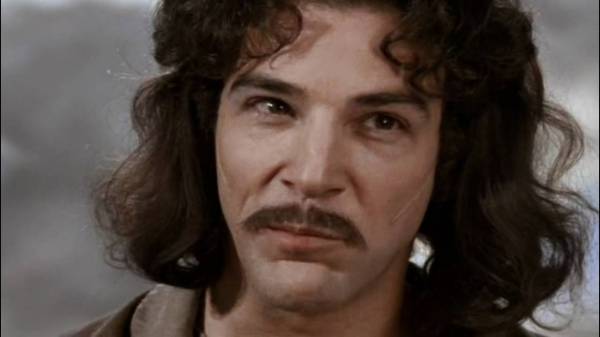
Today, I want to look at one of his sidekicks– Inigo Montoya. Inigo is a reluctant mercenary. He works for Vizzini “just to pay the bills.” His only real ambition is to find his father’s killer and demand vengeance. This has been his guiding ambition for over 20 years, and he is committed to killing his father’s murderer in a duel– if only he can find the elusive villain!
Inigo knows three things– he knows the villain roams free and has never been brought to justice; he carries the scars from his own failed sword fight with the man, so he knows his skill and ruthlessness; and he knows the man has six fingers on his right hand. He doesn’t know the man’s name or rank, where he lives, what he does for a living, if he still lives, if he has a family– he really doesn’t know how or where to look for him, and he has no plan beyond challenging the man to a rematch to avenge his father.
I cannot condone Inigo’s thirst for vengeance https://www.biblegateway.com/passage/?search=Romans+12%3A19&version=ESV, nor his half-baked plan to achieve his goal. But Inigo’s great love for his father and his belief in justice make him a likable character. Unlike Vizzini, Inigo seems concerned for the princess’s welfare and fate, and reluctant to be involved in something that could lead to her harm (or even death). Once he meets the “man in black” who comes to rescue the princess, he treats him with honor and admires his courage and skill, even as he is pledged to try to stop him. He allows his foe to catch his breath, prepare for battle, and even shares his sad tale in the hopes that the man in black can help him find his Nemesis.
Inigo isn’t a very good villain; he is too honorable, too ready to help others he meets along the way. But he attracts miracles along his journey, and I’d like to look at three-and-a-half miracles today.
Miracles come in different types. Some are miracles of preservation; some are miracles of healing; some of transformation.
Inigo’s first “miracle” is actually a series of miracles of preservation. Three times, Inigo is involved in sword battles, and three times he is preserved. At age eleven, he watches as his father is ruthlessly slaughtered by the villainous six-fingered man. Inigo tries to fight for his father’s honor, but is defeated. The six-fingered man leaves him scarred and humiliated, but considers Inigo nothing more than a “brat,” and considers that he has “taught him a lesson,” so he lets him live. It doesn’t seem like a miracle, but Inigo is given a chance to grow up, when he easily could have been killed. He uses this opportunity to become a great swordsman, so he can find his father’s killer and challenge him to a rematch! When Inigo challenges the mysterious man in black, he is formidable in battle, yet he loses. He is winded, scratched, and disarmed by the stranger, and expects to be killed. Yet, again, he is spared– this time out of respect. The stranger renders him unconscious, but does not kill him. Inigo recovers and finally gets the chance for vengeance against his nemesis, Count Rugen. He challenges the Count to a duel. But the Count cheats, and Inigo is gravely wounded before the battle even begins. Miraculously, he finds the strength of body and will to continue the fight. Struggling against the loss of blood, the taunts of his enemy, and his own sense of failure, Inigo continues to fight, gaining strength and momentum, until he wins–bringing justice to his father, and defeating his enemy.
The second miracle is one of guidance. Inigo needs help to reach his goal of finding and confronting Count Rugen. He needs the help of the very man he fought earlier– the mysterious man in black. But the tables have turned. The man in black has been taken captive and tortured. Inigo must find and rescue him. In desperation, he prays for guidance. He enlists God’s help in locating the man who can help him. But his prayer seems to go unanswered. He stumbles around in the woods, lost and defeated. Finally, he leans against an old tree–and in doing so, he triggers the secret door leading to the torture chamber where the man in black lies, left for dead.
The third miracle is one of revival and restoration. The man in black seems to be dead, so Inigo and his friend, Fezzik, take the body to a man named Miracle Max, to be brought back to life. Of course, this is a fairy tale (though a fractured one). We don’t expect to find miracle workers in the middle of a forest. But we often pray for miracles in hospital wards, courtrooms, and rescue shelters. God sends miracles– but he often does so through the skills and willingness of others. In this case, Miracle Max delivers a crushing blow– he does not have the power to bring someone back from the dead. However, the man is black is NOT dead; he is only “mostly” dead. Miracle Max concocts a restorative potion, delivered in a chocolate-coated pill. The man in black makes a halting, but timely, recovery, allowing Inigo to track down the evil Count and bring him to justice. (It also allows the man in black to finish his quest, rescue the Princess and defeat her wicked fiance.)
After three miracles, Inigo finishes his quest and faces a surprising new problem. His whole life has centered around revenge. Now that he has achieved his goal, he has no future; he has lost his sense of purpose. And this is where the “half” miracle happens. Inigo’s character is noble, even if his obsession with vengeance has been unhealthy. Along the way, he has befriended Fezzik, and rescued a man who was deemed to be an enemy. He has fought bravely and with honor, and has not been corrupted by money, power, or violence. His new friend, the man in black, offers him the chance to start over– as the Dread Pirate Roberts! (Lest this sound truly “dreadful”, it has already been explained that the name and reputation are what brings terror into the hearts of the other pirates..once again, this is a fairy tale, where pirates can be heroes.)
Inigo Montoya is a flawed character– he is a drunkard, a mercenary, living with years of failure and haunted by his thirst for revenge. He is not wicked in the same way as Count Rugen or the evil Prince Humperdink, but he is lost, confused, angry, bitter, and unable to save himself. He is a sympathetic character because he is a lot like many of us. But Inigo’s life is transformed by miracles– mostly unsought–giving him the opportunity to start a new life, make new friends, and explore new opportunities.
What unsought, and even unacknowledged, miracles have come into your life? How many times has God preserved your life, guided you in unexpected directions, provided healing or renewal to your physical, emotional, or spiritual being, and given you unexpected new opportunities?
God doesn’t always give us an instant or dramatic miracle– even when we pray for one. Sometimes, he allows us to collapse against a tree, or be scarred by our enemies, or spend twenty years chasing a quest only to find ourselves unfulfilled at the end of it.

















 Pursuing Prayer