“To Love Thee More Dearly…”

How can I love Jesus more than I already do?  If I can love him more, does that mean that I don’t love Him enough?  That I don’t really love Him as much as I think I do?  That I love Him the wrong way?  How can I “love thee more dearly…day by day”

I want to explore the second prayer in the folk rock song “Day by Day” from the musical “Godspell” (see my last post).  When I write about pursuing prayer, this is a major focus of the pursuit– to develop my love for Jesus.  But there’s more to it than just spending more time, or even “better” time in prayer.

silhouettes of couple kissing against sunset

I love my husband, and that love grows over the years– not because we are in an eternal “honeymoon” period, where life is rosy and all I know about him is the wonderful image I’ve built up–but because in living with him, working with him, even struggling with him, I learn to value who he really is.  I learn about qualities I never knew he had.  I learn to trust him and respect his judgment; I learn about the deepest part of his heart that he only shares with those closest to him.  And even though I learn about his faults, I see him desiring to be the best that he can be.  In his turn, my husband does the same with me– learning my strengths and weaknesses.  Together we learn how to work together to strengthen and support each other.  We even learn how to argue better!

But we all know marriages (and no marriage is immune) where doubt, distrust, disdain, and despair creep in.  The very qualities that attracted us in the beginning become sore spots that tear us apart.  The joy is swallowed up in little hurts that go unresolved; little misunderstandings that grow into lengthy silences and slammed doors.  Struggles that should bring us together cause us to run to separate corners.  Our feelings change, our hopes are dashed, and our relationship crumbles

woman and man sitting on brown wooden bench

Relationships require trust–if I say that I love God, but I don’t trust Him, I’m not being honest with myself.  If I pray to Him, but I don’t really think He’s listening; if I read His word but make excuses for my continued disobedience–I don’t really love Him.  I may idolize Him, even worship Him.  But I don’t really love Him.

adults couple couple walking grass

Unlike a marriage partner, family member, or close friend, God’s love for us never changes.  We never have to pray that Jesus should love US more dearly.  It’s impossible.  The same love that spoke the universe into being and designed you to be the awesome and unique person you are, is the same love that stretched out his arms so they could be nailed to the cross– the same love that calls out to you no matter what you’ve done or who you are and offers you peace, joy, and rest.  Loving Jesus isn’t a matter of measuring how I feel about Him from day to day, but spending each day learning to know Him better for who He is and not just what He has done or what He can do for me.  The prayer should be for me to really learn better how to honor Him, how to trust Him, how to obey Him, praise Him, listen to Him, and walk close to him.

More about this last one next time…

“Powerful” Prayers

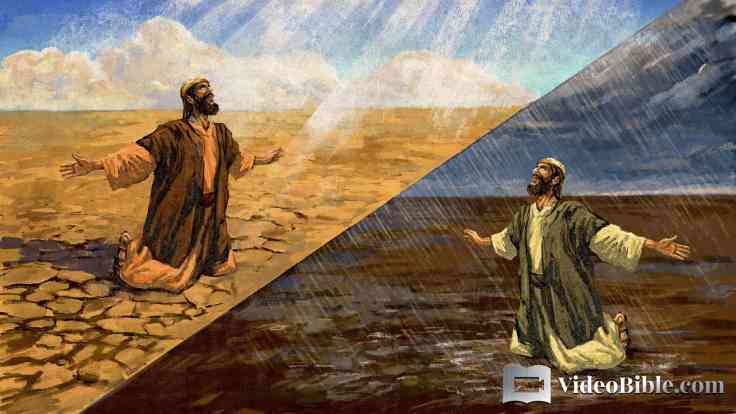
Are any of you suffering hardships? You should pray. Are any of you happy? You should sing praises. Are any of you sick? You should call for the elders of the church to come and pray over you, anointing you with oil in the name of the Lord. Such a prayer offered in faith will heal the sick, and the Lord will make you well. And if you have committed any sins, you will be forgiven. Confess your sins to each other and pray for each other so that you may be healed. The earnest prayer of a righteous person has great power and produces wonderful results.  Elijah was as human as we are, and yet when he prayed earnestly that no rain would fall, none fell for three and a half years! Then, when he prayed again, the sky sent down rain and the earth began to yield its crops. James 5:13-18 (NLT)

I heard someone the other day claim that a friend of ours “has a direct line to God.” The implication was that our friend’s prayers are more powerful and more effective, because she has an “in” with God that others just don’t have. The friend in question was quick to point out that God does not have “favorites.” He loves us all the same, and He listens to all our prayers with the same loving care and goodness.

There are, however, some prayers that are more “powerful” than others. There is an oft-quoted verse from James, chapter five that says, “The earnest prayer of a righteous person has great power and produces wonderful results.” James goes on to present the example of the great prophet, Elijah, whose prayers caused God to stop the rain for three and a half years and then caused the rain to fall again. Unfortunately, the lesson we often take from this passage is that Elijah was a powerful pray-er. If we were a great prophet like him, maybe we would pray powerful prayers as well. But James is clear– “Elijah was as human as we are”–in fact, this same Elijah, after his “powerful” prayer that brought the rain back, ran and hid in a cave and begged God to let him die!

There are two things that make prayer powerful, and neither of them have to do with WHO is speaking! The first is that prayer has to be earnest. Prayers that are sincere, heartfelt, and consistent with God’s will are powerful– regardless of the words used, the length of time the speaker has been following Jesus, or the “importance” of the subject. God looks at the heart; He sees (and hears) right through the words! He sees the motives. And if our motives are impure or selfish, our prayers will still be heard and answered, but perhaps not with the miraculous flourish that we expected.

Secondly, powerful prayers are lifted up by “a righteous person.” And this is where many people miss the blessing of this verse. Who, exactly, is “a righteous person”? NO ONE! At least, not on our own. If we think that our prayers will be powerful because of who we are, what we have (or haven’t) done in the past, or how religious we claim to be, our prayers will actually be LESS effective. Like so many things in the Christian Life, this concept is counter-intuitive and counter-cultural. Powerful prayers are not the ones delivered by those who think they are powerful. Powerful prayers come from those who accept that all power, and all righteousness as well, comes from Christ alone. Such people know they are not innately “righteous.” Their righteousness comes from Christ– through His death and resurrection– alone. And such prayers reflect a wholehearted trust that God knows best and will answer in His own loving and wise way.

Truly powerful prayers come from anyone who is fully trusting in God– not because of who they are, but because of who GOD is. My friend does have a “direct line to God”– but so does anyone who trusts Him completely! You don’t have to be an Elijah to have a powerful prayer life. And that’s a great comfort, because even Elijah wasn’t always a mighty prophet. Sometimes, he was frightened, defeated, and depressed. Sometimes, he was hurt and sullen. Sometimes, he was just plain worn to a frazzle! But God still heard him and used him to inspire a nation.

“Little” Prayers

Do you ever wonder if your prayers are “too little?”  Are you bothering God, pestering him with requests to help you find your misplaced keys, or help you make the green light on your way through a busy part of town?  After all, God is the ruler of galaxies– there are over six billion people, let alone the cattle on thousands of hills, sparrows, and lilies of the field for him to consider just on our planet.

I know many people who find it awkward, or even impossible, to offer up “little” prayers.  They believe that God is too busy, too important, and “too Holy” to be concerned with their petty wishes.  I know others who pray about almost everything– what flavor of ice cream to choose; what color nail polish to wear; whether to join  their friends for a game of Monopoly or a trip to McDonald’s…  Is there a happy medium; a guideline on what constitutes an “appropriate” subject for prayer?  Is there such a thing as a prayer that is “too” little to bring to our Father?

I don’t think so.  I think there are prayers that exasperate God because they are selfish and prideful.  I think there are prayers that come to God with disrespect and disbelief, and a lack of consideration for who he is.  But I think those who come to God asking for his help, his wisdom, his grace, and his protection– no matter how small their request may seem–bless the heart of God and receive his full attention.

God constantly uses the small and seemingly unimportant things of this world to make huge statements of great value.  Consider sand.  Sand is almost everywhere– it is under our feet, blowing in the wind, all along the beach; it gets in our shoes, between our toes, even in our hair!  Sand seems unimportant, even annoying sometimes.  We use it for all kinds of things, most of which we consider unimportant– sandbags for weight, sand to play in, or build a temporary sand castle.  We use sand to make glass, or to polish stones, or to keep time.  A single grain of sand has no value to us, except in the rarest of circumstances, when it becomes the nucleus of a pearl.  But God sees each grain of sand.  He knows the value of sand.  In explaining to Abram about his promise, God said that he would make Abram’s descendants like the grains of sand– beyond counting!

sosua.jpg

God uses tiny seeds to produce and reproduce big harvests.  God uses bugs and insects to create amazing (and sometimes terrifying) structures–giant anthills, enormous beehives and hornet nests, spider webs and more.  He uses the simple and even foolish things of this world to confound the wise.

Moreover, God delights in the little things– the details and minutiae.  King David, and later Jesus, would be moved to compare our day-to-day living to that of grass, and common birds, and flowers– not because we are not important to God, but because THEY ARE– if the things we take for grated are under God’s constant care, how much more are we!?

Lastly, God ASKS us to be faithful in the little things–to care for the grass and sand and flowers in our midst– to offer up the little prayers and share our “small” concerns with him.  I like to remember childhood, and the shared delight of my parents when we made “little” discoveries on nature walks, or learned to make cookies, or grew another inch.  It was much easier for them to tie our shoes, but they loved watching us learn to do it.  God doesn’t want us to hide in a corner and try to figure out all of life before we come to him.  He wants to teach us, help us, and celebrate the small victories with us– as well as the great triumphs.

I think our society has lost its appreciation for the “small” moments and the “stuff” of life.  We try to cram our lives full of importance and purpose, only to find it slipping through our fingers like sand.

“Father, thank you for being a God of galaxies and grains of sand. Thank you that no detail is too small for you to notice; that you care about each one. Help me to see the blessings in the “little things” and to seek you first– with my praise and with my ponderings, life’s triumphs and its trials.”


The Prince of Peace

They have healed the wound of my people lightly, saying, ‘Peace, peace,’ when there is no peace. Jeremiah 8:11(ESV)

While people are saying, “There is peace and security,” then sudden destruction will come upon them as labor pains come upon a pregnant woman, and they will not escape. 1 Thessalonians 5:3 (ESV)

Peace I leave with you; my peace I give to you. Not as the world gives do I give to you. Let not your hearts be troubled, neither let them be afraid. John 14:27 (ESV)

I have said these things to you, that in me you may have peace. In the world you will have tribulation. But take heart; I have overcome the world.” John 16:33 (ESV)

Jesus answered: “Watch out that no one deceives you. For many will come in my name, claiming, ‘I am the Messiah,’ and will deceive many. You will hear of wars and rumors of wars, but see to it that you are not alarmed. Such things must happen, but the end is still to come. Nation will rise against nation, and kingdom against kingdom. There will be famines and earthquakes in various places. All these are the beginning of birth pains…21 For then there will be great distress, unequaled from the beginning of the world until now—and never to be equaled again. Matthew 24:4-8; 21 (NIV)

One of the prophetic names given to Jesus in the book of Isaiah is “Prince of Peace” (Isaiah 9:6). And yet, Jesus did not bring an end to the Roman occupation of Judea while He walked the earth. He did not end slavery or war or oppression. He did not bring the kind of “peace” that most of us look for even today. We live in a world of war, dissention, upheaval, and chaos. There is hatred, injustice, slavery, abuse, and oppression, and none of the efforts to bring peace in our world have succeeded in wiping out any of these evils. In the nearly 2000 years since His crucifixion and the rise of the Christian Church, these evils have remained. Great strides have been made over the years– slavery is officially outlawed in many areas of the world; human rights have been codified. Humanitarian efforts have greatly decreased the number of people who die of starvation and disease, homelessness and exposure to the elements. But there are thousands, and indeed hundreds of thousands of people around the world who are refugees from their home countries, who are denied human rights, who live in fear of bombing raids and terrorist attacks.

Where is the Peace?

Jesus spoke freely of the tribulations His followers through the generations would face. He never promised us a world without any trouble. He promised that, in this life, we WILL have trouble. And it will increase over time. People will grow suspicious, hateful, and cold. Nations will rise up against other nations; families will be divided in such a way that one’s greatest enemies will be their closest relatives! Wars and natural disasters will intensify. And ONLY Christ’s return will stop any of it. Human efforts may make a difference for a short while, or make a small difference for a long while, but nothing we can do, single-handedly or as a human race, will deliver us from the evil that lives in the human heart. In fact, we often delude ourselves into thinking that we can change the world on our own; we seek to force our plans on others “for their own good,” little knowing that we may be sowing the seeds of bitterness, backlash, and revenge.

Jesus Christ is the Prince of Peace. He will administer perfect peace and justice when He returns. And in the meantime, He offers us an inner peace that passes all understanding. We can experience peace as bullets whip around us; as we are being misunderstood, mistreated, and abused; as we face injustice and oppression. We can do this because Jesus gave us the example. He did not fight back or even complain as He was arrested, falsely accused, sentenced, and executed. He did not seek to force everyone to accept His rightful claims. He did not even protest the unjust treatment of His people by the Romans.

What He did instead was to focus on God’s mission– He interacted with those who were suffering; He healed the sick; He brought comfort to those who were grieving. He brought sinners to repentance and sought to make peace between individuals and God. Jesus is the Prince of real and lasting Peace– not just peace in “our time” or peace for a generation, but eternal and everlastingly joyous Peace. This is the kind of peace that sees trouble and tribulation for what it is– temporary and transformational. Suffering can make us bitter or better, and Jesus shows us how to experience the latter. When we protest instead of pray, we forfeit that peace. When we pray, we gain wisdom in how to stand firm against injustice without losing our own peace and perspective.

These are not peaceful times, but we can still experience peace, hope, trust, endurance, joy, and light in the days ahead, thanks to our Prince of Peace.

Jehovah Jireh– The God Who Provides

Often when I am praying, I’m asking for something– “Bless this food,” “bring healing to _______,” “help the victims of (insert recent natural disaster) to find shelter, food, water, etc.,”..

God is a provider. He is the owner of everything, yet He chooses to share good things with us. He provides for the birds of the air and the flowers of the field. He provides for insects and elephants. He provides water and sunlight for all the plants– whether in the rain forest or the desert. He provides air for us to breathe and provides plants to recycle what we breathe out. He provides for the orphan and the widow, the homeless and the dispossessed. And for those who seem to “have it all”– God is the ultimate source of their riches, too.

In the book of Job, we meet a man who seemed to “have it all.” He was wealthy, healthy, respected, and surrounded by family. And when it all disappeared in a flash, his response was very telling. He said, ” Naked I came from my mother’s womb, and naked I will leave this life. The Lord gives, and the Lord takes away. Blessed be the name of the Lord.” (Job 1:21 CSB). Job had learned that in good times or bad, God was his provider. And Job’s faith in God’s provision and His faithfulness gave him hope, even in the worst of his troubles.

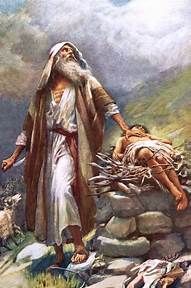
The first time we hear of Jehovah (or Yahweh) Jireh is in the story of Abraham and Isaac and the sacrifice at Mount Moriah. God asks Abraham to take his son– the son of the promise; the son for whom he had waited so long– and give him as a sacrifice. Nowhere else in the Bible does God ask for a human sacrifice– in fact, God says He detests the practices of the nations and religions who sacrifice their children to Molech or other gods. Yet, when Abraham obeys, in spite of whatever fear or horror is conjured up by the command, God stops him and provides a ram as an alternate sacrifice. Abraham names Him Jehovah Jireh– the LORD who will provide–as a result of that experience. (See Genesis 22)

But Jehovah Jireh means more than just God providing what we need in the moment or what we ask for in prayer. It also means, “the LORD who perceives, or experiences.” God does not just stand removed from our situation and write a blank check for us to cash when or how we see fit. God is with us (Emmanuel) and sees our deepest and most profound needs. He also sees our daily and even seemingly silly needs. He knows, He cares, and He provides good gifts. God did not send Abraham and Isaac alone on their perilous mission. He was right there, ready to step in and provide what was needed. What an amazing turn-around for Abraham. He went from anguish to absolute joy in those precious moments, and learned to know God in a personal, experiential, and powerful way.

Sometimes, we lose sight of that. Sometimes, it seems as though God is far away and indifferent, or even cruel. When Job accepted the loss of his wealth, his health, his status, and all of his children, it was not easy for him to say, “Blessed be the name of the LORD.” God had taken away nearly everything– in fact, the only things Job had left were some unhelpful finger-pointing friends and a complaining wife! But God restored everything that Job had lost, and then some! God does take away. And it hurts. He doesn’t stop us from experiencing heartache and grief. But even then, He is Jehovah Jireh– the LORD who experiences; the LORD who perceives. He does not leave us without hope or comfort, if we seek His face. As the Psalmist says: “The nights of crying your eyes out give way to days of laughter.” (Psalm 30: 5b The Message)

The story of Abraham and Isaac; the story of Job and his losses– each points us to another truth about how God is our provider. He provided His own Son to be our sacrifice– to pay the debt for our Sin, and to give us Eternal Life (see John 3:16). God experienced all the anguish and loss of death so that we would only have to taste it once. Jesus lost everything to gain our redemption. And He rose victorious over death, so we can have hope and joy in this life and in the life to come!

Recently, I was worried about finances– not because we had no money, but we had unexpected bills. I asked the LORD to provide, knowing that He could, but expecting that we would have to raid our “rainy day” fund to get through the week. But God had an amazing surprise– an unexpected gift of $100! Just when we needed it. God could have provided ten dollars, or a thousand dollars. He could have allowed us to dip into the “rainy day” fund and provided some unexpected money the following week. But I believe God saw, not just our monetary need, but my need to be reminded of His loving care and faithfulness. God knew what we needed. He provided what we needed. And He shared in our experience of dependence on Him and joy in His creative answer.

I don’t know where I will be today or tomorrow. I don’t know what needs are on the horizon. And I don’t know how or what God will provide. He may not provide healing for a disease, but strength for the fight. He may not provide a cash gift for our material needs, but He may provide opportunities to trade with neighbors or earn extra money when we need it next. Whatever God chooses to do– whatever He gives or takes away– He is my provider of abundant life. “Blessed be the Name of the LORD!”

(For more about this Name of God, see https://www.christianity.com/wiki/god/what-does-it-mean-that-god-is-jehovah-jireh.html)

Holy!

Not so much a name of God as a description of His Character, the word Holy means “sacred, separate or set apart, morally blameless; complete; whole; lacking nothing; worthy of worship.” God is Holy. There is no force, no person, no entity who can rival God or be a peer of God. Satan is not God’s equal. Sin, death, evil, none of these can successfully oppose God, or cause Him to stumble or challenge Him. God is Supreme– Alone in His Power and Glory and Sovereignty.

I pray to a Holy God. I pray with the guidance of His Holy Spirit. I follow Christ, who demonstrated Holiness in human form during His time on earth. Sinless perfection, He walked among sinful men and women, healing, teaching, and showing perfect Love and Mercy.

We live in a world that constantly questions this aspect of God. How can a Holy God allow people to suffer injustice, doubts and struggles, and even death? Surely, this is a mistake! God must have failed at some point, or we would live in a perfect world.

God doesn’t make mistakes! And sometimes, that is a concept that can be difficult to fully comprehend. Yes, we know God is “good.” And we know He is powerful. But He is so much more than that. He is without guilt, without doubt, without confusion, without failure. When I see and experience injustice or disease, disappointment, misunderstanding, exhaustion, grief–these are not from God. They come from a fallen world in rebellion against our perfect maker.

Except we once did! Adam and Eve lived in the Garden of Eden, and God provided for their every need. They didn’t need clothing– it never got cold, and the insects, animals, and plants posed no threats. They didn’t need the Law, because they walked with God and knew only good. They didn’t need jobs or houses, money or banks, governments, medicine, dictionaries, alarm clocks or Wikipedia. God didn’t sin– they did. And God didn’t get caught by surprise by the Fall– He already had planned for mankind’s redemption. God didn’t fail. He was, is, and will always be Holy.

This also means He is always “wholly” sufficient for our every need. Even the needs to be understood and to be rescued from our own failures. God, who is Holy, sent His Holy Son to live IN our fallen world– to taste OUR failure, and to set things right. Whatever we suffer now is not God’s “fault,” and it has already been made right in His perfect plan. He understands our temporary pain and suffering differently than we do, because He sees the finished product– our renewal, redemption, and “perfection” in Him!

So I am very thankful today for the Holiness of God. It is something I cannot fully understand until I experience it first-hand, but I can trust in it, put my hope in it, and LIVE in the promise of it, even when I stumble, fail, and struggle.

For more on the Holiness of God, see https://www.whatchristianswanttoknow.com/what-is-the-biblical-definition-of-holy/#:~:text=If%20you%20think%20God%20is%20concerned https://www.biblestudytools.com/bible-study/topical-studies/what-does-it-mean-to-be-holy.html

“Thy Will Be Done”

At the age of 14 months, just after I had learned to walk well, and had learned to say “Mama” and “Da-da”, I became very ill.  Our doctor was baffled– I was tired and weak, I was losing weight, but I wasn’t carrying a fever.  It wasn’t any of the “usual” culprits– we did find out I was allergic to penicillin, but other antibiotics had no effect.  We tried a different doctor– he was also stumped, and all the while, I got weaker.  My desperate parents prayed for healing as the weeks went on.  I was too little to even describe any symptoms– I whimpered and slept; I ate very little, and became too weak to walk.

God was listening to my parents’ prayers, even though the situation seemed impossible and tragic, and God seemed silent and distant.  My mother, in the years since this incident, has shared with me the “breakthrough” moment for her– that moment when her prayers changed from “heal my little girl”, to “thy will be done.”  Not immediately, but shortly after that, the new doctor was inspired to look for another cause.  After some blood tests, he determined that my body wasn’t absorbing and processing protein.  As soon as I began a regimen of protein booster shots, my health began to improve.  I was still sickly as a child; I had immunity issues, and I was small for my age, but I was out of grave danger.  I had to relearn how to walk, and my return to solid foods (especially meat) was a gradual one.  I have no actual memory of these events, but I learned a valuable lesson about prayer.

Praying hands

When we pray “Thy will be done,” we sometimes think it is “our” will vs. “God’s” will… that God’s will is always opposed to ours; that it will lead to us losing whatever it is we are holding on to.  That may be the case, sometimes.  We grapple with God’s will, struggling and wrestling, like Jacob, until we are forced to give in.  Some of us limp our way to the altar of prayer.  But God’s will is not set in relation to ours– His will is His own.  It is higher than ours.  It is perfect and complete.  That doesn’t always make it pleasant, comfortable, or easy.  In my family’s case, it meant months of trips to get shots– every day for the first few weeks; every week for months afterwards, and every month after that until the time I started Kindergarten (a year later than I might have if I had been healthier).  For many, “Thy will be done,” means saying goodbye to a loved one.  Sometimes it means losing a limb, or letting go of a cherished dream.  But what we see; what we experience; these are mere moments in God’s plan for our eternity.  Like the booster shots I had to have as a child, they bring a momentary sting, and the fear of them may loom large, but in God’s plan, they bring us the opportunity for life and health and ultimately, triumph.

Sometimes God’s will means walking through the fire, or walking through the valley of the shadow of death.  Long before my birth and health scare, my mother had lost twins, and been a divorced mother of a young son.  She had already faced death and heartbreak and hardship.  After this incident, she would be hurt by my brother’s teenage rebellion, face depression, and go through health issues with my father before his death; but she would also gain another daughter and live to see grandchildren and great-grandchildren who brought her joy.  In my own life, I have faced the shattered dream of wanting children of my own. I struggled for years with singleness, when I wanted to be married and have a family.  But God’s will was for me to learn patience, compassion, and empathy for others who hurt in these areas.  And he has blessed me with a family I would never have imagined–not only the husband, step-children, and grandkids, but all the students and children I met through my careers in education and public libraries.

It is natural and easy to pray for what our will, our feelings, or our intuition tells us is best– healing for the sick (immediate healing is even better), success for our ventures and those of our families and friends, safety in travels and daily routines, prosperity, and happiness.  It is not wrong to want these things.  But it is better by far to remember that God is sovereign and good.  Giving him complete control over our situations is not weakness; it is not “giving up”.  Instead, it is investing our future– putting it in the hands of the one who holds tomorrow, and all of eternity!  It is trusting the one who is most trustworthy to make the most of our hours and days, our treasures and our dreams.

Even Jesus taught His disciples to pray “thy will be done on earth as it is in heaven” (Matthew 6:10b). But He didn’t just teach that phrase to His disciples– He prayed it Himself in the Garden of Gethsemane. “Father, if you are willing, take this cup from me; yet not my will, but yours be done” (Luke 22:42). Jesus knew he would face humiliation, torture, and death. He knew that He would take on the punishment for all the sins of the world– punishment He did not deserve– and that He would be subject to the full wrath of God. In His humanness, He was anguished to the point of sweating drops of blood. Yet He chose to pray, “Thy will be done.”

I have never been in that kind of anguish– even when I was so very sick or depressed about seemingly broken dreams. But I still find it difficult to fully surrender to God’s sovereign will when the future is in doubt, and when the present looks overwhelming. But growth and victory come when I let God take the reins and guide me through the valleys and wilderness walkways of life. His will is mysterious and sometimes scary, but He is always faithful. And I know that from experience.

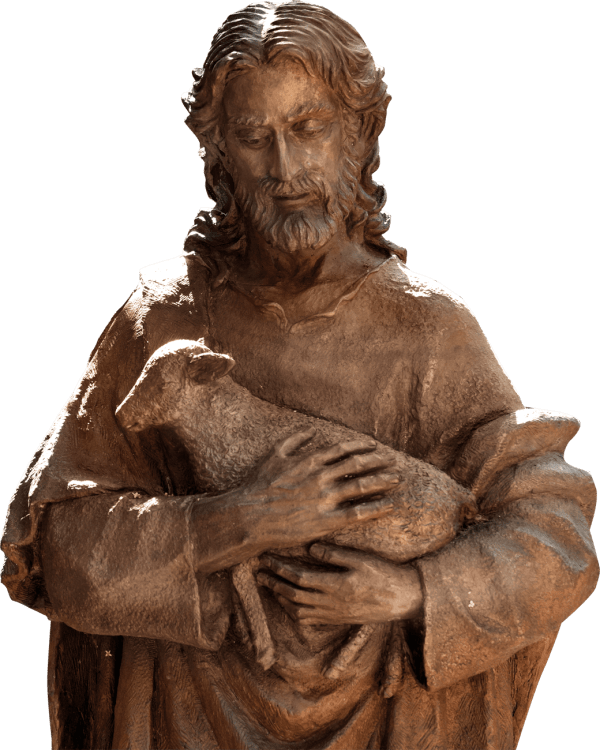
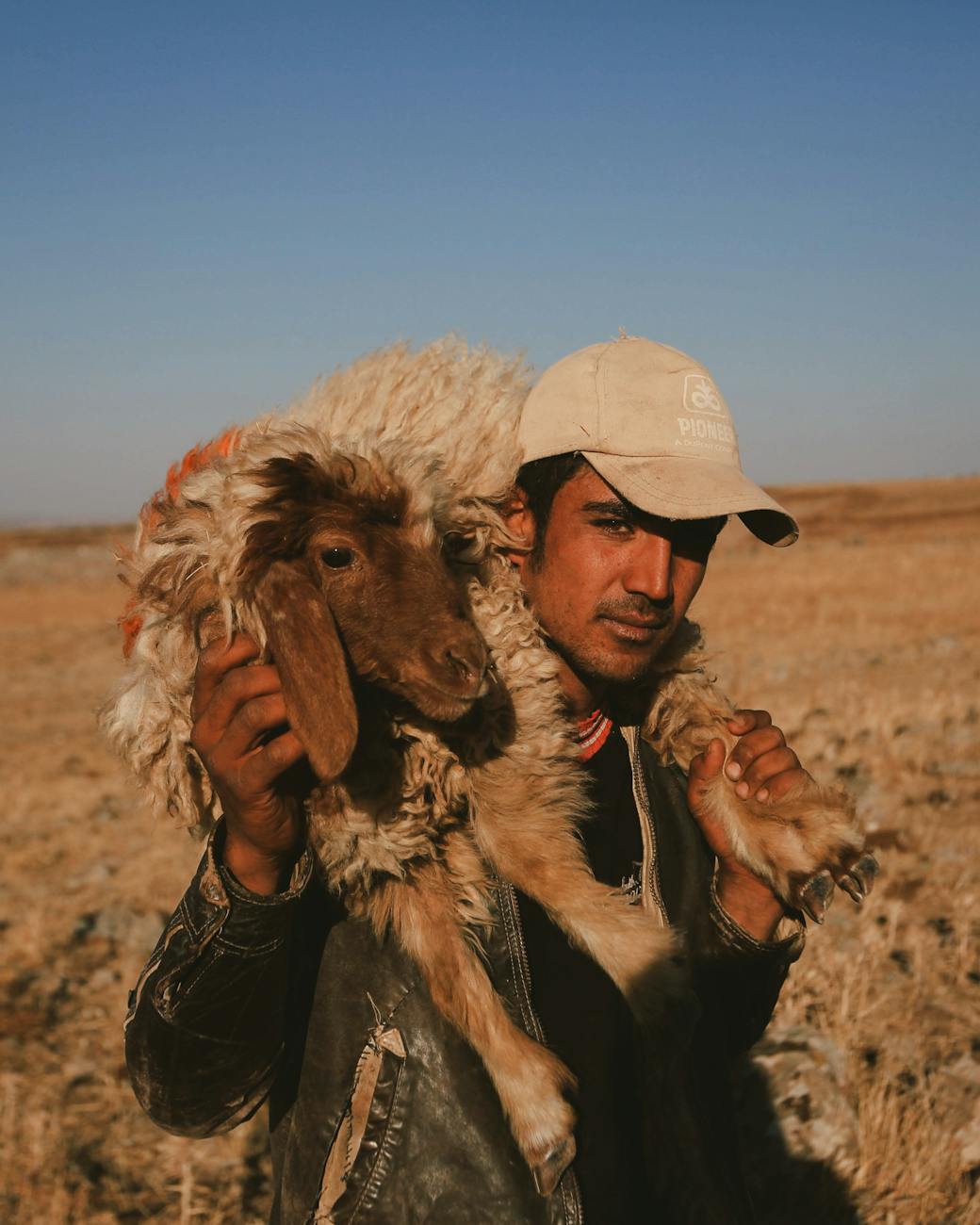
The Good Shepherd

Yahweh is my shepherd;
    I shall lack nothing.
He makes me lie down in green pastures.
    He leads me beside still waters.
He restores my soul.
    He guides me in the paths of righteousness for his name’s sake.
Even though I walk through the valley of the shadow of death,
    I will fear no evil, for you are with me.
Your rod and your staff,
    they comfort me.
You prepare a table before me
    in the presence of my enemies.
You anoint my head with oil.
    My cup runs over.
Surely goodness and loving kindness shall follow me all the days of my life,
    and I will dwell in Yahweh’s house forever. Psalm 23 (World English Bible)

 “I am the good shepherd; I know my sheep and my sheep know me— just as the Father knows me and I know the Father—and I lay down my life for the sheep. I have other sheep that are not of this sheep pen. I must bring them also. They too will listen to my voice, and there shall be one flock and one shepherd. The reason my Father loves me is that I lay down my life—only to take it up again. No one takes it from me, but I lay it down of my own accord. I have authority to lay it down and authority to take it up again. This command I received from my Father.” John 10:14-18 (NIV)

Yahweh is my shepherd…The LORD Almighty is my caretaker and protector. I don’t need to fear danger, lack of resources, darkness– even the shadow of Death!

God is Mighty and has all Authority. Yet He chooses to guide me, guard me, and provide for me. Not because of who I am– I am a wayward lamb– but because of His Loving Character. It’s literally who He IS and what He Does!

God is not distant. I may not see Him, but He surrounds me. I may not audibly hear His voice, but He speaks to me. I may not see a hand reaching down from Heaven, but He is at work all around me, and His Spirit lives inside of me! God is my Shepherd, not my “boss” or my jailor. He sees both dangers and delights which are along the path of my life, and He knows how to navigate the road ahead. And He is not a hired “master” or overseer. He is my Creator and Sustainer. He is the one who knows me, and when I follow Him, I know His voice. I know both the Authority of His voice, and the Love He has for me.

As we go through Holy Week, it is worth remembering that He is also the Shepherd who lays down His LIFE for His sheep. Willingly, lovingly sacrifices what we cannot, so that we may have the LIFE that He gives us. He is our guardian, our guide, our benefactor, and the Lover of our Souls.

When I pray to the Good Shepherd, I am praying to someone who knows all about me; my past and future, my strengths and weaknesses, every challenge I will face, and every blessing He is waiting for me to receive from Him. My prayers cannot surprise Him or baffle Him or stretch Him beyond His capacity to answer. And His answers will be wise and perfect in their scope, their timing, and their resources.

That’s my King! That’s my Shepherd!

Forgetting the Names of God

My given name is Lila June. I was named after my great-grandmother, Lila, and my aunt, Ila June. I have never used a nickname or my middle name, but my Aunt June rarely used her given name of Ila. In fact, she used it so seldom that she forgot it. Not literally forgot that it was her name but forgot that anyone might use it to refer to her. She and her husband lived on a series of Army bases, and when she went to the doctor’s office, they used the name on her official paperwork. A nurse would come out and call for Ila to come back to see the doctor. Startled at first, she looked around the waiting room to see who else could possibly have the same unusual name– only to hear the nurse call for Ila Mellinger! SHE was the Ila being called. But it took her a few moments to respond.

I was reminded of my aunt, and her name, this week. On my Facebook feed, there was a short video by a pastor. In the video he was lamenting that, in his view, the modern Christian church is so focused on practical Christian living– on good deeds and kind words; on outreach programs and building projects– that we have lost sight of WHO GOD IS! We serve the church; we serve the community; we serve our own notion of what makes us “good people,” but we do not serve God, because we don’t really know Him.

He was placing much of the blame for this on other pastors and institutional leaders– saying that they were at fault for not teaching the names of God. I’m not sure I totally agree with him. I think there is some merit in what he said, but ultimately, when I stand before the throne of judgment, I’m not going to be asked whether my pastor taught me the names of God. I will not be asked how much I knew ABOUT God. I won’t even be asked whether or not I know God–I will either hear that my name is in the Lamb’s Book of Life, or it isn’t! My pastors might face judgment for how true they were in teaching the Gospel, but my mission is to know God experientially. It is MY job to learn who God is, and to follow Him— to trust and obey Him.

But I DO agree that modern churches spend less time on this subject than I remember in my church growing up. Not because we spent so much time on the list of individual “names” of God, but we spent more time in worshipping God for WHO HE IS, and not for what he’s done for me, or what I can be doing for Him, saying about Him, or “identifying” as a Christian, a Christ-follower, or a Believer (and all the tiny differences in meaning that those terms might have).

Part of that comes from the habit of studying the Bible as a narrative. We used to study the “patriarchs” of the Old Testament, the “red letter” words of Jesus Christ, and the letters and “acts” of the Apostles. In fact, it is no longer politically correct to even use words like “patriarchs,” and out of fashion to teach the Bible as historical fact. But there is a value in studying this way– not because the characters are mostly men, or even because they are “heroes of the Faith.” It is important to study them precisely because they are so flawed and broken and in need of a Savior– just as we are! And as they encountered God or walked with Jesus, they saw Him– and NAMED Him– for all of His attributes.

In the Old Testament, He is Yahweh, Jehovah, the LORD. He is Almighty. He is the God who sees, the God who hears, the God who saves, the God who provides, the God who saves, the All-sufficient One, the Lord (who) is my Shepherd, the Most High God, the One whose name is a Strong Tower, the Everlasting God and the Lord of Hosts, among others. Jesus, the promised Messiah, also has a host of names, including Wonderful Counselor, Mighty God, Everlasting Father, Prince of Peace, Lion of Judah, Son of God, Son of Man, Emmanuel, Light of the World, the Living Word of God, Savior, Master, Redeemer, Rabboni, the Bread of Life, the Living Water, the Lamb of God, the Risen Lord, the Alpha and Omega, and many more. What a rich picture of God we get from His Names!

I also remember the old hymns and worship songs doing a better job of helping us to see the God of the Bible. I know we have modern worship songs that include God’s many names and attributes, but others seem to concentrate, not on who GOD is, but who I AM because of God–I’m forgiven, I’m a Child of God, etc. I miss the old hymns that remind me that God is a Mighty Fortress, He is my Vision, my Blessed Redeemer, the Rock of Ages, whose grace is Amazing, and whose Love is “greater far than tongue or pen could ever tell!”

I don’t want to “forget” any of the many titles and attributes of my Father, His Son, or the Holy Spirit. When I lose track of them, I am less likely to worship, less likely to obey, and less likely to turn to Him first in every situation. As we close in on Easter this year, I want to spend some time looking at some of His many Names. But for today, I want to take a deep breath, and worship the one who is “worthy, O LORD, to receive Glory and Honor and Power” (Revelation 4:11).

April Fools

Yes, I know I’m early– April begins tomorrow, and the first of April is known as “April Fool’s Day.” It’s a day for pulling practical jokes and trying to “fool” people with fake news stories (actually, that can happen any day of the year, but it’s usually more obvious on April first). And when people tomorrow sit on a whoopee cushion, or bite into a frosted bagel, thinking it’s a donut, or they pass on a “breaking” news story about alien invasions, they will be laughed at and labeled “fools.”

But the Bible has a different outlook. We laugh at people who are deluded by headlines and gags; God warns us not to be deluded by our own thoughts and feelings.

The fool says in his heart, ‘There is no God.’ They are corrupt, their deeds are vile; there is no one who does good. The Lord looks down from heaven on all mankind to see if there are any who understand, any who seek God. All have turned away, all have become corrupt; there is no one who does good, not even one. Do all these evildoers know nothing?” Psalm 14:1-4 (NIV)

This doesn’t mean that corrupt people are corrupt merely because they are stupid, ignorant, or gullible, or that those who claim “there is no God” just don’t know any better. In fact, many atheists and agnostics know more about Biblical scholarship that most people who claim to be Christians! And many who claim to be Christians behave as though they don’t believe in or have any reverence for God!

What it IS saying is that even intelligent and well-read people can “fool” themselves into believing that God is irrelevant to the way they live their lives. Because they have not seen God act in dramatic fashion to bring justice– either punishment for their own corruption, or punishment for someone else’s injustice against them, they have concluded that God does not see, does not care, does not answer, or does not exist. They may be intelligent; they may even have a personal moral code of a sort. They may even base their “personal” morality on principles from the Bible. But they deny that God has any power or authority over their life. And this is just as true in the lives of people who carry the name of Christ as it is among atheists!

So why does the Psalmist call such people “fools?” Because God DOES see, He DOES bring Justice, He DOES answer– in His way and His timing. And when we forget that, or refuse to come to terms with that, we begin thinking that WE are in God’s place– that WE have the power and authority to do whatever we think is right or just and we can ignore God’s word, His warnings, and His sovereignty–or whatever parts of those we find inconvenient.

And many “fools” live their lives believing they are smarter, cleverer, and wiser than those who revere God. After all, their life circumstances are not so different from those who practice reverence and obedience– often they are wealthier, healthier, and more successful than their neighbors! What is the “reward” of being humble, obedient, and following a lot of “outdated and irrelevant” Biblical principles? In fact, on the face of it, it looks as though Christ followers are the real “fools!” We cannot “prove” God’s power in our lives if we are acting in our own power or measuring our life only through our current circumstances.

The Apostle Paul addresses this in 1 Corinthians, where many new believers were doubting the truth of the Resurrection. This is a central teaching of the Christian church, and yet it is a difficult reality to explain and teach to those who do not believe in life after death. A person who adopts a set of moral principles– even those taught by Jesus Christ– but doesn’t believe in the Resurrection of Christ can’t truly be called a “Christ-follower” or a “Christian.” But without the Resurrection, there is no life-changing power in a mere set of man-made rules, or the teachings of a dead folk hero.

We have preached that Christ has been raised from the dead. So how can some of you say that no one rises from the dead?  If no one rises from the dead, then not even Christ has been raised.  And if Christ has not been raised, what we preach doesn’t mean anything. Your faith doesn’t mean anything either.  More than that, we would be lying about God. We are witnesses that God raised Christ from the dead. But he did not raise him if the dead are not raised.  If the dead are not raised, then Christ has not been raised either.  And if Christ has not been raised, your faith doesn’t mean anything. Your sins have not been forgiven. Those who have died believing in Christ are also lost. Do we have hope in Christ only for this life? Then people should pity us more than anyone else. But Christ really has been raised from the dead. He is the first of all those who will rise from the dead. 1 Corinthians 15: 12-20

How does this relate to the pursuit of Prayer? If we pray to someone who “might” exist or who “may” hear us when we call, if we pray to someone who “probably” has the power to heal the sick or break the power of addiction, we really aren’t praying– we are foolishly practicing wishful thinking–we are gambling with our faith. AND, if we are praying, but then acting as though God won’t answer, we will not wait for His wisdom or wait to see His power at work in our lives. Instead, we will act on our own convictions, with our own limited understanding of the consequences (intended AND unintended) of our actions.

We can pray with confidence because God is Real; He really is Good; and because Christ really did rise from the dead in Power and Glory. Otherwise, we are praying in the mushy desire that God will rubber-stamp our requests, or that our daily circumstances are greater than God’s eternal promises. Let’s not fall into “foolish” thinking tomorrow– especially as it applies to the power of Prayer!

Blog at WordPress.com.

Up ↑