As a young girl, I prayed about being married. Most of my prayers were pretty shallow– more about the wedding than the marriage. I dreamed of dresses and decorations, flowers and a shadowy “prince charming” type of groom, whisking me off into the sunset and living happily, dreamily ever after.
The years went by…MANY years! I prayed and dreamed through my twenties; I prayed and hoped through my thirties; and I prayed with less hope and more desperation in my early forties! But my prayers changed as I saw marriages around me. I saw many marriages that were solid, even through tough times. And I saw many “fairy tale” marriages crumble. I saw a lot of heartbreak, anger, and tears, as people who had once vowed to love one another “’til death us do part” fought over furniture and who got the kids over minor holiday weekends. I heard from frustrated wives who felt like they had made a huge mistake, marrying the “man of their dreams.” Some of them compounded the mistake by looking around for a replacement “Mr. Right.”
Instead of praying about a wedding, I began praying about marriage. Instead of praying for “Mr. Right,” I started praying that God would help me become “Mrs. Right.” And I prayed that God would show me what I should do for others during the time that I was single, as well as what I could do for him in a marriage relationship.
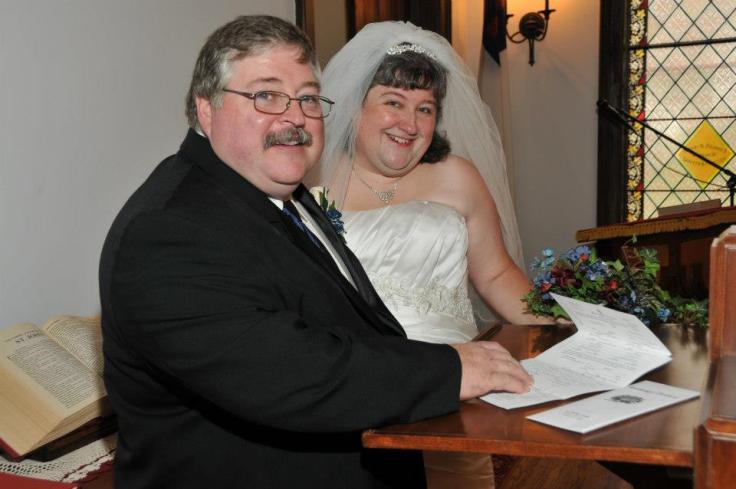
Thirteen years ago, I married my husband, David. He isn’t “Prince Charming,” though he can be charming and noble at times. He is, as I am, a flawed human being. David was married before, and he carries the hurt of betrayal and loss of trust from the past. I carry the hurt of being rejected and passed over for so many years. Marriage doesn’t make the past disappear. Marriage is not a “cure” for such hurts.
But marriage is more. God instituted marriage from the beginning for a man and woman to come together in a mysteriously intimate relationship that models what God’s love is like. (See Genesis 2:24; Matthew 19:5; Ephesians 5:31 and others.) David and I don’t exist to “complete” each other. We don’t cease to be our own individual selves. And yet, we are not the same as we were before our marriage. We are more than the sum of our parts– we are ourselves, yet we are one– the Fairs. He is David Fair, and I am Lila Fair, but WE are THE Fairs. And spiritually, we are also one WITH Christ– as individuals and as a couple. We walk forward as One. We make decisions together. We share hopes and dreams, as well as struggles and disappointments. We fight sometimes– not against each other, but against differences or misunderstandings that could weaken US as a couple and weaken our relationship with Christ.
I don’t pray any less often or less fervently now that I am married, but I pray daily about my marriage. I thank God that He was with me through all the “single” years. I thank God that He continues to work in our marriage– that David and I know more about love and faith, hope and fulfillment than we did 13 years ago! I pray that David and I will grow together for many years to come. I pray that we will impact our family as we live out what a Godly marriage is supposed to be. I pray that our marriage will inspire young men and women who are looking (as I once was) to see what a solid marriage involves– that the way we talk to each other, and behave, and work, and live will give hope to future couples, and glory to God.
Marriage and prayer go hand in hand. Prayer cannot guarantee that marriage will be easy–or even than it will survive. Marriage takes two people praying and walking in the same direction! But marriage–and life– without prayer will never be all that God intends it to be.
But when you pray, go into your room and shut the door and pray to your Father who is in secret. And your Father who sees in secret will reward you. Matthew 6:6 (ESV)
Prayer can sometimes seem like a cowardly action. It seems passive; it relies on faith and, often, patience. We connect courage to action– courageous people DO something; cowards sit on the sidelines or hide in their closets. Yet Jesus told His disciples to go into their rooms or closets, close the door, and pray in secret. Jesus himself often went out into the desert to pray alone. Jesus’s ministry was filled with passive moments. He spoke, or he walked along from town to town. He stopped to heal people by touching them or speaking to them. He rarely raised his voice or let his temper show. He allowed himself to be arrested, tried, sentenced, beaten, and crucified, without making a vigorous defense or protesting his horrific and unjust treatment. On the cross, his one impassioned outburst was a prayer to His Father–“My God, My God, why have you forsaken me?” (Mark 15:34)
We don’t think of Jesus as a coward. Yet, we often sneer at Christians who spend more time praying and less time “doing.” Being active is not a bad thing. Jesus commanded His disciples with many active words– “GO,” “teach,” “feed My sheep.” And there are busy people who are courageous in their own way. They go into dangerous places to preach the Gospel. They risk their health and safety to reach the lost with the Good News that Jesus Saves! They stand firm for the truth, and they defend it with vigor and passion. But Jesus also commanded His disciples to “Follow Me.” That means that we need to look at and model our lives after the ways that Jesus responded to various situations, and how He lived. The question we often ask is “what would Jesus do?” But the real question we should ask is “what did Jesus DO?”
Jesus prayed. He prayed for people; He prayed with people; and He prayed alone for hours and even days. And Jesus prayed courageous prayers. He didn’t pray “safe” prayers. Even His anguished prayer in the garden ended with courageous and humble resignation– “Father, if you are willing, remove this cup from me. Nevertheless, not my will, but yours, be done.” (Luke 22:42) Jesus also engaged lovingly and personally with the kinds of people that others ignored or wrote off or dismissed as broken, damaged, or irredeemable.
Just this week, a young Christian apologist and conservative speaker, Charlie Kirk, was assassinated. He was well-known and admired (or detested) for speaking up about family values, and Christian principles on American college campuses. He often faced hostile critics and smug detractors– atheists, anarchists, and those who called him a racist, a homophobe/transphobe, a bigot, and a “hater.” I never met Mr. Kirk. I watched some of the videos his group posted of him patiently and passionately arguing for marriage, faith, morality, hard work, ethical behavior, and national issues like immigration reform, tariffs, and foreign policy matters. I respected much of what he said, and some of how he said it. One of the things I most respected was his commitment to listening and asking questions, instead of merely attacking. But the most amazing thing about Mr. Kirk was his passionate and outspoken commitment to Jesus Christ. His faith was the center of everything he said, and in the way he interacted with supporters and detractors alike. He did not shy away from difficult questions, and he rarely resorted to easy answers, but he always pointed others to the example and the words of Jesus.
In the wake of his death, many people are asking, “What now?” Mr. Kirk was articulate, passionate, and willing to put himself in danger in order to defend the truth and his personal views. He trusted God to use him, and he was willing to pay a horrible price– being hated, threatened, and ultimately shot to death–to do what he saw as God’s work. He left behind a family (wife and two children), several close friends, and a host of people who followed him on social media and looked to him as a Godly example. Fellow Christians, while we may grieve his loss here, rejoice that he is Home with his Savior for eternity. But many people are wondering what will happen if no one steps forward to take his place and carry on his mission. While I believe that many young people will be inspired to speak out and engage in discussions, I don’t think most of us are meant to step into a spotlight. I think we NEED more people who will commit to going into their closets and pray. While Mr. Kirk put himself in the public arena, there have been hundreds and thousands of people praying for him. They continue to pray for his family, his outreach organization, “Turning Point”, and they even pray for those who instigated and committed this violence.
Prayer is NOT cowardly. Prayer warriors are needed to intercede, to call on Heaven’s Armies to continue in the age-old battle. We should be willing to have the difficult conversations when they arise. Some of us will be called to initiate such conversations openly and with fierce determination. And we should all be ready to “give a reason for the hope that is in you” (1 Peter 3:15) even when it is with “trembling and fear.” And we should always remember to be humble and show kindness, even to those who despise us. But some of us need to be lifting up those who are being attacked. Some of us need to pray more boldly, more often, and more confidently in light of the violence that has exploded in our world. We need to pray, not just for the Charlie Kirks of the world, but for the salvation of all the would-be assassins. We need to pray for the hearts and minds of those who want to argue and “cancel” all those who stand for God’s Word. And for all those who do not know the truth, who are confused, befuddled, or deceived.
We need those who can be courageous– whether in the public square or in a private room.
There is a dangerous idea that sometimes appears in Christian circles. If we are struggling with circumstances, someone, usually with good intentions, will ask us if we have prayed. Then they may suggest that we haven’t prayed “enough” or that maybe we haven’t prayed the “right” way.
We want to see results– immediate, dramatic, positive results. It’s what we expect from everything else in life; from the drive-thru fast food place, the vacation resort, weight loss program, graduation, manicure, even marriage. When results are not evident, or slow in coming, we think we can and must do something to speed up the process. We begin looking around for what else we can try– what else we “should have” done– to get the results we want. We even say to ourselves that God wants more from us before he will provide blessing or healing or a breakthrough.
But that’s not always the case. God makes everything good–IN HIS TIME. He has the power to bring about immediate change, but he frequently chooses to walk with us through the times of stress and shadows, when we can’t see the end from the beginning, and we are tempted to turn back or doubt. He doesn’t do this because he enjoys seeing us go through struggles, but because he knows that we learn to lean on him, to trust him, and to find our strength in him by traveling the narrow road.
Our prayers need to focus on God’s love and faithfulness. He knows our need, sees our situation, and hears our prayers. Our job is to know His word, look for his hand in our situation, and listen for his counsel as we trust him. We should not grow weary of praying or give up in our efforts. But neither should we doubt God’s wisdom or try to manipulate his timing with empty gestures or endless repetition.
Sometimes, we may find that God changes our desires, or opens our eyes to habits we need to change or worries we need to give over to him. Hear out those well-meaning folks–some of them may carry God’s wisdom. But in the end, our prayers– our life’s struggles and triumphs– are in God’s hands, not theirs. It’s not the quantity or the quality of your prayer that makes the difference. It’s the perfect love and timing of God.
Remember that even Jesus prayed in the Garden of Gethsemane– he prayed with so much intensity that he sweat blood drops. He prayed more than once that God might let the burden of death and separation pass from him. It wasn’t that Jesus didn’t pray “enough”, or that his prayers weren’t valid. It wasn’t that God didn’t listen or care about his own son. But God sent the assurance that Jesus needed to end his prayers with “Thy will be done.” So it should be with our prayers.
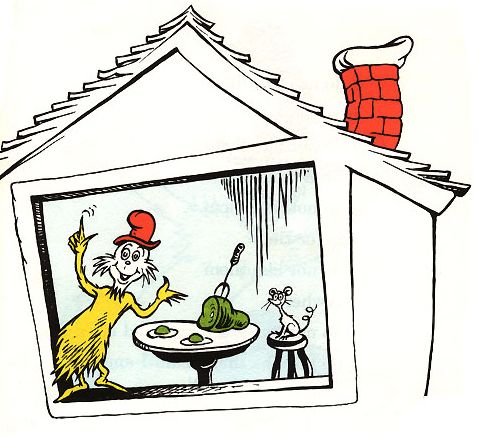
Have you ever read the Dr. Seuss classic, “Green Eggs and Ham”? In this early childhood reader, the narrator (nameless) is accosted by an enthusiastic character named Sam (Sam I Am), who wants him to try a dish called green eggs and ham. But the narrator refuses. Sam keeps offering, but the narrator continues to refuse, saying he does not like green eggs and ham, and will not try them under a variety of circumstances (in a box, with a fox, on a train, in the rain, etc..) offered by the optimistic Sam.
Finally, Sam’s persistence wears down the narrator’s resistance, and he agrees to try the dish. To his surprise, he LOVES them. In his newfound enthusiasm, he declares he WILL eat them in a box, with a fox, in a tree, in a boat, with a goat, on a train, in the rain, here or there…in fact, he WILL eat them anywhere! He ends by thanking Sam.
So what does a children’s book have to do with prayer?
Well, I believe that the pursuit of prayer as an integral part of living a Christ-like lifestyle is kind of like green eggs and ham. Most people who dismiss the power of prayer have never really pursued it. They have seen it, heard about it– maybe even gotten a whiff of it. They may have “sampled” prayer many years ago as a child or in a single moment of desperation. And the result was disappointment or confusion. Prayer didn’t solve all their problems in an instant. They didn’t get the miracle they hoped for. They didn’t get the bike for Christmas. Their neighbor’s leukemia wasn’t cured. Their situation at work got even worse. Their wife still left and filed for divorce. “Prayer” left a bad taste in their mouth. And they have heard others dismiss prayer and faith as obsolete, ignorant practices, designed for backward and unenlightened people. Like the slightly nauseating color of green eggs and ham, prayer has been deemed unappetizing and best avoided.
And now, when someone mentions a lifestyle of prayer– when someone talks about praying as a daily habit, or a natural part of their worship–the reaction is scorn and suspicion. Prayer doesn’t look powerful. It doesn’t look appetizing. How can something so simple and tame have any effect? Why is the world still suffering so much injustice and evil if there are people out there praying every day? And why do Christians (and others with a prayer tradition) cling to prayer as though it will solve life’s problems?
But prayer, like eggs, can have a bad reputation. For years, we were told that eggs were awful for you– high in protein, yes, but also high in cholesterol, and likely to contribute to diabetes and colon cancer. Recent studies contradict each other, but many now say that eggs are actually good for you. Similarly, during times of crises or disasters, prayer is often derided as inactive and ineffective, and we get mixed messages about people who offer to pray for victims and their families.
Recently, I was challenged about my pursuit of prayer. What good does my prayer do in the face of injustice and disease, death and suffering that people experience? Why do I pray to a God that allows bad things to happen? I have been challenged before, and my answer remains the same. I pray because I have known the peace that comes from trusting God’s wisdom, HIS timing, and His Love for each of us. I don’t have answers for all the “what-ifs” or the “whys.” But I continue to trust that God DOES! And daily prayer is not about “me,” or my questions or what I wish for. It’s about communing with the God who has been faithful all my life and continues to be faithful in every season. The God I love, and the God who knows the end from the beginning.
So what if more of us prayed daily– not just as a reaction to disasters– but pro-actively? What if we prayed, not in anger or bitterness, not transactionally, expecting a particular outcome, but with gratitude for who God is, what He has already done, and what He will choose to do in His loving sovereignty? What if we prayed with open minds and hearts, trusting that we are talking to a God who loves us and knows what is best, not just in the temporary, but in the eternal scope of our lives? We would still see evil in this fallen world, but what if our prayers DO make a difference– we just don’t see the whole scope of what God has provided, or the evil He has NOT allowed to touch us?
I speak as one who has pursued prayer for more than half a century. I’m not perfect. Sometimes, I get frustrated when my desires don’t align with God’s answers. But that’s not the fault of Prayer. Prayer DOES change things– maybe not instantly, and maybe not in the ways I imagine in the short term– but I have seen and experienced the power of prayer. I have felt it in my own life, and I have seen in in studying history and talking to people whose lives were radically transformed by their prayers and the prayers of others.
In every situation, we can pray. So, to paraphrase Sam I Am, I WILL pray here and there! I will pray most anywhere (except I won’t close my eyes if I am driving!) So to end:
“I’ll be praying in a boat, I could be praying with a goat. I may be praying in the rain. Or in the dark. Or on a train.
And in a car (eyes open of course). And in a tree. Because Prayer, it is so good, you see!
So I would still pray in a box. And I would still pray with a fox. I will pray inside my house. And I will pray beside a mouse.
And I will write “Pursuing Prayer” Because I serve a Lord who Cares!
What if we all had the same enthusiasm for prayer as Sam had about Green Eggs and Ham? What if we keep praying “without ceasing” (1 Thessalonians 5:17) and with confidence (1 John 5:14-15) each day?
It’s been nearly 45 years since I first heard this phrase, but it has resonated with me ever since. Samuel Taylor Coleridge wrote of it over 200 years ago, speaking of how readers interact with literature, especially when it contains fantastical or supernatural elements. Our high school English teacher and drama coach, Mrs. Barr spoke of it not only in the context of literature but in the context of the theater. In fact, in all art, the artist depends on at least some willing suspension of disbelief on the part of his/her audience.
In visual art, we must believe that a few strategic blobs of color, or carefully shaped pieces of marble or wood have captured something timeless and true about a single moment in time– that movement and emotion and life can be held immortal on a canvas or a statue or a tapestry. We must suspend our disbelief that paint, or wood, marble or stone exists only as itself– in the artist’s capable hands, mere matter transcends its ordinary form to touch our very soul. In music, we can hear, in the well-played notes of an instrument, the sounds of birds, the falling rain, the crashing of thunder, the marching of armies, or the buzzing of bees. Music doesn’t just touch our ears, it can touch our souls. Shakespeare also alluded to this in a comical way: “Is it not strange that sheep’s guts should hale souls out of men’s bodies” (Much Ado About Nothing– Act II, Scene 3) We can listen to a symphony without being moved, but in the willing suspension of disbelief, we can be transformed and inspired by notes on a page and breath being blown into wood or brass or fingers or bows being drawn over “sheep’s guts”.
In literature or in the movies, we must suspend our disbelief that mythical creatures, aliens, monsters, and talking animals live among us as a normal occurrence– for the duration of the story…Dragons must be vanquished, Fairy Godmothers must be allowed to help poor Cinderella to the ball, and The Raven must repeat his ominous line, “Nevermore.” Frodo must hide from orcs and Nazgul in order to reach the Fires of Doom and destroy the One Ring. Charlotte must spin her wordy webs and Papa Bear must exclaim, “someone has been sitting in my chair.” As children, we shed our disbelief readily and enter into the story, falling in love (or having nightmares about) imaginary characters. As adults we become cynical, and lose some of our ability to enter into imagination and other-wordly realms.
I was recently reminded of this concept of the willing suspension of disbelief in two different contexts– loss of Faith, and the deception of the internet– including “fact checking” and AI. Very different experiences, but I think they both tie in.
First, in the loss of Faith. I know so many people, family, friends, even strangers, who write passionately about their loss of Faith. Oh, they don’t call it that. They have other terms, other catchphrases– they talk about their “Deconversion” or their “Awakening”. They are too smart, too savvy, too enlightened to give credence to Faith in Jesus, or in any “god” or divine being. After all, they cannot see “Him” or “it”; they cannot prove His existence (they can’t prove His non-existence either, but that’s another story). Believing in God, they claim, is the same as believing in fairy tales.
And yet…Keats once posited, “Beauty is truth, truth beauty– That is all ye know on earth, and all ye need to know” (Ode on a Grecian Urn). Earlier in his poem, he also says, “Heard melodies are sweet, but those unheard are sweeter; therefore, ye soft pipes, play on; not to the sensual ear, but, more endear’d, pipe to the spirit ditties of no tone…” There is an acknowledgement that we do not just exist in a physical plane, but in a world of metaphysical marvels– memory, hope, and yes, even “fairy tales”.
Of course, we know that there is no Cinderella– no “happily ever after” in this world. Life is not a fairy tale story. But our lives ARE stories– we have a beginning and an end. We want to find a purpose, a reason for being who we are, where we are, and even when we are. We search for our “true” identities. We dream dreams and harbor hopes. We battle evil forces– the demanding boss, the annoying neighbors, blizzards and tornadoes, cancer…And we believe very strongly in concepts of justice and injustice, fairness and unfairness, goodness and evil–metaphysical concepts. We long to be understood, accepted, “seen,” and loved (ever after!). And we must suspend our disbelief in the face of evil to search for the good. We must suspend our disbelief in our own worth to make choices that preserve our health and develop our latent talents. Indeed, we must believe and cherish what we do NOT see or have never experienced, or we will be crushed by our (often temporary) realities. When cynicism and disbelief BECOME our belief system, we become the living dead. Oh, we can continue doing “good” things without believing in God; we can espouse a code of “good living”, we can take care of our bodies and emotions within a framework of humanism and self-esteem. But we will not experience the fullness of Truth, or Beauty, or majesty, that lives in Faith.
Loss of Faith represents, what I would call an “unwillingness” to suspend disbelief, or a tendency to cling to only that which can be experienced on a physical plane. But there is another danger– that of an “unwilling” suspension of disbelief–believing things that are deceptive, because they are presented as “truth.” This includes such things as “fake news” on the internet, “fact checkers” who tilt the truth and “throw shade” on inconvenient or uncomfortable truths, and AI-generated stories meant to “create” truth where none exists.
I would like to say that I am immune to such things; that my knowledge and dependence on truth cannot be subjected to manipulation. But that is not always true. I see a touching story on Facebook about a young person who is missing– please spread the word– only to find out that the post is several months out of date. I see a meme that accuses one political big-shot or a celebrity or even a corporation or business of being corrupt, unfair, evil, etc., and I am outraged– until I realize that the original post was generated by a person or group that is completely unknown to me. I don’t know their true experience, or their motivation in spreading this information (or false information). It MAY be true, it MAY be completely false, but it is most likely somewhere in between– not nearly as bad as portrayed, or as every bit as bad as other politicians, celebrities, or companies who aren’t mentioned in the meme or article.
Outrage— especially outrage that is deliberately and manipulatively generated– is the suspension of not just disbelief, but of discernment. We immediately judge. We immediately feel our blood pressure rise, our cheeks flame, and our breathing accelerate. Webecome passionately angry, but we also become instantly indignant and self-righteous. I would never…I cannot tolerate… But what have we done on a smaller scale? Are we SO innocent? Do we have the authority to judge based on a single article or photo?
But it is not just outrage that can be deliberately and manipulatively generated. AI and bad actors on the internet and other media sources can also manipulate our hopes, our disappointments, and our beliefs in what has happened and what is happening around us. Stories appear online that sound authentic, narrated by well-modulated voices (many of which seem familiar), telling us that this event took place and changed someone’s life, or that this celebrity has finally “spilled the dirt” about beloved co-stars who died a couple of decades ago. Others purport to give “wise words” from aging actors or writers or recently dead corporate gurus. We suspend our disbelief, or our suspicions, because we trust the voice or the photoshopped picture. We choose to believe the worst of people we already dislike. We choose to believe only the best of people we like. If a stranger came up to me on the street with a story like this, I would be suspicious. Who are they? Why are they telling me this? Why should I trust them? But we suspend our disbelief if we see it in print with what looks like credible photos and when narrated by what we assume to be a credible voice. If we bother to look at the source, even that seems credible– I may not have heard of this news service, but it has the word “news” in its heading…
We put our Faith in things seen– even if they are false, while we hold truth and beauty to be suspicious, because we have lost the ability to hope and trust in something beyond our own wisdom and personal perceptions.
We need dreamers and artists and writers who see truth and beauty in the universal and metaphysical realities of faith and hope and majesty. And we need people with the discernment to disbelieve what strangers claim to “show” and “tell” us with their clever manipulations.
Both Faith and “the willing suspension of disbelief” depend on the Will. We have to make choices in what we are willing to believe and how far we are willing to search for the truth– both in what we can see, and in what we cannot.
I pray every day. But why? There are short, glib answers– “Prayer works,” or “The Bible tells me to.” Or I could say that it’s just a “good” habit, or that it “does something” for me. But prayer is more complex than that. I can give a lot of generic reasons for someone to pray. I can list (and have listed) many benefits of regular prayer. But what are my personal reasons for praying?
Prayer does “do something” for me– lots of somethings. Not every time; not always in the same measure, but prayer can:
Put me in a better mindset; it changes my focus and my attitude. When I pray, the world around me shrinks, along with all the worries and distractions it presents. Instead, I begin to focus on “God” things– the metaphysical reality that I am not the center of the universe, and my limited understanding is not enough to navigate life in its fullest sense. Jesus offers “abundant life” (See John 10:10)– life to the full. And prayer ignites that, taps into that, and lifts me from futility and confusion to meet with One who sees the end from the beginning.
“Recharge my batteries.” Prayer, meditation, “quiet time”– they are all similar, and they all have a physical benefit. Spending time in prayer can lower blood pressure, promote clearer thinking, and increase a person’s ability to withstand stress. Prayer can improve mood, but it can also improve the body’s ability to fight off depression, infection, and other stress-related issues. This is very personal for me, because I have struggled with stress and depression at various times in my life, and prayer can calm me, help me to change negative thought patterns, and endure hardship better than anything else. (Please note this does not mean that I don’t also need to do other things– proper diet, plenty of sleep, hydration are all necessary. Some people may require medication– prayer is not a substitute for good health advice, rather it is an integral part of being physically and spiritually healthy.)
Deepen my faith. God doesn’t always give immediate and clear answers to my prayers. In fact, it may feel sometimes as though He has forgotten me. So why continue to pray? Because God DOES answer prayer. Often, He answers in surprising and unexpected ways. Sometimes His answers come so slowly, so subtly, that I might miss them– if I weren’t keeping track. This is one of the great benefits of keeping a prayer journal or diary…I will often see an old entry, one that I had given up on or forgotten, and realize that God answered it weeks ago without any startling revelation or dramatic rescue. If I only pray when I expect God to do the impossible immediately, I may miss the development of something even more amazing that I imagined!
Become a vital part of my discipleship. Being a disciple literally involves discipline…I can’t say that I follow Christ part-time. Ignoring daily habits, like prayer and Bible study; failing to make time for fellowship with others; depending on my feelings instead of God’s Truth to guide my life– is hypocritical. Also, prayer should open my heart and mind to others who need to BE discipled. And this leads me to another benefit…Prayer can
Help me develop empathy for others. As I pray for others, I learn more about the struggles they face; I learn about their deeper needs. For instance, I may begin praying for someone with a chronic illness to be healed. And that is good. But as I pray for them daily, I learn that along with healing, they desire help with everyday chores that they can no longer do, or they need support and encouragement. Maybe they need rides to doctor appointments and tests. If I am praying for someone struggling with past mistakes or addictions, I learn to see with eyes of compassion and encouragement, rather than judgment and self-righteousness. It’s not just about praying for the “big” needs but learning to pray for (and find ways to help with!) intermediate needs as well. Finally, prayer can…
Remind me that I am never alone! I don’t pray to a brick wall, nor do I pray in a vacuum. I LOVE meeting with our local prayer group every week. I love hearing the others pray. I love being reminded that God listens to my prayers– The Father listens; The Son is my intercessor; The Spirit translates even my groans and mumbles–God delights in hearing from me! (See Zechariah 3:17; Hebrews 13:5; others)
So, Yes, I would say that “Prayer works.” But not in the sense that I can show that God has answered my requests exactly how or when I wanted. There are prayers I have prayed for most of my life that have not been answered “my way” yet. Reckoning with hurtful words and deeds from my past; family members who still haven’t accepted Christ; friends who are still facing the consequences of sinful life choices; situations and circumstances that I would like to see changed. And I don’t have any jaw-dropping evidence that my prayers can cure cancer or end world hunger or make my life problem-free. Quite the opposite. But I DO have evidence that Prayer has made a difference in my life; that I HAVE seen lives changed in ways that are impossible to explain away; that prayer is worth pursuing.
Meanwhile, the moment we get tired in the waiting, God’s Spirit is right alongside helping us along. If we don’t know how or what to pray, it doesn’t matter. He does our praying in and for us, making prayer out of our wordless sighs, our aching groans. He knows us far better than we know ourselves, knows our pregnant condition, and keeps us present before God. That’s why we can be so sure that every detail in our lives of love for God is worked into something good.God knew what he was doing from the very beginning. He decided from the outset to shape the lives of those who love him along the same lines as the life of his Son. The Son stands first in the line of humanity he restored. We see the original and intended shape of our lives there in him. After God made that decision of what his children should be like, he followed it up by calling people by name. After he called them by name, he set them on a solid basis with himself. And then, after getting them established, he stayed with them to the end, gloriously completing what he had begun.So, what do you think? With God on our side like this, how can we lose? If God didn’t hesitate to put everything on the line for us, embracing our condition and exposing himself to the worst by sending his own Son, is there anything else he wouldn’t gladly and freely do for us? And who would dare tangle with God by messing with one of God’s chosen? Who would dare even to point a finger? The One who died for us—who was raised to life for us!—is in the presence of God at this very moment sticking up for us. Do you think anyone is going to be able to drive a wedge between us and Christ’s love for us? There is no way! Not trouble, not hard times, not hatred, not hunger, not homelessness, not bullying threats, not backstabbing, not even the worst sins listed in Scripture: They kill us in cold blood because they hate you. We’re sitting ducks; they pick us off one by one. None of this fazes us because Jesus loves us. I’m absolutely convinced that nothing—nothing living or dead, angelic or demonic, today or tomorrow, high or low, thinkable or unthinkable—absolutely nothing can get between us and God’s love because of the way that Jesus our Master has embraced us. (Romans 8:26-38– The Message. Emphases added)
I keep a Prayer Journal– (for more info, click here: Prayer Journal). In my prayer journal, I have lists of names– people I pray for on their birthday or anniversary; people I pray for on the anniversary of a loved ones’ death; people who are hurting or in need at a particular time– and some days, the list seems very long. Sometimes the names on my lists are people I know well, but other names are there because I knew them well in the past, or because they are important to people I know well, but I don’t really know them personally. Often, I don’t really know how best to pray for an individual on my list. But imagine if Jesus were to keep a written prayer journal! He doesn’t just pray for people on special occasions or even in their time of trial– He prays continually for all who are His! And He knows each one intimately– He knows our every need better than we do!
You and I (if we are followers of Christ) are CONTINUALLY on His mind, and CONTINUALLY in His prayers! In fact, His Spirit even inhabits our groans and fumbled or aborted prayers. There is not a moment or a set of circumstances in which Jesus has turned His back on us or been distracted by something else. He is our Eternal Advocate, our Ever-Present Help, and our Heavenly prayer-warrior!
What a comfort to know that I don’t have to know exactly how or what to pray in order to lift up my heart-cry to God. My words may be muddled, my mind distracted by fleeting worries or doubts, but if I have placed my trust in Christ, I will never pray in vain. I may not be able to understand how or why or when God will work; I may not understand how my prayers fit into God’s overall plans. But I can pray with confidence that comes from knowing that God is Good, and Christ is my liaison with all that is Sovereign and Good. I cannot be separated from any of that by my own inadequacies or my lack of understanding. I cannot be kept apart from God by any personal failings or any forces working against me. And my fumbling prayers cannot be intercepted or twisted or negated by the enemy.
Your name is on Jesus’s prayer “list”; you are in His constant prayers before the Father. And each of your prayers is personally siphoned through the Holy Spirit and the Son to be presented– perfected– to the Father! What a captivating and encouraging thought! What an Amazing God we serve!
Most days, I post about Pursuing Prayer from the “praying” end…how do I pray, what attitude do I have about praying, why do I pray, etc.
Today, I want to explore the “responding” end…how do I know when God is answering my prayer, or what he’s asking me to do in response to his will? While I don’t have a complete answer, I do want to share some wisdom– some from experience and some from Biblical principles and others’ testimony.
Isaiah 55:8-9English Standard Version (ESV)
8 For my thoughts are not your thoughts, neither are your ways my ways, declares the Lord. 9 For as the heavens are higher than the earth, so are my ways higher than your ways and my thoughts than your thoughts.
God moves in a mysterious way, His wonders to perform. He plants his footsteps in the sea, and rides upon the storm. William Cowper
It often surprises people to learn that “God works in mysterious ways” is not actually in the Bible. God’s ways are NOT our ways, and his thoughts are not our thoughts, but his answers to prayer are not always obscure and unknowable. God does not delight in vexing us and making us guess and second-guess his will. It would be easy if God always answered our prayers with a flashing neon sign that gave a simple, one-sentence directive– “Take two aspirin and call me in the morning.” “Click your heels together and say, ‘There’s no place like home.'” “Hakuna Matata.” But pithy platitudes and easy answers are not God’s way, either. God created each of us as a unique reflection of his divine image– his answers will be uniquely designed to fulfill his will and meet our deepest needs, not always in ways we expect or understand.
So how do we discern God’s will when there is no neon sign or simple answer to our prayers? Here are a few guiding principles:
God will NEVER answer your prayer by contradicting himself or compromising his holiness.
God will not answer your prayer for money by giving you an opportunity to cheat or steal. He will not answer your prayer for a husband by throwing you into the arms of someone else’s.
Just because God doesn’t send a lightning bolt or physically stop you from doing something doesn’t mean that he has given his OK. If he ALLOWS you to sin, that doesn’t mean that he APPROVES of your sin or that it is his answer to your prayer.
God will never ask you to do harm to yourself or others as an answer to your prayer. Vengeance, sacrifice, atonement, and retribution are the province of God alone. I believe that God asks us to be vigilant in defense, and allows us to take up arms in defense, but to initiate a feud, to seek personal vengeance, or to act out vigilante justice is to flout both God’s authority and the authority of the powers God has set in place over us.
God MAY use circumstances or people to answer your prayer. But the same principle above applies– circumstances that lead to sinful actions are NOT God’s answer to your prayer; people who advise you to do what you know is contrary to God’s holiness are not sent from God– no matter how appealing the prospect, no matter how powerful the person or persons. That being said, God may choose to use the most unlikely of persons or events to bring about a resolution to your need–LET HIM! Don’t judge a gift by the size, the shape, or the wrapping paper!
God may use time to answer your prayer. I prayed for a husband from the time I was a young girl– I married at age 46. Waiting doesn’t mean that God has forgotten about you; it doesn’t mean that you aren’t worthy of an answer or ready for an answer– sometimes your answer isn’t ready for you! There are two caveats I want to share from my own experience of waiting for an answer:
Don’t give up! God knows the desires of your heart– but keep praying anyway. Well-meaning people will say awful, hurtful things– that you aren’t praying enough, or praying the “right” way; that you must be hiding un-confessed sin; that you need to try some other way to get what you want, or to hurry God along. In my case, I had people trying to fix me up, suggest dating services, remind me that my “clock” was ticking (it was broken, but they didn’t know that), or suggest that it just wasn’t God’s will that I marry, and I should pray for him to take away the desire for a husband. Listen to folks like this (if you must) with half an ear and less than 10% of your heart– let them cause you to re-examine your heart and your desires, but don’t let them cause you to give up or doubt God. That was not their intention, but it can often be the result of their ill-considered words.
Do the next right thing. Doing nothing while you wait for the perfect answer gets you nowhere. Wringing your hands and pacing gets you nowhere. God wants our trust and our obedience. As we wait for more specific direction, we need to trust that doing the next right thing IS the RIGHT thing to do. This was the hardest lesson for me, but the one I most needed to learn. So while I waited, I moved ahead step-by-step. I made a lot of friends, gained a lot of experiences, and learned about marriage by watching the examples of others (both good and bad). I got involved working with children, first as a secondary teacher, and then as a librarian. I got to spend nearly thirty years of my working life surrounded by young people. I got to laugh with them, love on them, mentor them, dream with them, discipline them, and cry over them (and send them home). I didn’t just “settle for” a single lifestyle– I learned to embrace it. I learned to be grateful for the wonderful opportunities I had as a single woman, and to anticipate the changes that marriage would bring, should it come along. I learned that marriage should be a means to an end, not the end itself– that marriage done right is not about my growth and fulfillment; not even about his growth and fulfillment; but about OUR growth together and toward Godliness.
Trust “that voice in your head”– (not the one that speaks out loud and gets you strange looks!) –but your God-given conscience, and the guidance of the Holy Spirit. “That still, small voice” is often the most personal way God speaks to us. In my own life, it was taking the risk to leave a career I loved (teaching) to reach for a deeper dependence on God. I left the security of my teaching position for three part-time jobs (at one point), no health insurance, and a move to a new community where I knew virtually no one. I had other choices, other more appealing options, chances to reconsider. I wasn’t being pushed out of teaching–in fact, I left just as my options at the school were opening up for bigger and better things. Yet I felt compelled to leave. I had no safety net waiting– I ended up in libraries, but that wasn’t my original plan. There were many people counseling me to reconsider– and their reasons were compelling. But as I stood firm, other voices came along to encourage me. I believe they were sent by God to confirm that this risk was from him and for my good.
Don’t trust “that voice in your head”–No, I’m not trying to confuse you or contradict what I just said. But this is another caveat (see above). We are told to “test the spirits”, and sometimes, that voice in your head is NOT the Holy Spirit. In the case I mentioned above, I had to follow all the other principles of discerning God’s will. In my case, leaving teaching did not violate God’s holiness or come about because I wasn’t willing to follow God’s leading–I wasn’t leaving teaching to try my hand at a get-rich-quick scheme, or because I had lost my desire to work with students, or had lost faith in God’s sovereignty in my life. God DID use circumstances and people to confirm my decision and help me grow through the experiences that followed. God used time to help me transition from schools to libraries, and prepare me for other opportunities, including short-term missions trips and marriage. I can’t even begin to list all the ways I tested and examined what I felt God was leading me to do before I made the leap. That much testing may not always be necessary, but we need to be careful not to rely on our own understanding (Proverbs 3:5-6), but to Trust in the Lord with all our hearts. He WILL direct our paths when we do that.
Finally, Pray for it– pray for discernment, for wisdom, for strength to do the right thing! Won’t God DO IT!
We used to teach children to say bedtime prayers by rote:
Now I lay me down to sleep; I pray the Lord my soul to keep. If I should die before I wake, I pray the Lord my soul to take.
I don’t actually remember praying this exact prayer at bedtime– partly because it seemed morbid and conjured the stuff of nightmares more than peaceful rest. Thankfully, my parents taught me more about praying than just this little prayer. We learned the Lord’s Prayer, and to lift up our friends and family to God’s care. We prayed for family stationed far from home, family members who were ill or suffering in some way, and for neighbors and classmates we cared about. We prayed for missionaries and the people and places that called them far away. We prayed for our nation and leaders. And we prayed confession, and thanksgiving, and worship, and intercession.
But I was reminded of this old prayer when I watched a video our aunt sent us the other day. It was a short documentary about a nature photographer who spent over 18 months building up trust with a wild cheetah in order to get “close up” shots of her in the wild– hunting, eating, resting, bathing. All was going well, until she disappeared on him. Several months later, a park ranger located her– and her five newborn cubs! The photographer knew he was taking a huge risk, but he drove his jeep (known to the mother cheetah) and went to the area where she was now caring for her young. He got out of the jeep and sat down in the grass nearby. Mother cheetah was nervous, but she did not attack. Hoping this was a good sign, the photographer did the unthinkable– he lay down in the grass, helpless, to show that he was not a threat. As he moved from the sitting position, the mother cheetah stood up and watched. As he lay sprawling on the ground, she too lay down, letting her cubs know that they were free to explore. They came over to the photographer– they bit at his toes, climbed all over him, and let him pet them and poke at them with his finger. He never sat up, lifted his head, or played rough with them. He never grabbed them by the nape or spoke. When they got tired of “the new thing” and returned to their mother, the photographer was able to sit up, move close to the family, and take some incredible photos of the whole group.
Why did this remind me of a child’s prayer? The photographer kept saying in the voice-over that it was all about trust– he was patiently building a relationship with this single cheetah for over a year and a half, showing her that he could be trusted. And he was rewarded by her reaction when he signaled that he wanted to be close to her cubs. His act of lying down and essentially putting his life in the balance caused her to respond with a similar act showing her trust was complete. And her act of trust signaled to her cubs that this “new thing” was safe to approach– he could be trusted. Gaining her trust was a matter of life and death for the photographer. A mother cheetah in the wild can run faster than a sports car and kill without a second thought to protect her young.
But she lay still and rested in her trust of this man.
How often do we “lay down” in our trust of God– stop brooding, worrying, fidgeting, and fighting to make sense of things, to build a safety net, to get ahead, to keep up with the neighbors, to feed our dreams and aspirations? The Psalmist in Psalm 23 says, “He makes me to lie down in green pastures…”
Trust isn’t just about lying down and resting– we are commanded to “Go” to “run the race” and to “stand firm in the faith”. But what would it look like if people could see followers of Christ at rest in the certainty of God’s provision and power? What if we opened our eyes to see God patiently building a relationship with us, waiting for the day that we would trust Him enough to enter our daily life? How much more might our children learn to trust God if they saw parents who followed God’s cue to lie down in peace and hope, instead of scurrying around trying to do God’s work in their own (used up) energy? What if, instead of praying with a morbid expectation of dying, we lay down to sleep, knowing that our soul is eternally safe, and that our future is secure and blessed because of the One who hears our prayer?
“Now I lay me down to sleep; I know the Lord my soul will keep. If I should live another day, He then will light my every way!”
Everybody has enemies. And when I use the term “enemies”, I’m mosl referring to two types of people. There are the people who are your enemies– they hate you. They are scheming to hurt or destroy you; people who defame or slander you; people who betray you; people who cheat and lie to and steal from and abuse you or those closest to you. Then there are the people for whom you are an enemy– you don’t like them, you don’t trust them, you don’t respect them; you probably defame or gossip about them, and you hurt them, even if it is unintentional. Some enemies fall into both categories, but not all.
And then there are existential “enemies”– not personal enemies, but those who live in opposition to our way of life, or our beliefs, or our nation. There are enemies within and enemies without– those who argue in the street, and enemies who plan catastrophic destruction to entire groups of people. And sometimes, those enemies can include “us.” “Us” v. “Them.”
I would love to say that I have no enemies–of any type. But, alas, they exist. God calls on us to love our enemies, to pray for them, to show them kindness, and to bless them! In our own power, we can’t do this. We can make the attempt to forgive the unforgivable, to love the unlovable, and reconcile the impossible, but we fall short in our attempts: the betrayal is too deep; the hurt is too overwhelming; the damage is irreversible, and the impossible is just…well…impossible.
Loving our enemies is one of the proofs of God’s existence, his goodness, his power, his own boundless love at work through our imperfect words and efforts. Praying for our enemies, showing kindness and grace in the face of hatred and betrayal–these are miracles that defy explanation. That is one good reason to keep praying for the enemies in our lives– God can work through us to effect reconciliation, healing, and peace. And this includes those enemies who want to do is immeasurable harm. We don’t have to pray for their triumph at our expense– but we should be praying for their salvation; for their safety; for their good! Yes, even “those” enemies. God can change even the most horrific situation.
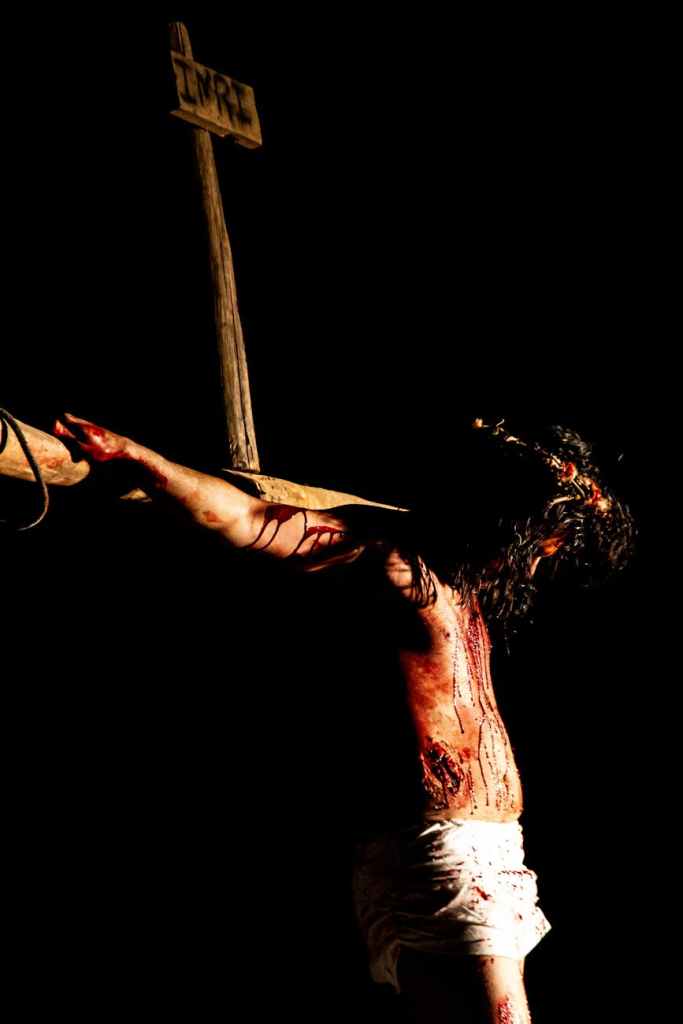
Another good reason is that prayer changes US. Praying for our enemies is difficult. It is humbling. It breaks our pride and forces us to let go of the bitterness and recognize God’s rightful place as judge, avenger, and healer. It reminds us that God’s love, being boundless and eternal, stretches to those people who don’t deserve it, whether that is the hurtful person you don’t want to forgive, or the hurtful YOU who needs to be forgiven. God even loves those who seek our destruction. God loves those who hate HIM! God prayed for those who crucified Him– while He was dying. Can we say that we follow Him and do any less?
But praying for our enemies isn’t just about bringing peace and harmony or transforming us into better versions of ourselves. No amount of willpower, or good intention, or logic, or internal fortitude, or peaceful meditation, or persuasive rhetoric, or even powerful prayer will be enough to eliminate our enemies or make us perfect in love. Our prayers may stop neighborhood chaos or family feuds. They may even cause wars to cease. But they may NOT. Jesus is the Prince of Peace– not me. My job is to recognize that I cannot bring peace, but I can live in the Peace that passes all understanding– even in the midst of chaos and turmoil. And I can show love, even as I stand up for truth and hold fast to God’s Word. Love doesn’t mean that I will compromise. But I will respond with compassion– even in conflict.
We pray FOR our enemies, but not all of our enemies. There are two enemies we need to pray AGAINST– Sin and Satan. They are the true enemies, trying to destroy both sinner and sinned-against. They are not just our enemies, but enemies of God. Both are defeated. Their power is illusory, and their damage, while intensely painful, is temporary. And when we refuse to pray for our human “enemies” we serve their destructive purposes. When we follow our own fears, hurts, and feelings of outrage, instead of God’s wisdom in showing love to our enemies, they gain a temporary victory. And we end up on the losing end!