I Can Do All Things..

I know many Christians who cite Philippians 4:13 as their favorite verse: “I can do all things through Christ who gives me strength.” And while this is a powerful verse, and holds great promise, I think it has been misused and taken out of context too often in recent years.

The Apostle Paul wrote this– from a prison cell as he awaited trial and a likely sentence of death! And this thought is a summary statement. It follows a list of circumstances in which Paul had experienced needs, and questions, and setbacks, and lack of provision.

Photo by Nandhu Kumar on Pexels.com

In this season of “sheltering in place,” I have a new appreciation for Paul’s letter. I am not in jail, but there are many restrictions (temporary, but seemingly endless) on where I can go and what activities I can pursue in light of the COVID-19 pandemic. I cannot “do all things” in any normal sense. My family could not gather for Mother’s Day this year. We cannot have friends over for a meal, or take our grandchildren to the movies, or meet together for a traditional church service on Sundays. I cannot open my little shop to customers. I can’t go and get a haircut or hang out at the bakery or coffee shop.

Photo by Cliff Booth on Pexels.com

And there are others who are struggling, not just with restrictions, but with increased expectations. They cannot “do all things” to help a dying patient, or stop the spread of infection in their nursing home or hospital ward. They cannot answer frenzied questions about timelines and protocols. They cannot work effectively from home and still be available to their children as both parent and surrogate teacher. Or, they cannot meet the needs of their students without face-to-face interaction.

But Paul is not talking about the mere completion of a worldly task, or achieving a personal goal. Paul isn’t suggesting that he (or anyone else) can do anything and everything he might want to do or that others might wish him to do. He has just finished talking about times of lack, of wants and needs and facing uncertainties. Paul did not (even with Christ’s help) skip lightly around Asia Minor, making friends and influencing people.

Photo by Ylanite Koppens on Pexels.com

So what DID he do? What did he mean by “all things?”

Paul speaks often throughout his letter of “running a race.” Paul learned that in all circumstances, with whatever resources, whatever restrictions, and whatever obstacles, he could “run” his race. Under persecution or in times of great success; in times of plenty, or in times of hunger; in prison or on the road (or seas); in Jewish synagogues or Greek amphitheaters; alone or in crowds– Paul could worship God. He could proclaim the Gospel. He could spread the love and grace of Christ Jesus. If he couldn’t travel, he could still speak. If he couldn’t speak, he could write. If he couldn’t write, he could pray. He could do “all things” that were necessary to accomplish his one goal– to run the race; to finish strong; to live a life of purpose and worship.

Photo by Pixabay on Pexels.com

May we do the same today, through Christ, who gives us strength. I may not be able to gather with friends, but I have the blessing of being able to call, or e-mail, or IM, or send encouragement. I can still write this blog. I can still pray– in fact I have more time to do so! I can do “all things” that will fulfill my purpose and bring honor to God. And so can you. What a privilege–no matter where we are or what our circumstances!

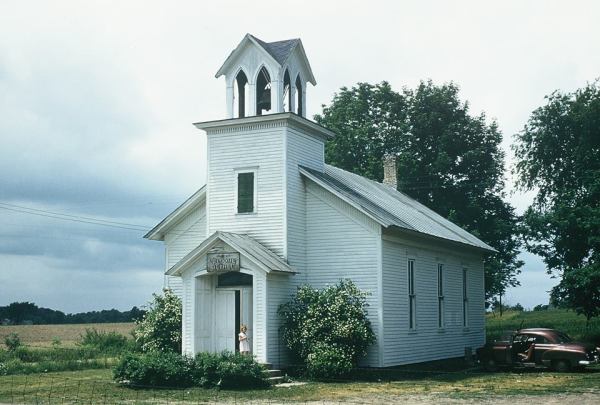
Photo by Porapak Apichodilok on Pexels.com

…And I Will Dwell In the House of the Lord..

During the global COVID-19 pandemic, churches are being asked to suspend meetings– worship services, Bible studies, prayer meetings–all must be conducted via internet, or some other remote broadcasting option. This will be the first Easter in modern memory when millions of people will be unable to celebrate in church.

I miss going to church. I miss seeing and talking to my friends. I miss singing as a congregation, and praying together. I miss my weekly Bible study group, my Sunday School group, and I miss seeing the kids jumping and twirling and full of energy. I miss visiting the “house of the Lord.”

But there are three very important things this time is teaching me:

Photo by Pixabay on Pexels.com
  • I miss “visiting” the house of the Lord, not “dwelling” there. There is a huge difference. As a member of the “body” of Christ (1 Corinthians 12), I live and move and have my being (Acts 17:28) IN Him. I do not “visit” the body– I AM part of the body– which brings me to..
  • The building is NOT the “Church.” Our church is still operating– just in different ways for the different circumstances. Members are making phone calls, sending e-mails, greeting cards, and creating web content to help share resources, provide encouragement and prayer support, and inspire others. We’ve been praying for those who are battling COVID-19— some are suffering from the disease; others are on the front lines– doctors, nurses, emergency workers, “essential” services workers in groceries, post offices, truckers, and more; some are suffering financially from lay-offs and losses. We are sharing specific names and needs as they arise–church members, neighbors, extended family, needs close to home or around the globe. Even if we are not meeting face-to-face in a particular building, we are still The Church, and I am “dwelling” there.
  • We have been asked to “shelter in place”– to stay in our dwellings. And that is precisely what God asks of us, as well. We need to dwell in the House of the Lord through this crisis. He is our shelter, our place of safety, and our rest. Instead of seeing this as a negative, or a set-back, we can use this time to celebrate the safety of our eternal dwelling place– safe in the arms of our Savior!
  • Finally, I WILL dwell in the House of the Lord– I already am a member of the body; I already dwell in unity with the Church; I already live in the presence of God and with His Spirit– someday I will dwell with Him face-to-face in the same kind of intimacy I am missing now with my fellow believers. What I am missing now should cause me to be joyful! This is temporary– what will be is eternal and will never be interrupted by disease, distance, or the imperfections of our current fallen world.
Photo by Tookapic on Pexels.com

COVID-19 is the visitor– unwelcome, scary, dangerous, yes, but as a child of God, I dwell in the House of the Lord– and COVID-19 can’t change that for me or for anyone else who calls on the name of Jesus! Ever!

Head and Shoulders, Knees and Toes

I worked for many years at a public library doing pre-school story time programs. One of the favorite songs among the children was “Head and Shoulders, Knees and Toes.” Children love rhymes, music, and movement, and this song involved all three. Children stood, ready to stretch and bend, point, and sing: “Head and shoulders, knees and toes, knees and toes.” Their hands flew from one body part to another as we sang, faster and faster. “Eyes and ears and mouth and nose; head and shoulders, knees and toes, knees and toes.” Faster and faster, louder and louder, the excitement growing, until the song ended in a breathless shout, “Knees and toes”!

Another favorite was the “Hokey Pokey”, in which we formed a circle and took turns “putting in” and “putting out” various limbs and body parts, “turning (ourselves) about” and clapping. We “put in” our right arms, our left legs, our heads, and “our whole selves.” From the earliest of ages, we become aware of the various parts of our bodies, their names and functions, and how they work together.

As God’s people, we are to be the “Body of Christ” (1 Corinthians 12:12-14) and our bodies are to be His temple(1 Corinthians 6:19). It is important that we recognize how every part of our body needs to be consecrated and ready to serve, to worship, and to reflect God’s Glory.

Photo by nappy on Pexels.com

This is not a new concept. In fact, much of the book of Leviticus is given over to consecrating every aspect of the worship of God by His children. There are detailed instructions for the priests– how and when to enter the Tabernacle; what to wear, what kind of offerings to bring and how to prepare for service. One set of details involves the installation ceremony for the priests. They were to wash from head to toe, before putting on the sacred garments. They were to offer a blood sacrifice, and some of the blood was to be placed or smeared in three places– the lobe of the right ear, the thumb of the right hand, and the big toe of the right foot (Leviticus 14:28).

Scholars through the years have given us many reasons for these detailed instructions (see this link for a terrific overview) https://www.myjewishlearning.com/article/ears-thumbs-and-toes/, and most of them bring out the idea that God wants us to worship and be consecrated “from head to toe.” God has authority over how we choose to use our ears, hands, and feet– He wants purity in our words and deeds. He wants us to listen to Him, obey Him, and follow Him.

The smearing of blood in these three areas also demonstrates a need for atonement– only blood can cover or atone for our lack of attentiveness, our lack of obedience, and our open rebellion against God’s authority. The blood of the ritual sacrifices in Leviticus are a foreshadowing of the ultimate atonement we receive from the sacrifice of the Only True Lamb, Jesus Christ. Christ takes away our sin, and consecrates us to His service and worship– from head to toe!

Photo by Pixabay on Pexels.com

And, unlike the Hokey Pokey, THAT’S what it’s all about! God gives us His life and purity, His Grace and forgiveness, His divine purpose and eternal Glory when we “put our whole selves” in His hands, and He “turns us all about,” to become more than conquerors (Romans 8:37), a royal priesthood (1 Peter 2:9), and the sheep of His pasture. (Psalm 100:3)

I Love to Tell the Story

I’ve mentioned this before, but many of my childhood memories of church revolve around old hymns, sung with more gusto than musicality– joyful noises, just not always faithful to the notes. But they were faithful to the Word, and the Worship of Christ. I will always be grateful for that heritage.

Photo by Pixabay on Pexels.com

In the more informal services on Sunday nights or Wednesday nights before we settled in for prayer, the worship leader would often ask for members of the congregation to call out the number of any random hymn. We would (attempt) to sing it, often a capella, just the first verse, or maybe the first and last. It gave people a chance to sing an old favorite, or a hymn we hadn’t sung in awhile. Sometimes, a brave soul would find a “new” hymn– one no one (or almost no one) had ever heard. Occasionally, the evening church hour would revolve solely around this worship model– a hymn-sing service. It’s a dying practice, and one that deserves to be preserved. My church has done it a few times over the past years, a local chapel does it once a month, and Bible Study Fellowship in our area begins with hymn-sing every week. It’s a great way to learn old hymns, long-forgotten choruses, and treasured truths of doctrine set to music.

Photo by Luis Quintero on Pexels.com

But I digress. As a child, I liked this spontaneous activity, except for one thing. I knew that if Mr. Teeter opened the hymnal and started to clear his throat, that he would suggest the same hymn he always picked. It never seemed to vary– ever. Mr. Teeter was one of the older men of the church. He was in his seventies, short, with wisps of white hair, wise and twinkling eyes, and a big, red nose like a strawberry, which he often blew–loudly–into his pristine white handkerchief. He always came to church in a suit, complete with a hat, which had its own special spot on the hat rack in the entryway. I could not imagine him any other way. And every time he had the opportunity, he would choose to have us all sing, “I Love to Tell the Story.”

I wasn’t much impressed with the song. It seemed old-fashioned. It was simple. It had no soaring musical passages– sometimes, it even sounded whiny to my young ears. I dreaded the thought that we would sing it (yet) again. I would try to get my hand up and choose another hymn, any other hymn, before Mr. Teeter could clear his throat. I did not understand why he never seemed to want to sing other hymns– I knew he liked “Standing on the Promises,” “Blessed Assurance,” even “Leaning on the Everlasting Arms!” But, while he could be stalled for one or two other numbers, he would eventually call out the dreaded number, and we would sing at least one verse. It’s not that I hated the song, and I certainly had respect for Mr. Teeter, but I just couldn’t figure out why THIS song? Why EVERY time?

Photo by Pixabay on Pexels.com

Just a couple of years before his death, Mr. Teeter gave his salvation story in front of the church. Many of us had never known about his wild early years; his drinking or his rebellion against his family and the church. Many of us assumed he had always lived a quiet, rather pious life. He radiated the peace and wisdom of a man who walked daily with his God. And then, he told of his fascination with this old hymn. He liked the very simplicity of it–his life wasn’t based on some grand theological argument, or a complicated list of heroic actions he had achieved to win his salvation. His life–his born-again, wonderful, eternal life– was because someone had told him an old, old story, he had believed it, and that had made all the difference. That simple old story has been the same since the beginning– God made the world, mankind sinned and fell short of God’s glory, God sent His Son to pay the price of that fall, and Jesus’ death and resurrection allows anyone who believes to be adopted as a son or daughter of God. And though Mr. Teeter knew the old story inside and out, and lived it, he never tired of it. He was “hungering and thirsting” to hear it again!

Whenever I hear this song now (or suggest it), I think of Mr. Teeter singing with saints and angels, his quiet voice full of emotion, his eyes filling with tears of gratitude and worship, as he gets his request–“and when, in scenes of glory, I sing the new, new song, ’twill be the old, old story that I have loved so long. I love to tell the story; ’twill be my theme in glory to tell the old, old story of Jesus and His love!”

This is My Father’s World

Yesterday, in our Bible Fellowship class at church, we continued our series on a Christian view of “Hot” topics: we focused on Environmental issues.

“In the beginning, God created the heavens and the Earth.” (Genesis 1:1)
“The earth is the Lord’s, and the fullness thereof; the world, and they that dwell therein.” (Psalm 24:1) KJV

Our environment can become a politically and emotionally charged subject. How should we as Christians, view our environment, our environmental impact, and our attitudes toward dire reports about climate change, extinction rates, emissions, pollution, habitat reduction, natural resources, and energy needs?

The Bible gives us guidelines, warnings, and even hope!

  • Ultimately, the fate of the world does not rest on my shoulders, or yours, or our generation’s…This is MY FATHER’S world. He created it, He inhabits it, and He has a plan for it. That does not give me an excuse to ignore the problems facing our planet. It does not give me the right or the privilege of passing the problems along to someone else, where action can and should be taken. But it does remind me that God has not left us alone and helpless to stop an environmental apocalypse left to us by previous generations and accelerated by our own.
Photo by Brett Sayles on Pexels.com
  • GOD created the heavens and the Earth. God, who knows the end from the beginning. God designed our planet, our atmosphere, our universe. What even the best of our scientists know about our planet is infinitely smaller than what God knows, and what even the boldest plans of man propose are nothing to the power of God to heal and restore. That doesn’t mean we don’t need to be concerned about things that are happening– but we can’t let our concerns turn to despair and doubt. When the nation of Israel first entered the promised land, God gave them a list of blessings and curses. (Deuteronomy, chapter 28) If they obeyed, they would be blessed. If they were disobedient, they would be cursed. Many of these blessings and curses relate directly to the land and weather. God is still in control of nature, but this leads me to…
Photo by Pixabay on Pexels.com
  • God gave stewardship of the Earth to mankind. We are to be the daily caretakers of God’s Earth. That there are so many problems with our environment shows that mankind as a whole has failed to obey God in this matter. We are not under the direct blessings and curses that came to Israel in the promised land, but there is still a correlation–as Sin proliferates, so does death and destruction– including that of the world around us. That doesn’t give me the right to point the finger at others and justify my own disobedience because “at least I don’t…,” or “at least I do…”
    God expects me to act in ways that protect, preserve, or develop the environment to benefit those around me and give glory to Him. This includes the way I interact with the land, water, air, plants, animals, and other people. It includes the actions I take to destroy harmful plants and animals; to protect the soil and water; to dispose of waste; to eat; to build, or heat, or cool buildings; what I eat and drink and wear. It even includes being informed about second-hand resources that I buy and use, and whether or not those resources are being stewarded well by others. This doesn’t mean becoming an environmental Pharisee– publicly calling out all my neighbors who still use plastic bags or buy products from “that” company. And it doesn’t mean I must become a vegan, or a homesteader or give up my computer or cell phone. But what can I do to become a better steward?
  • Is it possible that my attitude toward the environment is coming from a lack of exposure to both the environment itself and its maker? Am I spending more time reading about climate change than I am spending in the climate itself? Have I thanked God for the world He created? Do I take the time to notice the beauty in a blade of grass, or the colors in a sunset, or the mystery of running water, and marvel at God’s handiwork? How would my view of Nature change if I developed my relationship with its maker?
Photo by Pixabay on Pexels.com
  • Lastly, I need to engage with others to find ways we all can become better stewards– not (necessarily) by bashing people over the head with statistics and mandates, but getting the facts– not just the hype or the denials–and sharing practical ideas.

I don’t have to save the world– that is God’s job; He’s the only one who can. But I CAN do my part to protect, preserve, develop, and enjoy all the beauty He created. And in doing so, I pray that I can help others see the One who loved us all enough to create such a beautiful home!

Have You Any Room?

I had no idea what to write tonight, so I started thumbing through an old hymnal. A song title caught my eye– just a glance, and I turned the page, but it wouldn’t leave my mind. “Have You Any Room for Jesus?” it read. It’s an old hymn; one I don’t know, and have never sung. But there it was, and I had to turn back through the pages and look again. It’s not the sort of song we sing in our modern worship services– it’s an invitational hymn, meant for evangelistic meetings– it has little appeal to those who already consider themselves “saved”, and little appeal to those who see worship as a constant celebration, without any “awkward” conviction, confession, or heart-prodding that might make us sober and thoughtful.

And as I read it, I was struck by the absence. The words are “old-fashioned,” “melodramatic,” “quaint.” They are plaintive and urgent, and they are foreign to our modern churches.

Have you any room for Jesus,
He who bore your load of sin?
As He knocks and asks admission,
Sinner, will you let Him in?

Room for pleasure, room for business–
But for Christ, the Crucified,
Not a place that He can enter
In the heart for which He died?

Room for Jesus, King of Glory!
Hasten now; His Word obey.
Swing the heart’s door widely open;
Bid Him enter while you may
.

Sing to the Lord Hymnal– publisher and copyright unknown

We tend to be very critical of such sentiments–we don’t want to be addressed as “Sinner.” We shy away from the image of Christ knocking at the door, waiting for us to invite Him in. We want the aftermath– Jesus sitting with us in the “room” HE has prepared for us in Heaven. Without the knocking, and the waiting, and the mundane obedience. I say this critically (and after my last post, too!), but I say it with conviction of my own shortcomings in this area.

When I was a young girl, our family had a print hanging on the wall in our house. It was a common sight in many homes, as I recall, the image of Jesus standing at the door of a small house or cottage, and lifting His hand to the knocker. But that print has been criticized– the “Jesus” is “too white.” The door is not “consistent with doors Jesus would have seen in his earthly life.” The entire scenario is inconsistent with the image of Jesus that modern culture presents– Jesus “hanging out” with rough and tumble commoners at the park or marketplace, or marching in the streets seeking justice for the poor and marginalized, or “Super” Jesus riding on the clouds coming to reward the faithful and punish the wicked.

Photo by Josh Sorenson on Pexels.com

We don’t preach a gentle Jesus who knocks at the door and “asks admission.” We don’t give altar calls and urge people to “bid Him enter while you may.” We wear Jesus jewelry, and play contemporary Christian music as we drive around in cars with “Christian” messages stuck to the bumper, and boast about all the “amazing” things God has done for US. Jesus is “cool”– He doesn’t have to knock on our door and ask for admission.

Photo by Pixabay on Pexels.com

But this is exactly how He came when He was here for His earthly mission. He was born in a stable because there “was no room” (Luke 2:7) in any of the inns at Bethlehem. He had no home of his own; “nowhere to lay his head” (Matthew 8:20). He asked for water from the woman at the well (John 4), and He invited Himself to the home of Zacchaeus (Luke 19: 1-10). And it is Jesus himself who offers the invitation in Revelation: “Behold, I stand at the door and knock..” (Revelation 3:20).

Why, then, have so many of us stopped singing songs like this? When did we stop recognizing ourselves and those around us as “sinners” who need to “swing the heart’s door widely open”? And not just once; we should be heeding the call to make “room” in our hearts and lives daily to meet with the One who bore our “load of sin.”

Lord Jesus, may I answer Your gentle knock– may I clear out the boxes of business and packages of pleasures that clutter my daily life and crowd out my time with You. May I invite You in–to talk with You, listen to You, learn from You, and enjoy Your presence every day! And help me make room to invite others to know the peace, fellowship, and salvation that You offer.

Jacob the Brother of Esau

The Biblical story of Jacob and Esau has long baffled readers and scholars alike. I don’t pretend to have the answers to some of the tough questions it poses, but I’d like to take a close look at some of them.

Esau and Jacob were twins–the only sons of their parents–born just minutes apart. Yet their personalities, their destinies, and their relationships with God and others could not have been more different.

We spent the last post covering some of Jacob’s character flaws– his early years involved scheming and “cheating” this twin of his. Jacob’s life and actions are the focus of the story, after all. He is the one God chose to establish the nation he promised to Jacob’s father and grandfather. But why Jacob and not Esau?

In many ways, this story echoes that of the very first brothers in the Bible. God chose Abel’s sacrifice over his brother’s. We are not given an obvious reason why Cain’s sacrifice was unacceptable– or why Abel’s was. In this case, God does not give Rebecca a reason why her boys would fight throughout their lives or why the elder son would serve his younger brother. At one point, the Bible even says that God “loved” Jacob and “hated” Esau! So we are left with a big question–Does God play favorites? Does He give His favor capriciously? If so, why bother to worship, serve, and obey Him if, in the end, He has already chosen who will be blessed?

We may never have a full explanation of God’s ways– we are told that they are not our ways; that they are higher and wiser than our ways–but there are several things I want to consider that may shed some light.

  • God is timeless. He lives beyond the boundaries of linear time, and he sees the end from the beginning. As we read through the story of Jacob, we see his progression, and the changes he makes as he matures and as he encounters the great God of his fathers as it unfolds in time. His beginning shows little promise, but God already sees Jacob as Israel, as the father of twelve tribes of people, as the ancestor of Moses, of King David, and of the coming Messiah. He sees all of this before Jacob is even born! It is part of His eternal plan that Jacob, the cheater, the underdog, the “lesser” brother should become all of these things.
  • God sees inside the human heart. Esau’s character is not fully shown in this Biblical story, but we get a few clues: 1) Esau despised his birthright– he was flippant about his inheritance, trading it for a bowl of stew. 2) Esau took foreign wives who caused his parents distress–this detail may almost escape the modern reader. We do not tend to live with our extended family, but it was (and in some cases still is) common to the society in which Isaac lived. Esau did not consider his parents when bringing foreign women into the family. They had different customs and different gods. And Esau didn’t learn from the first two wives..when Rebecca commented on the Hittite women, Esau married a daughter of Ishmael, a woman likely to resent her father’s rival (remember Ishmael was banished on account of his resentment of Isaac!) 3) Esau plotted his brother’s death. His anger and resentment over the lost blessing caused him to plot murder. Jacob was sent away, not only to find an acceptable wife, but to keep him safe from his brother’s vengeance. Even though the two brothers later met in peace (Genesis 33), the meeting was filled with tension and the brothers were never close. 4) There is not one indication in the Bible that Esau ever sought the God of his fathers—no mention of him praying, offering a sacrifice, or acknowledging God. In fact, the sons and descendants of Esau (Edom) would attack and fight with the nation of Israel for centuries to come, finally being conquered and forced to serve the descendants of Jacob. https://www.jewishvirtuallibrary.org/the-edomites
  • God does not “love” or “hate” in the same way that we do. God’s love is universal and eternal. God loves even those who reject, mock, and hate him. So when God says, “Jacob have I loved, and Esau I have hated”, He is not talking about his feelings for individuals (see https://www.biblegateway.com/passage/?search=Malachi+1%3A1-5&version=NIV and https://www.biblegateway.com/passage/?search=Romans+9%3A6-16&version=MEV). Rather, He is talking about how He shows mercy. Jacob and Esau were real people, and God blessed both of them, and built both of them into great nations. But God showed mercy and favor on Israel for keeping his commandments, while destroying the nation of Edom because of its continuing wickedness. (God eventually showed wrath on the nation of Israel as well, sending its people into exile because of their unfaithfulness!) Even in their destruction, both nations retained a remnant and their peoples exist to this day.
Photo by Pixabay on Pexels.com
  • God did not abandon Esau. When Jacob finally reconnects with his older brother, Esau is the head of a mighty army. Esau’s sons became the heads of tribes and kings of Edom. God allowed Esau to prosper and grow strong. But Esau never sought God; Edom never showed humility, wisdom, or reverence–only arrogance, might, and hatred. God shows mercy to those who don’t deserve it, and grace to those who desire it, but He will not allow injustice and arrogance to go unchecked forever.
  • God’s grace is a gift–Jacob didn’t deserve to be favored; but neither did Esau, or Isaac, or Abraham. Nor do any of us. https://www.biblegateway.com/passage/?search=Romans+3%3A9-18&version=ESV Not one of us has earned God’s blessing. God chooses to love us even in our sin, and chooses to give us the Grace to return and receive His blessing!
Photo by Reafon Gates on Pexels.com

Praise be to the God of Jacob!

Come, Let Us Adore Him!

I wanted to cap off this week of Christmas carols with this line from “O, Come, All Ye Faithful (Adeste Fideles)”


Oh, come, all ye faithful, joyful and triumphant,
Oh, come ye, oh, come ye, to Bethlehem.
Come and behold Him, born the King of angels;

Refrain:
Oh, come, let us adore Him, oh, come, let us adore Him,
Oh, come, let us adore Him, Christ the Lord.


Sing, choirs of angels, sing in exultation;
Oh, sing, all ye citizens of heav’n above!
Glory to God, all glory in the highest;


Yea, Lord, we greet Thee, born this happy morning;
Jesus, to Thee be all glory giv’n;
Word of the Father, now in flesh appearing;

O Come, All Ye Faithful– Words by John F. Wade (Latin); translation by Frederick Oakeley.
Photo by Digital Buggu on Pexels.com

The words of this hymn sum up an important pattern running through this week’s group of song lyrics. Worship, praise, obedience, wonder, joy– all come by way of invitation. Christmas compels us, not by force of law, or a show of superior power, but by beauty, generosity, humility, and Love. God gives the invitation; He draws close to the lowly and the broken-hearted; He dispels the darkness with starlight, and breaks through the silence with angelic choirs; He cries quietly from a borrowed stable. Shepherds leave their flocks to see him, Magi travel with treasures to worship him– but the rest of the world passes by, unaware and untouched. As this child grows, he continues to issue invitations– “Come unto me, you who are weary, and I will give you rest!” “Whosoever believes in me shall have everlasting life.” “I am the bread of life. He who comes to me will never go hungry. (John 6:35 a)” Jesus didn’t use threats and judgment to attract angry followers. In fact, when he spoke harsh truth, the religious and political leaders of the day plotted to kill him– and he knew of their plans but did nothing to stop them! Those who followed Jesus did so because he asked.

Photo by Jessica Lewis on Pexels.com

It is the same for us today. The invitation still exists– it is still valid. It is possible to ignore Jesus, to say, “No;” even to deny Him. Christmas is not a command. It is a communion. The wonder of Christmas– the miracle– is that God has not ignored us or denied us; He has not bound us in chains and forced our obedience or our worship; He has not abandoned us to the darkness. He reached out, He pursued us, wooed us, sharing our burdens and our woes, and promising us fullness of life and joy– IF we will accept the invitation.

Photo by Pixabay on Pexels.com

Let us come. Let us worship and adore Him. Let no tongue on Earth be silent or sullen. Let nothing keep us in dismay and fear. Let our hearts prepare to receive this matchless gift of Grace. Let all that is within us praise His Holy Name!

Let us celebrate!

Let No Tongue on Earth Be Silent…


“Of the Father’s Love Begotten”
by Aurelius C. Prudentius, 413, cento
Translated by John. M. Neale, 1818-1866
and Henry W. Baker, 1821-1977

1. Of the Father’s love begotten
Ere the worlds began to be,
He is Alpha and Omega,
He the Source, the Ending He,
Of the things that are, that have been,
And that future years shall see
Evermore and evermore.

2. Oh, that birth forever blessed
When the Virgin, full of grace,
By the Holy Ghost conceiving,
Bare the Savior of our race,
And the Babe, the world’s Redeemer,
First revealed His sacred face
Evermore and evermore.


3. O ye heights of heaven, adore Him;
Angel hosts, His praises sing;
Powers, dominions, bow before Him
And extol our God and King.
Let no tongue on earth be silent,
Every voice in concert ring
Evermore and evermore.


4. This is He whom Heaven-taught singers
Sang of old with one accord;
Whom the Scriptures of the prophets
Promised in their faithful word.
Now He shines, the Long-expected;
Let creation praise its Lord
Evermore and evermore.


5. Christ, to Thee, with God the Father,
And, O Holy Ghost, to Thee
Hymn and chant and high thanksgiving
And unending praises be,
Honor, glory, and dominion,
And eternal victory
Evermore and evermore.

taken from http://www.lutheranhymnal.com
Photo by Pixabay on Pexels.com


Christ’s Humility and Exaltation
Adopt the same attitude as that of Christ Jesus,
who, existing in the form of God,
did not consider equality with God
as something to be exploited.[a
Instead he emptied himself
by assuming the form of a servant,
taking on the likeness of humanity.
And when he had come as a man,
he humbled himself by becoming obedient
to the point of death—
even to death on a cross.
For this reason God highly exalted him
and gave him the name
that is above every name,
10 so that at the name of Jesus
every knee will bow—
in heaven and on earth
and under the earth—
11 and every tongue will confess
that Jesus Christ is Lord,
to the glory of God the Father.

Philippians 2:5-11 (Christian Standard Bible–CSB)

Photo by Pixabay on Pexels.com

An early Christian poet penned the words for this Christmas Hymn over 1500 years ago.  He was echoing the words of the Apostle Paul from 400 years before that.  Paul’s “hymn” was expressing truths penned by prophets and songmakers stretching back centuries before his time.  From the earliest recorded writings of Moses we see the same themes:  God is eternal–eternal in existence, eternal in power, eternal in glory; God extends himself on behalf of his creation–giving, sacrificing, inviting, forgiving; God exalts the humble–he notices the overlooked, elevates the lowly, honors the meek.

Photo by Pixabay on Pexels.com

These themes have not changed in centuries, but our interpretation and usage of them has.   I still love this old hymn, and the passage from Philippians, but I see people, Christians and non-Christians alike, using phrases like, “Let no tongue on earth be silent,” and “Every knee shall bow” not as invitations or extensions of God’s glory and sacrifice, but as threats.  I find this understandable, but not defensible– especially coming from Christians.

Photo by Shelagh Murphy on Pexels.com

I think our modern world has lost much of its wonder and ability to see “honor, glory and dominion.”  We spend our days “debunking” any idea or person who might seem worthy of respect or honor, but we replace them with ideas and people who are less worthy of respect, because they make us feel superior and smug in our own complacent, convenient lives.  We are satisfied by glitter, instead of seeking glory.  We have given the word “dominion” the same negative connotation as “colonialism” or “conquest”.  We do not choose to honor humility or service– we celebrate what is brash, flashy, loud, and self-serving.

Photo by Pixabay on Pexels.com

Some of our modern churches and worship services fall into the same trap.  We give more honor to the worship band and the comfortable seats than we do to the creator of the heavens.  We spend our money on t-shirts and CDs proclaiming the wonders of OUR faith, but we don’t have any money to share with those in need just two streets away.  I am not saying that this is unique to our time, or that the early Church was without fault.  But there is a very different feeling one gets in entering a medieval church or cathedral–they were not built for human comfort, but to inspire the sort of knee-bowing, tongue-confessing awe found in the ancient hymns.  Jesus grabbing a cup of Joe and plopping down next to us in a climate-controlled, renovated movie theater does not have the same effect.  We are sometimes left with the impression that Glory is ephemeral and glittery, and God is more interested in our comfort than in our transformation.

Photo by rawpixel.com on Pexels.com

So when we read that God is eternally glorious and that every knee WILL bow and every tongue WILL confess– we see this as coming from a self-important little-g  “god” who compels his creation to worship him out of a vain desire for imputed glory.  In contrast, the Bible presents a God whose very nature IS Glorious.  We worship him when we see him as he is.  When we choose in this life to exalt ourselves and ignore God’s invitation, and the ways in which he reveals his glory here on earth, it doesn’t diminish his glory or change his nature.   

Consider a beautiful sunset.  There was a glorious sunset in our area last Saturday night.  Several of my friends posted pictures of it– it was awe-inspiring!  That was its very nature.  But many people missed seeing it, or recognizing its beauty.  After all, the sun sets every day.  This sunset came and went like all the others.  The sky didn’t force anyone to look at it, but it was visible to anyone who would see it.  God’s presence, when fully revealed, will be stunning in its Glory and impossible to ignore.  Every knee WILL bow and every tongue WILL confess– simply in awe of it.  God invites us to open our eyes, to catch glimpses (like Saturday’s sunset) of the glory he imputes to even the most ordinary and humble things in life.

Photo by Pixabay on Pexels.com

And so it was in the incarnation.  God’s glory arrived in the form of a baby– one among thousands in Judea, His divine nature wrapped in the ordinariness of arms and legs, cooing and crying like any other baby, born in obscurity, yet announced from the beginning and heralded by the very hosts of heaven– Here HE is!  Come and behold Him!  Worship and adore Him!  Evermore and Evermore!

God Gave…


For God So Loved the World
16 “For God so loved the world, that he gave his only Son, that whoever believes in him should not perish but have eternal life.


John 3:16 English Standard Version (ESV)
Photo by Sharefaith on Pexels.com

From the very beginning, God has been a giver of good gifts.  He created a beautiful world, teeming with life and joy.  He gave mankind dominion over this beautiful creation, and even when we rebelled and fell short of our calling, God gave us promises of restoration and renewal.  He gave His words and demonstrations of His character and goodness as He interacted with His chosen people.  He took a childless man and promised to make him the father of many nations.  He took His people through the wilderness and provided for their every need– from their heads to their sandal-shod toes.

God’s greatest gift was himself– and He gave everything He had to give.

Photo by Francesco Paggiaro on Pexels.com


14 The Word became flesh and made his dwelling among us. We have seen his glory, the glory of the one and only Son, who came from the Father, full of grace and truth.


John 1:14 New International Version (NIV)


5 In your relationships with one another, have the same mindset as Christ Jesus:
6 Who, being in very nature God,
    did not consider equality with God something to be used to his own advantage;
7 rather, he made himself nothing
    by taking the very nature of a servant,
    being made in human likeness.
8 And being found in appearance as a man,
    he humbled himself
    by becoming obedient to death—
        even death on a cross!

Philippians 2:5-8
Photo by Pixabay on Pexels.com

Many of us are celebrating Thanksgiving today– but there is great reason to give thanks every day for this indescribable gift!

Photo by Element5 Digital on Pexels.com

Thanksgiving is so much more than turkey dinners or football on TV or shopping.  It is a lifestyle and an attitude that recognizes the God who gives lavishly, lovingly, eternally, and to the very last measure.

Blog at WordPress.com.

Up ↑