Prayer in the Cyber Age

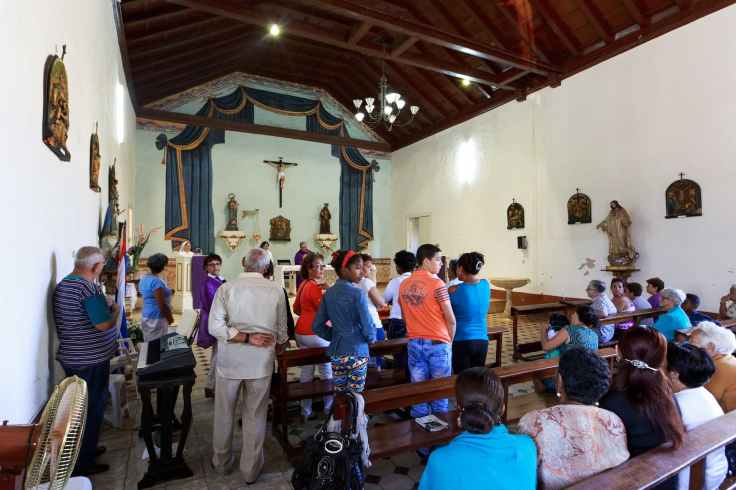
I attend a weekly prayer meeting at our church. A small group of us meets one morning a week to share prayer concerns, pray for our pastors and church workers, missionaries, community members in need, etc. It usually lasts just about an hour. On a “good day,” we have about seven people.

I grew up in a small rural area, and our little country church had a weekly Wednesday evening prayer service. On a “slow night,” we might have seven people. Sometimes, we had thirty or more (nearly half the church congregation)! They lasted about an hour and a half. When I was in college, we had groups that met once a week for prayer. It wasn’t always the same group, but it met at the same time, and, again, we sometimes had as many as thirty in attendance– for prayer. Often, we met in a dorm room, so it was cramped, and many of us were sitting or kneeling on the floor. Once, we had a fire drill, and my feet had “fallen asleep” and I had to be helped as we walked to the exit!

I don’t say this to disparage our current small group, but to point out some of the differences between life in the 1970s, 1980s and today. My current church has activities every Wednesday evening, and much larger attendance than the little country church ever attained. And prayer is still a small part of the Wednesday evening programming. Prayer is encouraged in small groups, individually, and we pray during service. But sustained time set aside for prayer– what the old hymn refers to as “Sweet Hour of Prayer”–in a group setting is becoming more of a rarity.

There are many reasons for it– some good, some not so good.

On the “good” side, it must be noted that corporate prayer today has expanded far beyond the traditional in-person prayer meeting. Prayer can be skyped, group-chatted, zoomed, and conference-called. Prayer can be “hosted” in one location, with satellite groups around the world praying in real time together. In such ways, thousands, and even millions of people can be joined in prayer. This is an amazing development!

And, along with such developments, prayer has become far more global, and far more immediate. I can receive a text or e-mail notifying me of a prayer request from nearly anywhere in the world, and know that I am joining with a host of other Christians when I stop and take a few moments to pray right then.
So what’s the “downside” of cyber prayer?

Speaking as one who has lived the experience of meeting with the same people at a dedicated time over many years specifically to pray, I have observed the following benefits:

In-person prayer meetings offer a more intimate time of fellowship, compassion, and service. I’m not just seeing other people on a screen, reading a text message, or even filling an auditorium seat as part of a huge “movement”– I’m sitting in a circle, breathing the same air, hearing the same hum of the furnace or fluorescent lights, the sound of others breathing, sighing, or even crying quietly around me. Sometimes, I’m holding another person’s hand, or giving them a hug. I am not just among fellow believers, I’m with family. We get to know one another in a deeper way. I know their families, their personal struggles and victories. I learn the rhythm of their prayers, and the issues closest to their hearts– and they know mine! And that can be a scary thing at first– building the kind of trust that intimate fellowship demands. But it pays off a thousand-fold!

In-person prayer meetings are also focused in a different way. Cyber prayer usually focuses on a specific need– sometimes an immediate, or even temporary issue. In-person prayer focuses on the long term discipline of praying. I have prayed with groups over years for lost relatives or unresolved health issues. And while that may seem depressing to read about, in practice it teaches patience, and deepens faith. As a group, we see God’s answers develop according to HIS timing and HIS plan. Sometimes, we see issues resolved quickly; other times, we see how God strengthens us in our trials; and still other times we see God do surprising and miraculous things just as we’ve almost given up hope. And there are some answers we may never “see.” But, primarily, we are not praying for an outcome– we are praying as a pursuit of Christian living; developing a life of prayer, faith, and obedience. We spend much of our time in prayer lifting up requests, but we also spend much of our time in praise, worship, adoration, confession, and thanksgiving– because prayer is a holistic pursuit.

Which brings me to another benefit, one that may not seem obvious at first. Meeting consistently and weekly for prayer is a habit. It builds a character of faithfulness and true compassion like very little else I’ve encountered. God can “show up” wherever two or three are gathered (see Matthew 18:20), and because God is beyond time and space, He can be present in a church meeting room, in cyberspace, or in outer space! But we are temporal. We have to learn patience, hope, and faithfulness. We learn to be trustworthy of the feelings and confidences of others by sharing our hearts. We learn to serve by the practice of serving those around us over an extended period of time. We learn patience by waiting on the Lord, stopping our busy, deadline-driven, goal-oriented lifestyle to make time for the development of our faith.

Finally, in a post-COVID society, sustained, regular, corporate prayer is also sustained, regular, corporate fellowship. We live in an increasingly isolated society. With more people on the earth than ever before, we are more lonely, depressed, anxious, and self-absorbed than ever before. Even in Church! Many people attend service regularly, but still feel unconnected and uninvolved. And others get “involved” in every activity, often burning themselves out trying to “outdo” themselves (or others). Activities that promise fellowship can sometimes fall “flat” in the face of social expectations. We attend, hoping to “get something” out of an experience. We want to be entertained, challenged, encouraged, uplifted, etc. But often, our expectations are not met. We don’t feel included, or we feel overwhelmed. We imagine we are being compared to others (or we do the comparing!), and feel that we fall short. We don’t know enough, do enough, are not “enough.” And we give up. We give up on the church, on other Christians, on God.

Committing to attend a weekly prayer meeting pulls us “out of ourselves.” We learn to pray for the needs of others. We learn to share our own needs and allow others to pray for us. We learn to be transparent and authentic. We learn to forgive.

Prayer is amazing– in any form. Communicating with the God of the Universe is an unspeakably miraculous opportunity, made possible BY God, THROUGH God, for OUR benefit. Prayer in the cyber age is diverse, global, immediate, and effective. But let’s consider the blessing of old-fashioned Prayer Meetings, and not forsake the practice of meeting together (see Hebrews 10:25) , in person, with no other goal than to spend a sweet hour in prayer!


Saint Patrick’s Breastplate

In honor of St. Patrick’s Day yesterday, I am reprinting one of his prayers, called St. Patrick’s Breastplate. For more on this and other prayers attributed to St. Patrick, see https://slife.org/saint-patricks-prayers/.


St. Patrick (also known as Padraig or Padrig) lived in the fifth century during the last of the Roman era in Britain. Held as a slave in Ireland as a young man, he escaped and returned to his home. However, he felt called to return to the land of his captivity as a missionary. Today, he is celebrated for his efforts to bring the Good News of Christianity to the very people who had enslaved him. The following prayer is attributed to St. Patrick. It is as relevant today as it was over 1500 years ago:

I arise today
Through the strength of heaven;
Light of the sun,
Splendor of fire,
Speed of lightning,
Swiftness of the wind,
Depth of the sea,
Stability of the earth,
Firmness of the rock.

I arise today
Through God’s strength to pilot me;
God’s might to uphold me,
God’s wisdom to guide me,
God’s eye to look before me,
God’s ear to hear me,
God’s word to speak for me,
God’s hand to guard me,
God’s way to lie before me,
God’s shield to protect me,
God’s hosts to save me
Afar and anear,
Alone or in a multitude.

Christ shield me today
Against wounding
Christ with me, Christ before me, Christ behind me,
Christ in me, Christ beneath me, Christ above me,
Christ on my right, Christ on my left,
Christ when I lie down, Christ when I sit down,
Christ in the heart of everyone who thinks of me,
Christ in the mouth of everyone who speaks of me,
Christ in the eye that sees me,
Christ in the ear that hears me.

I arise today
Through the mighty strength
Of the Lord of creation.

But Even If He Does Not…

16 Shadrach, Meshach and Abednego replied to him, “King Nebuchadnezzar, we do not need to defend ourselves before you in this matter. 17 If we are thrown into the blazing furnace, the God we serve is able to deliver us from it, and he will deliver us[c] from Your Majesty’s hand. 18 But even if he does not, we want you to know, Your Majesty, that we will not serve your gods or worship the image of gold you have set up.”

Daniel 3:16-18 (NIV)

I hear a lot of American Christians complaining about the “dark days” in which we live. And indeed, they are dark. There is great evil in the world– wars, famines, injustices, hatred, division, greed, and immorality. But, along with complaints, I hear a note of whining. Isn’t God supposed to deliver us from just such evil? Isn’t He supposed to clear the way for us to love one another in peace and harmony? Surely, it can’t be His will for us to be laughed at, spit upon, misunderstood, and treated with contempt?!

The ancient nation of Israel was conquered and sent into exile. Israelites who had abandoned their faith, as well as those who had steadfastly served the Lord, were ripped from their homeland and marched to Babylon. Worship in the Temple of Jerusalem ceased. The Temple itself had been destroyed. There were no tabernacles, no festivals– none of the systems and structures of worship left available to God’s people. Yet some still worshipped– in homes, isolated from their fellow Jews, or in secret groups. They were not surrounded by reminders of when “their” religious beliefs were considered the cultural norm. Nor did they live in a culture that practiced religious “toleration” as we understand it today.

In the book of Daniel, the commitment of s handful of exiles is detailed as it comes in conflict with the oppressive control of the Babylonian (and later the Persian) Empire. Daniel and his three friends are challenged by the pressure to compromise and adapt to their surroundings. They are tempted and bribed by the promise of power in the court– if they can compete with other Babylonians. But they secretly hold fast to their “old” diet, and religious practices. They refuse to eat the rich food of Babylon– or bow to its gods.

In Chapter 3 of Daniel, the three friends, Shadrach, Meshach, and Abednego, refuse to bow to a golden statue of Nebudchadnezzar, the megalomaniac for whom they worked. Even though he had appointed them to high offices, he refused to “coddle” them in their worship of a foreign god. He demanded that they bow to his statue– something God had commanded them NOT to do.

It might have been easy enough to secretly meet in homes and celebrate Passover without alerting those around them. It would have been possible for them to hide scrolls containing the ancient words of their historians and prophets, to be read or studied. But they were being asked to publicly bow to a statue of their King– to acknowledge him as a “god.” And they refused. As court officials, their refusal was not just a minor snub, but a scandalous insult. Yet they stood firm.

Shocked and angered, Nebuchadnezzar, a notoriously cruel and impulsive king, gave them a generous “second chance” to save their careers and lives by obeying his orders. Amazingly, the three did not even spend a moment considering their options. They answered, boldly, courageously, and graciously, that they would not bow down to the statue. And God rescued them from the fiery furnace, so that not even their hair was singed by the flames– even though their captors were killed in the very act of pushing them into the furnace! God not only rescued them– He appeared WITH them in the midst of the flames. This so astonished Nebuchadnezzar, that he ordered them released and proclaimed that no one should say anything against the God of Shadrach, Meshach, and Abednego–an incredible act of religious toleration for that culture and time.

The story of The Fiery Furnace is well-known. I’ve used it before in my posts. But today, I’d like to focus on just one little phrase that stood out to me this week. When brought before Nebuchadnezzar the first time, the three men said, “we do not need to defend ourselves before you in this matter…” (v. 16).

How tempting it might have been to have defended their refusal– to give Nebuchadnezzar a lecture on God’s Law and His past miracles. But they refused to explain or defend their actions. They merely gave testimony of their faith that God COULD save them, and that, “even if He does not..” they were willing to die rather than dishonor Him. And Nebuchadnezzar SAW the proof of their faith in a way that their words and arguments could not have accomplished!

Most of the time, when I hear Christians talking about this story, they focus on the miraculous deliverance of the three men from the flames. The lesson is that God will be with us, no matter what. He can deliver us FROM the flames, but often, He chooses to deliver us THROUGH the flames. And that is a wonderful lesson and a true promise.

But that deliverance should not overshadow the quiet dedication of the three men. Before God joined them in the fire, they were already committed to dying in silence to obey God rather than their earthly king. They stood to lose everything– their lives, their legacy of faith, their service, their families (who might have been left destitute or even subject to punishment)– all of it was riding on their willingness to suffer injustice and torture. We know that God “showed up”– literally– in their defense. And they certainly knew that God COULD save them. But they also acknowledged that “if He does not..” they were still willing to die. And they were willing to do so, not acknowledged as martyred heroes, but as convicted criminals.

Centuries later, Jesus Christ would appear before Pontius Pilate, who asked Him to give a defense. Astonished at Jesus’ refusal to argue and plead for His life, Pilate came to the conclusion that “I find no fault in Him.” (John 19:4) Jesus willingly accepted an unjust sentence of Death, offering no argument or defense, except the Truth. No one came to His rescue. And God did NOT spare His life! The Son of God died as a criminal on a Roman cross, betrayed by Jewish leaders. Yet, Jesus’ obedience; His willingness to die brought US life, and forgiveness and peace!

There are millions of believers in Christ today who must be prepared to face a “fiery furnace” moment–maybe it involves death or torture. Perhaps it only involves being teased or despised by a neighbor or a classmate at school. And we may pray for deliverance–that is natural. But how often do we give up the chance to argue, and justify our diligence, our “right” to worship “our” way? How ready are we to be seen as foolish, or even rebellious to the culture of the day? We long for God to come to our physical rescue– to join us IN the fire– but are we willing to let Him be our defense? Are we willing to be humble in the face of obvious injustice, and let God speak up on our behalf? And what if He does not?

The Apostle Paul also faced this dilemma. Not only were there Greek and Roman officials who thought him a fool, there were Jews– his own people– who were going around defaming him, denouncing him, and spreading lies and rumors. Paul (never one to let a good argument go unargued!) spent much of his time in letters writing out his defense of the Gospel. But, in his own defense, he downplayed his position and his great knowledge of the scripture. He was not defending himself “in these matters”– he was defending the Truth of the Gospel! He also acknowledged that God could use even detractors and tormentors to spread the Gospel. And he often urged fellow believers to live in peace with their unbelieving neighbors, even those who taunted them!

It is tempting in Western Culture, where Christianity has been normalized, to think that when we defend ourselves, we are defending Christianity. But what if, like Shadrach, Meshach, and Abednego, we let God be our defense– in the flames, in the courtroom of public opinion, in our own families? What if we followed Jesus’ example and remained calm and confident, even under duress? What if we lived humble and quiet lives of integrity, ready to submit even to the flames or the cross, serving even those who would stoke the fires or pound the nails? God might just “show up” in ways we never could have imagined! Courage is often seen as boldness and speaking up in our own defense. But, sometimes, it takes greater courage to stand silent and let our actions– even when they are disparaged and misinterpreted– speak as a testimony of God’s power.

But Not Yet…

I really need to go on that diet.
I really should call my Aunt Kay.
I need an hour of peace and quiet.
And time to sit and pray.

But I’m scrolling through Facebook.
I’m following the news.
I just need another look;
This meme has so many views..

I should greet that new couple at church.
I should make them feel at home.
But I need a cup of coffee first.
And my hair should be re-combed.

My Bible waits by my chair–
Unread these past four days.
Later, I know it will still be there–
Ready to catch my gaze

Tomorrow, or the next day.
God will understand.
I want to follow His Way,
But this wasn’t what I planned.

I got caught up in a magazine
I stopped to shoot the breeze–
My house is needing to be cleaned
Before I get on my knees.

I “had to,” “should have,” “had a mind”
To spend time with God, and yet
My day’s flown past, and now I find
I’ve only time to fret.

“Not yet” was my sad refrain
“Not yet” kept me on the go.
“Not yet” robbed me once again
Of time spent with One who loves me so.

And so my day was filled and rife
With wasted time and small regrets.
I missed the more abundant life
Of trust grown from obedience.

The internet will still be there
Tomorrow and the next day;
But the trust built up in an hour of prayer
Can never be taken away.

Today may be busy with “urgent” needs and countless distractions. But there will only be one “today” to meet with God– in prayer, Bible study, meditation, and worship. What is my priority today? Even if I can’t “find” an entire hour in my busy schedule, have I made a plan and a priority to meet with God? Am I searching for opportunities to serve Him and encourage others, or am I too busy searching for my own entertainment and fulfillment? What are the empty things in my life that I should be telling, “Not yet?”

The Righteous Will Live By Faith

“Look at the proud! They trust in themselves, and their lives are crooked, but the righteous will live by their faith.”

Habakkuk 2:4

Is it rational to believe in God? About three and a half centuries ago, the French philosopher, Blaise Pascal, drew up what is now known as “Pascal’s Wager.” In it, he gives a “rational” justification for belief in God (theism). In it, he posits that if God doesn’t exist, it doesn’t matter whether or not we believe that He does. But if God is real, the consequences of our belief or denial are crucial. If the God of the Bible exists (along with heaven and hell, sin and salvation), the failure to believe will lead us to lose everything; the decision to believe will lead us to gain everything…there is no in between.

I’m not a big fan of Pascal’s Wager. Not because it’s bad logic, per se, but because it depends on belief, but not faith.

What’s the difference? Belief says that God exists–that He is supreme, that He controls our destiny, and that He must be obeyed. It will produce a life of theistic obedience to God’s Law, including a life of “good” works, moral conduct, and “right” thinking. But it will not produce a Godly character. It will not be a life of righteousness.

Faith, on the other hand, believes that God not only exists, but that He rewards those who earnestly seek Him (Hebrews 11:6) and that He so loved the world, that He gave His only Son (John 3:16) to save us from Sin and Death (1 Corinthians 15:56-7). It is not our belief in God’s existence that saves us and gives us life; rather it is Faith by His Grace! (Ephesians 2:8-9) in the nature and character of God– in the atoning work of Jesus as revelation and proof of His character– that saves us from Sin and Death.

Pascal’s Wager is a way of thinking about God. It can lead someone to believe, which can produce a life of Faith. But it can also produce a kind of life that is ruled by grudging obedience, resentment, and pride in one’s own powers of self-control and understanding. Faith lives in dependence and humility, and joyous gratitude for God’s gifts.

The prophet Habakkuk, who first wrote the phrase, “the righteous will live by faith,” learned this lesson in dramatic fashion. He “believed” in God– in His righteousness and justice. He spoke to God about the wickedness he saw all around him, among his own people. God gave him a difficult answer: Justice was coming in the form of an invasion by the Babylonians– a group known for their wickedness and cruelty and lack of justice! God’s answer was shocking and counter-intuitive. But Habakkuk chose to believe and put his faith in God’s Eternal Character, as God revealed the “rest of the story.” Israel would suffer; justice would be cruel–but God’s glory and His salvation would triumph. Habakkuk’s response was a song of praise. Regardless of his circumstances, Habakkuk would wait and rejoice, knowing that God’s ways are perfect.

It’s not difficult to say we believe in God. But are we living in Faith? I find it easy to let circumstances–especially injustice and wickedness–overwhelm me and rob me of peace and joy. But I find it comforting to know that my momentary doubts cannot stop God’s promises, His Mercy, or His power to help me live by Faith. That’s due to His righteousness, not mine, but through Christ, I can trust in it, walk in it, and live in it!

Prepare Him Room

“Let every heart prepare Him room,
And Heaven and Nature sing!”

from “Joy to the World”, by Isaac Watts

I cleared a space in my living room for a tree.
I placed a Nativity set on our newly-cleaned mantle place.

I found a cozy nook to wrap all the Christmas gifts,
And I used candles and decorations to fill all the empty space.

I cashed in my Christmas club money to buy the gifts
For friends and family.

I set aside money to buy stamps for Christmas cards
And to give to charity.

I cleared my schedule and made time for
All the extra running this Holiday season.

For parties and shopping with friends;
For Church and family–all excellent reasons!

But it wasn’t until I made time and space for the Babe–
God come to Earth as a baby Boy–

It wasn’t until I let go of all of “it” for “HIM,”
That my heart was transformed with Unspeakable Joy!

Christmas has room for bells and lights,
For carols, and cookies, and festive nights.

Christmas has room for laughter and presents.
But it isn’t really Christmas without HIS PRESENCE.

“Let every heart prepare Him room” this year.
Let every heart be filled with true cheer.

Let us Adore Him–far and wide–
This Savior who was born; who died

And rose victorious over the tomb!
Who entered our world in a Virgin’s womb,

The one who came to save the human race;
The one who is filled with “redeeming Grace!”

May Christmas Day, and ALL our days
Be filled with Wonder, Joy, and Praise!

Today, as we celebrate the coming of Jesus Christ into the world, let us remember that He came into a world that wasn’t prepared. There was no room in the inn. There was no baby shower, anticipating the arrival of a long-expected birth. In fact, His birth came without all the trappings that we have added to the Holiday. I love all the wonder of the Christmas Season– all the lights and songs; gathering with family, and friends, Advent services and Christmas Eve candlelight vigils, gifts and cookies, Christmas movies and Christmas cards– I could go on for pages!

But the heart of Christmas comes quietly and simply; when we step back from all the glitter and activity and take in the absolute wonder that the God of the Universe stepped into all the limitations of His Creation– a world of time and space, dirt and disease, broken hearts and broken bodies–and He did it for YOU and for ME. He had to be fed and changed–the ruler of Nations!–and placed in a manger to lie in all the helplessness of infancy. He had to walk wherever He wanted to go. He had to eat and sleep and wait in lines and wash away the dirt and sweat of His exertions. He had to listen to the foolish arguments and explain Himself to critics whose very souls He had lovingly created. And He let them condemn Him unfairly and kill Him in the most painful and humiliating way they could dream up.

Christmas is about Joy bursting into a world that was NOT prepared for it. It is about the inextricable link between suffering and celebration; between seeking and being sought out; between salvation and sacrifice.

Our Joy at Christmas cannot be manufactured by songs or gifts or entertainments. It can’t even be found in rituals and traditions. But when Jesus finds room in our meditations, our relationships, and our lives, Joy is the overflow.

May we all find Joy this Christmas– whether or not we prepared in advance; whether or not we checked off all the items on our “to-do” lists; whether we can afford all the trimmings and decorations; even if we are crying out in the darkness– may the Joy of Christmas burst upon us, just as Jesus burst upon a weary world so long ago! 

“Joy to the world! The Lord has Come!”

Of Gingerbread, Christmas Trees, and Frankincense…

As the Christmas season approaches, people are decorating their homes– wreaths, Christmas Trees, lights, gingerbread houses, manger scenes, elves and reindeer, candles and more. And along with the sights and sounds and tastes, the air is redolent with the scents of the season.

Scents evoke memories and emotions deeper than any of our other senses. We can close our eyes or ears to unwanted stimuli, but it’s difficult not to breathe in the spicy air filled with cinnamon or cloves, or ignore the scent of pine or scented candles filling the room.

There was no gingerbread, or evergreen tree, or clove orange in the stable where Jesus was born so long ago– no candles or air fresheners to cover the other scents of animals and afterbirth. But when the wise men arrived to worship the infant King (which may have been a couple of weeks or even months later), they brought gifts, and two of the three were spices– Frankincense and Myrrh. They were precious spices, with medicinal and healing properties, and were also used in embalming– symbolic of Jesus’s future life and death. Oddly enough, their fragrances are reminiscent of citrus and pine, two scents we commonly associate with the Christmas season. https://www.history.com/news/a-wise-mans-cure-frankincense-and-myrrh

Photo by Jonathan Meyer on Pexels.com

God never wastes details. The Bible is full of them– lists of names, detailed instructions for the construction of the Tabernacle and Temple, references to various places, animals, trees, events– seemingly unimportant, sometimes even distracting–but all of them have a purpose. The gifts of the Wise Men (or Kings) were costly, prophetic, and worthy of a newborn king. But they were also physical gifts. The Bible never tells us how the gifts were eventually used– Did Joseph and Mary use the gold to help pay for their flight to Egypt? Did Mary save the frankincense and myrrh to use for Jesus’s burial? We don’t know. But the spices would have kept their scent for a long time, releasing their fragrance whenever the jars or containers were opened. And they reveal something about both the recipient and the givers.

God reveals Himself to us in many ways– and He appeals to all of our senses. Our worship of and fellowship with Him should do the same. We may not have access to frankincense or myrrh (though they have increased in popularity and are readily available from dealers in essential oils), but the Bible tells us that WE are a fragrance– our worship, our obedience, our sharing of the Gospel with others.

14 But thanks be to God, who in Christ always leads us in triumphal procession, and through us spreads the fragrance of the knowledge of him everywhere. 15 For we are the aroma of Christ to God among those who are being saved and among those who are perishing, 16 to one a fragrance from death to death, to the other a fragrance from life to life. Who is sufficient for these things?

2 Corinthians 2:14-16 (ESV) via http://www.biblegateway.com

Above all, our prayers are said to be incense– a pleasing aroma before the throne of heaven:

The Lamb Takes the Scroll (Revelation 5:1-10 CSB)

Then I saw in the right hand of the one seated on the throne a scroll with writing on both sides, sealed with seven seals. I also saw a mighty angel proclaiming with a loud voice, “Who is worthy to open the scroll and break its seals?” But no one in heaven or on earth or under the earth was able to open the scroll or even to look in it. I wept and wept because no one was found worthy to open the scroll or even to look in it. Then one of the elders said to me, “Do not weep. Look, the Lion from the tribe of Judah, the Root of David, has conquered so that he is able to open the scroll and its seven seals.”

Then I saw one like a slaughtered lamb standing in the midst of the throne and the four living creatures and among the elders. He had seven horns and seven eyes, which are the seven spirits of God sent into all the earth. He went and took the scroll out of the right hand of the one seated on the throne.

The Lamb Is Worthy

When he took the scroll, the four living creatures and the twenty-four elders fell down before the Lamb. Each one had a harp and golden bowls filled with incense, which are the prayers of the saints. And they sang a new song:

Photo by Josh Sorenson on Pexels.com

You are worthy to take the scroll
and to open its seals,
because you were slaughtered,
and you purchased people
for God by your blood
from every tribe and language
and people and nation.
10 You made them a kingdom
and priests to our God,
and they will reign on the earth.

Photo by Jeswin Thomas on Pexels.com

This season, as we revel in the scents of the season and remember the gifts given to the infant Emmanuel, let us present Him with the gift of fervent prayer and enthusiastic praise. He is Worthy!

Let Heaven And Nature Sing!

Christmas is so much bigger than just us. That struck me afresh as I was listening to Christmas Carols earlier this week. It is more than just preparing our individual hearts, as crucial as that is, to accept the wonder and miracle that the God of the Universe would empty Himself of all His Royal Prerogative; all His Glory, to become, not just a human being, but a baby! To grow up among His flawed and rebellious creation; to know hunger and exhaustion; to wait in lines, to obey His “elders.”

His coming was not just a quiet birth in the night– though it was that, too. Such a paradox. His birth split the heavens, and divided all time into “before” and “after.” And yet, it went unnoticed by so many people crowded into Bethlehem that night. People living outside of Judea had no idea (other than some wise men from the East) that their King and Savior; their Creator and Redeemer, had just burst into history and humanity with a tiny mewling cry and covered in placenta.

But the Heavens knew! Angels marveled and shouted His Praise! Rocks and hills thrummed with the joy of it. The oceans may have danced, mountains skipped, trees cheered, frosty air molecules jumped up and down, and the stars– the suns of millions of galaxies– laughed in delight! For this was Their Savior, too! Jesus came to redeem all of creation–to fulfill God’s perfect plan!

Photo by Felix Mittermeier on Pexels.com

How can this be? After all, we still have earthquakes and tidal waves; we still have forest fires and smog. Nature is still unpredictable and untamed. And yet, Christ’s coming was the sign that the “groaning” of all creation would certainly come to an end. The promise was true! The Hope of Heaven, the Light of the World, the Word of God, was HERE. Living ON the earth. Able to climb a tree, step into (or walk on top of) the water, breathe the scent of flowers, and look up at all the stars He Himself had placed in the reaches of space. Able to enjoy– as He meant for US to enjoy– all the bounty of the Earth. 

And this same Savior has prepared another place– one that is already perfect and needs no redemption, no taming or saving or reclaiming–for those who put their Trust in Him. This tiny Babe, held in the arms of an ordinary girl in a grubby little stable in a tiny corner of the world He holds in His own arms. He is Lord of ALL Nature– that we can see on the Earth, and that which awaits us in a New Heaven and a New Earth!

Christmas is bigger than you and I. It is bigger than our lights and traditions. It is bigger than all of history. Bigger than the night sky; bigger than all we can imagine or dream. Because Christmas is the Advent of Christ– the one who encompasses everything. Let ALL Heaven and Nature Sing! Let the Angels announce His Glory! And let us Repeat the sounding JOY!

Father, I marvel at your Creation. I marvel at your desire to enter into it; to teach us how to have Joy in our journey through it. And I bow in Awe that You would include me in the bigger picture of eternity. Help me to carry this marvel into each moment, as I seek to Honor You and Enjoy the Wonder of Your Nature– both Your Creation, and Your Character! Amen!
Where Are the Altars?

In the Biblical books of the prophets (Isaiah, Jeremiah, Ezekiel, etc.), there are many references to altars and sacrifices–both the ones built to honor Jehovah God, and those designed for idols.

Israel and Judah were guilty of building thousands of altars and shrines to false gods. Some of them were found even inside the Holy area of God’s own temple! As part of God’s judgment, He repeated that He would no longer accept the empty sacrifices of His people–He would no longer hear their prayers, unless they repented.

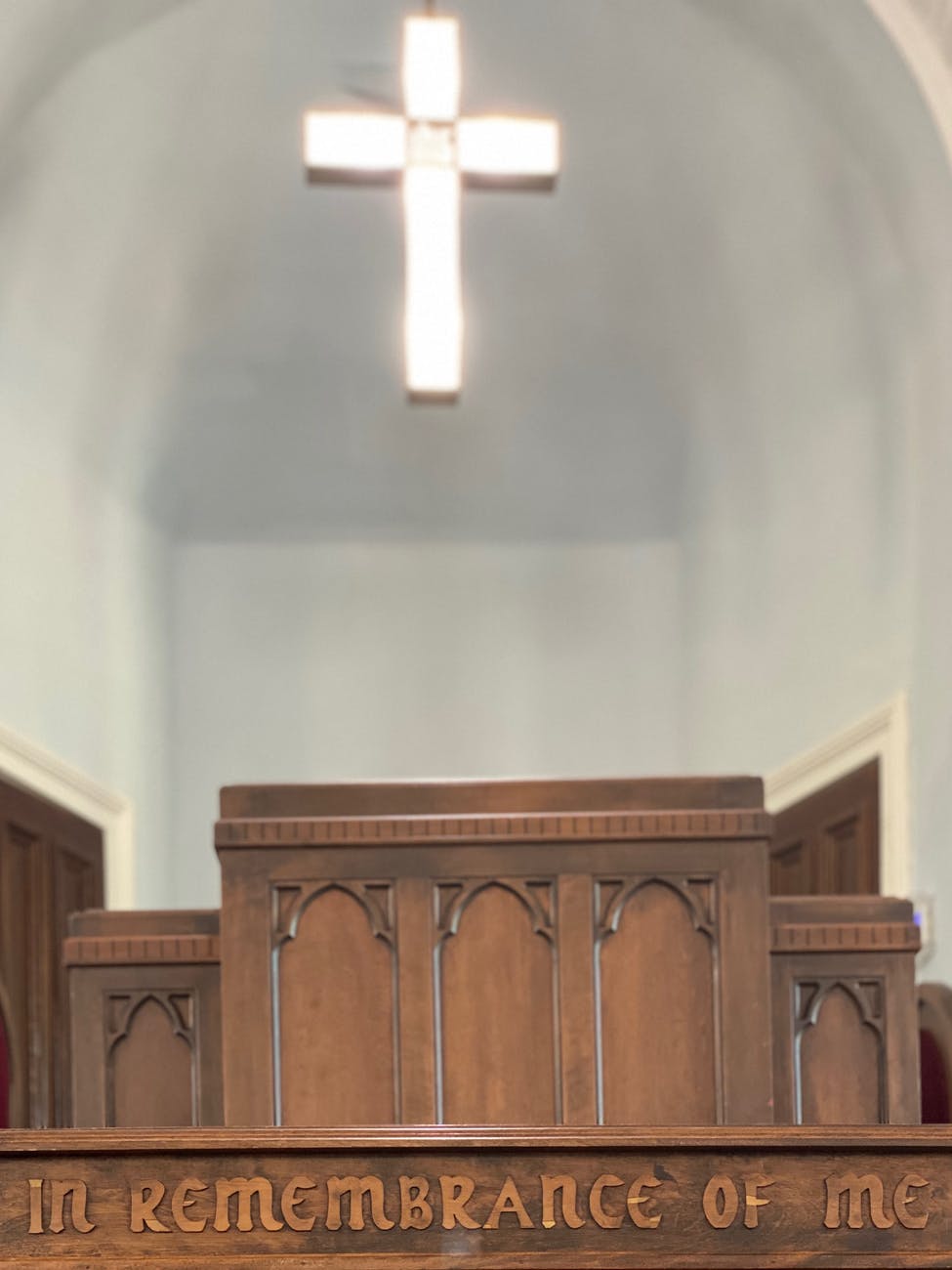
I read these words and wondered– Where are our altars today? When I was a child, many of the older churches had what we called an Altar. It was usually a raised platform, with a podium for the minister, and possibly a “host table” for communion. My childhood church also had a small table that held a large Bible. Sometimes, the platform would have a railing around the edge, with a couple of stairs on either side. And, while many churches “passed the plate” for offerings, some had a special plate on the railing of the altar, where people would march up and place their offerings for the week. There it would sit for the rest of the service–random dollar bills of random denominations in random states of being crumpled, folded, and worn, along with checks, and, sometimes even coins. All of them brought forward and placed on the altar.

In many churches, the altar was where congregants would come to receive communion. The most important church events happened “at the altar.” Weddings, baby dedications, Bible readings and sermons, even funerals– all happened at the altar.

And often, we would have an “altar call.” The pastor, or a guest evangelist would urge people from the congregation to meet at the altar– to repent, to receive forgiveness, to be renewed and refreshed as we offered ourselves to God. There we were– random denominations of people, in random stages of obedience or rebellion, all answering the call to follow Christ as Lord. Some stayed there for a few minutes, praying silently. Others might be there for an hour, crying out, trying to find the words to express pain, guilt, or gratitude and awe, that GOD would meet with US there! Sometimes, we would form small groups to pray and give encouragement; sometimes we would disperse, too moved to speak at all. The Altar was the focus of the service– the place where God met with us; where He received our worship and our offerings; where we were challenged and made ready for spiritual battle.

Today, many churches have stages, like any large theater or event center. There is no railing, but there are hundreds of spotlights and fog machines. There is no podium for the pastor–just a headset and maybe a small stand for notes. Sometimes, the pastor reads from a teleprompter. Often, he or she is joined by a full band or orchestra, and dozens of singers, actors, or other assistants. No one from the congregation approaches the stage– why would they get up from their comfortable reclining padded seat? No one even “needs” to bring a Bible– the sermon text is printed out on the giant screens hanging above the stage. Our worship is comfortable, and entertaining. Many of us don’t even go to a church building, anymore. We can livestream worship services, or watch from a satellite location. We don’t even have to change out of our pajamas! And we feel blessed, and filled with excitement to be part of something dynamic and spiritually uplifting.

But we have no altars. There is no place for someone to lay their offering before God; no place to meet with Him in repentance or revival. There is no place to remind us of sacrifice and atonement. Oh, to be sure, many churches have a large cross on display somewhere. Some even have the “host table” for communion– somewhere in the wings, just in case–but the concept of an “altar” has all but disappeared from churches in the West. It is an anachronism–something ancient and uncomfortably part of the distant mists of tradition.

I miss the altar. I believe God misses it, too.

Building Blocks of Healthy Prayer

When I was in elementary school, we learned about nutrition. Back then, we were taught that there were four basic food groups (nutrition education has gone through several “cycles” since then– food pyramid, healthy plate, “eating the rainbow”, etc.). Eating a healthy balance of foods is essential to good health. If I only eat meat, or only sweets, I will not be healthy. If I just eat whatever or whenever I feel like it, my body won’t get all the necessary nutrients to grow, fight off diseases, and stay strong.

Pursuing a healthy prayer life includes essential “building blocks” or nutrients, as well. Over the course of many years, I have seen various guidelines and acronyms to help include different building blocks in prayer. I want to share a couple of them again today. These guidelines are just that– guidelines. But they can help balance our prayer life, and help it grow.

The first acronym I learned, and the one I have used for decades, is ACTS. Here’s how it works:

  • Adoration/Acknowledgement– begin each prayer by acknowledging God’s Sovereignty, His Holiness, His Goodness, and other qualities worth worshipping. This helps put you in the right frame of mind when talking to God. I am not just talking to a neighbor or a “good buddy”– I am speaking with the One who holds all of Creation in His hands! And He WANTS a relationship with me! He is all-powerful: there is nothing I can ask that He cannot do! His is all-loving: there is nothing I can ask that He won’t filter through His loving wisdom and will. Even if I don’t know what to ask for; even if I ask for the “wrong” thing– God will only allow those things that He can use for good. God is beyond space and time: He knows all that has happened– all the triumphs and tragedies of my life so far, and all that is to come. He is LORD: He is in control– now and forevermore. Whatever seemingly impossible circumstances I face, they are nothing compared to the eternal, almighty plans of God.
  • Confession–This doesn’t mean an endless repetition of all my failures and sins from six months ago, or raking myself over the coals for not being “holy enough.” This is an honest assessment of who I am in relation to God. God is Holy and perfect. I am not. If I acknowledge God’s goodness, I must also acknowledge that I fall short. I don’t know everything. I don’t always act with the right motives. I NEED the Holy Spirit’s guidance, and I DEPEND on Christ’s finished work on Calvary for my Salvation. This should naturally lead to
  • Thanksgiving/Trust– I can trust God to save me, NOT because of who I am, but because of what He has done. I can see God’s hand working in and around and through me as I yield to His Spirit in me. I can recall, and acknowledge so many of the ways that God has blessed me and others around me. Once I have these building blocks in place, I can bring burdens to God through
  • Supplication– this is just a fancy term for asking God to work His will in specific areas– healing, guidance, encouragement, strength, understanding, submitting to His will, and following Him. I can ask for personal help, or lift up family members, neighbors, friends, and yes, even enemies! I can pray about situations great and small–from wars and famines to lost keys and short tempers.

I learned about ACTS when I was in college, and I have found it to be a great guideline. While I don’t use it for every prayer– sometimes an issue calls for immediate and direct supplication, for instance– I find that using this in daily prayer helps me grow in faith, patience, endurance, and hope. When I come to God in panic or stress, and I haven’t built up a healthy, consistent practice of prayer, my words can be anemic– lacking in faith and based on my fear or anger. I pray with my focus on problems, rather than on God’s power to overcome any circumstance. Using ACTS helps me remember that it is GOD who “acts,” and always for the best!

The second acronym I have used is PRAY. It is very similar to ACTS, but the end focus is slightly different:

  • Praise/Adoration– once again, it begins with praising the God who is worthy; the God who hears me, sees me, loves me, and knows what is best. I cannot live victoriously without remembering the source of hope and victory, and putting my heart in HIS hands.
  • Repentance– as with Confession above, this is not an act of groveling and rehearsing past shame. It is acknowledging anything that I might be holding on to that gets in the way of my worship of and submission to God’. E.M. Blaiklock, the Christian apologist from New Zealand once said: “God alone knows how to humble us without humiliating us and how to exalt us without flattering us.”  Repentance is not about humiliation or holding on to guilt, but rather about staying humble and honest about our need for God’s Grace and Power. And turning from anything that might get in the way of following Jesus Christ.
  • Ask– once we have a right view of who God is, and who we are, we are free to ask Him whatever is on our mind, and share our questions, fears, burdens, etc., with the One who has all the answers!
  • Yield/ “Yes, LORD!”– The final step is making sure we are ready to listen and respond to God as we expect His answer. No matter what God’s answer may be, we should trust and obey His wisdom above our own.

I have come to value PRAY as a wonderful tool to help in my pursuit of prayer, and in my broader pursuit of Christlikeness. Both ACTS and PRAY help me pray “better.” It’s not that God grades my prayers or listens more or responds differently: but it helps me to better appreciate the power of prayer, and the power behind prayer. Individual prayers can change circumstances, but the pursuit of prayer is meant to change US as well. Prayer that shapes us, helps us grow– if that isn’t at least part of our pursuit of prayer, we are missing out on what God wants to do through us, and not just for us.

It is important, just as with nutrition, that we have a healthy balance in our prayer life. That balance consists of worship, repentance, sharing our burdens, showing gratitude, and offering ourselves in humble service. Prayer is too important to just “wing it.” We need to pursue it with the same (or better!) dedication that we give to our physical health.

Blog at WordPress.com.

Up ↑