This has been a week full of distress.. My husband and I got our second COVID vaccine (even though we recovered from the virus earlier this year), and spent a day bedridden with fever, chills, and body aches. But we recovered. I got word that my great-nephew broke his arm. Someone I know had to take her daughter to the emergency room–Again–with a serious infection. Another couple delivered a stillborn son. Yet another delivered a tiny, premature little girl. Another woman is back in the hospital, and another friend is off work with a lingering illness that remains undiagnosed. And that is just a list of health issues!
It has been said that when we are in distress– especially with bedridden illness– we are forced to look up. And this gives us the impetus to call out to God. Not everyone will do so. And some will call out in anger or bitterness. But the Psalmist David used his distress to call out to God for help. In Psalm 18:6 he says: “In my distress I called upon the LORD; to my God I cried for help. From his temple he heard my voice, and my cry to him reached his ears.”(ESV via bibleref.com) David’s distress was not from illness, but from being hemmed in by King Saul, who had closed in and had David trapped and seemingly helpless–first in a walled city, then twice in the wilderness. (1 Samuel 23) Three times, David’s situation seemed hopeless, and three times, he was rescued from capture and death.
It is tempting to look out at our circumstances, and lose hope. Even when we know that God hears us and loves us, sometimes his answers are not what we expect. David called out to God, yet he had to face his enemy three times before Saul abandoned his hunt (temporarily!) My husband and I recovered quickly from our reaction earlier this week, but we faced the pain and symptoms three times– during the actual illness, and, less severely with each dose of the vaccine. My nephew will have to be in a cast most of the summer. The tiny baby will be in the neonatal ICU for several weeks, if she survives. Her family will be waiting and worrying and praying. Yet, God DID deliver David in a miraculous way; He brought my husband through a severe case of COVID that involved a stay in the hospital and a related case of pneumonia; He gave life to this precious little baby; He is bringing peace to the family that lost their precious little boy. His timing may not be ours; His ways are not our ways. But God’s ears are always open, and His ways are always good, and His wisdom is perfect.
Distress can make us impatient and cause us to doubt Our Father’s care. But when we remember God’s faithfulness in the past– both toward us and those we love–we can find the strength to wait and even praise God in the struggle.
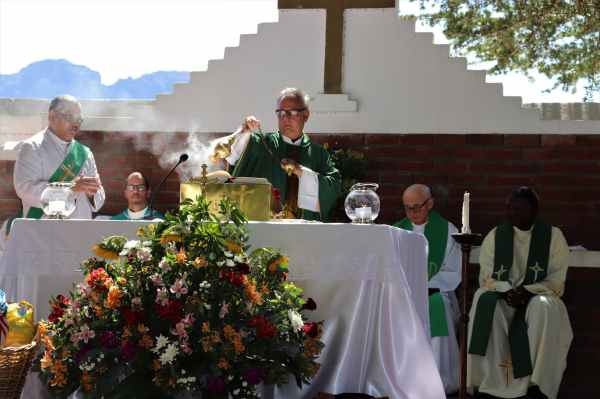
Often throughout scripture, prayer is compared to a pleasant aroma, rising like incense toward Heaven. I love that God interacts with us through all of our senses, even the ones we may not value as much.
When I contracted COVID in late February of this year, I lost my sense of smell, and my sense of taste was dulled. Four months later, it’s only slowly coming back. I have a new appreciation for this wonderful sense. All my life, I have taken it for granted that I could smell– flowers, food, smoke from a fire, perfume, bleach.. When I lost that ability, I worried about things I had never worried about before. Would I be able to smell if I had added too much onion or not enough garlic to our food? Would I miss the warning smell of smoke if there was a fire nearby? Even ridiculous worries– would others smell bad breath or other body odors of which I was completely unaware?
As my sense of smell has begun to return, I am amazed at subtle smells that tickle my nose– exhaust fumes, warm bread, soap, my husband’s cup of coffee in the morning, fresh mowed grass, pine needles, fried chicken. Some of them I had missed for so long, only to have them surprise me with their reappearance. Some of them, I still miss, but I am hopeful that one day, they will suddenly stop me in my tracks and cause excitement and thanksgiving.
God never loses His senses; He never forgets what prayer smells like; He never misses or ignores the aroma of our prayers. But sometimes, we lose the joy of sending prayers toward His Throne. We lose the aroma of prayer. We lose our taste for spending time with God. We may not be able to identify what is missing– perhaps we can still smell other things, like fear,or pride, or decay.
As I write this, it is still Sunday evening. This morning, we sang a classic hymn at church– “Nothing But the Blood of Jesus.” It’s an old hymn, and familiar; we often sing such hymns on auto-pilot and without really thinking of the wonderful words and truths coming out of our throats.
“What can wash away my sin?– Nothing but the blood of Jesus.” “What can make me whole again?–Nothing but the blood of Jesus.” When I come to God in prayer, confessing my sins, it is not my prayer that makes me clean. Nothing I can say or do will give me right standing before God. I am a sinner, and I fall short of God’s glory. I also trespass against His holiness, and even His mercy. I am guilty, and there is no “magic” prayer that will heal me or exonerate me.
Yet I come before a Holy God and make my confession. Not because He doesn’t know that I have sinned. Not because my words will save me. I come because I know that the Blood of Jesus Christ has, and will make me whole and justified. I have no need to hide the truth of my condition, or try to make my own justification or sanctification. Christ has done it all.
Prayers of confession are not for God’s benefit, but for ours. To hide our guilt, or to excuse it, is to despise God’s amazing gift of Grace. When we confess to God, it is not because He wants to humiliate us or cause us additional guilt– though this is often the lie we tell ourselves. God is eager to remove our guilt and to guide us in His righteous ways. But He will not save us against our own will or without our permission. He will not conspire with us to hide our secret sins, or pass the blame on to someone else. To do so would be to submit to OUR will. WE are NOT God, though we sometimes act as though our ways are better than His.
I’m so glad that God is God– that His ways are perfect, and that I can trust Him completely. Even when I fall short, I can trust that God has already paid the price to make things right– something I could never do, and something I find too wonderful to fully comprehend.
Nothing but the blood can save me. And anything other than the blood will fail to set me free. My prayers of confession– no matter how polished or pious or piteous– cannot unlock the mystery of salvation and restoration. But they acknowledge the marvelous reality that it IS FINISHED! God’s Grace is sufficient! Hallelujah!
36 “Teacher, which is the great commandment in the Law?” 37 And he said to him, “You shall love the Lord your God with all your heart and with all your soul and with all your mind. 38 This is the great and first commandment. 39 And a second is like it: You shall love your neighbor as yourself. 40 On these two commandments depend all the Law and the Prophets.”
This is a familiar Bible passage, and one that Jesus quotes from the ancient writings (in Deuteronomy and Leviticus). All the laws and regulations of history boiled down to two commands. And they are not what one might expect. The greatest commandment isn’t to believe; it isn’t a “shalt not”; it isn’t even to “obey.” Instead, the greatest commandment is to LOVE– love God wholly and without reserve, and love your neighbor “as yourself.”
It sounds so simple, but we don’t do it. In fact, we spend countless hours and waste energy trying to make the commandments MORE complicated and adding conditions, additions, interpretations, excuses, and critiques.
There is not enough time or space to list all the ways we try to avoid the greatest commandment, but here are a few I struggle with:
My heart–I love the Lord, but I don’t always love Him with my whole heart. I love His creation; I love His promises; I love the “idea” of God. But I also love my comfort zone; I love my own moods (especially happiness and self-esteem); I love the admiration of my peers; I love God, but…I don’t always pray to God the way I would talk to my best friend. I don’t seek Him out ahead of everyone else. I don’t always seek His correction or welcome His Lordship.
My soul–Most of us would claim that we are “spiritual” on some level. But many of us (including me) don’t do a very good job of tending to our souls. We assume that behaviors and habits and a list of beliefs are “enough.” We spend very little time in prayer, worship, and Bible study (compared to the time we spend on chores, sleep, entertainment, driving around, daydreaming, etc.). I’m not suggesting that we all need to go into a cloister (especially in light of the second great commandment to love our neighbor). But souls, like bodies and minds, need to be nourished, exercised, and cared for. Very few of us make it a priority to nourish our soul-connection with God–to Love Him with all our soul. We skim over this part of the commandment, assuming it is much the same as loving Him with all our heart or all our mind.
My mind– My mind wanders– a lot! And I spend a lot of time learning “about God,” instead of learning “from God.” I want to know what God is like– to be able to explain Him or comprehend Him. But God is bigger than my ability to “know” or even to imagine. And yet, He invites me to “know” Him, not just know about Him. In fact, He invites me to “follow” Him, to be His disciple, to model my character and my thoughts after His own.
My neighbor–I want to love humanity. I want to love “everybody”– from a comfortable distance! But God calls me to love my neighbor– that person who cuts in front of me at the grocery store, or revs their car engine outside my bedroom window at 3 in the morning, or laughs at me when I’m having a bad hair day. And not just “love” them in the sense of tolerating them– God wants me to love them “as myself.” To value them, reach out to them when I might rather avoid them, or seek peace when they are “pushing my buttons.” God wants me to offer them grace and forgiveness, when I might expect to demand justice or recognition.
“As Myself”–Sometimes, I don’t love myself. Sometimes, I idolize myself. Other times, I despise myself. And the attitude I have rubs off on to others. God doesn’t call me to idolize my neighbor; to lie to my neighbor about Sin and its consequences, or to let my neighbor’s wicked behavior go unchallenged. Just as God wants to call me to repentance, He wants me to lovingly reach out to my neighbor, not enable her/him to live a lie. But if I am living a lie–not dealing with my own sin– I cannot demand from my neighbor what I am not willing to give to God. Similarly, I can’t give honest love to my neighbor when I despise myself– God created us both and loves us with an everlasting love! How can I give love I am not willing to receive?
My understanding of “commandment.” God has the authority to command my attention, my obedience, my worship, and my loyalty. But my “love?” God has given us the CHOICE to Love Him, and to Love others– He also gives us the imperative to live our lives filled with Love. It is not God’s will that we Love out of coercion, robot-like and against our own free will. Rather, God commands us to submit our will to Love in every situation. We are slaves to Sin, powerless to love perfectly–even when we try, or think we are doing well, we will fall into faulty thinking, ungoverned emotions, and uninformed, unloving reactions. We WILL break this greatest commandment, just as we will break other, lesser commandments. But God has also promised to listen to our confession and forgive us, redeeming our soul, cleansing our heart, and renewing our mind as we follow Him. God does not command us to Love perfectly in our own power. He does command us to choose Love–first and foremost for Him, and then for those around us whom He loves. In so doing, we will grow to understand the power of God’s commands as we experience the power of His Love!
My husband and I run a small business. And I am always surprised at the number of people who call us “after hours.” Sundays, early mornings, late at night…they seem to be under the impression that we will be available to answer their questions 24 hours a day, seven days a week. We have a website, which includes frequently asked questions, and a list of our hours, but people still call when we are not available. Some of them even call to complain that we are not open as they stand outside our door–which also has a list of our hours! We just can’t be at our shop all the time, and we can’t anticipate when someone will call or want to stop by.
God doesn’t have any “after” hours. He’s always available when we need help, have a question, or want to express our feelings and thoughts. There is no busy signal, no “peak” time, and no need to “hold” while waiting for Him to listen to our call.
We know this, or we ought to, but we often take for granted this incredible gift of access to the Almighty. Suppose God went on vacation for two weeks every year, or took a siesta every afternoon, or had a staff of “receptionists” to screen prayers, so that only certain ones reached His ears? Imagine a God who could only be reached between 9 a.m. and 5 p.m. on weekdays, or could only be reached at His “main office” in Peoria, or Lagos?
God– The Only, Sovereign, Eternal God–is accessible in a way that no one else can ever be. He is our “ever present help in time of trouble” (Psalm 46). No matter when, no matter where, God is “on call.” And He is available to anyone and everyone at all times. Hundreds of thousands of prayers rising up at any given moment– ALL reach His ears and capture His attention.
It is tempting, especially when we expect an instant answer, to interpret God’s seeming silence as inattention or even rejection. We begin to wonder if God has heard us, if He cares, or if He is indifferent to our pleas. One way to keep things in perspective is to journal our prayer life. Not just the requests, but the answers.
I keep a prayer journal, and periodically, I go back over the requests from last week, last month, or even last year. I am astonished at how many I’ve forgotten in the march of time, and how many of them God has answered– often in unexpected ways and at unexpected times. He never forgets, but He often acts in His own ways and in His own perfect timing.
God is the ultimate 24-hour help line– ALWAYS there to listen; always available; always able; and always compassionate.
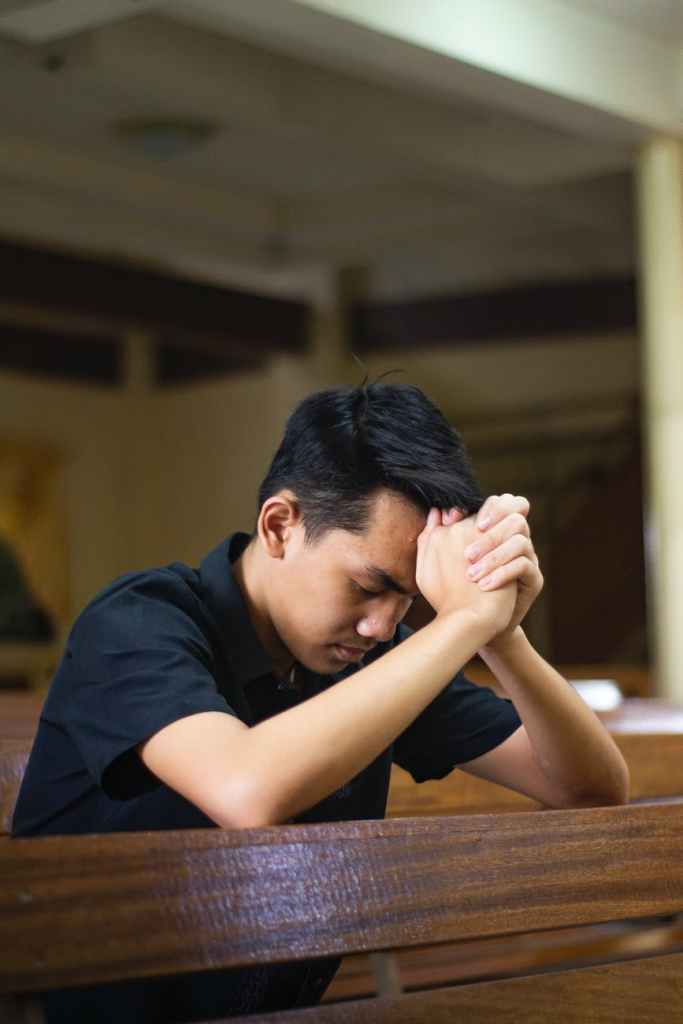
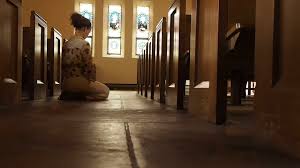
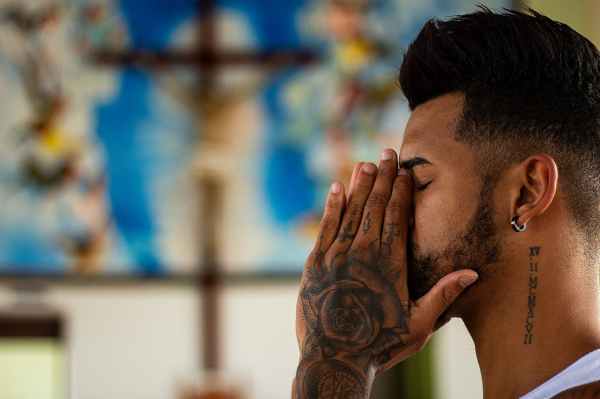
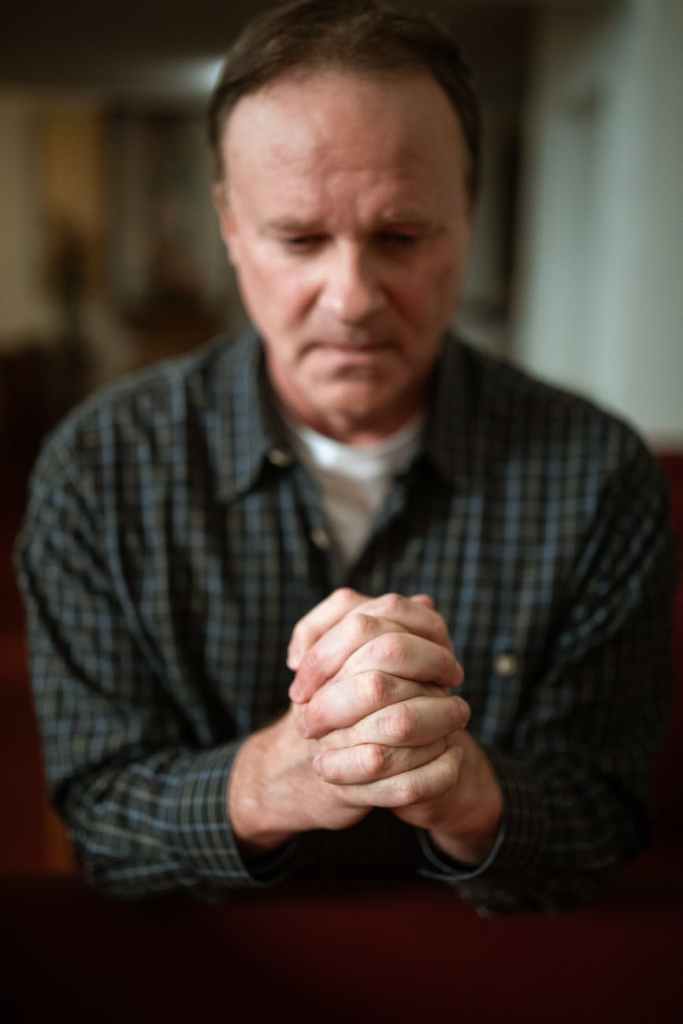
There is no one “right” way to pray–God listens to our heart, whether we are standing, sitting, bowing, lying prostrate, or running! However, kneeling or bowing before God shows our heart attitude. And I think it is important to talk about it a little here.
Bowing or kneeling shows deference. A person bows or kneels before a sovereign or dignitary, someone of rank and importance, or someone in high authority. 9 Therefore God also has highly exalted Him and given Him the name which is above every name, 10 that at the name of Jesus every knee should bow, of those in heaven, and of those on earth, and of those under the earth, 11 and that every tongue should confess that Jesus Christ is Lord, to the glory of God the Father. (Philippians 2:9-11 NKJV)
Bowing not only demonstrates God’s superior position, but reminds me of my own position before Him. It is a humbling position to kneel; to bow one’s head; to become smaller and cast one’s eyes down. If there is pride lurking in my heart, bowing may not come easily…
To bow or kneel forces us to stop, and puts us in a position for prayer. It forces us to turn away from distractions and from comfort. I can pray in any position, but I don’t generally kneel to do household tasks, or bow to take a phone call. Even if I am not in a position to physically kneel or bow, I can put aside distractions, and take a heart and mind “stance” of prayer.
Throughout the Bible, we are encouraged to bow or kneel when we pray– it is one among many stances of worship we are to take when approaching God’s throne. (see also Romans 14:11, Isaiah 45:23, Revelation 5:13, and Psalm 95:6-7)
Kneeling or bowing sets us apart. That is not to say that we should make empty postures to make ourselves look virtuous. But neither should we be afraid to bow our heads, or reluctant to kneel, if we feel led to do so. This is especially true when we are at home or in church. It may NOT be appropriate to kneel in the breakroom at work or bow your head while driving– but if bowing or kneeling at church or in your own home makes you feel uncomfortable (other than for physical limitations), because someone “might” see you, there may be another heart issue at stake.
Today, as I come before my creator, I will kneel in reverence, bow in humility, and worship Him in word and action.
Last week about this time, I was miserable. Feverish, achy, somewhat nauseous, and doubting my own sanity. I had chosen, along with my husband, to get the COVID vaccine– even though we already had the disease earlier this year! We should have a built-up immunity, and medically, there is no compelling reason to get the vaccine and take the risk of suffering all the symptoms I suffered last week.
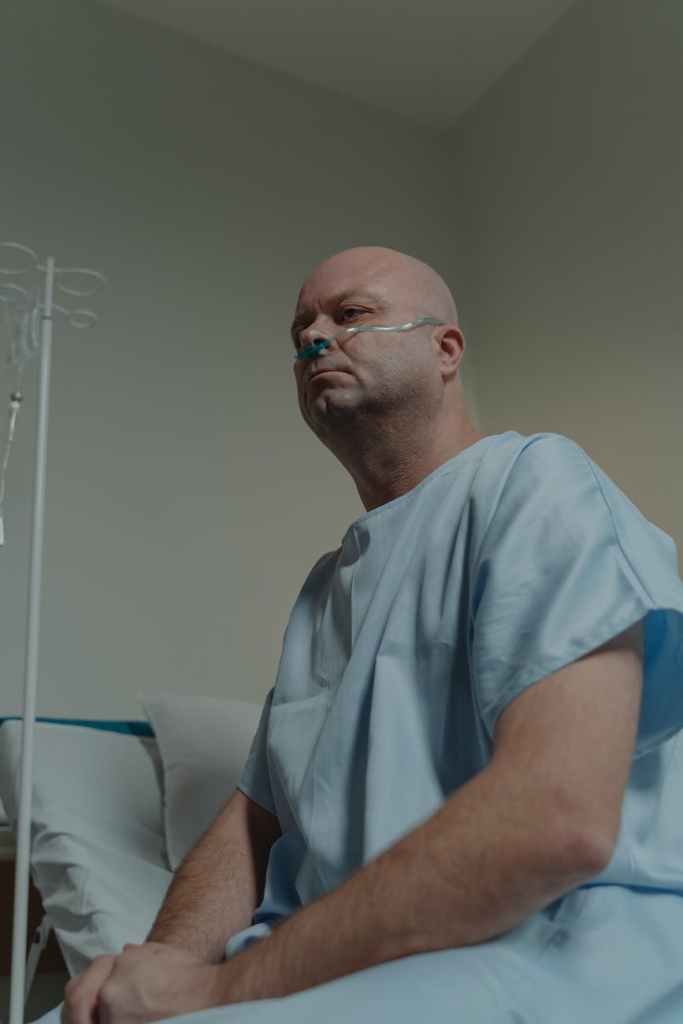
Fever and pain have a way of making people cranky, impatient, and rebellious. Especially when they come as a result of trying to do “the right thing.” I was reminded of the Biblical character of Job, who suffered intense pain and suffering through no fault of his own. While my suffering was nothing compared to his– or to many of those who have suffered worse from COVID than I did– it brought some of the same thoughts and complaints. “What did I do to deserve this?” “Why me?” “Don’t you care about my suffering?” “How much longer must I be in pain?” “Wouldn’t it be better if I could just escape this fever and achiness?”
Most of us are not “good patients.” No one likes to suffer, even for a short while. And it can be easy to let our pain determine our prayer life. Our focus narrows to our own circumstances, and how we wish them to change. We tend to go to God with indignation–how could He let us suffer like this?! And yet, even in his indignation and self-centered moaning, Job never lost sight of God’s essential goodness and justice.
Job’s friends started out with a sincere desire to offer help and comfort. They heard of his sufferings, left their homes and traveled to visit and comfort their friend. When they arrived, they wept, tore their clothes, and sat, silent and supportive, for seven whole days! (Job 2:11-13) This is in contrast to Job’s embittered wife, who told him to “curse God, and die!” There is no other mention of her throughout all of Job’s suffering–which may have been one of the unheralded mercies of God!
Job’s conversation with his friends may not sound much like prayer, but we see into Job’s heart and mind through these conversations. As his friends remind Job that God is Just, and that He punishes those who are wicked and rebellious, Job defends himself. But he also defends God–God IS Just; but He is also merciful and loving. What is happening to Job is not consistent with all that Job has experienced of God. In fact, it seems capricious and unfair. Job’s confusion and his questioning are not only coming from his pain and suffering, but from his surprise at God’s silence and seeming absence. Job’s friends see Job’s circumstances as confirmation of his sin. But though Job is confused by sudden change of circumstances, he is convinced that God will continue to be Just– that He will hear Job’s complaint, even if He has decided against Job for reasons Job may never understand. In fact, Job is still convinced of God’s goodness, declaring that “I know my redeemer lives…I myself will see him with my own eyes…how my heart yearns within me..” (Job 19:25-27), and that “the fear of the Lord–that is wisdom”(Job 28:28)
When we face the “ash heap” of despair, pain, grief, and doubt, whether we are isolated or surrounded by well-meaning friends, we have a choice in our response. We can praise God from the ashes, we can bring Him our doubts and questions. Or we can “curse God and die”– choosing to see only our circumstances and losing sight of who God is (and always has been).
The same God who brought David and I through our bout with COVID brought us through last week’s reaction to the vaccine. He is the same God who has comforted families who lost loved ones to this disease, and who has kept still others healthy throughout this crisis. I don’t know why or how we got sick back in February; I don’t know why I had such a bad reaction last week. I don’t know what the future holds, or what other pains and struggles we may face in the weeks and months ahead. The same God who finally appeared to Job–even though He never answered Job’s questions!–is the same God who holds the universe in His hand. He is the same God who never lost sight of Job. He is the same God who parted the Red Sea, healed lepers and kings, raised the dead, and promises everlasting life with Him.
So I may not know what troubles I will face tomorrow, and I may not have the answers to all my questions. But, like Job, I know that my redeemer lives! I know that whatever happens, God will remain Faithful, Good, Just, and Holy. And one day, “I myself will see him with my own eyes…how my heart yearns within me”!
In the movie, The Sound of Music, a young woman named Maria is asked to leave her life in a convent to become a governess of seven children belonging to a widowed Navy Captain. After a hectic first day, she settles in for her evening prayers. She lists by name all the people she wants God to bless; but as she goes through the unfamiliar names of the seven children, she realizes she has forgotten the name of the younger, “incorrigible” boy. After a short struggle, she simply asks God to “bless what’s his name.” That evening, a storm comes up and soon three frightened girls come running to Maria’s room, and happen to mention the boy’s name– Kurt. “That’s it. Kurt. God Bless Kurt!” A short time later, Kurt, his brother, Freidrich, and the other girls show up, and they all end up bonding and singing through the storm. It’s a nice movie scene, but it also teaches us a lesson about prayer.
Maria’s lapse reminds us that even when we try to include everyone, we often forget a person’s name, or forget one member of a larger group. Sometimes, we forget that we already mentioned someone else, and count them twice. It happens. When I was a teacher, even with my roll call list, sometimes I would make mistakes as I hurried through the task to get to a lesson. As I get older, I find it’s common for me to see a person’s face, and not be able to remember their name. And, disconcertingly, I often see a name and cannot remember the face! (“God bless Kurt…whoever he is.”)
God knows the weaknesses and limitations of our minds. While it would be irresponsible to pray “God bless what’s his name” every night, and never try to call Kurt by name, it is important to lift up the “what’s his/her names” in our lives, trusting that God knows their names, their needs, their hearts, and their unique place in His plans. The very fact that we remember some essence of their personality or presence is enough to make them worth lifting up to the one who knows them far better. And perhaps someone else, who has forgotten your name, but not your value to the Father, is lifting you up in this very moment!
Maria’s prayer also reminds us that it is important to pray for individuals BY name (when we remember). We can pray for nations, groups, civil and corporate bodies, and churches, but when we pray for individuals, calling them to mind and heart, we are continuing a prayer that stretches through time and around the globe. This prayer– this list of names and remembrance of faces and spirits– began with Jesus and His disciples, and continues unbroken over centuries. It is a single prayer, tying together brothers and sisters in Christ who are otherwise divided by language and distance, time, and tide. Children saying their bedtime prayers; aged saints at their morning devotions; mothers lifting up their precious children; fathers lifting up their neighbors; missionaries lifting up their persecutors–throughout generations–this prayer is a continuous offering, like incense, rising to the throne of grace.
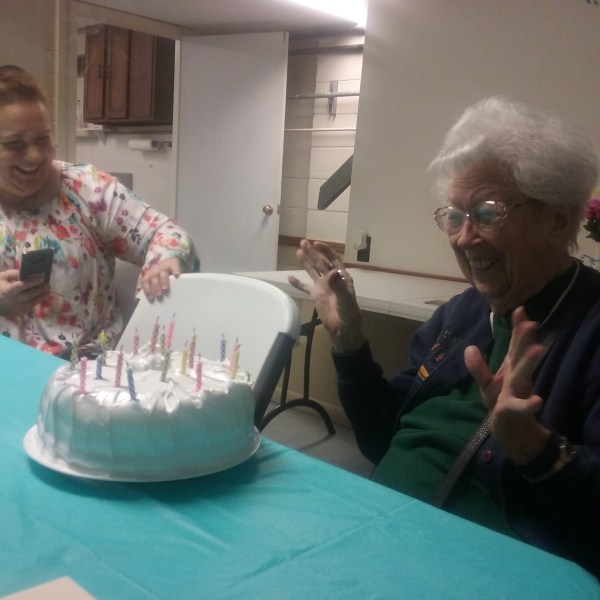
Earlier this week, my mother celebrated her 88th birthday. Mom has survived more than most people can imagine. She was born in 1933, during the worst years of the Great Depression. She survived hunger and poverty, near-homelessness, and insecurity in her earliest years, despite my grandparents’ best efforts to provide for their family. She survived the upheaval of World War 2, when her father left to serve in the Navy and her mother worked long hours in a factory. She and her sister had to take on most of the housework.
As a teenager, mom fell madly in love with a young man who convinced her to drop out of high school and become his wife. Her romantic dream quickly turned into a nightmare of abuse, heartbreak, fear, and starvation. Though he loved her, her husband could not control his own inner torments. He drank heavily and was very controlling. He insulted her, isolated her from family and friends, forbad her from going to church, and he sometimes punched her. By the age of 19, she was anemic, weighed less than 100 pounds, and had just miscarried twins– partly because she had been denied access to pre-natal care; partly because she had been beaten and malnourished. But she survived, and went on to have a healthy pregnancy, mostly because her husband was drafted and sent to Korea.
Mom survived divorce, something to which she had always been opposed, for the sake of her son. She survived the threats against herself and her young boy. She survived all the court dates and new responsibilities. She survived working 10-hours days, six days a week, at a butcher shop, cutting, grinding, and packing up meat, so she could provide for her young son.
Mom remarried at age 30. Shortly before her marriage, she had found a better job; one with better pay and shorter hours. Shortly after her marriage, on her way home from work, she was involved in a horrible accident. She had a head injury, broken ribs, and a broken collarbone. She began suffering from headaches. She suffered another miscarriage. But she survived, and went on to have me and my sister, both healthy deliveries. She had stopped working to be home with us, but she was involved in multiply volunteer opportunities through church and in the community. But her headaches were debilitating, and with them came depression.
Mom survived many dark days of pain and doubt. Though she was socially active, it took a great deal of energy and will to force herself to get out and keep going. Her doctor gave her medication for depression, and, thankfully, he carefully monitored what she took and whether it was effective. The headaches did not diminish, and mom treated them with massive doses of Anacin and other pain relievers.
In her 50s, mom developed more health problems. She developed arthritis. She had a hysterectomy, and had to have her gall bladder removed. In her 60s, mom had cataract surgery. Then she had to watch as her husband’s health deteriorated, and she lost him just after their 35th anniversary. She survived, and had to adjust to widowhood. In her 70s, she had more surgeries– she lost part of her thyroid, and nearly died. She had surgery to “undo” some of the damage from her earlier hysterectomy. She was diagnosed with bone density issues, which caused a curvature in her spine. In her 80s, she developed a heart condition. She had to undergo heart surgery and have a pacemaker. She could have died, but she didn’t. She developed a series of infections from one of her earlier surgeries, and had to use a cane to walk because of the bone density and spine curvature. She was diagnosed with macular degeneration, meaning that she is slowly going blind.
Last fall, during the height of the COVID crisis, Mom fell and broke her hip. She was in a hospital where there were COVID cases, and she was transported to a rehab facility that had 4 COVID cases. By the time she left to come home, she was one of only 4 who had NOT developed COVID at that facility! She continues to go to outpatient rehab twice a week, and now has to use a walker, instead of just a cane, to provide balance and stability when she walks. She no longer drives, and has trouble reading, due to the macular degeneration. But she survives.
I say all of this, not because my mom is tougher, or luckier than other folks; not because she is more worthy of life than those who have not survived such struggles, and not because her life is more tragic than anyone else’s. I say this because my mother is a woman of prayer.
Last week, for Mother’s Day, we took my mom to her local church. She no longer drives, and she rarely gets out because of her health issues. But she wanted to be in church that Sunday. The very first hymn they sang that day was “Love Lifted Me.” And I cried. That was the song she had used, fifty years ago, to rock me to sleep as a child. Sometimes, she would sing it out. Sometimes she would just hum the tune as she rocked me. She was often crying as she sang– exhausted, depressed, worried, or haunted–but those words imprinted themselves in my young mind: Love lifted me. Love lifted me. When nothing else could help– Love lifted me.
My mother wasn’t just singing those words, she was praying.
Mom has lived out those words. Crying out to “the Master of the Sea,” Mom has been lifted up time and again. She has been a prayer warrior, knowing that her prayers rise to the One who loves her best of all; the One who holds her destiny and her redemption in His hands. No matter her circumstances, she can sing, knowing that love will continue to lift her, and carry her through.
What’s the most “important” prayer you can pray today? Sometimes, we think it is the prayer we pray in a moment of crisis. Or maybe the one we are asked to lead in front of a congregation. But the setting or the situation doesn’t make one prayer more important than any other.
It’s almost a trick question, really. Jesus never taught that some prayers were more “important” than others. But He did teach the some prayers were more effective than others. And His answers may be surprising to some.
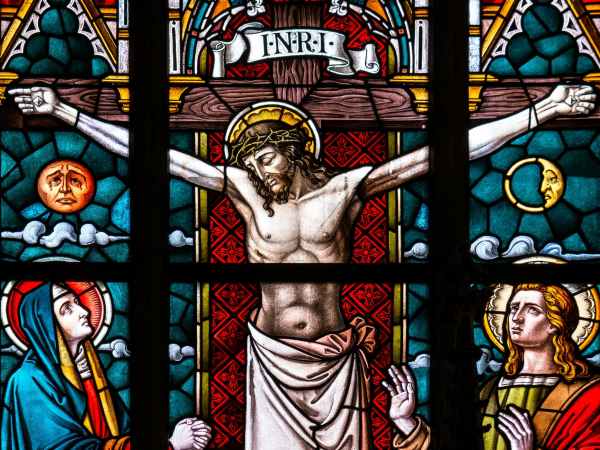
The prayers Jesus praised were prayers of humble confession and needy request. God doesn’t judge our prayers– He judges the heart of the Pray-er. Jesus praised the prayer of the Tax Collector over that of the self-righteous Pharisee (Luke 18:10-14). While others might have been impressed by the Pharisee’s words and confidence, Jesus heard the desperation and the dependence of the Tax Collector. Just before this exchange, Jesus told the parable of a persistent widow, whose constant nagging resulted in getting justice from corrupt judge (Luke 18:1-8). It’s a strange parable–the woman is not meekly accepting of her situation; the judge is corrupt, initially refusing to do the right thing. Yet Jesus prefaces the story by telling his followers to “always pray and not lose heart.” (v. 1) So, the very prayers we dismiss– the nightly prayers for our loved ones, the “unspoken” request we lift up on behalf of a friend, or the seemingly unanswered requests–are no less important than any others.
Finally, Jesus praised (and prayed!) prayers that were “real.” He poured out His heart to His Father in the Garden of Gethsemane; He lifted up His friends’ needs at the Last Supper (John 13-17); He said simple grace before feeding the crowds.
So often, we judge our efforts when we pray– did we say the “right” thing? Did we say it the “right” way? Did we leave something out? Forget to say something? But God knows what is on our heart and in our mind. He knows what we “meant to say.” He knows everything we need– and all the needs of everyone else we could mention! He already knows all His names and attributes! And though He loves to hear us speak words of praise, He also listens to our heart, and–26 In the same way, the Spirit helps us in our weakness. We do not know what we ought to pray for, but the Spirit himself intercedes for us through wordless groans. 27 And he who searches our hearts knows the mind of the Spirit, because the Spirit intercedes for God’s people in accordance with the will of God. (Romans 8:26-27 NIV via biblegateway.com)
There is one caveat– because God knows our heart, He also “sees through” prayers that are insincere, proud, self-centered, and thoughtless. Some of the most “important-sounding” prayers fall short of touching God’s ears. He will not listen to the prayers of those who wish to “strike a bargain” with Him, or convince Him of their own self-worth. That doesn’t mean that God doesn’t value each one of us– after all, He became Sin who knew no sin, so that we could become the Righteousness of God (2 Corinthians 5:21). But God’s love is a gift–when we try to bargain for His gifts and earn His Grace with our eloquence, we lose sight of Who He Is.
Many centuries before Jesus walked the earth, Hannah poured out her heart in tears, wordless anguish, and groaning. (1 Samuel 1). Her prayer was such a mess, the priest, Eli, accused her of being drunk! But God heard her heart, and answered her prayer, and because of her great faith, her son, Samuel led Israel through some of its most trying times. Hers was a very “important” prayer.
What if our stumbling effort to pour out whatever is on our hearts and lift it up to Almighty God–our praise, our failings, our grief, our desperate need–is be the most important prayer we can pray today?







































 Pursuing Prayer