Why Have You Forsaken Me?

(Please note: This is a post from a couple of years ago, which has been updated and revised…)

Have you ever doubted? Wondered, “Where is God?” Maybe even wondered if He exists at all? And then someone came along and made you feel wicked and small for having such a thought…”How could you!?”

Photo by Paul Theodor Oja on Pexels.com

I know there are people who believe that faith is not really faith if you can have moments of doubt– that true faith never wavers, stumbles, or has tough questions. I don’t think this is Biblical, nor do I think this reflects God’s relationship with us. The Bible is full of “faithful” people who had moments of doubt.

Photo by Oladimeji Ajegbile on Pexels.com

Abraham, when told that he would become the father of many nations, believed, and it was counted as righteousness (Genesis 15:6, Hebrews 11:11, Romans 4:3, etc.) Abraham’s faith was so solid, that he was willing to sacrifice his son, Isaac, the son of God’s Promise! Yet Abraham and Sarah acted outside of absolute faith when they brought in Hagar and tried to start a family on their own. God still blessed Hagar and Ishmael, but they were not part of the fulfillment of God’s plan. And over four thousand years of bad blood between the descendants of Isaac and Ishmael are a sad reminder that Abraham did not trust God absolutely and completely.

Photo by Pixabay on Pexels.com

King David was a “man after God’s own heart.” Yet David wrote often about his feelings of being abandoned or forsaken by God. (See Psalm 10, Psalm 13, and Psalm 22 among others.) Elijah, within hours of a great victory over hundreds of angry priests of Baal, after a miraculous demonstration of God’s power and faithfulness, hid in despair and asked to die, sure that God had abandoned him to his enemies (1 Kings 19).

Photo by Alem Su00e1nchez on Pexels.com

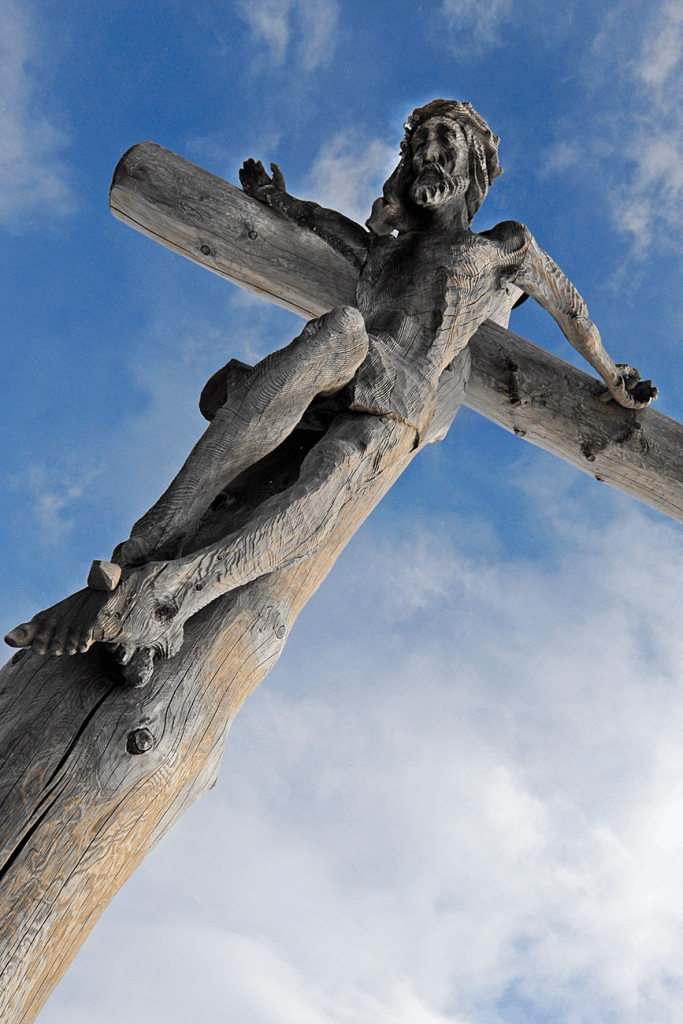
Most telling is the statement from Jesus Himself on the cross. “My God, My God, why have you forsaken me?” (Matthew 27:45-46; Mark 15:33-34) Although He was quoting one of King David’s psalms (22:1), the words still ask a very harsh question. Did Jesus Himself doubt God’s presence or His boundless love? (I don’t think so, but it is this kind of statement that often invites condemnation from those who cannot allow for any momentary doubt of any kind.)

I don’t believe any of these moments in the Bible are accidental. I believe God wants us to know that His presence and His faithfulness do not depend on the absolute strength of our faith. I believe it is one of the reasons that Jesus spoke of faith “as small as a mustard seed” (Matthew 17:20). It is not the size or the strength of our faith that determines what God can or will do. It is the size and strength of our faith that causes US to understand what God is doing and to participate more fully with Him. And taking our momentary doubts and questions to God shows a different kind of faith– one that is strong enough to BE tested and triumph. God rewards those who SEEK Him. If we never need to seek, or ask, or knock (See Matthew 7:7), could it be that we are not trusting in Him, but in our own wisdom?

Photo by Wildan Zainul Faki on Pexels.com

Take heart! Have faith! But don’t be afraid to go through valleys of doubt, or wrestle with difficult questions. And if someone else is struggling–be willing to listen to their doubts and questions, rather than just dismissing them. God does…

When God Asks a Question…

We often fear questions. We are afraid to ask questions; we are afraid of being questioned; we are afraid of asking the wrong questions or not asking the right ones. And we are often afraid of the answers, too.

Photo by samer daboul on Pexels.com

God is not afraid of our questions. In fact, He wants us to ask, to seek, and to knock (Matthew 7:7, Jeremiah 33:3, and others). God knows the answers to our questions– He even knows our motives in asking them! God may not give us the answers we expect, or answer in the manner or time we expect. But God encourages us to ask anyway, and to trust in His ability and His desire to give us what we need in the moment we most need it.

Photo by Munmun Singh on Pexels.com

God also asks questions–not because He doesn’t already know the answers, but because we can learn from the questions He asks, and the answers we give. Some of God’s questions seem self-evident; others are probing. Some are rhetorical; others are anguished. Let’s take a look at just a few, and see what we might be able to learn from them:

  • In Genesis 3, God asks some very obvious questions of Adam and Eve after they hide from him. “Where are you?” Adam and Eve had not successfully hidden from God. He knew exactly where they were and even why they were hiding. But instead of storming into the Garden of Eden with condemnation and instant judgment, God asked a simple question, giving them both the opportunity to confess, and a clear reminder of their broken relationship. There had never been a need (on either side) to ask “Where are you?” After Adam responds with the excuse of being naked and ashamed, God asks his second question, “Who told you that you were naked?” God knew the answer to this, as well, but He added a third question that forced Adam to get to the heart of the matter and tell Him the truth– “Have you eaten from the tree…?” God could have asked condemning questions– “How could you disobey me like this?” “Do you have any idea what you’ve done?!” But God isn’t asking questions to overwhelm Adam and Eve with their guilt and shame. He’s asking for truthful acknowledgment of their disobedience, so their broken relationship can begin to be repaired. God assigns punishment, but He does not bring additional questions and condemnation
Photo by Chinmay Singh on Pexels.com
  • In the very next chapter, God asks Cain a probing question, “Why are you angry? (And why has your countenance fallen?)” God knows the answer. He knows how Cain feels and what Cain is thinking. God knows it so well, that He challenges Cain to master his anger and turn his face upward (i.e. seek God’s counsel over his own emotions). We don’t like probing questions, because they reveal our selfish motives and dark impulses. But God actually WANTS us to be aware of our own tendencies–and our need for His wisdom and grace! God is not afraid of our darkest thought– He doesn’t want to expose them for our shame, but enlighten us for our own good!
  • In Genesis chapter 18, the Lord asks a rhetorical question, “Shall I hide from Abraham what I am about to do…” (concerning the destruction of the cities of Sodom and Gomorrah). God had already determined that they should be destroyed; He had no need to share this information with Abraham. But in asking the rhetorical question, God gave us a glimpse into His character (as well as a window into Abraham’s character!) God does everything with purpose. He is not willing to hide information we need, nor to waste time or energy on useless information. Imagine if we knew everything–everything!- that would happen to us for the next year? If we knew about that near miss at the intersection on May 22, or the toothache on June 2, or the “surprise” birthday party in October? But when God does choose to open a window, He gives us a chance to respond. Abraham did not choose to argue that Sodom and Gomorrah were not wicked cities, or that God had no business destroying them. His heart was driven to discover if God would destroy the innocent with the wicked. He got his answer (several times over!) And even when God did not find ten innocent people in the cities, He still offered rescue for Abraham’s nephew, Lot, and his family.
Photo by Pixabay on Pexels.com

  • It isn’t only God the father who asks questions. Jesus the son asked two agonizing questions in the New Testament. While He was dying on the cross, He asked the Father, “My God, My God, why hast Thou forsaken Me?” (Matthew 27:46). Jesus knew, intellectually and spiritually, why God had forsaken him; but His question echoed the one found all the way back in the Garden of Eden– “Where ARE you?” The ultimate anguish of being separated from God’s presence was felt by God himself! The agony of loneliness that comes from sin and shame and guilt– God knows it intimately from both sides!
  • Jesus also asked and anguished question of Saul of Tarsus– “Saul, Saul, why are you persecuting Me?” (Acts 9:4) Just as God asked Cain to look carefully at his motives and emotions, so Jesus challenges Saul to reexamine his activities and ambitions. Jesus knew, of course, why Saul was hunting down those who were preaching the Good News. He knew Saul’s ambition and his zeal for the Law. He knew that it had blinded him to the truth. And in Saul’s physical blindness, Jesus could “open his eyes” to a greater ambition and zeal–to preach this same Good News to the Gentiles– the same Gospel that is opening eyes around the world to this day to see the Awesome, Eternal, Victorious, and All-Encompassing Love of God.

Today, may we ask, seek, search out, study, cry out, knock on doors, and pursue this truth–God wants to meet with us! He wants to talk to us, to listen to us, to share closeness, to increase our Joy and be joined to us in our Grief, to lift up our countenance, end our isolation, and be the ultimate answer to our questions.

Photo by Saulo Zayas on Pexels.com

Always On the Go

“On the Go..”, “Going, Going, Gone!”, “Get Up and Go”–it seems that we spend a lot of our time either going somewhere or planning to go somewhere. Traveling, commuting, hiking, even walking in place; it seems we can’t stay still and in one place for any length of time.

Photo by Dom J on Pexels.com

Sometimes we’re on the move trying to get to a destination; other times we’re trying to escape from a situation. We go to the store; we go to a party; we go to an amusement park or a movie to escape from home and “normal” life for awhile. We go to the beach or the woods to experience nature; we go to the city to experience more people “on the go!” We go to work; we go back home.

Photo by Lisa Fotios on Pexels.com

Many times in the Bible, God explicitly commanded people to “Go;” Abraham was told to go to a land where God would lead him; Moses was told to go to Pharaoh, and tell him to “Let my people GO!” Jonah was told to go to Ninevah; Ananias was told to go to the house where Saul was staying after his encounter on the road to Damascus. The Disciples were told to “Go into all the world!”

Photo by Valentin Antonucci on Pexels.com

But there is one important exception–Jesus calls us to go into all the world, but He also commands us to “Come!” And unlike a command to Go–first here, then there, then somewhere else–the command to “Come” is full of closure and finality. We will not be forever “on the go” in Heaven. We will be Home. The God who is outside of time and space bids us join Him in the Eternal Everywhere–we cannot “Go” anywhere where He doesn’t exist, but someday, we will live in our ultimate destination– the eternal awareness of His constant, encompassing presence!

Photo by Johannes Plenio on Pexels.com

That’s the great good news of the GOspel. But it comes with a warning. Just as Heaven is an eternal destination, with no more need to “Go” anywhere, so Hell is an eternal destination, with no way of escape. Those in Heaven will have eternal rest– the peace of being where we were meant to be. Those in Hell will be eternally restless–wanting to escape from shame, guilt, and loneliness; wanting to escape to peace, rest, joy, and communion– always wanting to go, but unable to leave.

Photo by Ekrulila on Pexels.com

This compulsion to “go” throughout life is a nagging reminder that we have an ultimate destination. Either we are “going” toward a purpose and a destination, or we are wandering, lost and restless, never reaching the end of the race.

Photo by Emma Bauso on Pexels.com

Today, let’s pause for a moment and evaluate where we are going today. Even a long journey, over rough terrain, can be filled with joyous anticipation. Even a short journey on smooth roads can be filled with stress and regret. Let’s remember our destination, even as we “press on” today.

Who Do I Think I Am?

(This post was originally published in March of 2021. I am re-posting it.)

I was struck the other day by the parable of Lazarus and the Rich Man (Luke 16: 19-31). I’ve heard sermons and talks and done Bible studies on this passage, and the focus is always on the rich man. In life, he did nothing to help the poor beggar who was literally on his doorstep. In death, he ends up in torment, and seeing Father Abraham with Lazarus in Heaven, he tries to strike a bargain with Abraham to ease his own tormented soul.

Photo by sergio omassi on Pexels.com

But I was struck by several things I had never considered:

  • Jesus named Lazarus, but not the Rich Man. This is a parable– a metaphorical story– so Jesus did not need to have specific names for any of the characters. He often told such stories with no names. This one contains a specific person, Lazarus, and very specific details about his earthly life. He was not just a beggar, but a beggar covered with sores and starving. Jesus even related that the “dogs came and licked his sores” (v.21). And Jesus makes it clear that the rich man recognized and knew Lazarus by name. Yet he had done nothing to help Lazarus when he had the chance. We never hear in the story whether or not Lazarus was ever cured or helped; we don’t know if he had been a wealthy or prominent man at one time, of if he had always been a diseased beggar. The point is that Jesus, and Abraham, and the rich man all KNEW Lazarus. He mattered enough to call by name. The Rich Man in this story also had a name. He probably was well-known in the town or city where the story took place. And we know that he had five brothers who were likely well-known and highly respected. But NONE of them are named in the story. Only Lazarus.
  • The Rich Man looks up into Heaven. He can see and recognize Lazarus and Father Abraham. But he never looks for, sees, talks to, or wonders about the Heavenly Father. He never asks for comfort from God– he doesn’t even ask a favor of the Patriarch– he only considers that someone like Lazarus should be made to help him and/or his brothers.
Photo by Andrea Piacquadio on Pexels.com
  • Abraham explains that Lazarus cannot and will not be allowed to do as the Rich Man requests– but the parable does not tell us that Lazarus can either see the Rich Man or hear his requests, nor does it say that Lazarus is unwilling to help.
  • Jesus tells this story in a straightforward manner, even though it is a Parable and has hidden meanings. The Rich Man wants help in his hour of torment, even though he was unwilling to help others in their need. But he isn’t without feeling or pity– he loves his brothers enough to try to warn them. Jesus could have used this parable to say much more about Social Justice, and the plight of the poor and the wealthy. He could have said much more about greed or apathy. He could have pressed the point about loving one’s neighbor. He did NOT make some of the connections we add to this story. We often assume that the Rich Man is in hell only because he did not help Lazarus during his lifetime, and that Lazarus is in Heaven solely because he was oppressed and afflicted in life. But is that really what Jesus says?
Photo by Pixabay on Pexels.com

What struck me the most about this story is that I always look at it as an outsider. I don’t relate with either of these characters. Of course I don’t want to think that I am cold and selfish like the Rich Man in this story, but neither do I think I am Lazarus. So who do I think I am when I read this parable? Do I pat myself on the back for sending a check to a charity a couple of times a year, or speaking up for the poor or marginalized in my community? Do I indignantly point out all the “others” who are not doing their part to help? Do I see myself, not as a poor diseased beggar, but as someone who has been “oppressed” by nameless, faceless rich people– someone who deserves to be rescued and comforted while “they” suffer through eternity?

Photo by Charles Nunes on Pexels.com

I don’t have any answers as to how I “should” see myself (or others) in this parable. But I think Jesus wants us to grapple with some of the realities it presents:

  • Our world is filled with situations like that of Lazarus and the Rich Man–situations of injustice, struggle, disease, poverty, inequality, suffering, and luxury. And while it is clear that we should do what we can to help others, and to bring justice and mercy, and to reach out and connect with our neighbors in love, it is also clear that such situations are not for us to make blanket judgments. I know many who see poverty as a judgment– those who are poor are lazy or unworthy. And I know others who see luxury and wealth as a judgment–those who are wealthy are greedy and selfish and unworthy. God will not judge us by our circumstances or the injustices done against us. He WILL judge us by our response to Him– when we look toward Heaven, do we see Him, or do we see the place we think we deserve to be?
  • Our ultimate situation has very little to do with our earthly circumstances. Are we sick, poor, suffering, grieving, or in pain? God is aware, and He offers eternal comfort. We can endure and hope because we know that this is not all there is to life. Are we blessed with comfort and ease right now? We should not take our circumstances for granted, but be willing to share in our abundance, knowing that our future is sure, and that God will care for our needs as we care for others. But wealth or poverty, status or shameful circumstances, do not predict our eternal destiny.
Photo by ding lei on Pexels.com
  • God sees us! He sees our circumstances, and He cares! He sees our heart and our motives. He knows our every thought.
  • We need to look with God’s eyes. The Rich Man in this story thought he was important– in life and even in the afterlife. He thought Lazarus was worthy only to serve him or stay out of his way as he enjoyed life’s luxuries. But he also thought he was more important than Heaven! Sitting in eternal torment, he was not humbled or repentant– he was still trying to see the world through his own self-importance. Lazarus may have spent his life thinking that he was NOT important– a beggar, alone, forgotten, and unwanted. But God knew his name and saw his suffering. Lazarus could have been bitter, cursing God for his circumstances, or spending his days trying to steal or take revenge on the Rich Man.
  • I need to look with God’s eyes, not only at who I am in relation to God and others, but at OTHERS in relation to God and to me. I may see someone like the Rich Man– selfish, pompous, self-important– and dismiss them as unlovable and unworthy of mercy or grace. But God sees someone He created; someone who is needy and lost– someone He loves enough to die for. I may see someone like Lazarus–hurting and forgotten– and think they are a lost cause or fear that they will prove to be “undeserving” of my help. But God sees someone He created; someone He aches with; someone He loves enough to die for!

Praying Scripture

This is not a great secret or a new discovery, but a reminder that we can “pray” the Scriptures. Sometimes, we do this in corporate prayer, as in a congregation reciting “The Lord’s Prayer” together. But often, it is when we are reading God’s word, or a particular verse haunts our memory that we echo the words in our prayer life. There are so many benefits from this:

Photo by Luis Quintero on Pexels.com
  • We are joining in a great tradition– much of Scripture records the prayers of the patriarchs and of Jesus Himself. When we echo those words, we affirm them–both to God and to ourselves.
  • We are praying in the light of the truth–God’s own words on our lips can keep us from trying to put our words in God’s voice!
  • We are deepening our understanding and experience of Scripture– making it personal, rather than just a learning exercise or a daily duty.
  • We are deepening our experience of Prayer– it is more than just me talking to God. It is me agreeing with God’s Word, and God’s Word literally speaking through me.
  • We are reminded of what prayer can do– many of the prayers of Scripture are followed by answers, from prophecies to miracles to movements of the Holy Spirit.
  • We are reminded that God answers prayer that is consistent with His will– not all Biblical prayers were answered in the ways that their petitioners hoped or expected!

The Bible is full of wonderful examples of prayers. Here are just a few to get started:

  • Abraham’s prayer for God to spare Sodom in Genesis 18 (v. 23-32).
  • Moses praying for God to forgive Israel’s sin and disbelief in Exodus 32 (v. 31-32)
  • Moses praying for a successor to lead Israel into the Promised Land (Numbers 27:16-17)
  • Gideon’s prayer for guidance in Judges 6
  • Manoah’s prayer for help in raising his son Samson in Judges 13
  • David’s prayer in 2 Samuel 7 (v.18-29)
  • Elijah’s prayer for God to send fire from Heaven in 1 Kings 18 (v.36-37)
  • Several of the Psalms, including 3, 51, 90, 102, 103, 105, and many others.
  • Hezekiah’s prayer for God to save Israel from their enemies in Isaiah 37 ( v.16-20)
  • The prayer of Jebez in 1 Chronicles 4:10
  • Habakkuk’s prayer for revival in Habakkuk 3: 2-19
  • Jesus’ prayer in Matthew 11:25
  • Jesus’ prayer for His disciples (John 17)
  • Jesus’ prayer in the Garden of Gethsemane (Matthew 26:39-44)
  • Jesus’ prayer from the cross in Luke 23:34
  • Stephen’s prayer in Acts 7:59-60
  • Prayer of worship in Heaven in Revelation 5:13

https://christian.net/resources/the-top-most-powerful-prayers-in-the-bible/

In addition, Bible passages that describe the Character and Majesty of God the Father, the Son, and the Holy Spirit can be used as prayers of worship and adoration. Bible stories and events can be lifted up in worship of God’s power and faithfulness through the ages. Jesus’ teachings (such as the Beatitudes) can be lifted up as the desire of our hearts, and as requests for the strength and wisdom to follow Him.

Photo by cottonbro on Pexels.com

Now unto him that is able to keep you from falling, and to present you faultless before the presence of his glory with exceeding joy, To the only wise God our Saviour, be glory and majesty, dominion and power, both now and ever. Amen.

Jude 1:24-25

God of the Impossible

35 On that day, when evening had come, he said to them, “Let us go across to the other side.” 36 And leaving the crowd, they took him with them in the boat, just as he was. And other boats were with him. 37 And a great windstorm arose, and the waves were breaking into the boat, so that the boat was already filling. 38 But he was in the stern, asleep on the cushion. And they woke him and said to him, “Teacher, do you not care that we are perishing?” 39 And he awoke and rebuked the wind and said to the sea, “Peace! Be still!” And the wind ceased, and there was a great calm. 40 He said to them, “Why are you so afraid? Have you still no faith?” 41 And they were filled with great fear and said to one another, “Who then is this, that even the wind and the sea obey him?”

Mark 4:35-41 ESV

I’ve been reading through the Gospels this month, and one of the phrases that has stood out for me this year is “ye of little faith.”(or “you have so little faith!) Jesus uses this phrase to chastise His disciples, as well as the crowds– they claim to want miracles, yet when Jesus does miracles, they seem astonished almost to the point of fear. Or they attempt to “explain them away.”

Photo by Andrea Piacquadio on Pexels.com

We live in a world of possibilities– when we are young, we see possibilities everywhere. “When I grow up…” we imagine ourselves as astronauts, or world leaders, or Olympic champions. As we grow older, our world of possibilities grows narrower. We become cynical (or more aware of our own limitations!) and, while we long to see miracles, we neither expect them nor ask for them. We know some difficult or unexpected things are still possible, but we tend to see more “impossibilities.” “My health will never get better.” “My boss will never listen to me.” “I can’t…”

Photo by Andrea Piacquadio on Pexels.com

One of the biggest roadblocks to becoming a Christian (and to continue to grow in faith) is to accept that NOTHING is impossible for God. We set limits on God’s ability, His willingness, His goodness–we expect to be disappointed, disillusioned, and disheartened. And it becomes a self-fulfilling prophecy– we end up disappointed, disillusioned, and disheartened in others, in ourselves…

Photo by Dimitry Zub on Pexels.com

Yet, God has given us an entire book filled with miracles and impossible events that are meant to show us that He is the God of the Impossible; the God of Miracles. From the beginning, God has demonstrated His willingness to make a way when there seems to be no way. From Noah and the Flood, to Abraham becoming the Father of many nations, to bringing Joseph from a pit to becoming the second-most powerful man in Egypt, to the story of Moses leading the Israelites out of slavery…the stories abound. Whether sending food from heaven, water from a rock, or fire from the sky, God’s power is on display throughout the Old Testament. The crowds following Jesus grew up hearing these stories. But after four hundred years of silence, they seemed to remember what God COULD do, but doubt what God WOULD do for those who call on Him.

Jesus walked on water, healed the sick, turned water into wine, cast out demons, raised the dead, and much more. And still the people wanted “proof.” But we are not so very different. Not only do we have all the stories of the Old Testament; we have all the stories of Jesus’ miracles. Yet we still wonder whether God will hear and/or answer our prayers. And it doesn’t take 400 years of silence to cause us to doubt. Sometimes it is four hours, or four days, or four months of seeming silence.

Photo by Skyler Ewing on Pexels.com

Nothing is impossible with God. There are some things that are not productive; some things that are not part of His plan. Imagine Shadrach, Meshach and Abednego praying that God would not allow them to go into the fiery furnace? That wasn’t the plan. Instead, God chose to do the unexpected, the unthinkable–the impossible. He rescued them IN the fire– caused them to come through without being singed. Imagine those who prayed that Lazarus would recover from his illness. That wasn’t the plan. Instead, Jesus did the impossible– raising Lazarus after four days; after the funeral, after the burial, after all possible hope was gone.

God excels in the impossible. He delights in it. What impossible situation are you facing today? God may not choose to remove the situation. But He can take an impossible situation and turn it into a miraculous victory. Not because we demand “proof” of His divinity or power. But because His plans are bigger and better than what we can comprehend.

Photo by Anna Shvets on Pexels.com

I’ve shared a bit about one of my current struggles. My Mom is in her 88th year, and her health is failing. She is very independent and lives alone. My siblings and I are being “stretched” in trying to help Mom navigate several decisions and several changing conditions. God has not taken away her health issues, or conveniently provided an easy transition or simple answers to our questions. But He has been “with us in the fire.” That doesn’t mean that I understand all that Mom is going through, or how best to help her from moment to moment. And I’m not asking God to provide a dramatic “rescue” for Mom as she navigates this part of her journey. But I trust that God has already seen the end from the beginning– none of the “setbacks” or “unexpected events” we face can take God by surprise or leave Him unprepared to use them for His glory and our ultimate good.

The Long and Winding Road

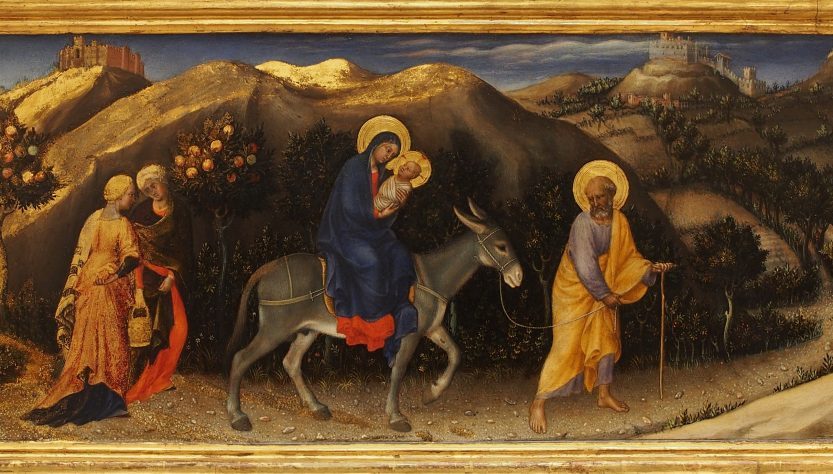
Joseph and Mary traveled dark and dangerous roads to reach Bethlehem before the birth of the Baby Jesus. The wise men made a long journey to see the newborn king. The entire nation of Israel spent more than 40 years wandering in the wilderness. Abraham, Jacob, Jonah, the Apostle Paul…there are many tales in the Bible of long journeys to unknown destinations and unknown outcomes.

Photo by rawpixel.com on Pexels.com

Traveling can be exciting and adventurous, but it can also be filled with detours, setbacks, and hardships. Traveling means being away from our comfort zone, our “safe” place– even if our “safe” place isn’t really safe. Travel often means going into the unknown, especially if we travel alone or travel against our own will. Where does this road lead? Who will I meet along the way? Where will I stay at night? Will I get lost? Will I get delayed? What if I get sick or hurt or attacked? Will I find my way back home? Can I feel safe in a new home, among unknown people and circumstances?

Photo by Andrea Piacquadio on Pexels.com

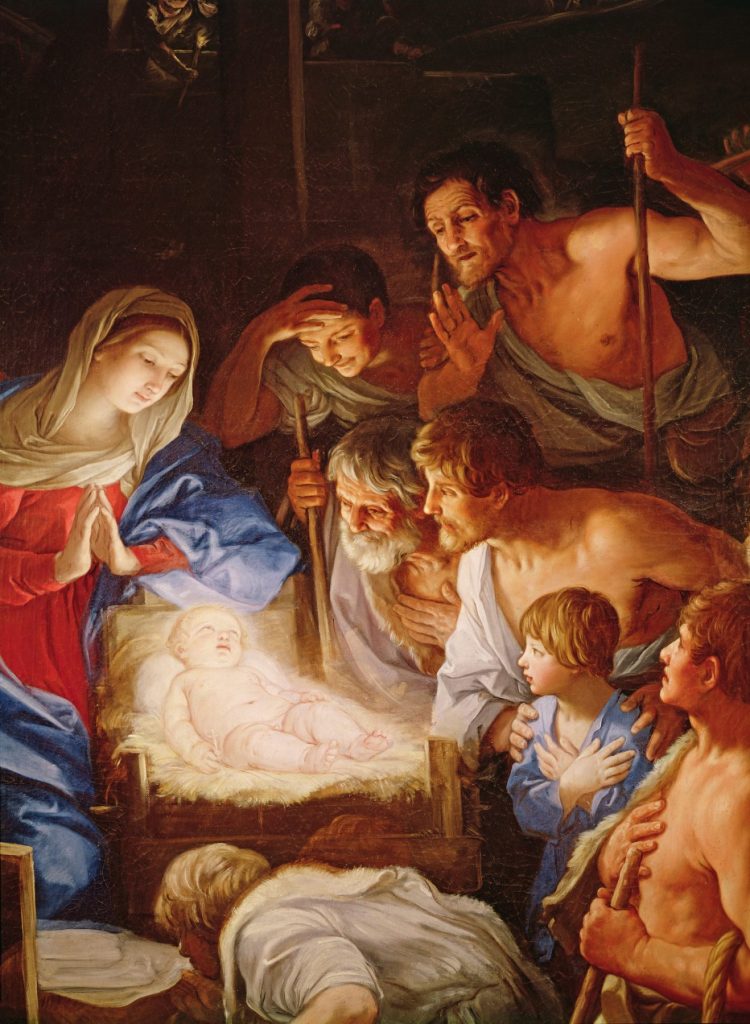
Jesus was born “away from home.” The first people to greet him were not grandparents or giddy relatives or neighbors, but shepherds– unnamed in scripture, unknown to his parents. In fact, the Bible doesn’t say much about Jesus being close to an extended family– his own small family always seemed to be on the move! Later, Joseph was told to take Mary and the child to Egypt; another long and unexpected journey, another long and winding road.

As an adult, Jesus was also “on the road” for much of his ministry. Long dusty roads leading to Galilee, or Jerusalem, Jericho, or Bethany.

Photo by Kamaji Ogino on Pexels.com

At times, it can seem like our “roads” in life are long, winding, dusty paths leading to strange new places– lonely, rambling trails or busy superhighways taking us where we don’t always want to go. But we don’t need to fear traveling– even if we have to walk through the “valley of the shadow of death,” God is always with us. Just as He was with Mary and Joseph on the long road to Bethlehem, where there was no room for them in the inn. Just as He was with Jesus on the lonely path in the Garden of Gethsemane. Just as He was with Jonah in the belly of the big fish!

As we await the Advent of the Christ Child this year, it is likely that most of us have been on a long and winding road. Though many of us have been prevented from physical travel to foreign lands, we’ve traveled on an emotionally and even spiritually exhausting road in 2020. Chaos, corruption, COVID, elections, “executive orders”, economic collapse, lock-downs, lawlessness, and loneliness–we seem to have traveled a lot of miles, and most of them have been perilous and unfamiliar. But God has a plan, and a destination. The journey may not make sense right now; it is not the journey we would have planned; not the journey we would have chosen. But let us follow it to Bethlehem– to the Manger– to the Cross– and finally, HOME!

Name Above All Names

We live in a wonderfully diverse world, filled with unique individuals. One thing that defines us to our families, neighbors, and friends, is our name. Names can be tricky–some are difficult to pronounce, or spell. Some names are shortened or changed to form “nicknames.” Others are changed by circumstances, like adoption or marriage. Some names are common to several people, or shared as “namesakes” of others, or shared between generations, calling for additions, like “Jr.,” or “the elder” or “the fourth.” Some people reject the name they were given at birth, preferring to use an alias, or going through a legal process to change it. Some names have become symbolic, or stereotyped, famous, or infamous, or iconic.

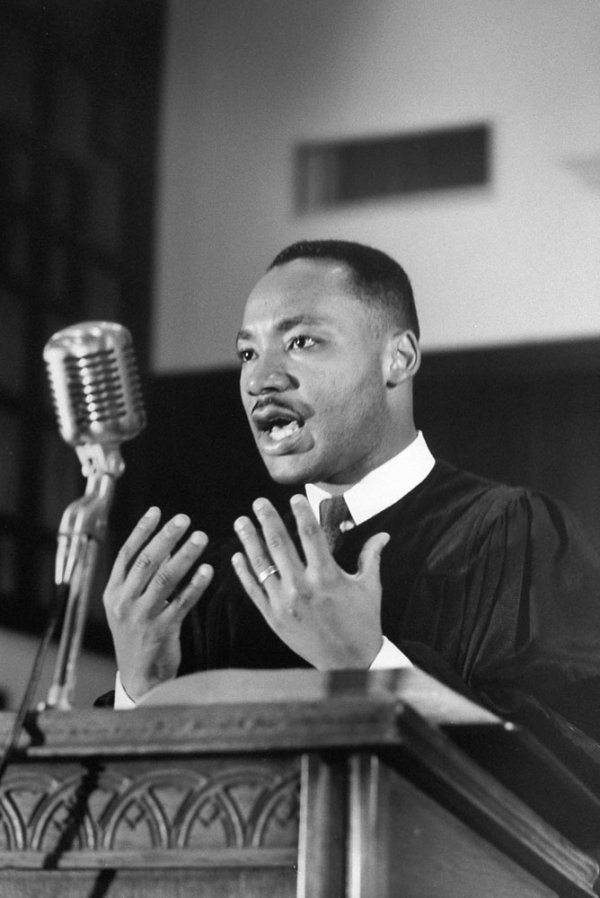
Civil Rights activist Rev. Dr. Martin Luther King Jr. gesturing during sermon at Ebenezer Baptist Church. (Photo by Donald Uhrbrock//Time Life Pictures/Getty Images)

Even though many of us may share a common first name, or surname, (or even both), our name still represents who we are–it becomes a symbolic representation of all that makes us unique– our personality, our history, and our character. And it’s not just people who carry names. We name rivers and mountains, cities, houses, farms, cars, products, pets, works of art…the list goes on. It is deep in the human soul to name things. This is a God-given desire. All the way back in the second chapter of Genesis, God brought all the beasts of the air and land to Adam, to see what name he would give them. Adam and Eve chose the names for their sons– names with very personal meanings. Names are important and carry power; they should never be taken lightly.

Photo by Life of Wu on Pexels.com

God recognizes each one of us by name. The prophets Isaiah and Jeremiah both refer to God calling them before they were even born! Before the great judge Samuel even knew how to recognize God’s voice, God called him by name. God often changes names– Abram to Abraham, Jacob to Israel, Saul of Tarsus to Paul, the disciple Simon to Peter (or Cephas). One reason God changes names is to show His power to transform people and give them, not just a new name, but a renewed nature and spirit.

Photo by 3Motional Studio on Pexels.com

And when we talk to God, whose very name is sacred, He allows us to call on Him through the Name He gave to Himself/His Son– Jesus. There are many boys and men who carry this name, but when we pray in the name of Jesus, we are referring to the one and only Begotten Son of God the Father; the Jesus of the Trinity; Jesus the Virgin-born Messiah. HIS name is above all other names. There is power in every ordinary name, but THIS name carries eternal, sovereign, immeasurable power. It encompasses His holiness, His compassion, His wisdom, His goodness, His faithfulness, and His Love. There is no other name by which we are saved; no other name by which we can be made new. It is not a name to be taken lightly or in vain. It is a name to be honored, cherished, and exalted. JESUS. The name above all names!

Photo by Patricia McCarty on Pexels.com

El-Roi–The God Who Sees…
Do you ever feel invisible? One of the common complaints among depressed people is that they feel as if no one sees them. “No one would notice if I just disappeared..” “No one really notices me…I just fade into the background.” “I always get passed over; pushed aside; ignored…” “Everyone just seems to look right through me. It’s like I don’t even exist.”

Photo by Engin Akyurt on Pexels.com

In a world of 7.8 billion people, https://en.wikipedia.org/wiki/World_population#:~:text=In%20demographics%2C%20the%20world%20population,more%20to%20reach%207%20billion. it’s easy to see why someone might be tempted to feel that way. But it isn’t true. No one exists in a vacuum. Even when it feels like we are being ignored or dismissed or forgotten, someone is always watching.

Photo by Mike Chai on Pexels.com

Hundreds of years ago, Hagar, the slave girl of Abraham’s wife, Sarah, believed herself to be abandoned and alone. She had been used by her mistress as a pawn in a scheme to give Abraham a son. Hagar was able to do what Sarah could not (get pregnant by Abraham), and she let it go to her head. But she was still a slave. When Sarah complained to her husband, Abraham reminded her that she still had power over Hagar. Sarah used that power to mistreat Hagar, causing her to run away into the wilderness. But God was watching. The “angel of the Lord” not only saw Hagar– he found her beside a spring and called out to her by name. He asked why she was in the wilderness, and then gave her a promise– that her descendants would become too numerous to count! In response, she gave God a name– El-Roi– “the god who sees me.”

Photo by Pixabay on Pexels.com

The Bible is filled with stories of people–sometimes warriors and kings, but often ordinary, even lowly, people: slaves, younger siblings, nameless servants–who are seen and chosen by God for His Glory, to play a special role in history. God sees them all; He knows them all by name (even if their names are not recorded in the Bible!) He knows each person’s strengths and weaknesses; He knows everyone who will cross their path, how their story began, and how their story will end.

Photo by Ivandrei Pretorius on Pexels.com

We can take great comfort in knowing that God sees us. There is nothing hidden from Him– when we are slighted or mistreated; when we are the ones wronging others…He knows our thoughts and emotions. He knows our strengths and weaknesses (better than we know ourselves!) He understands– even when we don’t–what’s happening in and around us. God sees us exactly as we are– and He already knows all that we can become! Hagar could see that she was a pawn. She could see herself giving Abraham a child when Sarah had not. But God didn’t see her as “just” a slave girl or “just” a pregnant woman. He saw her her as a young woman in distress; as a woman with unique hopes and dreams, aches and disappointments; and as the ancestress of millions upon millions of people– unique people, each one loved and seen and known intimately by their creator. He saw her as someone worthy of being found and called and reassured. And even though God sent her back into a difficult situation, He kept His eyes on her, and came to her rescue again years later.

Photo by Pixabay on Pexels.com

On days when you feel invisible, or forgotten– when it seems that no one would notice your absence– remember Hagar’s experience with El-Roi– “The God who Sees.”

Our Father…
I have known some excellent fathers– including my own father and my husband. Fathers who do their best to provide for, pray for, protect, and prepare their families. Fathers who show patience, perseverance, wisdom, and selflessness.

But I know this isn’t the case for everyone. I have also known some wicked fathers– fathers who are physically, verbally, and mentally abusive toward their wives and children. Fathers who abandon their responsibilities, and leave behind a legacy of need, chaos, anger, and despair.

Photo by Pixabay on Pexels.com

Throughout the Bible, God is portrayed as a Father. Not as a “man”– Jesus took on flesh and became a man– but the Triune God exists as Father, Son, and Spirit. God has all the characteristics of a perfect father. God also embodies all the characteristics of a good mother. But there is something about Fatherhood that God particularly wants us to learn and understand.

Photo by Pixabay on Pexels.com

When God chose Abram for His special covenant, Abram’s name meant “exalted father.” But Abram was childless. God chose someone whose name had no meaning (or an ironic meaning), and changed it– not a lot–he added an “ah”, so that Abraham’s name meant “father of many” or “father of multitudes.” I don’t think it was any accident that God chose a man named “Abram,” or that He changed his name only slightly. God chose Abraham, not because he was a father, but so that he could become a father– to many! It was as a father (to Isaac, but also to Ishmael and all his other sons and descendants) that Abraham was exalted and revered.

Photo by Luis Quintero on Pexels.com

But Abraham was not a perfect father– far from it! God gave us the story of Abraham, and drew attention to Abraham to help us learn the importance of GOD as our Father. Abraham was willing to give up his heir– the son of God’s promise– because Abraham was a “son” of God before he was a father to Isaac. https://www.biblegateway.com/passage/?search=Genesis+22&version=NIV

Even though I have known some excellent fathers, I know of only one who is perfect. And He isn’t someone else’s father, that I should be envious, or discouraged. He isn’t only “my” father, that I should be smug. He isn’t my father by birth, that I should make little of His sacrifices or His promises– they are not given out of duty or a sense of genetic obligation. He is OUR Father– He invites all of us to become His children. He lavishes love and grace, sheds tears and aches, sacrifices and pursues, rejoices and grieves– for and with every soul.

Photo by Josh Willink on Pexels.com

When Jesus taught His disciples to pray, He wasn’t giving them a rote prayer to memorize, but a pattern. https://www.crosswalk.com/faith/prayer/the-lords-prayer-be-encouraged-and-strengthened.html If you look through the Gospels at Jesus’ other prayers you will see it–He always begins by addressing His Father. For the group of disciples, He began with “Our Father.” Jesus, who could have claimed sole son-ship, made it clear that He (as Son with the Father and Spirit) desires this amazing relationship– more than power, more than honor, more than life! And God the Father is not a man or a mere mortal– He is Holy, Perfect, Eternally Loving and Eternally Sovereign!

Photo by Lgh_9 on Pexels.com

What a wonderful thought for Father’s Day this year– no matter what kind of earthly father(s) we have known!

Blog at WordPress.com.

Up ↑