I could have smiled when I paid my utility bill the other day– When the clerk asked if she could help me, and thanked me, and sent me on my way.
I might have offered my unused coupons to that young man who was shopping– The one with two boisterous kids in the cart, and very few groceries. Maybe he would have been offended. But maybe it would have given him an opportunity And a little hope.
I thought about calling an old friend and asking if we could pray together. Maybe we could have met for tea or gone for a walk together.
I had planned to clean out the closet and set aside some clothes to take to a local shelter.
I considered calling my sister, sending a card to that widower from church, or e-mailing my cousin…
I really needed to spend a little time in confession and repentance, and cleansing. I needed to be renewed, recharged, and transformed. At least, I thought I did. But something else claimed my thoughts, and my good intentions. Now, I just feel worn and guilty and unworthy.
And the “thing” is– I didn’t do anything horrible. I didn’t make anyone cry, or rob a bank. I didn’t burn dinner or break the speed limit. I didn’t break my marriage vows or embezzle a fortune. I didn’t break the law– I didn’t even break a sweat!
I just Didn’t.
Lord, today, I pray that you would light a fire under me. Help me to see the opportunities all around me– tiny acts of kindness, and truths that I need to hold tight. Show me people who need a listening ear, or a helping hand, or a word of encouragement. Help me to move “at the impulse of your love.” And when You direct me to be still, help me to be still and KNOW that You are a God of purpose and hope; joy and abundance. Help me to BE first–to Be obedient, to Be humble, to Be available. But then, help me to DO what you would have me do for Your Great Name. Thank you for second (and third) chances to BE and DO all that brings You honor. Amen.
As I write this, my mom is dying. We don’t know how much longer she has, but we’ve asked for prayers as she takes this journey toward death and resurrection. These are sometimes difficult prayers to make. We don’t like to see Mom suffering, but we don’t like the thought of separation through death, either. Our initial prayer would be for complete healing. But that’s not realistic, given that Mom has heart failure and is almost 90 years old. That doesn’t mean that God cannot or would not grant total healing. But we aren’t expecting that kind of miracle when we pray today.
For some people, our prayers seem meaningless. One of my classmates from school reacted to my request for prayer by saying, “I just wish that prayer DID something…” I take this to mean that if we don’t get a miraculous outcome, she believes our prayers are wasted. I hope I’m misinterpreting here, but I know that this is a common criticism of prayer in tough times. It seems that every time there is a natural disaster, or a mass shooting, people who offer “thoughts and prayers” are roundly criticized for praying “instead” of “doing.” As though the two are mutually exclusive. As though prayer is an empty gesture in the face of disaster and distress. As though there is no hope, no comfort, and no help in praying.
There are others who will assert with complete confidence their belief that God will answer any prayer for a miracle, simply because they ask it “in Jesus’ Name” or because many people are praying for the same outcome. I call these kinds of prayers, and attitudes about prayer, “Vending Machine Prayers.” It is the belief that prayer must produce an immediate and positive outcome, or it is “broken” or invalid. If you don’t get what you were expecting, you must have prayed “wrong,” or didn’t have “enough” faith. Or your prayer just didn’t “work.” When someone puts money into a vending machine, and presses a button or punches in a code or pulls a knob, and they don’t get the expected item, some of them will kick the machine, or curse. Or they will try again, carefully trying to get the “right” result. Vending machines are inanimate objects designed to give a satisfactory consumer experience. If the coins or bills “jam,” if the knobs or buttons malfunction, if the product gets “stuck,” or isn’t available, the consumer feels cheated. Sometimes, they can get their money returned, but most often, they go away angry and unfulfilled.
God is not a vending machine. He is not “designed” to serve us or give us satisfaction. There is nothing we can “insert” in our relationship with God –even sincere prayer–that obligates Him to give us what we desire. God chooses to answer prayers in whatever way He knows is best for our eternal and overall well-being. God still gives miracles. I’ve seen it and experienced it. In fact, we could have lost Mom several years ago, when her heart failure put her in a similar state. God provided a miracle in the form of heart valve replacement surgery–and a cancellation that moved her surgery schedule forward before her condition was too far gone. I’ve seen people healed of cancer– and people whose prayers for healing ended in their rapid decline and death. But none of those prayers were wasted. Not one. God was working– sometimes on the sidelines, strengthening family members to deal with grief; sometimes providing testimonies to those with doubts and questions; sometimes planting seeds that would bear fruit years later in the lives of those left behind–sometimes God was working “sideways,” as He did with Mom years ago to give her several more years of life, even though she wasn’t completely healed, to grow and prepare for this next step and testify to God’s sustaining power.
God is not apathetic, and He certainly isn’t “happy” about Mom’s decline and her impending death. He shares our sufferings and our sorrows. But God knows and sees the “rest of the story!” Jesus wept over the death of His friend Lazarus, even though He knew that Lazarus would be raised back to life. Jesus was sharing the deep grief over the loss and sorrow felt by all of His friends, just as He rejoiced with them as Lazarus walked home from the tomb! (See John 11 for the whole story.) God doesn’t delight in death. He is the author of LIFE. But He is very present through every stage of life– even that last bitter taste of death we all must experience. And just as we pray for God’s miraculous presence, we pray for His guiding, comforting, and hopeful presence in ALL situations.
Prayer DOES something! Even if we don’t see immediate changes in situations; prayer changes US. It changes OTHERS. It changes our priorities and perspectives. It draws us close– to each other and to the One whose Love is Eternal and unchanging.
116 I love the Lord, because he hath heard my voice and my supplications.
2 Because he hath inclined his ear unto me, therefore will I call upon him as long as I live.
3 The sorrows of death compassed me, and the pains of hell gat hold upon me: I found trouble and sorrow.
4 Then called I upon the name of the Lord; O Lord, I beseech thee, deliver my soul.
5 Gracious is the Lord, and righteous; yea, our God is merciful.
6 The Lord preserveth the simple: I was brought low, and he helped me.
7 Return unto thy rest, O my soul; for the Lord hath dealt bountifully with thee.
8 For thou hast delivered my soul from death, mine eyes from tears, and my feet from falling.
9 I will walk before the Lord in the land of the living.
10 I believed, therefore have I spoken: I was greatly afflicted:
11 I said in my haste, All men are liars.
12 What shall I render unto the Lord for all his benefits toward me?
13 I will take the cup of salvation, and call upon the name of the Lord.
14 I will pay my vows unto the Lord now in the presence of all his people.
15 Precious in the sight of the Lord is the death of his saints.
16 O Lord, truly I am thy servant; I am thy servant, and the son of thine handmaid: thou hast loosed my bonds.
17 I will offer to thee the sacrifice of thanksgiving, and will call upon the name of the Lord.
18 I will pay my vows unto the Lord now in the presence of all his people.
19 In the courts of the Lord’s house, in the midst of thee, O Jerusalem. Praise ye the Lord.
There are dozens, if not hundreds, of people praying for my Mom (and all of us who love her so very much). And probably, there are some “vending machine” prayers among them. That’s ok. God hears them all. And I am so very blessed by them all. Because prayers DO SOMETHING AMAZING. They rise to a God who sees, who hears, and who LOVES unconditionally, eternally, and perfectly! We’re actively trying to do what we can do to make Mom comfortable and seeking treatment that will ease her last days, but we depend on God’s touch, His healing, His timing, and His good will to see us all through and keep us in perfect peace.
5-9 So don’t lose a minute in building on what you’ve been given, complementing your basic faith with good character, spiritualunderstanding, alert discipline, passionate patience, reverent wonder, warm friendliness, and generous love, each dimension fitting into and developing the others. With these qualities active and growing in your lives, no grass will grow under your feet, no day will pass without its reward as you mature in your experience of our Master Jesus. Without these qualities you can’t see what’s right before you, oblivious that your old sinful life has been wiped off the books.
I’ve seen lots of posts recently about the “-ber” months–September, October, November, December–and the excitement for some as this season comes ’round. September in Michigan is filled with ripening fruits and changing colors. October brings pumpkins, apple cider, and frosty mornings. November is often spent thinking of and planning for Thanksgiving– bountiful feasts and time with family. And December brings the Christmas season– snow, caroling, giving and receiving gifts, and families gathered around trees and fireplaces, sharing old memories and making new ones.
Part of this season of summer morphing into autumn and “falling” into winter is anticipation. The first apple harvest; the first frost; the first snowfall; those eager moments of wondering what will be under the Christmas Tree…we know they will come, but when, and how?
My birthday is at the end of November, and as a child, I always loved Thanksgiving. It meant that family would gather, and at some point, they would sing “Happy Birthday” and there would be a cake among all the wonderful Thanksgiving desserts with my name on it! Four weeks later, Christmas would come, and the same excitement filled the house. It was difficult to be patient, but I learned that everything special was worth waiting for. In fact, sometimes, the anticipation is part of what makes such times more wonderful. There is no fun in rushing through precious moments or “ruining” the surprise of what is to come; nor is there any virtue in losing passion for what is possible, just because we can’t see the outcome, yet.
The Apostle Peter gave early Christians a list of attributes and spiritual traits that they should be developing in increasing measure. One of these attributes is “passionate patience.” In other translations, it is also called “perseverance,” “endurance,” “patience,” and “strength to keep going.” I like this wording, “passionate patience,” because it reminds us that patience isn’t just passive and meek. Especially as we work on building our spiritual understanding and alert discipline, patience becomes a powerful trait– one that distinguishes Christians from those around them. Some people are marked by impatience, anger, and dissatisfaction. Others are marked with complacency and resignation. Christians are asked to be passionately patient! Our faith and hope should radiate, even as we endure trials and anticipate God’s movement in the world around us.
Jesus modeled “passionate patience” in His ministry on earth. Peter was witness to Jesus’ endurance in the face of rejection, unbelief, misunderstanding, and injustice– both to those around Him, and personal injustices. Jesus remained faithful, passionate for the truth, and compassionate toward others. He did not give in to despair, or waste His energy in anger or revenge. He did not make excuses for inaction, but He did not “burn out” in useless activities, either. He confidently did what the Father told Him to do– no more and no less.
How do I reflect “passionate patience?” When I look around me and see injustice, do I explode in anger? Do I shrug my shoulders in resignation? Do I lose faith and passion? Or do I remain positive and faithful in doing what I know to be right and speaking up for the truth? Do I spread compassion or consternation? Antipathy, anger, or aspiration? When my life circumstances are filled with pain or hardship, do I endure? Do I persevere? Do I thrive? Or do I complain? Do I remain passionately hopeful, or give in to anxiety or despair? Do I wait for God’s strength and wisdom, or do I try to “fix” things in my own power? Do I accept help and guidance when I need it, or resent others’ efforts? Do I spread hope and healing? Or do I spread doubt and gloom? Do I grow bitter or better? I’d love to say that I respond with the kind of endurance, patience, and fortitude that Peter spoke of. And sometimes, with God’s help, I have. But I have much to learn, and room to grow!
5-9 So don’t lose a minute in building on what you’ve been given, complementing your basic faith with good character, spiritual understanding, alert discipline, passionate patience, reverent wonder, warm friendliness, and generous love, each dimension fitting into and developing the others. With these qualities active and growing in your lives, no grass will grow under your feet, no day will pass without its reward as you mature in your experience of our Master Jesus. Without these qualities you can’t see what’s right before you, oblivious that your old sinful life has been wiped off the books.
8 “For my thoughts are not your thoughts, and your ways are not my ways.” This is the Lord’s declaration. 9 “For as heaven is higher than earth, so my ways are higher than your ways, and my thoughts than your thoughts.
Isaiah 55:8-9 (Christian Standard Bible)
I do not understand God’s ways. If I try to work it out with human understanding, I will never make sense of how God works. I don’t have His wisdom or omniscience; I don’t have His eternal perspective or omnipotence. God will never answer all of my questions; He will never reveal all of His plans or reasoning to me. He calls me to walk in Faith, not by sight (2 Corinthians 5:7) This is a stumbling block to many. It is especially frustrating for those who think they already DO know (almost) everything, and believe that they should be able to speak to God as a peer, even to be able to consult Him! I knew of a man (a convicted felon) who refused to repent of his actions. He admitted that he had done wrong, and that his prison sentence was deserved, but when challenged with how he would answer before God, he simply said–“God and I will come to an understanding.” He simply felt that if he explained “his side of the story,” God would change his immutable commandments and make an exception.
God doesn’t need anyone to “explain” anything to Him. Nor does He “owe” any of His creation an explanation for His actions or seeming inactions. I will never understand why certain injustices are allowed to happen, and seem to go unpunished in my lifetime. I don’t understand God’s timing in my life– why my father died when he did, or why I had to wait so long to be married. But I am learning to trust that God knows every injustice, every need, every situation we face, and that He WILL make all things “right” in HIS time and in His perfect way.
Spiritual Understanding has to come from the Spirit. It cannot come through our own wisdom or learning. It has to be built, not just on Faith, but on acting in Faith and walking humbly in conformity to our Good Shepherd’s example. We must become, not just “fans” of Christ, or even just students of Christ, but disciples of Christ, if we want to begin to have greater understanding. Like the apprentice, who must learn by doing, so we must learn through practice of God’s Word. We must also ASK for wisdom and understanding. (James 1:5) They are gifts, just like Salvation. We don’t earn understanding; we are granted it as we walk in obedience and faith.
Today, my prayer is that I would receive insight as I learn to trust, and I would trust that God will give the wisdom I need for the day ahead– no more or less, and not a moment too late or too soon. And experience confirms that He is faithful to do just that!
5-9 So don’t lose a minute in building on what you’ve been given, complementing your basic faith with good character, spiritual understanding, alert discipline, passionate patience, reverent wonder, warm friendliness, and generous love, each dimension fitting into and developing the others. With these qualities active and growing in your lives, no grass will grow under your feet, no day will pass without its reward as you mature in your experience of our Master Jesus. Without these qualities you can’t see what’s right before you, oblivious that your old sinful life has been wiped off the books.
What does it mean to be “good?” This is a question that Jesus posed to the Rich Young Ruler in Luke 18:
18 A certain ruler asked him, “Good teacher, what must I do to inherit eternal life?” 19 “Why do you call me good?” Jesus answered. “No one is good—except God alone.
Jesus went on to list several Biblical commandments– you shall not commit adultery, you shall not murder, you shall not steal, etc.., but even when the young man answers with confidence that he has kept all these commandments, Jesus says, “you still lack one thing. Sell everything you have and give to the poor, and you will have treasure in Heaven. Then come, follow me.” (v. 22)
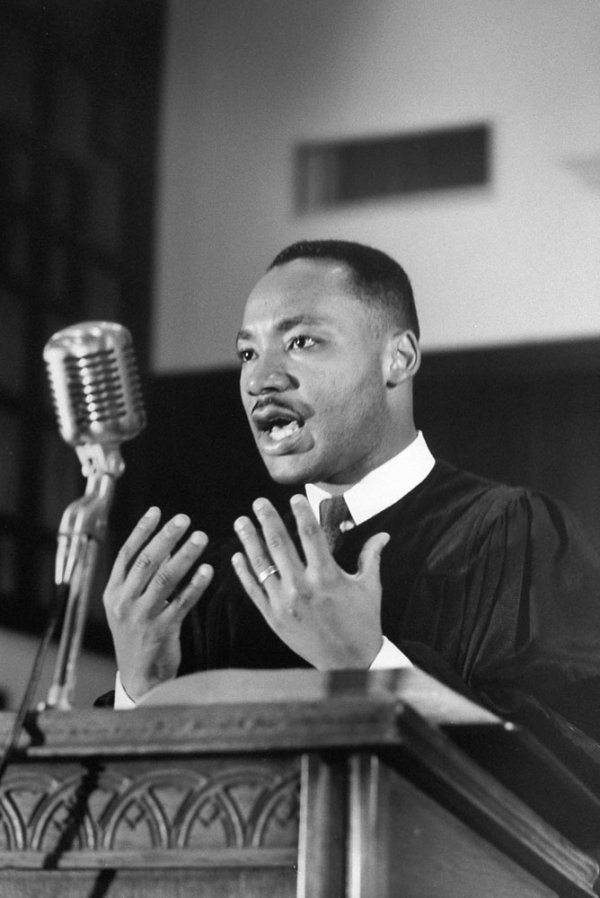
Civil Rights activist Rev. Dr. Martin Luther King Jr. gesturing during sermon at Ebenezer Baptist Church. (Photo by Donald Uhrbrock//Time Life Pictures/Getty Images)
Being “good” is not a matter of avoiding evil. It is more than being “correct” in our principles, and upright in our actions. Martin Luther King, Jr., in his famous address in 1963 said that he dreamed of a day when his children… would not be judged by the color of their skin but by the “content of their character.” Character, and more specifically the “good character” mentioned by Peter in the above passage, includes thoughts, principles, actions, and habits by which we are judged. I may never commit murder in the literal sense, but I will be judged wanting in character if my words and actions are vicious, snide, malicious, sarcastic, and brutal. I may never be convicted of theft, but I may be judged harshly for being ungenerous or miserly toward those in need. Dr. King wanted his children to be judged–positively–for their character, not for something as superficial and arbitrary as skin color, nor for whatever they hadn’t done.
The young ruler in Luke’s story, not willing to give away his possessions, went away disappointed. But he missed the more important calling– “Then come, follow me.” Jesus wasn’t being self-effacing when He asked, “Why do you call me good?” Far from it! Jesus WAS good– He was (and is) the embodiment of Goodness! It is not through ritualistically following the commandments that anyone becomes “good.” It isn’t even in the self-sacrificing act of giving away one’s possessions. It is in the humble act of following the Master! To follow Christ is to step out in faith, and to walk in goodness.
Peter makes the natural connection that James also makes in his epistle– that Faith, while fundamental, must build good character through our actions, words, and habits. Faith, without works, is dead. (James 2:14-26) So the next building block is developing a good (or Godly) character. Our lives should reflect the Goodness of Christ. We won’t be perfect. But we will be given strength and guidance by the Holy Spirit to walk in Goodness. And as we walk, we will build on that foundation with the next step…Spiritual Understanding. (More about that next time.)
Today, I pray that God will show me how, and His Spirit empower me, to develop in goodness; that I would become more like the “Good Teacher” who is also my savior and Lord. For Goodness’ Sake!
5-9 So don’t lose a minute in building on what you’ve been given, complementing your basic faith with good character, spiritual understanding, alert discipline, passionate patience, reverent wonder, warm friendliness, and generous love, each dimension fitting into and developing the others. With these qualities active and growing in your lives, no grass will grow under your feet, no day will pass without its reward as you mature in your experience of our Master Jesus. Without these qualities you can’t see what’s right before you, oblivious that your old sinful life has been wiped off the books.
The Apostle Peter was writing to people in the early church– people who were under enormous pressures and persecution. The Epistles of 1 and 2 Peter are filled with dire warnings– and urgent calls to action! Earlier in his first letter, Peter spoke of prayer: “7 Give all your worries and cares to God, for he cares about you.” (1 Peter 5:7 New Living Translation). Prayer is primary, but it must be paired with action. In this passage, Peter lays out a progression of characteristics to pursue. We must actively chase after a Godly character. It will not develop in a vacuum. We must build on our foundation, and keep building up– so that we can build up others as well!
The foundation is basic Faith. We need a bedrock, solid and sure; unmoving and capable of handling stress and pressure. In our own power and our own wisdom, we will crumble under the kinds of stress and persecution we may face in modern circumstances. We need to trust God– and seek to trust Him more completely–before we can advance in Christlikeness. We will be tempted to doubt– that is normal in a broken world. But we must continue to bring those doubts before the power of the Holy Spirit’s guidance. Doubts, like other challenges, will test us. The challenge of doubt is particularly tricky, because the more we try to wrestle in our own mind, the more doubt (aided by pride) can take hold. It is counter-intuitive. The more I try to answer every doubt and every contradiction– the more evidence and reassurance I require before I am willing to trust, the less I am likely to find faith. Faith is like a muscle– if you never exercise it– you will hardly know it’s there. But when you need it, you’ll wish you had worked out more! Faith is not fully developed overnight. God will NOT answer every question, settle every niggling doubt, solve every seeming contradiction. But He HAS promised not to leave us alone, without hope or help. And when we do exercise Faith, we will learn to trust more. As we learn to trust God’s wisdom and provision, we will develop our other muscles…like goodness, self-discipline, and self-sacrificing love!
I like the above translation, because it stresses the urgency that is a core of all Peter’s writings. “Don’t lose a minute…” Don’t waste time in second-guessing, excuse-making, distractions, or empty arguments. Don’t lose the opportunity to see God’s work unfolding as you take baby steps of Faith! Don’t become complacent, and lag behind, losing momentum and focus! Chase after Faith! Cling to the “hem of His garment”
20 Then suddenly a woman who had been suffering from hemorrhages for twelve years came up behind him and touched the fringe of his cloak, 21 for she said to herself, “If I only touch his cloak, I will be made well.” 22 Jesus turned, and seeing her he said, “Take heart, daughter; your faith has made you well.” And instantly the woman was made well.
We may not see the instant miracle of this woman, but our faith WILL make us “well.” It will change our perspective, open our eyes, and chase away doubts like a breeze chases away a cloud of smoke.
Peter’s list is worth exploring more deeply. I’ve looked at Faith today…next time, I want to explore good character (also translated as “goodness,” or “moral excellence.”) Today, I pray that I would build on the gift of Faith, and strive for a deeper faith, aided by the Holy Spirit, as I face whatever challenges life brings.
Back in the 1960s, Pete Seeger “wrote” a new folk song, later recorded by a group called The Byrds. All but the title and the last six words of the song were taken directly (though the word order was changed) from the book of Ecclesiastes. Essentially, Pete Seeger wrote seven words and some music; the rest was written by King Solomon almost three thousand years ago! Learn more about the song here…
When God created the world, he instituted times and seasons– day and night; winter and summer; weeks and months. We are bound by time while we live here. Sunlight and darkness help determine when we are active or sleeping (less so since the advent of electric lighting); summer and winter (or rainy/dry seasons) determine when we plant or harvest, what we wear, how we travel, and what activities we plan.
But Solomon reminds us that there are also “seasons” that don’t depend on the weather or the amount of light filling the horizon. There is a time to be born and a time to die; a time for laughter and a time for weeping; a time for war and a time for peace. Our world is not static– it is filled with changes, and times for turning away from one thing and facing another.
3 For everything there is a season, and a time for every matter under heaven:
2 a time to be born, and a time to die; a time to plant, and a time to pluck up what is planted; 3 a time to kill, and a time to heal; a time to break down, and a time to build up; 4 a time to weep, and a time to laugh; a time to mourn, and a time to dance; 5 a time to cast away stones, and a time to gather stones together; a time to embrace, and a time to refrain from embracing; 6 a time to seek, and a time to lose; a time to keep, and a time to cast away; 7 a time to tear, and a time to sew; a time to keep silence, and a time to speak; 8 a time to love, and a time to hate; a time for war, and a time for peace.
Our prayers will change with these seasons– prayers of wonder and prayers of wondering why; prayers of great boldness and reluctant, halting prayers; prayers that come from joy, and those that come with wracking grief. There will be seasons of chaotic busyness, and seasons of loneliness and long hours; seasons when we help lift the burdens of others before our own, and seasons where others help us lift burdens we cannot bear alone. There will be seasons of fierce, pounding spiritual warfare, and seasons of relative peace and rest.
Solomon lays out the concept, but I like Pete Seeger’s addition of the phrase, “turn, turn, turn.” It reminds me that the seasons of my life will change, but I need to change as well. I need to turn, first of all, to see where God is working in my life and the lives of others– that’s where I need to be and where I need to be focused. God will never leave me nor forsake me, but He loves me too much to “leave” me in a rut– He needs me to move on and finish the race He has set out for me. Change can be difficult, but without it, there is no growth!
Second, I need to turn from habits and activities that are “out of season”–young parents will have a completely different way of mapping out their time, including time for prayer and Bible study, than empty-nesters. People in mourning will have a different approach to prayer and worship than those who are in a season of celebration. There is a season to break down–to end bad relationships and turn from bad habits–and a time to build up healthy relationships and habits. There is a time to speak– to share prayer requests and spend time in corporate prayer; to ask questions and persist in our requests. But there is also a time to stay silent– to meditate and listen more than we talk; to be still and know, instead of pace and ponder. I don’t wear a heavy coat in the middle of summer or run barefoot in the snow– I need to turn in alignment with the season I am passing through.
Finally, I need to turn away from temptation and sin. God gives me the power, through His Spirit, to turn and walk away from the quicksand of complaisance, the tidal waves of desire, the live wire of unchecked rage, or the bottomless pit of envy, but I must turn away from them.
This life is full of seasons and change– some good, some dangerous. But God is outside of time and seasons. He provides endless variety, but He never changes His essential nature. No matter where we turn, He can be found!
I live in a small town. Every week, I take a mental (and sometimes also a walking) tour of my town as I pray for it. I pray for the businesses, the public services, the churches, schools, families, and more. Sometimes, I try to picture my town street by street…the pharmacy, the pizza place, the real estate agent, the City Hall, the little ice cream shop, the Library, the beauty salon, the Post Office, the bakery, the corner gas station…
It’s a routine, and it’s a exercise, but it’s also a great reminder of several things:
Prayer is about every aspect of life–even the things I take for granted, like the corner store or the insurance agent down the street, or the fire station. I can (and should) thank God for the blessings He has given me. I should also lift up my neighbors and friends in prayer. I may not always know specific needs, but as I recall places, sometimes I recall needs as well.
Prayer is about more than just me. It is easy to get caught up in my own triumphs or worries and lose sight of how God is working in others’ lives around town.
God is all about community–Jesus came to announce that “The Kingdom of God is among (or within) you” (Luke 17:21; Matthew 3:2, etc.) We are not to live our lives isolated from others. And this is certainly true of prayer. We are to think of others, and to love our neighbors “as ourselves” (Matthew 7:12; Mark 12:31, others), and that includes praying for them. We don’t have to pray grandiose prayers or pointed prayers, but pray for their health, well-being (including, but not limited to their spiritual well-being), and relationships.
Praying for the town and its various residents reminds me to reach out and treat them with respect. It’s much easier to pray for someone you talk to and get to know– and it’s easier to reach out and get to know people around you if you are praying for them already! We don’t pray in a vacuum or a hermit’s cell– prayer should spur us to action and interaction!
Praying around town actually helps me get to know the town better–As I think about the various places around town, I remember shops or neighborhoods I normally walk or drive past, but don’t really notice, or services I don’t normally use. Our small town has an airport, a canoe rental, a hospital, two museums, a book store, several restaurants, a couple of car dealerships, several barbers and salons, a pastry shop, a purse store, a candy shop, a yarn store, dentists, chiropractors, eye doctors, auto repair shops, flower shops, thrift stores, several churches, a funeral home, parks, hardware stores, a laundromat, a rent-to-own store, a flooring shop, a shop that sells art and suits (that’s actually its name– Art and Suits), gas stations/convenience stores, at least three grocers, and many other businesses, including our own shop that sells radios and antiques! The more I know, the more I can help others get to know about our town– and the better I can pray for those in it.
I pray for my community (specifically) once every week. It’s part of what I call “Prayer Points”– every day of the week has a special focus. One day is for the Community; one day is for Global Issues (war, hunger, climate issues, disease, poverty, etc.); one day is just for issues relating to The Church (persecuted Christians, Evangelism and Missions, etc.. Why do I do this? For me, it helps me focus on needs that are ongoing– needs I might otherwise forget or de-emphasize in the hustle and bustle and “noise” of newsfeeds, “urgent” requests, and general self-indulgence. It doesn’t make me a better person. But I hope it makes me a better “pray-er.”
I suffer from seasonal depression. In spite of the joy I know I should feel during this season; in spite of all the reasons I have to BE joyful, I have been in a funk. I’ve been physically ill, but even more, I’ve been mentally drained and emotionally overwhelmed for over a week. I’ve missed posting a couple of days recently, because I feel hypocritical writing about Christmas.
But I choose to write tonight about the enduring power of prayer. There are people praying for me, not because I’ve said anything about my condition, but because they are faithful in praying for people, and I happen to be one of them. The clouds are beginning to lift and I’m finding it easier to feel what I already know– that God is in control; that He cares; that He has a purpose beyond the sadness. It’s why I’m so passionate about praying and keeping a prayer log or prayer journal. I am one of those who pray for others, and I am one of those who are being prayed for–we lift each other up, even when–especially when–we don’t fully understand why.
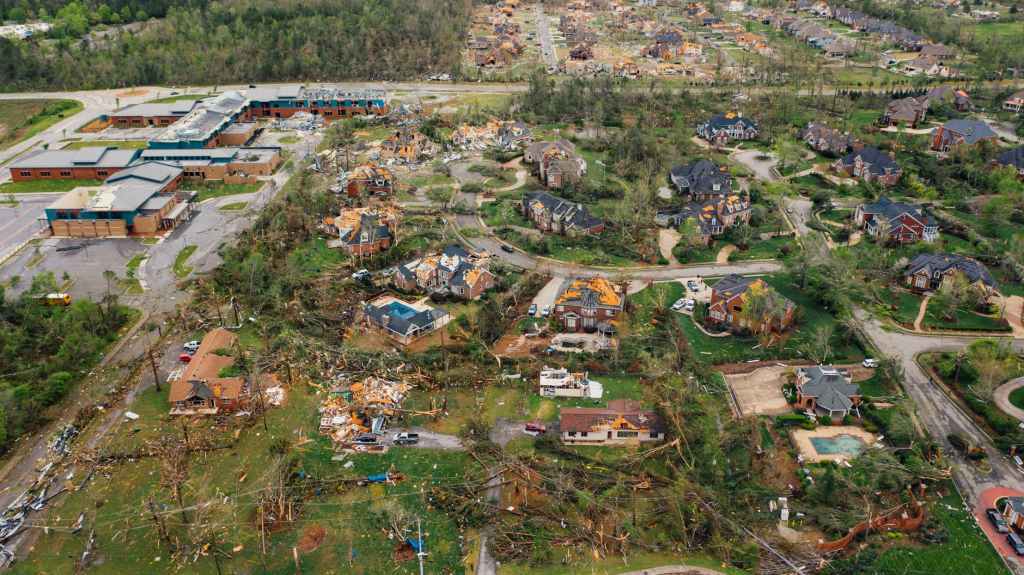
Some may ask, “How can you say that prayer works if you are depressed? Doesn’t that just prove that prayer isn’t working?” Some people mock the power of prayer in the face of “bad” circumstances. The recent school shooting in my home state of Michigan, or the recent spate of tornadoes in Kentucky and other states are prime examples. Sincere people of faith are being mocked for saying that their “thoughts and prayers” are with the people who are suffering. Mockers say that thoughts and prayers are meaningless–otherwise, prayers should have prevented the events in question from ever happening. In the aftermath, only actions are of value.
In the face of disaster, distress, or depression, prayers may seem small and even meaningless. Most prayers don’t pack the power of a tornado, nor elicit such an immediate and dramatic response. My depression didn’t suddenly disappear the moment someone began praying for me; those whose homes and lives have been turned upside-down in the past days and weeks didn’t wake up this morning to find that it was just a bad dream. And prayer should be accompanied by thoughtful and compassionate action. But prayer heals– and healing takes time. God chooses to use the prayers of others to seep into our lives; to fortify us and draw us together. Actions may change the circumstances, but prayer changes the person. Prayer reaches beyond the circumstances and the limitations of our human nature.
So today, I will pray. Through the “funk,” through the pain, through the confusion and chaos of a troubled world, I will choose to pray. For those individuals listed in my journal; for those whose needs are posted online or made known to me some other way; for those whose names and faces come to mind throughout the day. Because it is God’s way. Because others are faithfully doing the same. Because, in the end, it brings joy and peace. Even when–especially when– things seem so bleak.
I’m not talking about the current Queen of England–though it’s my understanding that she must, and does, pray as well as the rest of us. Sometimes we forget that even royalty have very human needs, and their power and authority, while greater than ours, is limited. God is still the ultimate authority. Instead, I’m thinking about the old testament Queen Esther/Hadassah.
Queen Esther’s position was one of great power– and of great peril. Her husband, Ahasueras, the King of Persia, had chosen her from among a host of women to replace the disgraced Queen Vashti. But Ahasueras was not a man of character and integrity. Vashti’s disgrace came after the King had been banqueting and drinking for a solid week, and this after six months of entertaining other heads of state! Ahasueras left the running of his kingdom in the hands of his ministers–even Vashti’s dismissal and Esther’s elevation were at the suggestion of the King’s counselors (though the King made the particular choice of Esther over all the other contenders). Ahasueras was unpredictable, capricious, vindictive, hot-headed, and easily led. He also had “unlimited” power– his word was, literally, law.
Even though Esther had risen to a place of prominence and (limited) power, she still faced danger, in the guise of her husband’s Prime Minister, Haman. Haman’s power was second only to the king, and he intended to use that power to rid himself of his enemy, Mordecai, a Jewish exile, who just happened to be the foster-father and cousin of Queen Esther! Not content with simply having Mordecai executed, Haman suggested to the gullible King Ahasueras that all the Jewish exiles throughout the kingdom should be slaughtered and plundered within a single day.
Queen Esther’s only option was to get the king to reverse his own edict– even if she managed to escape the genocidal plot, her silence would spell the doom of the entire scattered nation of her own people. Queen Esther could not trust in her own limited authority, nor in the beauty that had brought her to the throne. Only God could capture the heart and mind of such a king. Queen Esther began to pray.
And she didn’t just fall on her knees in silent despair She asked others to fast and pray for three days before she would approach the king. And she paved the way with another banquet, during which she flattered both the king and his arrogant prime minister before pleading for her life and the lives of her countrymen.
Esther’s beauty and grace alone were no match for Haman’s treachery. But God knew the end of this story from the beginning. Esther was in grave danger, but she was also in God’s loving and all-powerful hands. Esther is remembered for her bravery and poise in the face of Haman’s diabolical plotting, but also for her dependence on God’s power over her own.
What dangers will we face today? If Queen Esther needed to pray– and ask for prayer– in her situation, how much more should we be willing to do so in ours?!