The Lord Has Taken Away…

20 Then Job arose and tore his robe and shaved his head and fell on the ground and worshiped. 21 And he said, “Naked I came from my mother’s womb, and naked shall I return. The Lord gave, and the Lord has taken away; blessed be the name of the Lord.”

Job 1:20-21 ESV (via biblegateway.com)
Photo by Pixabay on Pexels.com

The book of Job presents us with a startling picture. Job is a godly man; a righteous man; a man of faith and good works. And yet, God allows him to experience loss upon loss– Job loses everything, short of his life and his nagging, bitter wife. His first response is praise and worship! But as the losses sink in; as the pain and agony and grief continue, Job questions God’s justice and wisdom. Job, like us, wants answers that make sense. He is willing to suffer– even greatly–IF he can see the purpose of his suffering, and justify it to himself.

Photo by RODNAE Productions on Pexels.com

We are getting ready to celebrate Thanksgiving tomorrow in the U.S.– a day when we celebrate what God has given us. We normally celebrate family, health, good food, material blessings, etc. We celebrate abundance and comfort; peace and plenty; family and freedom. But his year, our celebration will be quite different. The Lord has taken away…

Photo by Karolina Grabowska on Pexels.com

Some of us have lost jobs, or we’ve lost our good health to COVID or related factors, or we’ve lost loved ones, often without the chance to say our final “goodbyes”. Millions of us have lost the ability to move about freely and conduct “normal” errands and activities. Schools and businesses are closed or operating from a distance. Families and friends have been kept apart. Much that gave us comfort and happiness has been “taken away” this year. And God has allowed it all to unfold. He has not “taken away” this disease or its consequences. He has not “taken away” floods, or fires, or hurricanes. He has not given us answers or explanations.

Photo by Collis on Pexels.com

Job’s initial praise turns to questioning. While he does not “curse God and die,” as his wife suggests, Job spends his time wondering, “Why me?” His friends try to find answers– “you must have done something to deserve this, Job.” Because God does not “punish” the righteous. It isn’t logical; it isn’t fair; it isn’t just.

Photo by Alem Su00e1nchez on Pexels.com

Except that God laid on His own Son– on Himself– the guilt and punishment for all those who are unrighteous. What Job went through–unknown and unseen to him and his friends–was a glimpse into what God Himself would suffer. Christ lost everything–INCLUDING his life– in order to bring salvation to all those who are willing to believe and receive it. Christ was willing to give away His dignity, His power, His friends and family, and His life. And the Lord allowed it all to be taken.

Photo by Andrea Piacquadio on Pexels.com

Many people read the story of Job– his loss and all his questions and complaints–and conclude that God is not fair or just. They find Him to be capricious and unwilling to ease Job’s suffering or answer his questions. They conclude that God is wicked and unworthy of Job’s praise or trust.

But to do so is to ignore the end of the story– God DOES “answer” Job; He gives Job a chance to justify himself and bring his case. And more than that– He gives Job more than he had before. Job ends up with more children to love, renewed health, and even more wealth than he lost. https://www.biblegateway.com/passage/?search=Job+42&version=CSB And the same is true of Jesus Christ. Because of His “loss,” the world has gained the priceless gift of Salvation by Grace. Christ has become the first of millions to taste victory over death and enter into eternal life. https://www.biblegateway.com/passage/?search=1+Corinthians+15%3A20-23&version=NIV

Loss and grief still exist in this world; disease and suffering and hardship still plague us this year. But we have SO much to celebrate at Thanksgiving. When the Lord “takes away,” it is not because He is capricious, or jealous of our wealth or happiness. It is not because He is unkind or uncaring. At just the right time, and forever more, the Lord will Give without end– lavishly, extravagantly, abundantly. Nothing He takes away in this life– even a cherished love one–is beyond all hope of comfort, redemption, or restoration. Our losses cannot compare to the riches of His Grace and Love. This is a great mystery, but as Job discovered, God WILL DO IT!

Photo by mentatdgt on Pexels.com

Blessed be the name of the Lord! Let us Thank and Praise His Holy Name!

Mayday!

Today is the first of May. This is also known as May Day or Mayday. In many countries, there are traditional celebrations, including dancing around a May Pole, or leaving a small bouquet of fresh spring flowers on someone’s doorstep. It is meant to be a happy occasion, signaling the arrival of spring flowers after a month of showers and growth– the promise of more growth and greenery after a long winter and cool, wet, spring.

Photo by Suzy Hazelwood on Pexels.com

This year, many people have been looking forward to May 1 as a potential “end” to the lockdown/shelter-in-place orders. They are eager for a chance to return to “life as normal,” including spending time in parks and gardens, and celebrating with friends. They long to chat, mingle, and dance with their friends and loved ones in the sunnier, greener weather. Others are just tired of being “cooped up,” and want to get out into the busy marketplaces and public squares. But many leaders (mayors, governors, ministers, presidents, etc.,) are extending the orders to continue social distancing during this pandemic season.

There is another meaning for the phrase “Mayday!” It is an urgent call for help. It comes from the French phrase m’aidez– help me–and is used mostly in radio transmissions from ships in danger. Many people around the world today are, figuratively or metaphorically, calling out “M’aidez!” They are calling on their political leaders, financial institutions, hospitals, emergency workers, and others for help– healing, testing, equipment, food, answers to impossible questions, guidance, and comfort. For many, it feels like drowning in a sea of uncertainty and danger.

Photo by stein egil liland on Pexels.com

Even in times of uncertainty and danger, we have a Faithful and Loving God. When we cry out, “Mayday! Help!”, He is ready and able to answer our call:

I cried unto the Lord with my voice, and he heard me out of his holy hill. Selah.

I laid me down and slept; I awaked; for the Lord sustained me.

I will not be afraid of ten thousands of people, that have set themselves against me round about.

Many times in his life, David had called on the Lord, and found him faithful– to protect him, rescue him, bless him, and forgive him. David danced and celebrated God’s provision for Israel, and he also cried out in anguish and bitterness of soul. And in every situation, God heard David’s “Mayday! M’aidez!”

Photo by icon0.com on Pexels.com
  • King David’s descendant, King Hezekiah, also cried out to the Lord. He led the entire nation of Israel in celebrating a magnificent Passover feast and a Festival of Unleavened Bread. He also built up and fortified walls that had been allowed to crumble. He strengthened a weakened nation. In spite of his measures, however, the nation was threatened with invasion and destruction by a powerful Assyrian army. https://www.biblegateway.com/passage/?search=2+Chronicles+32&version=ESV But Hezekiah, along with the prophet Isaiah, sent up a “M’aidez!” to God, and He answered in a mighty way: 20 Then Hezekiah the king and Isaiah the prophet, the son of Amoz, prayed because of this and cried to heaven. 21 And the Lord sent an angel, who cut off all the mighty warriors and commanders and officers in the camp of the king of Assyria. So he returned with shame of face to his own land. And when he came into the house of his god, some of his own sons struck him down there with the sword. 22 So the Lord saved Hezekiah and the inhabitants of Jerusalem from the hand of Sennacherib king of Assyria and from the hand of all his enemies, and he provided for them on every side. 23 And many brought gifts to the Lord to Jerusalem and precious things to Hezekiah king of Judah, so that he was exalted in the sight of all nations from that time onward.
  • The Apostle Peter called out as he was sinking into the waves. https://www.biblegateway.com/passage/?search=matthew+14%3A22-32&version=NIV His faith, which made him to want to walk out to Jesus on the water, faltered. Peter knew the danger of open water, he faced such dangers in his fishing boat nearly every day. Without a miracle, he would sink below the wind-churned waves and be unable to make it back to the boat or swim all the way to shore. He cried out, “Lord, save me!” “M’aidez!” And Jesus was there to hold his hand and bring him to safety. Later in life, Peter went forth boldly preaching the Resurrection of Jesus, and spreading the Good News that Jesus Saves! Peter knew from first-hand experience that Jesus not only brought physical salvation from storms, but He offered spiritual salvation, renewal, and hope. In fact, it is in one of Peter’s epistles that we find this verse of hope: “..casting all your care upon Him, for He cares for you.” (1 Peter 5:7)
Photo by Guy Kawasaki on Pexels.com

This May Day, we may call out to God in desperation, or in celebration, or both. But let’s take every opportunity to call on His Holy Name.

Photo by 3Motional Studio on Pexels.com

Come Home

It’s Football season again here in the U.S. (American Football, that is). High Schools and colleges across the country are having “homecoming” festivities, as their teams return “home” after playing games on the road. Elaborate floats, dress-up days, pep rallies, parades, ceremonies, homecoming princes and princesses, dances, tailgate parties..homecoming is a big deal. There is something about the idea of returning home that captures our emotions and brings out joy and excitement.

Photo by Joe Calomeni on Pexels.com

One of the most famous of Jesus’ parables involved a son who comes home after living a life of dissipation, folly, and dishonor. https://www.biblegateway.com/passage/?search=Luke+15%3A11-32&version=NIV. As he is making his way home, but is still “a long way off,” his father sees, him, has compassion on him, and runs to meet him and welcome him. He then commands that clothes should be brought, and a feast prepared to welcome his son back home.

Photo by Pixabay on Pexels.com

What a beautiful picture of God’s love for us–it overcomes shame and disgrace, dishonor, and ruin. God watches for us to change directions and seek His face. But He doesn’t demand that we crawl home in defeat and beg Him to take us back. He runs to meet us with joy and excitement even greater than all the parades and floats and dances of any homecoming celebration. All of Heaven rejoices over every one who comes to repentance!

Photo by Pixabay on Pexels.com

But there are two sons in this story. The “other” son does not want to join in the celebration– he is resentful and bitter over his brother’s behavior and his father’s willingness to celebrate. We do not get to know all the reasons why he might be resentful, but his father gently reminds him that he is loved and secure, and still has his inheritance. The return of the brother doesn’t change any of that.

In prayer, we should remember this parable and some of the lessons it can teach. Let’s ask ourselves:

  • Am I making some of the same mistakes as the “prodigal son?” Am I running away from “home” and God in selfish pursuits? Am I asking God for an “advance” on my inheritance–wanting blessings and rewards before God’s time or outside of God’s will? Am I wasting time or resources or talents that God has given me? Am I stubbornly refusing to return home, even when it’s obvious that “my” way isn’t working? Do I think I need to work my way back to God by bargaining my good works?
Photo by Pixabay on Pexels.com
  • Am I making some of the mistakes of the “other” brother? Do I resent God’s mercy toward people I think of as “unworthy?” Do I refuse to celebrate and welcome my brothers or sisters who have come “home?” Do I blame God for “withholding” blessings, even though I never sought them? Do I doubt God’s love for me because my life story isn’t dramatic or filled with miraculous demonstrations of grace (apart from the ultimate miracle of the Crucifixion and Resurrection!!!)
  • Am I watching and running with the Father to welcome others “home?” Am I joining in the Homecoming festivities for those who are being rescued from ruin and death? Am I filled with joy and excitement about the Gospel?
  • Am I anticipating the ultimate “Homecoming” –the indescribable joy of spending eternity with the Father, Son, and Holy Spirit, along with all the saints in Glory?

Lord, help me to see the faces of my neighbors and friends, and enemies, and even strangers, as you do–help me to delight in their redemption, ready to celebrate and share in the joy; help me to search for them, run to them, and lead them to You! And help me to never take for granted the amazing love you have for me–even me!

Photo by Munmun Singh on Pexels.com
  1. Softly and tenderly Jesus is calling,
    Calling for you and for me;
    See, on the portals He’s waiting and watching,
    Watching for you and for me.
    • Refrain:
      Come home, come home,
      You who are weary, come home;
      Earnestly, tenderly, Jesus is calling,
      Calling, O sinner, come home!
  2. Why should we tarry when Jesus is pleading,
    Pleading for you and for me?
    Why should we linger and heed not His mercies,
    Mercies for you and for me?
  3. Time is now fleeting, the moments are passing,
    Passing from you and from me;
    Shadows are gathering, deathbeds are coming,
    Coming for you and for me.
  4. Oh, for the wonderful love He has promised,
    Promised for you and for me!
    Though we have sinned, He has mercy and pardon,
    Pardon for you and for me.

Come, Let Us Adore Him!

I wanted to cap off this week of Christmas carols with this line from “O, Come, All Ye Faithful (Adeste Fideles)”


Oh, come, all ye faithful, joyful and triumphant,
Oh, come ye, oh, come ye, to Bethlehem.
Come and behold Him, born the King of angels;

Refrain:
Oh, come, let us adore Him, oh, come, let us adore Him,
Oh, come, let us adore Him, Christ the Lord.


Sing, choirs of angels, sing in exultation;
Oh, sing, all ye citizens of heav’n above!
Glory to God, all glory in the highest;


Yea, Lord, we greet Thee, born this happy morning;
Jesus, to Thee be all glory giv’n;
Word of the Father, now in flesh appearing;

O Come, All Ye Faithful– Words by John F. Wade (Latin); translation by Frederick Oakeley.
Photo by Digital Buggu on Pexels.com

The words of this hymn sum up an important pattern running through this week’s group of song lyrics. Worship, praise, obedience, wonder, joy– all come by way of invitation. Christmas compels us, not by force of law, or a show of superior power, but by beauty, generosity, humility, and Love. God gives the invitation; He draws close to the lowly and the broken-hearted; He dispels the darkness with starlight, and breaks through the silence with angelic choirs; He cries quietly from a borrowed stable. Shepherds leave their flocks to see him, Magi travel with treasures to worship him– but the rest of the world passes by, unaware and untouched. As this child grows, he continues to issue invitations– “Come unto me, you who are weary, and I will give you rest!” “Whosoever believes in me shall have everlasting life.” “I am the bread of life. He who comes to me will never go hungry. (John 6:35 a)” Jesus didn’t use threats and judgment to attract angry followers. In fact, when he spoke harsh truth, the religious and political leaders of the day plotted to kill him– and he knew of their plans but did nothing to stop them! Those who followed Jesus did so because he asked.

Photo by Jessica Lewis on Pexels.com

It is the same for us today. The invitation still exists– it is still valid. It is possible to ignore Jesus, to say, “No;” even to deny Him. Christmas is not a command. It is a communion. The wonder of Christmas– the miracle– is that God has not ignored us or denied us; He has not bound us in chains and forced our obedience or our worship; He has not abandoned us to the darkness. He reached out, He pursued us, wooed us, sharing our burdens and our woes, and promising us fullness of life and joy– IF we will accept the invitation.

Photo by Pixabay on Pexels.com

Let us come. Let us worship and adore Him. Let no tongue on Earth be silent or sullen. Let nothing keep us in dismay and fear. Let our hearts prepare to receive this matchless gift of Grace. Let all that is within us praise His Holy Name!

Let us celebrate!

The Empty Cross

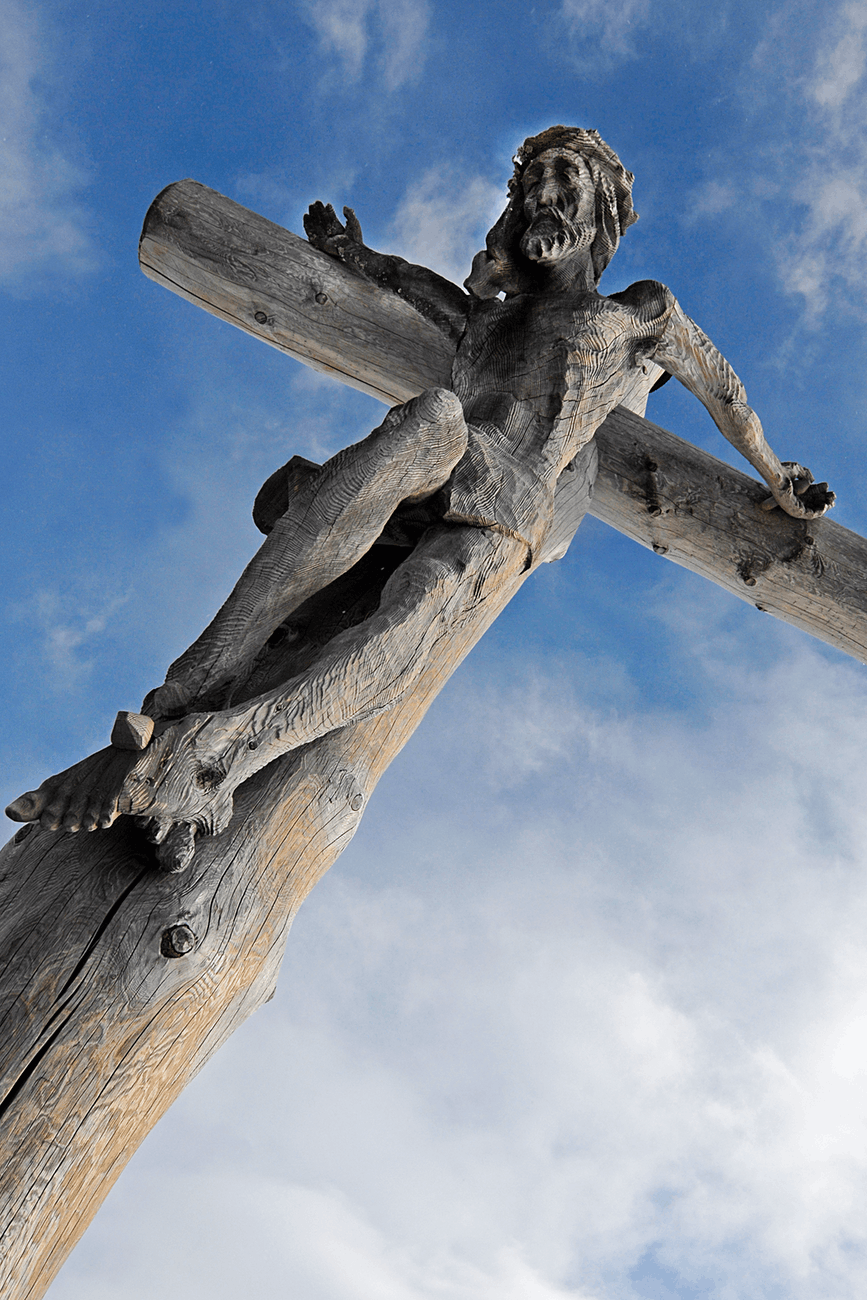
The most common symbol of the Christian religion is the cross.  And, while many statues and necklaces and artistic renderings include a dying Christ figure , the kind you most often see is the empty cross.  On this day between the crucifixion and the resurrection, I want to consider the significance of the empty cross.

  • First, the empty cross reminds us that Christ lived.  In spite of those who continue to challenge the historical evidence, there was a man named Jesus of Nazareth.  He lived in a particular time and place, and he was tried and sentenced to death by crucifixion.  His existence caused the modern Western Calendar to be split into two distinctive parts based on the estimated year of his birth, and his life, death, and resurrection gave rise to a movement that has never been stamped out, equaled, or eclipsed.

pexels-photo-51524.jpeg

  • Second, it reminds us that Christ died.  He was fully human in his capacity to feel pain, rejection, betrayal, hunger, thirst, and grief.  Yet he also experienced joy, companionship, hope, love, compassion, laughter, and growth.  He didn’t just grow old or fade into obscurity.  He didn’t leave his life’s work unfinished, he didn’t compromise or change his message; he didn’t give up or start over with a different “crew.”  Though he never staged a coup, or built up an arsenal, or rose to a seat of power or influence, this homeless, itinerant, soft-spoken rabbi was seen as enough of a threat to the leaders of his time that he was framed, tried and convicted, and sentenced to death.
  • The empty cross also reminds us how he died.  Modern crosses often look imposing and even triumphant, as they tower over a mega church parking lot, or hang on a chain of elegant silver, or stand in rows of chiseled rock in a military cemetery.  “O death, where is your sting?  O grave, where is your victory?”  (I Cor. 15:55)  But the torture before and during the crucifixion were brutal– bones were not broken, but they were pulled out of joint and then forced to bear the full weight of a bloody, swollen and bruised body of ripped muscles and exposed flesh.  Heat caused the salty sweat mixed with blood to drip into his eyes, his open wounds, and around his nose and mouth, but he was unable to wipe any of it away.  Flies gathered; he couldn’t keep them from buzzing or biting.  Each breath was a torturous push and pull of the arms and body upon the nails holding him at an unnatural angle against a wooden bar that rubbed against his already raw back.  And all of this was public; entertainment for the masses of hecklers, and those who were rejoicing in his humiliation and failure.  There was nothing pretty or majestic about the cross on that day.

jesus-cross-summit-cross-37737.png

  • The empty cross reminds us that Jesus was buried and put under Roman guard.  His emaciated, bloody, barely recognizable remains were wrapped up and prepared with spices.  Guards, whose lives depended on this body remaining in the tomb and undisturbed, were posted, and a huge boulder rolled into place to block entry to and exit from the tomb.  Jesus didn’t spontaneously climb down off the cross, or waltz out of an air-conditioned cave.
  • Finally, the empty cross reminds us that Jesus was the Christ–death could not stop him; the grave could not hold him.  His victory was complete.  He didn’t claw his way out of that tomb; he didn’t sneak out in the dead of night; he didn’t hobble into hiding for several weeks because he was only “mostly dead” of his torturous injuries.  He arose, victorious, recognizable to those who knew him best; healed and full of power.

pexels-photo-635699.jpeg

There are hundreds of reasons why we “cherish the Old Rugged Cross.”  And, though the cross stands empty, our reasons are not.  Hallelujah!  Tomorrow, hundreds of millions of Christians will be celebrating the empty tomb.  But for today, I want to celebrate the empty cross.

Why “Good” Friday Matters

Good Friday is a stumbling block for many people who would be Christians.  Some get angered at the mere mention of “Good” Friday.  They see nothing good in it, and no reason to celebrate.  They mock Christian celebrations and practices throughout Holy Week.  They ask, “What could be good about being arrested, beaten, tried in an unfair court, mocked, and condemned to death?”  “What could be good about celebrating someone’s final meal, and following the gruesome details of his humiliating crucifixion?”  “Why remember someone being tortured by his enemies and abandoned and even betrayed by his friends?”  I know someone who uses the crucifixion of Jesus as “proof” that God is neither omnipotent, nor holy.

Yet the Bible chooses to focus time, detailed description, and several varying viewpoints to make this the pivotal event (along with the resurrection) of history.  The Crucifixion does not come as a sudden and inexplicable episode in Jesus’ ministry. He predicts it; not just once, and not just in one account–he doesn’t hint vaguely at some “future trouble,” or potential danger–he gives a detailed description of what will happen to him:

Mark 10:33-34 New American Standard Bible (NASB)

33 saying“Behold, we are going up to Jerusalem, and the Son of Man will be [a]delivered to the chief priests and the scribes; and they will condemn Him to death and will [b]hand Him over to the Gentiles. 34 They will mock Him and spit on Him, and scourge Him and kill Him, and three days later He will rise again.”

Luke 24:6-7 New American Standard Bible (NASB)

He is not here, but He has [a]risen. Remember how He spoke to you while He was still in Galilee, saying that the Son of Man must be delivered into the hands of sinful men, and be crucified, and the third day rise again.”

Why do we need Good Friday?  Why, my acquaintance posits, does a loving God make salvation contingent upon the death of himself in human form?  Is it that God is incapable, or unwilling to offer “unconditional” grace?  After all, does he not offer “unconditional” love?  Why must salvation be achieved only by the unjust death of a perfect being?  Why must reconciliation and new life be forged in suffering and death?

These are not unreasonable questions, but I think they miss the broader picture.  Before the cross, before the scourging and the betrayal, let’s look at the life of Christ.  Jesus, the second person of the Trinity, the author of creation, could have stepped out of Heaven at any moment, and arrived in all his glory, surrounded by angels, to walk in pomp and dignity through the world he created.  He could have swept the entire Roman Empire off the face of the planet, healed every disease with a whisper, and lived in the Temple in Jerusalem as the Ruler he is.   Instead, he came as a helpless child, born to a teenage mom and her fiance during a grueling tax season.  He grew up in relative obscurity, never attended college, and is lost to history until he begins his second career as an itinerant rabbi at age 30.  He never held political office, never owned a home of his own, never wrote a book, or produced a piece of art work, never led an army into battle, never married or had children, never became wealthy, never did anything to make himself famous by worldly standards.  He was not crucified because he posed an actual threat to the Roman occupation of Jerusalem, but because he was accused of blasphemy by not denying claims that he was the promised Messiah of Israel.  His only “claim to fame” was that he was a dynamic teacher and had performed miraculous healings.  By almost every worldly standard, his life was a failure and a lesson in wasted potential.

His death is in keeping with his humble life.  It strikes us as a failure– humiliating, unjust, anti-climactic.  A life of servitude, poverty, being misunderstood, and making all the “wrong” friends and enemies.  Why would God live such a ridiculous and unfulfilling life?  Except he didn’t– it wasn’t a failure; his life and death stand as examples of how to live at peace, and how to change the world!  Hundreds of people flocked to hear him teach; hundreds more to see him heal the sick and raise the dead.  But he never charged a single coin, never demanded accolades or even thanks.

church-window-church-window-stained-glass-46154.jpeg

This is the paradox of the Gospels.  God’s ways are not our ways.  His humiliating death on the cross was necessary for the ultimate triumph of the resurrection, but it was more than that– it was a vindication of justice over injustice and service over selfishness.  Good doesn’t always triumph over evil in a power play.  God has the power to obliterate every one of his enemies, but more often than not, he causes them to fall by their own arrogance and blind ambition.  The Chief Priests, the Roman Soldiers, the agony and torture of death– they were no match for God’s love.

Good Friday showed us that God can ALWAYS make even our most difficult circumstances, even the worst situations, into something VICTORIOUS.  Jesus still had to suffer and die, because we will still have to face betrayal, hatred, injustice, unanswered questions, and even taste death.  An Easter without Good Friday is a happy ending without the story.  Only an omnipotent God could have given us the triumph; only a loving God would have walked the Via Dolorosa to fight in the trenches with us.


Prayers in the Pendulum

I’m late in posting an entry today– it’s been a day of swinging in the pendulum.  Not in a personal sense, but in praying for friends and family.

We all have “pendulum” days (or weeks, or even hours)– times where we are carried, pushed, swung, or banged about by life’s circumstances.  Moments where time stands still– sometimes in astonishing joy, and sometimes in soul–stomping grief.  Then comes the rush of being pulled by forces beyond our control– up, and down, across, and through the arc.  I’ve been hearing from friends all day, sharing those moments, and asking for prayer.  In the space of an hour, I’ve prayed for those who have just lost loved ones– a mother, a sister, a son– and those who are celebrating– an engagement, a birthday, a new home.  I’ve prayed for those whose lives are in the balance– in ICUs and in the womb.  Cancer, anniversaries, new puppies, pneumonia, a new job, a vacation, a car accident…

When we pray for others, we share those joys and heartaches– together, we swing through the arc of tragedy and triumph, even if we don’t all feel the full impact.  We become like the balls on the pendulum swing; absorbing and sharing laughter and tears not fully our own. But by doing so, we provide both energy and equilibrium.  Shared joys are multiplied; shared pain becomes bearable.  Prayer breaks through the isolation or the intensity of the moment, and keeps us grounded, or keeps us from shattering.   It reminds us that even in these defining and refining moments, life is not static.  And the momentum pulses through us in our connectedness.

Yet prayer goes one step further– it brings triumph and tragedy to the God who is above, beyond, around, and amidst the circumstances, the chaos, and the emotional highs and lows.  Our voices, raised together in laughter or grief, exasperation or anticipation, ascend to the one who came and lived and laughed and cried among us– to Jesus, whose arms are fully extended to embrace us wherever we are on the pendulum.

pexels-photo-227390.jpeg

Blog at WordPress.com.

Up ↑