Today, my husband was finally able to get out and go to the grocery. He saw that they were unloading some herbs, already started and ready to plant. It got me thinking about various herbs and their symbolism. What we plant in our garden; what we use in our cooking; how we “season” our prayer life– it all makes a difference. So here are some tips for “seasoning” our prayers…Make sure to add:
Rosemary– for remembrance. Remember and worship God for who He is. Remember His past goodness. Remember His faithfulness. Remember His Great Love. Remember that He sees and hears you; He knows you intimately, and loves you eternally.
Sage– for wisdom. Ask for it. God longs to give you stores of wisdom and guidance. He longs for you to seek His wisdom every day.
Fennel– for praiseworthiness. God is worthy of all our praise and worship. Prayer is just one way of expressing His worthiness and glory!
Mustard seed– for faith. Faith grows exponentially larger and stronger when it is tended. One seed of faith can produce a large plant, which in turn produced hundreds of new seeds. Don’t let the weight of doubt crush that little seed–it really is enough! Not because of the size of your faith, but because of the size of the One in whom it rests.
Horseradish/radishes– for bitterness and contrition. A Holy God can only be approached by those whose sins have been forgiven. God offers mercy and grace in abundance– for those who acknowledge their sin and wish to be restored in Grace. Confession and repentance should be a regular part of our prayer life… and this leads to..
Hyssop– for cleansing. King David prayed: “Cleanse me with hyssop, and I will be clean; wash me, and I will be whiter than snow…Create in me a pure heart, O God, and renew a steadfast spirit within me.” (Psalm 51: 7, 10) May we seek to have a pure heart and a steadfast spirit. And as we are cleansed, we will have…
Parsley– for gratitude and joy. Parsley brightens and garnishes; it brings a finishing touch and its bright green color suggests growth and abundance. Prayer should result in thankfulness and rejoicing as we enter into the very presence of the Giver of All Life.
Thyme–for, well, time. Take time every day to meet with God. Make both “quality time” and “quantity time” when you can, knowing that God wants to be part of your day, all day, every day.
Chives– for usefulness and peace. Chives add flavor and balance when used in cooking. Bring your daily tasks, your goals, even your everyday worries to God in prayer. Pray as you work, as you run, as you do useful things throughout the day. This will lead to peace and purpose.
Garlic– for strength and healing. Especially in times when people are experiencing sickness and confusion, prayer brings strength. As we pray for healing– physical, emotional, and spiritual– we cast our cares upon a Loving and Omnipotent God.
But then, he does three important things: He recounts what he knows of God’s character, he waits, and he hopes.
Sometimes, when I cry out to God, I expect God to reveal Himself to me with an immediate and positive answer. And, occasionally, God does answer prayer with a dramatic and instant result. But most of the time, God answers first with silence. Not because He is cruel or uninterested or too busy to acknowledge my cry. He gives me time to reflect– on His nature, and the nature of my need. And He gives me time to find peace and trust in the middle of the storm.
I spent much of yesterday crying out– I am frustrated with the uncertainty surrounding COVID-19. I am angry at the misinformation and conflicting reports; I don’t know what to believe about staying put or venturing out–is it allowed? Is it safe if I wear a mask? Can I go to the park or beach? When can I re-open my shop? Can I make the payments until it can be re-opened? When can I safely see my family and friends again? Will it be safe to hug them? And I am frustrated with the way I see people treating each other– yelling, screaming, eager to condemn everyone else’s behavior while justifying their own. And I find myself saying and doing the same thing from the relative safety of my computer screen– after all, I can’t yell at anyone to their face if I can’t leave the house, right? But I can let my 300 closest friends know how heartless and selfish they are if they don’t see things my way! They’re KILLING people! They’re betraying family members! They’re living in fear! They have no compassion! And I cannot make them do what I think is right!
But when I stop the crying and carrying on, and justifying, and finger-pointing; when I stop to remember who God is, and who I am, I remember that God IS attentive. And not just to my frustration, but to everyone’s needs– the person who is living in terror; the person who is suffering pain, grief, agony, and loss; the person who is defiant and uncaring and angry. God is attentive, but He is also overflowing with mercy. If He kept records– if He only looked upon mankind to find evidence of our guilt or to pour out shame and punishment– who could stand? Who would have the authority to tell God how He should direct the universe? Who could say that they were more capable of dispensing life and death, health and sickness, mercy and justice? Would I? It is no little thing to cry out to the God of the universe. And yet, God listens attentively to our every cry. Especially when we cry out to Him for mercy, for wisdom, for peace, and for healing. His answer may not look like what we expect, but He never fails to listen in Love.
And as I contemplate God’s power, wisdom, compassion, grace, and authority, I can wait. And that doesn’t mean that I sit in a lotus position and stop seeing the pain and chaos and death. Or that I count to ten and hold my breath. Or that I set a timer and think happy thoughts for 20 minutes. No. I wait like a watchman– like a sentry waiting for whatever may happen– alert and ready to do my duty. And I wait like a watchman for the dawn– for the light of day to see clearly; for the end of my watch, when there will be rest.
This season is difficult, but it will end. It will give way to a new dawn– with new challenges! But just as the Psalmist tells Israel, I know I can put my hope in the Lord, for “with the Lord is unfailing love and with him is full redemption (v. 7). If I cry out, knowing that God is willing to listen and able to save, but I don’t stand firm in hope, I can still be swept away by the winds of doubt and the current of angst.
Psalm 23:6– And I will dwell in the house of the Lord, forever.
Forever is a concept we acknowledge, but we don’t fully understand. We talk about difficult circumstances, like the current pandemic, lasting “forever.” But they won’t. Such circumstances may last longer than we would like; they may be more difficult than anticipate; they may bring more pain and grief than we think we can bear, but they will pass. Even if they last throughout our lifetime, they will not continue indefinitely.
But God IS forever– He is eternal. And He has created US to be eternal– to live with Him (or apart from Him) FOREVER! Our experience does not prepare us fully for this reality– we only know an existence that is limited by time and space. But deep within, we have an awareness that there is MORE– more than our brief time here; more than the difficulty and disappointment we experience. God has planted this awareness in each of us; this desire to know what comes “after” death; what “forever” really means.
And that should give us abundant hope and comfort in times like these. What we face today is temporary. This is the “valley of the shadow of death.” We cannot see what is directly in front of us. It continues to bring anxiety and pain, and even death. But, death is not the end. It is only a shadow hiding the light of Eternity. And “Forever” cannot terrify us; it cannot hold terror for those who belong to the one who holds forever in His hands!
Someday, we will not need calendars. We will not need to worry about next week, or our 5-year plan, or deadlines. We will have unlimited opportunities, unlimited possibilities, unlimited life with the source of all good things!
“Surely you can’t be serious, doctor.” “I’m very serious. And stop calling me Shirley.”
Classic comedy makes use of the English word, surely, but the word has a very serious and powerful meaning. It means that whatever follows is for sure, certain, true, positive, undeniable, and guaranteed. In Psalm 23, David, the shepherd-king, is building to a triumphant conclusion. “Surely, goodness and mercy shall follow me all the days of my life…” This is not wishful thinking or a faint hope. It is certain and expected that he will see goodness and mercy for the rest of his days. Are you living in that mind-set? Do you expect to see goodness and mercy every day? Do I?
And David is very particular about his words. Goodness and Mercy WILL follow Him, because He is constantly surrounded by his Good Shepherd, who embodies goodness and mercy. David did not say that health, wealth, comfort, popularity, power, or worldly success would follow him. He did not say that happiness, confidence, self-esteem, or even peace of mind would be his constant companions. But goodness and mercy will never be absent if we are in the presence of God. Because they are part of God’s character, they cannot be absent where He is present.
More than that, the word for “follow” here means that goodness and mercy are not just “tagging along” like an annoying younger sibling, or following at a polite distance. They are chasing after, in pursuit, even stalking us! God will chase after us, track us down, and surround us with His goodness! He will lavish His mercy on us– no matter how far we try to run and hide from it.
I’ve spent the past few days revisiting one of my favorite movies, The Princess Bride. The movie is based on a “fractured” fairy tale, written by William Goldman. In it, a spoiled young farm girl falls in love with a lowly farm hand. When he leaves to make his fortune, the girl promises to wait for his return. When word comes back that he has been killed, she swears that she will never love again, and becomes a pawn of a wicked prince.
** SPOILER ALERT**
Of course, her true love, Westley, has not been killed, and when he finally finds Buttercup, she has agreed to marry the wicked prince, who has had her kidnapped and plans to kill her. “Why didn’t you wait for me?, ” Westley asks. “Well..you were dead,” replies Buttercup. “Death cannot stop true love. All it can do is delay it a while, ” says the intrepid Westley, to which Buttercup replies, “I will never doubt again.”
In true fairy-tale fashion, Westley and Buttercup must face many obstacles, including all the dangers of the “fire swamp,”capture, torture, a fake marriage ceremony, and Westley being “mostly dead”– again– before they can have their happy ending. But in the end, “true love” wins over all trials and obstacles, and Westley and Buttercup “live happily ever after.”
We live in a post-modern age, where people tend to sneer at notions like fairy tales, true love, and “happily ever after.” We are more likely to echo the words of the bitter Dread Pirate Roberts, who tells Princess Buttercup that “life is pain, highness, and anyone who tells you differently is selling something.” Ironically, the Dread Pirate Roberts is really Westley in disguise. His life is filled with painful trials, and “inconceivable” obstacles, but he perseveres, and his “happily ever after” makes all that came before fade from memory. Because, in the end, death CANNOT stop true love. It may take a few miracles, and lots of patience, forgiveness, and faith, but true love “bears all things, believes all things, hopes all things, endures all things” (1 Corinthians 13:7 ESV)
God’s love is true– it is sure and enduring. God’s presence goes with us even into the valley of the shadow of death–even if the shadows and darkness block our sight; even if death seems sure to win. His rod and staff are not tools of torture and dread, but reminders that He is there to guide us, even if we cannot see His face in the gloom.
Life is filled with pain–and Westley was right; anyone who tells you differently is selling you something. God doesn’t promise that our path will always be on smooth ground in sunny pastures. We may face separation from loved ones, flame spurts and quicksand, betrayal by friends, battles with giants, wicked rulers, even rodents of unusual size. But in each of these situations, we have God’s very presence to comfort us and help us endure to the end. And the “happily ever after?” It is eternal and glorious like nothing we have ever known or even imagined.
Fairy tales are not real– but God’s word is. The very reason such tales and myths and legends endure is because they echo what we know to be true– Truth, and Love, and Justice, and Honor, and Hope, and Faith–they are eternally enduring and strong. We recognize the truth that “Death cannot stop true love– all it can do is delay it for a while.” https://www.biblegateway.com/passage/?search=Romans+8%3A31-39&version=ESV
I’m continuing to explore the life of Lot in the Biblical story of Genesis. Lot, the nephew of the Biblical patriarch, Abraham, chose to live near, and then in, the wicked city of Sodom. His circumstances have made him wealthy, but they have also made him a pawn and a victim of greed and war all around.
When we left Lot (see Friday’s entry), he had been rescued by his uncle Abram (later renamed Abraham), along with all his possessions, after being kidnapped from Sodom. This might have been a good time for him to move on with his life, make a fresh start, and get away from the wars and wickedness surrounding him. But he didn’t. Nor does he seem to have had any kind of positive impact on his neighbors and friends. The Bible doesn’t mention whether or not Lot joined in any of the wicked behavior of his fellow Sodomites, but he seems to have turned a (mostly) blind eye to it.
The Biblical narrative leaves Lot for a few chapters, to concentrate on the life of Abraham, the changing of Abram’s name to Abraham, the birth of his son, Ishmael, and the promised coming of Isaac. But at the end of chapter 18, the LORD speaks to Abraham about the impending destruction of the cities of Sodom and Gomorrah:
17 The LORD said, shall I hide from Abraham what I am about to do, 18 seeing that Abraham shall surely become a great and mighty nation, and all the nations of the earth shall be blessed in him? 19 For I have chosen him, that he may command his children and his household after him to keep the way of the LORD by doing righteousness and justice, so that the LORD may bring to Abraham what he has promised him.” 20 Then the LORD said, “Because the outcry against Sodom and Gomorrah is great and their sin is very grave, 21 I will go down to see whether they have done altogether according to the outcry that has come to me. And if not, I will know.” 22 So the men turned from there and went toward Sodom, but Abraham still stood before the LORD. 23 Then Abraham drew near and said, “Will you indeed sweep away the righteous with the wicked? 24 Suppose there are fifty righteous within the city. Will you then sweep away the place and not spare it for the fifty righteous who are in it? 25 Far be it from you to do such a thing, to put the righteous to death with the wicked, so that the righteous fare as the wicked! Far be that from you! Shall not the Judge of all the earth do what is just?” 26 And the LORD said, “If I find at Sodom fifty righteous in the city, I will spare the whole place for their sake.” 27 Abraham answered and said, “Behold, I have undertaken to speak to the Lord, I who am but dust and ashes. 28 Suppose five of the fifty righteous are lacking. Will you destroy the whole city for lack of five?” And he said, “I will not destroy it if I find forty-five there.” 29 Again he spoke to him and said, “Suppose forty are found there.” He answered, “For the sake of forty I will not do it.” 30 Then he said, “Oh let not the Lord be angry, and I will speak. Suppose thirty are found there.” He answered, “I will not do it, if I find ththirty there.” 31 He said, “Behold, I have undertaken to speak to the Lord. Suppose twenty are found there.” He answered, “For the sake of twenty I will not destroy it.” 32 Then he said, “Oh let not the Lord be angry, and I will speak again but this once. Suppose ten are found there.” He answered, “For the sake of ten I will not destroy it.” 33 And the LORD went his way, when he had finished speaking to Abraham, and Abraham returned to his place.
The Bible is not explicit in describing the evil that occurred in Sodom and Gomorrah. But two things stand out in this passage. The LORD speaks of “the outcry” against these two cities and the gravity of their “sin.” Some people have suggested that there is a single egregious sin– “sodomy”– that roused God’s especial judgment. Certainly, in chapter 19 (https://www.biblegateway.com/passage/?search=Genesis+19&version=NIV) the men of the city demand that Lot’s “guests” be brought out so they can have sex with them. Lot offers his virgin daughters, but the men refuse and become so violent that the “guests” have to intervene. However, a parallel story is reported later in the Old Testament, this time in the city of Gibeah in the region of Benjamin. (https://www.biblegateway.com/passage/?search=Judges+19&version=NIV) And, while judgment is delivered to the city, it is not singled out for especial judgment by fire from heaven.
Whatever the evil in Sodom, it included rape, sodomy, and likely human trafficking and human sacrifice (see the end of Genesis 14, where the king of Sodom offers Abram all the material spoils of war, in exchange for all the people). It was not just the evil of sexual promiscuity or occasional violent practices, but something that caused an enormous “outcry” from victims, and possibly even angelic messengers reporting on the level of depravity, destruction, and oppression involved. Yet Lot lived there for years, raising his family, going about his business, and ignoring or excusing the evil all around him. There is no record of him making any positive difference, any positive contribution; no record of Lot doing anything to stand out from among his neighbors.
And when judgment comes, it is swift and terrible. The Angelic messengers must drag Lot and his family away from their home and possessions. They urge him to flee into the mountains, but he balks and asks to be allowed to flee to the small town at the edge of the destruction. (More about this at a later time…) Lot has lost almost everything of value– he ends up bankrupt; materially, and spiritually. Lot is a vacant shell of a man–fearful and snivelling, weak and empty.
What evil occurs in our neighborhoods today? What are we doing to alleviate it? Combat it? Excuse it? Enable it? If God were to bring judgment to our city or country, would He have to send angels to drag us out of the fire? Would he find even 10 righteous people on our block? In our apartment complex? God didn’t find 10 righteous people in Sodom…In fact, the Bible doesn’t say that he found ANY! Lot and his daughters were spared, but the stench of Sodom and Gomorrah lingered in this family to their ruin.
Lot’s legacy is one of emptiness, loss, and depravity. But there is one bright spot, which we’ll look at next time. God is slow to anger, and rich in mercy. His redemptive plan will include even Lot with all his flaws and weakness. And it extends to each of us, regardless of where we’ve lived, or what we’ve experienced. God didn’t find any righteous people in Sodom; He knew He wouldn’t! More than once the Bible tells us “there is no one righteous; not even one; there is no one who understands; there is no one who seeks God. All have turned away, they have together become worthless; there is no one who does good, not even one.” (Romans 3:10-12; Psalms 14:1-3, others…) God’s plan is not to find people who are already righteous– His plan is to rescue people like Lot; people like US! And His plan is to include us in the rescue effort, too.
The character of Lot in the Biblical book of Genesis is one that often gets overlooked in favor of his uncle, Abram/Abraham. Yet Lot lingers in the background, following Abram to Canaan, and later to the area between Bethel and Ai. (See the end of Genesis 11 and the beginning Genesis 13.) Curiously, we don’t hear anything of Lot when Abram and Sarai travel to Egypt during a period of famine. He isn’t there to support his uncle, or share his burden. He isn’t there to alleviate any of Abram’s fears relating to Sarai (See Genesis 12). Abram resorts to lying about his relationship, and causing difficulties with Pharaoh, but there is no mention of Lot until Abram and Sarai return from Egypt. Lot rejoins his uncle and they move into a fertile region– so fertile, in fact, that their flocks and herds soon grow too big for the area.
At the beginning of Genesis 13, things have come to a crisis point. Abram, as the elder, could have used his age and position to demand the best grazing land and force Lot to fend for himself elsewhere. But he doesn’t. God has already promised that Abram and he will become a great nation and own the land of Canaan. Abram, in faith, tells Lot that he can have his choice of the land– anywhere he goes, Abram will pull back and take the leftovers.
It must have felt like winning a prize–being given carte blanche– first dibs on the best land in the region, while your elder agrees to give you even more space to expand. And Lot makes the most of this golden opportunity. He chooses the best land in the area– well watered, green, and near wealthy centers of commerce and culture–what could go wrong?
Before we explore the answer to that question, let’s stop and consider Lot’s character and choice in comparison to his uncle’s character and offer.
Abram reveals much of his character in a pattern of “calling on the Lord.” He does it in Genesis 12:7, 13:4, and again after the separation from Lot in Genesis 13:18, where he built an altar. There is no mention of Lot ever calling on the Lord for anything. Not to seek His face, or give Him praise, or memorialize an event. Lot is not a giver– he is a taker. He takes advantage of his uncle’s wealth and standing time after time, but we never see him thanking his uncle or showing deference to him as an elder. This is not to say that Lot never showed gratitude or deference, but he seems not to have made a habit of it. In taking the best land for himself, Lot acted with supreme self-interest. He could have sought out good land elsewhere, leaving his older uncle in possession of good land close by. He could have taken time to consider more than just the obvious good points of the land he chose. But he didn’t. He jumped at what looked like an amazing stroke of luck. But in the end it turned out to be more of a curse than a blessing.
How often am I like Lot? When have I jumped at the chance to take the “easy” path, never bothering to consider how it impacts others? Have I developed the bad habit of taking “good fortune” for granted? Do I thank God, and those who have poured into my life, for their care and help? Am I dependable– am I “there” for my friends and family in good times and in times of famine, hardship, or pain?
Lord, help me to learn these lessons from your word. Help me to be more like Abram, and less like Lot as I go through the day and week ahead. And Thank You for Your character of faithfulness and grace, that chose to rescue Lot (twice!) in spite of his selfish choices. Help me to show the same grace to others I encounter.
I spent part of last year taking a closer look at some of the figures of the Old Testament. This week, I’d like to take a closer look at one of the lesser figures of Genesis: Abraham’s nephew, Lot.
We tend to focus on the teachings of Jesus, and the writings of the apostles in the New Testament. We should. But we should not neglect the lessons to be found in these ancient stories. They have a “lot” to teach us about human nature, and about God’s response to it. They are rich with characters, patterns, metaphors, and foreshadowing.
We first meet the character of Lot, along with his family, at the end of Genesis 11: 27 This is the account of Terah’s family line. Terah became the father of Abram, Nahor and Haran. And Haran became the father of Lot. 28 While his father Terah was still alive, Haran died in Ur of the Chaldeans, in the land of his birth. 29 Abram and Nahor both married. The name of Abram’s wife was Sarai, and the name of Nahor’s wife was Milkah; she was the daughter of Haran, the father of both Milkah and Iskah. 30 Now Sarai was childless because she was not able to conceive. 31 Terah took his son Abram, his grandson Lot son of Haran, and his daughter-in-law Sarai, the wife of his son Abram, and together they set out from Ur of the Chaldeans to go to Canaan. But when they came to Harran, they settled there. 32 Terah lived 205 years, and he died in Harran. (Genesis 11:27-32 NIV, taken from http://www.biblegateway.com)
When I was reading this passage the other day, I was struck by something I never noticed before, and have never heard in any sermon or Bible study–Lot’s mother is never mentioned, and there is a strong implication that Lot’s parents were never married. The text merely says that Haran became the father of Lot, and that he died. The next sentence, however, says that both his uncles married– and it names their wives. The Bible does not state explicitly that Lot was illegitimate, or that he never knew his mother, but if that is the case, it makes certain things about his life stand in sharp contrast. And, though it says Haran died while his father was still alive, we don’t know how long he was a part of his son’s life. Lot is part of a family, but his position is not well-defined. He is a grandson, and a nephew, but he has no parents or siblings, and he is not adopted or named as an heir by either of his uncles. (Even before Abraham becomes a father, his “heir” is a servant named Eliezer of Damascus, not his nephew– see Genesis 15:1-3) He travels with his grandfather, and then “moves about” with Abraham (Genesis 13), but doesn’t seem to be a part of Abraham’s household. Instead, he is raised by his grandfather, who seems to have given him his father’s portion of the inheritance. Lot isn’t abandoned by his father’s family, but he is not embraced, either.
Lot seems almost to be included in this family history by chance. And, indeed, his name connotes chance and happenstance. People cast lots, play the lottery, and talk about their “lot in life.” Lot, much like his name, seems to depend on chance as he travels through life. His birth is mysterious and obscure, but he has connections to a great and wealthy family. He has great success in building his flocks and herds, enough that the “land could not not support (he and Abraham) while they stayed together” (Genesis 13:6a), but he doesn’t seem to be able to stay out of trouble. He gets used as a pawn in a territorial war (Genesis 14), and must be rescued by his uncle, only to return to the wicked city of Sodom. Angels must drag him out of the city to rescue him again, when God decides to destroy both Sodom and Gomorrah for their wickedness. Bitter and pouting, Lot becomes a pawn for his own daughters in the aftermath of his rescue, ending his days as a footnote in history, as the ancestor of two of Israel’s fiercest enemies– the Moabites and Ammonites.
Why is the story of Lot woven into the chronicles of Abraham? What can we learn from his character and life story? How does Lot play a part in the genealogy of Jesus?
I’ve challenged myself to learn more–may I pray that you might do the same? Nothing about Lot’s story is written without some purpose–let’s search out what a “lot” God has to share with us in the life of this one man.
I generally write on Monday, Wednesday, and Friday each week. I missed Friday of last week and Monday of this week. I got busy with holidays and housework and mundane things. I was not faithful in my writing.
God is never unfaithful. There is never a day when the sun doesn’t rise, when the ocean waves don’t roll, when gravity suddenly stops, or when God stops answering prayer.
There may be days when we don’t “see” God, or feel His presence; days when we don’t understand the way He works or why He chooses to answer, “No,” to our heart’s desire. But there is never a time when He simply stops caring, or takes His hand away from creation or removes Himself from all contact, leaving us alone and without hope.
Jesus said, “I am the way, and the truth, and the life…” (John 14:6 a) and the writer of Hebrews said, “Jesus Christ is the same yesterday, and today, yes, and forever.” (Heb. 13:8) We never have to worry or wonder about God’s Spirit leaving us, or disappearing; we don’t have to consider that God will suddenly change His character or that His love will grow cold.
People will ultimately disappoint us–in small or big ways, or at surprising moments–not always because they are vicious or unfeeling. Most of the time, they will let us down because not one of us is perfect. We get tired, cranky, sick, or forgetful. We get delayed, distracted, or depressed. But God is Love, and “Love never fails” (1 Cor. 13:8a). God is sovereign and eternally unchanging.
So even when I fall short, I can call out to God for forgiveness, and strength to begin again. I can come to Him in confidence, assurance, and hope, knowing that His Grace is boundless, His love is limitless, and His arms are always open wide to receive me. All I have to do is run to Him and accept Him for who He is– My Faithful Redeemer, My Lord, and My Heavenly Father.
Yesterday, in our Bible Fellowship class at church, we continued our series on a Christian view of “Hot” topics: we focused on Environmental issues.
“In the beginning, God created the heavens and the Earth.” (Genesis 1:1) “The earth is the Lord’s, and the fullness thereof; the world, and they that dwell therein.” (Psalm 24:1) KJV
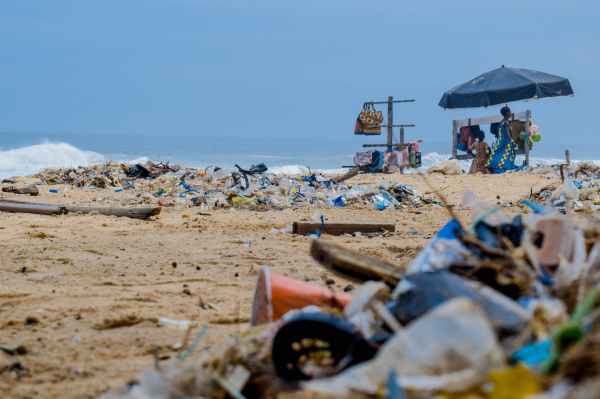
Our environment can become a politically and emotionally charged subject. How should we as Christians, view our environment, our environmental impact, and our attitudes toward dire reports about climate change, extinction rates, emissions, pollution, habitat reduction, natural resources, and energy needs?
The Bible gives us guidelines, warnings, and even hope!
Ultimately, the fate of the world does not rest on my shoulders, or yours, or our generation’s…This is MY FATHER’S world. He created it, He inhabits it, and He has a plan for it. That does not give me an excuse to ignore the problems facing our planet. It does not give me the right or the privilege of passing the problems along to someone else, where action can and should be taken. But it does remind me that God has not left us alone and helpless to stop an environmental apocalypse left to us by previous generations and accelerated by our own.
GOD created the heavens and the Earth. God, who knows the end from the beginning. God designed our planet, our atmosphere, our universe. What even the best of our scientists know about our planet is infinitely smaller than what God knows, and what even the boldest plans of man propose are nothing to the power of God to heal and restore. That doesn’t mean we don’t need to be concerned about things that are happening– but we can’t let our concerns turn to despair and doubt. When the nation of Israel first entered the promised land, God gave them a list of blessings and curses. (Deuteronomy, chapter 28) If they obeyed, they would be blessed. If they were disobedient, they would be cursed. Many of these blessings and curses relate directly to the land and weather. God is still in control of nature, but this leads me to…
God gave stewardship of the Earth to mankind. We are to be the daily caretakers of God’s Earth. That there are so many problems with our environment shows that mankind as a whole has failed to obey God in this matter. We are not under the direct blessings and curses that came to Israel in the promised land, but there is still a correlation–as Sin proliferates, so does death and destruction– including that of the world around us. That doesn’t give me the right to point the finger at others and justify my own disobedience because “at least I don’t…,” or “at least I do…” God expects me to act in ways that protect, preserve, or develop the environment to benefit those around me and give glory to Him. This includes the way I interact with the land, water, air, plants, animals, and other people. It includes the actions I take to destroy harmful plants and animals; to protect the soil and water; to dispose of waste; to eat; to build, or heat, or cool buildings; what I eat and drink and wear. It even includes being informed about second-hand resources that I buy and use, and whether or not those resources are being stewarded well by others. This doesn’t mean becoming an environmental Pharisee– publicly calling out all my neighbors who still use plastic bags or buy products from “that” company. And it doesn’t mean I must become a vegan, or a homesteader or give up my computer or cell phone. But what can I do to become a better steward?
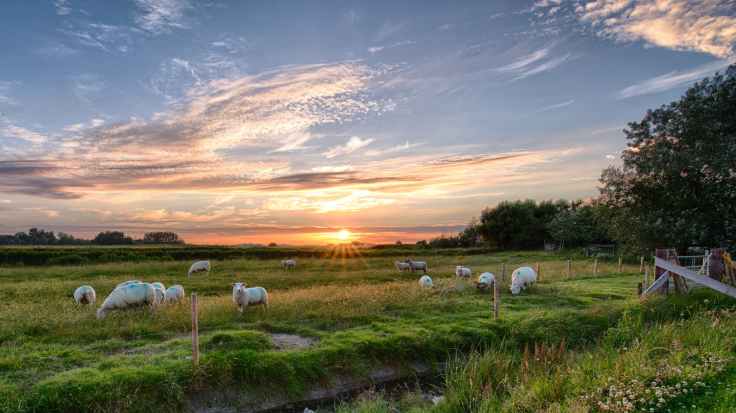
Is it possible that my attitude toward the environment is coming from a lack of exposure to both the environment itself and its maker? Am I spending more time reading about climate change than I am spending in the climate itself? Have I thanked God for the world He created? Do I take the time to notice the beauty in a blade of grass, or the colors in a sunset, or the mystery of running water, and marvel at God’s handiwork? How would my view of Nature change if I developed my relationship with its maker?
Lastly, I need to engage with others to find ways we all can become better stewards– not (necessarily) by bashing people over the head with statistics and mandates, but getting the facts– not just the hype or the denials–and sharing practical ideas.
I don’t have to save the world– that is God’s job; He’s the only one who can. But I CAN do my part to protect, preserve, develop, and enjoy all the beauty He created. And in doing so, I pray that I can help others see the One who loved us all enough to create such a beautiful home!



























 Pursuing Prayer