A “Lot” to Learn

I learned a “lot” studying the character of Abraham’s nephew, Lot. (Read Genesis 13, 14, and 19) Today, I want to summarize…

  • Our lives depend on choices, rather than chances…Lot experienced many opportunities and some tragedies beyond his control. But even when God gave Lot some amazing opportunities– even when He offered miraculous rescue–Lot continued to make bad decisions or no decision at all. When have I done the same? Do I wait for chance and circumstance to find me? Do I drift along without making wise choices, allowing life to carry me to my next destination? Or do I seek God–His wisdom, His Word, His provision–and choose to obey Him?
  • Not making a choice IS making a choice…Lot chose to live outside of Sodom– but he ended up in the city. Lot spent much of his time NOT making decisions or plans. He chose inactivity, chose to be vulnerable to attack, chose to live in a city so wicked it was doomed to destruction, chose to compromise and bargain with his wicked neighbors, chose to drag his feet (literally) about leaving, chose to let his daughters control his destiny and legacy. How often do I pray for God to direct my steps and guide my life, and then sit on the couch doing nothing? Lot’s story doesn’t include a single instance of Lot taking initiative. He simple reacts to, takes advantage of, or accepts whatever opportunities or misfortunes befall him. And he doesn’t see his inactivity as a sin or rebellion against God. But he never CHOOSES to follow God; to seek Him or obey him. He assumes that not choosing active rebellion and evil is enough. Have I done the same? Do I think that because I am not actively involved in wickedness that I am honoring God with my inaction and apathy?
  • You cannot live surrounded by evil and not be hurt by it. Ignoring the warning signs, tolerating evil because it becomes familiar, turning a blind eye to the ways others are being hurt–if we are not part of a solution, we are part of the problem. Lot had options– he could have moved away from Sodom; he could have stayed outside the city; he could have spoken up about the evil all around him–he did none of those things. He lived a compromised life; a life in denial. What have I done to flee evil? To speak out against injustice and oppression? To stand up for what is right? When have I winked at evil, or turned a blind eye to wickedness? How often have I sat in uncomfortable silence while someone else suffered? Because “it’s not my problem.” “One voice won’t make a difference.” “It’s just the way they are.” “I don’t want to offend anyone by getting involved. It’s none of my business, anyway.” Lot and his family suffered greatly, even as they tried to “coexist” with their wicked neighbors.

That’s a lot to consider in the life of one man. But more importantly, there are a “lot” of things to learn about the character of God in this story:

  • God sees us. God included Lot in the larger story of Abraham– He gave an orphaned boy a family, a fortune, and a future. Lot had done nothing to “earn” God’s protection or favor. He certainly did nothing to deserve being rescued– twice– and he did nothing to show gratitude for either rescue. But God didn’t make a mistake in showing Lot mercy. God wasn’t surprised by Lot’s life choices– He didn’t “fail” Lot, and He didn’t forget about Him– even after generations.
  • God is a judge. We like to concentrate on God’s mercy and blessings, but God’s goodness requires that sin, wickedness, and evil be punished. God doesn’t delight in punishment, but He will not forget the cries of the oppressed. Those who practice evil and seem to “get away with it” will face judgment. If they do not seek God’s forgiveness, they will be destroyed. The cities of Sodom and Gomorrah were destroyed by supernatural fire; Lot was destroyed by his own fears and compromises.
  • God is merciful. God destroyed Sodom and Gomorrah, but He was willing to save the cities for the sake of as few as ten “righteous” people. We know that “There is no one righteous, not even one..” (Romans 3:10), but God thoughtfully listened to Abraham, and promised to seek for anyone who could be considered worthy of saving. That He saved only Lot and his small family was for Abraham’s sake, not Lot’s– yet save them He did. God doesn’t save the “deserving”– He saves the lost!
  • God’s plans are perfect, detailed, and eternal. God saved the unworthy Lot, and even when his family repaid God’s mercy with incest, violence, and wickedness against Israel, God orchestrated the story of Ruth– a story of love, faithfulness, and redemption pulled from the ashes of this tragic story in Genesis. God has a plan for each of us– He already knows if we will participate eagerly in a story of beauty and blessing, or be dragged through a story of compromise and tragedy. But ultimately, our story will be woven into a tapestry of God’s faithfulness, righteousness, and restoration. How we respond will change our life, and potentially, the lives of generations to come. And God will give us opportunities to choose lives of obedience, wisdom, and faith. No matter if we live in Sodom, or wasted earlier chances, we can choose rescue and redemption because of God’s great love and mercy!

The Bible never records a prayer by Lot– whether he DID pray is a matter of speculation. But it seems clear that Lot did not seek God in any meaningful way– he didn’t obey God, he didn’t honor God, he didn’t walk with God as his uncle did. Abraham’s life wasn’t perfect– he lied about his wife, became impatient for God’s promised son and took matters into his own hands– but Abraham learned from his mistakes. He humbled himself, looked to God for wisdom, and trusted Him for the next step. He honored God, built altars, and called on the Name of the Lord. May we call out to the same God of Abraham for guidance and wisdom today.

The Value of a Life

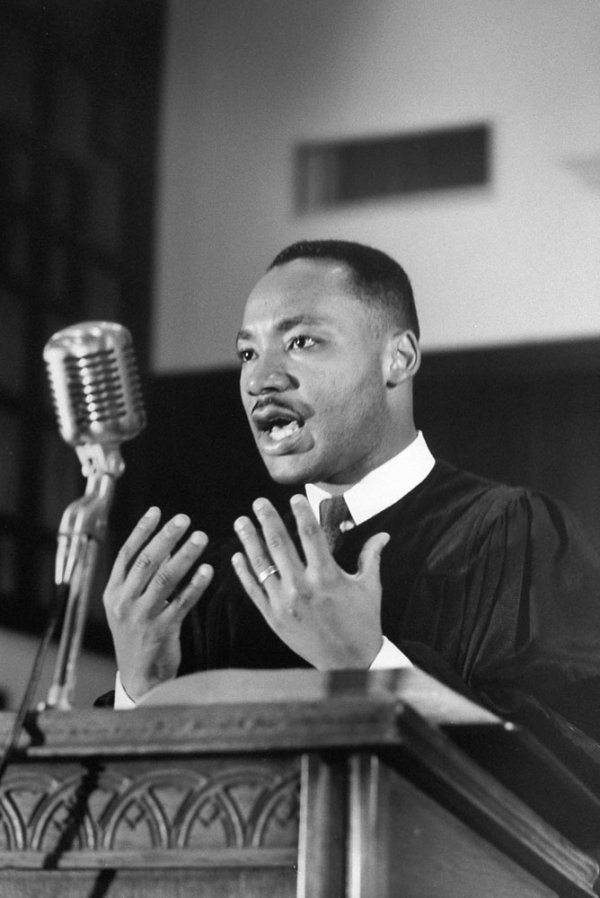
Today in America, we celebrate the life of Dr. Martin Luther King, Jr. Dr. King was a minister, a brilliant writer and student of theology, a leader in the Civil Rights movement of the late 1950s and early 1960s, a noted speaker, and man who arguably made a difference in the world. Dr. King was murdered in 1968, at the age of only 39, leaving a family and a nation devastated by his loss.

Next Monday, we will observe the 51st anniversary of the Supreme Court decision Roe v Wade, in which nine judges effectively legalized abortion in the U.S. for over half a century. Even though this decision has been overturned, many states, using the precedent of Roe v Wade, have changed their state laws to allow for abortion. In many states, it is now legal to abort a child right up to the moment of birth!

What is the value of a single life? Who gets to decide that they have the right to take another person’s life– whether by assassination, capital punishment, abortion, murder, or euthanasia?

It is a question that our society has struggled with for centuries. Who can give life? Who can take life? Who can determine the conditions of another person’s existence? And, for those who live, what is the “value” of their life–to their family, to their neighborhood, to their nation, or to history? Who gets to set the standard of what constitutes a “worthwhile” life or the “quality” of life for someone else? For themselves?

I’ve been reading through the book of Genesis this month, and, according to the Bible, this subject is as old as human life on earth. Cain decided that Abel’s life was expendable, so he killed him– the first murder. The people of Sodom and Gomorrah felt they had the right to enslave and rape anyone they wanted to. Joseph’s brothers plotted to kill him, before selling him into slavery, instead.

The Bible doesn’t hide this history, nor does it sugar-coat the actions of those featured in its pages. But, the Bible offers us a clear picture of WHO gives life, and WHO has the authority to decide what life is worth. God alone has this authority. It is God alone who can create and sustain life. Mankind has the choice– to protect life or destroy it; to treat life with respect or with disdain; to honor the Giver of Life, or to rebel against Him.

All the atrocities of the Old Testament lead to the ultimate decision on the value of a single life. Jesus lived a simple, ordinary human life. He lived with compassion, with purpose, and with humility. And He was willing to GIVE His life to atone for all the murders, all the abortions, all the slavery, all the injustices in history, so that WE could enjoy abundant, eternal life with Him. By looking to this singular life, and trusting in the power of His death and resurrection, we can choose to honor all life. We can make a difference. We can live with purpose and joy.

Dr. King’s legacy is one of honoring life, and pointing out the evils of those who seek to devalue the lives of others based on the color of their skin. Abortion’s legacy is one of destroying life, and promoting those who devalue the rights of the helpless.

The choice is still before us. How will we determine the value of a single life in the coming week? How will be add value to life on earth? How will we live for more than just the moment?

More Jesus, Less Me?

Last week, I saw numerous posts with New Year’s resolutions, promises, and goals. One that I saw repeated often was the phrase, “This year, I need more of Jesus and Less of Me.” And, while I can see the appeal of such a phrase, I’d like to take a closer look at what that really means in a practical sense.

It’s easy enough to say a phrase like this and then proceed to live exactly the same as last year– struggling to be a “better” person, a more Christ-like person–and wondering why it isn’t working. But what if we’re missing the real transformation we need this year by misunderstanding what this phrase really means?

“More Jesus.” Actually, there is no “more” Jesus to be had than there already is. We can’t “get” more Jesus. We already have access to all the Grace, Power, and Peace that Jesus can offer. We have His Spirit to guide us, His example to follow, His indescribable sacrifice to motivate us, His promises to sustain us…what “more” are we looking for?

What we really mean by this phrase isn’t more of Jesus, but more TO Jesus and more FOR Jesus– more of our devotion, more of our obedience, more of our submission, more of our learning to lean on Him. We need to make more room for Him, more time for Him, more energy.

“Less Me.” In today’s world that revolves around identity and self-expression, this is where we lose non-believers, and many Christians, as well. The language of the New Testament– Jesus’ own words in fact! — call for us to die to ourselves and be raised to new life in Him. To many people, this seems like a very bad bargain. Matthew 16:25 puts it this way: “ For anyone who keeps his life for himself shall lose it; and anyone who loses his life for me shall find it again.” (The Living Bible) But look closely at this statement. Jesus is not promising death, but LIFE. (See also John 10:10) Jesus isn’t proposing to take away our life, but to help us find our best life. The word “life” in this passage can be translated as “life” or “soul.” When we think of “dying” to ourselves, or “losing” our life, we see only the negative. And death IS the ultimate negative. We don’t want to “die.” We don’t want to let go of this precious gift of life that we have been given. And it seems as though Jesus asks us to make a ridiculous trade– our life for His; our will for His; our self-control and determination for His mastery and domination.

Except that is Satan’s oldest and greatest lie! When Jesus says, “anyone who loses his life for me shall find it again,” He’s not promising a shadow life of slavery or degradation. God doesn’t want Holy zombies or robots, mindlessly and grudgingly following orders. He wants to bring us into the BEST and most abundant LIFE we can experience! But in order to experience any of it, we have to “get out of the way!” We have been given the ability to choose between right and wrong, between following God’s way or rebelling against it. It is when we believe the lie that God doesn’t love us, that He doesn’t have our best interests at heart, that He is withholding “something” from us– power, “fun,” happiness, achievement, etc.–that we lose our true life. We lose perspective, we lose joy, we lose peace, we lose our true purpose, we lost trust, and we lose hope. We get so worried that God will “cheat” us out of what we want in life, that we become enslaved to our own limitations and fears. I have hopes and dreams, but on my own, I will scheme, connive, compromise, and fall short of what I could become. I will let circumstances and bitterness determine my limits. I will betray all the promises of God for all the lies of the world. i may “win” the game of life, but in the end, I will still die. And I will die never knowing what I might have achieved WITH God, instead of in my own strength and wisdom.

So when we say, “Less Me,” what we really mean is less of my grasping, less of my whining, less of my demanding my own way, less of me shutting out others, less of me standing in opposition to God’s best for my life. ”More Jesus”– more trust in Him, more humbly walking WITH Him, instead of shaking my fists AT Him, actually results in “More Me”– not the ME that wants the world to revolve around only myself, but the Me that God created me to be! The Me that can only be shaped by a Master’s Hand. The created me bringing glory to and through the Creator!

So this year, instead of saying “More Jesus, Less Me,” maybe we should say, “Me Less, Jesus More!” Me less and less in the driver’s seat. Me less prideful and isolated. Me less prone to anger and bitterness. Me less in the center of my thoughts and plans for today. Jesus more in my daily talk. Jesus more in control of my emotions and reactions. Jesus more of my focus. Jesus more of my best and most trusted friend! And in the end, Me, More like Jesus made me!

Do Be Do Be Do…

I was reading the other day, and thinking about how often we read the Bible with preconceived notions. We sometimes think the Bible is a guide that tells us what to do or not to do. But a good portion of the Bible tells us, not what to do, but how to be. Even the Ten Commandments don’t tell us what to do— rather they tell us what we should NOT do.

God has given each of us free will, and created us with distinct skills and personalities and sets of circumstances. We will not– indeed we cannot– all do the same things. God doesn’t expect it of us. And He does not expect us to earn our salvation by what we do. What He does expect is that we will do those things that bring us closer to Him and closer to the people we were meant to be. His power will take care of the rest.

Photo by Klaus Nielsen on Pexels.com

We have a tendency to get caught up in what we (and what others around us) are doing; we tend to judge and compare and criticize. Instead, we should concentrate on who and what we are becoming:

  • We want to learn–but do we want to be teachable?
  • We want to make money– but do we want to be generous?
  • We want to build a reputation– but do we want to be honest and reliable?
  • We want to have friends– do we want to be available?
  • We want a family–do we want to be intimately known and knowable?
  • We want freedom–do we want to be responsible?
  • We want justice– do we want to be just?
  • We want happiness–do we want to be content with what we have?

Jesus didn’t give His disciples a long “to do” list. He didn’t give them detailed lists of things to do. He gave them “Beatitudes”– “Be” “Attitudes”

Blessed are the poor in spirit, for theirs is the kingdom of heaven.

Blessed are those who mourn, for they shall be comforted.

Blessed are the meek, for they shall inherit the earth.

Blessed are those who hunger and thirst for righteousness, for they shall be filled.

Blessed are the merciful, for they shall obtain mercy.

Blessed are the pure in heart, for they shall see God.

Blessed are the peacemakers, for they shall be called sons of God.

Blessed are those who are persecuted for righteousness’ sake, for theirs is the kingdom of heaven.

Matthew 5:3-12

Of course, much of who we are and who we become depends on what we do. And it is important to do what is right and honorable, just and compassionate. But it’s the “being” that is the goal, not merely the “doing.” God knows we cannot “do” what it takes to be perfectly righteous in our own power. But He will give us the guidance, the strength, and the encouragement to “become” more like Him as we live out the above attitudes.

What a Waste!

(The following is an updated post from a couple of years ago..)

The author of Ecclesiastes (presumed to be King Solomon) was a wise man. Yet he concluded that almost every aspect of life was meaningless– nothing more than “chasing after the wind.” Health, wealth, learning, entertainment, popularity, achievement– they can give pleasure and temporary satisfaction. But in the end, everyone dies, and their health is gone, their wealth goes to someone else, their learning is lost, their name and accomplishments are all forgotten and/ or destroyed.

In chapter 3, the author states that there is a time for “everything”– all the seemingly important activities of life–building, and tearing down, war and peace, living and dying…https://www.biblegateway.com/passage/?search=Ecclesiastes+3&version=NIV And then he makes a curious statement in verse 11: “He has made everything beautiful in its time. He has also set eternity in the human heart; yet no one can fathom what God has done from beginning to end.” Solomon describes this as a burden– mankind can sense eternity, but only lives to see a brief span of it. What a waste! What a tragedy!

Photo by u00darsula Madariaga on Pexels.com

So what are we to do?

First, we need to make an important distinction– Solomon explores the pursuits of life and finds them all meaningless. At no point does he say that life itself is without meaning. Life itself is not a waste– but the things we do can waste the precious (and brief!) life we have been given. Nor does he say there is no difference between wisdom and foolishness, honest labor and laziness, or self-indulgence and connectedness. I know some people who, after a quick reading through Ecclesiastes, use it to justify a hedonistic lifestyle. “Nothing matters,” they say. But that’s not what this book actually promotes. It isn’t that “nothing” matters. Rather, it is that none of our personal pursuits produce meaning in and of themselves or beyond our own limitations.

Photo by Harrison Haines on Pexels.com

Next, we should be wise in light of the eternity that God has placed in our hearts. Even if our pursuits seem trivial and temporary, they have consequences that ripple through time– long after we are gone. We may not be able to see the future, but we CAN see the effects of wisdom and foolishness in the lives of others, and we can heed the advice of those who have come before us. Most of all, we have the wisdom that comes from God. Solomon’s wisdom, though incredible among humans, was limited to his own experience and learning. His frustration and despair came from knowing how limited it was!

Photo by freestocks.org on Pexels.com

Finally, we must read Ecclesiastes in context. Solomon was wise, but he seems to have lacked the vision of his father, David, to fully anticipate the coming of Messiah. Solomon’s ambitions were for the span of his own earthly life. He did not have his hope firmly rooted in a resurrection and an eternal life shared with his Creator. For all his wisdom, he was found lacking in his faith. After writing such wisdom (not just in Ecclesiastes, but throughout the Proverbs), Solomon ended his life in a foolish pursuit of relativism and compromise that ruined much of the strength and prosperity he had brought to Israel in earlier years.

Photo by Simon Matzinger on Pexels.com

Solomon reaches a final conclusion. One thing remains– to fear God and follow His commands. God is eternal–and all that is done for Him and by Him and through Him will never be wasted. Solomon’s life may have ended with failure, but his words and wisdom live on. Our lives may be short; we may have wasted precious time in meaningless pursuits–but God has promised that “all things work together for the good of those who love God, who are called according to his purpose” (Romans 8:28 CSB) and that “he who began a good work in you will carry it on to completion until the day of Christ Jesus.” (Philippians 1:6 NIV)

My prayer today is that we would not waste a single minute! And that we would see that even in the wasted moments and foolish mistakes of our past, there is redemption, hope, and renewal. In God’s economy, nothing is wasted!

Holiday Poison

Yesterday was Thanksgiving across the U.S. Many families enjoyed a large dinner, surrounded by family or friends. Traditionally, this dinner might include turkey (or ham or both!), vegetables and fruits (potatoes, sweet potatoes, green beans, baked beans, corn, squash or some kind of greens, cranberries or cranberry sauce, apples or fruit salad), dressing, stuffing, rolls, and/or bread, and some dessert, such as pumpkin pie, pumpkin roll, apple pie, or cake. It’s a holiday which focuses heavily on food and eating.

Photo by Craig Adderley on Pexels.com

Because of this, it is also a holiday that carries the risk of food poisoning. Turkey and other meats, if not cooked properly or long enough, can make people sick. So can leftovers that are left out too long or not stored properly after the big meal.

Photo by Sora Shimazaki on Pexels.com

But there is another kind of poison that can ruin Thanksgiving. It may not make us immediately physically ill, but it is not less dangerous. It is the poison of ingratitude. Like salmonella or other types of bacteria, ingratitude can be invisible. It can hide, waiting to attack without warning, causing everything to have a bitter aftertaste. It may cause violent reactions, such as rage, or lie dormant, causing depression, apathy, or a general dissatisfaction. And just like food poisoning ruining a holiday built around food, ingratitude is a natural problem to have during a time set aside for thankfulness.

Photo by fauxels on Pexels.com

One of the most insidious forms of this holiday poison comes through comparisons–we gather to be near family we love, only to compare ourselves with them. Which one is happier? Wealthier? More popular? More intelligent? Better looking? Is the host’s house nicer than mine (or is my house “good enough”)? Did I work harder? Did my contribution to the meal taste “better”(or was it passed by– again)? Why am I still sitting at “the kids’ table?” The list is endless of the petty grievances that we allow to overwhelm our intentions to be thankful and live in peace. Someone says something to “push our buttons,” or they seem to ignore us completely.

Photo by Ketut Subiyanto on Pexels.com

Another form of holiday poison spreads from person to person–complaining, venting, sounding off, moralizing, criticizing, blaming…what began as a thankful, joyful gathering becomes a snake pit of biting, poisonous talk. And we react. We take the bait, become defensive, get sucked into that political discussion we vowed to avoid, or we revisit old wounds we thought we had put behind us.

Photo by Ken Ozuna on Pexels.com

But unlike food poisoning, bitterness and ingratitude are choices. We can’t always choose our circumstances, nor can we choose what others say or do. But we DO choose our reactions and our attitudes. I can blame someone else’s anger or selfishness for my bitterness, but they didn’t MAKE me succumb to their poison. I can compare myself to others and feel arrogant or inept, but no one forces me to live someone else’s life or measure up to their circumstances.

God has given each of us life and breath, and a purpose. Some of His gifts to us are universal and exactly the same for each person. He has given us each 24 hours in each day; He gives sunshine and rain, day and night, and air to breathe. But some of his gifts are unique to each individual. Our response should be to open our unique gifts, so we can enjoy them and use them, NOT waste time coveting someone else’s gift when we have neglected even to open our own.

Photo by Karolina Grabowska on Pexels.com

I wish I could say that “holiday poison” was easy to avoid– it’s not. It is human nature to grumble and whine and wish for what we do not have. But it IS possible to get healing. It starts with humble confession. We DO wish for what we do not have–and the more we deny and try to bury our failings, the more susceptible we are to the poison they can bring. If we confess our feelings of inadequacy, our desire to have “more” or “better” in life, we can turn to God freely and let Him give us a better perspective. Suddenly, we “see” blessings where we used to see burdens, we can see hope where once there was only grief, and we see opportunities where we only saw obstacles before.

Photo by Nicholas Githiri on Pexels.com

And God’s power to transform our attitude is just one more wonderful thing to be thankful for!

God Doesn’t Vote

Tomorrow is election day in America. People have been “early” voting for weeks; many will be voting tomorrow, myself included. And then we will watch and wait.

Photo by Element5 Digital on Pexels.com

Pundits and professional pollsters have been trying to predict the outcome for months. They will go at it for the next several days (if not longer), trying to analyze, synthesize, and dissect the voting patterns in various regions to explain why this candidate won, that one lost, or why this race is “too close to call.”

Photo by Element5 Digital on Pexels.com

Meanwhile, many Christians will be doing the same thing in their living rooms, Bible study groups, and neighborhoods. Is America under God’s blessing or His curse? Is this election God’s judgment, or a second chance?

Photo by Markus Spiske on Pexels.com

But God doesn’t “vote.” God is sovereign; He can direct the outcome of elections. He can raise up rulers and bring them down again. He can raise up a nation from nothing or tear down empires. But God doesn’t act on our whims or even on our fervent beliefs about politics, economics, social action, or social issues. He acts on HIS plans and in His wisdom. He asks us not to vote for Him, but to trust and obey Him!

Photo by Magda Ehlers on Pexels.com

I will vote for candidates and issues based on prayer, research, and hopefully, with God’s wisdom. But my vote is not the same as my everyday witness of how God is working in His world. I can vote for the “right” candidates or principles and still disobey God’s commandment to “love my neighbor as myself.” I can vote for the “wrong” candidate, because I am focused on what she says, and not how she treats the people around her, or how she honors God by her actions. I can not vote at all, and still work to spread the good news of the Gospel.

Photo by Toni ph on Pexels.com

God wants His people to live “in the world.” He wants us to be good citizens, interacting with those around us, even getting involved in causes, movements and social issues. But He also wants us to seek His Kingdom first and foremost (Matthew 6:33). Whether we live in a nation that has free elections; whether we vote red or blue (or purple or green); whether we take an active role in politics or sit on the sidelines– we should act in a manner that honors Him above our own ambitions or preferences. And if our candidate(s) should lose; if our nation adopts policies that continue to devalue life, denigrate families, and dishonor God– that does not give us the right to seek violence, retribution, endless recounts, or haughty isolation. We must continue to DO the right thing, in the right way, for the right reasons. We must continue to pray for our enemies, and bless those who curse us. We must continue to tell the truth– IN LOVE–and be ready to joyfully explain the hope that is in us (1 Peter 3:15).

Photo by cottonbro on Pexels.com

God doesn’t vote. He does love ALL those who do!

G.P.S.

Psalm 23:3 English Standard Version (ESV)

3     He restores my soul.
He leads me in paths of righteousness
    for his name’s sake.

Photo by Amelie Lachapelle on Pexels.com

Many phones, tablets, even vehicles, come with a GPS– Global Positioning System–which uses satellite technology to tell you where you are. Combined with a satellite navigation system, the GPS helps tell you how to get from point A to point B– mapping out various routes, including estimated travel times, and information about road construction, detours, and traffic patterns. Applications like Google Maps or MapQuest can show you details and even images of the roads on which you are traveling. Such systems and apps can be very helpful, but they are not perfect. A GPS may be a few yards “off,” leading you close to your destination, but leaving you slightly lost and confused. If you type the wrong coordinates or address into a navigation system, you may end up far from where you expected to be!

Photo by Leonardo Gonzalez on Pexels.com

As Christians, we have a GPS– God’s Provision and Sovereignty. God promises to lead us in the paths of righteousness. God’s direction and leadership are sure and good. We still have the responsibility of listening and adjusting our course, however. We can still miss a turn, go off in the wrong direction, or set the wrong coordinates for our destination.

But, unlike a satellite navigator, God’s provision is eternal and supernatural. God knows all the roads we can take, could take, should take, (or shouldn’t take), and will take– He knows every curve, every bump in the road, every traffic jam, and every scenic lookout and rest stop along the way! God’s MapQuest sets us on a course of righteousness– paths that will not only bring us safely to our ultimate destination of eternal life with Him, but do so in a way that brings honor and glory to Him. After all, it’s His reputation at stake as our Shepherd. He is the Good Shepherd– He won’t lead us down the wrong path; He WANTS us to reach our destination. And our full potential!

Photo by Vlad Cheu021ban on Pexels.com

When we travel these paths, with our Shepherd leading the way, we will become familiar with the best roads; able to help others navigate the sharp turns and steep grades we have already traveled. We can share the glory of that sweet stretch of road beside the cool stream, or the view from the hidden rise. And we can share the blessings of being on the road with the one who owns it!

Photo by Drew Rae on Pexels.com

Sometimes, we pray for a different path– a short cut, or a road with more adventure (or less!)–God hears our prayers, and He knows where the road leads. When we look back, we may be amazed– not only at the road God laid out for us to follow, but the roads we didn’t take. We see a short-cut; God sees missed opportunities for growth. We see a detour; God sees the dangerous wash-out we were spared. But if we walk by faith, and not by sight (or intuition, or emotion), we will begin to see the goodness of the path we are on, no matter how difficult or how different from our expectation. And we will begin to pray, not for the path to change, but for wisdom to follow where our Shepherd leads.

Photo by Aleksejs Bergmanis on Pexels.com

The best part of God’s GPS is that no matter how lost we are; no matter which path we have chosen against His good will– God can get us back on course and to the right destination. He can turn our dead-end roads around, help us make the right turns, and help us reconnect with the paths of righteousness.

Photo by rawpixel.com on Pexels.com

Whatever path you and I find ourselves on today, I pray that we will turn on our GPS, and follow God’s directions for the road ahead.

Winning the “Lot”-tery

The character of Lot in the Biblical book of Genesis is one that often gets overlooked in favor of his uncle, Abram/Abraham. Yet Lot lingers in the background, following Abram to Canaan, and later to the area between Bethel and Ai. (See the end of Genesis 11 and the beginning Genesis 13.) Curiously, we don’t hear anything of Lot when Abram and Sarai travel to Egypt during a period of famine. He isn’t there to support his uncle, or share his burden. He isn’t there to alleviate any of Abram’s fears relating to Sarai (See Genesis 12). Abram resorts to lying about his relationship, and causing difficulties with Pharaoh, but there is no mention of Lot until Abram and Sarai return from Egypt. Lot rejoins his uncle and they move into a fertile region– so fertile, in fact, that their flocks and herds soon grow too big for the area.

Photo by Quang Nguyen Vinh on Pexels.com

At the beginning of Genesis 13, things have come to a crisis point. Abram, as the elder, could have used his age and position to demand the best grazing land and force Lot to fend for himself elsewhere. But he doesn’t. God has already promised that Abram and he will become a great nation and own the land of Canaan. Abram, in faith, tells Lot that he can have his choice of the land– anywhere he goes, Abram will pull back and take the leftovers.

It must have felt like winning a prize–being given carte blanche– first dibs on the best land in the region, while your elder agrees to give you even more space to expand. And Lot makes the most of this golden opportunity. He chooses the best land in the area– well watered, green, and near wealthy centers of commerce and culture–what could go wrong?

Photo by Vlad Cheu021ban on Pexels.com

Before we explore the answer to that question, let’s stop and consider Lot’s character and choice in comparison to his uncle’s character and offer.

Abram reveals much of his character in a pattern of “calling on the Lord.” He does it in Genesis 12:7, 13:4, and again after the separation from Lot in Genesis 13:18, where he built an altar. There is no mention of Lot ever calling on the Lord for anything. Not to seek His face, or give Him praise, or memorialize an event. Lot is not a giver– he is a taker. He takes advantage of his uncle’s wealth and standing time after time, but we never see him thanking his uncle or showing deference to him as an elder. This is not to say that Lot never showed gratitude or deference, but he seems not to have made a habit of it. In taking the best land for himself, Lot acted with supreme self-interest. He could have sought out good land elsewhere, leaving his older uncle in possession of good land close by. He could have taken time to consider more than just the obvious good points of the land he chose. But he didn’t. He jumped at what looked like an amazing stroke of luck. But in the end it turned out to be more of a curse than a blessing.

Photo by Little Visuals on Pexels.com

How often am I like Lot? When have I jumped at the chance to take the “easy” path, never bothering to consider how it impacts others? Have I developed the bad habit of taking “good fortune” for granted? Do I thank God, and those who have poured into my life, for their care and help? Am I dependable– am I “there” for my friends and family in good times and in times of famine, hardship, or pain?

Photo by Guy Kawasaki on Pexels.com

Lord, help me to learn these lessons from your word. Help me to be more like Abram, and less like Lot as I go through the day and week ahead. And Thank You for Your character of faithfulness and grace, that chose to rescue Lot (twice!) in spite of his selfish choices. Help me to show the same grace to others I encounter.

The “if” at the Center of Life

The English word “life” has only four letters, but the central two form another word– “If.” Life is all about making choices–and facing the consequences of those choices. Often we focus on those circumstances over which we seem to have no choice–I didn’t “choose” to be born, to be born female, to be born into the family or community where I grew up. I didn’t choose to be short, I didn’t choose the color of my eyes or skin or hair (though my hair color has changed as I get older!)

Photo by Pixabay on Pexels.com

But those are circumstances– they are not my LIFE. My life is made up of thoughts, feelings, actions, attitudes, decisions, and interactions with others. The color of my eyes, my lack of stature, or my family name does not determine my attitude or my inner beliefs or the way I treat others. Who I am is determined by the choices I make– to be proud, to believe that I am superior (or inferior) to others; to choose hope and courage or to wallow in worry and despondency; to make the most of my time, or to waste it; to envy others or be grateful for all that I have; to obey or defy; to take care of my body or make unhealthy life choices; to be a good steward or be wasteful and destructive; to show love or to withhold kindness; to forgive or to hold a grudge; to seek God for his love and mercy, or to blame God for every challenge I face. Every choice (and its consequences) is woven into the fabric of my earthly life– every reaction to bad circumstances, every investment in future goals, every moment spent “just vegging”, every secret habit I continue to indulge..

Photo by Artem Beliaikin on Pexels.com

The word “if” can hold great promise or regret– we can get lost in speculating, “if only…” or we can try to bargain with ourselves or with God, “if…then.” God gives us life, and He gives us “if”– the freedom to choose how we will react to our circumstances; freedom to choose how we will live our lives; the freedom to seek Him; the freedom to serve Him (or not) with all the unique gifts and passions He planted in each of us.

Life is filled with “ifs”– good and bad. “If’s” are conditional and have consequences. God’s love is not an “If.” It is unconditional, eternal, and immeasurable. Accepting it, however is conditional–it is the greatest “if” in the center of our life!

Lord, help me make good choices– choices that reflect the love and mercy You have shown; choices that bring You honor and glory. Thank you for making the choice to send Your only Son, that whoever (including me) believes in Him should have everlasting life!

Blog at WordPress.com.

Up ↑