Getting Ready…

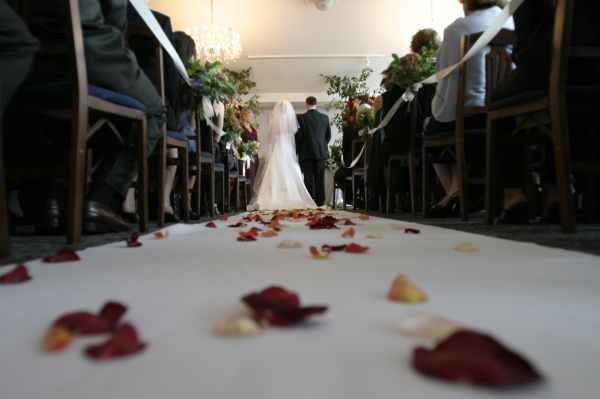
My husband and I recently celebrated our anniversary. We married late– I became a bride at nearly 47 years of age. I spent most of my childhood and adulthood “preparing” to be a bride–I learned how to cook and sew and keep house with the goal of becoming a wife and mother. I saved items in a “hope” chest– collecting dishes and linens, candles, books–items I thought would help fill our home. After several years, I had quite a collection! Even so, when the time came, I found there were several things I still needed to learn, prepare, collect, and even change as David and I began our life together. And it wasn’t just me– David also made a lot of preparations and sacrifices to ensure that we could begin our lives in safety and relative comfort.

And marriage requires learning, and adjusting, and growing after the wedding, too. So even though we are still happily married after seven years, and even though I spent years before preparing to be a wife, I am still learning and we are still growing in our love for each other and for God.

Jesus compares our eternal life to a marriage. He has paid the “bride price”– redeeming us to belong to Him. He has gone ahead to “prepare a place” for us (John 14: 1-4). Our response should be to prepare for our eternal future with Him! In fact, our marriages should be a reflection and a model of Christ’s relationship with His Bride, the Church.

Photo by Bashir Olawoyin on Pexels.com

As we live out our lives, learning and preparing to spend eternity with God, there are (at least) two things to remember:

  • Don’t “go it alone”– God uses the imagery of weddings and marriages for good reason– He wants us to live in communion, unity, and togetherness for eternity. To try to live independently, grow, learn, and act independently, is to work outside of God’s plan. Insisting on the “perfect” mate– one that will never challenge you to grow–or bailing out at the first sign of conflict may be signs of trouble in our relationship with God. That doesn’t mean that we can’t grow or learn outside of earthly marriage– nor does it mean that marriage alone can teach us all God wants us to learn about relationships. But it does mean that relationships should be more than just superficial interactions, and working through relationship struggles can often teach us about God’s steady and enduring love, and help us develop our own capacity to love wisely and well. Heaven has many “rooms” or “mansions”, but it doesn’t have hideaways and solitary confinement!
  • Preparation must be a priority–imagine getting engaged and doing nothing to prepare for a wedding! No date or time, no venue, no dress, no invitations or guests, no menu, no vows?! And worse– no plan for the marriage–no idea where to live, no furniture, no discussions on how to rear children, pay bills, manage the household expenses, plan for the future?! Yet many of us become Christians and do little or nothing to prepare for our future eternal life with Christ! We spend no time reading His word, seeking His face, or learning about His character. And we spend no time investing in relationships with people who will be our neighbors for eternity– or inviting others to join us for the most important wedding in history!

I have wonderful pictures and memories of a wedding day seven years ago–how much more wonderful to prepare for the ultimate wedding day!

Jacob Meets– His Maker

It is fascinating to study the life of Jacob. His story is rich with contradiction and confrontation. But it is also a magnificent story of God’s grace, protection, and redemption.

We’ve spent a lot of time discussing Jacob’s relationship with Laban, his uncle/father-in-law, and a man who made Jacob’s lies and duplicity look like child’s play. (See https://pursuingprayer.blog/2019/07/01/jacob-meets-his-match-part-one/ and https://pursuingprayer.blog/2019/07/03/jacob-meets-his-match-part-two/ ). While Jacob learned a lot from this stormy relationship, God was not finished putting Jacob to the test. As Jacob moved his family away from Laban, bringing them to their new home in Canaan, he encountered his estranged brother, Esau. (See https://pursuingprayer.blog/2019/06/28/jacob-the-brother-of-esau/). But, just before the encounter, Jacob encountered someone else. https://www.biblegateway.com/passage/?search=Genesis+32%3A22-32&version=ESV He wrestled all night with “a man”, and he refused to let go until he received a blessing. “The man” touched his hip joint, so it was wrenched out of its socket, and gave him a new name, Israel. When Jacob asked the man’s name, he returned with a strange question: “Why do you ask my name?” He never answered Jacob’s question, but he didn’t need to. Jacob acknowledges that he wrestled with God– he met him, spoke to him, and grappled with him face-to-face– and his life was not only spared, but blessed!

I love this story of Jacob, and it gives me a great deal of hope for many reasons:

  • Jacob got a new name. This is significant throughout the entire Bible. Whenever someone gets a new name, it indicates that he/she has a new nature, a new future, a new relationship with God. Jacob was named for all the worst of his character attributes– he literally came out of the womb grabbing his brother’s heel, and his name means “heel-grabber” and “cheat”. But his new name, Israel, turns all of that on its head–Jacob “grabbed” hold of God and would not let go! He “struggled” with God, and God promised to be with him in all his struggles; to protect him, to bless him, to be on his side. When we come to Christ in faith, we may not get a new name, but we get a new nature, and a new relationship with God. Christ promises to be our advocate– he will struggle with us, uphold us, strengthen us, and bless us–all we need to do is grab hold of the grace that is offered!
  • God met with Jacob where he was– literally and figuratively. Sometimes, we meet someone who “struggles”– with every thing and everyone. Jacob had contentious relationships with nearly everyone in his life. He was accused, abused, cheated, hated, passed over, fought over, lied to, and aggravated. God didn’t come to him in glory and splendor– he came and wrestled with Jacob–down and dirty, gritty and unannounced. And when Jacob hung on and kept fighting, God let him. He even “cheated” by putting his hip socket out of joint to end the match. God could have showed up and overwhelmed Jacob with his glorious presence. He could have visited him as he did Abraham–stopping by for a meal and a visit. He could even have appeared in another dream. But he knew Jacob from the inside-out– he knew Jacob’s character and temperament; he knew Jacob’s fears and deepest needs. He grappled with a grappler, twisting and turning in sweaty combat. And when it was over, Jacob KNEW his God. He knew that God would not let go– would not send him away, would not let him sneak away in the middle of the night, would not destroy him. Instead, this God would hold him, struggle WITH him, and bless him afterward. I think we often forget that God is not just Holy and Awesome; he is not just a God who loves in a vague and universal way. God is very personal and intimate. He will engage with our doubts, our fears, our high-spirited, strong-willed natures, and he will embrace us with all the fierceness of death–even death on a cross.
  • God’s timing doesn’t always make sense, but it is always perfect. Jacob was leaving horrible situation, on the eve of a difficult confrontation with his brother, and, ultimately, on a difficult journey to reconciliation with his father. God didn’t need to give Jacob a pep talk, or a list of do’s and don’t’s. He gave him a new name and a new blessing to replace the past hurts and inspire Jacob to build a new life. Jacob was able to face his brother and father with renewed confidence that God would see him through.
  • Finally, it is in this story that God literally becomes “the God of Jacob” in a personal and profound sense. God still longs to be the God of __________”– fill in the blank with your own name! If you have been wrestling with God or against God, or just avoiding God, let this be the day that you receive the blessing of God’s grace. It’s yours for the asking. And likely, it will be less painful than Jacob’s encounter!
Photo by Public Domain Pictures on Pexels.com

God Created…


For the Beauty of the Earth
The United Methodist Hymnal Number 092
Text: Folliot S. Pierpoint 
Music: Conrad Kocher; Arr. by W.H. Monk 
Tune: DIX, Meter: 77.77.77

1. For the beauty of the earth, 
for the glory of the skies, 
for the love which from our birth 
over and around us lies; 
Lord of all, to thee we raise 
this our hymn of grateful praise. 

Photo by Studio 7042 on Pexels.com


2. For the beauty of each hour 
of the day and of the night, 
hill and vale, and tree and flower, 
sun and moon, and stars of light; 
Lord of all, to thee we raise 
this our hymn of grateful praise. 


3. For the joy of ear and eye, 
for the heart and mind’s delight, 
for the mystic harmony, 
linking sense to sound and sight; 
Lord of all, to thee we raise 
this our hymn of grateful praise. 

\Photo by Pixabay on Pexels.com


. 

4. For the joy of human love, 
brother, sister, parent, child, 
friends on earth and friends above, 
for all gentle thoughts and mild; 
Lord of all, to thee we raise 
this our hymn of grateful praise. 

Photo by Edward Eyer on Pexels.com


5. For thy church, that evermore 
lifteth holy hands above, 
offering up on every shore 
her pure sacrifice of love; 
Lord of all, to thee we raise 
this our hymn of grateful praise. 

Photo by Pixabay on Pexels.com


6. For thyself, best Gift Divine, 
to the world so freely given, 
for that great, great love of thine, 
peace on earth, and joy in heaven: 
Lord of all, to thee we raise 
this our hymn of grateful praise. 

Photo by David Dibert on Pexels.com

This week, may we raise hymns of grateful praise to the creator of all the beauty of the earth.

For by him all things were created: things in heaven and on earth, visible and invisible, whether thrones or powers or rulers or authorities; all tings were created by him and for him. 

Colossians 1:16


In the beginning was the Word, and the Word was with God, and the Word was God. 2 He was in the beginning with God. 3 All things were made through him, and without him was not any thing made that was made. 4 In him was life, and the life was the light of men. 5 The light shines in the darkness, and the darkness has not overcome it.

St. John 1:1-5 (ESV)

The Empty Cross

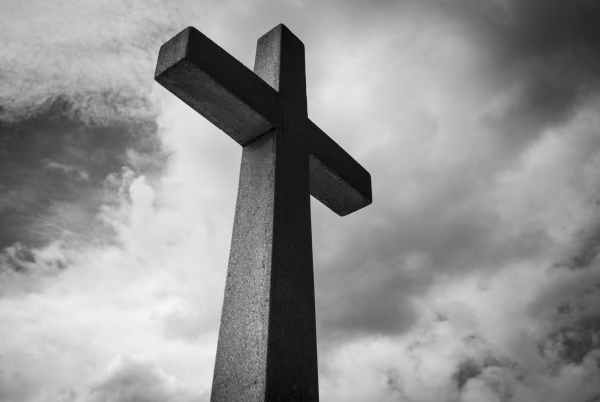
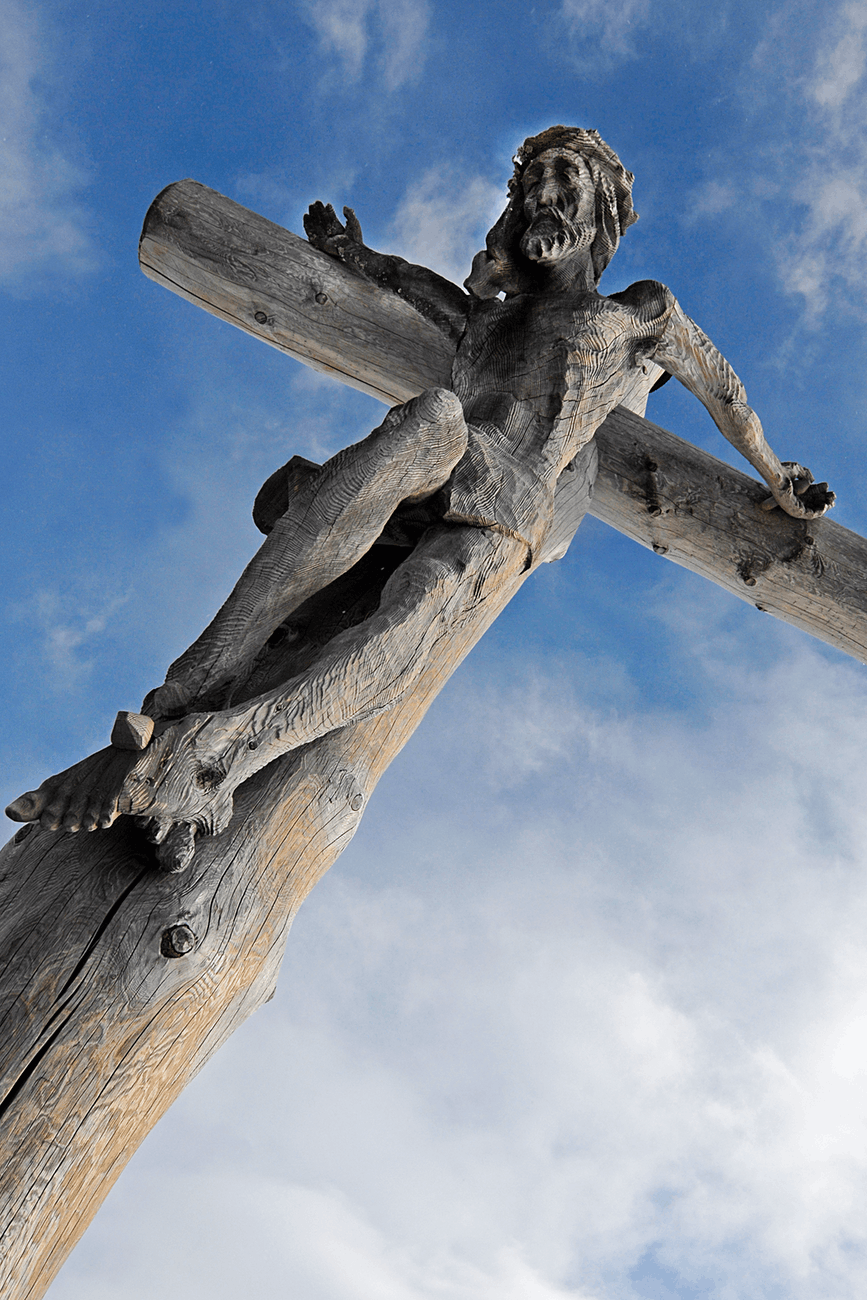
The most common symbol of the Christian religion is the cross.  And, while many statues and necklaces and artistic renderings include a dying Christ figure , the kind you most often see is the empty cross.  On this day between the crucifixion and the resurrection, I want to consider the significance of the empty cross.

  • First, the empty cross reminds us that Christ lived.  In spite of those who continue to challenge the historical evidence, there was a man named Jesus of Nazareth.  He lived in a particular time and place, and he was tried and sentenced to death by crucifixion.  His existence caused the modern Western Calendar to be split into two distinctive parts based on the estimated year of his birth, and his life, death, and resurrection gave rise to a movement that has never been stamped out, equaled, or eclipsed.

pexels-photo-51524.jpeg

  • Second, it reminds us that Christ died.  He was fully human in his capacity to feel pain, rejection, betrayal, hunger, thirst, and grief.  Yet he also experienced joy, companionship, hope, love, compassion, laughter, and growth.  He didn’t just grow old or fade into obscurity.  He didn’t leave his life’s work unfinished, he didn’t compromise or change his message; he didn’t give up or start over with a different “crew.”  Though he never staged a coup, or built up an arsenal, or rose to a seat of power or influence, this homeless, itinerant, soft-spoken rabbi was seen as enough of a threat to the leaders of his time that he was framed, tried and convicted, and sentenced to death.
  • The empty cross also reminds us how he died.  Modern crosses often look imposing and even triumphant, as they tower over a mega church parking lot, or hang on a chain of elegant silver, or stand in rows of chiseled rock in a military cemetery.  “O death, where is your sting?  O grave, where is your victory?”  (I Cor. 15:55)  But the torture before and during the crucifixion were brutal– bones were not broken, but they were pulled out of joint and then forced to bear the full weight of a bloody, swollen and bruised body of ripped muscles and exposed flesh.  Heat caused the salty sweat mixed with blood to drip into his eyes, his open wounds, and around his nose and mouth, but he was unable to wipe any of it away.  Flies gathered; he couldn’t keep them from buzzing or biting.  Each breath was a torturous push and pull of the arms and body upon the nails holding him at an unnatural angle against a wooden bar that rubbed against his already raw back.  And all of this was public; entertainment for the masses of hecklers, and those who were rejoicing in his humiliation and failure.  There was nothing pretty or majestic about the cross on that day.

jesus-cross-summit-cross-37737.png

  • The empty cross reminds us that Jesus was buried and put under Roman guard.  His emaciated, bloody, barely recognizable remains were wrapped up and prepared with spices.  Guards, whose lives depended on this body remaining in the tomb and undisturbed, were posted, and a huge boulder rolled into place to block entry to and exit from the tomb.  Jesus didn’t spontaneously climb down off the cross, or waltz out of an air-conditioned cave.
  • Finally, the empty cross reminds us that Jesus was the Christ–death could not stop him; the grave could not hold him.  His victory was complete.  He didn’t claw his way out of that tomb; he didn’t sneak out in the dead of night; he didn’t hobble into hiding for several weeks because he was only “mostly dead” of his torturous injuries.  He arose, victorious, recognizable to those who knew him best; healed and full of power.

pexels-photo-635699.jpeg

There are hundreds of reasons why we “cherish the Old Rugged Cross.”  And, though the cross stands empty, our reasons are not.  Hallelujah!  Tomorrow, hundreds of millions of Christians will be celebrating the empty tomb.  But for today, I want to celebrate the empty cross.

Blog at WordPress.com.

Up ↑