Who Do You Say That I Am?

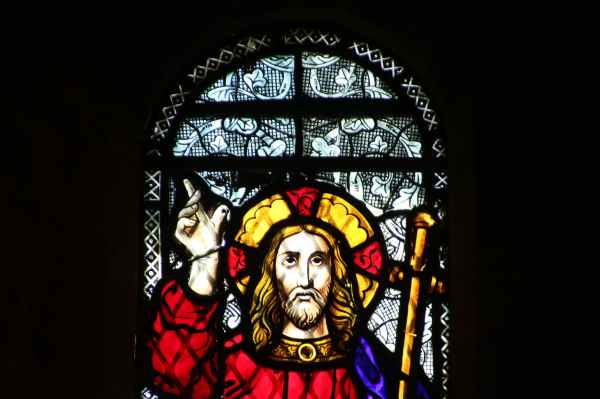
During Jesus’ ministry on earth, there were many discussions about who he was, who he said he was, and who others said he was.  The Bible is full of the names of God, of Jesus, and of the Holy Spirit– there are descriptive names, prophetic names, genealogical references, allegorical names, sacred names…but one of the pivotal questions Jesus asked of his followers was this: “Who do YOU say that I am”? (Luke 9:18-27; Matt. 16: 13-18)

We can ask ourselves why Jesus might pose this question to the disciples– was it some Socratic technique, or a trick question?  The disciples had heard several theories, descriptions, and names tossed about.  Was Jesus trying to determine how effectively he had presented himself to the Jewish people– and to his closest followers?   I don’t think so.  If that were his motivation, he could have asked, “Who to you THINK I am?”, or “Who WOULD you say that I am?”  Instead, he asked “Who DO YOU SAY  that I am?”

This is still a very relevant question today, and not just as a matter of recognizing him as Messiah.  Even when Peter gave an answer, Jesus did not say, “Good job, Peter.  You nailed it in one!  That’s the right answer, and your prize is that you will become “The Rock” on which I build my church.”  That’s how some people might read it, but that’s not the true story– Peter gave a correct answer, an inspired answer, but it was not a definitive answer.  Peter recognized who Jesus was supposed to be, but he had not experienced, and did not know, the fullness of who Jesus was.  Peter would later go on to deny this same Jesus, and say that he did not even know him at all!  Only after Jesus’ resurrection and ascension did Peter fully recognize and live out the answer he gave earlier.  His last years were spent demonstrating  in words and deeds that he had truly encountered “the Christ, the Son of the Living God!”

How does this relate to a pursuit of prayer in our own time?  What we say about Jesus involves more than just a pat answer.  To say, “He is the Christ, the Son of the Living God” is a correct answer, but what does that really mean to us?  What does it mean as we live as a witness before others?  Is he Christ and Savior, and Messiah to me? When I say he is the “Son of God,” is that just another of his many names to me, or do I understand all the richness of that title?  When I review the many names of God, do they resonate with personal meaning?  Do I pray to the “God who Sees,” to the “God who Provides,” the “God of my Salvation,” the “Almighty”, and the “God who Hears?”  Or am I praying to a “God I studied and know a lot about,”  a “God I heard about at Church,” or a “God I hope will hear me?”  If I pray “in Jesus’ name,” is that just an affectation?  Is it just a formality, or does that name, that person, inhabit my prayers and my life?  Am I praying in the name of the “Lion of Judah,” “Emmanuel”, “the Risen Lamb,” or just “a great teacher who talked a lot about love?”

pexels-photo-217114.jpeg

These are not questions meant to trigger doubt about my salvation, but questions designed to challenge my commitment and my faithfulness.  I bear the name of Christ–what I think I say about him; what I think I believe about him; what I think others see of him in me– it matters.  It is of supreme importance.  I need to be sure that I’m not taking for granted that what I know about my savior is the same as Knowing Him, and that what I think I’m saying about him is clear, consistent, and true.

What do my prayers say about Jesus?  What do my actions say about him?  What does my life say about him?  Hopefully, like Peter, the end of my story will bring honor and bear truthful witness to the Great “I AM” of scripture, the God of MY salvation, and the God who has heard me, loved me, corrected me, redeemed me, sanctified me, and welcomed me home to be with Him eternally!

Talk is Cheap

We are entering the season of Lent.  It is supposed to be a season of reflection, repentance, confession, and preparation.  Some people refer to it as a spring cleaning of the soul.  It is a time when many give things up or abstain from things– certain habits or routines, certain foods or activities.  This can be a good practice for many reasons– it teaches us discipline and patience; it reminds us of all that Christ gave up for us; it turns our focus from common earthly things to spiritual matters; and it frees us from habits and routines that have not only pulled us away from God, but away from each other.

I grew up with very mixed, and mostly negative, feelings about Lent. Neither my family nor my church celebrated Lent.  Many of my friends did, and their stories did very little to change my views.  I saw the season as drudgery, self-imposed punishment, dreary and legalistic, a cheerless, fruitless, and (mostly) meatless way of counting down to Easter.  No one seemed to “celebrate” it– it was more like they endured it.  My views have since changed, but I don’t think they were all that uncommon, and I think I was missing something of great value, something I would like to explore.

There are three important elements of Lent that I have struggled with, and I would like to share what I’ve learned.

  • There is great value in sober, somber reflection.  Our world is constantly calling us to revelry, happiness, entertainment, activity, and superficial comfort.  We see weakness in mourning for, and admitting to, our sins. We judge those who are serious and sober as “stodgy”, “boring”, and “prosy”.  We feel awkward in stillness and silent self-examination.  But the Bible paints a very different picture.  And the practices of fasting, confession, and meditation, practiced across a spectrum of religions, have been shown to promote better physical, mental, and emotional health, as well as spiritual well-being.

godlysorrow

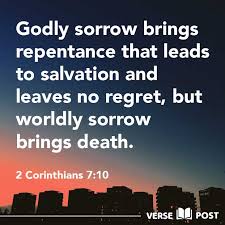
  • Because we don’t value Godly sorrow– we sometimes substitute other practices that make a mockery of what Lent should be about.  I know I am not perfect, but I don’t want to feel that emptiness, that bankruptcy of spirit, that comes with honest confession and repentance.  In fact, I sometimes “glamorize” what is really petty.  I justify my bitterness, I excuse my selfishness, I “confide” my dislikes and judgmental thoughts about others.  And I bring these sins before God, not in sorrow and humility, but in scandal, as though he will be shocked or even entertained by my wayward behavior

trueconfessions

  • Which brings me to the third thing–cheap grace.  I spend a lot of time talking about Christian living– about the value of prayer, and confession being good for the soul.  I talk about being forgiven, and loving God, and wanting to serve him better.  But I have fallen into the very bad habit of seeing God as Ward Cleaver, or Ozzie Nelson– lovable and authoritative, but not Sovereign or supremely Holy –“There, there, child.  That’s all right.  You’ve confessed, and you’ve learned your lesson.  We’ll just forget that ever happened.”   Lent should lead us to dependence on God’s amazing grace.  It is the work of Christ in us– and only that– that saves, renews, and empowers us.  There is a danger in our culture that we cheapen grace by making the focus on what we know, or say about Christianity, rather than what God does through us.  Cheap grace leads to cheap talk–in my daily life, and in my prayer life.

This year for Lent, I’m not going to talk about giving up fast food, or Facebook, or shopping at my favorite store.  I’m not going to set a checklist or a target for random acts of kindness or giving alms.  I’m not even going to set a schedule for extra prayers or a list of special prayers just for this season.  There’s nothing wrong with any of those; in fact, if you’re thinking of doing any of the above (or all of the above), I encourage you to do it with all my heart.  My prayer for the next forty days will be to invite God to clean out the pretense and hand-wringing, sweep away the cobwebs of analyzing and making excuses, and empty my heart of pride, self-sufficiency, and false guilt, so that he can fill it again with love for him and for others.  Love that is more than cheap talk.  Love that pours out life and renewal– just as Christ poured out his blood on Good Friday, poured out glory on Easter morning, and poured out power at Pentecost.  Not because it was part of a 40-day program of renewal, but because it could not be contained.

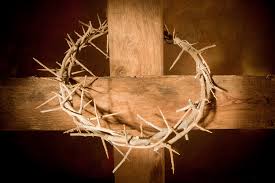
But it starts with ashes and repentance.

psalm139

Sacrificial Prayer

I call this blog “Pursuing Prayer.” I believe prayer is a pursuit; a discipline that one can learn from, grow into, and practice faithfully in life. But prayer is also a sacrifice. It involves giving of time, space, and honest reflection.

Sometimes, prayer is a willing and joyful sacrifice. I want to come and spend time with My Father in praise and worship, adoration, and even asking for His guidance and wisdom. But sometimes, the sacrifice is hard. I may dread coming to God when I know I have been dishonest or unfaithful. Like any relationship, I cherish the easy times, the relaxing times, and the expectations of challenges met and conquered. I don’t look forward to the hard work, the waiting, or the corrections that God may have for me.

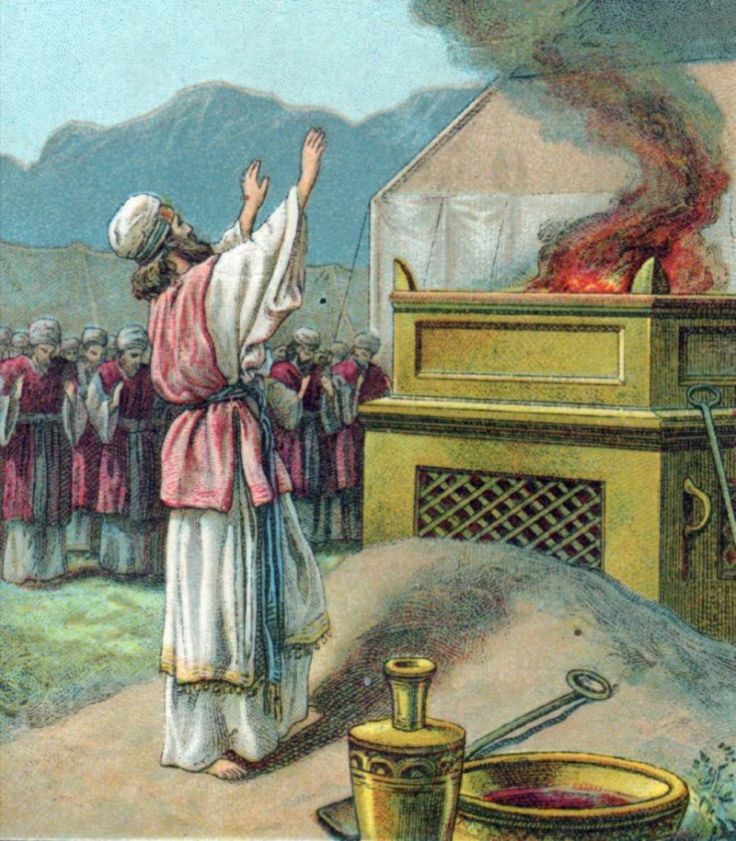
One type of sacrifice that doesn’t belong in the prayer of a believer is the Sin sacrifice. As described in the Old Testament books, the sin sacrifice had to be given to cover over the sins of individuals, priests and even the entire nation. The Israelites even had to give a sin offering for unintentional or accidental sins!

Unfortunately, I sometimes make the mistake of thinking that I must make a similar “sin sacrifice” in my prayer life– that I have to rehearse and recount all my past sins before God will hear me or act on my behalf. And that is NOT Biblical. If we are truly trusting in Jesus’ finished work on the cross, we are not obligated to offer token sacrifices as a means of covering over our past. Christ’s blood IS sufficient! (See 1 John 2:2, 2 Corinthians 5:21,1 Peter 2:24, and Romans 5:9 among others)

So when I talk about prayer of confession, I’m not talking about pouring out long laundry lists of sins I committed last week or thirty years ago. God already knows– in fact He knew about them before they happened!–and He has already forgiven me. That doesn’t mean that He wants me to pretend they never happened or that He doesn’t want me to feel the regret or understand the consequences of what I have done. Instead, He wants me to understand and rejoice in His overwhelming Mercy and Grace! My sacrifice, when I confess my sins, is a sacrifice of praise for God’s willingness to offer what I can never earn or deserve or atone for– complete forgiveness and restoration! I am agreeing with God about who I am and what I’ve done, AND about what He has done for me!

There are other times when prayer can be a difficult sacrifice. Sometimes, I am compelled to pray for those who have hurt me, or those whose actions have hurt others. I am commanded to pray for leaders– that may include church leaders who have sinned, or national leaders who have broken their promises or caused great damage. I am commanded to love my enemies, even if they never repent for things they have done.

Once again, I should be reminded of the sufficiency of Christ’s sacrifice for our sins. He didn’t just die for my Sin; He died for the sins that were committed against me. I may still feel the pain and consequences of that Sin for as long as I live on this earth. But I can trust and be confident that God has dealt with it. And that causes me to rejoice, because I can’t turn back time; I can’t undo the bad things that have happened; I can’t create perfect justice to punish my enemy. But I can let go of the burden of trying to make things “as they should be.” God will do it; He has promised! I can stop wallowing in the “what ifs” or the “what-could-have-beens;” the endless “whys” and “why me’s” that take up so much of my time and focus. Instead, I can leave them as a sacrifice on the altar of prayer, pledging my trust in the Almighty to heal and help me forgive as I have been forgiven.

We don’t practice the old animal sacrifices of the Old Testament. And we don’t have to! But sacrifice is more than just bleeding sheep and burning incense. Sacrifice is offering all of who we are to the One who created us, sustains us, forgives us, and gives us abundant life!

I Just Called to Say…

Near the end of 2020, my mother took a bad fall and broke her hip. Because of COVID, we were not allowed to visit her while she was recuperating. Thankfully, she had her cell phone and was able to make and receive phone calls. My mom was a very independent sort, but she loved to be “in the know” about all that was happening in the neighborhood and among our family members– births, deaths, hospitalizations, relocations, etc.. But, for all her interest in “what’s new,” Mom was completely computer-illiterate. She didn’t text, she didn’t have e-mail, and she knew nothing of social media. She relied on her phone and her desk calendar and notepad. Being trapped in a nursing home for six weeks was torture for her, even though she needed to recover and do physical therapy there. I tried to call her every day, and each time, she would ask, “Do you have any news?”

Sometimes, I had “news” for her; someone had tested positive for COVID, or a new baby had been born. But most days, I had to tell her– “I just called to say I love you, and I’m thinking of you.” And I could “hear” her smile on the other end of the line as she replied, “well, that means a lot. I just love to hear your voice.”

I don’t know why, but it struck me the other day how often we pray about circumstances– we “call” on God because we have “news”– situations that we want to bring to His attention– as if He didn’t already know! We pray because we want to lift up someone who is ill or suffering; we pray because we need to make a confession and ask forgiveness; we pray because we are facing an unknown future, and we desire God’s guidance and wisdom. Other times, we pray because we have a specific praise or thanks to offer. These are all legitimate reasons to reach out to God in prayer, and we certainly SHOULD pray in all circumstances, but how often do we call on God just to say, “I love you and I am thinking of you!” In fact, how often do we take the time to disconnect from social media and all the other distractions of our day to really focus on spending time with God?

Mom went back in a nursing home a couple of years after her first fall…she fell again and broke her other leg! So, I called her nearly every day– with or without “news.”

I marvel that God is every bit as eager to hear from me– even me– every day, “just because.” I’m so glad that I had the ability to talk to Mom; to hear her voice–and yes, even to share the “news.” She has been gone almost two years now, but what precious memories of our time together on the phone! How much greater my joy that I can talk to my creator; that I don’t have to worry about a busy signal or dropped call; that I can read His words to me any time of day; that His presence–even though I can’t see Him or hear His voice–follows me everywhere. And that He sends special people to call me, or text, or e-mail– “just because.” And no matter how I feel about my circumstances, God is so very glad to hear from me. And you!

This isn’t a hymn, but the music was running through my head as I wrote this. How often to we hear a ballad or a love song, and suddenly realize that God sings love songs over us?! (See Zephaniah 3:17!)

Christmas Prayer

Father, this Christmas, I want to

Confess that I have not really comprehended what Christmas really means. There are times throughout this year when I have not made “room in the inn;” I have not welcomed Christ in the “least of these.” I have not followed the star, or listened to the message of the angels. I have not come to the manger with gifts. I have been like the people of Bethlehem– asleep and unaware of the miracles taking place under my nose. I have not acknowledged that you are

Here. Not just that you came. Not just that you lived, and died, and rose again. But that you are present with me–Now! Every moment! Forever. Here. Not just beside me, but indwelling…living in me and working through me, flawed and cracked vessel that I am. Living in and working through other ordinary people You send into my life (as You send me into theirs).

Righteous Redeemer, help me to understand better Your Wisdom, Your Power, Your Glory, and Your Holiness. You did not come to rescue us from some failed plan or cosmic mistake. You are altogether perfect in Your plan of Salvation. Even when I cannot understand Your ways, they are higher and better than anything I can imagine. And Christmas, with all its wonder and glory and contradiction was never a surprise to YOU. It wasn’t Plan B. It was timed down to the minute, scripted to the very last detail, and part of the eternal plan of Salvation.

Inspire me again with the wonder of Your Mercy and Grace. Help me to experience the Joy of the Shepherds, the Awe of the Magi, and the Hush of Heaven as You left Your throne to become a little lower than the angels who shouted Your Glory into the darkness.

Send me, as you sent the Shepherds, to make known Your wonders, as you sent the Angels to tell of Your Good News of Great Joy, and as you sent Your Son into the world to make reconciliation. Strengthen me as an instrument of Your Grace, as a Witness of Your Might, and as an Ambassador of Your Love.

Transform my thinking. Build my Trust in You, that I would spend less time fretting about my daily needs and the unforeseen circumstances of my days, and more time praising You for what you have done, and will do, and are doing. Help me to embrace Your

Might, Your Majesty, and Your mystery. That the same voice that spoke galaxies into being and the same right arm that raised up empires was wrapped up in rags and laid in a Manger, meek and tiny. That Your glory was hidden in a cattle stall in a quiet village of a conquered nation. That Your plan to bring us life involved Your own painful death at the hands of people You had raised up to power That all of Eternity could be changed in a single instant, even as the Earth slept.

Photo by Jeswin Thomas on Pexels.com

Accept my adoration, incomplete and uncomprehending as it is. And equip me to Act in ways that bring You Glory and Honor. Advance Your Kingdom, and Thank You for making it possible to be reconciled to You.

Sovereign Savior and Gracious Shepherd, let CHRISTMAS be born in me anew this season. Let me grow in Faith and Obedience. Let me shine like that first star– drawing others to worship You.

Amen.

But Did I Pray?

I saw you at the store today.
I saw your stressed-out look
And your nervous glances.
I nodded and said, “Hello.”
I didn’t ask about your family–
Your husband’s job search,
Your child’s illness…
I felt so bad for you.

But did I Pray?

She came into my shop yesterday.
She was slurring her words a little
As she tried to focus.
She didn’t meet my eyes.
I was polite to her.
I felt guilty because I was a bit
Relieved when she left.
I wondered if she would be ok.

But did I Pray?

I worked into the night making pies
For the church bake sale.
Peach, cherry, pecan–
Perfect crusts for each one.
I gave my best effort.

But did I Pray?

I got up and wrote my blog for the day.
I spoke of prayer and the need to cry out,
To share my heart in prayer.
I quoted scripture, shared personal anecdotes
And offered suggestions about how to
Start and end the day–

But did I Pray?

Lord, forgive me for the times
I’ve failed to come to You–
In my pride, or in my need,
In my confusion or awkwardness.
In my sorrow, or in my joy.
Help me to seek You FIRST
So I don’t have to think back and ask

Did I Pray?

Recipe for Prayer

I love to cook. I’ve been cooking for most of my life, and sometimes, I don’t use a recipe. Often, it’s a dish I’ve made so many times, I make it from memory. Other times, I’m adapting for ingredients I have, or substituting one cooking technique for another.

But I don’t recommend creating a new dish without a recipe or guideline. Cooking is a lot like chemistry– too much of one ingredient, or leaving out another one entirely, can result in disaster! You can’t just throw together a little of this and a little of that, cook it for who knows how long, and expect good results.

The same can be said for pursuing prayer as a lifestyle. I use a “recipe” for prayer. And yes, there are times when I vary from it. But a good, healthy prayer LIFE should contain the following four ingredients:

Praise/Worship/Adoration: After all, we are not praying to an unknown being with unknown qualities. We are praying to the One True God, whose marvelous attributes are worthy of unending praise. If I am praying regularly, and NOT praising God, what is the purpose of my prayer? It can devolve into a laundry list of my complaints, worries, wishes, and whims, instead of being a conversation between a child and her Beloved and Faithful Father.

Confession/Repentance/Review: This ingredient is a stumbling block for many people. If we have been forgiven, why do we need to confess or repent? God already knows our deeds, and Jesus’ death and resurrection have already removed our sins as far as the East is from the West, right? Right. But Confession is not about beating ourselves up over wrongs we cannot undo. Rather, it is simply agreeing with God about our condition and actions. Yes, Jesus has forgiven me. But I need to acknowledge who I am before Him. I am forgiven, not by being better than someone else, or even better than I was before, but because God has extended His Grace and Mercy. And if I don’t remind myself of this fundamental truth, I may forget, and begin to believe that I no longer “need” God’s mercy in my life.

Asking/Requests/Supplication: Supplication is an old word that means asking or pleading. Once again, this can be a stumbling block in a couple of different ways. As with confession, God already knows what we are going to ask. He already knows our needs. Saying them isn’t about making God aware; it’s about giving us a chance to seek HIS mercy, HIS will, and HIS answer. And it’s about acknowledging HIS sovereignty in all aspects of our life. I can’t count the number of times I have asked God for something, and realized that I was not really asking, but rather trying to dictate to God what I wanted to have happen. If I’ve started with the first two ingredients above, I quickly realize that, while God knows what is in my heart, He also knows what is best– and often that is much larger or better than I can imagine!

Thanksgiving/Responding/Yielding: The last ingredient in a healthy prayer life is a heart bursting with Thanksgiving and willing response to God’s Love and Care in my life. Prayer is, at heart, a conversation we have with God. And part of any good relationship is affirming that bond. If I talk with my friend, and even ask a favor, or share some of my burdens, I don’t just walk away without acknowledging how much their friendship and love mean to me– regardless of whether they respond immediately to my request. And I don’t listen to their loving advice and support and walk away as though they never spoke. Prayer should include a time of saying, “YES!” to our relationship with Jesus. YES, I trust you. YES, I gladly accept Your will and all the blessings You have provided in my life. YES, I will obey you and follow you!

Of course, every prayer and every pray-er is unique. Some prayers will have more asking than confessing; others will be “heavy” on Thanksgiving (especially those coming up later this month!). But it is good to stop and consider how the “ingredients” of prayer are producing a harvest in the way we live and the way we pursue a Godly lifestyle. For more about this topic, see https://www.dailyeffectiveprayer.org/prayer-acronym/ and also https://proverbs31mentor.com/acts-prayer/.

Objects In the Mirror…

“Objects in the mirror are closer than they appear…” This notice is on the side rear-view mirror of my car. It serves to remind me that I cannot judge distances by what I see– that my mirror is meant to show a wide-range view, rather than one that is precise and in-scale.

Many things in life are similarly distorted. The actual objects in my rear-view mirror don’t appear distorted, but if I back up without considering the warning, I am likely to run into an object and “distort” my back bumper!

The Bible also warns us about distortion and mirrors. In James, chapter 1, the Apostle writes:

22 Do not merely listen to the word, and so deceive yourselves. Do what it says. 23 Anyone who listens to the word but does not do what it says is like someone who looks at his face in a mirror 24 and, after looking at himself, goes away and immediately forgets what he looks like. 25 But whoever looks intently into the perfect law that gives freedom, and continues in it—not forgetting what they have heard, but doing it—they will be blessed in what they do.
26 Those who consider themselves religious and yet do not keep a tight rein on their tongues deceive themselves, and their religion is worthless. 27 Religion that God our Father accepts as pure and faultless is this: to look after orphans and widows in their distress and to keep oneself from being polluted by the world.

James 1:22-27 (NIV)

We can easily read what the Bible says; we can easily hear the truth; we can even recite Scripture– and still be deceived and following a distorted version of God’s Word. As I write this, I can quote James, or another passage of Scripture, and walk away from the keyboard only to spread gossip, or snap at my husband, or in some other way distort what I know to be true about myself and about God.

The Apostle Paul also references mirrors in 1 Corinthians:

Love never fails. But where there are prophecies, they will cease; where there are tongues, they will be stilled; where there is knowledge, it will pass away. For we know in part and we prophesy in part, 10 but when completeness comes, what is in part disappears. 11 When I was a child, I talked like a child, I thought like a child, I reasoned like a child. When I became a man, I put the ways of childhood behind me. 12 For now we see only a reflection as in a mirror; then we shall see face to face. Now I know in part; then I shall know fully, even as I am fully known.

1 Corinthians 13: 8-12

Even though this chapter is famously known as the “Love” chapter, it also addresses our need to be alert, humble, and committed to acting on what we know to be true. We can speak of love, even perform acts of self-sacrifice, yet distort what it actually means to practice Love. If we glance at our lives in the distorted mirrors of pride or worldly comparison, we will lose our perspective and our proper focus– and end up damaging more than just a bumper!

This distortion can also infect our prayer life. We can pray on “auto-pilot”– looking at things in a distorted mirror, instead of focusing on God and putting things in their proper perspective. How many times have I prayed that God would help those in need, without ever considering how He might want me to DO something? Have I asked locally if there is a need I can help meet? Not just with money, but in time or service? Do I pray “globally” but ignore those right in my own back yard? Sadly, I must answer than I have been guilty of such distortion. Or how many times have I been in the one in need, praying for a miracle, while refusing the practical help that someone has offered? Have I prayed that God would “change” someone else’s attitude, without seeing that mine needs to change as well (or instead!)? Have I confessed a sin, without really repenting? There is temptation, waiting in my rear-view mirror– and much closer than it appears!–but I want absolution without discipline. I want help without humility. I want to love others– when it is convenient.

Thankfully, God WANTS us to see clearly. He gives us warnings about the mirrors we tend to use, and His Word helps us correct our focus.

God wants us to see things as they really are– both the horror of our sin and rebellion, and the wonder of His Grace. And sometimes, that means grappling with the distortions in the mirrors of our own making.

Nacho Prayers

Have you ever ordered nachos at a restaurant? I’m not talking about just tortilla chips with sauce– I mean the loaded, deluxe, supreme nachos that some with everything but the kitchen sink. There are several layers of goodness: crispy tortilla chips, smothered in rich, gooey nacho cheese sauce, and piled with spiced meat, tomatoes, green onion, black olives, salsa, chilies, beans, more cheese (shredded), maybe even some mango or avocado, and sour cream. Each flavor is distinct– different textures, different temperatures–yet they come together as they land on your taste buds. And each bite is just a little different– a different ratio of cheese to meat to veggies to chips in each taste.

And that means that my nacho is “not ‘cho” nacho. Even with all the same ingredients, my nacho experience will never be exactly the same as yours.

In a strange way, prayers are kind of like nachos. Prayers have many distinct “ingredients”– confession, praise, anguish, supplication, thankfulness, even questions. And many people can pray with the same ingredients and still offer up unique prayers. My prayer is “nacho” prayer– and your prayer is not mine; even when we are praying together about the same thing.

God loves the variety and uniqueness of our individual prayers. He never tires of “nacho” prayers. And He never compares my “nacho” prayers with yours, or your prayers with mine. Indeed, He loves tasting the individual ingredients in their unique ratio of flavors and elements. He loves hearing our gooey, cheesy emotions, as well as our crisp list of needs; He appreciates the savory outpouring of our praise, as well as the spicy and even bitter tang of our grief.

Can you imagine the tantalizing aroma of our prayers as they rise to Heaven? What satisfaction it brings to God as we pour out our thoughts and concerns to the One who loves us best? God isn’t looking for gourmet prayers. Our prayers may be neatly arranged or completely sloppy. They may contain lumps of worry, or be soggy with emotion; they may be spiced with urgency, or smothered in majestic outpourings of praise. God is still hungry to hear from us!

Exceedingly, Abundantly, Above…

“Now unto him that is able to do exceeding abundantly above all that we ask or think, according to the power that worketh in us,”

Ephesians 3:20 (KJV)

What do I expect as I pray? What is the outcome that I hope for? Most of the time, it looks like one of the following:

  • I expect to praise and worship God; I hope that He will hear my heart of gratitude and worship, and that He will be pleased with my words and actions
  • I expect Him to act on or through a particular circumstance, such as providing healing or guidance to someone in need
  • I expect to hear from Him, or to gain wisdom or guidance for myself
  • I expect that He will honor His promise to forgive my sins when I confess them
  • I expect to grow closer to God as I speak to Him and wait to hear from Him

But Paul reminds us in the book of Ephesians that God is able, through the power of Christ at work in us (emphasis added), to do much more than anything we can imagine or ask! What does that mean in my pursuit of prayer?

Well, it means more than I can explain in any blog entry, but let me attempt to imagine a few outcomes that go beyond my normal expectations:

  • Prayer is a matter of choice. It is also a matter of obedience and acknowledgement. No matter how short, or faltering, or disorganized it may be, each prayer proclaims that God is GOD–worthy of praise, able to save and forgive, supremely authoritative over my life and the lives of others, and ever present to listen to every voice that calls out to Him. And it proclaims this both to the physical world (if we’re praying aloud or with others) and to an unseen and metaphysical world inhabited by spiritual beings who also owe God their worship and obedience.
  • Prayer is a partnership. In some mysterious way, God allows us to participate in His ongoing work– whether it is bringing healing, joining the chorus of angels in songs of praise, praying for God’s hand to move in global and historical affairs, or developing our personal relationship with Him–God chooses to let us “have a voice” in what He does. God is still in charge. Our prayers will not cause Him to go against His own will. But as we pray, we grow to understand God’s heart. We begin to want what He wants, and to ask for His will because it is what we want most. As we see and hear about miracles, we can know that we are “part of the team.”
  • Prayer changes things–often in ways we cannot ever see or measure. Someone may pray for years to see a relative or neighbor come to Christ– seemingly without success. What they may NOT see is how their testimony, though spurned by the object of their prayers, has brought others to Christ over the years. And each one of THOSE people has the potential to witness to others– including the one who rejected the original efforts! A prayer for healing that seems to go unanswered may inspire someone to commit their life to researching a disease of find a cure so that thousands of others may be spared the suffering you prayed to alleviate. Praying for peace or justice may not have immediate effect. But we cannot know or imagine the cumulative effect of such prayers in bringing lasting peace or more perfect justice to our children or future generations.
  • Prayer changes people– especially us! If I am praying for someone, my thoughts and actions will follow. I will take a more active interest in those for whom I pray. I will (or should!) reach out with practical efforts and partner with others who share my concerns. I will give, share, encourage, work, and advocate– not just pray and move on unchanged.
  • Prayer has substance. We imagine prayer to be ethereal and mental or spiritual. But the Apostle John, writing in Revelation 8:3-4, describes the prayers of the believers (saints) as incense. Our prayers have a pleasing odor, and they rise like smoke into the presence of God. There is nothing empty or “fake” about prayers lifted to Almighty God. Our prayer is not just an exercise in wishful thinking or the power of group-think or “positive vibes.”

We serve an amazing, limitless, all-powerful, all-wise God! Our prayers may seem like just words–humble, inadequate, or even unintelligible– but in God’s hands, they are mighty tools, bringing Him glory in ways we can’t even begin to explain or imagine!

Blog at WordPress.com.

Up ↑