Think on These Things…

Finally, brothers and sisters, whatever is true, whatever is noble, whatever is right, whatever is pure, whatever is lovely, whatever is admirable—if anything is excellent or praiseworthy—think about such things. Whatever you have learned or received or heard from me, or seen in me—put it into practice. And the God of peace will be with you.

Philippians 4:8-9 (NIV via biblegateway.com)

Sometimes I have to ask if I have a “Hollywood Musical” kind of faith: the kind that breaks into song and dance in the face of trouble, and expects all of life’s problems to be solved by sheer optimism and a catchy tune. But life is full of real problems– ones that cannot be “solved” by putting on a determined smile and skipping down a Yellow Brick Road or twirling through the Alps. In fact, most of life’s problems are bigger and darker than my ability to sing or dance or even think away. I can’t sing away cancer. I can’t end injustice just by whistling a happy tune. I can’t dance my way through mass shootings, economic downturns, famines, or war.
Photo by Anna Kester on Pexels.com

But I CAN choose my attitude– every day, no matter what my circumstances. I cannot ignore realities around me, but I can control HOW I view them: I can choose how much of my attention and energy I spend on negative things, and the perspective from which I view the world around me. Positive thinking won’t make problems disappear, but it will determine my response to circumstances– even unexpected ones.

Photo by Ron Lach on Pexels.com

The Apostle Paul wrote of this to the church in Philippi. Paul himself was facing very difficult circumstances– imprisoned, awaiting a sentence of death, in poor health–circumstances that would cause most people to be depressed. But Paul was sending encouragement and hope and words of joy and peace to his friends.

Notice the difference, though, between the “power of positive thinking” espoused by Hollywood, and the Power of Faith that Paul practiced. Hollywood tells us to think of our “favorite” things–kittens and mittens and snowflakes and schnitzel. Such thoughts can bring us a temporary measure of comfort and reassurance, but they cannot give us the power to endure a constant onslaught of negative viewpoints and bad news. Paul, in contrast, asks us to think of higher and bigger things– GOD’S favorite things! And he gives us the imperative–this isn’t just a “helpful hint,” meant to make us feel better for a moment. This is a consistent practice; whether the sun shines and the birds sing, or the “dog barks” and the “bee stings.” And, though they are divided into two separate verses, there is a second part of the imperative–we are to put into practice what we have learned. We need to be positively active, as well. We need to BE true and noble and pure; we need to share and promote all that is lovely, admirable, and praise-worthy.
Photo by Pixabay on Pexels.com

Just thinking about “nice” things won’t change the world. Just thinking positive thoughts about ourselves or reciting positive thoughts to ourselves won’t necessarily lead to positive results. But training ourselves to think “above and beyond” our circumstances; to think about the positive ways we can respond to them; and preparing to actively pursue positive actions, no matter what– these steps put us in a position to be used by God to create positive change.

Photo by Mary Taylor on Pexels.com

Praying the attributes of God will automatically help us to think of all that is true and noble and pure– because God IS all that is true, and majestic, and holy. Remembering all that God has done– throughout history and in our own lives–will remind us how even small acts of faith can make a difference in a cold, dark world.

Photo by Jonathan Petersson on Pexels.com

And let’s not forget the end of verse 9– “And the God of peace will be with you.” Never forget the positive promise of God’s abiding presence in all of our circumstances. Not only will he give us joy and peace, he will give us the power to endure and prevail!

Thank You For “Wee” Things…

Photo by Tetyana Kovyrina on Pexels.com

For the sound of my husband breathing
For the tick of the clock on the wall
For daffodils peeping through the sleepy earth
For the robins’ cheerful call

For the scent of frying bacon
For wrinkles and gray hair
For dishes in the drainer
For memories to share

Photo by Magda Ehlers on Pexels.com


I thank You for the “wee” things
And I thank You for the “WE” things
I thank You for the fleeting things
And for the “barely see them” things

For times of laughter; times of tears
For times of loneliness and fears
For so many times throughout the years
You’ve proved Yourself “The God Who Hears”

Photo by Josh Sorenson on Pexels.com

For bedtime stories and toddler sighs
For strangers met on planes and trains
For warm “hellos” and teary “good byes”
For Easter eggs and candy canes

For rainbows, sunsets, and gentle waves
For snowflakes and fragile butterflies
For echoes in mountains, and woods, and caves
For hands to hold and twinkling eyes

Photo by nappy on Pexels.com


Thank You, Lord for loving me
For Hope and Faith and Peace
Thank You for Salvation Free
Your promises to believe.

Where Are You, God?

I’ve missed posting a couple of blog posts this past week. My husband and I have been ill. We both came down with COVID, and my husband ended up in Hospital for a week with COVID-related pneumonia. As I write this, he is scheduled to be released to come home, where he will continue to recuperate. I will be finished with my quarantine period, but I am still recovering, as well.

Photo by Nandhu Kumar on Pexels.com

It can be very tempting in times of sickness or unexpected struggles to ask, “Where are you God, in all this?” And, while some would say it is not appropriate to question God, I think this is a good question to explore. There is nothing wrong with the simple question, if you are seeking an honest answer. Here is part of the answer I’ve received over the past two weeks:

Photo by Olya Kobruseva on Pexels.com
  • Where: I know all the “correct” and spiritual answers– “God is everywhere, omnipresent.” “God is seated on His Throne.” “God is right beside you, and His Spirit is within you…” These are big answers, true and Biblical. But they can be very cold comfort when you see your husband struggling to breathe, or when you are exhausted and frightened. God is omnipresent, but He is spirit– invisible and undetectable through our physical senses. We can “know” He is present, but we can still question His “Presence.”
    But when we are seeking His presence in the question, there are so many wonderful and comforting answers. God IS Everywhere– so that even when my husband is miles away in a hospital room and I am alone in our apartment, God is in both places at the same time, providing rest, wisdom, and healing! God IS on His Throne– orchestrating timing and people to offer their skills, advice, services, prayers, encouragement, and more. David and I have been sick, and even in danger, but God did not abandon us. He provided for us to be able to get David to the hospital at the right time; He provided friends and family to help us– even strangers to pray for us and encourage us. God’s Spirit gave us strength and courage to ask the right questions, make decisions, and trust Him through this process. And God will continue to be working within, and around, and through us as we continue to heal.

Photo by Arnie Chou on Pexels.com
  • Are: We may claim that God is omnipresent and omnipotent– always present and all-powerful– but often when things don’t go according to our plan, we question. Not so much where God is at the present moment, but where WAS He? Why didn’t He stop this from happening? And where will God be tomorrow, when the medical bills start to arrive? Doesn’t He know or care about the aftermath? The fall-out? When will my husband be able to return to work, if ever? How did we get exposed to COVID? Why didn’t God prevent it? How much more will we suffer?
    But once again, God IS omnipresent– not just in space, but in time. God knew this would happen long before we had ever heard of COVID. God has already seen the future play out. He knows the end from the beginning, and every step in between. I tend to get lost in all that I cannot see– past and future, why and how–but God is so much bigger than all that. There is NOTHING that can take God by surprise or cause Him to fail in His plans for us. God spends a great deal of time throughout the Bible reminding us of His promises; many of which are promises of His Presence, His Provision, His Protection, and His Peace. He never promised that our lives would be easy, problem- or worry-free, or boringly comfortable. Such lives don’t shape us or develop our character; they teach us nothing about God or ourselves. God wants us to have an abundant life– a life full of “LIFE”! And that means facing challenges that show us how to trust our Loving Father, and cause us to see the depths and breadth of His Love and Power.
  • You: God is Spirit; He is invisible and indescribable. Yet He is a personal God, and wants a personal relationship with each of us. It is easy to lose sight when I am worried or suffering– I forget the heights and depths of what God has done to pursue that relationship with me– ME! I never have to ask “Where is the God of the Universe?” I can ask, “Where are YOU?!” And even though God is Spirit, He also has a “body”– US! God is in the welcome voice of loved ones, and the hugs (even virtual ones during these days of quarantine) of family and friends. God is in the offers of help and advice from friends and strangers alike. God works through US to bring us together, to encourage, and strengthen, and guide us every day– on good days and difficult days alike.
Photo by Pixabay on Pexels.com
  • GOD: Illness gives one plenty of time to think, reflect, and meditate on God. It is a stark reminder that I am NOT God (and never could be, thankfully), and that God knows and always does BEST, even when I can’t see or understand. I know many thousands of people have not survived their COVID journey– they didn’t recover; they lost their husband or wife or other loved ones. God doesn’t stop being God when we don’t get a “happily ever after” ending. Some day, David and I will each die. We will leave or be left behind by other loved ones. God is still GOOD; He is enduringly FAITHFUL; He grieves WITH us, just as He rejoices with us. He SUSTAINS us, and He REDEEMS us.
Photo by Edu Carvalho on Pexels.com

Where are you, GOD? YOU are everywhere, always, and perfectly where and when and how YOU should be. And I will praise YOU!

Mustard Seeds..

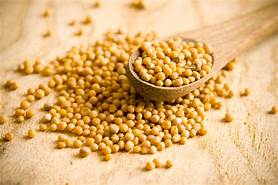
He said to them, “Because of your little faith. For truly, I say to you, if you have faith like a grain of mustard seed, you will say to this mountain, ‘Move from here to there,’ and it will move, and nothing will be impossible for you.”

Matthew17:20 ESV (via biblehub.com)

Faith is a vital part of life, and especially a life in pursuit of prayer. If I don’t believe that God exists, and that He rewards those who earnestly seek Him (Hebrews 11:6) then my prayers are little more than wishes made on a star or empty dreams.

Photo by sobhan joodi on Pexels.com

During Jesus’ ministry on earth, He lamented often that His disciples had so little faith. And yet, He said that if they had “faith like a grain of mustard seed,” nothing would be impossible. In fact, Jesus used seeds in a lot of His teaching. He talked of seeds scattered on different types of soil; mustard seeds growing into large plants; seeds in good soil yielding exponentially large harvests. There is something about seeds that can teach us about the nature of faith. And, according to Jesus Himself, we need to learn about and practice faith in greater measure!

Photo by Karolina Grabowska on Pexels.com

So what are some of the seed lessons we still need to learn?

  • Seeds start out small. Jesus used a mustard seed, mentioning that it is one of the smallest of all seeds. So often, we want to start out “large” in our faith. We see our doubts as failure, rather than immaturity. We see our slow growth as weakness–and it is! It is that very weakness that God wants to use to show HIS strength. When Jesus “lamented” that the disciples had so little faith, He wasn’t condemning them– instead He was pointing out that faith is a process–that seeds GROW into larger plants.
  • Seeds do not produce plants unless they are planted! I see websites and Christian bookstores selling jewelry featuring a small glass case with a tiny mustard seed inside. It’s a nice reminder of Jesus’ teaching about faith, but carrying around a mustard seed is NOT the same thing as having faith like a mustard seed. Faith that is never planted and rooted in good soil will remain nothing more than a seed– useful as a piece of decoration, perhaps, but dormant and unproductive. If I have faith “like a mustard seed” in money, or power, or in my own wisdom and skills, it is no more effective than if I throw it on the sidewalk, wear it around my neck, or put it in my pocket.
Photo by Torsten Dettlaff on Pexels.com
  • Seeds need soil, light, and water. Faith doesn’t grow in isolation. I need to listen to others, share with others, and, most of all, live in the good soil of God’s word. I need to pray for others– and I need the prayers of others! I need to talk to God daily; but I also need to read His words to me daily!
  • Seeds are designed to produce a harvest– fruit, grain, trees, and new seeds! I get distracted, thinking of how faith impacts MY life and my Christian walk. God wants me to grow stronger in my own, yes. But He wants my faith to be multiplied by being visible. Even a root vegetable sends a shoot or a plant above-ground, so there is evidence of growth underground. In doing go, the original seed will disappear! There are days when I cannot see my “mustard seed.” But that is (I hope) because the seed is becoming a mustard plant– producing evidence of God’s sustaining power and love, and providing “seeds” for others to plant.
Photo by icon0.com on Pexels.com

There are days when my faith may feel small and dead. But I need to remember that the power is not in the “seed” of faith– no matter how small; no matter how large its potential–it is in planting that seed and letting God’s power transform a seed into fruit that will last!

Photo by Pixabay on Pexels.com

More more on this topic, see:https://www.crosswalk.com/faith/bible-study/what-does-jesus-mean-by-faith-as-small-as-a-mustard-seed.html

Holy Terror

It’s the end of October, and tomorrow will be Halloween. Stores and houses around the neighborhood are decorated with frightening figures of skeletons, witches, ghosts, and gravestones. Some of my friends love this time of year, and they look forward to binge-watching movies about zombies or vampires– anything scary, spooky, or terrifying.

Photo by Toni Cuenca on Pexels.com

I don’t like Halloween. I don’t like scary movies. But I believe in the value of fright. Life is filled with things–natural and supernatural– that fill us with real fear. And that is as it must be in a fallen world. Sin and death, evil and darkness, fires, earthquakes, violence and plague–they are real and should produce both fear and caution. The Bible is not silent or dismissive of such things. God’s laws warn against evil spirits, calling on the dead, consulting with witches, fortune telling, even giving in to anger, envy, and hatred. God’s laws also provide for hygienic practices to ward off disease and plague.

Photo by Mike on Pexels.com

And yet, the Bible also gives hundreds of warnings against giving in to fear and letting it control our lives. We are to be cautious and wise where fear is concerned. Over all, we are to remember that God is bigger and more powerful than our fears. God can calm storms, put out fires, even conquer disease and death! There is no power, no force, no terror, that can overwhelm God, or touch those under His protection.

Photo by Pixabay on Pexels.com

Terror holds no power in God’s presence. Therefore, if we know God, we can experience no true terror. But where there is no God, terror will reign. It’s like the saying: “No God; No Peace–Know God; Know Peace”. Terror comes with darkness, with chaos, with lawlessness and loneliness.

Photo by Skitterphoto on Pexels.com

There is only one other kind of terror– a Holy Terror. We can be terrified by the awesome Holiness of God. It is altogether more powerful and alien than anything we can even imagine. Even for those who know God, there is the knowledge that God is GOD, and we are not worthy to look on His face or enter into His presence on our own. Normally, when we think of terror, we think of things that are very unholy–evil things; supernatural forces of darkness. Yet Holiness can also inspire terror because it causes us to see our own unworthiness; our own sin and failure. I am reminded of the “face-melt” scene from Raiders of the Lost Ark– Nazis, who have been fearlessly and relentlessly pursuing the Ark of the Covenant, believing that it holds supernatural powers they can use to gain power over life and death, are suddenly and horrifically destroyed when they gaze inside–as they come in contact with the very Glory of God, their terror is absolute, and they are destroyed by its presence.

Photo by samer daboul on Pexels.com

This season, may we celebrate that God, in His awesome and mighty power, constantly reminds us that we can “Know” Him without fear; instead of running, cowering, or melting, we can come to Him with confidence and joy! And in doing so, we can face any other terror, knowing that God is with us, and for us, and even filling us with His peace! We need not be filled with Holy Terror– instead, we can be filled with the Holy Spirit!

Photo by Pixabay on Pexels.com

When God Sends a Canoe…

There is an old joke about a man whose house was in the path of a great flood. He prayed and prayed for God to rescue him from the rising waters. As the water crept closer to his front door, a man in a canoe came paddling by. He said he had room in the canoe, if the man wanted to evacuate. “No, no,” the man replied. I have faith that God will rescue me.

Photo by Andy Vu on Pexels.com

But the water kept rising. The man was now trapped upstairs, as the water had flooded his ground floor and continued pouring into his house. A Coast Guard rescue boat came by. It was crowded with people, but the rescue workers assured the man that there was still room for one more. “No, no,” the man replied. I’ve been praying, and I know God will rescue me.

Photo by Onur Kurtic on Pexels.com

Just before sundown, the man was forced to climb onto his roof, as the waters kept rising. A Marine rescue helicopter hovered, and a Marine was lowered with a rope to rescue the man. By this time, the man was hungry, exhausted and shivering, but he refused to accept the Marine’s help, once again claiming that God would rescue him.

Photo by Michael D. Camphin on Pexels.com

As night fell, and the waters were creeping up to his perch on the roof, the man cried out to God,” Where are you, Lord? I prayed for your help, and I trusted you to rescue me. Yet here I am, clinging to the roof. I’m wet, scared, cold, hungry, and tired. Didn’t you hear me? Don’t you care?”

From the darkness above, a voice answered: “I sent two boats and a helicopter. What more do you want?”

Photo by hitesh choudhary on Pexels.com

This is a silly story, but it made me think– how often do I miss God’s answer to my prayers because of my own narrow focus or selfish expectations? When God sends a canoe, do I dismiss it because I want a different outcome? The story doesn’t say why this man refused to see God’s hand in the reasonable rescue attempts that came his way– perhaps he thought God would simply redirect the floodwaters away from his house, or provide a supernatural rescue. And we never find out what happens next– maybe the man gets his miracle, after all.

God’s ways are not our ways, but God often uses practical, even humble means to answer our prayers. And He rarely ever tells us what His answers will look like.

Photo by GEORGE DESIPRIS on Pexels.com

Even the Apostle Paul had to be rescued– several times. In Acts 27 and 28, we find an amazing story in which God revealed to Paul that he would be shipwrecked and rescued. Several attempts were made to save the ship, but Paul’s focus was on saving the lives of all on board. And God answered his prayer. https://www.biblegateway.com/passage/?search=Acts+27-28&version=NIV Strangely, God chose not to reveal that Paul would face a new danger as soon as he was safely on land. Paul trusted God to make sure he arrived safely in Rome– no matter WHAT crisis arose, no matter what surprising disaster loomed. When he was bitten by a poisonous viper, Paul didn’t panic. The same God who had led him safely to shore kept him from harm yet again. This same God would bring him to Rome, where he would be executed for his faith. While in jail, Paul wrote many letters, sometimes asking for basic necessities– including a warm cloak and some parchment. Paul never lived to see his letters become part of the New Testament. He never lived to see generations of martyrs and missionaries reading and sharing his words around the world. But he left a testimony of faith that God would be with him, wherever he went and whatever circumstances he faced.

Photo by Ian Porce on Pexels.com

Whether God sends me a canoe today, or a helicopter tomorrow, I know I can trust Him to do what is best– in His way and in His time.

I Pledge Allegiance..

The U.S. is getting ready for a national general election. We’ll be voting for officials, from local commissioners all the way to the office of President. There are campaign ads and political conventions– banners, slogans, hats, t-shirts, and lots of American Flags. And, while many of the normal rallies and “whistle-stop” campaigns have been cancelled due to Covid-19, the conventions have been marked by people reciting the Pledge of Allegiance to our Flag and all it stands for.

Photo by Element5 Digital on Pexels.com

“I pledge allegiance to the Flag of the United States of America, and to the Republic for which it stands, one Nation under God, indivisible, with liberty and justice for all.”

Much has been made recently about just two words of this pledge–“under God”– which were added more than 65 years ago. Interestingly, between 1892 and 1942, there were at least two versions of the pledge being used. One version stated: “I pledge allegiance to my flag, and the republic for which it stands. I pledge my head and my heart to God and my country. One country, one language and one flag.” Another version (which was altered and officially recognized by Congress in 1942), originally read: “I pledge allegiance to my Flag and the Republic for which it stands, one nation, indivisible, with liberty and justice for all.” https://en.wikipedia.org/wiki/Pledge_of_Allegiance.

Photo by Brett Sayles on Pexels.com

There are Americans who are using the Pledge of Allegiance, the U.S. Flag, even the words, “under God,” to cause division, chaos, and ill-will to flourish in the weeks leading up to the election. Some are trying to redefine what it means to be an American; what the Flag stands for. People on “both sides” are trying to rewrite our history–denying that it contains both good and bad; triumph and tragedy, promises kept and promises broken.

Photo by Pixabay on Pexels.com

As an American, I seek to live and act in such a way as to honor this nation and those who live here. Part of pledging allegiance to the flag (for me at least) is a promise to uphold those principles upon which this nation was founded: the conviction that all people are created equal (not just here, but around the world); that they are endowed by God with the right to live, to think and act according to the free will God gave them, and to pursue those dreams and activities that will bring hope, goodness, prosperity, and general “happiness” to themselves and to others. That does not mean that all people will use their free will wisely, or that they will all achieve equal outcomes and equal success regardless of their skills, resources, or efforts, however. Governments are instituted to protect the opportunities and rights of all, not to ensure that everyone gets the same life, the same will, and the same definition of “happiness.”

Photo by Sharefaith on Pexels.com

I also pledge to defend and protect and preserve this land–figuratively and literally. It is my duty to care for the trees and rivers, lakes and meadows, wildlife and even the air. It is my duty to encourage my neighbors, to vote on local ordinances, and cast my ballot for local, state, and federal offices. It is also my duty to speak out, to write, to act in the cause of justice. Finally, it is my duty to obey the laws that govern this country–not because I voted for them, or because they are convenient, or because I see an immediate benefit from them, but because they are justly enacted laws. If I don’t like a law, I pledge to see if it can be amended or repealed. I may use civil means to protest injustice– sit-ins, peaceful marches, legal suits, petitions, etc.. But my allegiance to this nation and its people means that I pledge not to put others in danger, or to deprive them of their lives or livelihoods in my pursuit of change. I will, however, defend myself and others from anyone who would try to take away these sacred rights.

I love my country. I love the world God created and the unique and diverse people He designed to fill it. But ultimately, my highest allegiance is not to America. It isn’t to my neighbors, or my family, or to the planet. My heart, mind, soul, and spirit belong to God. My allegiance to Him comes before any other. If my nation turns away from God; if it denounces all that is sacred, and demands that I do the same, I can no longer pledge my allegiance to its flag. If I am asked to destroy innocent lives, or deny God’s existence, or forced to speak lies in the name of patriotism, I must follow my first allegiance.

Photo by cottonbro on Pexels.com

In times like these, it can be very easy to get “wrapped up” in the Flag, and the patriotic speeches, and the political rhetoric. Candidates paint themselves in the best colors, and attempt to make their opponents look evil, uncaring, and incompetent. But I have not pledged my allegiance to any candidate. I will choose to vote for the individuals I believe are best suited to bring about changes or preserve policies that honor both God and our founding principles. And I will pray for all elected leaders, whether I voted for them or not. But my hope, and trust, and allegiance, is to God above all, And all else, even the United States of America, is “Under God.”

Prayer and Pizza-making

Maybe it’s just because I was hungry, but I started thinking about making a pizza from scratch, and how it can be like praying…I know it’s kind of a stretch, but stay with me..

Photo by Daria Shevtsova on Pexels.com

  • Faith/Crust–every pizza has to have a solid crust–and making crust from scratch usually involves stretching and pulling, flattening and forming it to make a round(ish) base for the toppings. Prayers rely on a solid foundation of faith. Even if it is a “thin” crust, faith is what gives us the confidence to approach God with our thoughts and thanks, our confessions and our concerns. Our faith is often stretched and pounded by circumstances, and it gets strengthened in the fires as God refines us.
Photo by Athena on Pexels.com
  • Salvation/Sauce– right there with the crust comes a sauce. It is usually red (tomato-based) or white (cream-based). I am reminded that our faith, and our ability to approach God freely is “covered” by the shed blood of Jesus Christ. Our sins, though scarlet, are made white as snow. Whatever weaknesses we have– even our small or weak faith, are “covered”– God pours and spreads His grace and salvation over us. Jesus advocates for us every time we pray.
Photo by Pixabay on Pexels.com
  • Content of our Prayers/Toppings–pizzas come in all types of varieties. I’ve had pizzas with goat cheese, tomatoes, onions, shrimp, smoked sausage, carrots, blueberries, ham, scrambled eggs, spinach, olives, gravy, cornmeal, mushrooms, grilled chicken, dried beef, taco meat, cocktail sauce…just not all on the same pizza! My point is that our prayers are as unique and individual as we are. Some of us pray “single topping” prayers– raising a special concern that God has laid on our heart– all day long, or for days or years on end. Some of us pray “scattershot” prayers– a little of this and a little of that as things come to mind. Some of us pray “house favorite” prayers– we follow a formula or a pattern in many of our prayers. But each prayer gives off a delicious aroma– each one has a unique combination of flavors, textures, and pleasing smells as they are offered up to the Father.
    And we prepare our toppings/our individual prayers…our thoughts may be chopped up, diced, sliced, and spread around. They may get layered and mixed up and melded.
Photo by Italo Melo on Pexels.com
  • Meditation/Baking– I’ve had fruit and vegetable pizzas that are served “uncooked” (except usually the crust has been pre-baked), but most pizzas have to go in the oven before they can be eaten. Some prayers are spoken in public or “in the moment,” but God wants to spend some time alone with us– even if it is in a “hot” oven for just a few minutes! Taking time to immerse ourselves in God’s presence not only refreshes us, it gives us time and space and openness to hear God’s voice; to catch a glimpse of His vision for our day; to close our eyes and ears to distractions and false promises, guilt and self-justification.
Photo by Pixabay on Pexels.com
  • Reading/Recipe–great pizzas don’t just happen by trial and error. Even though I love to experiment with different toppings and different seasonings–even different crust variations–if I don’t follow a recipe, I can ruin an otherwise great pizza. If we’re not reading the Bible regularly, we can begin to fall into bad prayer habits– selfish or prideful prayers, praying in the wrong spirit (bitterness or anger), even praying in ways that don’t recognize God for who He is.
Photo by Buenosia Carol on Pexels.com
  • Serving/Serving! Pizzas are not meant to be created and left to sit and grow cold or moldy. Prayers offered up without obedience and active service don’t nourish anyone. Prayer should nourish our souls– we should be strengthened, changed, and experience growth. And God is gracious. Even if our prayer life has grown “cold”– well, cold pizza is still really good!
Photo by Narda Yescas on Pexels.com

So build a great pizza/prayer today (and throughout the day). “Taste and see that the Lord is Good” (Psalm 34:8)! Come back tomorrow and repeat!

Heroes of the Faith

When I was just a girl, many of my cousins and playmates were fans of comic-book heroes: Superman, Batman, Wonder Woman, X-Men, Spiderman, and many others. In fact, in second grade, we had a “superhero” club that met at recess and played out scenarios. Most of us got to be heroes; a few had to take turns being villains. We ran as fast as we could; we pretended to fly; we pretended to save the world!

Photo by CDC on Pexels.com

Each super hero has a special super power (or several super powers), and each one has a “fatal flaw”– some weakness that could keep him (or her) from easy victory over a villain. Superman can fly; but he cannot overcome the effects of Krypton. Batman has a seemingly endless array of cool gadgets, but they are not always enough to counter the cool gadgets of his foes. Spider-man can spin webs, but being a superhero doesn’t pay his bills. Wonder Woman has a lasso of truth and an invisible airplane, but she must struggle between promoting peace and fighting to stop violence and war.

Photo by Pixabay on Pexels.com

I was reminded recently that we often confuse Biblical characters with comic-book superheroes. Abraham had extraordinary faith. Moses had his staff. Samson had great strength. David wrote poetry and killed giants…and so on. And each “hero” of the faith seemed to have a “fatal flaw”– Abraham did not wait for God’s promise of Isaac. Moses had a temper. Samson was arrogant and forgot the source of his strength. David was tempted by lust, which led him to commit adultery and murder!

There is nothing wrong with honoring men and women of faith and courage and obedience. The entire eleventh chapter of Hebrews is devoted to “heroes” of the faith, and the faith of Godly heroes.

But we can turn heroes into idols, and that leads us to false thinking. We falsely believe that God only calls those who are already heroic and strong. We sometimes feel that God cannot use us unless we first show that we have some super power. We also carry a false guilt about our “fatal flaws,” feeling that we have somehow ruined God’s plans or let the enemy “win” whenever we stumble. Finally, we fail to see that our ordinary obedience–even our shaky and stumbling faith– IS heroic.

Photo by Pixabay on Pexels.com

Superheroes are not Biblical, and Biblical characters were never “super” heroes. Most of them spent their lives doing mostly ordinary things– farming, fishing, carpentry, tax collecting, herding sheep! There is only one “superhero” in the Bible– God himself–and He has no fatal flaw. Instead, He chooses flawed and ordinary people to obey Him as HE does extraordinary things through them.

Photo by Luis Quintero on Pexels.com

One consistent thing about the people we celebrate as “heroes” in the Bible– they all prayed! They all knew that real power (and wisdom and help) comes from God alone. Prayer and obedience are not guaranteed to make us famous or heroic. But God can use the simplest acts and the smallest measure of true faith to do great things in, and around, and through ordinary people just like us!

Just When it Couldn’t Get Any Worse…

It is very discouraging to listen to the news lately…pandemics, riots, economic collapse, lock-downs and social distancing mandates…some days it seems like it can’t get any worse. And yet, if someone were to report that things will soon get better, would we believe it? Even if a prophet of God came to reassure us, would we greet her/his news with joy, or would we react with cynical disbelief?

Photo by Krunal Parmar on Pexels.com

Such was the case hundreds of years ago in Samaria. The capital city of Israel was under siege by the Syrian King, Ben-Hadad. https://www.biblegateway.com/passage/?search=2+Kings+6%3A24-7%3A20&version=ESV The entire city was trapped; surrounded by thousands of soldier, they were terrified, diseased, and starving. It was far worse than most of us have ever experienced. The siege had gotten so bad that the people had resorted to cannibalism–things could not get any worse. The king, desperate and helpless, sent for Elisha. And the prophet had unbelievably good news– in less than twenty-four hours, the fate of Samaria would be completely reversed. There would be food, freedom, and joy throughout the city– plenty for everyone!

Photo by Min An on Pexels.com

Hope! Joy! Salvation! But how could this be? The king’s messenger scoffed–“Impossible! Even if God opened up the heavens, this could not happen.” So Elisha has bad news for the messenger– he will see this prophecy fulfilled, but will not be able to enjoy it.

And it all happens just as Elisha predicted…in the middle of the night, the Syrian army panics and flees. Prompted by the Lord, they believe they hear a mighty host coming to ambush them in their tents. In their flight, they leave everything behind– food, weapons, clothing, medicine–vast resources, and enough to supply the entire city!

Alerted to this miracle by four lepers who brave the enemy camp only to find it deserted, the king and his messenger are still skeptical. But when the report is confirmed, the citizens rush out to plunder the Syrian goods, trampling over and killing the messenger in their haste.

When times are tough, it is easy to hold on to a limp and lifeless form of faith– we keep praying and reciting platitudes; we tell ourselves to be patient and bear up under pressure. And we should not lose heart or compromise the truth for a temporary sense of ease. But our faith has to be prepared to see God do “exceedingly, abundantly, above all that we ask or think, according to the power that works in us..” (Ephesians 3:20 NKJV) Because just when things couldn’t get any worse, they may just be about to get better than we can imagine!

Photo by Johan De Jager on Pexels.com

Lord, may I seek your face with confidence and joy– not because of the circumstances I face, but because of my faith in Your great might and power, and in Your grace and wisdom to turn even the worst night into a glorious and victorious dawn!

Blog at WordPress.com.

Up ↑