Often, when I pray for those who are in pain or grief, I will ask, “God, BE WITH…” This is a natural desire, but in one sense, it is also superfluous. God is always with us; always present, no matter our circumstances.
So when I ask God to “be with” someone, I am not really asking that He stop whatever else He is doing and go to that person. He is already there. I’m not asking Him to become aware of their heartache or suffering; He already knows. I’m not asking that He do something new or different from His will or His plan. What I am asking is that His presence would be revealed in and through the situation– that my friend or loved one (or stranger whose needs have been brought to my attention) would have a supernatural sense of God’s abiding, powerful, compassion and grace.
Intellectually, I can know that God is omnipresent and omniscient. I “know” that God is always with me. The Bible is filled with God’s promises to “be with” His people. (See https://www.biblestudytools.com/bible-study/topical-studies/beautiful-verses-to-remind-you-that-god-is-with-us.html) But I also know, emotionally and experientially, that I don’t always feel His presence. I have moments of doubt and despair– I think all of us do. That’s part of the curse of Sin–being separated from the awareness of God’s continual presence. Even Jesus, as He was dying, felt the awful anguish of being separated from the Father, crying out, “Eloi, Eloi, lema sabachthani?” which means, “My God, my God, why have you forsaken me?” (Mark 15:34)
God promises each believer that He (through His Holy Spirit) will dwell with us. He will “abide” with us. But just like living with a spouse and other members of a family, there are times when His presence seems to be in another room; and we feel alone. There may be many reasons for this– sometimes, it is because we have walked away, or turned our face away. But at other times, we long for that closeness, that awareness that God is right beside us, only to feel that He is far away. As strong as that feeling may be, we need to remember that it is NOT the reality. God still abides with us. He is still present, even if He is silent.
So, when I know that feeling, or when I know someone else is going through that feeling, I pray, not that God will come to us, or come back from being away, but that our awareness of God’s presence and closeness will be deepened or reignited.
Someday, I won’t have to pray that prayer. Someday, and for all eternity, we will be surrounded by God’s Glorious Presence. But in this fallen world, what a privilege and hope to be able to pray to a God that abides with us!
..but we rejoice in our sufferings, knowing that suffering produces endurance, 4 and endurance produces character, and character produces hope, 5 and hope does not put us to shame, because God’s love has been poured into our hearts through the Holy Spirit who has been given to us.
I once had to drop out of a thread on social media. (Actually, I’ve had to drop out of a number of threads, but that is neither here nor there…) The thread was about parenting, and priorities. The main thrust was that, as a parent, one’s top priority was to make one’s children “happy.” If your child wanted a particular toy for her/his birthday, you would certainly do whatever you could to get “that” toy. If your child wanted the latest fashion in shoes, you would certainly try to buy them. If your child wanted to be successful, you would do whatever you could to see that he/she got into the “best” schools and had the “best” opportunities in life. And if they wanted to do something of which you disapproved, you would still encourage them to follow their dream– if it would make them happy. Of course, this didn’t include letting your child abuse drugs or become a criminal. But in general, it meant sacrificing and taking a back seat to your child’s emotional well-being.
On the surface, this seems like good parenting. Of course, I don’t “want” my child to be miserable, or unsuccessful, or “left out.” And I don’t want to impose my dreams and wishes onto my child, or live my life through him/her. I would not wish hardship and suffering to come to anyone, especially those I love. Except…I want them to develop endurance, and character, and hope, and compassion, and wisdom, and humility, and faith. And all these things come from suffering, losing, and learning from difficult experiences.
I dropped out of the thread for a couple of reasons: I have learned that whenever the subject of parenting comes up, my experience (or lack thereof) makes my opinion “invalid” to those who disagree. “You’ve never had children. You don’t know what it’s like.” But I know what it was like to BE a child, and to have parents. I’ve observed the results of parenting by others, both good and bad. I know that even good parenting can’t guarantee “happy” teenagers! And even “bad” parenting can produce children who break the cycle and become adults of integrity and joy. The other reason I held back was that, in my experience, those who post such threads only want their own opinions confirmed. The people posting on this thread were not “bad” parents–in fact, they probably would agree with me if we had the time to sit down and talk through the issue. But one of the downfalls of social media is that we want short, pithy advice, instead of long and serious discussions. We don’t want nuances; we want comfortable “likes.”
I don’t want my family members– my step-children, grandchildren, nieces and nephews, and cousins, etc.–to be defeated by suffering. I don’t want them to be overwhelmed by depression and anxiety. I don’t pray for them to be hurt or frustrated, because “it’s for their own good.” But I do pray that they will learn strength and courage, faith and trust, hope and joy as they overcome struggles, conquer fears, fight life’s battles, and walk in obedience to the One who has won the final victory. I don’t “just” want them to be happy. I want them to find the lasting joy that comes from developing a Godly character. That may bring me to tears when I see them fighting illness and hardship, persecution, depression, and other setbacks. But it also keeps me on my knees and reaching out as they understand that I’m there whether they’re sad, or angry, or hurting– and so is the God who loves them forever!
This past weekend, my husband and I participated in “Field Day.” It is an annual Amateur Radio contest, in which operators have 24 hours to make as many unique “contacts” as possible within the U.S. and Canada, using low power and simulating “field” conditions (many operators and clubs literally set up with tents in fields and use only solar or battery power for their radio equipment).
Field Day can be a lot of fun, but it can also be very frustrating. Depending on where and how you set up, the weather conditions, and other random factors, you may end up with very few contacts, and a lot of static! Radio static comes from three main sources– natural electromagnetic atmospheric noise, such as lightning, high winds, and solar pulses; radio frequency interference, when the radio equipment picks up pulses from nearby electrical devices, including TVs, other radios, or even power lines; and thermal noise coming from within the radio device itself.
We chose to set up for Field Day at our radio store, which is located in town, just beneath our apartment. We have several antennas set up on the roof, along with a solar panel and battery, which can power all of our radio equipment. So we met the basic requirements for Field Day, operating the radios on Solar and Solar Battery power, without extra amplifiers and power boosts. We set up two stations, and we were able to make contacts through voice transmission or by Morse Code. But we were not exposed to the weather and discomfort of a tent in the field– we had a refrigerator stocked with food, we had air conditioning and comfy chairs, and we were able to sneak upstairs for a nap in our own bed, if we felt tired.
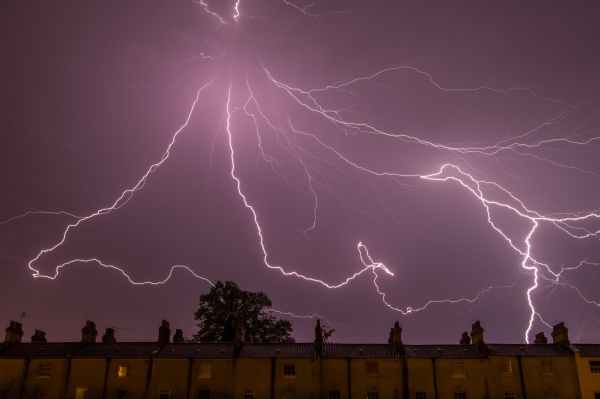
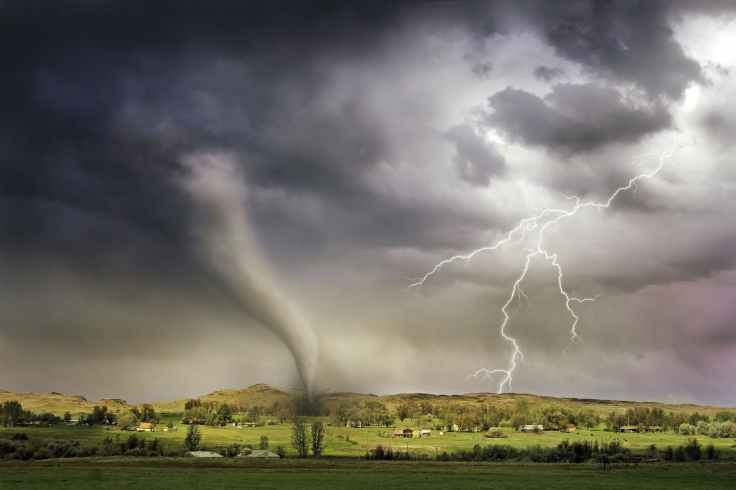
Atmospheric conditions were not so good this year for Field Day– not in Michigan, at any rate. We had a series of extreme storm cells coming through, with torrential rains, thunder and lighting, and a tornado watch, which spanned the first six hours of the contest. We were lucky not to have a tornado touch down, but other areas were not as lucky…
Staying in town also provided some complications– we are surrounded by power lines, neighbors with electronic equipment, street traffic, including cars with loud stereo systems and radios, and our own electronic and radio devices– cell phones, air conditioners, computers, etc.
Finally, we had an ongoing issue with our two radios. If we were using certain frequencies, the two radios interfered with each other. As I was listening to one radio, my husband would try tuning his radio. Suddenly, the noise of his radio could be heard over the sound of other transmissions.
All of this made for a somewhat frustrating contest, but it reminded me of some important aspects of prayer:
Prayer can be “choked out” by atmospheric conditions. If we are not “tuned in” to God’s presence, the noise of other worries, interests, concerns, and even “good” things can cause static. Life struggles, changes in our routine, or the “high winds” of adversity can seem louder than the faithfulness and compassion of the One who never changes and never leaves us. This is one reason we are to make prayer more than a habit or routine– it is to be a lifestyle and a blessed and constant pursuit– regardless of our circumstances or feelings at a given moment.
Prayer can also be derailed by “frequency interference.” If we don’t spend time in deep prayer and meditation with God, listening to His Word, or making ourselves accountable to Him, we will be susceptible to interference from other voices, other philosophies, and other “static” influences. Jesus’ prayer life included many times of retreat and separation from the crowds and stress of His ministry; not because He didn’t love others, but because He loved and honored God more.
Finally, prayer can get lost in the “internal” static of our wayward hearts. The heat of anger, bitterness, selfishness, pride, greed, and lust can keep us from meaningful communication and communion with our Father. Often, we struggle with prayer, because we are hanging on to the “static” of our own desires and fears. King David wrote: “Search me, O God, and know my heart; test me and know my anxious thoughts. Point out anything in me that offends you, and lead me along the path of everlasting life.” (Psalm 139:23-24, New Living Translation, via bible.com)
Field Day is over for another year. We were somewhat disappointed in our performance, but, in the end, it is just a contest– an opportunity to learn and grow in our hobby. While we enjoy being amateur radio operators, and we feel it is an important and worthwhile hobby, it pales in comparison to growing in our Faith and our pursuit of praying and obeying Jesus Christ!
In the middle of our contest this year, we had a singular opportunity– to leave the contest for a few hours and visit a local church where my niece and two of my nephews were getting baptized. It would mean fewer contacts for the contest, at a time when the atmospheric conditions were the best they had been for several hours. After a dismal evening, we could have chosen to focus on our own pursuits. We didn’t have to witness the baptism to rejoice in it. They would have been no “less” baptized, and they had other family and friends there to see it. And going there didn’t make us “better” or more righteous people. But we chose to shut down our contesting activities, pick up my Mom, and join in the happiness of watching three precious young people publicly declare their choice to follow Jesus. And they were among others who made that decision– others whose joy and radiance also filled the church that day.
Field Day is about listening through the static, reaching out, and making contact with others. Yesterday, I was reminded that there is a much more important “Field Day.”
Do you not say, ‘There are still four months, and then comes the harvest’? Behold, I tell you, raise your eyes and observe the fields, that they are white for harvest.
What static is preventing us from making “contact” with those who need to hear the Good News? What static is preventing us from hearing God’s voice? What static is keeping us from seeing the “fields” ready for harvest?
There is a line in a song by Billy Joel (Only the Good Die Young) which reads, “I’d rather laugh with the sinners than cry with the saints. The sinners are much more fun.”
There is a myth about sin– that sin is fun and obedience is drudgery. Sinners laugh and live carefree, happy lives, while “saints” lead gloomy lives filled with tears, worry, and anguish. Heaven will be filled with sour-faced do-gooders playing harps, while Hell will be an eternal party.
Nothing could be further from reality. While sin gives momentary pleasure and temporary laughter, it also leads to devastating pain and haunting regret. Broken families, lost relationships, stress, and guilt are just some of the consequences of sin. The idea that “I’m not hurting anybody– I’m just doing what makes me happy” is a false comfort.
Similarly, while obedience may require us to make sacrifices or suffer momentarily, it also leads to great reward–discipline, wisdom, integrity, and a legacy of hope and help. The idea that “I’m missing out on the fun” is also a false one. “Saints” may cry, but often their tears are for the misfortunes of others!
Unfortunately, the common stereotype of sinners laughing while saints cry or, more often, sit in judgment, is based on observation. I have known some very sour Christians. They may not be crying, but they frequently make others around them cry! They nag, scold, wag their fingers, consign their neighbors and family members to Hell, and act as though they are too good for everyone else. When challenged about their negative attitude, sometimes they suggest that they are just “waiting for Heaven.” Others plead a genuine concern for others, and they worry that the laughter they hear now will turn to mourning in the future.
But I have also known joyful Christians– laughing, singing, encouraging others, whistling while they work, even laughing in the face of suffering and persecution! They, too, are “waiting for Heaven.” But in the meantime, they are celebrating their new and abundant life in Christ. Their attitude and actions attract others, and reflect the love, joy, peace, and hope that transcends the mere “happiness” of a moment’s sinful pleasure.
The Bible says much about the value of both laughter and tears; of joyous celebration and sober reflection. In the end, ALL of us are “sinners”–no one is righteous on her/his own. Jesus, when He walked the earth and interacted with people, wept and celebrated with them. The Pharisees reprimanded Jesus and His disciples for their “feasting” and spending time with prostitutes and tax collectors. And yet, Jesus had harsh words about sin and Hell, and often spent time alone and in anguish of heart.
The crying of saints is not, in itself, of any more value than the laughter of sinners. But laughter and happiness in the moment cannot save us from the sting of death or the yawning emptiness of an eternity without God. And that is no laughing matter! Unfortunately, the song is based on an empty myth. Death comes to all of us, young or old, “good” or “bad,” gloomy or exuberant in life. What makes the difference is not our laughter or tears, or even our efforts to obey or live “good” lives– what makes a difference is GRACE and FAITH. And I’d rather live with the redeemed than die with the defiant!
8 Finally, brothers and sisters, whatever is true, whatever is noble, whatever is right, whatever is pure, whatever is lovely, whatever is admirable—if anything is excellent or praiseworthy—think about such things. 9 Whatever you have learned or received or heard from me, or seen in me—put it into practice. And the God of peace will be with you.
Philippians 4:8-9 (NIV via biblegateway.com)
Sometimes I have to ask if I have a “Hollywood Musical” kind of faith: the kind that breaks into song and dance in the face of trouble, and expects all of life’s problems to be solved by sheer optimism and a catchy tune. But life is full of real problems– ones that cannot be “solved” by putting on a determined smile and skipping down a Yellow Brick Road or twirling through the Alps. In fact, most of life’s problems are bigger and darker than my ability to sing or dance or even think away. I can’t sing away cancer. I can’t end injustice just by whistling a happy tune. I can’t dance my way through mass shootings, economic downturns, famines, or war.
But I CAN choose my attitude– every day, no matter what my circumstances. I cannot ignore realities around me, but I can control HOW I view them: I can choose how much of my attention and energy I spend on negative things, and the perspective from which I view the world around me. Positive thinking won’t make problems disappear, but it will determine my response to circumstances– even unexpected ones.
The Apostle Paul wrote of this to the church in Philippi. Paul himself was facing very difficult circumstances– imprisoned, awaiting a sentence of death, in poor health–circumstances that would cause most people to be depressed. But Paul was sending encouragement and hope and words of joy and peace to his friends.
Notice the difference, though, between the “power of positive thinking” espoused by Hollywood, and the Power of Faith that Paul practiced. Hollywood tells us to think of our “favorite” things–kittens and mittens and snowflakes and schnitzel. Such thoughts can bring us a temporary measure of comfort and reassurance, but they cannot give us the power to endure a constant onslaught of negative viewpoints and bad news. Paul, in contrast, asks us to think of higher and bigger things– GOD’S favorite things! And he gives us the imperative–this isn’t just a “helpful hint,” meant to make us feel better for a moment. This is a consistent practice; whether the sun shines and the birds sing, or the “dog barks” and the “bee stings.” And, though they are divided into two separate verses, there is a second part of the imperative–we are to put into practice what we have learned. We need to be positivelyactive, as well. We need to BE true and noble and pure; we need to share and promote all that is lovely, admirable, and praise-worthy.
Just thinking about “nice” things won’t change the world. Just thinking positive thoughts about ourselves or reciting positive thoughts to ourselves won’t necessarily lead to positive results. But training ourselves to think “above and beyond” our circumstances; to think about the positive ways we can respond to them; and preparing to actively pursue positive actions, no matter what– these steps put us in a position to be used by God to create positive change.
Praying the attributes of God will automatically help us to think of all that is true and noble and pure– because God IS all that is true, and majestic, and holy. Remembering all that God has done– throughout history and in our own lives–will remind us how even small acts of faith can make a difference in a cold, dark world.
And let’s not forget the end of verse 9– “And the God of peace will be with you.” Never forget the positive promise of God’s abiding presence in all of our circumstances. Not only will he give us joy and peace, he will give us the power to endure and prevail!
For the sound of my husband breathing For the tick of the clock on the wall For daffodils peeping through the sleepy earth For the robins’ cheerful call
For the scent of frying bacon For wrinkles and gray hair For dishes in the drainer For memories to share
I thank You for the “wee” things And I thank You for the “WE” things I thank You for the fleeting things And for the “barely see them” things
For times of laughter; times of tears For times of loneliness and fears For so many times throughout the years You’ve proved Yourself “The God Who Hears”
For bedtime stories and toddler sighs For strangers met on planes and trains For warm “hellos” and teary “good byes” For Easter eggs and candy canes
For rainbows, sunsets, and gentle waves For snowflakes and fragile butterflies For echoes in mountains, and woods, and caves For hands to hold and twinkling eyes
I’ve missed posting a couple of blog posts this past week. My husband and I have been ill. We both came down with COVID, and my husband ended up in Hospital for a week with COVID-related pneumonia. As I write this, he is scheduled to be released to come home, where he will continue to recuperate. I will be finished with my quarantine period, but I am still recovering, as well.
It can be very tempting in times of sickness or unexpected struggles to ask, “Where are you God, in all this?” And, while some would say it is not appropriate to question God, I think this is a good question to explore. There is nothing wrong with the simple question, if you are seeking an honest answer. Here is part of the answer I’ve received over the past two weeks:
Where: I know all the “correct” and spiritual answers– “God is everywhere, omnipresent.” “God is seated on His Throne.” “God is right beside you, and His Spirit is within you…” These are big answers, true and Biblical. But they can be very cold comfort when you see your husband struggling to breathe, or when you are exhausted and frightened. God is omnipresent, but He is spirit– invisible and undetectable through our physical senses. We can “know” He is present, but we can still question His “Presence.” But when we are seeking His presence in the question, there are so many wonderful and comforting answers. God IS Everywhere– so that even when my husband is miles away in a hospital room and I am alone in our apartment, God is in both places at the same time, providing rest, wisdom, and healing! God IS on His Throne– orchestrating timing and people to offer their skills, advice, services, prayers, encouragement, and more. David and I have been sick, and even in danger, but God did not abandon us. He provided for us to be able to get David to the hospital at the right time; He provided friends and family to help us– even strangers to pray for us and encourage us. God’s Spirit gave us strength and courage to ask the right questions, make decisions, and trust Him through this process. And God will continue to be working within, and around, and through us as we continue to heal.
Are: We may claim that God is omnipresent and omnipotent– always present and all-powerful– but often when things don’t go according to our plan, we question. Not so much where God is at the present moment, but where WAS He? Why didn’t He stop this from happening? And where will God be tomorrow, when the medical bills start to arrive? Doesn’t He know or care about the aftermath? The fall-out? When will my husband be able to return to work, if ever? How did we get exposed to COVID? Why didn’t God prevent it? How much more will we suffer? But once again, God IS omnipresent– not just in space, but in time. God knew this would happen long before we had ever heard of COVID. God has already seen the future play out. He knows the end from the beginning, and every step in between. I tend to get lost in all that I cannot see– past and future, why and how–but God is so much bigger than all that. There is NOTHING that can take God by surprise or cause Him to fail in His plans for us. God spends a great deal of time throughout the Bible reminding us of His promises; many of which are promises of His Presence, His Provision, His Protection, and His Peace. He never promised that our lives would be easy, problem- or worry-free, or boringly comfortable. Such lives don’t shape us or develop our character; they teach us nothing about God or ourselves. God wants us to have an abundant life– a life full of “LIFE”! And that means facing challenges that show us how to trust our Loving Father, and cause us to see the depths and breadth of His Love and Power.
You: God is Spirit; He is invisible and indescribable. Yet He is a personal God, and wants a personal relationship with each of us. It is easy to lose sight when I am worried or suffering– I forget the heights and depths of what God has done to pursue that relationship with me– ME! I never have to ask “Where is the God of the Universe?” I can ask, “Where are YOU?!” And even though God is Spirit, He also has a “body”– US! God is in the welcome voice of loved ones, and the hugs (even virtual ones during these days of quarantine) of family and friends. God is in the offers of help and advice from friends and strangers alike. God works through US to bring us together, to encourage, and strengthen, and guide us every day– on good days and difficult days alike.
GOD: Illness gives one plenty of time to think, reflect, and meditate on God. It is a stark reminder that I am NOT God (and never could be, thankfully), and that God knows and always does BEST, even when I can’t see or understand. I know many thousands of people have not survived their COVID journey– they didn’t recover; they lost their husband or wife or other loved ones. God doesn’t stop being God when we don’t get a “happily ever after” ending. Some day, David and I will each die. We will leave or be left behind by other loved ones. God is still GOOD; He is enduringly FAITHFUL; He grieves WITH us, just as He rejoices with us. He SUSTAINS us, and He REDEEMS us.
He said to them, “Because of your little faith. For truly, I say to you, if you have faith like a grain of mustard seed, you will say to this mountain, ‘Move from here to there,’ and it will move, and nothing will be impossible for you.”
Matthew17:20 ESV (via biblehub.com)
Faith is a vital part of life, and especially a life in pursuit of prayer. If I don’t believe that God exists, and that He rewards those who earnestly seek Him (Hebrews 11:6) then my prayers are little more than wishes made on a star or empty dreams.
During Jesus’ ministry on earth, He lamented often that His disciples had so little faith. And yet, He said that if they had “faith like a grain of mustard seed,” nothing would be impossible. In fact, Jesus used seeds in a lot of His teaching. He talked of seeds scattered on different types of soil; mustard seeds growing into large plants; seeds in good soil yielding exponentially large harvests. There is something about seeds that can teach us about the nature of faith. And, according to Jesus Himself, we need to learn about and practice faith in greater measure!
So what are some of the seed lessons we still need to learn?
Seeds start out small. Jesus used a mustard seed, mentioning that it is one of the smallest of all seeds. So often, we want to start out “large” in our faith. We see our doubts as failure, rather than immaturity. We see our slow growth as weakness–and it is! It is that very weakness that God wants to use to show HIS strength. When Jesus “lamented” that the disciples had so little faith, He wasn’t condemning them– instead He was pointing out that faith is a process–that seeds GROW into larger plants.
Seeds do not produce plants unless they are planted! I see websites and Christian bookstores selling jewelry featuring a small glass case with a tiny mustard seed inside. It’s a nice reminder of Jesus’ teaching about faith, but carrying around a mustard seed is NOT the same thing as having faith like a mustard seed. Faith that is never planted and rooted in good soil will remain nothing more than a seed– useful as a piece of decoration, perhaps, but dormant and unproductive. If I have faith “like a mustard seed” in money, or power, or in my own wisdom and skills, it is no more effective than if I throw it on the sidewalk, wear it around my neck, or put it in my pocket.
Seeds need soil, light, and water. Faith doesn’t grow in isolation. I need to listen to others, share with others, and, most of all, live in the good soil of God’s word. I need to pray for others– and I need the prayers of others! I need to talk to God daily; but I also need to read His words to me daily!
Seeds are designed to produce a harvest– fruit, grain, trees, and new seeds! I get distracted, thinking of how faith impacts MY life and my Christian walk. God wants me to grow stronger in my own, yes. But He wants my faith to be multiplied by being visible. Even a root vegetable sends a shoot or a plant above-ground, so there is evidence of growth underground. In doing go, the original seed will disappear! There are days when I cannot see my “mustard seed.” But that is (I hope) because the seed is becoming a mustard plant– producing evidence of God’s sustaining power and love, and providing “seeds” for others to plant.
There are days when my faith may feel small and dead. But I need to remember that the power is not in the “seed” of faith– no matter how small; no matter how large its potential–it is in planting that seed and letting God’s power transform a seed into fruit that will last!
It’s the end of October, and tomorrow will be Halloween. Stores and houses around the neighborhood are decorated with frightening figures of skeletons, witches, ghosts, and gravestones. Some of my friends love this time of year, and they look forward to binge-watching movies about zombies or vampires– anything scary, spooky, or terrifying.
I don’t like Halloween. I don’t like scary movies. But I believe in the value of fright. Life is filled with things–natural and supernatural– that fill us with real fear. And that is as it must be in a fallen world. Sin and death, evil and darkness, fires, earthquakes, violence and plague–they are real and should produce both fear and caution. The Bible is not silent or dismissive of such things. God’s laws warn against evil spirits, calling on the dead, consulting with witches, fortune telling, even giving in to anger, envy, and hatred. God’s laws also provide for hygienic practices to ward off disease and plague.
And yet, the Bible also gives hundreds of warnings against giving in to fear and letting it control our lives. We are to be cautious and wise where fear is concerned. Over all, we are to remember that God is bigger and more powerful than our fears. God can calm storms, put out fires, even conquer disease and death! There is no power, no force, no terror, that can overwhelm God, or touch those under His protection.
Terror holds no power in God’s presence. Therefore, if we know God, we can experience no true terror. But where there is no God, terror will reign. It’s like the saying: “No God; No Peace–Know God; Know Peace”. Terror comes with darkness, with chaos, with lawlessness and loneliness.
There is only one other kind of terror– a Holy Terror. We can be terrified by the awesome Holiness of God. It is altogether more powerful and alien than anything we can even imagine. Even for those who know God, there is the knowledge that God is GOD, and we are not worthy to look on His face or enter into His presence on our own. Normally, when we think of terror, we think of things that are very unholy–evil things; supernatural forces of darkness. Yet Holiness can also inspire terror because it causes us to see our own unworthiness; our own sin and failure. I am reminded of the “face-melt” scene from Raiders of the Lost Ark– Nazis, who have been fearlessly and relentlessly pursuing the Ark of the Covenant, believing that it holds supernatural powers they can use to gain power over life and death, are suddenly and horrifically destroyed when they gaze inside–as they come in contact with the very Glory of God, their terror is absolute, and they are destroyed by its presence.
This season, may we celebrate that God, in His awesome and mighty power, constantly reminds us that we can “Know” Him without fear; instead of running, cowering, or melting, we can come to Him with confidence and joy! And in doing so, we can face any other terror, knowing that God is with us, and for us, and even filling us with His peace! We need not be filled with Holy Terror– instead, we can be filled with the Holy Spirit!
There is an old joke about a man whose house was in the path of a great flood. He prayed and prayed for God to rescue him from the rising waters. As the water crept closer to his front door, a man in a canoe came paddling by. He said he had room in the canoe, if the man wanted to evacuate. “No, no,” the man replied. I have faith that God will rescue me.
But the water kept rising. The man was now trapped upstairs, as the water had flooded his ground floor and continued pouring into his house. A Coast Guard rescue boat came by. It was crowded with people, but the rescue workers assured the man that there was still room for one more. “No, no,” the man replied. I’ve been praying, and I know God will rescue me.
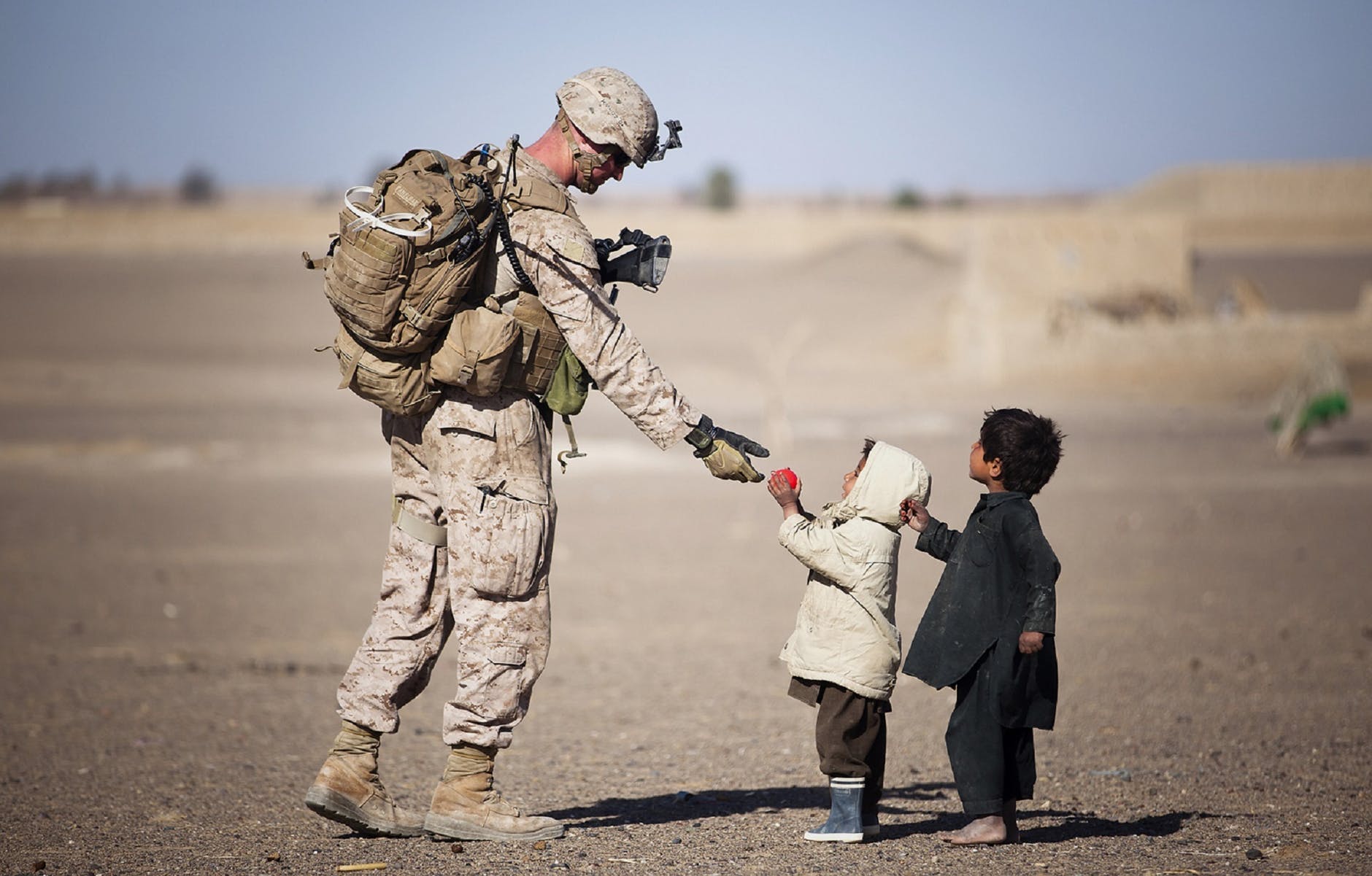
Just before sundown, the man was forced to climb onto his roof, as the waters kept rising. A Marine rescue helicopter hovered, and a Marine was lowered with a rope to rescue the man. By this time, the man was hungry, exhausted and shivering, but he refused to accept the Marine’s help, once again claiming that God would rescue him.
As night fell, and the waters were creeping up to his perch on the roof, the man cried out to God,” Where are you, Lord? I prayed for your help, and I trusted you to rescue me. Yet here I am, clinging to the roof. I’m wet, scared, cold, hungry, and tired. Didn’t you hear me? Don’t you care?”
From the darkness above, a voice answered: “I sent two boats and a helicopter. What more do you want?”
This is a silly story, but it made me think– how often do I miss God’s answer to my prayers because of my own narrow focus or selfish expectations? When God sends a canoe, do I dismiss it because I want a different outcome? The story doesn’t say why this man refused to see God’s hand in the reasonable rescue attempts that came his way– perhaps he thought God would simply redirect the floodwaters away from his house, or provide a supernatural rescue. And we never find out what happens next– maybe the man gets his miracle, after all.
God’s ways are not our ways, but God often uses practical, even humble means to answer our prayers. And He rarely ever tells us what His answers will look like.
Even the Apostle Paul had to be rescued– several times. In Acts 27 and 28, we find an amazing story in which God revealed to Paul that he would be shipwrecked and rescued. Several attempts were made to save the ship, but Paul’s focus was on saving the lives of all on board. And God answered his prayer. https://www.biblegateway.com/passage/?search=Acts+27-28&version=NIV Strangely, God chose not to reveal that Paul would face a new danger as soon as he was safely on land. Paul trusted God to make sure he arrived safely in Rome– no matter WHAT crisis arose, no matter what surprising disaster loomed. When he was bitten by a poisonous viper, Paul didn’t panic. The same God who had led him safely to shore kept him from harm yet again. This same God would bring him to Rome, where he would be executed for his faith. While in jail, Paul wrote many letters, sometimes asking for basic necessities– including a warm cloak and some parchment. Paul never lived to see his letters become part of the New Testament. He never lived to see generations of martyrs and missionaries reading and sharing his words around the world. But he left a testimony of faith that God would be with him, wherever he went and whatever circumstances he faced.