One of my favorite movies is “The Princess Bride.” Based on a modern “fractured” fairy tale by William Goldman, it tells the story of a young couple whose “fairy tale” romance is complicated by his death, her kidnapping on the eve of her wedding to an evil prince, and rodents of unusual size…
One of the kidnappers is a Sicilian mercenary named Vizzini. Vizzini brags about his intellect, and claims to know more than anyone. He also claims that his plot to kidnap Princess Buttercup is perfect to the last detail. But when a mysterious stranger begins following them, and foils each of Vizzini’s efforts to shake him, Vizzini grows more and more rattled. His brilliant plan turns out to be less than perfect. In fact, the mysterious stranger (who turns out to be Princess Buttercup’s long-lost true love) succeeds in rescuing the princess and defeating Vizzini in a battle of wits.
As each of Vizzini’s efforts fails, he declares it is “inconceivable” that the stranger should win. Even in the face of clear evidence, Vizzini finds it unbelievable that his plan should have failed–and failed again! Finally, one of the other kidnappers turns to Vizzini and says, “You keep using this word; I do not think it means what you think it means”.
I often hear people scoff at faith in God– “it doesn’t make sense.” “There’s no proof that God exists.” “How can you believe all those old myths–Noah and the Ark; Moses and the Red Sea; David and Goliath–they’re impossible in ‘real life’.” “It’s inconceivable!” “Stop saying all that stuff about God!” “Stop saying you’ll pray for me.” “Prayer is nothing more than wishful thinking.”
And it can be difficult to have faith, sometimes. We don’t ‘see’ what God is doing in our lives and circumstances.” We don’t understand the bigger picture. We don’t believe that God sees or hears us in the middle of our struggles. But God tells us time and time again that nothing is impossible for Him; that He knows all that happens, and that He works all things together for the good of those who follow Him (Romans 8:28). God is able to do “exceedingly, abundantly, above all that we ask or think..”(Ephesians 3:20)
Those stories in the Bible; those “unbelievable” stories we hear or read about miraculous healings and lives transformed…we can choose to ignore them, or scoff at them. We can, like Vizzini, claim that they are “inconceivable,” or try to explain them away while trusting our own knowledge and experiences to get us through life. We can ignore the wise counsel of others, ignore our conscience, and laugh in the face of danger. But in the end, we are human. We are fallible. We are not all-knowing or all-powerful. And we are not immune to sin and its poisonous consequences. The only chance of escape is to be rescued by someone who is “immune” to sin– our Savior, Jesus the Lamb of God.
It may seem “inconceivable” that God would part the Red Sea, or save Noah in the Ark; it may seem beyond belief that Jesus would be born as a human, live among people who denied Him, die on the cross and be resurrected on the third day, so that He could take away the power of sin and death for anyone who will trust Him. But it is precisely this Good News that has transformed the lives of millions of people throughout the centuries since he came.
It may seem “inconceivable” that God would listen to our “little” prayers and care about our every need– but He does! His Love may be beyond our ability to comprehend or explain– His power extends beyond our wildest imagination. But if we have faith– even as small as a mustard seed (Matthew 17:20)– we can experience God’s Love, Power, Grace, and Salvation in miraculous ways.
I worked for many years at a public library doing pre-school story time programs. One of the favorite songs among the children was “Head and Shoulders, Knees and Toes.” Children love rhymes, music, and movement, and this song involved all three. Children stood, ready to stretch and bend, point, and sing: “Head and shoulders, knees and toes, knees and toes.” Their hands flew from one body part to another as we sang, faster and faster. “Eyes and ears and mouth and nose; head and shoulders, knees and toes, knees and toes.” Faster and faster, louder and louder, the excitement growing, until the song ended in a breathless shout, “Knees and toes”!
Another favorite was the “Hokey Pokey”, in which we formed a circle and took turns “putting in” and “putting out” various limbs and body parts, “turning (ourselves) about” and clapping. We “put in” our right arms, our left legs, our heads, and “our whole selves.” From the earliest of ages, we become aware of the various parts of our bodies, their names and functions, and how they work together.
As God’s people, we are to be the “Body of Christ” (1 Corinthians 12:12-14) and our bodies are to be His temple(1 Corinthians 6:19). It is important that we recognize how every part of our body needs to be consecrated and ready to serve, to worship, and to reflect God’s Glory.
This is not a new concept. In fact, much of the book of Leviticus is given over to consecrating every aspect of the worship of God by His children. There are detailed instructions for the priests– how and when to enter the Tabernacle; what to wear, what kind of offerings to bring and how to prepare for service. One set of details involves the installation ceremony for the priests. They were to wash from head to toe, before putting on the sacred garments. They were to offer a blood sacrifice, and some of the blood was to be placed or smeared in three places– the lobe of the right ear, the thumb of the right hand, and the big toe of the right foot (Leviticus 14:28).
Scholars through the years have given us many reasons for these detailed instructions (see this link for a terrific overview) https://www.myjewishlearning.com/article/ears-thumbs-and-toes/, and most of them bring out the idea that God wants us to worship and be consecrated “from head to toe.” God has authority over how we choose to use our ears, hands, and feet– He wants purity in our words and deeds. He wants us to listen to Him, obey Him, and follow Him.
The smearing of blood in these three areas also demonstrates a need for atonement– only blood can cover or atone for our lack of attentiveness, our lack of obedience, and our open rebellion against God’s authority. The blood of the ritual sacrifices in Leviticus are a foreshadowing of the ultimate atonement we receive from the sacrifice of the Only True Lamb, Jesus Christ. Christ takes away our sin, and consecrates us to His service and worship– from head to toe!
And, unlike the Hokey Pokey, THAT’S what it’s all about! God gives us His life and purity, His Grace and forgiveness, His divine purpose and eternal Glory when we “put our whole selves” in His hands, and He “turns us all about,” to become more than conquerors (Romans 8:37), a royal priesthood (1 Peter 2:9), and the sheep of His pasture. (Psalm 100:3)
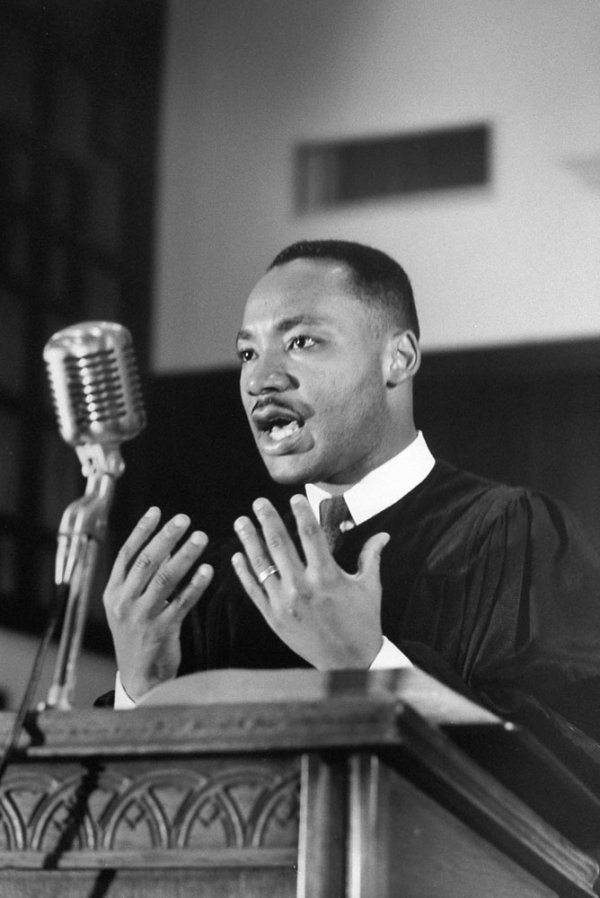
Last week in America, we marked two important dates. We celebrated the birth of a great hero, patriot, and statesman, Martin Luther King, Jr. And we marked the 47th anniversary of the Supreme Court decision, Roe v. Wade, which effectively legalized abortion across the land.
The life of Dr. King was marked by hardship, oppression, violence, and assassination at the age of 39. Dr. King was a brilliant student and gifted speaker. He led peaceful protests and civil rights marches calling for justice and equality under the law for all people. More than 50 years after his death, there are still issues of racial discrimination and racial tensions in this country. The disproportionate loss of life and liberty among blacks in urban areas has led to a new round of protests, some of which go under the name of “Black Lives Matter.” There is a feeling that, especially with the police and government officials, black lives don’t matter– that black lives are devalued and dismissed as less deserving of respect and protection.
In light of this, there has been “push back” from those who argue that “ALL Lives Matter”, or that “Blue Lives Matter” (blue for police who have become victims of mob violence and angry crowds who feel that the police are responsible for racism and corruption). The argument is that groups like “Black Lives Matter” are not so much about bringing awareness or promoting justice, but are meant to divide us as a nation and exact revenge for past offenses, slights, and perceived slights.
There is speculation about what might have happened if Dr. King had not died when he did. Would he have continued leading non-violent protests? Would the Civil Rights movement of the sixties gained more momentum under Dr. King’s leadership? Would our nation have achieved a new dawn of equality, freedom, and unity, greater and stronger than what we have seen in the last five decades? Would Dr. King be pleased with the progress we have made, or ashamed? Did his life make a difference? Yes. But was it “enough” of a difference? Does it matter to a young person of color growing up in Baltimore or Chicago that Dr. King spoke out, marched, and died for a dream that seems frozen in time and unfulfilled?
Just two days after our nation wrestled with that uncomfortable memory, we marked one even more controversial. In 1973, our Supreme Court ruled that no state could prohibit abortion. The decision also limited the ability of states to restrict abortion. Since that decision, an estimated 60 million Americans http://www.numberofabortions.com/ (not to mention infants around the world) have been denied the right by legal practice to be born. This is roughly equal to the number of people killed in World War II, though estimates of both numbers vary by source (https://www.nationalww2museum.org/students-teachers/student-resources/research-starters/research-starters-worldwide-deaths-world-war)
In looking at abortion, we see millions of lives who were determined NOT to matter. They didn’t deserve respect, protection, liberty, education, dreams, food, shelter…not even breath and a heartbeat!
Oh God– let us see life as YOU see it. Every life matters infinitely to You. You have created all life–unique, precious, priceless, glorious, fragile, and yet eternal. You walked among people, healed the sick and broken, reached out to the outcast and isolated, welcomed children, and brought the dead back to life. In Christ, you took on human life– breathed the air, knew joy and pain, weariness, hunger, and strife.
One life– every life– matters. It matters, not because we are important to the world, but because we are precious in the eyes of our creator. We celebrate the life of Dr. King, because we was considered important in the history of our nation. But God celebrated Dr. King’s life from the moment of his conception. God knit him together in his mother’s womb, just as He does for each of us. God knew the moment of Dr. King’s birth. He saw every tear, heard every laugh, felt every bruise that Dr. King experienced. And God knew the moment of Dr. King’s assassination. He knew the shock and horror it would be for his family. He knew that years later, we would quote Dr. King’s words and even argue about his relevance and impact. But Dr. King’s life mattered to God even if it had been a life of obscurity or failure.
Similarly, and incredibly, every one of those 60 million lives that have been lost to abortion “mattered” to God. He knew and loved them from the moment of conception. And He knew– He KNEW– that they would be aborted; thrown away and discarded by those who should have loved and protected them. And He LOVES those who killed them– their lives “matter” to God as well. Dr. King’s dream was that his children would be judged by the content of their character. God will judge us one day on that basis; but He offers to judge us by the content of HIS character, if we will trust Him to forgive us for the past, and transform us as we live for Him.
Your life matters to God. It has worth and meaning. You are infinitely precious– so much so that God sent His only son to live and to die for your sake. What an incredible love He has for you! What an incredible love He has for every person you will encounter today!
I’m continuing to explore the life of Lot in the Biblical story of Genesis. Lot, the nephew of the Biblical patriarch, Abraham, chose to live near, and then in, the wicked city of Sodom. His circumstances have made him wealthy, but they have also made him a pawn and a victim of greed and war all around.
When we left Lot (see Friday’s entry), he had been rescued by his uncle Abram (later renamed Abraham), along with all his possessions, after being kidnapped from Sodom. This might have been a good time for him to move on with his life, make a fresh start, and get away from the wars and wickedness surrounding him. But he didn’t. Nor does he seem to have had any kind of positive impact on his neighbors and friends. The Bible doesn’t mention whether or not Lot joined in any of the wicked behavior of his fellow Sodomites, but he seems to have turned a (mostly) blind eye to it.
The Biblical narrative leaves Lot for a few chapters, to concentrate on the life of Abraham, the changing of Abram’s name to Abraham, the birth of his son, Ishmael, and the promised coming of Isaac. But at the end of chapter 18, the LORD speaks to Abraham about the impending destruction of the cities of Sodom and Gomorrah:
17 The LORD said, shall I hide from Abraham what I am about to do, 18 seeing that Abraham shall surely become a great and mighty nation, and all the nations of the earth shall be blessed in him? 19 For I have chosen him, that he may command his children and his household after him to keep the way of the LORD by doing righteousness and justice, so that the LORD may bring to Abraham what he has promised him.” 20 Then the LORD said, “Because the outcry against Sodom and Gomorrah is great and their sin is very grave, 21 I will go down to see whether they have done altogether according to the outcry that has come to me. And if not, I will know.” 22 So the men turned from there and went toward Sodom, but Abraham still stood before the LORD. 23 Then Abraham drew near and said, “Will you indeed sweep away the righteous with the wicked? 24 Suppose there are fifty righteous within the city. Will you then sweep away the place and not spare it for the fifty righteous who are in it? 25 Far be it from you to do such a thing, to put the righteous to death with the wicked, so that the righteous fare as the wicked! Far be that from you! Shall not the Judge of all the earth do what is just?” 26 And the LORD said, “If I find at Sodom fifty righteous in the city, I will spare the whole place for their sake.” 27 Abraham answered and said, “Behold, I have undertaken to speak to the Lord, I who am but dust and ashes. 28 Suppose five of the fifty righteous are lacking. Will you destroy the whole city for lack of five?” And he said, “I will not destroy it if I find forty-five there.” 29 Again he spoke to him and said, “Suppose forty are found there.” He answered, “For the sake of forty I will not do it.” 30 Then he said, “Oh let not the Lord be angry, and I will speak. Suppose thirty are found there.” He answered, “I will not do it, if I find ththirty there.” 31 He said, “Behold, I have undertaken to speak to the Lord. Suppose twenty are found there.” He answered, “For the sake of twenty I will not destroy it.” 32 Then he said, “Oh let not the Lord be angry, and I will speak again but this once. Suppose ten are found there.” He answered, “For the sake of ten I will not destroy it.” 33 And the LORD went his way, when he had finished speaking to Abraham, and Abraham returned to his place.
The Bible is not explicit in describing the evil that occurred in Sodom and Gomorrah. But two things stand out in this passage. The LORD speaks of “the outcry” against these two cities and the gravity of their “sin.” Some people have suggested that there is a single egregious sin– “sodomy”– that roused God’s especial judgment. Certainly, in chapter 19 (https://www.biblegateway.com/passage/?search=Genesis+19&version=NIV) the men of the city demand that Lot’s “guests” be brought out so they can have sex with them. Lot offers his virgin daughters, but the men refuse and become so violent that the “guests” have to intervene. However, a parallel story is reported later in the Old Testament, this time in the city of Gibeah in the region of Benjamin. (https://www.biblegateway.com/passage/?search=Judges+19&version=NIV) And, while judgment is delivered to the city, it is not singled out for especial judgment by fire from heaven.
Whatever the evil in Sodom, it included rape, sodomy, and likely human trafficking and human sacrifice (see the end of Genesis 14, where the king of Sodom offers Abram all the material spoils of war, in exchange for all the people). It was not just the evil of sexual promiscuity or occasional violent practices, but something that caused an enormous “outcry” from victims, and possibly even angelic messengers reporting on the level of depravity, destruction, and oppression involved. Yet Lot lived there for years, raising his family, going about his business, and ignoring or excusing the evil all around him. There is no record of him making any positive difference, any positive contribution; no record of Lot doing anything to stand out from among his neighbors.
And when judgment comes, it is swift and terrible. The Angelic messengers must drag Lot and his family away from their home and possessions. They urge him to flee into the mountains, but he balks and asks to be allowed to flee to the small town at the edge of the destruction. (More about this at a later time…) Lot has lost almost everything of value– he ends up bankrupt; materially, and spiritually. Lot is a vacant shell of a man–fearful and snivelling, weak and empty.
What evil occurs in our neighborhoods today? What are we doing to alleviate it? Combat it? Excuse it? Enable it? If God were to bring judgment to our city or country, would He have to send angels to drag us out of the fire? Would he find even 10 righteous people on our block? In our apartment complex? God didn’t find 10 righteous people in Sodom…In fact, the Bible doesn’t say that he found ANY! Lot and his daughters were spared, but the stench of Sodom and Gomorrah lingered in this family to their ruin.
Lot’s legacy is one of emptiness, loss, and depravity. But there is one bright spot, which we’ll look at next time. God is slow to anger, and rich in mercy. His redemptive plan will include even Lot with all his flaws and weakness. And it extends to each of us, regardless of where we’ve lived, or what we’ve experienced. God didn’t find any righteous people in Sodom; He knew He wouldn’t! More than once the Bible tells us “there is no one righteous; not even one; there is no one who understands; there is no one who seeks God. All have turned away, they have together become worthless; there is no one who does good, not even one.” (Romans 3:10-12; Psalms 14:1-3, others…) God’s plan is not to find people who are already righteous– His plan is to rescue people like Lot; people like US! And His plan is to include us in the rescue effort, too.
I have been revisiting old hymns lately as I write about my pursuit of prayer. This is partly because I believe that prayer is a form of worship, and is closely tied to other forms of worship– meditation, singing, etc.. Sometimes, it can be helpful to pray songs or to sing prayers– look at the entire book of Psalms!
Our church has recently been involved in revival services– two weeks of time set aside to evaluate our daily walk with Christ. We need periods of revival and refreshment, conviction and confession, repentance and reflection. Without them, we will wander; without them we will wither and grow cold, and lose sight of our first love.
One of the first nights, we explored the idea of surrender. We say that we trust God; that Jesus is Lord, that we are followers of Christ…but do we really demonstrate those truths by the way we live? Have we really surrendered our will, our lives, our futures to God? We claim that He is sovereign over big things– all of creation, world affairs, and such–but is He Lord over the little things? Do I trust Him with my reputation when someone misrepresents me to others? Do I trust Him with my diet when I am tempted to overeat? Do I trust Him with my time when someone asks me to help them on my day off?
One of the keys to this hymn (and to prayer) is in the first verse– “..in His presence daily live.” There are times when I feel the need to surrender; times when I feel wholly surrendered and devoted. But there will be other days when the feeling just isn’t there. My surrender needs to happen daily– in the “good” times and in the “difficult” times. Sometimes, I just need to pray that the Holy Spirit will guide and empower me to recognize and surrender those areas that I have tried to “take back” from Him.
And then, I need to be intentional about letting go–one piece at a time, if necessary–each day saying, “Yes” to God instead of “Yes” to those things that pull me away. It’s not always easy to say, “I surrender all.” It’s even harder to actually follow through. We want to hang on to things that are comfortable, familiar, even “good.” We want to hang on to things that seem to promise safety, success, or fulfillment– even when God offers more.
I’m not writing this because I have mastered the discipline of surrender– I need to learn to let go, to trust God more, to risk what I cannot keep to gain what I cannot lose (paraphrasing from Jim Elliot–https://www.brainyquote.com/quotes/jim_elliot_189244. That is my prayer today, for myself, and for others.
There is a curious story in the Bible about the Apostle Paul and a young man named Eutychus. https://www.gotquestions.org/Eutychus-in-the-Bible.html. The story is found in Acts 20:7-12, and involves a young man listening to the Apostle Paul. As Paul talks on into the night, the young man, sitting in the third story window, falls asleep, falls out of the window, and plummets to his death. Luke, who authored the the gospel which bears his name and the book of Acts, was a doctor, and an eyewitness of this event. He clearly states that Eutychus died from his fall. But Paul runs outside and brings Eutychus back to life, returning inside to finish his talk and eat with the crowd– who are amazed and relieved to have their friend alive and well.
Luke’s story doesn’t say whether or not Eutychus was alone in the third story window, or leaning against a wide window frame or perched precariously before he fell into “a deep sleep.” I have always imagined him perched comfortably leaning against the side of a wide and open window frame, one leg drawn up and the other dangling as he listened to Paul speak. As the night wore on, he may have slouched a bit, or even turned to lean his whole back against the frame, pulling both legs up onto the wide ledge. My mental picture may be completely wrong, but I don’t think of him hugging a narrow space and sitting tense and clinging before sleep claimed him.
A few days ago, I referenced an old hymn knows as “The Solid Rock” or “On Christ the Solid Rock I Stand. ” One of the lines of the hymn states, “I dare not trust the sweetest frame, but wholly lean on Jesus’ Name.” But the flip side of this is that Jesus IS the solid rock and the “frame” on which we can both stand and rest secure.
I was reminded today of another old hymn; one that I heard as a child and did not understand at all. Have you ever heard a new song, and completely mis-heard the lyrics? As a young child, I often heard hymns sung that were old to the adults but “new” to me. This was one of them. I paid little attention to the first verse, but the chorus!?! I was sure the congregation was singing, “Wienies (the word my grandparents sometimes used for hot dogs)! Wienies! Wienies on the everlasting arms…” It sounded like a righteous chorus of hot dog vendors at a baseball game. I giggled and snorted, and my grandmother, who was standing next to me, quietly leaned over and asked what I found so funny. When I explained it to her, she too began to giggle a little, and we shared a (quieter) giggle and smiles throughout the rest of the hymn. (Sacrilegious, I know, but it seemed very funny to a five-year-old.) Later, my grandmother lovingly explained the hymn–turning a “silly” song into a wonderful testament of God’s tender, loving care that touches me to this day.
I don’t recommend to anyone that they trust themselves to a window frame, a third story balcony, a too-comfortable seat at the theater, or to hot dogs eaten in bleacher seats at the baseball game. God doesn’t call us to get comfortable! Even if we are listening, and trying to follow Jesus, we may still fall– literally, like Eutychus, or figuratively. We may misunderstand, or get confused or weary and lose our focus. We may put ourselves at risk by leaning on the wrong frame.
God could have kept Eutychus from falling from that third story window, but I believe He meant for that story to come down through the ages. It is not just a miracle, and a testament to the power of God and given to the Apostle Paul. It is a great reminder that even when we are trying to listen and follow God, we can still end up trusting in the wrong things and “falling asleep”. But no matter how far we fall, or how broken or “dead” we may seem to be, God sees us, cares for us, and wants to give us new life! We can rest “safe and secure from all alarms” when we remain in (or return to) the reassuring, everlasting arms of our Savior.
Some days, I feel like Eutychus– lying broken and useless three stories below where I began. Other times, I feel like a confused hot dog vendor, calling out to God for “Wienies”, when I really need Wisdom and Grace. But God is faithful to bring me back time after time, wrapping me in his amazing “Everlasting Arms”:
The Bible is not a series of stories about super heroes, though it is often taught that way in Sunday School. Instead, it is the story of ordinary, flawed and hurting people who encounter a Holy and Majestic God. Jacob is one such person, and nearly half of the book of Genesis revolves around Jacob’s families– his parents and brother, his father-in-law’s household, and his own wives and children, extending to his grandchildren and even great-grandchildren.
Jacob grew into a man of great integrity and wisdom–a man of power and influence, wealth and consequence. But he was far from perfect, and his family caused him no end of headaches and heartaches. From the bickering and rivalry of his wives and their servants, to the violent clashes of his many sons, Jacob knew very little peace.
It is important to note that, while the “God of Jacob” protected him, blessed him, and gave him a new name, He did not make life smooth and comfortable for him. We are not given great insight into Jacob’s parenting style, but we know that he had a favorite son, Joseph, and that his favoritism caused resentment among the others . Unlike his own father, though, Jacob interacted with all his sons, giving them each responsibilities and training them to work together. On his deathbed, he had blessings for each son that tied in to his strengths and weaknesses. We know that Jacob was highly respected by his sons, and that in the end, they did not disperse and lose contact with each other, but lived together in the land of Goshen in Egypt– even after the time of the famine that drove them there.
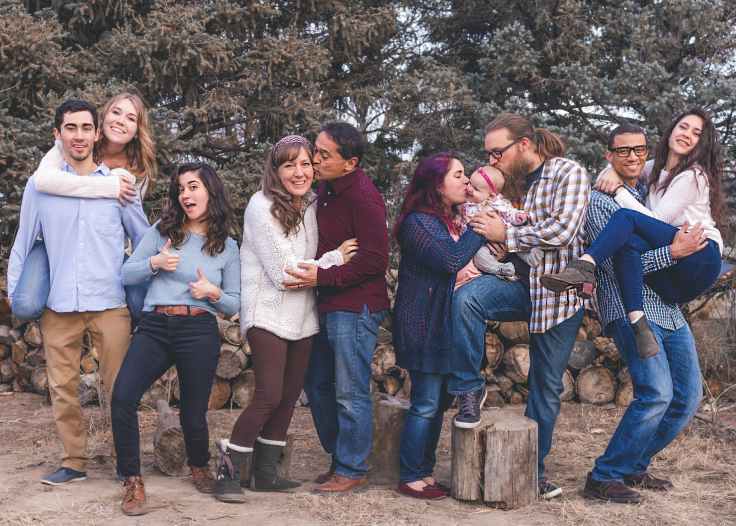
Even in a family of blessing, there will always be some level of dysfunction, struggle, hardship, and pain. Favoritism, discord, envy, resentment, unforgiveness– it all starts in families among flawed people living in a fallen world.
So often, we try to present ourselves and our families “in our Sunday best”– we want people to be impressed by our show of piety or “good manners” or “problem-free” family life. We pretend that we never argue, never harbor bitterness, never have tantrums or meltdowns or sarcastic “episodes”. God is not looking for picture perfect families…He is looking for families who are honestly and earnestly seeking Him.
Surely, after his encounter with God, Jacob changed. He was a better man than before. But he was never the “perfect dad”, the “perfect husband”, or the “perfect man.” And his family wasn’t a model of decorum and harmony. But God did not turn his back on this dysfunctional family. He did not disown Jacob or cancel all the blessings He had promised. Instead, he solidified the promise he had made to Jacob’s grandfather and father, creating in Jacob’s sons the twelve tribes that would make up the nation of Israel. Just as Jacob’s family wasn’t perfect, the nation of Israel was never perfect– it still isn’t. But God has chosen to pour out His grace on imperfect people throughout history– it’s His specialty!
If you are experiencing disharmony or even angry clashes with family members– take heart and hope from reading about Jacob’s trials and triumphs. Remember to take your pain, resentment, hurt and worry to “the God of Jacob.” God was with Jacob through all his many struggles, including the heartaches of “losing” his favorite son, losing his beloved wives, suffering during the famine in Canaan, having to move to Egypt in his old age, and watching his sons struggle with their own families and trials. Out of each struggle, God brought renewal, hope, rescue, and promise. And remember, God will not abandon you (or your children) because your family experiences disharmony or you have wayward family members. Others may pass judgment on appearances, but God sees the heart– He’s in the business of fixing that which is dysfunctional– not promoting those who hide behind a “perfect” facade.
The Biblical story of Jacob and Esau has long baffled readers and scholars alike. I don’t pretend to have the answers to some of the tough questions it poses, but I’d like to take a close look at some of them.
Esau and Jacob were twins–the only sons of their parents–born just minutes apart. Yet their personalities, their destinies, and their relationships with God and others could not have been more different.
We spent the last post covering some of Jacob’s character flaws– his early years involved scheming and “cheating” this twin of his. Jacob’s life and actions are the focus of the story, after all. He is the one God chose to establish the nation he promised to Jacob’s father and grandfather. But why Jacob and not Esau?
In many ways, this story echoes that of the very first brothers in the Bible. God chose Abel’s sacrifice over his brother’s. We are not given an obvious reason why Cain’s sacrifice was unacceptable– or why Abel’s was. In this case, God does not give Rebecca a reason why her boys would fight throughout their lives or why the elder son would serve his younger brother. At one point, the Bible even says that God “loved” Jacob and “hated” Esau! So we are left with a big question–Does God play favorites? Does He give His favor capriciously? If so, why bother to worship, serve, and obey Him if, in the end, He has already chosen who will be blessed?
We may never have a full explanation of God’s ways– we are told that they are not our ways; that they are higher and wiser than our ways–but there are several things I want to consider that may shed some light.
God is timeless. He lives beyond the boundaries of linear time, and he sees the end from the beginning. As we read through the story of Jacob, we see his progression, and the changes he makes as he matures and as he encounters the great God of his fathers as it unfolds in time. His beginning shows little promise, but God already sees Jacob as Israel, as the father of twelve tribes of people, as the ancestor of Moses, of King David, and of the coming Messiah. He sees all of this before Jacob is even born! It is part of His eternal plan that Jacob, the cheater, the underdog, the “lesser” brother should become all of these things.
God sees inside the human heart. Esau’s character is not fully shown in this Biblical story, but we get a few clues: 1) Esau despised his birthright– he was flippant about his inheritance, trading it for a bowl of stew. 2) Esau took foreign wives who caused his parents distress–this detail may almost escape the modern reader. We do not tend to live with our extended family, but it was (and in some cases still is) common to the society in which Isaac lived. Esau did not consider his parents when bringing foreign women into the family. They had different customs and different gods. And Esau didn’t learn from the first two wives..when Rebecca commented on the Hittite women, Esau married a daughter of Ishmael, a woman likely to resent her father’s rival (remember Ishmael was banished on account of his resentment of Isaac!) 3) Esau plotted his brother’s death. His anger and resentment over the lost blessing caused him to plot murder. Jacob was sent away, not only to find an acceptable wife, but to keep him safe from his brother’s vengeance. Even though the two brothers later met in peace (Genesis 33), the meeting was filled with tension and the brothers were never close. 4) There is not one indication in the Bible that Esau ever sought the God of his fathers—no mention of him praying, offering a sacrifice, or acknowledging God. In fact, the sons and descendants of Esau (Edom) would attack and fight with the nation of Israel for centuries to come, finally being conquered and forced to serve the descendants of Jacob. https://www.jewishvirtuallibrary.org/the-edomites
God does not “love” or “hate” in the same way that we do. God’s love is universal and eternal. God loves even those who reject, mock, and hate him. So when God says, “Jacob have I loved, and Esau I have hated”, He is not talking about his feelings for individuals (see https://www.biblegateway.com/passage/?search=Malachi+1%3A1-5&version=NIV and https://www.biblegateway.com/passage/?search=Romans+9%3A6-16&version=MEV). Rather, He is talking about how He shows mercy. Jacob and Esau were real people, and God blessed both of them, and built both of them into great nations. But God showed mercy and favor on Israel for keeping his commandments, while destroying the nation of Edom because of its continuing wickedness. (God eventually showed wrath on the nation of Israel as well, sending its people into exile because of their unfaithfulness!) Even in their destruction, both nations retained a remnant and their peoples exist to this day.
God did not abandon Esau. When Jacob finally reconnects with his older brother, Esau is the head of a mighty army. Esau’s sons became the heads of tribes and kings of Edom. God allowed Esau to prosper and grow strong. But Esau never sought God; Edom never showed humility, wisdom, or reverence–only arrogance, might, and hatred. God shows mercy to those who don’t deserve it, and grace to those who desire it, but He will not allow injustice and arrogance to go unchecked forever.
God’s grace is a gift–Jacob didn’t deserve to be favored; but neither did Esau, or Isaac, or Abraham. Nor do any of us. https://www.biblegateway.com/passage/?search=Romans+3%3A9-18&version=ESV Not one of us has earned God’s blessing. God chooses to love us even in our sin, and chooses to give us the Grace to return and receive His blessing!
Why do we pray to, sing praises to, and trust in the fortress of “the God of Jacob” (Psalm 46; Psalm 75, etc.)? Isn’t Jacob the one who cheated his brother and tricked his father to steal an inheritance? Wasn’t he a liar, and a thief?
Last time, https://wordpress.com/read/feeds/78948359/posts/2322587905, I wrote about Jacob as the “other son”, the one in the shadows. But Jacob wasn’t content to stay in the shadows. He waited and schemed, and used his brother’s and father’s character traits against them and to his own advantage. Jacob was crafty, and sly, and devious. These are not characteristics designed to build trust or inspire admiration. They are, however, characteristics many of us secretly admire. Jacob tricked his way to the top! He didn’t exactly “steal” his brother’s inheritance– he tricked his brother into giving it away! No bloodshed or fighting…Jacob simply used his brother’s weakness and vanity to get what he wanted. Some might say that Esau didn’t deserve to keep an inheritance he was willing to barter away for a measly bowl of stew. (https://biblia.com/bible/nlt/Ge25.27-34) Even the Bible says that Esau despised his birthright!
Later, Jacob steals his brother’s blessing, too. This time, he lies and deceives his dying father in the process. This Bible story is curious, and much has been written about whether Jacob and his mother set out to deceive Isaac, and why. Was Rebekah trying to cheat her own son, Esau, out of his blessing, and lie to her husband in the process? Why would Jacob want to steal a blessing from his brother when he already had “taken” the birthright?
The Bible doesn’t always give us easy answers and complete explanations. What it does, however, is give us glimpses into the lives of real people and their very real encounters with God. Jacob’s family was a divided family. Isaac was prepared to give everything to Esau when he died. There is no evidence that he was prepared to give Jacob any kind of blessing– it had all been reserved for Esau. Whether this was in retaliation for Jacob’s earlier “trick”, we are not told. Whether Jacob and Rebecca intended for Jacob to appease his father with meat and get “a blessing” , and things got out of hand, or whether they intended that Esau should be cut out of both blessing and birthright, we don’t know. What we see is that Isaac meant to bless only Esau. When the “real” Esau showed up too late, there was nothing left for Isaac to give as a blessing. There was no plan for a secondary blessing– for either son. (Ironically, because Jacob was sent away, Isaac had a “going away” blessing for him that was also denied to Esau.. (see Genesis 28:1!)
Jacob’s days of cheating and using deception were to leave a lasting impact on his life. He was sent far away from his family, fearing his brother’s anger. He missed years of being with his mother and father; of having their advice, or letting them spend time with their grandchildren. Jacob ended up finding, in his Uncle Laban, a bigger cheat and liar than he had ever dreamed of being; a man whose craftiness cheated Jacob out of years of labor and saddled him with family problems for the rest of his life. Jacob’s heart was broken by the deception his own sons would perpetrate on him when they sold their brother, Joseph, into slavery. Cleverness, deceit, and crafty schemes may offer a temporary ticket to victory, power, and “the good life.” But such schemes have consequences that cause lasting pain and punishment.
But that’s not the end of the story. We see Jacob rise above his own earlier mistakes. Jacob never loses his cleverness or his desire to succeed, but he learns how to “cheat the cheater”– he becomes so successful and hard working that Laban can’t fault Jacob for having larger flocks and becoming rich. Jacob could rightfully show that he had not stolen any of his uncle’s flocks, and he made Laban rich, too. Jacob’s cleverness was not the problem– it was how he had used it; with lies and deception against his father and brother. Later in life, he uses the same cleverness to appease his brother, provide for his family, and establish his own growing dynasty.
And, at the end of his life, Jacob had blessings for each of his sons. Even though he had “favorites”, he made sure each son knew that he was loved and blessed by both his earthly and heavenly father. God also confirmed this by giving each “son” an inheritance among the burgeoning nation of Israel when they returned to the land of promise after their time in Egypt.
What caused this change? Some might say that Jacob “learned his lesson” (and he did!) at the hands of his uncle and with the passage of time. Some might say he matured with the responsibilities of fatherhood and his career. But the Bible gives us one other important factor– Jacob encountered God. Jacob even wrestled with God. But God cannot be cheated. God cannot be outwitted or tricked. God cannot be grabbed by the heel and tripped up by any scheme of man. Yet God blesses even the cheater. God loves even the liar. God chooses even the thief. God’s love and grace are greater by far than any birthright or blessing we can “grab” for ourselves. God doesn’t bless us because we are clever, and certainly not because we lie or cheat. But he gives us intelligence, cleverness, and, if we ask for it, the wisdom to know how to use our gifts in ways that please him and help others.
I don’t know about anyone else reading this, but I need a reminder every so often about living in the present (including keeping my prayer life centered in the present). It is very tempting sometimes to wallow in the past or dream of the future. There’s nothing wrong with learning from past mistakes or making future goals, but we are not to waste our time or our energies pursuing what isn’t, while ignoring what is happening around us.
If we look closely at the Lord’s Prayer, we see how centered it is in the present. There are a couple of forward-looking phrases (Thy kingdom come…lead us not into temptation…For ever and ever..) but most of the prayer is for the present and foreseeable future.
I need to be reminded, through Christ’s example and through scripture, that God wants me to trust Him for my daily needs and follow one step at a time. If I find myself spending more time asking God for things far out in my future, or continually bringing up things from my past, it may mean (though not always) that I am not fully trusting in the sufficiency of His Grace for today.
God has already seen my past– and loves me unconditionally. His Grace will not be rescinded each time I face a reminder of my past; He will not change His mind if someone else carries a grudge against me.
God has also seen my future. He knows my needs, my concerns, my desires. He wants me to bring my whole heart to Him in prayer–a heart that is ready to trust His provision and plan, even when I don’t know the details.
Think what would happen if every parent-child conversation involved the following themes:
“Mom, do you remember the time I tipped over your plants when I was five, and you yelled at me. I just want to tell you I’m so sorry I did that. I know you said you’ve forgiven me, but I need to ask you again.” “Dad, I know you were disappointed when I got into a fight with my brother back when I was eight, but I hope you can see how I’ve learned a lot since then. Please don’t hold that against me today.”
“Hey, Dad, I really want to drive when I turn 16. Can I ask you for a purple sports car when I turn 16? I want to be a good driver, and I just know that you want me to be a good driver. I think a purple sports car would make me a great driver in another seven years.” “Mom, will you promise to babysit my kids after I have kids? I just know my kids will want to have a close relationship with you, so will you just promise to be close to my kids when I grow up and have them?”
There’s nothing essentially wrong with the actual requests– but when we focus on the past or the future at the expense of the present, we miss learning what God has for us TODAY. We also risk seeing God only for what He gives and what He has done, and not for Who He Is!
Let’s enjoy time with God today (and every day) as it unfolds.