The Mercy Rule

I witnessed a blow-out high school football game last week.  The final score was 57 to 0!  Once the point differential was over 50, they invoked the “mercy rule.”  The game clock would not stop for downs; there would be no more “time out” calls– as this happened late in the game anyway, it just meant that the end came quickly and “mercifully” for the losing team.  It also meant that players were less likely to take dangerous risks in the forlorn hope of scoring big points.

High school football has a “mercy rule”  so that struggling teams don’t become victims of absolute despair.  This team deserved to lose, and they did.  They lost big; but they could’ve lost by a wider margin.  And they didn’t lose for lack of effort– they pushed hard and gave it a mighty try.  But they were not up to the challenge of a better team.


In life, when we come up against Sin, we can give our best effort, and still lose big.  Oh, there are certain sins that seem easily “tamed” or “defeated,” but there are others that end up crushing us– maybe it’s an addiction to porn, or a tendency to spread rumors; maybe we harbor bitterness or doubt, or we can’t control angry outbursts.

close up court courthouse hammer
Photo by Pixabay on Pexels.com

In the end, we are all losers in the game against Sin– whether the loss seems like a close shave or a blowout, the result is the same.  But the consequences are much more dire.  The penalty for Sin is Death.  Not just a single lost game, but an eternal loss of life and hope and light and love!  We are no match for Sin, and Sin shows no mercy.  Even with a mercy rule, our situation seems hopeless.  But it is not.

Death may seem like a a harsh and undeserved judgment.  We “can’t” win.  Or, more correctly, we will always lose.  Even a “mercy rule,” while it may mean that we don’t get the death we deserve, wouldn’t keep us from being “losers.”  This is how many people see God’s offer of salvation– as some sort of mercy rule that keeps us from the fate we can’t avoid.  But even if God only offered mercy, it would be infinitely better than we can imagine.  Because God’s mercy is not just a “rule”, it is a priceless gift of restoration.  We can be free from the “loss” and penalty we deserve, no matter what the “point differential.”  Even a close “loss” to sin is wiped out by God’s mercy.

God’s offer of salvation doesn’t just stop at mercy, however.  It includes something that will never happen in a football game or anywhere else in life.  God extends His Grace– all that we don’t deserve, and never could deserve–above and beyond the already infinite and superior mercy we needed to escape the judgment of Death.  We don’t just escape the horrors of death and hell.  We are gifted with all we need to win the game– to be co-victors over Death and Sin.  God, in His mercy keeps us from losing.  In His Grace, He coaches us, plays alongside us, cheers for us, and gives us the power to become all that we need to be to play our best.  AND, He has already secured the victory.  Far from being in a position where we “can’t” win– God offers us the opportunity to be in a position where we can’t LOSE!

accomplishment achievement adult african
Photo by rawpixel.com on Pexels.com

It is my ongoing prayer that if you are reading this, you have already responded to God’s invitation, through Jesus Christ, to be victorious; that God’s spirit would guide me to write what will be helpful in encouraging you and strengthening your faith (as well as my own).  I pray that you will grow in faith and make the pursuit of prayer part of your daily walk in Faith.  If that is not the case, and you have not accepted both God’s mercy and His grace, I pray that you will take that opportunity today.

Don’t wait for a “mercy rule”– accept the mercy of the Ruler!

Repent, relent, or resent?

I’m revisiting Jonah today.  The book of Jonah is a fascinating study–it’s just four short chapters, but they are packed with messages that inspire, convict, and encourage. More about Jonah here…

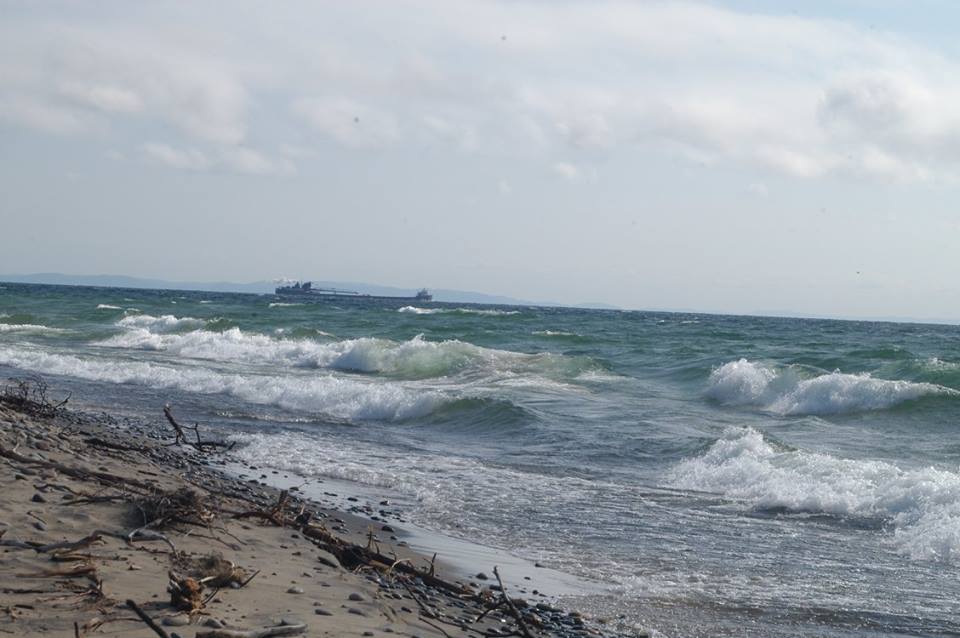
waves

At the beginning of the book, Jonah is sent by God to preach disaster to a city steeped in evil and violence.  Nineveh was an ancient metropolis of the Assyrian empire, located near modern-day Mosul, Iraq.  The people of Nineveh had been responsible for attacks against Israel, and it is believed that Jonah may have lost family members in these attacks.  Now God is sending him into the “belly of the beast” to preach judgment and doom.  Instead of following God’s command, Jonah tries to run away and gets swallowed by a big fish.

photography of whale tail in body of water
Photo by Daniel Ross on Pexels.com

This is the part of the story with which most people are familiar– Jonah and the “Whale”.  But this covers only the first quarter of the story!  Inside the fish, Jonah prays.  It is a beautiful prayer of praise and acknowledgement of God’s might and power to save.  This is not the sniveling coward of chapter one, but the great prophet he could have, should have been.  God gives him another chance and this time, Jonah is faithful to preach the message God sends– forty more days and He will wipe out Nineveh.

brown concrete building
Photo by Nicolas Postiglioni on Pexels.com

But something unexpected happens.  The people of Nineveh hear Jonah’s dire warning– a lone voice calling in the streets with a gloomy message– and they repent.  From the least to the greatest, they cry out for mercy, they fast and mourn and do a complete about-face.  Just as God saved Jonah from the fish, He relents and saves Nineveh from destruction.  Jonah’s enemies get to live to see a new day!

The Ninevites repented, God relented, and Jonah resented.  The last chapter tells of Jonah’s temper tantrum in the light of God’s mercy.  God even sends him an object lesson in the form of a gourd vine.  The book of Jonah ends abruptly with God’s last statement.  We never read Jonah’s response; we never find out if he learned his lesson a second time or not.

green trees
Photo by Juan Pablo Arenas on Pexels.com

Even with its abrupt end, the book of Jonah teaches about three important responses:

  • The people of Nineveh repented.  When faced with judgment, they humbled themselves and called for mercy.  They received it.  In spite of their former violence, idolatry, and wickedness, God sent them a warning, and He extended the grace and mercy they did not deserve.
    • Two words of warning here:
      • 1) Their response was immediate, sincere, and dramatic.  That makes for an exciting story, but repentance sometimes comes over time and quietly.  God knows if our repentance is real.  It is not our place to judge someone else’s conversion or apology.
      • 2)  In the case of Nineveh, their repentance was short-lived.  God eventually destroyed the city and the Assyrian empire.  Just because we have a moment of sincere regret or keenly feel a need for mercy doesn’t mean that God has an obligation to extend mercy or to withhold judgment indefinitely.  Grace is a gift, not a negotiation!
pexels-photo-576926.jpeg

  • God relented.  God listens, ready to extend His grace.  He does not punish us as we deserve.  He does not mete out immediate judgment without hope of redemption.  God sent Jonah with a message of potential doom to Israel’s sworn enemy in the knowledge that they (EVEN THEY) would repent.  God sent dozens of prophets to the nation of Israel warning of doom and exile, and they mocked and even killed the messengers!  God is patient, loving, and kind.  But He is also just– evil will not be forgotten or left unpunished.  God will relent, but He won’t retreat, back down, or surrender.
pexels-photo-583437.jpeg

  • Jonah resented.  We don’t know if he stayed resentful, or rediscovered gratitude for God’s grace to Nineveh or to himself, but we are left with a picture that Jesus echoes in the story of the prodigal son.  Jonah is like the older brother who worries more about his brother’s misdeeds than his brother’s soul.  How many of us who have experienced grace sulk and pout when we see others enjoying their first delightful taste of it?  Do we stamp our feet at God when he sends us to bring the Gospel to people we have written off as uninterested in or unworthy of it?  Do we resent being corrected and humbled by a loving God?  Do we worry and fret over our creature comforts as Jonah worried over his gourd vine, while others live without hope, food, or shelter?

Three words, so similar in spelling and sound, but so very different in impact!

Lord, I pray that my repentance would always be immediate and sincere; that I would see others, and their need for your grace, through your eyes of compassion; and that I would not resent your goodness and patience toward others.  Thank you for your patience and mercy toward me, and may I give the same to those who need to see Your face.  Give me the wisdom to trust you and obey, even when my flesh would run away.  May I see the gourd vines and big fish in my life as your gifts.

Can You Hear Me Now?

We experienced some storms last week, and while we didn’t have a lot of damage from the winds and rain, my husband and I lost our internet connection over the weekend.  No wireless internet meant no Facebook, no WordPress, no e-mail, and no cash register at our little shop downstairs.  We had to do every transaction by hand until we could rig up something so our smart phone could accept cards; no new chip cards, no Apple Pay or PayPal.  And while our phone could begin to accept limited credit payments, it could not provide any printed receipts, nor could it do double duty– we either had a phone or a point-of-sale device, but not both!

It was an inconvenience, but not a disaster.  I thought about thousands of people who are stuck in the aftermath of hurricanes, tornadoes, floods, earthquakes, and blizzards who have no electricity, no phone lines, no cell service, no roads, no water or sewer lines–cut off from common necessities and basic communication.  Suddenly, an emergency becomes even more tragic because of the isolation, and the inability to ask for help or to hear any message of hope.  (Of course, my husband would like me to put in a short plug here about the advantages of amateur radio– the radios can run on battery power and still connect over hundreds of miles!)

sound-speaker-radio-microphone.jpg

Isolation is an earthly concept.  God is eternally Triune.  He created us for relationship; from the very beginning, he declared that it is not good for “man” to be alone (Genesis 2:18)  God instituted marriage, and families, and communities so that we would stay connected, and he himself came to walk and talk with mankind in the Garden of Eden before the Fall.  It is mankind who hid from God and broke off communication– one of the effects of Sin is the desire to run away, to separate, to isolate and cut off relationships and break off contact.

That is one reason that prayer is so basic; so essential.  It is a lifeline to the one who loves us best, who knows what we need, and has the power to hear us, to help us, to lift us up wherever we may be, whatever our circumstances.

pexels-photo-787452.jpeg

But sometimes, even when we want to talk to God, it seems impossible to speak or feel like he hears us.  Sometimes, we are the ones who can’t come up with words, or can’t settle our minds to seek his face.  Sometimes, we pour out our hearts and wait in silence for an answer.   Why should it be that just when we need it most, prayer seems the hardest?

I wish I had a pithy, perfect answer.  I don’t know.  I have a few incomplete thoughts, though:

  • what comes easily has less value to us.  Cheap and pointless conversation doesn’t make us work hard, but it also leaves us empty and unsatisfied.  Crying out to God is hard–it humbles us, it strips us bare and uncovers all our pretenses and subterfuge.  The true depth of our need is ripped out of us like a tumor, and it hurts, but it is a healing hurt.  Waiting in silence can cause us to become restless and to doubt, but it also can cause us to listen more attentively– we strain to hear the answer; we stop the white noise of busyness and half-hearted hand-wringing, and listen with our whole being.  And the smallest whisper– that still, small voice– has the power of the first rain after a long drought.  We are revitalized and our strength renewed as never before.

pexels-photo-546657.jpeg

  • sometimes, though not always, we find prayer difficult because we have not really prayed for a long time (if ever)– we have developed a habit of saying words to the empty air and thinking that the words themselves hold some power of hope or magic or self-fulfilling prophecy.  When life’s realities cannot be wished away with simple words, we search for distractions, for other types of words, for other “realities”, when we should be searching for our maker and the lover of our souls.
  • sometimes, it is a matter of unacknowledged or unconfessed sin that keeps us from breaking through in prayer.  However, there are many people who will use this as a default position, and that, too, is wrong.  Jesus had such difficulty in praying at Gethsemane that he sweat drops of blood— NOT because of unconfessed sin, but because his heart was that overwhelmed.  Still, we should examine ourselves to see if we have started to move away from God– better to turn back than to go father afield.
  • sometimes, as with Christ in the Garden, our hearts are just overwhelmed in the moment– it’s hard to breathe!  It’s hard to go on; it’s hard to ask for help; it’s hard to keep the faith.  Just because it’s difficult, don’t give up– even if all you can do is groan or whimper–even if it feels like God has closed up the heavens and left you alone–don’t give up.  God DOES hear, he DOES care.  Sometimes, we are inches from victory– don’t give up!

And what can we do during those times?  Again, I wish I had better answers, but what I have, I want to share– some from my own experience, some wisdom from others, some of both:

  • Learn to “pray outside the box”–
    • Sing–sing the blues, sing an old hymn, sing along with the radio, sing like nobody else is listening
    • Write it out– write a letter, write an angry letter if you have to– write a rant, write a poem, write out all your questions
    • Move– dance, pace, run, punch a pillow, do some sit-ups, mop the floor, scrub the sink– as you get a rhythm going, add your thoughts or questions to your movements
    • Cry it out– it’s ok to cry, moan, sob, weep, or just stare into space and rock yourself to sleep after all the tears have dried up.  Jesus wept (John 11:35)– what makes us think that we can’t?

landscape-nature-man-person.jpgpexels-photo-256658.jpeg

  • Count your blessings
    • Make a list of what you have; what you have to be grateful for; what you have experienced and enjoyed now or in the past
    • Make a list of your questions, concerns, needs, wants, wishes–Now think back ten years and make a list of what you wanted then, and how many of those concerns have been answered, altered, or forgotten.
    • Put yourself in another time or place– what do you have here and now that others lack?  How do your present troubles compare to what others have had to deal with?
  • Ramp up your pursuit of God in other areas–
    • Search for answers in His word
    • Seek the companionship of someone you trust who will help you keep on going
    • Seek out counselors, web sites, and/or a church group or family who can keep you from becoming isolated

pexels-photo-935944.jpeg


The single most important thing is to continue the pursuit– seek God with all your heart–and you will find him sufficient through the silent times, as well as through the roaring of the fiercest storms.


Presumptuous Prayer

The Christian life is often one of paradox–We are “in” the world, but not “of” the world; we “die to the flesh”, even as we continue to breathe and walk and eat in our fleshly bodies.  Prayer is part of that paradox– we dare to present ourselves before the throne of Almighty God, yet we are told to call him “Our Father”, and to come boldly.  We call on one who is unseen, unknowable, and sovereign, and we’re told to ask for anything in Jesus’ name, and it will be done.

This can lead to problems, as we try to resolve the paradox– sometimes we dare too much; other times, we ask too little.  I want to take a peek at how this works, especially as I have a problem with the latter.

Why do I feel it is a presumption to ask God for help?  Why do I ask God to do the least that I might expect from Him, when He offers miracles for the asking?  Why do I wait to bring my requests to God, hoping that I can solve them myself and not “bother” him?  Do I not trust him?  Do I not trust him enough?  Why do I get discouraged when my prayers are not answered “my way?”  Immediately!  When hardship comes, why do I assume that it is an accident–a miscarriage of justice–and call out to God as though he is unaware of my dilemma?

sunrays

I think we come to prayer with a few faulty assumptions about God:

  • we believe that God doesn’t know– that he is unaware of our needs or our circumstances, , our sense of urgency, or the depth of our despair; that he will be embarrassed by our lack of obedience or the simplicity of our request
  • we believe that God doesn’t care– we fear that God will be distant, disapproving, or even disdainful; unwilling to help us until we “clean up our act.”  Or we believe that he delights in testing us, watching us struggle, withholding help until we are properly humbled and abject in our obedience.  Perhaps we believe that “God helps those who help themselves,” and therefore, he is waiting for us to work ourselves to the limit before we bother him with our troubles.  We believe that “if God really cared” he would give us what we want, when we want it, and how we want it
  • we believe that God is unable– that we have messed up so badly, even God can’t fix our mistakes; that what we are asking is stretching God to do what is beyond his plan or purpose; that our request is too broad in its scope for God to attend to it
  • we believe that God isn’t really GOD–we have doubts about his existence, his reality, his presence, and his power over all our circumstances

We also come with assumptions about ourselves:

  • we believe that we are unworthy of God’s love, care, time, power, concern, or attention
  • we believe that we are worthy–worthy of special treatment and privileges denied to others because of who we are or what we’ve done; worthy of a life devoid of pain, stress, hardship, or struggle
  • we believe that we know better than God how to meet our needs; we believe that we have all the answers, and God’s job is to do our bidding
  • we believe that coming to God in prayer is a sign of weakness, laziness, or neediness that brands us as “less” than others who live life on “their terms”
  • we believe that our wants and needs are not important; that our dreams and desires must be squashed in order to serve God

If we assume any (or all) of these things, our prayers will swing wildly from wimpy hand-wringing and grudging worship to impatient demands and selfish complaints.

God knows– he sees everything; he knows your very thoughts before you think them!  God cares– he loves each of us with an eternal, limitless love– a perfect love that casts out fear and bids us to draw near to him, but doesn’t spoil us, indulge our selfishness, or set us up for failure.
God is able–just because we don’t see the answer we want in our current situation doesn’t mean that answer isn’t on its way.  Look back at the ways God has been faithful in the past–Can’t He Do It!

We are unworthy–in our own power–but we are also cherished by God, who makes us worthy through faith in the finished work of Jesus Christ.  Our privilege of coming to and communing with Almighty God is not a presumption in itself– it is a gift given by him in the moment that the veil was torn from top to bottom in the temple– the very moment Christ fulfilled the law, the barriers were removed, and God made it possible to come into his very presence.
We know only in part, and we see only in part– God sees the whole; the end from the beginning.  He knows what is best, not only for us, but for all of creation.
When we come to God, it is a sign of submission– not weakness.  It is a sign that we recognize God’s right to be God, and our privilege to live and work and commune with him, instead of acting and living in rebellion against him.
Because he knows our every thought, and he loves us completely, he cares about our every need.  When we trust in him– in his goodness, his faithfulness, his timing, and his sovereignty, he doesn’t promise us a life without hardship; but he does promise peace that passes all understanding as we go through those hardships.

pexels-photo-156151.jpeg

In the end, our faulty assumptions come from making ourselves too big– taking pride in our own worthiness, strength, and intelligence; or exaggerating our faults, mistakes, and unmet expectations– and making God too small to meet our needs or understand our hearts.

God wants us to presume on his Goodness and Might– not on our own wisdom and worthiness.


What? A Privilege?!

“What a Friend we have in Jesus,  all our sins and griefs to bear!  What a privilege to carry everything to God in Prayer!”

The word “privilege” has taken a beating lately.  A privilege used to be considered a good thing.  Merriam-Webster defines it as, “a right or immunity granted as a particular benefit, advantage, or favor.”  A privilege is granted–given as the prerogative of someone in power or authority– to someone else.  It may be given as a reward, or granted for a limited time and under certain conditions.  But a true privilege is a gift–you can’t make your own privilege, and you cannot own or control a privilege– the terms are set by the giver, not the receiver.

In the past generation, the word “privilege” has become charged with political and societal connotations.  Those connotations, and the issues surrounding them, are worthy of discussion and could fill volumes, but I want to talk about a privilege that should be free of undertones and dubious meanings.

Prayer is a pursuit, and a practice.  It is personal, practical, and powerful.  But it is also a privilege.  Often one that we take for granted.

In pursuing prayer, we are not just developing a personal routine or discipline.  We are not just approaching a powerful supernatural entity.  We are fallen creation entering the presence of a Holy Creator; we are rebels entering the throne room of the King of Kings.

We have the right to approach God; to talk to, converse with, ask favors of, plead with, confess to, and expect answers from the One who creates galaxies with a single spoken word, and designs every unique flake of snow.  This same God grants us the right to draw breath, to experience both beauty and wonder, to question and to create.

Prayer in ancient times was almost universally accompanied by sacrifices, and surrounded with ritual– incense, bowing and prostrating oneself, covering or uncovering the head–in recognition of the horrible chasm, the great separation between God and mankind.  Many traditions still use ritual for prayer, and there is nothing wrong in this reminder of God’s Holiness and Sovereignty.  Yet God talks of prayer in intimate terms.  He didn’t impose ritual and sacrifice for his benefit, but for ours.  Several times throughout the Bible, he makes clear that he does not require the blood of bulls and goats–what he wants most is a humble and pure heart.  At the moment Jesus died, the great veil in the Temple was ripped in half from top to bottom–the most holy place laid open to all who might come into God’s presence.  Christ’s death and resurrection were not just means of saving us from Hell, but the means of bringing restoration of the intimacy God designed from the beginning.  God– Almighty, Omnipotent, and completely Holy–wants to give us the privilege to enter his presence and pour out our thoughts, feelings, burdens, and triumphs; to share intimacy with HIM.  We are not just objects of his care (or his wrath), not just creatures in whom he has a certain fond but distant interest.  We are recipients of lavish love and priceless privileges– forgiveness, power over sin, power to become more Christlike, restoration and renewal, and yes,  the pursuit of  prayer.

Blog at WordPress.com.

Up ↑