God Created…


For the Beauty of the Earth
The United Methodist Hymnal Number 092
Text: Folliot S. Pierpoint 
Music: Conrad Kocher; Arr. by W.H. Monk 
Tune: DIX, Meter: 77.77.77

1. For the beauty of the earth, 
for the glory of the skies, 
for the love which from our birth 
over and around us lies; 
Lord of all, to thee we raise 
this our hymn of grateful praise. 

Photo by Studio 7042 on Pexels.com


2. For the beauty of each hour 
of the day and of the night, 
hill and vale, and tree and flower, 
sun and moon, and stars of light; 
Lord of all, to thee we raise 
this our hymn of grateful praise. 


3. For the joy of ear and eye, 
for the heart and mind’s delight, 
for the mystic harmony, 
linking sense to sound and sight; 
Lord of all, to thee we raise 
this our hymn of grateful praise. 

\Photo by Pixabay on Pexels.com


4. For the joy of human love, 
brother, sister, parent, child, 
friends on earth and friends above, 
for all gentle thoughts and mild; 
Lord of all, to thee we raise 
this our hymn of grateful praise. 

Photo by Edward Eyer on Pexels.com


5. For thy church, that evermore 
lifteth holy hands above, 
offering up on every shore 
her pure sacrifice of love; 
Lord of all, to thee we raise 
this our hymn of grateful praise. 

Photo by Pixabay on Pexels.com


6. For thyself, best Gift Divine, 
to the world so freely given, 
for that great, great love of thine, 
peace on earth, and joy in heaven: 
Lord of all, to thee we raise 
this our hymn of grateful praise. 

Photo by David Dibert on Pexels.com

This week, may we raise hymns of grateful praise to the creator of all the beauty of the earth.

For by him all things were created: things in heaven and on earth, visible and invisible, whether thrones or powers or rulers or authorities; all tings were created by him and for him. 

Colossians 1:16


In the beginning was the Word, and the Word was with God, and the Word was God. He was in the beginning with God. All things were made through him, and without him was not any thing made that was made. In him was life, and the life was the light of men. The light shines in the darkness, and the darkness has not overcome it.

St. John 1:1-5 (ESV)

Praying for the Pulpit

October is Pastor Appreciation Month.  I have mixed feelings about such designations.  I’m glad to appreciate my pastors, past and present; to honor their service, their wisdom, their heart for God and their flocks, and their selfless devotion to both.  And I believe that pastors are some of the most under-appreciated, over-worked, overlooked people in our world today.  One way we can show appreciation is to pray for our pastors, their families, and our churches.  And not just during a single month of the year.  But for the remainder of this month,  let’s make a point of praying faithfully for pastors.  Here are a few reasons why, beyond just showing appreciation:

The raw data…

Reasons many pastors are leaving the ministry..

Pastors under personal attack (Christianity Today)

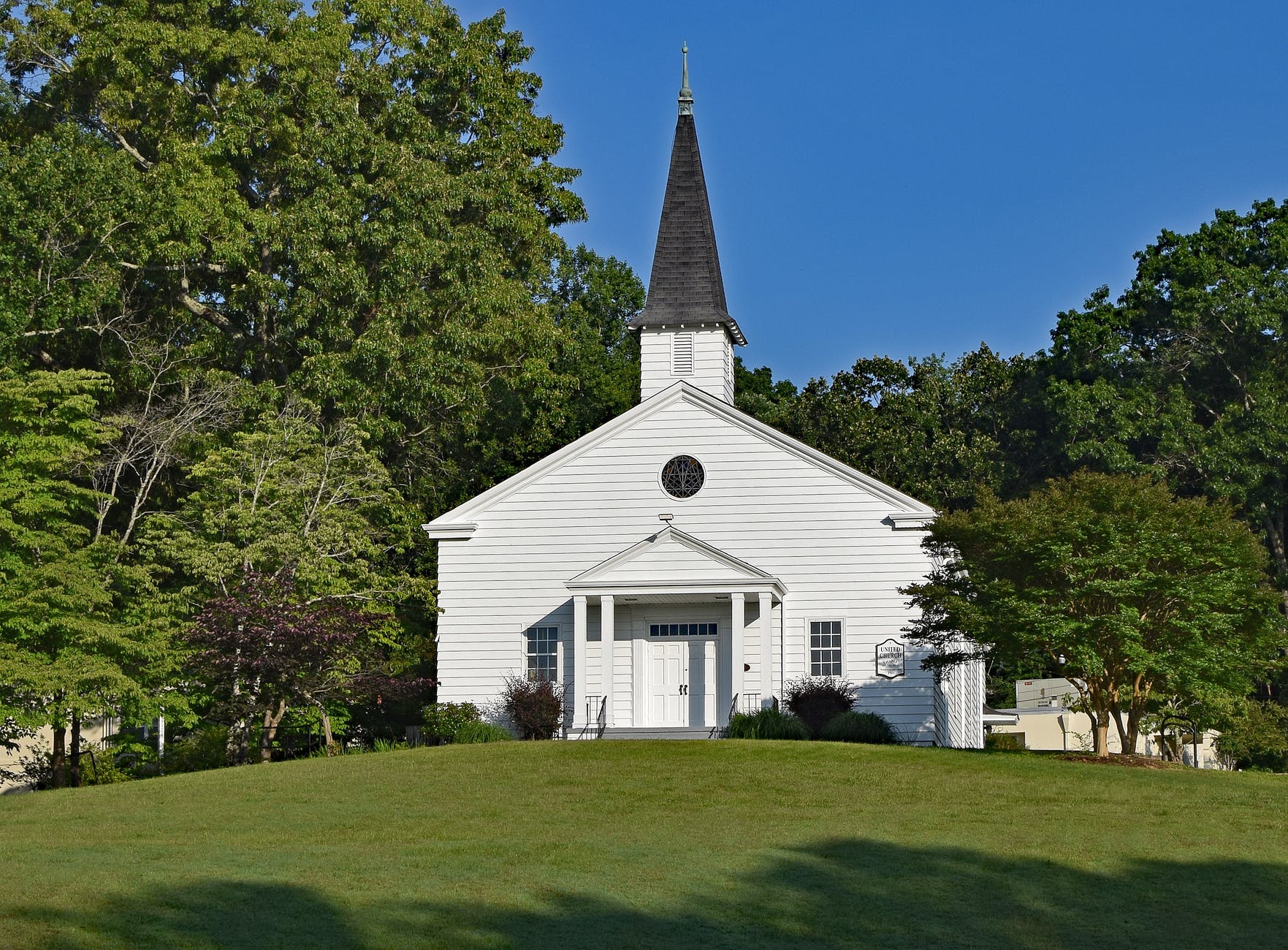
architecture building chapel church
Photo by Pixabay on Pexels.com

How can we pray for pastors?

  • Remember their basic daily needs (health, family, finances, emotions, wisdom, etc.) as well as spiritual needs
  • Remember they are sinners saved by grace, just like the rest of us– pray for grace and wisdom to show encouragement and acceptance
  • Ask them how you can pray for them!  It is surprising how many in the congregation are willing to share their needs but NEVER ask how they can lift up their pastors.
  • Ask God to show you ways to appreciate, encourage, and (genuinely) help your pastor(s).

light sign typography lighting
Photo by Gratisography on Pexels.com

  • Be grateful–Thank God for your pastor–Thank Him for your pastor’s strengths, and for the ways your pastor has shown growth and humility.  Thank God for your pastor’s family and for those who come alongside to help him/her in ministry.  Thank God if you live in an area where pastors can preach freely, openly, and honestly from God’s Word.
  • Be honest–(see above)  Being grateful for our pastor doesn’t mean that s/he is flawless, or that we don’t care about differences of opinion, or even questionable practices.  Giving grace doesn’t mean ignoring sin; but it also means looking honestly and prayerfully at a situation.  Often the “fault” we see lies in ourselves; we don’t like the sermons because they hit too close to home, or because are expecting great oratory and have no patience for simple homilies.  But occasionally, the fault is something that requires talking with or even confronting the pastor.  Pray for wisdom and humility, grace and strength.

belief bible book business
Photo by Pixabay on Pexels.com

  • Be wise.  Satan likes nothing better than to get us thinking about, discussing, and even bringing to God every little fault about our pastor (and our neighbor, our spouse, our in-laws, and even ourselves!)  Satan also thrives on half-truths, rumors, misinformation and assumption.  Pray that God will keep your pastor safe from ugly rumors, lies, and false accusations; pray also that God will keep your pastor accountable and your congregation open to following Biblical principles for confrontation, punishment, repentance, and restoration for all.

Faithful, God-fearing, loving, wise pastors are priceless gifts from our Heavenly Father.  Let’s be sure to pray for them, pray WITH them, and speak words of encouragement and gratitude.

And it wouldn’t hurt if you sent them a card or gift, or offered to take them out for coffee or dinner– just a thought…

chocolate cupcake with white and red toppings
Photo by Jess Watters on Pexels.com

The Birds of the Air Have Fled…

The air is different.
Cooler
Scented with readiness…
Waiting

The birds are restless of wing;
Apples hang heavy
As people and days
Move a little faster.

Anticipating the season;
Bringing in the harvest
Preparing to face
The cold gray of winter.

This short burst of color–
This cacophony of bird chatter
And swinging scythes–
Will give way to moaning winds
And skeletal branches reaching out
To empty skies.

asphalt autumn beauty colorful
Photo by Pixabay on Pexels.com

Autumn is coming– you can feel it in the air and start to see it on the trees here.  It’s coming on to “sweater” weather.  Football, the smell of vineyards heavy with grapes and orchards filled with apples and pears.  Gardeners and farmers are tripping over pumpkins and squash, and preparing to bring in the corn, wheat, and beans.  Squirrels are starting to zip about and look for nuts  and seeds to store.

selective focus photography of squirrel
Photo by Edwin Andrews on Pexels.com

There is a sense of urgency about this time of year– the harvest is ready to bring in; it will not wait for a more convenient moment.  Preparations for the coming winter must be completed while the good weather holds.

blue tractor next to white farm vehicle at daytime
Photo by Pixabay on Pexels.com

There is also a sense of completion and evaluation.  We look back at the summer with longing–did we make the most of sunny days and delayed sunsets?  Did we bring in a bumper crop?  And we look forward with a little anxiety– are we ready to weather the biting winds and bleak days ahead?

adult beverage breakfast celebration
Photo by Pixabay on Pexels.com

God has given us seasons– where I live, there are dramatic changes from summer to autumn– in other regions, there are changes from rainy season to dry season.  Each change gives us time to pause and notice where we have been and where we are headed.

white trash bin under red leaves tree
Photo by Dianne on Pexels.com

The same is true in our personal lives– we go through seasons of change.  Children grow to adulthood; young parents become empty-nesters (eventually); hectic days at the office give way to days at the doctor’s office; bank accounts and circles of friends grow or shrink.

adult affection baby child
Photo by Pixabay on Pexels.com

In every season, we should give thanks– for health, youth, and wisdom, as well as trials that refine us, and discipline that shapes us.

abundance agriculture autumn decoration banana
Photo by Pixabay on Pexels.com

The Power of a Praying Mother

Mother’s Day is coming, and I wanted to say a few words about the mothers in my life and their legacy of prayer.  My Mom is a prayer warrior.  I blog about prayer, and I pursue a better prayer life, but my Mom is a seasoned soldier,  and the daughter of another mighty woman of prayer.  Most of what I know about prayer, I learned through the examples of my Mom and Gram, but I have also been blessed by the godly examples of my mother-in-law, sister and sisters-in-law, aunts, cousins, and many more.

030

From my Mother, I learned to pray from the depths of my heart.  I have seen and heard her pray through pain, grief, and despair– not just her own, but more often that of someone else.  I have caught her holding back sobs over relatives and neighbors who don’t know or aren’t following Christ.  I’ve seen her pause in silent prayer over the plight of a person who is facing a lost job, or chemotherapy, or a migraine.  She very seldom offers to pray  aloud,”in the moment”, but she prays fervently, nonetheless.


Gramgrad

From my Grandmother, I learned to be patient and consistent in prayer.  Gram was quiet and unassuming, but she had an unshakable faith.  She prayed for years over situations that looked hopeless; often for people who or situations which never changed.  I asked her once how she kept from getting angry and frustrated.  She looked me straight in the eye and said, “We can’t change somebody else, and we can’t make them do what’s right.  That’s not our job.  Our job is to love each other, pray for each another, and let God deal with the rest.”  She died never seeing answers to some of what she prayed for, but that didn’t stop others from taking up the banner, and it never stopped her from earnestly and joyfully “taking it to the Lord in Prayer.”  She never gave up, never lost hope, and never stopped showing compassion.


There have been many other prayer warriors in my life– women (and men) of great faith who sought the Lord, and whose lives and words have had an unimaginable impact.  My family, members of my church family, classmates and friends from school or college, neighbors through the years…some of them have held my hand and prayed with me face-to-face; others have prayed on their knees in private; some have prayed for special needs and circumstances; others have prayed at the Holy Spirit’s prompting, never knowing why, but bowing in obedience.

prayermotherdaughter

Praying mothers are a treasure.  If you have one, or had one, don’t underestimate the value of her example.  And don’t just say, “Thank you”…Pay it forward.  Pray for family, neighbors and friends.  Pray early, pray often, pray without ceasing.  We all need more praying mothers, fathers, cousins, neighbors, co-workers, etc.  If you did not have a praying mother, you have a golden opportunity to become that good example to someone else.  You also have the opportunity to adopt a prayer partner– a surrogate praying mother–to pray with you and for you.

Great Expectations

Earlier this week, the Duke and Duchess of Cambridge (otherwise known as Prince William  and Kate Middleton), welcomed their third child.  As with most royal births, there was a lot of fanfare and speculation well in advance of the actual delivery.  Early tabloid reports hinted at twins; bookmakers were figuring odds for delivery dates, names– even what the Duchess would be wearing as she brought the newborn outside for his first “sighting”.  As of the writing of this blog, the name has yet to be announced, which is cause for more speculation and anticipation.

pexels-photo-50632.jpeg

Preparing for a newborn is exciting, and filled with certain expectations.   We imagine what the baby will look like, what kind of personality s/he will have, all the wonderful discoveries to be made. But we need to be careful not to let our expectations become idols.  There’s nothing wrong with hoping for good outcomes, but it can be dangerous to get locked into a particular expected outcome.  Children surprise us (in good ways and other ways) be being themselves, and not who or what we expect them to be.

pexels-photo-185934.jpeg

When we pray, we sometimes come with certain expectations–that God will answer in a certain way or on a certain timeline.  This is not the same as having faith.  Faith says that God will hear our prayer; that he knows best, and that he will act in accordance with his own love and mercy.  It doesn’t mean that he will give us what we want when we want it, or that he will give us what makes us comfortable and happy.  His answers may seem difficult or even painful to accept– certainly not what we were expecting.  When he chooses to answer in ways that don’t meet our expectations, we wonder why.  When he chooses to say “wait,” or even, “no,” we may feel cheated and even resentful, instead of thankful that our prayers are heard by a loving God.  Often, we have built up such expectations of what “the best” should look like that we miss the real miracle God is giving us instead.

pexels-photo-236287.jpeg

Worse, there are times when our expectations reveal a lack of faith or a lack of understanding of God’s ways.  We pray for peace, but what we really want is ease and comfort.  Peace– real peace– is often revealed in times of stress, hardship and loss!  We don’t want stress; we don’t pray for stress, but stress and hardship are going to come into our lives at some point.  Praying for peace won’t bring stress, any more than not praying will keep it away!  We expect the peace to come without the battle; we expect the growth to come without the growth pains; we expect to win the race without having to run!

Sometimes we won’t even pray for what we really want or need because we expect that God will “test” us or give us difficult circumstances if we ask for certain things (like patience or peace).  We see God as some sort of cosmic con artist, who teases us with the promise of good things, only to laugh as we suffer.  But this is a wrong view of God.  God doesn’t play games or “trick” us by giving us hardship when we ask for healing, though it may feel like it at the time. Suffering and hardship are not the gifts of God– his amazing gift is the ability to redeem even the worst of circumstances and bring joy and rest and peace that passes any expectation, any dread, or any understanding we have.  Often, our very desire for extra patience, peace, and joy are opportunities for us to learn more about God’s grace–and more about ourselves.

Life seldom meets our expectations–God is waiting to exceed even our wildest dreams!  Don’t just pray expecting something good might happen.  Pray expecting God to SHOW UP!


Surprise!

The world is full of surprises– some good, some bad.  Open your mailbox on any given day, or walk down the street…you are bound to see something unexpected.  You may get a bill you forgot about, or run into an old friend.  There are surprises in the weather patterns, in traffic patterns, in relationships, in jobs, all around our houses and neighborhoods, in world events.  Some are shocking, some delightful, and any of them can change our days or even our lives.

We like pleasant surprises; we fear the unpleasant ones.  But most of us don’t pray for them.  We pray for miracles–healing and rescue and transformation–pleasant outcomes that we hope for or imagine.  We pray for ease and comfort, or wisdom and strength to face the bad times.  But we don’t ask God to surprise us.

Why don’t I ask God to awe me?  Dazzle me?  Surprise me?  Sometimes I fear that he might surprise me with what my past actions deserve.  More often, I simply want to stay in the comfort and simplicity of what I already know.  I don’t want to be delighted; I just want to be entertained.

pexels-photo-96405.jpeg

One thing I know, but I need to be reminded:  God does not give bad surprises.  He does not send ANYTHING into my life that can’t be used for my good and his glory.  The world will send tragedy and I will have to face the consequences of Sin– mine and others’.  I may be unfairly treated at work; I may be struck by a drunk driver and paralyzed.  I may face difficult losses, and inexplicable circumstances.  And the mistake is to see these as “surprises” from God.  God never promised a pain-free, problem-free life in this world, but he surprises us with the kind of gifts that overcome and even confound our tragic circumstances– the power to forgive, to be joyful, to have peace, and share love.

John 16:33 English Standard Version (ESV)

33 I have said these things to you, that in me you may have peace. In the world you will have tribulation. But take heart; I have overcome the world.”

Matthew 7:9-11 New International Version (NIV)

“Which of you, if your son asks for bread, will give him a stone? 10 Or if he asks for a fish, will give him a snake? 11 If you, then, though you are evil, know how to give good gifts to your children, how much more will your Father in heaven give good gifts to those who ask him!

The road ahead is full of surprises–that’s a great reason to pray.  God loves to surprise us with good things– that’s another great reason to pray for them!

gift-jeans-fashion-pack-157879.jpeg


The Empty Cross

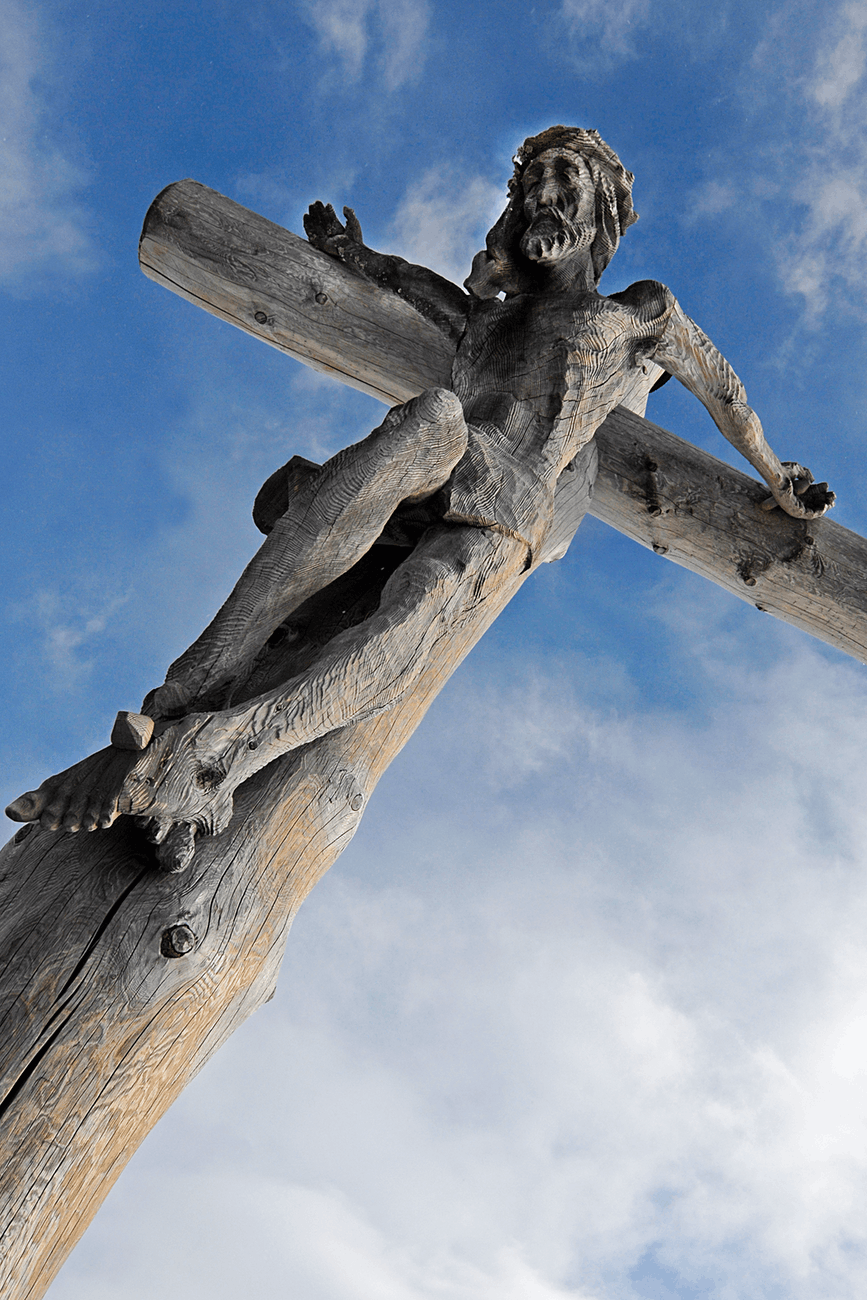
The most common symbol of the Christian religion is the cross.  And, while many statues and necklaces and artistic renderings include a dying Christ figure , the kind you most often see is the empty cross.  On this day between the crucifixion and the resurrection, I want to consider the significance of the empty cross.

  • First, the empty cross reminds us that Christ lived.  In spite of those who continue to challenge the historical evidence, there was a man named Jesus of Nazareth.  He lived in a particular time and place, and he was tried and sentenced to death by crucifixion.  His existence caused the modern Western Calendar to be split into two distinctive parts based on the estimated year of his birth, and his life, death, and resurrection gave rise to a movement that has never been stamped out, equaled, or eclipsed.

pexels-photo-51524.jpeg

  • Second, it reminds us that Christ died.  He was fully human in his capacity to feel pain, rejection, betrayal, hunger, thirst, and grief.  Yet he also experienced joy, companionship, hope, love, compassion, laughter, and growth.  He didn’t just grow old or fade into obscurity.  He didn’t leave his life’s work unfinished, he didn’t compromise or change his message; he didn’t give up or start over with a different “crew.”  Though he never staged a coup, or built up an arsenal, or rose to a seat of power or influence, this homeless, itinerant, soft-spoken rabbi was seen as enough of a threat to the leaders of his time that he was framed, tried and convicted, and sentenced to death.
  • The empty cross also reminds us how he died.  Modern crosses often look imposing and even triumphant, as they tower over a mega church parking lot, or hang on a chain of elegant silver, or stand in rows of chiseled rock in a military cemetery.  “O death, where is your sting?  O grave, where is your victory?”  (I Cor. 15:55)  But the torture before and during the crucifixion were brutal– bones were not broken, but they were pulled out of joint and then forced to bear the full weight of a bloody, swollen and bruised body of ripped muscles and exposed flesh.  Heat caused the salty sweat mixed with blood to drip into his eyes, his open wounds, and around his nose and mouth, but he was unable to wipe any of it away.  Flies gathered; he couldn’t keep them from buzzing or biting.  Each breath was a torturous push and pull of the arms and body upon the nails holding him at an unnatural angle against a wooden bar that rubbed against his already raw back.  And all of this was public; entertainment for the masses of hecklers, and those who were rejoicing in his humiliation and failure.  There was nothing pretty or majestic about the cross on that day.

jesus-cross-summit-cross-37737.png

  • The empty cross reminds us that Jesus was buried and put under Roman guard.  His emaciated, bloody, barely recognizable remains were wrapped up and prepared with spices.  Guards, whose lives depended on this body remaining in the tomb and undisturbed, were posted, and a huge boulder rolled into place to block entry to and exit from the tomb.  Jesus didn’t spontaneously climb down off the cross, or waltz out of an air-conditioned cave.
  • Finally, the empty cross reminds us that Jesus was the Christ–death could not stop him; the grave could not hold him.  His victory was complete.  He didn’t claw his way out of that tomb; he didn’t sneak out in the dead of night; he didn’t hobble into hiding for several weeks because he was only “mostly dead” of his torturous injuries.  He arose, victorious, recognizable to those who knew him best; healed and full of power.

pexels-photo-635699.jpeg

There are hundreds of reasons why we “cherish the Old Rugged Cross.”  And, though the cross stands empty, our reasons are not.  Hallelujah!  Tomorrow, hundreds of millions of Christians will be celebrating the empty tomb.  But for today, I want to celebrate the empty cross.

Why “Good” Friday Matters

Good Friday is a stumbling block for many people who would be Christians.  Some get angered at the mere mention of “Good” Friday.  They see nothing good in it, and no reason to celebrate.  They mock Christian celebrations and practices throughout Holy Week.  They ask, “What could be good about being arrested, beaten, tried in an unfair court, mocked, and condemned to death?”  “What could be good about celebrating someone’s final meal, and following the gruesome details of his humiliating crucifixion?”  “Why remember someone being tortured by his enemies and abandoned and even betrayed by his friends?”  I know someone who uses the crucifixion of Jesus as “proof” that God is neither omnipotent, nor holy.

Yet the Bible chooses to focus time, detailed description, and several varying viewpoints to make this the pivotal event (along with the resurrection) of history.  The Crucifixion does not come as a sudden and inexplicable episode in Jesus’ ministry. He predicts it; not just once, and not just in one account–he doesn’t hint vaguely at some “future trouble,” or potential danger–he gives a detailed description of what will happen to him:

Mark 10:33-34 New American Standard Bible (NASB)

33 saying“Behold, we are going up to Jerusalem, and the Son of Man will be [a]delivered to the chief priests and the scribes; and they will condemn Him to death and will [b]hand Him over to the Gentiles. 34 They will mock Him and spit on Him, and scourge Him and kill Him, and three days later He will rise again.”

Luke 24:6-7 New American Standard Bible (NASB)

He is not here, but He has [a]risen. Remember how He spoke to you while He was still in Galilee, saying that the Son of Man must be delivered into the hands of sinful men, and be crucified, and the third day rise again.”

Why do we need Good Friday?  Why, my acquaintance posits, does a loving God make salvation contingent upon the death of himself in human form?  Is it that God is incapable, or unwilling to offer “unconditional” grace?  After all, does he not offer “unconditional” love?  Why must salvation be achieved only by the unjust death of a perfect being?  Why must reconciliation and new life be forged in suffering and death?

These are not unreasonable questions, but I think they miss the broader picture.  Before the cross, before the scourging and the betrayal, let’s look at the life of Christ.  Jesus, the second person of the Trinity, the author of creation, could have stepped out of Heaven at any moment, and arrived in all his glory, surrounded by angels, to walk in pomp and dignity through the world he created.  He could have swept the entire Roman Empire off the face of the planet, healed every disease with a whisper, and lived in the Temple in Jerusalem as the Ruler he is.   Instead, he came as a helpless child, born to a teenage mom and her fiance during a grueling tax season.  He grew up in relative obscurity, never attended college, and is lost to history until he begins his second career as an itinerant rabbi at age 30.  He never held political office, never owned a home of his own, never wrote a book, or produced a piece of art work, never led an army into battle, never married or had children, never became wealthy, never did anything to make himself famous by worldly standards.  He was not crucified because he posed an actual threat to the Roman occupation of Jerusalem, but because he was accused of blasphemy by not denying claims that he was the promised Messiah of Israel.  His only “claim to fame” was that he was a dynamic teacher and had performed miraculous healings.  By almost every worldly standard, his life was a failure and a lesson in wasted potential.

His death is in keeping with his humble life.  It strikes us as a failure– humiliating, unjust, anti-climactic.  A life of servitude, poverty, being misunderstood, and making all the “wrong” friends and enemies.  Why would God live such a ridiculous and unfulfilling life?  Except he didn’t– it wasn’t a failure; his life and death stand as examples of how to live at peace, and how to change the world!  Hundreds of people flocked to hear him teach; hundreds more to see him heal the sick and raise the dead.  But he never charged a single coin, never demanded accolades or even thanks.

church-window-church-window-stained-glass-46154.jpeg

This is the paradox of the Gospels.  God’s ways are not our ways.  His humiliating death on the cross was necessary for the ultimate triumph of the resurrection, but it was more than that– it was a vindication of justice over injustice and service over selfishness.  Good doesn’t always triumph over evil in a power play.  God has the power to obliterate every one of his enemies, but more often than not, he causes them to fall by their own arrogance and blind ambition.  The Chief Priests, the Roman Soldiers, the agony and torture of death– they were no match for God’s love.

Good Friday showed us that God can ALWAYS make even our most difficult circumstances, even the worst situations, into something VICTORIOUS.  Jesus still had to suffer and die, because we will still have to face betrayal, hatred, injustice, unanswered questions, and even taste death.  An Easter without Good Friday is a happy ending without the story.  Only an omnipotent God could have given us the triumph; only a loving God would have walked the Via Dolorosa to fight in the trenches with us.


 

Suffering from “Prayer’s Block”

Do you ever suffer from “prayer’s block”– those times when you bow down, and your prayers seem stilted, or your mind keeps wandering, and you find yourself coming to God with…less.  Not necessarily with nothing– you can always thank God for your daily bread, or worship the fact of his majesty or holiness or search your heart for confession or praise.  But you’re left feeling like you really want to bring more…
Am I the only one who ever feels this?  I don’t think so; and I don’t feel it often, but when I do, I just wish I had something like a prayer prompt to take the conversation to another level.

That’s when I find books extremely helpful.  I recommend a personal prayer journal– one that has pages for each day, and lots of space to write requests and reminders as you pray.  I’m on my third year through a journal, and it has names of people who are celebrating birthdays or anniversaries on that day– including sad anniversaries of losses or challenges.  But even if you don’t have a journal, there are other great and creative ways to jump-start a great conversation with God.  See the page on my ideas for a Prayer Journal, or search for other wonderful ideas online to get you started.

Have you ever prayed a page from the phone book? (or your personal address list? or another list?)  It can feel awkward and impersonal to pray for people simply by name and without knowing anything about them, but it can also be instructive.  How so?  It reminds you that:

  • You are one person in a larger community of people you may not even know.  We live in a world that is more connected than ever before; yet we can be more isolated than ever before.  Neighbors come and go, communities grow (or shrink) without our awareness, unless we make ourselves look around.
  • Your problems are part of a larger reality.  Sometimes, our prayer life becomes narrow as we focus on our own struggles and needs.  Looking around doesn’t mean that our struggles are any less painful, important, or real; it does remind us, though, that we live in a big world– and that we have an even bigger God!
  • You may be the only Jesus another person will ever know… your prayers for a stranger may have unexpected consequences for them, as well as for you.

pexels-photo-205414.jpeg

Similarly, you can pray through an old yearbook, or your friends list on Facebook or LinkedIn, the members of your favorite band or the cast of your favorite movie or TV show, the members of your local government..the list goes on.  Rummage through your closet or look at old photos– are you finding anything to be thankful for, or reminded of times when God or others blessed you?  Pray the newspaper (or your news feed)–there’s plenty of fodder there!

pexels-photo-177557.jpeg

There are days when my heart is just too full (or maybe too empty) to concentrate.  And it’s not that God doesn’t know or understand such times.  But in this pursuit, I want to bring my best, and if “prayer’s block” comes, I don’t want it to be an excuse for missing out on the best that God has for me.

Paltry Prayer

A couple of days ago, I wrote about “Little Prayers.”  I believe God hears our prayers about the so-called “little things.”  But I think there is a type of prayer that is not “little”, but “paltry.”  What’s the difference?  “Paltry” doesn’t just imply little or trivial, it connotes something meager and petty.  And I think we waste a lot of time on it.

Paltry prayer is generic and insubstantial.  It’s like the horrible small talk at a social event one doesn’t want to attend, but feels obligated to show up at, because it’s expected.  When we throw up a prayer, but we really don’t want to get “real” before God, we’re offering crumbs instead of a sacrifice; face-time, instead of intimate conversation.

There are times when we cry out in desperation; we have no words or fleshed-out thoughts, only groans.  That’s not what I’m talking about.  I’m talking about the times when we want to reassure ourselves that we’re one of the good guys– that our plans and wishes have God’s stamp of approval–without actually risking God’s authoritative answer.  “God, help me to do your will today,” sounds like a great prayer, but do we really mean what we’re saying?   Or are we really asking God to approve of our own will  and plans as we go through the day?

I’m especially concerned that we are offering paltry prayers in regards to evangelism and revival.  We want it to come– we want God to send a fresh wave of revival to our communities, our country, and our world– but let it begin and end without making us too uncomfortable, too aware of our own need for confession, forgiveness, or change.  We want our neighbor to be saved– without the pain of witnessing and being laughed at or ostracized.  We want to be emboldened to witness, but we don’t want to be humbled into listening.  We want to be blessed; we don’t want to be tested.


I get very discouraged sometimes, when I realize that my own prayers have been paltry.  But there is good news– the same loving Father that wants deeper conversation with me is endlessly forgiving, encouraging, and loving.  And I am not alone in offering meager conversation or selfish complaints before His throne.

wakerocks

Jonah (yes the “Big Fish” guy of the Bible) was a prophet– a very successful one, except for the episode with Nineveh.  Not only did Jonah run as far from Nineveh as a ship could take him; he basically committed suicide to avoid doing God’s bidding.  When his shipmates are in a panic, Jonah demands that they throw him in the sea.  This is not as a result of consulting with God, nor does the Bible suggest that it is at God’s command.  The sailors continue to panic at the thought of throwing Jonah overboard, and are astonished when the storm stops as Jonah sinks toward the ocean floor.  If not for the fish, Jonah would have drowned.  God sent the fish to save Jonah, but there is nothing to suggest that Jonah had any idea of being rescued. However, from the belly of the fish, Jonah lifts up a poetic prayer, in which he sings the praises of the God who spared his life.   He marvels at his rescue and restoration, and vows to go back to Nineveh and fulfill his destiny.  His prayer strikes all the “holy” notes one would wish to see, but I would contend that this is, at its heart, a paltry prayer– sincere in the moment, but not the prayer of a man fully transformed by his near-death experience.

Fast forward to the fourth chapter of the book of Jonah.  Nineveh has heard Jonah’s message about God’s wrath and impending judgment; the people have had a miraculous change of heart, and God has agreed to spare them from destruction (for a time– the Ninevites went back to their old habits and were eventually destroyed).  Imagine if the late Billy Graham had held a rally in Moscow or Tehran or Los Angeles and the ENTIRE CITY had repented?!  This is success beyond imagination.  But we don’t find Jonah grateful and poetic as he was at the end of chapter two– instead, he is hateful and bitter, and praying for death!  God causes a small vine to grow and provide some shade for Jonah as he sits and sulks, but then he sends a worm to chew up the vine so it withers.  Jonah is more heartbroken at the loss of the vine then he was over the possibility of the destruction of an entire city.  Jonah’s story doesn’t end in triumph, but in triviality.

Prayer is a great opportunity to pour out our hearts before God– but it also reveals the content and character of our hearts.  If our prayers are paltry and our hearts shallow, God will often humble us.  But he will also rescue us from our own sinfulness and sulking, and give us all that we need to finish victoriously.  The book of Jonah is a great cautionary tale– let’s learn from it, today.
sea-beach-storm-tree.jpg

What can we do to make our prayers less “paltry” and more proactive?  Check out the suggestions on the attached pages of this blog, or look online for prayer groups and prayer sites that offer constructive ideas.

Blog at WordPress.com.

Up ↑