I want to spend some time this month exploring the Beatitudes and how they relate to our prayer life. Today I want to look at Matthew 5:3: “Blessed are the poor in spirit, for theirs is the kingdom of Heaven.”
How do I approach God’s throne of Grace? Do I come with a list of what I want, and what I’ve accomplished for God? Do I come reluctantly, grudgingly, holding back some part of who I am or who I have been? Do I come flaunting my self-righteousness? Or do I come empty of all but my desire to be in the Presence of my Maker?
Many people have interpreted (and misinterpreted) this phrase. Jesus does not insist that we be financially destitute, or drained of all enthusiasm or emotion. But He does require that we come recognizing our need of Him. We may not be physically needy in the moment– we may be well-fed, comfortable, or even wealthy by human standards. But we are all in need of God’s presence and His provision. On my own, I may believe that I have earned all that I seem to possess, but I cannot supply the air that I breathe, or guarantee that my health will remain perfect, or that I will be able to keep what I think I own, or force others to accept or respect me. “Man supposes, but God disposes” is an old phrase, but an accurate one.
When I approach God in prayer, no matter how rich or poor I may seem, I am dependent on God for everything. And this is true for every one of us. So I don’t approach God as someone “needier” or “less needy” than my neighbor. And I don’t approach God with any power to bargain or demand, or even to request– except that God has invited me and sought me out in His Love and Mercy!
And this is the rest of the Beatitude– “for theirs is the kingdom of Heaven.” God has opened up Heaven and invited me to walk with Him, to learn from Him, to receive His blessings, and to live with Him throughout eternity. His riches! His Glory! His Presence! Every time I pray, I trade my poverty for God’s bounty. I trade my confession for His forgiveness. I trade my helplessness for His Wisdom and Power to triumph over adversity and confusion, grief and doubt, sickness and lack.
It is when I come to Christ believing that I possess or control all that I suppose to be “mine,” that I lose the Blessing of His sufficiency and His perfection.
“Thank you, God of Mercy, and Ruler of All, for the privilege of coming to you. I come empty and spent–show me where I am holding on to something less than You, or trying to claim Your wealth as my own. Teach me to rest in the sufficiency of Your kingdom, even as I continue to serve you here on earth.”
I went on a “weight-loss” plan because my doctor said I should. Even so, I didn’t give up meat or chocolate, Or sweets, or even television, like some others did.
I didn’t give up shopping. I didn’t give up social media. I didn’t give up…anything for this short season.
But today I acknowledge that Lent isn’t really about What I have or haven’t given up. It’s about what YOU gave up. You gave it all: Your Glory; Your Power; Your Majesty. You became a simple man. A servant of men. A man without a home; Without prestige; Without a title.
You were betrayed; Falsely accused, Corruptly tried, Shamefully condemned, Brutally beaten, Crucified. So that I might gain eternal life.
You do not judge me for what I haven’t given up for a season. You do not withhold your love and forgiveness; Waiting for me to learn the disciplines of Lent. You ask for more than that– and less. You ask me to follow you–to leave it all behind. You ask me to give up my life– only to find it again in You.
Let me reflect today on what more I need to give up: My pride. My apathy. My selfishness with time and money. My need to have my own way; My own comforts.
May I be free to serve you; To serve others. May I be ready to give up whatever is Keeping me in thrall; Keeping me enslaved; Keeping me from serving you with abandon.
Show me how to let go Of all but You– That You may be my All.
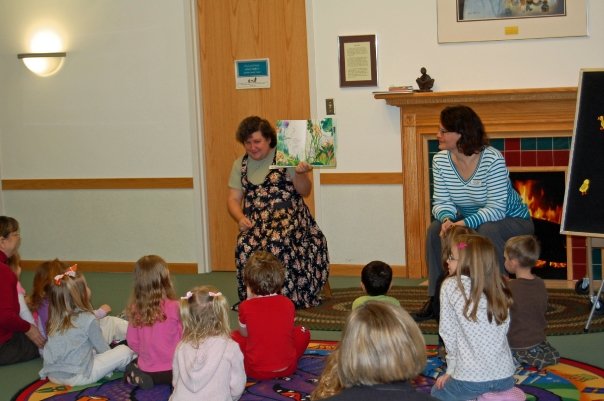
I used to work in a public library. I was the Youth Services Librarian, which meant that most of my time was spent working on building up the collection of children’s books, planning and presenting programming and story times, and going into schools to do book talks and promote library offerings. But I also spent time at the reference desks– both in the Children’s Area and the Adult Services area– and some of my time was spent finding answers to a wide range of questions:
Does the library have books or articles about Okapis (for a 4th grade report)?
Do you carry tax forms for my out-of-state business?
What are the school colors for _______ college (a small community college in Nebraska)?
Do you have a picture of the Egyptian queen Hatshepsut?
What is the title of a children’s book that featured muskrats making chicken soup?
My great-aunt left me a set of dishes and I want to know if they’re worth anything.
Some questions were easy to answer. Some required a little research within the library’s resources. Some were next to impossible and required hours of searching databases, or calling on expert help. Searching a database can be tricky. You need to find solid key words and search terms. For instance, our computer catalog did not recognize the the search term “cooking” or “cookbook.” You had to use the term “cookery” to get the best results. You could also use “cook***” to force the algorithm to look at all words that contained the letters c-o-o-k and any other letters that followed, such as cooks, cookies, cookery, etc. (Many library databases have since been updated, so searches will automatically redirect or refine common terms like this.)
Databases and search engines are amazing things, but they have limitations. They will only search for what you type in, and they will only search in the way they are programmed to do so. Computers (currently) “think” laterally–they do not make leaps of imagination, nor do they second-guess what you might have meant to ask but didn’t. If I want to know about pemmican, but I misspell it, the search engine may not find what I’m looking for.
That’s where algorithms come in. If I misspell pemmican by leaving out the second “m”, the algorithm will look for words close to what I typed, based on thousands of other inquiries. It may ask if I meant to search for pelican, instead. Or it may ask if I want pemmican. But if my spelling is really bad, or if the word I type in is actually another word, the search engine may miss my real inquiry altogether, and send me on a fruitless search. If I’m searching for a children’s book with muskrats and chicken soup, and the search engine doesn’t find both terms in a description, the algorithm will usually stick with the first term, and give me a list of children’s books with muskrats. Hopefully one of them also includes chicken soup… If I type the key words in reverse, I will get a list of children’s books with chicken soup…hopefully one of them includes muskrat characters! And algorithms can be skewed by advertisers or other interest groups that pay to have their information appear more often or first whenever certain search terms are entered.
When people request prayer, they are usually focused on what they perceive as their greatest need. They are searching for an answer; a solution to a specific problem or situation. “Pray for complete healing.” “Pray that my son/daughter will…” “Pray that I get this job.” And it is tempting to pray very specifically. This is not wrong. But sometimes, it limits how we see prayer and how we look at God’s answers. The opposite is also true. Sometimes, we pray so broadly, that we may not see God’s answer for what it is. Sometimes, we pray, hoping to change some sort of algorithm and get to the “top of the list” or get the “right” answer. This is not what prayer is about…we know this, but sometimes, our wants blind us to what we are actually asking (or asking others to ask for).
So what are some of the key words we can use in our prayer requests and prayers? Jesus gives us a fantastic blueprint in The Lord’s Prayer (Matthew 6:9-13):
“Our Father”–remembering to whom we are praying is vital. We are not praying to a distant, absent-minded, shadowy figure; He is our Father. He knows what is necessary, and what is best.
“Who art in Heaven”–God is Omnipotent. There is nothing we can ask or imagine that is too big, too difficult, or too much to ask. That doesn’t mean that God will give us whatever we want, whenever we want it, but it does mean that God is not limited by the same things that limit us!
“Hallowed by Thy Name.”–God is not our “genie in a bottle.” He doesn’t work for us, or at our command. God is sovereign; He commands the Universe. And even though He makes Himself known and wants a relationship with us, He is not like anyone else–He ALONE is GOD. When His answers seem “wrong,” or don’t make sense, it isn’t because He didn’t hear us, or because He doesn’t love us, but His ways are not our ways (Isaiah 55:8-9).
“Thy Kingdom come, Thy will be done on Earth as it is in Heaven”–There are a lot of “good” things that are NOT part of God’s best will for us. There are a lot of difficult and painful things that God can use for our good. He wants to hear the cry of our heart–“I want to be healed.” But He also wants to hear our willingness to accept that healing may not be immediate or easy.
“Give us this day our daily bread”– It is not “wrong” to pray for things in the future, or to pray for “big” or complex things, but our dependence on Him is shown best when we acknowledge our everyday basic needs are met by Him.
“And forgive us our debts as we forgive our debtors, And lead us not into temptation, but deliver us from evil”–Don’t be fooled. God will not ignore our hidden resentments, hatred, disdain, rebellion, and unforgiveness. Our requests can be sidelined by holding on to grudges and harboring secret doubts about God’s essential fairness, as well as hanging on to sinful habits.
God doesn’t need algorithms or special prayer “search terms”. We can come to Him with our requests, and He knows precisely what we want and what we need. But we will learn more about ourselves and about who God truly is when we refine our hearts and our prayer life.
My senior year of high school, I was voted “Most Likely to Succeed.” I’m not sure what that meant to most of my classmates, but it was both an honor and a burden to carry. While I was honored by my classmates’ faith in my ability to become some sort of “success,” I was also daunted by the mantle I felt I had to bear. Would I become famous? Wealthy? Important in public affairs or business? My immediate and modest goal was to become a teacher. But I had visions of becoming a well-known author. I also dreamed of becoming a wife and mother; of having a loving, happy family, and a nice home.
God’s plans are not our plans. God has placed many opportunities in my path– opportunities to serve myself and “get ahead,” and opportunities to serve others. I can say from experience that serving others brings more satisfaction in the long run, but it doesn’t feel like “success” as defined by most of our society. I’ve never achieved what most would consider “success.”
Some days, I feel wistful and even a bit resentful about some of life’s circumstances– children I was never able to have, or jobs I might have pursued with more ambition. But then, I think of all I might have missed– friendships, victories over certain struggles, lessons learned. My life isn’t finished– God may yet give me the opportunity to do “great things.” But already, He has given me the privilege of doing small things for Him over the course of many years. And it is more than enough.
One of the greatest measures of true success is to look at the life of Christ. After all, His life, death, and resurrection changed the entire course of history! Time is measured by His arrival on this planet– everything happened either before or after His birth. Billions of people have called themselves “Christians” after Him, and lived their lives in His service. But what did He actually accomplish in human terms? He was not a ruler or political powerhouse. He never owned a house, let alone villas and mansions. He never wrote a book (even though thousands of books have been written about Him). He didn’t invent anything, or found a corporation, or make a monumental scientific discovery. He never led an army. He healed several people, but He didn’t cure cancer or wipe out leprosy, or put an end to blindness. He didn’t rid the world of poverty, hatred, greed, or injustice. At the time of His death, He owned only the clothes on His back– and they were taken from Him! His friends deserted Him as hundreds shouted for Him to be crucified. He was nailed to a cross between two nameless malefactors, and died. He was placed in a borrowed grave. People who had expected great things of this Messiah ended up turning on Him and thinking Him a failure and a blasphemer.
Jesus did not pursue worldly success. He told parables. He dined with sinners and saints alike. He laughed. He cried. He prayed. Jesus served others, and yet He challenged authorities. He drew crowds, and performed miracles, but He died alone. Jesus did not come to show us how to “get ahead.” He came to show us how to live more abundantly, not more successfully. (See John 10:10)
So if there is any encouragement in Christ, any comfort from love, any participation in the Spirit, any affection and sympathy, 2 complete my joy by being of the same mind, having the same love, being in full accord and of one mind. 3 Do nothing from selfish ambition or conceit, but in humility count others more significant than yourselves. 4 Let each of you look not only to his own interests, but also to the interests of others. 5 Have this mind among yourselves, which is yours in Christ Jesus,6 who, though he was in the form of God, did not count equality with God a thing to be grasped,7 but emptied himself, by taking the form of a servant, being born in the likeness of men. 8 And being found in human form, he humbled himself by becoming obedient to the point of death, even death on a cross. 9 Therefore God has highly exalted him and bestowed on him the name that is above every name, 10 so that at the name of Jesus every knee should bow, in heaven and on earth and under the earth, 11 and every tongue confess that Jesus Christ is Lord, to the glory of God the Father.
God can use our worldly success, if we achieve any. But He delights in our humble prayers, our small acts of service, and our obedience. Jesus lived a humble life. He could have done anything He wanted, fulfilled the loftiest of ambitions, and crowned Himself King of the universe. But His success came from the unlikeliest of lives, and the most humiliating death. He lived the perfect and abundant life He offers us.
I don’t live a perfectly humble life. I chafe at my own weakness, sometimes. Yet it is when I stop chasing “success” and perfection that I find it –in Christ.
My prayer today is that someone reading this will be encouraged. If life feels like a series of missed opportunities to find success and fulfillment; if you feel like your life has let you down, and that God cannot use you for some great purpose– take heart! He loves to pour His love and holiness into broken vessels and exalt those who are humble and weary and “not enough.”
Yesterday was Thanksgiving across the U.S. Many families enjoyed a large dinner, surrounded by family or friends. Traditionally, this dinner might include turkey (or ham or both!), vegetables and fruits (potatoes, sweet potatoes, green beans, baked beans, corn, squash or some kind of greens, cranberries or cranberry sauce, apples or fruit salad), dressing, stuffing, rolls, and/or bread, and some dessert, such as pumpkin pie, pumpkin roll, apple pie, or cake. It’s a holiday which focuses heavily on food and eating.
Because of this, it is also a holiday that carries the risk of food poisoning. Turkey and other meats, if not cooked properly or long enough, can make people sick. So can leftovers that are left out too long or not stored properly after the big meal.
But there is another kind of poison that can ruin Thanksgiving. It may not make us immediately physically ill, but it is not less dangerous. It is the poison of ingratitude. Like salmonella or other types of bacteria, ingratitude can be invisible. It can hide, waiting to attack without warning, causing everything to have a bitter aftertaste. It may cause violent reactions, such as rage, or lie dormant, causing depression, apathy, or a general dissatisfaction. And just like food poisoning ruining a holiday built around food, ingratitude is a natural problem to have during a time set aside for thankfulness.
One of the most insidious forms of this holiday poison comes through comparisons–we gather to be near family we love, only to compare ourselves with them. Which one is happier? Wealthier? More popular? More intelligent? Better looking? Is the host’s house nicer than mine (or is my house “good enough”)? Did I work harder? Did my contribution to the meal taste “better”(or was it passed by– again)? Why am I still sitting at “the kids’ table?” The list is endless of the petty grievances that we allow to overwhelm our intentions to be thankful and live in peace. Someone says something to “push our buttons,” or they seem to ignore us completely.
Another form of holiday poison spreads from person to person–complaining, venting, sounding off, moralizing, criticizing, blaming…what began as a thankful, joyful gathering becomes a snake pit of biting, poisonous talk. And we react. We take the bait, become defensive, get sucked into that political discussion we vowed to avoid, or we revisit old wounds we thought we had put behind us.
But unlike food poisoning, bitterness and ingratitude are choices. We can’t always choose our circumstances, nor can we choose what others say or do. But we DO choose our reactions and our attitudes. I can blame someone else’s anger or selfishness for my bitterness, but they didn’t MAKE me succumb to their poison. I can compare myself to others and feel arrogant or inept, but no one forces me to live someone else’s life or measure up to their circumstances.
God has given each of us life and breath, and a purpose. Some of His gifts to us are universal and exactly the same for each person. He has given us each 24 hours in each day; He gives sunshine and rain, day and night, and air to breathe. But some of his gifts are unique to each individual. Our response should be to open our unique gifts, so we can enjoy them and use them, NOT waste time coveting someone else’s gift when we have neglected even to open our own.
I wish I could say that “holiday poison” was easy to avoid– it’s not. It is human nature to grumble and whine and wish for what we do not have. But it IS possible to get healing. It starts with humble confession. We DO wish for what we do not have–and the more we deny and try to bury our failings, the more susceptible we are to the poison they can bring. If we confess our feelings of inadequacy, our desire to have “more” or “better” in life, we can turn to God freely and let Him give us a better perspective. Suddenly, we “see” blessings where we used to see burdens, we can see hope where once there was only grief, and we see opportunities where we only saw obstacles before.
We’re coming up to Thanksgiving in the U.S. next week. Many families will sit down to sumptuous meals–turkey with dressing/stuffing (depending on what region you live in), pumpkin pies, sweet potatoes, corn, beans, rolls or muffins, salads, mac and cheese, casseroles, cranberry sauce, and more. Some will settle in front of big screen televisions to watch American football, and parades crowded with giant balloons and marching bands. Some will have modest gatherings with family and friends.
And the following day– Black Friday– they will rush to malls and giant box stores to take advantage of the spectacular sales. People will buy hundreds of dollars worth of Christmas gifts, all with the satisfaction that they might have spent a lot more if they had not braved the crowds and the 4 a.m. opening times (some will begin shopping on Thanksgiving Day for the “head start.” Others will stay comfortably and safely indoors and spend their money shopping on-line).
All of this costs money, of course. But for many Americans, it is not a real pinch to celebrate Thanksgiving. And we will say “Thanks,” and count our many blessings. We will also give. Charities and organizations are already taking donations. We can give $10 at the store to help buy meals for the hungry. We can buy small gifts to be sent overseas or to be given to the children of those in prison, or those who are homeless. We can buy coats (or hats or mittens, etc.) for those who have none. These efforts cost some money, too.
But how much of these efforts comes from true “thankfulness” and how much from other sources– pride or guilt or a sense of duty? For what am I truly grateful at Thanksgiving? Thankful that I have so much? Thankful that I have the power to help others? Thankful that I have the day off to go shopping?
It is easy for some of us to be thankful and generous–in our own eyes. I can give with the click of a button, and money I barely know I have is taken from my bank account and deposited in the account of a charity I may know very little about. I never have to see the people who are helped, and I never have to see what they have suffered or how my gift makes a difference. In fact, I don’t really have to see whether my gift even arrives where I imagine or does what the charity has promised. Some organizations are more transparent than others, and more reputable or honest than others, but I can feel good just by giving. In some cases, I can “make a difference” without any cost at all– just “like” a certain site, or fill out a survey. I can “give” without even giving!
In recent years, however, I have been surprised by those who have tried to make me feel bad about giving. They are not angry because I have not given, or have given very little, or given to dishonest charities. No. One lady was outraged that I should give to an organization that sends toys, hygiene items, and school supplies to needy children in countries around the world. What caused her outrage? Three things–the toys were “too American”–the instructions were printed in English, or they were “frivolous” toys like jump ropes and “matchbox” sized cars and trucks. Also, some of the boxes and wrapping were printed with cartoon-like children, which she felt were “racist” in their depiction. Finally, the spokesperson for the organization had been portrayed by the media as narrow-minded and “hateful” toward the issue of gay marriage. Her solution: she was never going to give to such an organization. She was urging people to give to groups that were providing livestock, instead. Here, she felt, was a useful gift. Chickens, goats, cows–these were gifts that would truly make a difference. And such gifts can and do make a difference– in rural areas, where there is space and enough grass or other food to sustain such animals. Her gift will have little impact on a child living in Nairobi, or Tegucigalpa, or Kosovo. I am glad she has the means and the desire to give and to help. And the organizations who provide such gifts are worthy–I mean no disrespect to any of them. But giving should be a joyous outpouring of love and thankfulness, of compassion and humility. If that means helping a rural community get milk and meat, that’s wonderful. If it means sending a stuffed animal, some silly socks, and some soap and washcloths to Lebanon, that’s great, too. Even if I don’t like the wrapping paper…
My point is that a lot of our “giving” has become more about virtue signaling than joyously sharing with others to meet their needs. It costs a lot more in money to send a goat to Peru. But it may cost a lot more in time and energy to spend a day serving meals at a homeless shelter, or volunteer to rebuild in a community hit by a tornado or hurricane. And even though there may be a monetary cost to some of our gifts, in some ways, our “giving” costs us nothing. Not just little or nothing in dollars and cents, but little in emotion or thought or effort. There is nothing personal, or heartfelt, or sacrificial about some of our giving.
During the reign of King David, there are many instances of celebration and thanksgiving. But there are also stories of heartbreak, loss, and repentance. In one of these incidents, King David angered God by taking a census. His conscience caused him to ask God’s forgiveness and ask what could be done to take away the guilt. God sent the prophet Gad to give David three choices, but David left it in God’s hands. God sent a vicious plague that swept toward Jerusalem. When the angel of death reached the threshing floor of a man named Araunah the Jebusite, God told him to stop. David could actually see where God had stopped the plague, and immediately went to buy the threshing floor, so he could build an alter and sacrifice to the Lord in repentance and in thanksgiving for God’s mercy.
King David had plenty of money. He also had authority, and the respect of his people. Araunah offered to give David not only the field, but the oxen to make the sacrifice. As the king, David could have taken the land and oxen– he could even have demanded them of Araunah. But David paid for it all, saying that he would not give to God that which had cost him nothing.
In this season of giving, it can be tempting to measure the value of our gift by the monetary cost, or by the value WE receive from giving. But true giving should involve a willing and joyful sacrifice of our pride and our time. Sometimes, this may mean NOT giving a toy or a goat–it may mean giving an apology, or a second chance, or being willing to give up a turkey dinner or a shopping trip, in order to visit a shut-in, or spend some much needed time on our knees.
Having said that, there are plenty of things we can give that cost us “nothing”–smiles, a warm welcome, a listening ear, reaching out for reconciliation, and most of all, a heart-felt “Thank You.” Sometimes, these gestures cost us nothing– sometimes, they are a sacrifice. But they are gifts that really make a difference.
6 Humble yourselves, therefore, under the mighty hand of God so that at the proper time he may exalt you, 7 casting all your anxieties on him, because he cares for you.
1 Peter 5:6-7 (ESV)
I grew up hearing the verses above, especially verse 7– it was a memory verse in Sunday School and Bible School. It was the subject of many a sermon. I have known these verses most of my life. But I started thinking about them differently in the last week or so. The verses haven’t changed. Even in different translations, the familiar words are almost the same..”cast your cares:” “give your worries;” “cast your anxieties…” “ON HIM.” Over the years, those words created an image of me handing over a bundle, or passing off a heavy coat into the waiting arms of Jesus. There is nothing wrong with this image, but I think there is more to this verse.
Peter–the author of this Epistle, was a fisherman. And one of the things I’ve learned being married to a man who loves to fish is that the “cast” is very important. No fisherman simply drops a line or a net into the water at random. Instead, he or she takes aim and hurls the net or line away from themselves and the boat (or dock or fishing platform). A good cast is intentional, directional, and takes commitment. And then, the fisherman, having made the cast, waits. Sometimes, it may take several “casts” before the fisherman gets a good “catch.” But a bad cast– or an impatient caster who can’t wait, but reels in and casts without intention– rarely gets good results.
I’m afraid I’ve learned more about fishing in the past few years than I have about trusting God in a lifetime. All too often, I try to bring my cares and worries to God in pieces and parts, in short bursts and limp tosses. I do not “cast” my cares on Him– I try to hand over those bits I know I can’t handle, and explain away the rest. Or I try to drop my net close to the boat. And if I don’t get an answer on the first “cast,” I give up, and reel all my cares back in, or wear myself out with fruitless prayers about the same worries, as if God didn’t hear or couldn’t understand them the first eight or nine times!
Casting our cares is more than just “handing” them over to God. We can hurl them, fling them, throw them, and toss them into the sea of His compassion and wisdom. As often as necessary, as desperately as necessary, as committed to getting rid of them as a fisherman is committed to getting a big “catch.” And we can trust that, at the right time, and in the right way, God will send us the “catch”– maybe not what we expected or imagined, but what He knows is best.
Fishing trip (with our daughter and some of our “catch.”)
Peter was a fisherman. After he walked with Jesus, he became a “fisher of men.” He learned how to “cast” all his cares on the one who performed miraculous deeds– walking on water, feeding the five thousand, raising the dead–even helping Peter and his friends catch fish! I’ve learned a lot about fishing. It’s time I learn more about “casting” my cares on my bountiful Father!
He who forms the mountains, who creates the wind, and who reveals his thoughts to mankind, who turns dawn to darkness, and treads on the heights of the earth— the LORD God Almighty is his name.
To whom do you pray? I know many people who address their prayers to “Our Father.” Others pray to the Name of Jesus, or to “Abba,” or even through a saint. I’ve heard some even use terms like “Daddy God,” or “The Man Upstairs.” But the One who hears our prayers, the Triune God of the Universe, is altogether Holy, Righteous, Sovereign, and Supreme. We forget that or diminish that to our peril.
That doesn’t mean that we cannot draw near to our Creator– in fact, He wants us to call on Him and commune with Him. But He is more than just another someone we can talk to. He sees us– and He sees through us! We may be able to “fool” our friends and even our family with a false smile or half-attentive listening, but God is not fooled by our appearance or our shallow actions.
The people of Israel, during the time of Amos’s writing, had formed a bad habit of “fake” worship. They prided themselves on their rituals– morning sacrifices, tithes, offerings, etc. They were religious– on the surface. But their lives were filled with greed, selfishness, corruption, pride, and apathy. They not only knew there was injustice all around them, they were willing participants!
They had pushed a loving and merciful God to His limits. He had sent plagues, famines, war, and other disasters to humble His people and shake them out of their sinful stupor. Hard times can bring people together; disasters can cause them to turn their eyes to Heaven; to ask for help, and to offer help to their neighbors. But these stubborn people used hard times to take advantage of those who were already in trouble– the rich watched in comfort and disdain as their countrymen starved. They cheated and hoarded while others were dying.
Sadly, the Israelites of Amos’s time are not so very different from people in our own time and countries. God’s warnings and pleadings don’t sound out of place in 21st century America. Or Europe. Or anywhere else. We have a form of worship– people who brag about their Mega-churches with worship orchestras, bistros, indoor playgrounds for the kids, light shows, and more; people who attend every “Christian” concert that comes to town, or attend retreats and seminars. And there’s nothing overtly “wrong” about such worship. But it has to translate into WORTH-SHIP–recognizing that God is not just another superstar; that His House is not just a place to be entertained or meet other “nice” people. That His Word is not just a bunch of stories about “other” people who messed up, with a list of suggestions on how to live a “better life now.”
“He who forms the mountains, who creates the wind, and who reveals his thoughts to mankind, who turns dawn to darkness, and treads on the heights of the earth— the LORD God Almighty is his name.” May we never forget or take for granted WHO God really is. And may we always recognize His Worth and Majesty. May we be quick to listen and obey Him, and quick to repent when we go astray. That’s what He was asking through Amos and the other prophets– that’s what He asks of us today.
24 Don’t you know that the runners in a stadium all race, but only one receives the prize? Run in such a way to win the prize. 25 Now everyone who competes exercises self-control in everything. They do it to receive a perishable crown, but we an imperishable crown. 26 So I do not run like one who runs aimlessly or box like one beating the air. 27 Instead, I discipline my body and bring it under strict control, so that after preaching to others, I myself will not be disqualified.
1 Corinthians 9:24-27 CSB
I must confess, I haven’t been watching much of the Olympic games currently taking place in Tokyo. Over the years, I’ve spent hours glued to the television, watching the competitions, gobbling up the emotional stories of various athletes and their struggles to qualify and chase their dreams. In fact, I used to get so involved in watching the Olympics, that I would fall behind in my housework, social obligations, and sleep! It can be very inspiring to watch as various athletes from around the world challenge themselves (and their competitors) to go faster, reach farther, and climb higher. And many of the stories and names have stayed with me over the years.
There is nothing wrong with watching sports, and cheering on those who have worked so hard. And I love the pageantry and good will of the Olympic games, where I find myself cheering for athletes and sports I would never know otherwise–those who have overcome tragedy and incredible obstacles just to participate; those whose achievements have set new standards and inspired others to greater heights. But as Christians, we should consider our OWN level of achievement. Not in a competitive sense, and not in the sense of “earning” God’s salvation or approval, but in the sense of growth and development of self-discipline.
We admire athletes, not only for their natural abilities, but for their discipline and spirit. They train for years, undergoing rigorous drills, keeping tight schedules, pushing their bodies– often to the point of injury–to get a little more speed or distance or strength. They prepare for the stress of competition and the pressure of expectation. They learn to leave behind the failures and the victories of yesterday as they get ready for tomorrow. We watch them, and we talk about being inspired. But inspired to do what? I have never developed the level of self-discipline to rise every day at 6 a.m. to run or stretch, let alone train for a race or a swimming meet. I briefly flirted with becoming a gymnast after watching Nadia Comaneci score a perfect 10.0 in the Montreal Olympics of 1976, but I quit after only one weekend!
The Apostle Paul calls us to follow his example and “run the race” as we live for Christ–we are to develop our character and practice spiritual discipline in the same way that an athlete develops her body and practices physical and mental discipline. And our motivation is not a gold medal or a world record that will eventually be broken, but eternal victory over Sin and Death!
I’m ashamed to say that I have not always followed this example. I’ve been an “armchair Olympian”– content to watch others do the hard work, and enjoy the vicarious feeling of victory when they cross the finish line. I cheer for those Christians who are called to foreign missions–I’ve even traveled on “short term” mission trips– but I don’t always see my everyday life as a “mission.” But that’s exactly what it is. Jesus didn’t watch the disciples heal the sick or preach about the Kingdom of God as He sat on the sidelines. And He certainly didn’t spend time analyzing and dissecting the “performances” of the prophets and patriarchs of old. He didn’t even tell the disciples to analyze His miracles or study His sermons. He simply said, “Follow Me!” “Walk with Me.” Christianity is not passively cultivating a feeling of victory in Jesus. It is living victoriously THROUGH Jesus.
Our character won’t be changed by sitting on the couch or in an armchair, watching others do the hard training and running their race. Cheering from the sidelines isn’t going to increase our patience, or develop our faith, or make us more Christlike. Listening to Christian Radio or watching sermons on television won’t automatically translate into a life of integrity and peace. Even reading the Bible, or keeping a prayer journal, or writing a blog about spiritual things won’t teach us humility, gentleness, or love for others. We need to make the effort. And we need to seek the wisdom and discipline of the Holy Spirit– our “coach”– as we follow the example of Christ. It starts with small decisions– daily habits–and learning to be consistent. It also takes a willingness to repent and get back on track when we fail. And we will fail in our own efforts!
We can admire earthly athletes. But we shouldn’t worship them. And we shouldn’t let them become idols that substitute for the kind of work WE need to be doing to learn discipline and faithfulness. I want to reach the finish line, knowing that I’ve run my best race for the King!
21 Not every one that saith unto me, Lord, Lord, shall enter into the kingdom of heaven; but he that doeth the will of my Father who is in heaven. 22 Many will say to me in that day, Lord, Lord, did we not prophesy by thy name, and by thy name cast out demons, and by thy name do many mighty works? 23 And then will I profess unto them, I never knew you: depart from me, ye that work iniquity.
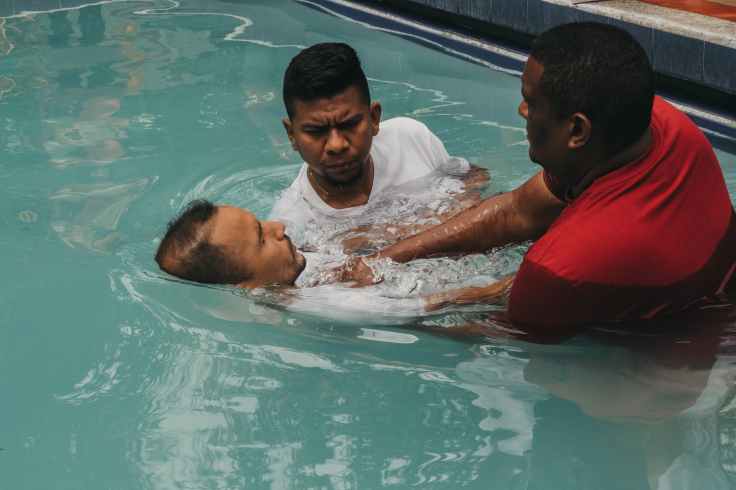
In just the past three weeks, three of my family members and one of my friends have made the decision to be baptized as a public declaration of their decision to live for Christ. All of them (and the others who were baptized at the same times) were baptized by immersion, signifying that they have, spiritually, died to self, been buried, and are raised with Christ to eternal life. This is not a step to be taken lightly, and I have confidence that all four (and more) of those I know are serious in their passion to follow the Lord.
When I write about prayer as a pursuit, I hope to convey that prayer is part of a larger pursuit of seeking God. And seeking God must include acknowledging Him as Lord above all– especially self. Jesus warned about people who claim to follow Him in word, but do not obey Him. It is, unfortunately, very easy to “speak Christian-ese”: to sound righteous and reverent when we are around others who claim to believe, but justify behaviors that may or may not stem from selfish motives.
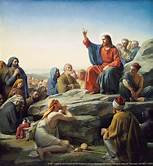
There are obvious examples of hypocrisy in our world, but in His famous “Sermon on the Mount,” Jesus warns that many who seem to be doing good deeds, and “talking the talk” will not be part of God’s eternal kingdom. We are not to be seduced into thinking that God will be impressed by charitable giving, memorizing Scripture, or working on the Mission field if we are not willing to repent of our “secret” sins and false attitudes. And it is not for us to point fingers at “other” hypocrites– it is for us to humbly assess whether or not we are truly acting in obedience and submission to our Lord, or satisfying our own selfish desires and hoping for God’s stamp of approval.
Prayer should be a two-way communication. We pray to God, but we also listen for God’s guidance, wisdom, conviction, and encouragement. And we must act in obedience, and confess our disobedience if we want to “keep the slate clean” and keep a close relationship. When we refuse, we are just giving God lip service, and using His name to impress others and deceive ourselves. Others may judge us on appearances, but God sees what is in our heart. And “in that day” (v. 22), He will not let imposters through the gates of Heaven.
The Good News is that Jesus doesn’t leave us hanging in verse 23. He goes on to say, “Therefore everyone who hears these words of mine and puts them into practice is like a wise man who built his house upon the rock..” (Matthew 7:24) Jesus is our Lord, but also our Savior and our Advocate. When we call on Him AS our true Lord, He is faithful and just to forgive our sins (1 John 1:9), and His divine power has given us everything we need for life and godliness (2 Peter 1:3a)
The act of Baptism alone does not have the power to save us. The practice of prayer alone has no saving power. But the pursuit of a relationship with Christ depends on such acts of obedience, humility, and trust. And the other good deeds that come from that relationship will not only help others, but will please God and strengthen that relationship. Instead of hearing, “I never knew you,” we can hear, “well done!” Not because of what we’ve done, but because of the partnership we’ve developed in God’s work.
May God bless all those who have recently taken the step of Baptism. And may we all continue to pursue that relationship of dying to self, being buried with Him, and rising to new life in Christ!