To Bow; To Kneel…

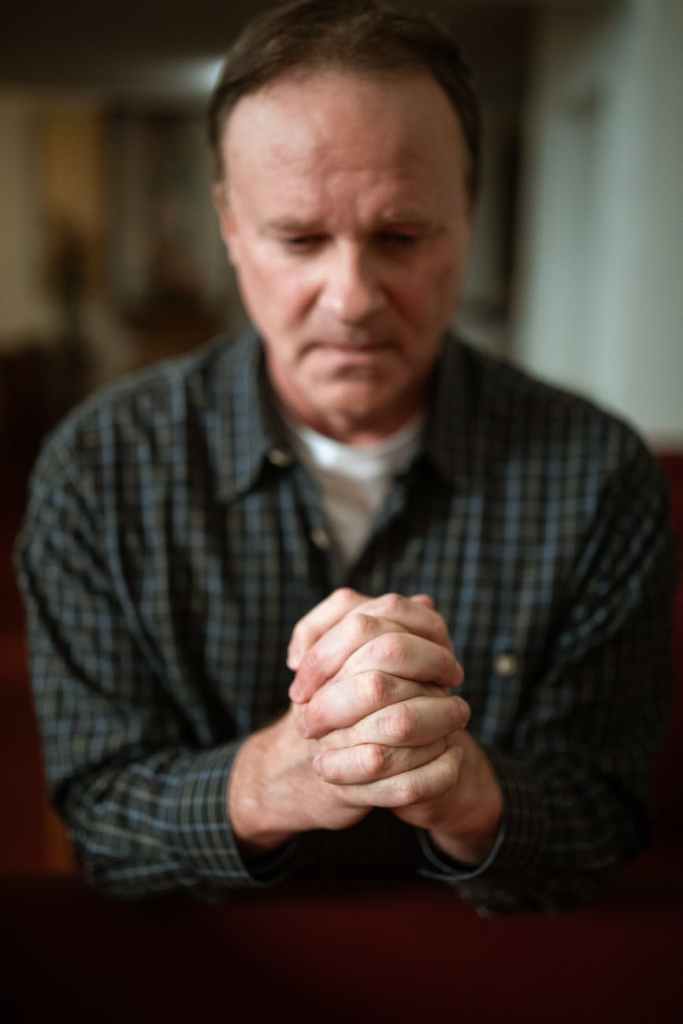
There is no one “right” way to pray–God listens to our heart, whether we are standing, sitting, bowing, lying prostrate, or running! However, kneeling or bowing before God shows our heart attitude. And I think it is important to talk about it a little here.
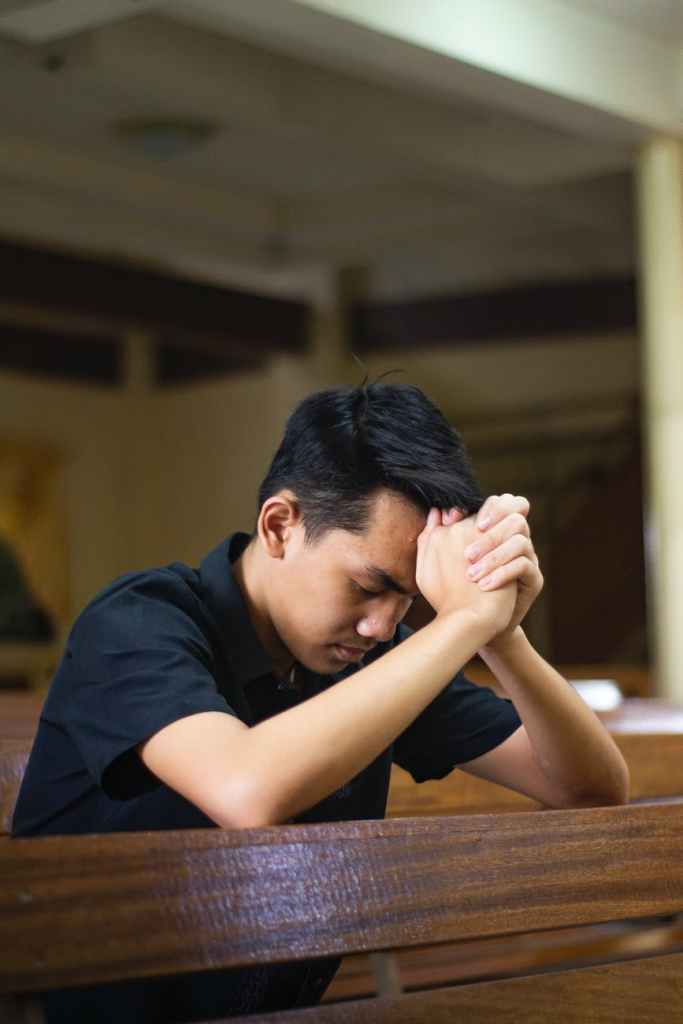
Photo by Ian Panelo on Pexels.com
  • Bowing or kneeling shows deference. A person bows or kneels before a sovereign or dignitary, someone of rank and importance, or someone in high authority. 9 Therefore God also has highly exalted Him and given Him the name which is above every name, 10 that at the name of Jesus every knee should bow, of those in heaven, and of those on earth, and of those under the earth, 11 and that every tongue should confess that Jesus Christ is Lord, to the glory of God the Father. (Philippians 2:9-11 NKJV)
  • Bowing not only demonstrates God’s superior position, but reminds me of my own position before Him. It is a humbling position to kneel; to bow one’s head; to become smaller and cast one’s eyes down. If there is pride lurking in my heart, bowing may not come easily…
  • To bow or kneel forces us to stop, and puts us in a position for prayer. It forces us to turn away from distractions and from comfort. I can pray in any position, but I don’t generally kneel to do household tasks, or bow to take a phone call. Even if I am not in a position to physically kneel or bow, I can put aside distractions, and take a heart and mind “stance” of prayer.

Photo by Tima Miroshnichenko on Pexels.com
  • Throughout the Bible, we are encouraged to bow or kneel when we pray– it is one among many stances of worship we are to take when approaching God’s throne. (see also Romans 14:11, Isaiah 45:23, Revelation 5:13, and Psalm 95:6-7)

https://www.gotquestions.org/bowing-kneeling-prayer.html

  • Kneeling or bowing sets us apart. That is not to say that we should make empty postures to make ourselves look virtuous. But neither should we be afraid to bow our heads, or reluctant to kneel, if we feel led to do so. This is especially true when we are at home or in church. It may NOT be appropriate to kneel in the breakroom at work or bow your head while driving– but if bowing or kneeling at church or in your own home makes you feel uncomfortable (other than for physical limitations), because someone “might” see you, there may be another heart issue at stake.

Today, as I come before my creator, I will kneel in reverence, bow in humility, and worship Him in word and action.


Prayer Priorities

What’s the most “important” prayer you can pray today? Sometimes, we think it is the prayer we pray in a moment of crisis. Or maybe the one we are asked to lead in front of a congregation. But the setting or the situation doesn’t make one prayer more important than any other.

It’s almost a trick question, really. Jesus never taught that some prayers were more “important” than others. But He did teach the some prayers were more effective than others. And His answers may be surprising to some.

Photo by sergio omassi on Pexels.com

The prayers Jesus praised were prayers of humble confession and needy request. God doesn’t judge our prayers– He judges the heart of the Pray-er. Jesus praised the prayer of the Tax Collector over that of the self-righteous Pharisee (Luke 18:10-14). While others might have been impressed by the Pharisee’s words and confidence, Jesus heard the desperation and the dependence of the Tax Collector. Just before this exchange, Jesus told the parable of a persistent widow, whose constant nagging resulted in getting justice from corrupt judge (Luke 18:1-8). It’s a strange parable–the woman is not meekly accepting of her situation; the judge is corrupt, initially refusing to do the right thing. Yet Jesus prefaces the story by telling his followers to “always pray and not lose heart.” (v. 1) So, the very prayers we dismiss– the nightly prayers for our loved ones, the “unspoken” request we lift up on behalf of a friend, or the seemingly unanswered requests–are no less important than any others.

Finally, Jesus praised (and prayed!) prayers that were “real.” He poured out His heart to His Father in the Garden of Gethsemane; He lifted up His friends’ needs at the Last Supper (John 13-17); He said simple grace before feeding the crowds.

Photo by RODNAE Productions on Pexels.com

So often, we judge our efforts when we pray– did we say the “right” thing? Did we say it the “right” way? Did we leave something out? Forget to say something? But God knows what is on our heart and in our mind. He knows what we “meant to say.” He knows everything we need– and all the needs of everyone else we could mention! He already knows all His names and attributes! And though He loves to hear us speak words of praise, He also listens to our heart, and–26 In the same way, the Spirit helps us in our weakness. We do not know what we ought to pray for, but the Spirit himself intercedes for us through wordless groans. 27 And he who searches our hearts knows the mind of the Spirit, because the Spirit intercedes for God’s people in accordance with the will of God. (Romans 8:26-27 NIV via biblegateway.com)

There is one caveat– because God knows our heart, He also “sees through” prayers that are insincere, proud, self-centered, and thoughtless. Some of the most “important-sounding” prayers fall short of touching God’s ears. He will not listen to the prayers of those who wish to “strike a bargain” with Him, or convince Him of their own self-worth. That doesn’t mean that God doesn’t value each one of us– after all, He became Sin who knew no sin, so that we could become the Righteousness of God (2 Corinthians 5:21). But God’s love is a gift–when we try to bargain for His gifts and earn His Grace with our eloquence, we lose sight of Who He Is.

Photo by Alex Green on Pexels.com

Many centuries before Jesus walked the earth, Hannah poured out her heart in tears, wordless anguish, and groaning. (1 Samuel 1). Her prayer was such a mess, the priest, Eli, accused her of being drunk! But God heard her heart, and answered her prayer, and because of her great faith, her son, Samuel led Israel through some of its most trying times. Hers was a very “important” prayer.

What if our stumbling effort to pour out whatever is on our hearts and lift it up to Almighty God–our praise, our failings, our grief, our desperate need–is be the most important prayer we can pray today?

Presumptuous Prayers

The Pharisee and the Tax Collector

9 He also told this parable to some who trusted in themselves that they were righteous, and treated others with contempt: 10 “Two men went up into the temple to pray, one a Pharisee and the other a tax collector. 11 The Pharisee, standing by himself, prayed thus: ‘God, I thank you that I am not like other men, extortioners, unjust, adulterers, or even like this tax collector. 12 I fast twice a week; I give tithes of all that I get.’ 13 But the tax collector, standing far off, would not even lift up his eyes to heaven, but beat his breast, saying, ‘God, be merciful to me, a sinner!’ 14 I tell you, this man went down to his house justified, rather than the other. For everyone who exalts himself will be humbled, but the one who humbles himself will be exalted.”

Luke 18:9-14 ESV (via biblegateway.com)
Photo by sobhan joodi on Pexels.com

“Father, help my neighbor see her sin. Change her heart, Lord Jesus.”

“Heavenly Father, I know it is not your will that I face this diagnosis of cancer. Help the doctors to see their mistake.”

“God, this job opening is a perfect opportunity– I claim this job in Your Name.”

Photo by Luis Quintero on Pexels.com

I’m not saying that the above examples are all about presumption, especially taken out of context, but I think it is easy to fall into a dangerous habit of thinking that our will must also be God’s will, and not the other way around. What if God is waiting for me to reach out in Love to my “sinful” neighbor? What if it is MY heart that needs to be changed? What if God’s plan for my life includes cancer– or a miraculous healing from it? What if my response to cancer is an opportunity to show God’s peace? What if God has a better job, or better timing for that job?

I actually had that experience. When I was first out of college, I applied for many teaching positions– nothing was open the first year, and I ended up working at a public relations firm as a proofreader. I was laid off nine months later– just in time to apply for teaching positions again. The “perfect” job came up at my old high school, where they needed an English teacher. I interviewed well, and thought I had the job. But they went with a teacher who had more experience. So I signed up to do substitute work– not what I wanted, but it paid for my room and board, and not much else. It was late January when I got the call. The other teacher had been chronically ill, and they needed me to “substitute” for the rest of the year, with a possibility of a contract the next year. When I arrived, the classes were in chaos. The students were unruly and way behind in their studies. It wasn’t the “perfect” job– it was difficult. But I prayed– agonizing, humbling, needy prayers. I stayed at that position another seven years. Any I prayed through every day. But what if I had gotten the job at the first try? Would my prayers have been as pure, or would they have been laced with presumption?

Photo by Katerina Holmes on Pexels.com

I pray every day. I read God’s word every day. But I am in need– every day– of God’s mercy, His wisdom, and His Holy Spirit to guide my thoughts. Too often, I presume when I pray– that God will do what I want, that He will see things from my perspective, that He will not ask me to go through hardship or disappointment, or pain.

Our prayers don’t need to be as arrogant as that of the Pharisee in this parable to hold certain prideful presumptions.

Photo by Ian Panelo on Pexels.com

“Lord, be merciful to me, a sinner! Give me strength to face the day ahead, grace to share Your Love with those around me, and eyes to see Your hands at work. Thank you for Your salvation, for Your promises, and for Your faithfulness. Amen.”

Take My Life..

We have entered the Lenten season, and many of us have made plans to “give up” something for the 40 days leading up to Easter–chocolate, or certain meats, or a certain habit. It is traditional to use this time leading up to Holy Week to focus on preparing our hearts to receive the Gift of salvation that comes from Christ’s resurrection on Easter.

But, in a larger sense, there is nothing we can do to prepare for Grace– it is completely unmerited favor. My willingness to deny my sweet tooth for six weeks cannot make me ready for God to allow His wrath to fall on His Holy Son, so that I can be declared righteous for all eternity. It is no more than a gesture.

Photo by Francesco Paggiaro on Pexels.com

God is not impressed by our Lenten traditions. This doesn’t mean that we should not make the gesture; it doesn’t mean that we cannot grow closer to God by such observances. But we must not place too much reliance on them. Jesus Christ is the Author and Finisher of our faith (Hebrews 12:2). He gave up far more than we can imagine in order to rescue us from all that we deserve. Jesus not only gave up His human life on the Cross, He gave up His throne, His status, His omnipresence, and His omnipotence. He allowed Himself to be subject to human authorities, and He served those He had created.

Photo by Pixabay on Pexels.com

Jesus didn’t just “give up” something on His way to the Cross. He offered everything He was! May we seek to do the same. May we pray, along with Jesus in the Garden, “..not my will, but Yours be done..” (Luke 22:42)

No, Not One…

I would like to be thought of as a good, honest, decent sort of person. I think most people would say the same; some might claim flippantly that they don’t care, but very few people are indifferent to public opinion. We want to be liked and respected by others– we want to be included. But we also want to be “right.” There is a confidence that comes from knowing that our opinions and morals are shared by those around us, and that we are accepted.

Photo by Kampus Production on Pexels.com

We live in a world full of “right-ness”, but much of what used to be considered good, right, and moral, is now seen as intolerant, mired in sexist or racist traditions, hateful, and “wrong.” And the temptation is to rise up in defense of what we know to be right– to be identified with it, and to claim it as our own. It is tempting to pray that others will “see the light” or even “get what is coming to them” in light of where they stand on moral issues.

Photo by Andrea Piacquadio on Pexels.com

But God’s standard is much higher. God loves us all with an unfathomable and everlasting love, but He is not impressed by our self-proclaimed righteousness. Nor does He declare us “better” or “more righteous” than our neighbors based on what we believe or how we argue. “There is NONE righteous, no not one.” (Romans 3:10) Our righteousness comes from Grace by Faith (Ephesians 2:8).

Just because God loves us all, and just because none of us can earn God’s favor by what we do or say, doesn’t mean that morality is relative or even irrelevant. We should still fight to correct faulty characterizations of God and His Righteousness. But we must be careful not to let it become a personal crusade; to let self-righteousness blind us to our own dependence on God’s Grace.

Photo by Nikita Krasnov on Pexels.com

If we spent as much time learning humility as we spend trying to humiliate our rivals, we might see that our reputation is safe in God’s hands!

Chariots of Iron

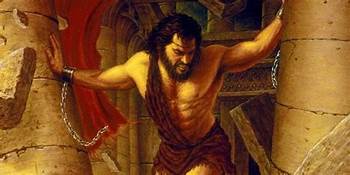
I was reading from the book of Judges today, and a curious phrase jumped out at me. The entire book of Judges is filled with the failure of the people of Israel to fully claim their promised inheritance from God. Generation after generation passes, with a cycle of sin, enslavement, and deliverance as God raises up various judges and heroes, like Gideon, Deborah, or Samson.

Already in chapter one, there is a hint of the trouble to come. The book begins with several successful battles after the death of Joshua. The people of Israel consult the Lord, who fights with them in several key battles. But in verse 19, it says: “The Lord was with the men of Judah. They took possession of the hill country, but they were unable to drive the people from the plains, because they had iron chariots.”

Say what? The Lord was with the men of Judah– the LORD! They had taken possession of the hill country– rough terrain that would have been filled with natural barriers, rocky fortresses, and literal “uphill battles.” They had destroyed massive cities like Jericho less than a generation before. They had defeated armies far larger and better positioned. They had defeated giants! And now, suddenly, they are “unable” to drive the people from the plains– because the enemy had chariots of iron?

Photo by van4er ivan on Pexels.com

https://www.biblestudytools.com/commentaries/gills-exposition-of-the-bible/judges-1-19.html I think this commentary says it well. The chariots of iron became the excuse for the Israelites’ unwillingness to obey; to trust in God’s strength instead of their own. After all, it wasn’t that long before in their history when God had drowned the entire Egyptian army, including all its chariots, in the Red Sea.

I don’t think it was about the chariots of iron. I think it was about the plains. I think sometimes it can be more difficult to fight on “the plains.” When God sends us on an “impossible” mission, we must face our own fears and acknowledge our weaknesses– we KNOW we cannot do it in our own power. But when we face an enemy on “equal footing,” we are tempted to trust in our own resources– the toughness of our armor, the skill of our generals, the speed of our horses, and the superiority of our weapons. We hope and expect God to fight for us where we cannot hope to win alone, but we don’t ask for God’s help or protection in areas where we believe our own strength should be sufficient. Israel had a fine army– seasoned veterans of battle. If they HAD iron chariots of their own, victory might have been expected– with or without God’s divine intervention. But victory eluded them, because they didn’t finish the fight!

Photo by Sora Shimazaki on Pexels.com

We do the same thing today–we fail to march into battle because the enemy has “chariots of iron.” Maybe they have more social status, more political or economic power then we have. Perhaps we see that they have the means to make our lives painful “on the plains.” We see their arrogance, and their wealth and success, and we let ourselves be intimidated. We know that God has promised never to leave us or forsake us, but He has not given us chariots of iron to match those of the enemy. We don’t pray for the courage to face their chariots, or the wisdom to trust that the battle belongs to the Lord. Instead, we make excuses for not fighting the battle at all.

The rest of the book of Judges is filled with war, slavery, corruption, death, and evil. The very last verse sums it up: “In those days Israel had no king; everyone did as he saw fit.” (Judges 21:25)

Photo by Ian Panelo on Pexels.com

Lord, help me to be courageous, and humble. May I always trust in You above all–especially above chariots of iron, and weapons of mankind.

Holy Infant, So Tender and Mild

It is one of the most popular Christmas Carols– we sing it every year: “Silent Night, Holy Night; All is calm, all is bright; ‘Round yon virgin mother and child– Holy infant, so tender and mild; Sleep in Heavenly Peace– Sleep in Heavenly Peace.”

Photo by Blue Ox Studio on Pexels.com

Each year, we celebrate the coming of Christ– “Son of God; Love’s Pure Light.” God coming to earth to live among His creation– Emmanuel, God with us. And it becomes familiar, and gets mixed in with stories of Santa Claus and gift-giving, decorated trees and flying reindeer.

Photo by cottonbro on Pexels.com

But stop a minute to reconsider the amazing juxtaposition–the very Word of creation became a speechless baby. The ruler of galaxies came to earth naked and needy, hungry and helpless. Holy Infant–fully God and fully human in His frailty.

Photo by Johannes Plenio on Pexels.com

God could have come as a ruler of might; He could have stepped out of Heaven in a blinding flash of light, spoken with a voice of thunder, and made the mountains tremble. He could have filled the skies and scattered all the stars and clouds. He could have come in all His Majesty– and someday, that’s how He will return.

Photo by Dominika Roseclay on Pexels.com

But on that Silent, Holy Night, He came in humility. He came in Heavenly Peace.

What an awesome enigma–the One who would break the power of death came in the weakness of an ordinary birth. The Giver of Life choosing to reside in the womb of an ordinary young woman, gasping for air as He took His first breath as a human. The omniscient one having to learn to sit up, and eat, to speak and to hold His mother’s hand; to stand up and walk.

God SO LOVED us that He went to extravagant lengths to meet us in our humanness. He didn’t need to become human for His sake– He did it for us; that WE could know Him more intimately; so that when we talk to Him, we are talking to one who has known hunger, and pain, and heartbreak, and loss– as one of us.

Photo by nappy on Pexels.com

It is terrifyingly easy to miss the significance of the incarnation after the fact. As we remember the Advent season, let us reflect on the world before that Holy birth.. a world so fallen that no one could imagine the face of God; no one could imagine walking with Him or sharing a meal or a smile with Him; no one had ever felt His touch on their cheek or heard Him laugh. No one could have imagined that God would bleed, or cry out in agony, or taste death. But He came. He lived and walked among us. He died. And He paid the penalty for your sins and mine, so that we can share life with Him– eternally.

I Will Give You Rest..

I love revisiting the promises of God. But I have to be careful not to make God’s promises into something they are not.

In Matthew 11, Jesus gives a promise– “I will give you rest.” But sometimes, I read more (or less) into this promise than Jesus meant.

28 “Come to me, all you who are weary and burdened, and I will give you rest. 29 Take my yoke upon you and learn from me, for I am gentle and humble in heart, and you will find rest for your souls. 30 For my yoke is easy and my burden is light.”

Matthew 11:28-30 (NIV) via biblegateway.com

First, Jesus bids us come to Him. There are times I want rest, but I want it on my terms– I want ease, comfort, rest, and renewal in the middle of my own plans, activities, and even rebellion. When we pray, we need to come to Jesus, not demand that He come to us.

Photo by Artem Beliaikin on Pexels.com

Next, Jesus offers rest to those who are weary and burdened. Similarly, Jesus said He came to save those who were lost, NOT those who already saw themselves as justified. If I come to Jesus asking for perpetual rest– never willing to trust Him when He asks me to exert myself or carry a burden–I will never know complete rest or fulfillment in Him.

Photo by Garrett Morrow on Pexels.com

In the very next verse, Jesus offers a yoke– certainly not a symbol of rest for most of us!–and He offers to teach us to find rest. Rest is not a gift like grace or love, even though Jesus “gives” it to us. Rest is a reward. And Jesus makes it clear that He will be with us every step of the way as we work and rest in Him. A yoke has many bad connotations– slavery or bondage, burdens, toil, and hard labor in the hot sun–but it can also have a positive meaning. Oxen who are yoked together share the load– with the lead ox taking the brunt of the burden, and the yoke-fellow carrying a lesser share. Imagine one ox trying to pull the load alone! Yet that is what many of us are doing– trying to carry the weight of the world on our shoulders and pushing away the One who wants to share our load and lead us in the best and most restful paths.

We don’t do much work with teams of horses or oxen in my community. We have powerful machines that make quick work of heavy loads– our burdens have less to do with loads of grain or logs, and more to do with mental and emotional stress. But Jesus reminds us that He is “gentle and humble in heart”–that the rest He promises is rest for our souls.

Photo by nappy on Pexels.com

What a wonderful promise in these turbulent times! Will we take up this offer? Will we claim this promise of our Loving Father to share our burdens and bring us to a place of rest?

Simple Prayers

I know some people who refuse to pray aloud in groups. Some of them are just modest or shy, or they get tongue-tied and feel awkward. But some of them refuse because they feel their prayers are “inadequate.” They wish their prayers were eloquent or flowery, righteous-sounding or inspiring, but they don’t believe their prayers are “enough.”

Photo by Rodolfo Clix on Pexels.com

But God listens with perfect ears. He hears beyond our words. Simple, humble prayers– spoken or silent–are His favorite kind!

We often waste our time trying to impress God (or others) with our words. But God isn’t waiting to be impressed– He’s waiting to spend real time with His child!

When children are first learning to speak, we delight in their coo-ing and lisping. As they grow, we sometimes tune out their babbling, their stories, their griping, and their whining. But as the years go by, we miss hearing their voices, and we long to have them call and talk to us– even for a few minutes.

Photo by nappy on Pexels.com

God never tunes out our babbling, but when we don’t pray, He misses the sound of our voices and the sharing of our thoughts, just like any parent would.

Never discount the power and the value of simple prayers. God doesn’t!

Stop, Drop, and Pray!

Does it ever feel like you spend your days “putting out fires?” Taking care of little problems before they become bigger problems? Never getting a chance to rest or relax before the next crisis hits? Trying to put out a fire that keeps getting out of hand?

Photo by Produtora Midtrack on Pexels.com

Fires can become very dangerous very quickly. Experts advise that we shouldn’t try to stay and fight a fire for which we are not equipped–it puts you and others at far greater risk. There is a simple phrase that can help people survive and escape a house or building fire: Stop. Drop. And Roll. A similar phrase can be helpful in facing the spiritual and emotional “fires” we face: Stop. Drop. And Pray!

Photo by Jeremy Bishop on Pexels.com
  • Stop! Often when we face trials, our first reaction is to rush in and try to “save” things– ourselves, our loved ones, our possessions, our pride…the list goes on. This is a natural reaction, but not always the wisest course. In the initial panic, we are likely to make poor judgments, and miss warning signs. With the best of intentions, we can make situations worse: maybe we don’t have the skills, the equipment, the authority, or the knowledge to offer salvation or safety. That doesn’t mean that we must walk away from danger, or fail to offer help when we are able to do so. But it means that we must remember that Salvation and Wisdom come from God.
Photo by Vlad Bagacian on Pexels.com
  • Drop. Fire is an obvious danger, but smoke is a silent killer. We can see fire; we can feel the heat of it. But the smoke can immobilize us long before the flames reach us. Spiritually, we may be able to see obvious sins in others, but ignore the smoke of compromise and apathy in the air all around us. Smoke rises– just like pride, and arrogance, and denial. We need to be “on our knees” –lowly and humble– if we want to keep from getting choked and suffocated.
Photo by Tobias Rehbein on Pexels.com
  • Pray! Pray with a heart to listen for good advice and obey. Sometimes, we need to stay still and wait; sometimes we need to flee! Sometimes we need to get involved; sometimes we need to walk away. We don’t need to know the next seven or eight steps, however. We need to do the next right thing– even if it seems insignificant in the face of the threat. What we can see is not always where the danger is greatest, nor where the help is most available.
Photo by Emre Kuzu on Pexels.com
  • Finally– Don’t wait until you are in danger to practice these steps or prepare for what may lie ahead. There is a popular but unbiblical phrase: “God helps those who help themselves.” But this is NOT what God says! God says that He will help those who humble themselves (Luke 14:11; James 4:10); those who seek Him (Psalm24:6; Amos 5:4); and those who believe (Mark 9:23; John 20:29).

Blog at WordPress.com.

Up ↑