A Garden of Prayer

It’s gardening season– many with gardens are reaping an early harvest of tomatoes, peas, beans, and other vegetables. I live in town, and have no space for a garden, but I have memories of working in my mom’s and grandma’s gardens. Gardening takes a lot of work, and involves a lot of elements. A life of prayer also requires a lot of discipline and certain elements:

Photo by Gustavo Fring on Pexels.com
  • Plowed ground– we need hearts that are softened and humble, ready to listen and respond.
  • Seeds of faith– even those as small as a mustard seed!
  • “Son”-shine–we can follow the examples of the prayers of Jesus, as well as His teachings on prayer.
  • Living Water–Jesus gives us living water in His words and His life. The more we spend time with Him (through prayer and in His Word), the more we will experience the nourishment He provides!
  • Cultivation– it is not enough just to plant a seed and leave it. We need to spend time in devotion, worship, prayer, scripture reading, and fellowship daily if we want growth. We also need to “weed out” sinful habits and thoughts that keep us from trusting God’s will and timing.
  • Workers for the harvest–Our lives should be producing fruit. But fruit that isn’t harvested and shared will go to waste! And we should also be ready to harvest the fruit of others– encouraging and building one another to better growth and adding to the Kingdom.
  • Helper “Bees”– like Bee Kind; Bee Patient; Bee Humble; Bee Generous; Bee Industrious; Bee Joyous; Bee Faithful; Bee Grateful; Bee Truthful; Bee Gentle; etc.
Photo by Pixabay on Pexels.com

Prayer is always “in season,” and always produces a harvest. It takes dedication and faith, but it is so worth it!

Fishers of Men

Earlier this week, my husband and I went fishing. As we were enjoying our time on the lake, and catching a few fish, I was reminded of the old song I learned in Sunday School:
“I will make you “fishers of men”…if you follow me.” Jesus said these words to His early followers, who were fishermen by trade (see Matthew 4:19). But what does it mean to be a “fisher of men?”

Photo by Public Domain Pictures on Pexels.com

The primary meaning is that we have a commission– found in Matthew 28:19: “Therefore, go and make disciples of all nations..” We are to go and “catch” men and women, taking them out of the sinful lifestyles we see around us, and bringing them into the Kingdom of God, much as fishermen take fish out of a lake or sea and bring them into the boat. But what practical implications can we take from the practice of fishing, that might help us as we carry out our spiritual commission?

  • First we much go where the “fish” are, and actively work to catch them. I can go to the lake, dip my toes in the water, even get into a boat and go sailing, and never catch a fish. The fish will not jump into my boat, or jump out of the water into a net. I must make an effort. I can follow Christ, and go to church every Sunday, participate in many spiritual activities, even pray every day, but if I never interact with lost and hurting people I am unlikely to become a “fisher of men.”
  • Next, we must recognize that we won’t “catch” all the fish! I know some Christians who become discouraged and depressed if they go out for one day of “evangelizing” and don’t make converts. They give up after one negative or unsuccessful encounter. “I’m not an evangelist.” “I can’t share the gospel– I just don’t have what it takes…” Imagine if fishermen responded that way– “I cast out three times, and never got a fish– I give up!” This is especially discouraging because our Great Commission is not to “convert” everyone; not just to go out and “catch” men and women with a hook or a net, but to make disciples. It is a process, but it comes with risks and no guaranteed “return” on our investment. Some “fish” are not ready to be caught. Some are meant for other fishermen. This should not lead us to be apathetic about lost neighbors or relatives, but it should remind us that we are God’s witnesses, not His SWAT team. Even Jesus didn’t “convert” everyone He met! But He did love them!
  • Third, and closely related, we must expect resistance. It is not natural for most people to respond immediately to the Good News of the Gospel. After all, it involves admitting our need for salvation, and submitting to the will of God. Fish that are taken from the water will die! And we must “die” to our selves and our selfish nature if we are to become Disciples of Christ.
  • Finally (and this is a bit of a stretch of the analogy, but bear with me…), we must have the right bait. This is not to say that the Gospel is inadequate or insufficient for the task. Rather, that we are not meant to hit people over the head with only our words– even when they come from Scripture! We do not create disciples by offering a bare hook. People are hungry– hungry for answers; hungry for hope; hungry for peace; and hungry for love. The Gospel lives in US– WE need to offer more than just the words of the Gospel–we need to LIVE the Gospel! To offer only condemnation or smug arrogance makes a mockery of the very Gospel we are supposed to share. Likewise, we do not create disciples by offering a shiny but “fake” gospel of easy answers and “cheap” grace without truth or repentance. It may hook a few desperate or gullible people for a moment, but once again, it is not our mission to merely “hook” people.
FISHERMAN#3/OK, 5/30/01, 3:52 PM, 8C, 8808×10935 (0+505), 150%, FISH, 1/10 s, R120.4, G94.7, B105.7

David and I enjoy fishing– we enjoy spending time in God’s beautiful nature; we enjoy the quiet and peace; and we enjoy the challenge of finding where the fish are “biting” on a particular morning. And I’m so glad that Jesus gave us such wonderful analogies and word-pictures to help us understand His love for us and His plan for spreading the Good News. Finally, I’m glad that I’ve been taken from the “lake” of sin and given new life by the great “Fisher of Men!” I pray that I can help others find and follow Christ, as well.

Proclaim Liberty to the Captives

“The Spirit of the Lord is upon me, because he has anointed me to proclaim good news to the poor. He has sent me to proclaim liberty to the captives and recovering of sight to the blind, to set at liberty those who are oppressed…”

Luke 4:18 (ESV)
Photo by Andrea Piacquadio on Pexels.com

Yesterday, we observed a holiday, relatively “new” on the national scale, of “Juneteenth.” Many people across the United States (and elsewhere) still don’t know the meaning behind this day. On the nineteenth of June, 1865, federal soldiers entered the city of Galveston, Texas, with news of the Emancipation Proclamation and the victory of the Union over the Confederate Army in the Civil War. The Emancipation Proclamation, in which President Abraham Lincoln declared freedom for all slaves throughout the Confederate States, had been signed on January 1, 1863. The war had been over for more than two months. President Lincoln had been assassinated in April. But news of the proclamation had never reached as far as Galveston; nor had news of the defeat of the Confederacy. Far from the ravages of the war, and far from the events of Washington or Richmond, the people of Galveston continued with life as it had been. For two-and-a-half years, people who had been declared free continued to live as slaves. News of their freedom came with shock and joy! Finally, those who were considered free in the eyes of the law KNEW they were free, indeed!

Photo by Yogendra Singh on Pexels.com

It would take more than 100 years for many of the injustices to be addressed that had grown up around slavery. Many of them are still being contested. But the celebration of the good news of Freedom continues, along with the hope that we will continue to build a better Union for All.

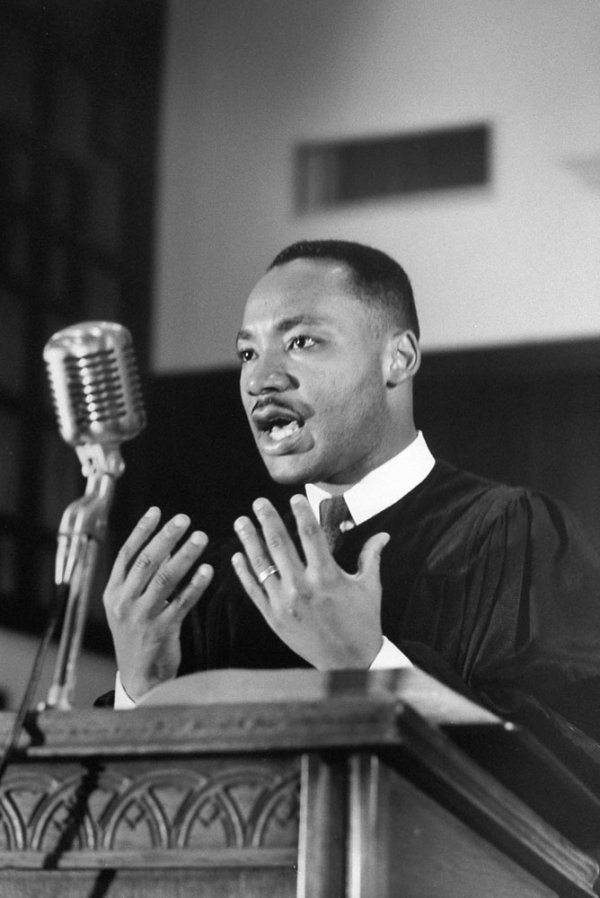
Civil Rights activist Rev. Dr. Martin Luther King Jr. gesturing during sermon at Ebenezer Baptist Church. (Photo by Donald Uhrbrock//Time Life Pictures/Getty Images)

Several centuries before the American Civil War, Jesus stood in the synagogue and read a prophetic passage from the book of Isaiah, in which He declared that He had been anointed to proclaim, among other things, “liberty for the captives.” He wasn’t talking about those who were in physical or institutionalized slavery, but for all of us who are slaves to sin. Unlike the slaves of Galveston, many of us are unaware of our captivity. But like them, we have been declared Free. What good news! Yet, we continue living in ignorance, both of our slavery, and of our potential freedom.

Photo by Engin Akyurt on Pexels.com

How many of us, even those of us who claim the Salvation of Christ, continue to live as though we are slaves? How many of those around us live as slaves without knowing they can be free? Today is a great day to proclaim the Good News– Jesus Saves! We can walk in Freedom and Newness of Life! Hallelujah! Carry the Good News to those who have not heard. Proclaim Freedom to the captives, and Liberty for those who are oppressed.

Photo by Designecologist on Pexels.com

Juneteenth is a time of celebration and exhilaration– for those who understand the gift of freedom. God offers us freedom–not from the trials or work of ordinary life– but freedom TO LIVE–abundantly, eternally, and fruitfully! In Christ, life has purpose, promise, hope, and joy. Death and sin and shame have been defeated– the war is over! Freedom is ours!

Photo by Victor Freitas on Pexels.com

I hope that today (and every day!)is a day of celebration for all of us who know the Freedom of Life in Christ.

Looking For God In the Storm

On Monday night, several strong storms moved through our area. There were also severe storms in other places, like Mexico City, and around Manila– high winds, heavy rains, hail, and flash flooding. Our town did not see much damage, but some nearby towns had many trees down and power outages, followed by near record-high heat.

Often when storms come, we question– “Where is God?” Doesn’t He see our suffering? Why does He allow it? We look for evidence of God’s goodness in spite of the storms in our life. We may even look for evidence of God’s goodness in the aftermath of a storm– “Well, it could’ve been worse..” But in the past couple days, I have seen evidence of people finding God IN the storm. At least a couple of friends were watching the storm approach and/or pass by, and they were able to capture a picture showing lightning striking through a rainbow!! Others have pictures of a glorious red sunset. Both pictures remind us of God’s faithfulness and His promises. God never promised that we would never see storms, but His rainbow reminds us that He will have mercy. A red sunset also speaks to sailors and farmers of better weather to come with a new dawn. God is not absent, waiting to speak after the storm is past. He is right there in the middle of the storm for those who are looking.

Photo by Pixabay on Pexels.com

Another thing I noticed is that several people have become evidence of God’s care in, through, and in the aftermath of the storms. Several people have volunteered to help clean up downed trees, or offered to provide food and water, or even (air-conditioned) shelter for those without power. Many such people have suffered some damage themselves. But their hearts are open to help their neighbors in their time of need.

Photo by Kampus Production on Pexels.com

I don’t recommend that we put ourselves in grave peril to see signs in the raging storms, nor am I trying to shame those who cannot volunteer to help in times of crisis. When storms come, it is wise to take shelter and TRUST that God sees us, knows our greatest needs, and will not leave us without hope. But it is also a great time to look for ways we can both SEE God and SERVE others.

Praying can help us in both ways. We should seek to praise God at all times–even in times of storms and trials. Instead of focusing only on the problems we face, we can be reminded of all the times God has been faithful in the past and remember all the promises He has kept! Instead of focusing on our own losses or pains, we can focus on praying for the needs of others and praying for wisdom in how to be helpful and encouraging. Because God is with us. Always!

Photo by Efigie lima Marcos on Pexels.com

The same mighty power that brings the storm is available to withstand it. God IS present IN the storm, just as He is present before and after. Sometimes, we ignore Him during times of ease and comfort. Sometimes we miss His voice in the raging wind and pounding hail. Sometimes, like Jesus’ disciples, we forget that God controls the winds and waves, and we let fear get the better of us for awhile. We wonder if God is “asleep on the job.” (See Mark 4:35-40) But a single word is enough to calm whatever storm is raging around us.

What a powerful God! What an encouraging reminder.

I Stand At the Door and Knock

I was being pestered by telemarketers the other day, and it struck me that God is the exact opposite of a telemarketer. Telemarketers call, generally when it is inconvenient, to sell you a product you did not know you even wanted! They may ask polite questions, but their goal is not to help you– rather, their goal is to sell you their product. They may have your name from a list (they usually slaughter the pronunciation of mine) , but more often than not, they simply call your number at random. They’ve never met you, nor do they intend to develop a long-term relationship with you. They are not interested in your family, your background, or your most pressing needs.

Photo by MART PRODUCTION on Pexels.com

God is not a telemarketer. He isn’t trying to “sell” you anything. He cares deeply and personally about who you are, and what you need. He knows you– even better than you know yourself! And He says, “Behold, I stand at the door, and knock: if any man hear my voice, and open the door, I will come in to him, and will sup with him, and he with me.” (Revelation 3:20) He doesn’t say that He will make an appointment to come to your door at His convenience. He doesn’t say that He will pound on your door and insist that you answer. He doesn’t say that He is there to make you a “limited-time offer you won’t want to miss…” The image in Revelation is that of a close friend who is always as close as your doorstep and waiting to fellowship with you.

Photo by Jack Sparrow on Pexels.com

The wonder of prayer is just that– God is ALWAYS, ALWAYS available and ready to listen, comfort, protect, encourage, forgive, advise, and just “BE” present. He invites Himself, but waits for our response to His gentle knock. He doesn’t walk away in disgust when we pretend we’re not at home. He doesn’t break in to our house, or peer through the window or blow up our voice mail box with frenzied messages.

Sometimes, WE are like the telemarketer– calling on God, insisting that He come to our rescue, or answer our doubts and questions, only to speed off without so much as a “Thank you.” And God still waits on the doorstep, waiting to come in and “sup” with us. So often, we have an agenda; we believe that God must have one, as well– that He wants a certain phrase or certain action, and then He will “go away” again, satisfied that He has “made a sale.” But God wants us to walk with Him in relationship (see Genesis 5:21-24; Genesis 6:8-9; Micah 6:8; Matthew 9:9; John 8:12; John 10:27; 1 Peter 2:21, etc.) In this sense, prayers is not an activity, but a pursuit and a way of life– an ongoing conversation between companions along their journey.

Photo by Alexavier Rylee Cimafranca on Pexels.com

May we enjoy today’s journey and welcome the company of the One who created us, pursued us, redeemed us, and who loves us best!

No Greater Love…

This coming Monday we will be celebrating Memorial Day in the U.S. It is a day to remember those who gave their lives in battle, defending our nation, our people, and our way of life over the course of almost 250 years. We decorate the graves of fallen soldiers with flowers and flags and plaques honoring their sacrifices. It is a strange sort of “holiday.” We don’t like to think of wars and battles– we ache for those who are terrorized by wars in the current days. We don’t celebrate war and violence– our highest goal is to achieve and preserve peace and safety. And it can seem somewhat morbid to “celebrate” the fallen soldiers of bygone days.

Photo by RODNAE Productions on Pexels.com

But we are not celebrating their deaths. We are celebrating the causes for which they fought and died. We celebrate freedom, and justice; the rights of individuals to pursue liberty and fulfill their dreams. These are causes worth fighting for, and yes, even dying for. We mourn the loss of life, and we grieve the necessity of fighting and struggling to preserve basic rights. But we are grateful for and humbled by the examples of those who have shown the courage and strength to give their all. We honor these sacrifices when we decorate the graves of fallen soldiers, or hold services and memorials at cemeteries. It is not meant to be a time of joyful celebration, but a time of solemn reflection and humble gratitude.

Photo by Pixabay on Pexels.com

But Memorial Day can also be a time of reflecting on an empty grave– that of Jesus Christ, who gave His all for a cause even greater than liberty and justice in a particular nation or time or for a particular group of people. Jesus gave His life to reconcile an unholy human race with a Holy and Righteous God. He fought against Sin and Death, and conquered them both. And we cannot decorate a grave to honor His sacrifice, because, unlike all the soldiers we honor next week, Jesus did not just preserve a cause or a way of life– He became Life for us. His grave is empty as a symbol of Death’s defeat!

It was Jesus Himself who said, “Greater love has no one than this, that one lay down his life for his friends.” (John 15:13 NASB) Soldiers who lay down their lives often do so to save the lives of their comrades at arms– their friends and fellow warriors– as well as their countrymen and women, their neighbors, and their families. And it isn’t just soldiers who give their lives. Recent news stories tell of teachers, police officers, and other individuals who have sacrificed their lives for the sake of innocent shoppers, students, and neighbors. Such sacrifices are tragic, but they are also heroic, and deserving of our acknowledgement.

We take time to honor those who died for a cause. How much more should we honor the One who died to bring eternal freedom and life to each one of us! And how much more should we be willing to give our lives for the sake His Kingdom! There is no greater love that we can show.

Photo by RODNAE Productions on Pexels.com

Be Reconciled

23 So if you are offering your gift at the altar and there remember that your brother has something against you, 24 leave your gift there before the altar and go. First be reconciled to your brother, and then come and offer your gift.

Matthew 5:23-24 (ESV)
Photo by RF._.studio on Pexels.com

Why do we find it so difficult to be reconciled? We crave God’s forgiveness, but we withhold our own toward our neighbors, or family members. We let anger and bitterness keep us apart. We let pride keep us from doing what we know is right in God’s eyes.

I speak from conviction. I have been estranged from a cousin of mine. Years have passed since we’ve spoken. We argued about something, and simply stopped talking. I tell myself that I have nothing for which to apologize–that’s just the way things ended. And my life is far less stressful since we’ve stopped talking. I do not “hate” my cousin, or feel bitter toward her. In fact, I tell myself that I only wish her the best– I just don’t want to be involved in her life, or have her involved in mine.

Photo by Josh Sorenson on Pexels.com

I know this is not what God wants. I know I should get in touch, and reassure her that “we’re okay”. Yet I am afraid to reach out and re-establish contact. Not because she poses any sort of physical threat, but she threatens my pride and my comfort. I find her difficult to talk to; difficult to understand. We have different ideas about boundaries and expectations–I find her “needy,” and she finds me “aloof.” I don’t think time will have made our relationship “easier.”

Photo by Liza Summer on Pexels.com

But God finds her precious in His sight– and worthy of my effort to reconcile our relationship. That doesn’t mean that I must allow her to manipulate me or abuse my emotions, or that I must demand that she be someone she is not to make me more comfortable. But it does mean that I may be embarrassed or inconvenienced at times. I need to be willing to listen, even when it is difficult, and so speak, even when it seems like I’ve said the same thing before. And it means that I must learn to set healthy boundaries and insist on them– not to shut her out as I have been doing, but to keep our relationship balanced and safe for both of us.

God puts a great premium on our willingness to be reconciled to one another. So much so, that Jesus told His listeners in the Sermon on the Mount, that if they were ready to bring an offering, and they remembered that someone had something against them, that they should leave their offering– unoffered– and go be reconciled first. Being at odds with others puts us at odds with their Creator and the One who loves them. Whenever possible, we should seek to reconcile. Broken relationships are sometimes a reflection of our relationship with Him. It hinders our prayer life, as well as our witness to the Power of God to redeem and reconcile the world around us.

Photo by Timur Weber on Pexels.com

God is aware that we are sinful people. And there are some relationships that are absolutely toxic. Reconciliation and forgiveness are NEVER about allowing another person to continue to abuse or manipulate you. Especially if this involves physical or sexual abuse. Forgiveness is not the same as accepting someone else’s manipulation or abuse. God, and only God, can redeem us and make us a new creation. Some relationships cannot be fully “reconciled” in this life. But “letting go” is not the same as “locking out” or “running away.” We must let others know that God can do what we cannot–He can restore broken relationships. He can make all things new.

Two Ears

“We have two ears and one mouth so that we can listen twice as much as we speak!”

Epictetus
Photo by Anna Shvets on Pexels.com
Photo by Lord Pixel on Pexels.com

I write about prayer–how I pray, when I pray, how other people pray, what the Bible says about prayer– but prayer is a two-way street. God desires to hear from us. But He also desires that we should listen. In fact, there is really nothing that we can “tell” God that He doesn’t already know. But there is much that we can learn when our mouth is shut and our eyes and ears are attuned to what God is telling us!

God rarely speaks to us directly, as another human would. God spoke to Moses face-to-face (see Exodus 33), and Jesus spoke directly to hundreds of people during His earthly life and ministry. He also spoke directly to Saul of Tarsus on the road to Damascus, though not face-to-face (see Acts 9). But most of us never hear the actual voice of God. Yet He is constantly sending us messages– if we are listening.

Photo by Ricardo Esquivel on Pexels.com

Often, He sends messages through His word. When we read the Bible, or hear it read aloud, a certain passage or phrase will suddenly stand out, offering comfort, conviction, or insight as we need it. Sometimes, it is the gentle prick of our conscience, or an urgent “sense” that we are to do something (or NOT do something). It may even sound like a voice in our head– our own or someone else’s–urging us to do something out of the ordinary or out of our comfort zone. Sometimes, He speaks to us through the wisdom and insight of someone else–a neighbor, a friend, a family member; sometimes even a stranger–and we get a sense that what we are hearing is “bigger” or more important than just words. And sometimes, God “speaks” through our other senses– in the beauty of a sunset, or the cool breeze at the end of a hot day; through the wordless songs of a bird or a rippling brook; the smell of warm bread–His way of reminding us that He is present, and He is Good.

Photo by Andrea Piacquadio on Pexels.com

We need to listen for such moments and messages. But we also need to listen carefully. Not all “feelings” are from God; not all “wisdom” is inspired. God will NEVER send us messages that are in conflict with His character. He may call us to do things that seem impossible, uncomfortable, “strange,” or even potentially “dangerous,” but He will not tell us to do something that contradicts His own word. God may nudge you to leave a toxic relationship, or move to another city or country to spread the Gospel. He may urge you to speak to a stranger on a bus, or give something away to a friend without knowing why. He may ask you to befriend someone who is homeless, or mentor a child, or volunteer your time in ways or places you never imagined. But God will never suggest (or send someone else to suggest) that you cheat on your spouse, or abuse the trust of a child, or mislead your neighbor, or steal from a stranger– NEVER.

Photo by Eren Li on Pexels.com

It isn’t just that God gave us two ears (and two eyes!) so that we can look and listen twice as much as we speak– we NEED to listen twice as much and twice as closely.

How will I listen today? How will God speak? When will I close my mouth, so that I can open my ears? Will I watch as well as listen? Lord, help me to hear You. Help me to discern your voice above the noise and busyness around me today.

Who Do I Think I Am?

(This post was originally published in March of 2021. I am re-posting it.)

I was struck the other day by the parable of Lazarus and the Rich Man (Luke 16: 19-31). I’ve heard sermons and talks and done Bible studies on this passage, and the focus is always on the rich man. In life, he did nothing to help the poor beggar who was literally on his doorstep. In death, he ends up in torment, and seeing Father Abraham with Lazarus in Heaven, he tries to strike a bargain with Abraham to ease his own tormented soul.

Photo by sergio omassi on Pexels.com

But I was struck by several things I had never considered:

  • Jesus named Lazarus, but not the Rich Man. This is a parable– a metaphorical story– so Jesus did not need to have specific names for any of the characters. He often told such stories with no names. This one contains a specific person, Lazarus, and very specific details about his earthly life. He was not just a beggar, but a beggar covered with sores and starving. Jesus even related that the “dogs came and licked his sores” (v.21). And Jesus makes it clear that the rich man recognized and knew Lazarus by name. Yet he had done nothing to help Lazarus when he had the chance. We never hear in the story whether or not Lazarus was ever cured or helped; we don’t know if he had been a wealthy or prominent man at one time, of if he had always been a diseased beggar. The point is that Jesus, and Abraham, and the rich man all KNEW Lazarus. He mattered enough to call by name. The Rich Man in this story also had a name. He probably was well-known in the town or city where the story took place. And we know that he had five brothers who were likely well-known and highly respected. But NONE of them are named in the story. Only Lazarus.
  • The Rich Man looks up into Heaven. He can see and recognize Lazarus and Father Abraham. But he never looks for, sees, talks to, or wonders about the Heavenly Father. He never asks for comfort from God– he doesn’t even ask a favor of the Patriarch– he only considers that someone like Lazarus should be made to help him and/or his brothers.
Photo by Andrea Piacquadio on Pexels.com
  • Abraham explains that Lazarus cannot and will not be allowed to do as the Rich Man requests– but the parable does not tell us that Lazarus can either see the Rich Man or hear his requests, nor does it say that Lazarus is unwilling to help.
  • Jesus tells this story in a straightforward manner, even though it is a Parable and has hidden meanings. The Rich Man wants help in his hour of torment, even though he was unwilling to help others in their need. But he isn’t without feeling or pity– he loves his brothers enough to try to warn them. Jesus could have used this parable to say much more about Social Justice, and the plight of the poor and the wealthy. He could have said much more about greed or apathy. He could have pressed the point about loving one’s neighbor. He did NOT make some of the connections we add to this story. We often assume that the Rich Man is in hell only because he did not help Lazarus during his lifetime, and that Lazarus is in Heaven solely because he was oppressed and afflicted in life. But is that really what Jesus says?

Photo by Pixabay on Pexels.com

What struck me the most about this story is that I always look at it as an outsider. I don’t relate with either of these characters. Of course I don’t want to think that I am cold and selfish like the Rich Man in this story, but neither do I think I am Lazarus. So who do I think I am when I read this parable? Do I pat myself on the back for sending a check to a charity a couple of times a year, or speaking up for the poor or marginalized in my community? Do I indignantly point out all the “others” who are not doing their part to help? Do I see myself, not as a poor diseased beggar, but as someone who has been “oppressed” by nameless, faceless rich people– someone who deserves to be rescued and comforted while “they” suffer through eternity?

Photo by Charles Nunes on Pexels.com

I don’t have any answers as to how I “should” see myself (or others) in this parable. But I think Jesus wants us to grapple with some of the realities it presents:

  • Our world is filled with situations like that of Lazarus and the Rich Man–situations of injustice, struggle, disease, poverty, inequality, suffering, and luxury. And while it is clear that we should do what we can to help others, and to bring justice and mercy, and to reach out and connect with our neighbors in love, it is also clear that such situations are not for us to make blanket judgments. I know many who see poverty as a judgment– those who are poor are lazy or unworthy. And I know others who see luxury and wealth as a judgment–those who are wealthy are greedy and selfish and unworthy. God will not judge us by our circumstances or the injustices done against us. He WILL judge us by our response to Him– when we look toward Heaven, do we see Him, or do we see the place we think we deserve to be?
  • Our ultimate situation has very little to do with our earthly circumstances. Are we sick, poor, suffering, grieving, or in pain? God is aware, and He offers eternal comfort. We can endure and hope because we know that this is not all there is to life. Are we blessed with comfort and ease right now? We should not take our circumstances for granted, but be willing to share in our abundance, knowing that our future is sure, and that God will care for our needs as we care for others. But wealth or poverty, status or shameful circumstances, do not predict our eternal destiny.
Photo by ding lei on Pexels.com
  • God sees us! He sees our circumstances, and He cares! He sees our heart and our motives. He knows our every thought.
  • We need to look with God’s eyes. The Rich Man in this story thought he was important– in life and even in the afterlife. He thought Lazarus was worthy only to serve him or stay out of his way as he enjoyed life’s luxuries. But he also thought he was more important than Heaven! Sitting in eternal torment, he was not humbled or repentant– he was still trying to see the world through his own self-importance. Lazarus may have spent his life thinking that he was NOT important– a beggar, alone, forgotten, and unwanted. But God knew his name and saw his suffering. Lazarus could have been bitter, cursing God for his circumstances, or spending his days trying to steal or take revenge on the Rich Man.
  • I need to look with God’s eyes, not only at who I am in relation to God and others, but at OTHERS in relation to God and to me. I may see someone like the Rich Man– selfish, pompous, self-important– and dismiss them as unlovable and unworthy of mercy or grace. But God sees someone He created; someone who is needy and lost– someone He loves enough to die for. I may see someone like Lazarus–hurting and forgotten– and think they are a lost cause or fear that they will prove to be “undeserving” of my help. But God sees someone He created; someone He aches with; someone He loves enough to die for!

Praying Scripture

This is not a great secret or a new discovery, but a reminder that we can “pray” the Scriptures. Sometimes, we do this in corporate prayer, as in a congregation reciting “The Lord’s Prayer” together. But often, it is when we are reading God’s word, or a particular verse haunts our memory that we echo the words in our prayer life. There are so many benefits from this:

Photo by Luis Quintero on Pexels.com
  • We are joining in a great tradition– much of Scripture records the prayers of the patriarchs and of Jesus Himself. When we echo those words, we affirm them–both to God and to ourselves.
  • We are praying in the light of the truth–God’s own words on our lips can keep us from trying to put our words in God’s voice!
  • We are deepening our understanding and experience of Scripture– making it personal, rather than just a learning exercise or a daily duty.
  • We are deepening our experience of Prayer– it is more than just me talking to God. It is me agreeing with God’s Word, and God’s Word literally speaking through me.
  • We are reminded of what prayer can do– many of the prayers of Scripture are followed by answers, from prophecies to miracles to movements of the Holy Spirit.
  • We are reminded that God answers prayer that is consistent with His will– not all Biblical prayers were answered in the ways that their petitioners hoped or expected!

The Bible is full of wonderful examples of prayers. Here are just a few to get started:

  • Abraham’s prayer for God to spare Sodom in Genesis 18 (v. 23-32).
  • Moses praying for God to forgive Israel’s sin and disbelief in Exodus 32 (v. 31-32)
  • Moses praying for a successor to lead Israel into the Promised Land (Numbers 27:16-17)
  • Gideon’s prayer for guidance in Judges 6
  • Manoah’s prayer for help in raising his son Samson in Judges 13
  • David’s prayer in 2 Samuel 7 (v.18-29)
  • Elijah’s prayer for God to send fire from Heaven in 1 Kings 18 (v.36-37)
  • Several of the Psalms, including 3, 51, 90, 102, 103, 105, and many others.
  • Hezekiah’s prayer for God to save Israel from their enemies in Isaiah 37 ( v.16-20)
  • The prayer of Jebez in 1 Chronicles 4:10
  • Habakkuk’s prayer for revival in Habakkuk 3: 2-19
  • Jesus’ prayer in Matthew 11:25
  • Jesus’ prayer for His disciples (John 17)
  • Jesus’ prayer in the Garden of Gethsemane (Matthew 26:39-44)
  • Jesus’ prayer from the cross in Luke 23:34
  • Stephen’s prayer in Acts 7:59-60
  • Prayer of worship in Heaven in Revelation 5:13

https://christian.net/resources/the-top-most-powerful-prayers-in-the-bible/

In addition, Bible passages that describe the Character and Majesty of God the Father, the Son, and the Holy Spirit can be used as prayers of worship and adoration. Bible stories and events can be lifted up in worship of God’s power and faithfulness through the ages. Jesus’ teachings (such as the Beatitudes) can be lifted up as the desire of our hearts, and as requests for the strength and wisdom to follow Him.

Photo by cottonbro on Pexels.com

Now unto him that is able to keep you from falling, and to present you faultless before the presence of his glory with exceeding joy, To the only wise God our Saviour, be glory and majesty, dominion and power, both now and ever. Amen.

Jude 1:24-25

Blog at WordPress.com.

Up ↑