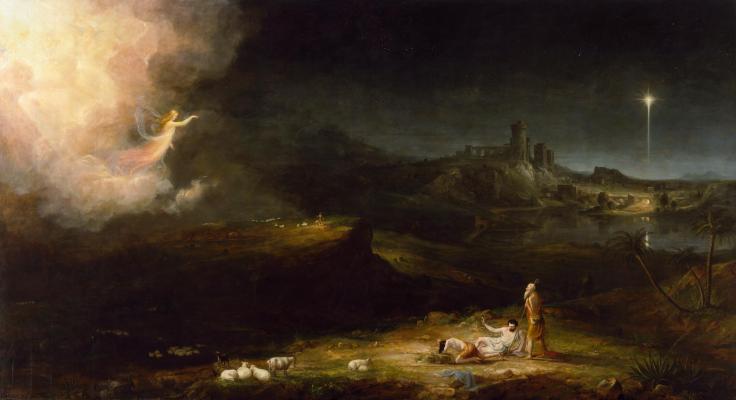
Five Smooth Stones

God’s ways are not our ways. God often turns our expectations on their heads– choosing Abraham and Sarah to become parents at an advanced age; choosing Moses, reluctant, disgraced, and hot-tempered, to shepherd close to a million refugees across the wilderness; choosing David, young and poorly armed to defeat the mighty giant, Goliath; choosing to send His Messiah as an infant, the son of a teenage girl stranded miles from home in a cattle shed…

Not only that, but God chooses to include cryptic and seemingly random details in many of the stories we read in the Bible. When Abraham and Sarah received news that they would become parents, Sarah laughed. Such a small detail, but God called attention to it, even giving the name Isaac (Laughter) to this promised son. When God called Moses, He didn’t just include the details of the burning bush and the miraculous signs, He chose to include Moses’s excuses and objections, and a curious command to Moses to remove his shoes.

Photo by Pixabay on Pexels.com

Recently, I found a short discussion about the “five smooth stones” David used to defeat Goliath. https://www.biblegateway.com/passage/?search=1+Samuel+17%3A26-50&version=MSG Some teachers spend time talking about the number of stones– why five? Did David doubt God’s power and provision? Can we attach significance or apply principles to each stone? But someone commented (I’m sorry, I lost the reference, or I would attach a link) on the fact that the stones were smooth–I’d never really noticed that detail before. David chose five smooth stones from the brook, not five heavy rocks, not sharp-edged stones of flint, not round balls made of iron– five smooth stones. The smooth stones in the brook may seem like a strange choice to us if we are not used to using a sling, but to David, such stones meant greater accuracy and speed. Five such stones would have been about a handful– easy to carry, load, and fire in rapid succession, if necessary.

I would like to suggest that there are some principles here that apply to both prayer and Christian living, especially involving how we can pray for and interact with the “giants” and “enemies” in our lives:

  • First, understand the reality of the “Giant”—Goliath was huge; bigger than any single warrior in Israel. But he wasn’t bigger than God. Goliath was also hampered by his heavy armor, his size, and his arrogance. David was offered armor and weapons similar to Goliath’s, but David’s greatest weapon was his understanding that Goliath was no match for the God of Angel Armies! We often make the mistake of magnifying our enemies. We see their size, their shining armor, and heavy weaponry. We forget that God is the maker of smooth stones!
Photo by Pixabay on Pexels.com
  • Second, actions really do speak louder than words. Goliath inspired fear; he taunted the army of Israel. Yet he never landed a blow against David. Goliath scoffed, bullied, and talked a good game, but David paired his words with action. Goliath demanded that David (or any other warrior) “Come down to me..” He had a javelin and a spear, but he never used either one. I find it interesting that many “enemies” of the Church behave the same way. They want to challenge the followers of Christ in debates; they publish books and articles filled with arrogant words, accusations, and complex arguments. It is tempting to respond in kind– to get into a war of words; to match their arrogance with our self-righteous assertions. What if we fought their words with action, instead of spending so much of our time answering and defending ourselves against empty arguments and accusations. We will not “win” any culture wars; we will not “win” the hearts and minds of the next generation; we will not “defend” morality by using bigger, better, or more persuasive words, or by having better armor and sharper weapons than our enemies. We need smooth stones from the brook–small acts of kindness and humility and grace that defy all the logic and brute force of those who trust in their own understanding.
Photo by Pixabay on Pexels.com
  • Third, accuracy is better than power. Goliath had one spear–and it was impressive–” His spear shaft was like a weaver’s rod, and its iron point weighed six hundred shekels.” (verse 7). Still, Goliath had a javelin, a sword, and several pounds of armor. David had no armor, one shepherd’s staff, and his sling and five smooth stones. But he only used one stone! It was accurate and true; it was sufficient, and it won the battle! Sin likes to flaunt it’s power–shiny armor, impressive weapons.. But if we are “true”–if we hold fast to the truth and follow the words and example of Jesus Christ–if we are faithful in our everyday walk with Christ, it is sufficient.
    There is an amazing climax in the movie, Star Wars (episode 4, A New Hope), where the young Luke Skywalker is sent with a group of fighters on a seemingly impossible task– destroy the “indestructible” Death Star! There is only one weakness–one small target. Luke’s small fighter plane is old and outdated; he and his fellow soldiers are under attack, and the pressure is on. But Luke’s accurate shot leads to victory. It is a modern retelling of the story of David and Goliath (with several space-age gadgets and extra plot twists).
    How many of our interactions with others get “sidetracked” by anger, envy, bitterness, and pride, to the point that we no longer reflect Christ accurately? How often do we consistently pray to stay “true” to God’s word, rather than praying for more powerful opportunities or platforms?
Photo by Arthur Brognoli on Pexels.com
  • Fourth, know your strengths and weaknesses (and those of your enemy). David knew that his strength was, first and foremost, in God. And David’s passion for God’s honor gave him focus and commitment beyond all that was found among the skilled soldiers of either side. He knew that fancy weapons and armor could not improve his skill with the sling, and that his skill had been tested in battle before.
    But David also knew better than to aim the stone at Goliaths’s breastplate, shield, or greaves. Goliath’s weakness was in his head! His first weakness was in thinking that his power was enough to defy the God of Israel’s army. But he also left his head unprotected from attack. Some scholars have even suggested that Goliath may have had very poor eyesight– that he was a fierce warrior in hand-to-hand combat, but literally could not see the stone coming at his forehead. Perhaps all his blustering and taunting was, in part, to distract from his very real vulnerability.
    I am reminded that this is also true of many of the “giants” we face. Their weakness is in their head and in their vision–they trust in their own understanding and in human arguments, or in their “vision” of who God is, or “isn’t”, or “should be”. They rely on what they can comprehend and control. They wave their swords and rattle their shields; they have gleaming armor and they “talk a good game”. They have locked away their hearts and bodies, often hiding painful scars and deep hurts.
    Goliath was a giant–but he wasn’t a god. He was once a little boy (or maybe never a “little” boy, but a young boy..). David was a young man (probably in his mid-to-late teens), who was a simple shepherd.
    How do we see ourselves? How do we see others around us? Do we know our weaknesses? Do we see the vulnerability in those who would threaten us?

Photo by Sharefaith on Pexels.com
  • Last, God’s “weapons” are not like those of the world. Five smooth stones do not look like weapons. In fact, five smooth stones from the brook may have looked charming and harmless and even comforting in David’s hand. Four of those stones may have gone back into the brook, to be polished some more by the current, or carried out to the sea.
    Christ’s followers have armor and weapons, but they are spiritual in nature. We are to put on the “whole armor of God” (https://www.biblegateway.com/passage/?search=Ephesians+6%3A11-18&version=ESV, including the “sword of the Spirit”, which is the word of God. Truth, Righteousness, Peace, Good News, Faith, Salvation– This is how we prepare for battle! And we are to pray at all times! Imagine dropping the weapons of sarcasm and self-righteous posturing, and picking up a smooth stone of grace!
    God calls us to use unconventional “weapons”– not to kill or destroy those around us, but to demolish lies, tear down walls of hatred, and defend the helpless. Has God placed you in a situation where you need to pick up “five smooth stones” today?

The Lord is My Shepherd

Psalm 100:3 Christian Standard Bible (CSB):

Acknowledge that the Lord is God.
He made us, and we are his—
his people, the sheep of his pasture.

Psalm 23 New King James Version (NKJV)
The Lord the Shepherd of His People
A Psalm of David.
23 The Lord is my shepherd;
I shall not [a]want.
He makes me to lie down in [b]green pastures;
He leads me beside the [c]still waters.
He restores my soul;
He leads me in the paths of righteousness
For His name’s sake.
Yea, though I walk through the valley of the shadow of death,
I will fear no evil;
For You are with me;
Your rod and Your staff, they comfort me.
You prepare a table before me in the presence of my enemies;
You anoint my head with oil;
My cup runs over.
Surely goodness and mercy shall follow me
All the days of my life;
And I will [d]dwell in the house of the Lord
[e]Forever.
Footnotes:
Psalm 23:1 lack
Psalm 23:2 Lit. pastures of tender grass
Psalm 23:2 Lit. waters of rest
Psalm 23:6 So with LXX, Syr., Tg., Vg.; MT return
Psalm 23:6 Or To the end of my days, lit. For length of days

http://www.biblegateway.com

The Bible is filled with imagery of sheep and shepherds. Growing up, I lived in the countryside, but we never raised sheep, and I had little experience with livestock of any kind. We had one neighbor who had sheep, however, and he shared a lot of insight into why we should pay attention to what sheep can teach us about ourselves, and our God.

Photo by Trinity Kubassek on Pexels.com

Not only does God use the imagery of sheep and shepherds, He uses examples throughout the Bible of actual sheep and shepherds. Abraham, Isaac, Jacob, the sons of Jacob, David, and the prophet Amos– all were shepherds. When the Messiah was born, the first announcement went to shepherds in the fields, keeping night-watch over their flocks!

Jesus used stories of sheep and shepherds in his parables, as well. There is a lot to understand, and I am not qualified to teach anyone about shepherding, but there are several wonderful principles that don’t require a lot of in-depth knowledge:

  • Sheep NEED a shepherd. There are breeds of mountain sheep that live independently, but the Bible stories speak of domesticated sheep…they are “high maintenance” animals– they need food and water, shelter, protection, and a lot of guidance and supervision! We NEED God–He understands our situations, our weaknesses, and our strengths, far better than we do. He knows the future; He has a plan, and He provides all that we need. We may not see the road ahead–we may not see the green pasture or the still waters where He wants to lead us–but He IS the WAY, the truth, and the life (John 14:6), and we can trust Him to get us there.
Photo by Chama on Pexels.com
  • Sheep need to be sheared. Left unsheared, the sheep’s wool will become matted, filthy, and a potential source of danger and disease. The sheep cannot get rid of its wool on its own. However, once the old wool is sheared off, the sheep is clean, and new wool can grow. Not only does God provide for our immediate needs, He provides for our renewal and growth–physical, emotional, and spiritual growth. Sometimes, that means we need to be “sheared” of habits, people, or situations that have become “matted”, and filthy. We haven’t even noticed the change, and we don’t see the danger. God wants to free us from the “baggage” we accumulate, and help us experience new growth.
  • Sheep depend on others to stay safe, healthy, and fed–there may be “lone wolves”, but there are no “lone sheep”. God will bring us into “flocks”. We learn to eat together, travel together, rest together, live together, and follow our shepherd’s voice together. Trying to be a “lone sheep” makes for a lot of trouble!
Photo by Ekrulila on Pexels.com
  • Shepherds make great sacrifices to care for their sheep– they provide, protect, rescue, heal, guide, and clean their sheep. A good shepherd is watchful, faithful, caring, and gentle, even as s/he must be strong, brave, and fiercely protective, risking their lives (or even giving their lives) for their flocks. Jesus, our Good Shepherd, knows each one of us intimately– He knows how to heal and guide us. He wants us to recognize His voice above all others, and to stay close to Him. He died to redeem you and me!
Photo by Magda Ehlers on Pexels.com

May we trust our Good Shepherd today, and every day. May we spend time acknowledging Him as our loving and faithful Shepherd, and call out to Him– in praise, in adoration, in supplication, and in loving gratitude.

Come, Let Us Adore Him!

I wanted to cap off this week of Christmas carols with this line from “O, Come, All Ye Faithful (Adeste Fideles)”


Oh, come, all ye faithful, joyful and triumphant,
Oh, come ye, oh, come ye, to Bethlehem.
Come and behold Him, born the King of angels;

Refrain:
Oh, come, let us adore Him, oh, come, let us adore Him,
Oh, come, let us adore Him, Christ the Lord.


Sing, choirs of angels, sing in exultation;
Oh, sing, all ye citizens of heav’n above!
Glory to God, all glory in the highest;


Yea, Lord, we greet Thee, born this happy morning;
Jesus, to Thee be all glory giv’n;
Word of the Father, now in flesh appearing;

O Come, All Ye Faithful– Words by John F. Wade (Latin); translation by Frederick Oakeley.
Photo by Digital Buggu on Pexels.com

The words of this hymn sum up an important pattern running through this week’s group of song lyrics. Worship, praise, obedience, wonder, joy– all come by way of invitation. Christmas compels us, not by force of law, or a show of superior power, but by beauty, generosity, humility, and Love. God gives the invitation; He draws close to the lowly and the broken-hearted; He dispels the darkness with starlight, and breaks through the silence with angelic choirs; He cries quietly from a borrowed stable. Shepherds leave their flocks to see him, Magi travel with treasures to worship him– but the rest of the world passes by, unaware and untouched. As this child grows, he continues to issue invitations– “Come unto me, you who are weary, and I will give you rest!” “Whosoever believes in me shall have everlasting life.” “I am the bread of life. He who comes to me will never go hungry. (John 6:35 a)” Jesus didn’t use threats and judgment to attract angry followers. In fact, when he spoke harsh truth, the religious and political leaders of the day plotted to kill him– and he knew of their plans but did nothing to stop them! Those who followed Jesus did so because he asked.

Photo by Jessica Lewis on Pexels.com

It is the same for us today. The invitation still exists– it is still valid. It is possible to ignore Jesus, to say, “No;” even to deny Him. Christmas is not a command. It is a communion. The wonder of Christmas– the miracle– is that God has not ignored us or denied us; He has not bound us in chains and forced our obedience or our worship; He has not abandoned us to the darkness. He reached out, He pursued us, wooed us, sharing our burdens and our woes, and promising us fullness of life and joy– IF we will accept the invitation.

Photo by Pixabay on Pexels.com

Let us come. Let us worship and adore Him. Let no tongue on Earth be silent or sullen. Let nothing keep us in dismay and fear. Let our hearts prepare to receive this matchless gift of Grace. Let all that is within us praise His Holy Name!

Let us celebrate!

Let All Within Us Praise His Holy Name


O holy night! 
The stars are brightly shining 
It is the night of the dear Savior’s birth! 
Long lay the world in sin and error pining 
Till he appeared and the soul felt its worth. 
A thrill of hope the weary world rejoices 
For yonder breaks a new and glorious morn!

Refrain:
Fall on your knees 
O hear the angel voices 
O night divine 
O night when Christ was born 
O night divine 
O night, O night divine

Led by the light of Faith serenely beaming 
With glowing hearts by His cradle we stand 
So led by light of a star sweetly gleaming 
Here come the wise men from Orient land 
The King of kings lay thus in lowly manger 
In all our trials born to be our friend.

Refrain
Truly He taught us to love one another 
His law is love and His gospel is peace 
Chains shall He break for the slave is our brother 
And in His name all oppression shall cease 
Sweet hymns of joy in grateful chorus raise we, 
Let all within us praise His holy name.

Refrain


From /www.songsforteaching.com/christmas/oholynight.php
Photo by Pixabay on Pexels.com

To the untrained eye, it was not a Holy Night– The streets of Bethlehem were crowded and dusty. The night, even if the stars were shining, was filled with noises and smells that fell far short of anything sacred or glorious. There were strangers clogging the city’s streets and inns and homes– extra animals to shelter, extra mouths to feed, extra waste everywhere. It was a weary world, it was in error and it was pining– but it was also noisy, angry, distracted by petty inconveniences and worried by chaos and upheaval and oppression.

Photo by Jeswin Thomas on Pexels.com

There was nothing special about the night itself. It was NOT a Holy Night until Holiness arrived in the form of a squalling infant born to a teenage mother and a carpenter/stepfather who were compelled to beg for shelter in an unfamiliar city full of squalor and resentment. People had come from all over to be nothing more than numbers in an unpopular bureaucratic nightmare. This child might have been no more than a number to the governor of the region, or to the Roman Empire, or to the Herod, the hamstrung pseudo-ruler of Judea–but His coming split history in two; it redefined the value of a single, simple soul! This was the night when the creator entered His creation AS a member of the creation– a child among other children; a helpless baby in a fallen and depraved world, vulnerable to disease, cruelty, abuse, starvation, exposure and exploitation. This God/Man would see and hear, and smell and feel the ugliness of leprosy, poverty, hunger, homelessness, despair, grief, madness, war, slavery, loneliness, betrayal, and death.

Photo by Sharefaith on Pexels.com

In His lifetime, He had no home of his own. He built no monument, founded no schools or hospitals, fought no (physical) battle, and toppled no governments. But, in the years since that otherwise ordinary night, majestic cathedrals have been built and have stood for hundreds of years; nations and governments have been transformed; hospitals, clinics, shelters, sanctuaries, universities, and institutions have served the poor, the sick, the outcasts, the weary, the forgotten, and the lost. The world is still fallen– there is still injustice, slavery, weariness, sickness and sin around us. But, because of that night, we are not waiting in utter darkness–as the Apostle John writes:

Photo by Pixabay on Pexels.com


16 For God loved the world in this way: He gave his one and only Son, so that everyone who believes in him will not perish but have eternal life… 19 This is the judgment: The light has come into the world, and people loved darkness rather than the light because their deeds were evil. 20 For everyone who does evil hates the light and avoids it, so that his deeds may not be exposed. 21 But anyone who lives by the truth comes to the light, so that his works may be shown to be accomplished by God.

John 3:16, 19-21 Christian Standard Bible
Photo by Nicholas Githiri on Pexels.com

We live on the other side of that ordinary, Holy Night– we will never know the darkness of a time without a Gospel of Peace on Earth, Goodwill to Men–we are witnesses to the power of Divine Love in human flesh. We have reason to “fall on (our) knees” and “let all within us praise His Holy Name!”

Photo by Victoria Borodinova on Pexels.com

My prayer is that we would all “hear the angel voices” this season and be able to worship in the fullness of joy this Christmas.

Go, Tell It on the Mountain


Go, Tell It On The Mountain

While shepherds kept their watching
O’er silent flocks by night,
Behold throughout the heavens
There shone a holy light


Go, tell it on the mountain
Over the hills and everywhere
Go, tell it on the mountain
That Jesus Christ is born.


The shepherds feared and trembled
When lo above the earth
Rang out the angel chorus
That hailed our Savior’s birth;


Go, tell it on the mountain
Over the hills and everywhere
Go, tell it on the mountain
That Jesus Christ is born.


Down in a lowly manger
The humble Christ was born;
And God sent out salvation
That blessed Christmas morn.


When I was a seeker
I sought both night and day
I sought the Lord to help me
And He showed me the way.


He made me a watchman
Upon the city wall
And If I am a Christian
I am the least of all.


Go, tell it on the mountain
Over the hills and everywhere
Go, tell it on the mountain
That Jesus Christ is born.

Photo by Gratisography on Pexels.com

During the Christmas season, we often focus on giving.  And it’s certainly appropriate.  But there is another aspect of Christmas that sometimes gets overlooked– Telling.

Photo by James Wheeler on Pexels.com

Christ came to earth humbly, but he didn’t come secretly.  Angels announced his arrival to the shepherds; stars aligned and shone brightly as a signal to the wise men.  Prophets had foretold his coming for centuries.  John the Baptist even went ahead of Jesus, baptizing and preparing his hearers for the good news yet to come.  The earliest followers of Christ were eager to tell of his words, his deeds, and his glorious resurrection.  Many lost their lives doing so.

Photo by Julian Jagtenberg on Pexels.com

If the birth of Christ was reason to fill the night sky with songs and wonders,  reason enough to send angels and stars, prophets and messengers; what about the news of his life, death, resurrection, and ascension?  Why do we allow this amazing news to sit on a dusty shelf, unopened and unshared?  Or treat it like a secret, good news for only the few, the righteous?

We have the greatest news in all of history– more important than any political scandal, more amazing than the latest technology, more joyous than any other announcement imaginable.  Emmanuel– God WITH US–He came, he lived, worked, spoke, laughed, shared, loved, cried, ate, slept, and died, WITH US.  And he died and rose so that we could continue to live WITH HIM!

Photo by Pixabay on Pexels.com

God didn’t send all the signs and wonders– he didn’t come into the world to be a guilty secret.  And though there is still a risk involved in proclaiming the gospel, it is no less good, and no less NEWS now than it was nearly 2000 years ago.  Let’s TELL it!  SHOW it!  POST it!  SING it out!– Everywhere!

Photo by Janez Podnar on Pexels.com

Father, Thank you for this wonderful news. Thank you for the Greatest Gift–Yourself.  Give us hearts filled with joy and courage, and lips eager to share your grace and love with those we meet.  Help us to be faithful messengers of that grace and love; transparent and true in word and deed.  May every mountain and valley, forest, meadow, desert and ocean ring with the hope and glory of your nativity, your ministry, and your death and resurrection.

Gloria in Excelsis Deo


Angels we have heard on high
Sweetly singing o’er the plains,
And the mountains in reply
Echoing their joyous strains.Refrain:
Gloria, in excelsis Deo!
Shepherds, why this jubilee?
Why your joyous strains prolong?
What the gladsome tidings be
Which inspire your heav’nly song?
Come to Bethlehem and see
Him Whose birth the angels sing;
Come, adore on bended knee,
Christ the Lord, the newborn King.
See Him in a manger laid,
Whom the choirs of angels praise;
Mary, Joseph, lend your aid,
While our hearts in love we raise.
Photo by Anthony on Pexels.com

This has always been one of my favorite Christmas carols to sing.  I love the movement of the melodic line and the harmonies, especially when singing the angels’ chorus:  “Gloria, in excelsis Deo!  Gloria, in excelsis Deo!”
(Glory to God in the Highest Heavens!)

Yet, if we think about it, the angels seem almost to be having a joke.  There is something ironic about hosts of angels praising the glory of God in His highest Heaven, when they are announcing that He is, at that moment, a wailing, helpless infant, wrapped in rags and borrowing a feeding trough for his bed, miles from the warmth and comfort of a home of any kind, let alone the glory of His rightful throne.

Photo by Pixabay on Pexels.com


And there were shepherds living out in the fields nearby, keeping watch over their flocks at night. An angel of the Lord appeared to them, and the glory of the Lord shone around them, and they were terrified. 10 But the angel said to them, “Do not be afraid. I bring you good news that will cause great joy for all the people. 11 Today in the town of David a Savior has been born to you; he is the Messiah, the Lord. 12 This will be a sign to you: You will find a baby wrapped in cloths and lying in a manger.”
13 Suddenly a great company of the heavenly host appeared with the angel, praising God and saying,
14 “Glory to God in the highest heaven,
    and on earth peace to those on whom his favor rests.”
15 When the angels had left them and gone into heaven, the shepherds said to one another, “Let’s go to Bethlehem and see this thing that has happened, which the Lord has told us about.”
16 So they hurried off and found Mary and Joseph, and the baby, who was lying in the manger. 17 When they had seen him, they spread the word concerning what had been told them about this child, 18 and all who heard it were amazed at what the shepherds said to them. 

Luke 2:8-18 (NIV)
Photo by Bich Tran on Pexels.com

And this is how God chose to appear, and chooses to work– confounding the power of the powerful, the wisdom of the wise, and the goodness of the self-righteous.  God does not glorify that which is already a spectacle.  Instead he glorifies the lowly and unqualified things of the world by coming into them, working through them, and reshaping them for His use.

Photo by David Dibert on Pexels.com

And so, may we have eyes, ears, and hands to work in the same way–to raise up, encourage, bless, and honor those who cannot yet see the Glory around them, the Glory God offers to share freely.  May we be the host of God’s messengers to spread the Glorious news of Christ’s gift of life and salvation.  May we be like the shepherds, jubilant in our acceptance of His great news.  And may we be, like the babe himself–humble and kind–bringing Glory to the world around us, no matter how dark or unwelcoming it may appear.  Remember, God himself is with us!

Photo by James Wheeler on Pexels.com

Gloria!  Gloria, in excelsis Deo!

The Rocks Cry Out

A couple of days ago, while the weather was still cold, but clear, my husband and I visited one of the many beaches along the eastern coast of Lake Michigan.  The beaches are popular throughout the summer months, especially those with lots of dunes and smooth sand for sunbathing and picnics and beach volleyball.  We’re the sort of odd ducks who like to visit in the off-season, bundled in parkas and combing the rocky shores looking for unique stones and beach glass.

I was reminded of Jesus’ parable of the two men– one who built his house upon the rock, and the other who built his on sand.  https://www.biblegateway.com/passage/?search=Matthew+7%3A24-27&version=ESV.   Sandy beaches are wonderful to visit in the summer, when the weather is perfect, the sun is shining, and the lake is calm.  But over the winter months, people avoid sandy beaches (as we did) because the wind and waves can erode great patches of sand, moving it about and changing the shoreline considerably.  On the bigger public beaches, crews put up fences to keep the winter gales from blowing sand away from the shore and into the parking lots and streets.  The fences also trap the sand and snow on the shore.  Snow banks that form on the beach can melt and carry the sand back into the lake, forming new sand bars that can cause damage to small boats.  Even in the summer, large waves can produce undertows and dangerous currents for the unwary. 

Photo by Miro Alt on Pexels.com

In many ways, sand is like sin.  Sand is attractive– smooth and glistening in the sun.  It is warm and seems to yield to the touch.  But sand shifts; it blows and drifts easily, but it sticks in place where we least want it, tiny grains getting into hair and clothes, shoes, and beach towels.  It slips away, slides from under our feet, fails to hold its shape, unless we wet it down and pack it, and then it crumbles under the action of the waves.

Photo by Pixabay on Pexels.com

Rock, on the other hand, is secure.  It takes centuries to erode; it doesn’t shift or fall away.  A rocky coast may not seem as inviting for pleasure, but it makes a far better foundation for a home or a lighthouse.  Even the smaller stones along the beach do not blow around in a strong wind, nor do they melt away with the snow.

Photo by Pixabay on Pexels.com

Beach stones can offer further illustrate how God works in our lives.  Stones on the beach start out with sharp edges.  They are cold and hard and uneven.  But over time, the rocks are slowly churned by the waves and the movement of smaller rocks and sand, and they are smoothed and polished by their environment.  Among the sharp rocks are beautiful agates and quartz, their varied colors seeming to absorb sunlight and heat.  Just so, we are transformed from hard and cold isolated individuals as we absorb the Son’s character.  And, as we are churned up against others, and the hard edges get smoothed away, His beautiful character is revealed in us, and we shine.  With further polishing, the stones reveal the kind of strength and beauty that make them worthy of being displayed or set in jewelry.  Not every rock along the beach will go through this transformation..some will remain hard and sharp; others will be ground into sand.  But some will cry out in their beauty and strength as testimonies of  God’s eternal process of redemption.

God Promised..

When we look around at all the beauty God created (see yesterday’s post:https://pursuingprayerblog.wordpress.com/wp-admin/post.php?post=1206&action=edit  ), we also see the ugliness of a fallen world.  What God created, he proclaimed “Good.”  That goodness still exists, but it is tainted and polluted by sin.  God has the authority and the right to destroy it all (and us along with it!); instead, he chose to redeem it.  God’s promise to do this has been playing out from the very beginning.

Photo by Pixabay on Pexels.com

God did not strike Adam and Eve– He allowed them to age, and reproduce, and live out their lifespan–but He did keep his promise that they would have to die (see Genesis 3).  God kept his promise to Noah, to save his family from a worldwide flood (Gensis 6-9).  He kept his promise to Abraham, to bring him to a new land and give it to his descendants– though the promise was made when Abraham as childless and wandering in the wilderness (Genesis 12-25).  God kept his promise to Abraham’s descendants, to bring them back to the land he had promised them (Exodus–Joshua). 

Photo by Brett Sayles on Pexels.com

God kept his promises to Israel– promises of blessings and of curses, of retribution and revival.  God chose King David, and kept many promises to him about his dynasty, the building of the temple, and the coming of a kingly redeemer in David’s line of ancestry (2 Samuel-1 Kings).  He kept his promises given through the prophets concerning the exile and return to Jerusalem.

Photo by Pixabay on Pexels.com

In this season, we celebrate all the many promises God made and kept regarding the coming of our Savior (Matthew-John). Just as God’s creation is “good,” so too are His promises– they are sure and true.  God’s promises reveal His nature–He is Just, He is Kind, and He is Omnipotent.  What He says, He can and will accomplish.

Photo by Pixabay on Pexels.com

Today, I am grateful for God’s promises– for all the ones He has already fulfilled, and for all He will bring to pass!

The Mercy Rule

I witnessed a blow-out high school football game last week.  The final score was 57 to 0!  Once the point differential was over 50, they invoked the “mercy rule.”  The game clock would not stop for downs; there would be no more “time out” calls– as this happened late in the game anyway, it just meant that the end came quickly and “mercifully” for the losing team.  It also meant that players were less likely to take dangerous risks in the forlorn hope of scoring big points.

High school football has a “mercy rule”  so that struggling teams don’t become victims of absolute despair.  This team deserved to lose, and they did.  They lost big; but they could’ve lost by a wider margin.  And they didn’t lose for lack of effort– they pushed hard and gave it a mighty try.  But they were not up to the challenge of a better team.


In life, when we come up against Sin, we can give our best effort, and still lose big.  Oh, there are certain sins that seem easily “tamed” or “defeated,” but there are others that end up crushing us– maybe it’s an addiction to porn, or a tendency to spread rumors; maybe we harbor bitterness or doubt, or we can’t control angry outbursts.

close up court courthouse hammer
Photo by Pixabay on Pexels.com

In the end, we are all losers in the game against Sin– whether the loss seems like a close shave or a blowout, the result is the same.  But the consequences are much more dire.  The penalty for Sin is Death.  Not just a single lost game, but an eternal loss of life and hope and light and love!  We are no match for Sin, and Sin shows no mercy.  Even with a mercy rule, our situation seems hopeless.  But it is not.

Death may seem like a a harsh and undeserved judgment.  We “can’t” win.  Or, more correctly, we will always lose.  Even a “mercy rule,” while it may mean that we don’t get the death we deserve, wouldn’t keep us from being “losers.”  This is how many people see God’s offer of salvation– as some sort of mercy rule that keeps us from the fate we can’t avoid.  But even if God only offered mercy, it would be infinitely better than we can imagine.  Because God’s mercy is not just a “rule”, it is a priceless gift of restoration.  We can be free from the “loss” and penalty we deserve, no matter what the “point differential.”  Even a close “loss” to sin is wiped out by God’s mercy.

God’s offer of salvation doesn’t just stop at mercy, however.  It includes something that will never happen in a football game or anywhere else in life.  God extends His Grace– all that we don’t deserve, and never could deserve–above and beyond the already infinite and superior mercy we needed to escape the judgment of Death.  We don’t just escape the horrors of death and hell.  We are gifted with all we need to win the game– to be co-victors over Death and Sin.  God, in His mercy keeps us from losing.  In His Grace, He coaches us, plays alongside us, cheers for us, and gives us the power to become all that we need to be to play our best.  AND, He has already secured the victory.  Far from being in a position where we “can’t” win– God offers us the opportunity to be in a position where we can’t LOSE!

accomplishment achievement adult african
Photo by rawpixel.com on Pexels.com

It is my ongoing prayer that if you are reading this, you have already responded to God’s invitation, through Jesus Christ, to be victorious; that God’s spirit would guide me to write what will be helpful in encouraging you and strengthening your faith (as well as my own).  I pray that you will grow in faith and make the pursuit of prayer part of your daily walk in Faith.  If that is not the case, and you have not accepted both God’s mercy and His grace, I pray that you will take that opportunity today.

Don’t wait for a “mercy rule”– accept the mercy of the Ruler!

A Brief Word About Shoes

I’m really sick of hearing about shoes in the news lately.  But, surprisingly, I think it’s time for a brief word about shoes— from a Biblical perspective.

man reading a book
Photo by Tri Fatono on Pexels.com

The Bible has a lot more to say about shoes than most of us realize.  Way back in Exodus, when God called Moses from the burning bush, He commanded Moses to take off his shoes.  Later, in Deuteronomy, the Israelites are reminded that during their years of wandering, their shoes did not wear out– God took care of even the smallest and lowliest of details in providing for their needs in the wilderness.

fashion footwear grass outdoors
Photo by Tobi on Pexels.com

Boaz secured the right to marry Ruth through an old ritual involving an exchange of sandals.  The prophets used shoes to indicate the coming exile, and the need for people to be prepared to leave their homeland.


apples colors fashion field
Photo by Valeria Boltneva on Pexels.com

In the New Testament, John the Baptist declares Jesus’ superiority by saying that he (John) is not worthy to latch Jesus’ shoes!  And the Apostle Paul includes shoes (or sandals or boots) in his list of spiritual armor, asking us to wear on our feet the readiness of the gospel of peace (Ephesians 6:15).  A Christian’s shoes are to be used to bring good news and peace– not anger, protests, and divisiveness.


brand trademark cobblestones community denim pants
Photo by Ingo Joseph on Pexels.com

Shoes are meant to serve a useful purpose.  They protect our feet from surfaces that are hot, cold, wet, dusty, or rough.  They provide traction, allowing us to start and stop moving on pavement, gravel, rocks, and flooring.  Some shoes even provide arch support so we may stand and walk for hours with minimum damage to our bones and nerves.  Shoes allow us to walk farther, run faster and with more confidence, and stand firm.

man person street shoes
Photo by Gratisography on Pexels.com

The most ridiculous thing about all the fighting over a shoe’s ad campaign is that it’s not about the SHOE–and no one is entirely clear on what it IS about– is it about race, police, injustice, patriotism, lack of patriotism, residual guilt over slavery, respect (or lack of respect) for military and/or rescue personnel, the NFL, Black Pride, White Privilege, income inequality, all of the above, something entirely different?  Mostly, it seems to be about anger, hurt feelings, hatred, and generic outrage.

None of that seems like a shoe I want to wear.

action air balance beach
Photo by Rafael on Pexels.com


Lord, from my head to my toes, I want to bring peace, hope, and love to this world in YOUR NAME.  Help me not to be blinded or distracted by all the world’s empty substitutes.  Let me wear the shoes that make my feet ready to bring your gospel of peace and reconciliation to others.  May I walk and run and climb and stand in Christ’s name and for His sake.  Amen.


Blog at WordPress.com.

Up ↑