Three Words

Essential

We’ve been hearing a lot lately about people who are “essential.” In times of crisis, certain skills and services are necessary to preserve or protect life. In times of war, soldiers, medics, makers of tanks and arms, helmets, planes, boots, and armor become essential. In times of famine, farmers, and anyone with reserves of food or water become essential. In times like these, doctors, nurses, EMTs, and those who make or distribute medicines, PPE (personal protective equipment), ventilators, etc., are essential.

Photo by Anna Shvets on Pexels.com

Being “essential” may sound wonderful, but it comes with a heavy price. Doctors and nurses are stretched and stressed, working ridiculously long shifts and scrambling to find ways to arrest the progress of COVID-19 among their patients who test positive. Meanwhile, their neighbors are complaining about being told to stay home and do nothing because their skills, their businesses, and their contributions are considered “non-essential.” Grocers and the cashiers, restaurant owners, farmers, and truckers are risking their lives to keep people supplied with food, only to have people complain about prices and temporary shortages. And any one of their customers could be spreading the virus– not just to them, but to their other customers. Police officers, already putting their lives on the line, are now asked to interact with those who may be carrying and spreading this virus, as well as dealing with an angry and frustrated population chafing under orders to stay home and stay inactive. And those who are “essential” are also vulnerable– tired and frightened and inadequate to meet every need–they are not infallible or indefatigable.

Photo by Alexander Dummer on Pexels.com

There are really only a few things in life that are actually essential–breathing (which is one of the reasons COVID-19 is so scary, because it attacks the lungs), water, food, and basic shelter (protection from excessive heat or cold). And, while many around the world are facing more extreme shortages than others, most of the chafing and complaining has less to do with not having the essentials than with being (or not being) labeled “essential” with very little notice or guidance, and asked to bear the brunt of a crisis they cannot predict or control.

Redundant (non-essential)

For every person who is feeling the pressure of being “essential” in a time like this, there are others who have been labeled “non-essential”– redundant, expendable, “in the way.” “Stay home!” “Stay away!” “Don’t!” Don’t shake hands, or hug, or visit friends or loved ones (unless you can do so via phone or internet). Don’t touch– don’t touch door knobs or counters or surfaces– don’t even touch your own face!

Photo by Engin Akyurt on Pexels.com

The intent of these messages is a positive one–“help stop the spread of this virus”–but the message often gets lost in the tone of fear and panic that accompanies it. “If you don’t (go away, stay away, stop touching, stop asking questions, stop being in the way…) other people, especially ‘essential’ people, will get sick and die.” “If you could just go away, disappear, be quiet, etc., until this crisis dies down…” Feeding your family, keeping your business open, earning a living, using or developing your skills, offering your services or products– none of that is “essential” right now. You have nothing to offer in a time of crisis– you are expendable. Perhaps not forever, but just now– just for a few more days, weeks, months?…

Jesus offers us a shocking view of what is/who is “essential” or “redundant.” In his encounter with the “rich young ruler,” (see https://pursuingprayer.blog/2020/02/07/a-miss-is-as-good-as-a-mile/) Jesus listens as the young man seeks to justify himself. He has done everything he deems “essential” to inherit eternal life. But Jesus challenges him with one “essential”–sell what he has in order to serve the poor and “redundant.”

Jesus had frequent encounters with lepers– the most “redundant” and expendable people of his day. They were contagious, “unclean,” unwanted. And Jesus also encountered those with great power and prestige–priests and rulers, centurions and tax collectors. Many of them were also considered “unclean,” and unwanted! Those for whom Jesus had the sternest warnings were those who refused to accept, respect, or help those they preferred to judge.

Photo by Lukas on Pexels.com

Whosoever-

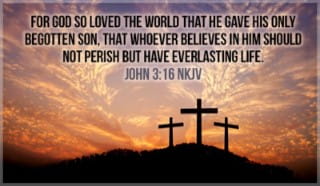
Jesus, the only One who actually has the right to judge, didn’t come to further the division of people into categories and labels. While he didn’t turn a blind eye to sinful activities, neither did he point fingers. And while he celebrated faith and service when he found it, he didn’t flatter or fawn over those whose service was more “essential” than others’. Instead, Jesus invited “whosoever” to believe in him (John 3:16), to follow him, and to become part of the Kingdom of God. (Revelation 22:17). Someday, He will judge us, and we will be separated. But the one “essential” will be whether or not we have chosen to depend on Him and trust Him for the wisdom and strength to do His will in service to “whosoever” we encounter.

Photo by Streetwindy on Pexels.com

There is no one so “essential” that God is required to accept her/him into the Kingdom. This may be a strange notion to some of us, who have fallen into thinking that we earn our salvation through good works or memorizing doctrinal statements. But NO person is essential in Heaven. And that’s not bad news or meant to condemn–it is simply a reminder that God’s standard is level and fair. We don’t have to strive and stress; we don’t have to have all the right answers, or do all the “right” things– in fact, we can’t.

And there is no one so “redundant” that God cannot accept him/her into the Kingdom. Again, this may be a strange notion, that we cannot “out-sin” God’s salvation. We can’t mess up, wash out, face-plant, or fail such that God cannot redeem, rescue, or revive us. God will never tell us to “stay away,” “wait,” “don’t get too close.” Instead he says, over and over again, “Come!”

Photo by Artem Beliaikin on Pexels.com

Whosoever is struggling with exhaustion, or impossible expectations, panic, fear, sickness, anger, depression, loneliness, hunger, rejection, injustice, confusion, or emptiness– let them come!


WWJD–Coronavirus edition

What Would Jesus Do? This question, shortened to the acronym WWJD, appeared as a fad on bracelets, t-shirts, billboards, etc., a few years ago. The idea was to ask oneself how Jesus Christ would act or react in various situations.

While I don’t disagree with the premise, I have never been a fan of this trend– mostly because it calls for people to speculate or imagine what Jesus would or might have done in their place. There is nothing wrong with wanting to act like Jesus– that’s what we’re supposed to do–to be disciples of Christ, and be His ambassadors. But our minds and hearts are not perfect; in fact they can be deceitful and arrogant, self-righteous and self-justifying. It is more common for us to justify how Jesus would act like us, than for us to adjust our thoughts and actions to those we know Jesus took during His time on earth. Would Jesus be angry about injustice– of course! Would He want us to have empathy for others– undoubtedly! But what would He actually DO? There are some pretty clear examples in the Bible– both examples of what Jesus DID, and what He DID NOT do:

  • Jesus drank wine; He visited and ate with known sinners; healed on the Sabbath (in direct violation of the church leaders of His day); interacted with the Romans (soldiers and leaders, etc.)who were oppressing the Jews– without protesting their rule or joining rebel groups; healed and performed miracles for some, but not for others; forgave sins for some, but not for others; paid His taxes without complaint; challenged religious leaders and spoke harshly against their practices; refused to get drawn into condemning and stoning a guilty adultress….
  • Jesus prayed. He want to temple regularly; read and studied God’s word; He rested, meditated, and spent time alone; He listened to strangers and treated those He met with compassion and respect; He honored His mother, but did not put her above His work; He loved his friends, even those who did not understand Him and the one who betrayed Him; He did not flatter those in power or disdain those in lowly positions; He cared deeply, wept unashamedly, and laughed heartily…
  • Jesus did not own a home. He didn’t have a “regular” job; He had no savings account or retirement fund; He had no donkey or horse for transportation; He wasn’t a member of a particular congregation or church council, like the Pharisees. Jesus didn’t have a university education; He didn’t run for public office; He never got “employee of the month;” He never married or had kids; We have no evidence that He ever gave to a particular charity, or joined any activist group. Jesus never hosted a barbecue, or led an evangelistic gathering, like His cousin, John the Baptist…
  • Jesus never addressed many of the issues we deal with today– civil rights, gay rights, abortion, health care, income inequality, democracy/socialism, smoking, drug use, pornography, violence in the media, global climate change, speed limits on highways, income tax structure, campaign finance reform, gender dysphoria, unisex bathrooms, vegans vs. meat eaters…

But the point of Jesus’ ministry on earth was to preach the coming of the “Kingdom of God,” and to fulfill His promise to go to the cross, die for our sins, and to rise again on the third day. He spent time teaching and discipling twelve very different individuals, who saw and did things very differently from each other, and differently from Jesus himself. Peter was fiery, John was a quiet observer, James was stern and concerned about actions, Matthew was concerned with history and prophecy. And all of them were loved by and commissioned by Jesus to spread the Gospel.

In these days of COVID-19, faced with fear and panic, many Christians (myself included) are struggling with the “right” response–we all want to show the love of God, and honor Him above all. In doing so, however, I find myself spending a lot of time justifying my own actions, and condemning the words and actions of others. And I find myself getting hurt and angry when someone I know and love reacts differently, uses different words or tones, or gets caught up in arguments about what “we must do.”

Photo by Korhan Erdol on Pexels.com

We MUST seek God’s wisdom in these times. And we MUST listen to and obey His word. But beyond that, I believe that God wants us to be very different “parts of the body” (see 1 Corinthians 12) https://www.biblegateway.com/passage/?search=1+Corinthians+12&version=ESV And I believe that God wants us to work together, honoring the various gifts and personalities that we have been given. Some of us are going to be fiery in our defense of health care workers, and advocating for the best and fastest medical care and treatments available. Some of us are going to be spreading small words and acts of encouragement wherever we see the opportunity. Some of us are going to be standing up against threats of corruption and injustice lurking among the actions of those in power. Some of us are going to speak boldly about our Hope in Christ, evangelizing and calling people to repentance. Some are going to be “standing in the gap” in prayer and counseling. Some are going to be providing money, food, PPE (personal protective equipment), and other services. And we must honor the other members of the body– in whatever role they take on– and seek unity, rather than division.

Photo by Pixabay on Pexels.com

Instead of blasting each other on Facebook or angry e-mails, we need to bring our initial reactions– anger, disappointment, hurt, confusion– to God. HE is the one who will judge our actions and motives in the end. Unless we see Christians who are flagrantly violating God’s laws– looting, cheating, spreading malicious lies and causing division, cursing God and/or misrepresenting Him in heretical fashion–we should ask, not just what Jesus would/might do in my situation, but what DID Jesus do in my place.

Photo by Francesco Paggiaro on Pexels.com

Because He died for me when I was still a sinner. He sacrificed His life. Not because I had done anything “right,” or “good enough.” He didn’t keep a list of all the things I got “wrong.” He did not bring condemnation– He brought forgiveness, mercy, and hope! And His mercies are new every morning. If I “get it wrong,” if I do something, or don’t do something–because I am still human and I don’t know everything about COVID-19 or the global economy or what tomorrow will bring–God will still love me. God will forgive me.

My prayer is that I will do the same for others– that I will extend Grace, and true encouragement (rather than flattery or mutual congratulation), and Love, because I know without a shadow of doubt or speculation, that this is What Jesus Would Do.

Resent, Relent, or Repent…

We’re getting ready to enter the Lenten season–six and a half weeks of reflection and preparation before Easter. Lent is not a celebration in the traditional sense– it is solemn and reflective, personal and, sometimes, painful. It is a time of getting “real” about our sinful condition. The Bible says we have all fallen short of the Glory and Holiness of God (Romans 3:10) and deserve God’s wrath. The natural consequence of sin is death (Romans 6:23), and permanent separation from the goodness of God.

Photo by Engin Akyurt on Pexels.com

There are many ways we can react to this reality. I know many people who resent God’s Holiness and His laws. They do not want to face God’s righteous judgment; they believe that God’s laws are cruel and unjust, and that they do not have to answer to anyone greater then themselves.

Others want to bargain with God. They feel that if they relent– if they set a goal to do more good than harm, if they strive to be better than “the next guy”–God will weigh their good deeds in the balance and judge them in comparison with how bad they “might have been.”

Photo by mentatdgt on Pexels.com

But God doesn’t judge on a curve– He doesn’t judge us by our measure, but by His. And none of us “make the grade.”

If that were the final word– the end of the story– there would be no reason to relent, and it wouldn’t make any difference if we were resentful. But God, from the very beginning, designed a different outcome. His judgement is just, but it is not without hope or remedy. God Himself has given us the chance to change– to repent. Repentance is agreeing with (not resenting) God’s judgment, and responding (not bargaining) with changed behavior and a changed attitude.

Lent begins when we confront the great gulf between God’s Holiness and our sinfulness. It stretches through the realization that sin and its consequences surround us, hem us in, and poison our world. It is a time of sadness and gaping loss, when we long for healing, for hope, and for a home we’ve never seen. It is a time for reflecting on the cost involved–not just in human suffering, but in God’s suffering as a human. God, who could have, in His righteousness, destroyed even the memory of mankind, chose to share our sufferings– hunger, cold, exhaustion, rejection, heartbreak, betrayal, death– to that we could be delivered into everlasting life.

Lent ends as we remember Jesus’ death and burial– His ultimate sacrifice for our debt. It ends with a shattering trumpet-blast of hope and joy on Easter Morning. Our sadness and loss is NOT the end– Sin’s power and poison are illusory. They have no power over our Great God.

Photo by Pixabay on Pexels.com

It can be tempting to respond to our present circumstances with resentment. It can be tempting to relent in our rebellion– trying to bargain with God, and minimize the cost He had to pay, trying to pay the price ourselves with a show of good behavior and a superficial devotion.

But God’s great Love and Mercy should draw us to worship and true devotion. As we reflect on the great gulf between sin and holiness, it should cause us to gladly repent– to lay on the altar all the substitutes and lesser things that keep us from full communion with the Lover of Our Souls.

Photo by sergio omassi on Pexels.com

Our prayers during this season may be difficult. They may be filled with grief, loss, and pain. But they may also be filled with hope and joy as we anticipate the gift of Grace. And they should be filled with praise. After all, Lent is a season; a season to reflect, a season to repent, a season to mourn, but a season with a beginning and an end; a season that gives way to celebration and a sure hope of resurrection!

Your Life Matters

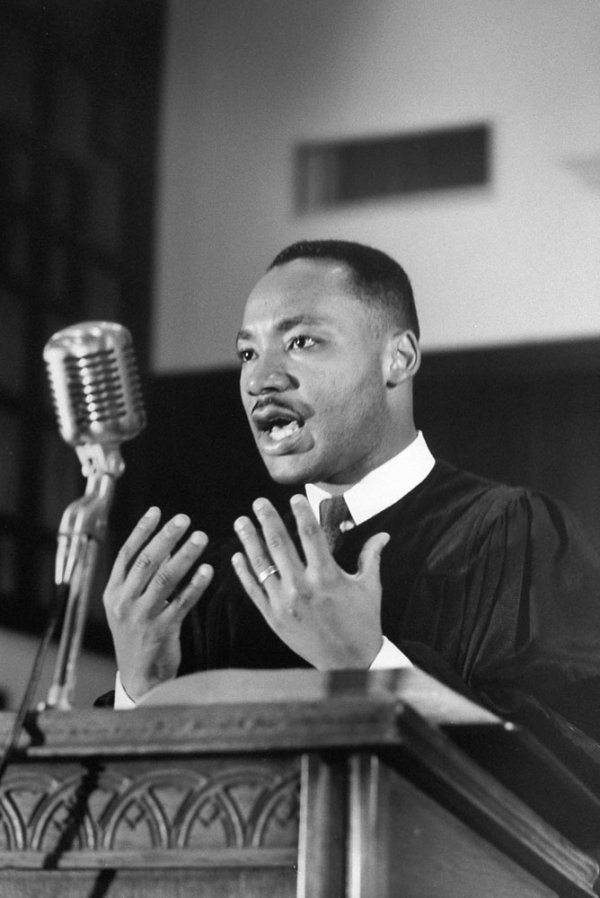
Last week in America, we marked two important dates. We celebrated the birth of a great hero, patriot, and statesman, Martin Luther King, Jr. And we marked the 47th anniversary of the Supreme Court decision, Roe v. Wade, which effectively legalized abortion across the land.

The life of Dr. King was marked by hardship, oppression, violence, and assassination at the age of 39. Dr. King was a brilliant student and gifted speaker. He led peaceful protests and civil rights marches calling for justice and equality under the law for all people. More than 50 years after his death, there are still issues of racial discrimination and racial tensions in this country. The disproportionate loss of life and liberty among blacks in urban areas has led to a new round of protests, some of which go under the name of “Black Lives Matter.” There is a feeling that, especially with the police and government officials, black lives don’t matter– that black lives are devalued and dismissed as less deserving of respect and protection.

Photo by Collis on Pexels.com

In light of this, there has been “push back” from those who argue that “ALL Lives Matter”, or that “Blue Lives Matter” (blue for police who have become victims of mob violence and angry crowds who feel that the police are responsible for racism and corruption). The argument is that groups like “Black Lives Matter” are not so much about bringing awareness or promoting justice, but are meant to divide us as a nation and exact revenge for past offenses, slights, and perceived slights.

There is speculation about what might have happened if Dr. King had not died when he did. Would he have continued leading non-violent protests? Would the Civil Rights movement of the sixties gained more momentum under Dr. King’s leadership? Would our nation have achieved a new dawn of equality, freedom, and unity, greater and stronger than what we have seen in the last five decades? Would Dr. King be pleased with the progress we have made, or ashamed? Did his life make a difference? Yes. But was it “enough” of a difference? Does it matter to a young person of color growing up in Baltimore or Chicago that Dr. King spoke out, marched, and died for a dream that seems frozen in time and unfulfilled?

Photo by nappy on Pexels.com

Just two days after our nation wrestled with that uncomfortable memory, we marked one even more controversial. In 1973, our Supreme Court ruled that no state could prohibit abortion. The decision also limited the ability of states to restrict abortion. Since that decision, an estimated 60 million Americans http://www.numberofabortions.com/ (not to mention infants around the world) have been denied the right by legal practice to be born. This is roughly equal to the number of people killed in World War II, though estimates of both numbers vary by source (https://www.nationalww2museum.org/students-teachers/student-resources/research-starters/research-starters-worldwide-deaths-world-war)

Photo by Pixabay on Pexels.com

In looking at abortion, we see millions of lives who were determined NOT to matter. They didn’t deserve respect, protection, liberty, education, dreams, food, shelter…not even breath and a heartbeat!

Oh God– let us see life as YOU see it. Every life matters infinitely to You. You have created all life–unique, precious, priceless, glorious, fragile, and yet eternal. You walked among people, healed the sick and broken, reached out to the outcast and isolated, welcomed children, and brought the dead back to life. In Christ, you took on human life– breathed the air, knew joy and pain, weariness, hunger, and strife.

Photo by nappy on Pexels.com

One life– every life– matters. It matters, not because we are important to the world, but because we are precious in the eyes of our creator. We celebrate the life of Dr. King, because we was considered important in the history of our nation. But God celebrated Dr. King’s life from the moment of his conception. God knit him together in his mother’s womb, just as He does for each of us. God knew the moment of Dr. King’s birth. He saw every tear, heard every laugh, felt every bruise that Dr. King experienced. And God knew the moment of Dr. King’s assassination. He knew the shock and horror it would be for his family. He knew that years later, we would quote Dr. King’s words and even argue about his relevance and impact. But Dr. King’s life mattered to God even if it had been a life of obscurity or failure.

Similarly, and incredibly, every one of those 60 million lives that have been lost to abortion “mattered” to God. He knew and loved them from the moment of conception. And He knew– He KNEW– that they would be aborted; thrown away and discarded by those who should have loved and protected them. And He LOVES those who killed them– their lives “matter” to God as well. Dr. King’s dream was that his children would be judged by the content of their character. God will judge us one day on that basis; but He offers to judge us by the content of HIS character, if we will trust Him to forgive us for the past, and transform us as we live for Him.

Photo by namo deet on Pexels.com

Your life matters to God. It has worth and meaning. You are infinitely precious– so much so that God sent His only son to live and to die for your sake. What an incredible love He has for you! What an incredible love He has for every person you will encounter today!

Vacant “Lot”

I’m continuing to explore the life of Lot in the Biblical story of Genesis. Lot, the nephew of the Biblical patriarch, Abraham, chose to live near, and then in, the wicked city of Sodom. His circumstances have made him wealthy, but they have also made him a pawn and a victim of greed and war all around.

When we left Lot (see Friday’s entry), he had been rescued by his uncle Abram (later renamed Abraham), along with all his possessions, after being kidnapped from Sodom. This might have been a good time for him to move on with his life, make a fresh start, and get away from the wars and wickedness surrounding him. But he didn’t. Nor does he seem to have had any kind of positive impact on his neighbors and friends. The Bible doesn’t mention whether or not Lot joined in any of the wicked behavior of his fellow Sodomites, but he seems to have turned a (mostly) blind eye to it.

Photo by omar alnahi on Pexels.com

The Biblical narrative leaves Lot for a few chapters, to concentrate on the life of Abraham, the changing of Abram’s name to Abraham, the birth of his son, Ishmael, and the promised coming of Isaac. But at the end of chapter 18, the LORD speaks to Abraham about the impending destruction of the cities of Sodom and Gomorrah:

17 The LORD said, shall I hide from Abraham what I am about to do, 
18 seeing that Abraham shall surely become a great and mighty nation, 
and all the nations of the earth shall be blessed in him? 19 For I have 
chosen him, that he may command his children and his household after 
him to keep the way of the LORD by doing righteousness and justice, so 
that the LORD may bring to Abraham what he has promised him.”
20 Then the LORD said, “Because the outcry against Sodom and 
Gomorrah is great and their sin is very grave, 21 I will go down to see 
whether they have done altogether according to the outcry that has come to me. And if not, I will know.” 22 So the men turned from there and went toward Sodom, but Abraham 
still stood before the LORD. 23 Then Abraham drew near and said, “Will 
you indeed sweep away the righteous with the wicked? 24 Suppose there 
are fifty righteous within the city. Will you then sweep away the place 
and not spare it for the fifty righteous who are in it? 25 Far be it from 
you to do such a thing, to put the righteous to death with the wicked, 
so that the righteous fare as the wicked! Far be that from you! Shall not
the Judge of all the earth do what is just?” 26 And the LORD said, “If I
find at Sodom fifty righteous in the city, I will spare the whole place for
their sake.” 2Abraham answered and said, “Behold, I have undertaken 
to speak to the Lord, I who am but dust and ashes. 28 Suppose five of the fifty righteous are lacking. Will you destroy the whole city for lack of 
five?” And he said, “I will not destroy it if I find forty-five there.” 
29 Again he spoke to him and said, “Suppose forty are found there.” He
 answered, “For the sake of forty I will not do it.” 30 Then he said, “Oh let not the Lord be angry, and I will speak. Suppose thirty are found there.” He answered, “I will not do it, if I find ththirty there.” 31 He said, “Behold, I have undertaken to speak to the Lord. Suppose twenty are found 
there.” He answered, “For the sake of twenty I will not destroy it.” 
32 Then he said, “Oh let not the Lord be angry, and I will speak again
but this once. Suppose ten are found there.” He answered, “For the sake
 of ten I will not destroy it.” 33 And the LORD went his way, when he had finished speaking to Abraham, and Abraham returned to his place.

(Genesis 18:17-33 ESV via http://www.esv.org)

The Bible is not explicit in describing the evil that occurred in Sodom and Gomorrah. But two things stand out in this passage. The LORD speaks of “the outcry” against these two cities and the gravity of their “sin.” Some people have suggested that there is a single egregious sin– “sodomy”– that roused God’s especial judgment. Certainly, in chapter 19 (https://www.biblegateway.com/passage/?search=Genesis+19&version=NIV) the men of the city demand that Lot’s “guests” be brought out so they can have sex with them. Lot offers his virgin daughters, but the men refuse and become so violent that the “guests” have to intervene. However, a parallel story is reported later in the Old Testament, this time in the city of Gibeah in the region of Benjamin. (https://www.biblegateway.com/passage/?search=Judges+19&version=NIV) And, while judgment is delivered to the city, it is not singled out for especial judgment by fire from heaven.

Photo by Engin Akyurt on Pexels.com

Whatever the evil in Sodom, it included rape, sodomy, and likely human trafficking and human sacrifice (see the end of Genesis 14, where the king of Sodom offers Abram all the material spoils of war, in exchange for all the people). It was not just the evil of sexual promiscuity or occasional violent practices, but something that caused an enormous “outcry” from victims, and possibly even angelic messengers reporting on the level of depravity, destruction, and oppression involved. Yet Lot lived there for years, raising his family, going about his business, and ignoring or excusing the evil all around him. There is no record of him making any positive difference, any positive contribution; no record of Lot doing anything to stand out from among his neighbors.

Photo by Krunal Parmar on Pexels.com

And when judgment comes, it is swift and terrible. The Angelic messengers must drag Lot and his family away from their home and possessions. They urge him to flee into the mountains, but he balks and asks to be allowed to flee to the small town at the edge of the destruction. (More about this at a later time…) Lot has lost almost everything of value– he ends up bankrupt; materially, and spiritually. Lot is a vacant shell of a man–fearful and snivelling, weak and empty.

What evil occurs in our neighborhoods today? What are we doing to alleviate it? Combat it? Excuse it? Enable it? If God were to bring judgment to our city or country, would He have to send angels to drag us out of the fire? Would he find even 10 righteous people on our block? In our apartment complex? God didn’t find 10 righteous people in Sodom…In fact, the Bible doesn’t say that he found ANY! Lot and his daughters were spared, but the stench of Sodom and Gomorrah lingered in this family to their ruin.

Lot’s legacy is one of emptiness, loss, and depravity. But there is one bright spot, which we’ll look at next time. God is slow to anger, and rich in mercy. His redemptive plan will include even Lot with all his flaws and weakness. And it extends to each of us, regardless of where we’ve lived, or what we’ve experienced. God didn’t find any righteous people in Sodom; He knew He wouldn’t! More than once the Bible tells us “there is no one righteous; not even one; there is no one who understands; there is no one who seeks God.
All have turned away, they have together become worthless; there is no one who does good, not even one.” (Romans 3:10-12; Psalms 14:1-3, others…) God’s plan is not to find people who are already righteous– His plan is to rescue people like Lot; people like US! And His plan is to include us in the rescue effort, too.

Photo by Julian Jagtenberg on Pexels.com

I’m learning a “lot” from Lot. There are a couple more things I want to explore in the coming days. I hope you will join me.

“Piece” of Mind

I gave that fellow a piece of my mind! I let him know how wrong he was, how backward, how ill-informed. And he just wouldn’t see reason.
He had the nerve to call me hateful, judgmental, and “toxic!” Doesn’t he understand? He is selfish, rebellious, arrogant, and “lost.” I was just trying to give him a warning. If he doesn’t repent, he will end up in Hell. I was good enough to spend my valuable time trying to set him straight, and all I got for it was abuse! Well, you know what they say, “Hate the sin, love the sinner.” At least I tried.

Photo by Designecologist on Pexels.com

I gave that woman a piece of my mind! I let her know how judgmental and backward and hateful she is. Who is she to tell me what to think? She called me a sinner and told me I was going to Hell– and then she wants me to thank her for it?! She was completely unreasonable. Why would I want to spend time with someone like that? People like her are what’s wrong with this world. They talk about love, but only if you act and think exactly like them– what kind of “love” is that? What a hypocrite!

Photo by Lukas on Pexels.com


Christ’s Example of Humility
So if there is any encouragement in Christ, any comfort from love, any participation in the Spirit, any affection and sympathy, 2 complete my joy by being of the same mind, having the same love, being in full accord and of one mindDo nothing from selfish ambition or conceit, but in humility count others more significant than yourselves. Let each of you look not only to his own interests, but also to the interests of others. Have this mind among yourselves, which is yours in Christ Jesus, who, though he was in the form of God, did not count equality with God a thing to be grasped, but emptied himself, by taking the form of a servant, being born in the likeness of men. And being found in human form, he humbled himself by becoming obedient to the point of death, even death on a cross. Therefore God has highly exalted him and bestowed on him the name that is above every name, 10 so that at the name of Jesus every knee should bow, in heaven and on earth and under the earth, 11 and every tongue confess that Jesus Christ is Lord, to the glory of God the Father.
Lights in the World
12 Therefore, my beloved, as you have always obeyed, so now, not only as in my presence but much more in my absence, work out your own salvation with fear and trembling, 13 for it is God who works in you, both to will and to work for his good pleasure.
14 Do all things without grumbling or disputing, 15 that you may be blameless and innocent, children of God without blemish in the midst of a crooked and twisted generation, among whom you shine as lights in the world, 16 holding fast to the word of life, so that in the day of Christ I may be proud that I did not run in vain or labor in vain. 17 Even if I am to be poured out as a drink offering upon the sacrificial offering of your faith, I am glad and rejoice with you all. 18 Likewise you also should be glad and rejoice with me.

Philippians 2:1-18 English Standard Version (ESV) (www.biblegateway.com) Emphasis added.
Photo by Magda Ehlers on Pexels.com

Lord Jesus, help me to give others the “Peace” of Your mind today, rather than a “piece” of mine!

Jacob the Brother of Esau

The Biblical story of Jacob and Esau has long baffled readers and scholars alike. I don’t pretend to have the answers to some of the tough questions it poses, but I’d like to take a close look at some of them.

Esau and Jacob were twins–the only sons of their parents–born just minutes apart. Yet their personalities, their destinies, and their relationships with God and others could not have been more different.

We spent the last post covering some of Jacob’s character flaws– his early years involved scheming and “cheating” this twin of his. Jacob’s life and actions are the focus of the story, after all. He is the one God chose to establish the nation he promised to Jacob’s father and grandfather. But why Jacob and not Esau?

In many ways, this story echoes that of the very first brothers in the Bible. God chose Abel’s sacrifice over his brother’s. We are not given an obvious reason why Cain’s sacrifice was unacceptable– or why Abel’s was. In this case, God does not give Rebecca a reason why her boys would fight throughout their lives or why the elder son would serve his younger brother. At one point, the Bible even says that God “loved” Jacob and “hated” Esau! So we are left with a big question–Does God play favorites? Does He give His favor capriciously? If so, why bother to worship, serve, and obey Him if, in the end, He has already chosen who will be blessed?

We may never have a full explanation of God’s ways– we are told that they are not our ways; that they are higher and wiser than our ways–but there are several things I want to consider that may shed some light.

  • God is timeless. He lives beyond the boundaries of linear time, and he sees the end from the beginning. As we read through the story of Jacob, we see his progression, and the changes he makes as he matures and as he encounters the great God of his fathers as it unfolds in time. His beginning shows little promise, but God already sees Jacob as Israel, as the father of twelve tribes of people, as the ancestor of Moses, of King David, and of the coming Messiah. He sees all of this before Jacob is even born! It is part of His eternal plan that Jacob, the cheater, the underdog, the “lesser” brother should become all of these things.
  • God sees inside the human heart. Esau’s character is not fully shown in this Biblical story, but we get a few clues: 1) Esau despised his birthright– he was flippant about his inheritance, trading it for a bowl of stew. 2) Esau took foreign wives who caused his parents distress–this detail may almost escape the modern reader. We do not tend to live with our extended family, but it was (and in some cases still is) common to the society in which Isaac lived. Esau did not consider his parents when bringing foreign women into the family. They had different customs and different gods. And Esau didn’t learn from the first two wives..when Rebecca commented on the Hittite women, Esau married a daughter of Ishmael, a woman likely to resent her father’s rival (remember Ishmael was banished on account of his resentment of Isaac!) 3) Esau plotted his brother’s death. His anger and resentment over the lost blessing caused him to plot murder. Jacob was sent away, not only to find an acceptable wife, but to keep him safe from his brother’s vengeance. Even though the two brothers later met in peace (Genesis 33), the meeting was filled with tension and the brothers were never close. 4) There is not one indication in the Bible that Esau ever sought the God of his fathers—no mention of him praying, offering a sacrifice, or acknowledging God. In fact, the sons and descendants of Esau (Edom) would attack and fight with the nation of Israel for centuries to come, finally being conquered and forced to serve the descendants of Jacob. https://www.jewishvirtuallibrary.org/the-edomites
  • God does not “love” or “hate” in the same way that we do. God’s love is universal and eternal. God loves even those who reject, mock, and hate him. So when God says, “Jacob have I loved, and Esau I have hated”, He is not talking about his feelings for individuals (see https://www.biblegateway.com/passage/?search=Malachi+1%3A1-5&version=NIV and https://www.biblegateway.com/passage/?search=Romans+9%3A6-16&version=MEV). Rather, He is talking about how He shows mercy. Jacob and Esau were real people, and God blessed both of them, and built both of them into great nations. But God showed mercy and favor on Israel for keeping his commandments, while destroying the nation of Edom because of its continuing wickedness. (God eventually showed wrath on the nation of Israel as well, sending its people into exile because of their unfaithfulness!) Even in their destruction, both nations retained a remnant and their peoples exist to this day.
Photo by Pixabay on Pexels.com
  • God did not abandon Esau. When Jacob finally reconnects with his older brother, Esau is the head of a mighty army. Esau’s sons became the heads of tribes and kings of Edom. God allowed Esau to prosper and grow strong. But Esau never sought God; Edom never showed humility, wisdom, or reverence–only arrogance, might, and hatred. God shows mercy to those who don’t deserve it, and grace to those who desire it, but He will not allow injustice and arrogance to go unchecked forever.
  • God’s grace is a gift–Jacob didn’t deserve to be favored; but neither did Esau, or Isaac, or Abraham. Nor do any of us. https://www.biblegateway.com/passage/?search=Romans+3%3A9-18&version=ESV Not one of us has earned God’s blessing. God chooses to love us even in our sin, and chooses to give us the Grace to return and receive His blessing!
Photo by Reafon Gates on Pexels.com

Praise be to the God of Jacob!

Bringing in the Leaves

It’s fall here in western Michigan, and that means falling leaves…lots of them!  In cities and larger towns, there are leaf “pick up” schedules.  Trucks come along at appointed times to pick up leaves that have been raked and piled up by the roadside or placed (along with other yard waste, sticks and such) into waste bins. In smaller towns and around the countryside, leaves will be raked, piled up and burned or placed in compost heaps and bins.  In a few cases, leaves will be left where they fall or are carried by the wind until the snow covers them, to be rediscovered in the spring when the snow melts off.

pave covered on red leaf between trees
Photo by Ali Yasser Arwand on Pexels.com

Falling leaves are part of the cycle of every year.  They announce the advent of autumn, delighting us with their colors for a few short weeks.  But when that task is done, they fall beneath our feet to be stepped on, swept up, burned up or forgotten.  Gone are the memories of shoots and buds blooming in the spring, or rich green leaves shading us from the intense heat and light of summer. Leaves are ephemeral.  They pass out of memory and time, their swirling colors lost in a heap of crunchy detritus underfoot.

photography of maple trees
Photo by Johannes Plenio on Pexels.com

People are not leaves.  We share the same creator, but God has placed eternity in the minds, hearts, and souls of humankind.  Whether we are blooming, changing color, falling, or being swept aside in this world, God will gather us all in a great harvest of souls.  But we will not be turned to ash or mulched into compost.  We face an eternal destiny; one where our true “colors” will be permanent, and our placement fixed.  We will either be raised to vibrant life, attached to the source of life and abundance; or we will be eternally “fallen”, swept away by judgment and guilt and the consequences of rebellion.

photography of graveyard under cloudy sky
Photo by Skitterphoto on Pexels.com

That may sound harsh and dramatic, but it is written in our soul–we feel it as we watch the withering leaves let go of the tree or smell the acrid of the burn pile.  We feel the pain and injustice of people being treated like no more than dead leaves– swept away as just another inconvenience.

woman holding orange maple leaf
Photo by Daniel Spase on Pexels.com

Today, I want to look for fallen leaves–we are all “fallen” from Grace, but some have also “fallen” through the cracks or by the wayside–look for people and seek ways I can pray for, reach out to, and offer Hope and Grace, especially to those whom life has swept aside.  Someone did it for me…Now it’s time to pass it forward.  It’s time to turn over a new “leaf”.  Let’s not “leave” the job unfinished–“branch” out beyond our comfort zone and bring in some leaves this autumn!


The Mercy Rule

I witnessed a blow-out high school football game last week.  The final score was 57 to 0!  Once the point differential was over 50, they invoked the “mercy rule.”  The game clock would not stop for downs; there would be no more “time out” calls– as this happened late in the game anyway, it just meant that the end came quickly and “mercifully” for the losing team.  It also meant that players were less likely to take dangerous risks in the forlorn hope of scoring big points.

High school football has a “mercy rule”  so that struggling teams don’t become victims of absolute despair.  This team deserved to lose, and they did.  They lost big; but they could’ve lost by a wider margin.  And they didn’t lose for lack of effort– they pushed hard and gave it a mighty try.  But they were not up to the challenge of a better team.


In life, when we come up against Sin, we can give our best effort, and still lose big.  Oh, there are certain sins that seem easily “tamed” or “defeated,” but there are others that end up crushing us– maybe it’s an addiction to porn, or a tendency to spread rumors; maybe we harbor bitterness or doubt, or we can’t control angry outbursts.

close up court courthouse hammer
Photo by Pixabay on Pexels.com

In the end, we are all losers in the game against Sin– whether the loss seems like a close shave or a blowout, the result is the same.  But the consequences are much more dire.  The penalty for Sin is Death.  Not just a single lost game, but an eternal loss of life and hope and light and love!  We are no match for Sin, and Sin shows no mercy.  Even with a mercy rule, our situation seems hopeless.  But it is not.

Death may seem like a a harsh and undeserved judgment.  We “can’t” win.  Or, more correctly, we will always lose.  Even a “mercy rule,” while it may mean that we don’t get the death we deserve, wouldn’t keep us from being “losers.”  This is how many people see God’s offer of salvation– as some sort of mercy rule that keeps us from the fate we can’t avoid.  But even if God only offered mercy, it would be infinitely better than we can imagine.  Because God’s mercy is not just a “rule”, it is a priceless gift of restoration.  We can be free from the “loss” and penalty we deserve, no matter what the “point differential.”  Even a close “loss” to sin is wiped out by God’s mercy.

God’s offer of salvation doesn’t just stop at mercy, however.  It includes something that will never happen in a football game or anywhere else in life.  God extends His Grace– all that we don’t deserve, and never could deserve–above and beyond the already infinite and superior mercy we needed to escape the judgment of Death.  We don’t just escape the horrors of death and hell.  We are gifted with all we need to win the game– to be co-victors over Death and Sin.  God, in His mercy keeps us from losing.  In His Grace, He coaches us, plays alongside us, cheers for us, and gives us the power to become all that we need to be to play our best.  AND, He has already secured the victory.  Far from being in a position where we “can’t” win– God offers us the opportunity to be in a position where we can’t LOSE!

accomplishment achievement adult african
Photo by rawpixel.com on Pexels.com

It is my ongoing prayer that if you are reading this, you have already responded to God’s invitation, through Jesus Christ, to be victorious; that God’s spirit would guide me to write what will be helpful in encouraging you and strengthening your faith (as well as my own).  I pray that you will grow in faith and make the pursuit of prayer part of your daily walk in Faith.  If that is not the case, and you have not accepted both God’s mercy and His grace, I pray that you will take that opportunity today.

Don’t wait for a “mercy rule”– accept the mercy of the Ruler!

Repent, relent, or resent?

I’m revisiting Jonah today.  The book of Jonah is a fascinating study–it’s just four short chapters, but they are packed with messages that inspire, convict, and encourage. More about Jonah here…

waves

At the beginning of the book, Jonah is sent by God to preach disaster to a city steeped in evil and violence.  Nineveh was an ancient metropolis of the Assyrian empire, located near modern-day Mosul, Iraq.  The people of Nineveh had been responsible for attacks against Israel, and it is believed that Jonah may have lost family members in these attacks.  Now God is sending him into the “belly of the beast” to preach judgment and doom.  Instead of following God’s command, Jonah tries to run away and gets swallowed by a big fish.

photography of whale tail in body of water
Photo by Daniel Ross on Pexels.com

This is the part of the story with which most people are familiar– Jonah and the “Whale”.  But this covers only the first quarter of the story!  Inside the fish, Jonah prays.  It is a beautiful prayer of praise and acknowledgement of God’s might and power to save.  This is not the sniveling coward of chapter one, but the great prophet he could have, should have been.  God gives him another chance and this time, Jonah is faithful to preach the message God sends– forty more days and He will wipe out Nineveh.

brown concrete building
Photo by Nicolas Postiglioni on Pexels.com

But something unexpected happens.  The people of Nineveh hear Jonah’s dire warning– a lone voice calling in the streets with a gloomy message– and they repent.  From the least to the greatest, they cry out for mercy, they fast and mourn and do a complete about-face.  Just as God saved Jonah from the fish, He relents and saves Nineveh from destruction.  Jonah’s enemies get to live to see a new day!

The Ninevites repented, God relented, and Jonah resented.  The last chapter tells of Jonah’s temper tantrum in the light of God’s mercy.  God even sends him an object lesson in the form of a gourd vine.  The book of Jonah ends abruptly with God’s last statement.  We never read Jonah’s response; we never find out if he learned his lesson a second time or not.

green trees
Photo by Juan Pablo Arenas on Pexels.com

Even with its abrupt end, the book of Jonah teaches about three important responses:

  • The people of Nineveh repented.  When faced with judgment, they humbled themselves and called for mercy.  They received it.  In spite of their former violence, idolatry, and wickedness, God sent them a warning, and He extended the grace and mercy they did not deserve.
    • Two words of warning here:
      • 1) Their response was immediate, sincere, and dramatic.  That makes for an exciting story, but repentance sometimes comes over time and quietly.  God knows if our repentance is real.  It is not our place to judge someone else’s conversion or apology.
      • 2)  In the case of Nineveh, their repentance was short-lived.  God eventually destroyed the city and the Assyrian empire.  Just because we have a moment of sincere regret or keenly feel a need for mercy doesn’t mean that God has an obligation to extend mercy or to withhold judgment indefinitely.  Grace is a gift, not a negotiation!

pexels-photo-576926.jpeg

  • God relented.  God listens, ready to extend His grace.  He does not punish us as we deserve.  He does not mete out immediate judgment without hope of redemption.  God sent Jonah with a message of potential doom to Israel’s sworn enemy in the knowledge that they (EVEN THEY) would repent.  God sent dozens of prophets to the nation of Israel warning of doom and exile, and they mocked and even killed the messengers!  God is patient, loving, and kind.  But He is also just– evil will not be forgotten or left unpunished.  God will relent, but He won’t retreat, back down, or surrender.

pexels-photo-583437.jpeg

  • Jonah resented.  We don’t know if he stayed resentful, or rediscovered gratitude for God’s grace to Nineveh or to himself, but we are left with a picture that Jesus echoes in the story of the prodigal son.  Jonah is like the older brother who worries more about his brother’s misdeeds than his brother’s soul.  How many of us who have experienced grace sulk and pout when we see others enjoying their first delightful taste of it?  Do we stamp our feet at God when he sends us to bring the Gospel to people we have written off as uninterested in or unworthy of it?  Do we resent being corrected and humbled by a loving God?  Do we worry and fret over our creature comforts as Jonah worried over his gourd vine, while others live without hope, food, or shelter?

Three words, so similar in spelling and sound, but so very different in impact!

Lord, I pray that my repentance would always be immediate and sincere; that I would see others, and their need for your grace, through your eyes of compassion; and that I would not resent your goodness and patience toward others.  Thank you for your patience and mercy toward me, and may I give the same to those who need to see Your face.  Give me the wisdom to trust you and obey, even when my flesh would run away.  May I see the gourd vines and big fish in my life as your gifts.

Blog at WordPress.com.

Up ↑