The Lord Has Taken Away…

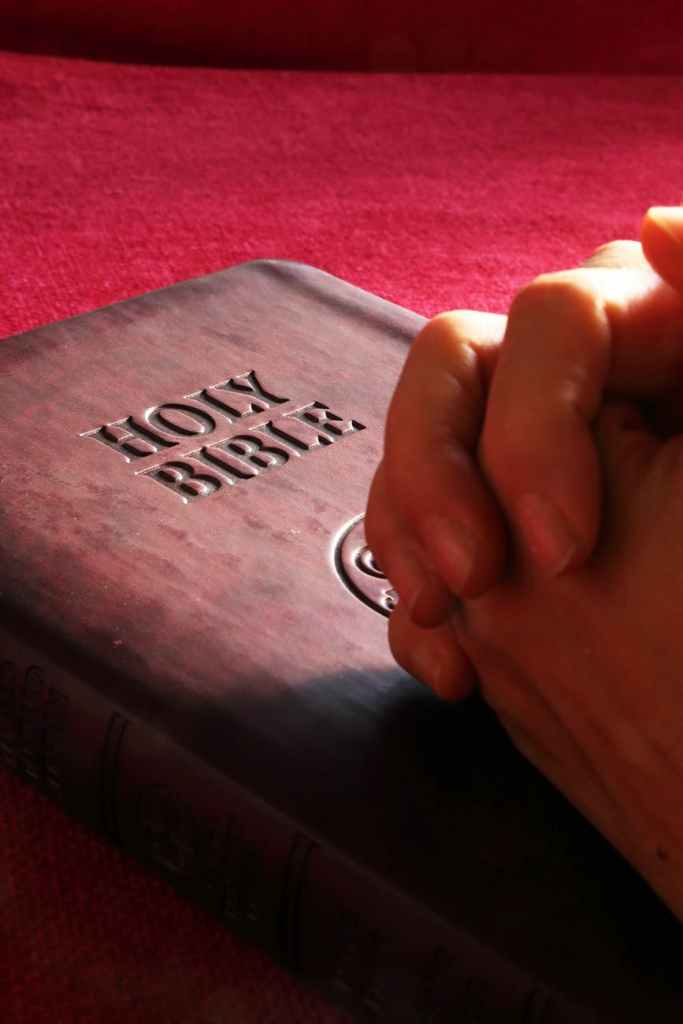
20 Then Job arose and tore his robe and shaved his head and fell on the ground and worshiped. 21 And he said, “Naked I came from my mother’s womb, and naked shall I return. The Lord gave, and the Lord has taken away; blessed be the name of the Lord.”

Job 1:20-21 ESV (via biblegateway.com)
Photo by Pixabay on Pexels.com

The book of Job presents us with a startling picture. Job is a godly man; a righteous man; a man of faith and good works. And yet, God allows him to experience loss upon loss– Job loses everything, short of his life and his nagging, bitter wife. His first response is praise and worship! But as the losses sink in; as the pain and agony and grief continue, Job questions God’s justice and wisdom. Job, like us, wants answers that make sense. He is willing to suffer– even greatly–IF he can see the purpose of his suffering, and justify it to himself.

Photo by RODNAE Productions on Pexels.com

We are getting ready to celebrate Thanksgiving tomorrow in the U.S.– a day when we celebrate what God has given us. We normally celebrate family, health, good food, material blessings, etc. We celebrate abundance and comfort; peace and plenty; family and freedom. But his year, our celebration will be quite different. The Lord has taken away…

Photo by Karolina Grabowska on Pexels.com

Some of us have lost jobs, or we’ve lost our good health to COVID or related factors, or we’ve lost loved ones, often without the chance to say our final “goodbyes”. Millions of us have lost the ability to move about freely and conduct “normal” errands and activities. Schools and businesses are closed or operating from a distance. Families and friends have been kept apart. Much that gave us comfort and happiness has been “taken away” this year. And God has allowed it all to unfold. He has not “taken away” this disease or its consequences. He has not “taken away” floods, or fires, or hurricanes. He has not given us answers or explanations.

Photo by Collis on Pexels.com

Job’s initial praise turns to questioning. While he does not “curse God and die,” as his wife suggests, Job spends his time wondering, “Why me?” His friends try to find answers– “you must have done something to deserve this, Job.” Because God does not “punish” the righteous. It isn’t logical; it isn’t fair; it isn’t just.

Photo by Alem Su00e1nchez on Pexels.com

Except that God laid on His own Son– on Himself– the guilt and punishment for all those who are unrighteous. What Job went through–unknown and unseen to him and his friends–was a glimpse into what God Himself would suffer. Christ lost everything–INCLUDING his life– in order to bring salvation to all those who are willing to believe and receive it. Christ was willing to give away His dignity, His power, His friends and family, and His life. And the Lord allowed it all to be taken.

Photo by Andrea Piacquadio on Pexels.com

Many people read the story of Job– his loss and all his questions and complaints–and conclude that God is not fair or just. They find Him to be capricious and unwilling to ease Job’s suffering or answer his questions. They conclude that God is wicked and unworthy of Job’s praise or trust.

But to do so is to ignore the end of the story– God DOES “answer” Job; He gives Job a chance to justify himself and bring his case. And more than that– He gives Job more than he had before. Job ends up with more children to love, renewed health, and even more wealth than he lost. https://www.biblegateway.com/passage/?search=Job+42&version=CSB And the same is true of Jesus Christ. Because of His “loss,” the world has gained the priceless gift of Salvation by Grace. Christ has become the first of millions to taste victory over death and enter into eternal life. https://www.biblegateway.com/passage/?search=1+Corinthians+15%3A20-23&version=NIV

Loss and grief still exist in this world; disease and suffering and hardship still plague us this year. But we have SO much to celebrate at Thanksgiving. When the Lord “takes away,” it is not because He is capricious, or jealous of our wealth or happiness. It is not because He is unkind or uncaring. At just the right time, and forever more, the Lord will Give without end– lavishly, extravagantly, abundantly. Nothing He takes away in this life– even a cherished love one–is beyond all hope of comfort, redemption, or restoration. Our losses cannot compare to the riches of His Grace and Love. This is a great mystery, but as Job discovered, God WILL DO IT!

Photo by mentatdgt on Pexels.com

Blessed be the name of the Lord! Let us Thank and Praise His Holy Name!

Praying from Nineveh

It’s depressing to watch the news, lately–the reports include the COVID-19 pandemic, rioting and violence, injustice, crime, natural disasters…there is very little to celebrate. And yet, my nation just recognized the 244th anniversary of our declaration of independence from Great Britain. In that declaration are the immortal words, “We hold these truths to be self-evident, that all men are created equal, that they are endowed by their Creator with certain unalienable Rights, that among these are Life, Liberty and the pursuit of Happiness.–That to secure these rights, Governments are instituted among Men, deriving their just powers from the consent of the governed, –That whenever any Form of Government becomes destructive of these ends, it is the Right of the People to alter or to abolish it, and to institute new Government, laying its foundation on such principles and organizing its powers in such form, as to them shall seem most likely to effect their Safety and Happiness..” America has never realized perfection of these truths. No nation can claim perfection, just as no individual person can claim perfection. “All have sinned and fall short of the glory of God.” (Romans 3:23). But the truth still stands. All men (and women, children…human beings) are created equal, and are endowed by their Creator with certain inalienable rights. God does not favor the rich or the poor, men or women; He doesn’t favor one skin tone over another; He doesn’t love Baptists more than Catholics, or agnostics! He is not partial to citizens of one nation over another; He doesn’t favor Republicans over Democrats. Governments and individuals may deny or withhold these rights; they may pervert the truth or twist and shape circumstances to their favor at the expense of others. But the truth still stands.

Photo by Ketut Subiyanto on Pexels.com

Long ago, there was an empire called Assyria– powerful, ruthless, domineering. They were not governed by principles of fairness, equality, or justice. They conquered and slaughtered other people at will. Their capital city was Nineveh. The prophet Jonah, a man thoroughly familiar with their cruelty and lack of justice, was dispatched by God to warn the people of their coming judgment. Instead of obeying, Jonah fled. It would seem understandable that Jonah might fear the people of Nineveh. Delivering such a warning could put him in danger. But that wasn’t why Jonah fled.

Photo by Jose Aragones on Pexels.com

The story of Jonah is well-known. After fleeing toward Tarshish on the first available ship, God sent a storm. Fearing that the ship would sink, the sailors cast lots to choose a human sacrifice to appease the sea gods. Jonah volunteered, saying it was his sin that “caused” the storm. Reluctantly, the sailors threw him overboard, and the storm ceased immediately. Jonah was “saved” when a giant fish swallowed him. From the belly of the fish, Jonah prayed, and God rescued him again, causing the fish to spit him out onto dry land. Jonah took advantage of his second chance, and went to Nineveh, preaching the message of destruction.

But when Jonah’s message results in mass repentance and a “second chance” for the Ninevites, Jonah is disgusted. THIS was why he didn’t want to go to Nineveh– because he did not want them to receive a warning and a potential reprieve! He knew that God was sending him, not with a message of doom, but with a message of hope! There was a chance to repent– to try again–to seek justice and avoid destruction. They didn’t deserve it. Certainly, they had never given mercy to any of the peoples they had already conquered. God had every right to destroy them without any warning– and Jonah had counted on it.

Photo by Nishant Aneja on Pexels.com

I almost always focus on the character of Jonah when I read through this story. https://www.biblegateway.com/passage/?search=Jonah+1&version=NIV (follow this link to see chapter 1 and use the site to read the other three chapters). But what about the people in the city of Nineveh? Imagine a stranger walking around one of America’s major cities– Washington, New York, Seattle (in light of recent events there)… His face and skin are unnaturally white and blotchy; bleached by stomach acid from an enormous fish. He looks like a zombie, and his message is delivered in utterly horrible assurance–“yet forty days, and this city will be destroyed.” Not by a spike in COVID-19 cases; not by looters or protesters tearing down a couple of buildings here or there–total destruction by the hand of God.

Photo by Євгеній Симоненко on Pexels.com

What might we do differently if we had forty days to convince God to stay His hand and give our nation a chance to repent. We claim we are not like the Assyrians– we were founded on truthful principles and ideals. We “hold” these truths, but we do not live them out as a nation.

The Ninevites did not have time to amend or rewrite a Constitution. They did not have forty weeks or forty years to “reconstruct” their empire or implement social justice legislation.

Photo by Life Matters on Pexels.com

But they had time to pray. They had time to fast, and repent, and seek the mercy of God. From the least to the greatest, they fasted and prayed. Even their animals fasted! They stopped frantically trying to grab power, and turned their eyes toward their Maker and Judge. And God listened! God forgave! God showed mercy!

Photo by Ali Arapou011flu on Pexels.com

May we pray– in every nation, region, city, village, or settlement– for God’s mercy in these times, and at all times. God is not waiting for us to “get it right.” He is waiting for us to come to Him. May we be humble and hopeful and turn to Him today. And may we learn from their example.*

Photo by Josh Willink on Pexels.com

*Spoiler alert– while the Assyrians in Nineveh repented after the message of Jonah, they quickly forgot God’s mercy and returned to their wickedness. Just a few decades later, God DID bring destruction on the entire empire– this time without warning!

Any One Who Is Without Sin…

I was re-reading a familiar passage in the gospel of John recently, and I was struck by a truth I had missed before. In the first part of John 8, there is a story about a woman caught in adultery https://www.biblegateway.com/passage/?search=John+8%3A1-11&version=NIV I have read this story many times, and even heard sermons preached on this passage. What struck me this time wasn’t exactly new material, or a new reading, but a new understanding of a detail that was there all along.

The story begins with Jesus teaching a crowd of people in the temple courts in Jerusalem. His teaching is interrupted by a group of Pharisees and teachers of the law. They have a woman caught in the act of adultery, and they come to Jesus asking his opinion about stoning her. They obviously know the laws of Moses, because they cite them. But they cite only a certain portion of the law, and they want Jesus to weigh in (so they can use his own words to trap him).

Photo by Sharefaith on Pexels.com

Jesus turns the tables, and passively bends down to write letters in the sand. He says only, “If any one of you is without sin, let him be the first to throw a stone at her.” One by one, the accusers and the crowd– everyone except Jesus–melts away. Finally, Jesus asks who is left to condemn the woman. There is no one. Jesus refuses to condemn her, and sends her on her way, telling her to “Go, and sin no more.”

Photo by Engin Akyurt on Pexels.com

Four details I want to highlight in this story:

  • There was already a crowd around Jesus before the Pharisees and teachers arrived. They did not bring this woman to Jesus to get an honest answer to a question, or to bring about justice (for that, they should have brought both her AND the man involved!); they brought her to a very public spot to humiliate her and trap Jesus. She was a pawn in a political and religious game, and she was guilty of a crime that was punishable by death. She was accused and forced to stand before a crowd to be condemned without a trial. So often, I read this passage, and my focus is on Jesus and the woman and the Pharisees– I forget that there is a crowd of ordinary people being “played” by the Pharisees for their own purposes.
  • Jesus never answers the question at hand. According to the laws of Moses, the woman should be stoned. That is the point the Pharisees want Jesus to address. They have set him up. If he agrees with their interpretation of the laws of Moses, he should insist that the woman be stoned. But this will be in violation of the Roman laws, and will lead to Jesus being arrested by the Romans. But if Jesus upholds the Roman law, he will be turning his back on centuries of Jewish tradition dating back to Moses. The problem is that the Pharisees have resorted to some half-truths. The laws of Moses DO speak of stoning; they speak of adultery being punishable by death– for both the man and the woman involved. However, the Priests and leaders of Israel have not followed this practice. King David committed adultery with Uriah’s wife. Neither one was stoned or condemned to death. There are no records of other adulterous couples being stoned throughout Israel’s history. So it is rather disingenuous for the Pharisees to bring this case to Jesus and ask him to speak judgment where they will not. Jesus knows this is not about actual justice; it isn’t really about the law of Moses– because they are not following it themselves! By turning the tables back on them, Jesus exposes their hypocrisy and failure in front of the very crowds they are trying to impress with their clever plans.
  • One by one, the woman’s accusers melt away. But it’s not just them, it’s the crowd of ordinary people– the ones who were likely riled up by the Pharisees and teachers. Think about the mob mentality–a guilty woman, caught in the act and brought before a teacher with moral authority–there is nothing like scandal to get a crowd of anonymous bystanders worked up and ready for blood. Yet, Jesus’ gentle reminder that any of us could be found “guilty” of something and condemned to shame and punishment puts out the flame of anger and resentment, and causes the mob to evaporate. No one is left to accuse, to curse, to insult, to humiliate, or condemn.
  • Finally, it’s down to Jesus and the sinful woman. There IS one person there who is without sin– one person who has the right to throw stones, to judge, to punish. Yet he reaches out with compassion and mercy. He is still righteous– he doesn’t shrug off the woman’s sin. He doesn’t say, “Well, that’s no big deal. Let’s just pretend that never happened.” or “I think you’ve learned a valuable lesson here today, young lady.” He simply says, “Neither do I condemn you. Go now and leave your life of sin.”
Photo by Ivandrei Pretorius on Pexels.com

Next time, I want to address each of these details from a practical standpoint in light of modern circumstances, and what lessons I am taking from Jesus’ actions.

In the Presence of My Enemies

“Thou preparest a table before me in the presence of my enemies..” (Psalm 23:5a)

I don’t like confrontation. I don’t like dealing with opposition. I don’t like having enemies. However, God’s word is very clear– I can’t avoid them or deny their existence. No matter how hard I try to make peace or stay on good terms with others, there will always be some who disagree, who dislike me, who stand against me.

Photo by Engin Akyurt on Pexels.com

So it should not come as a great surprise that God, the Good Shepherd, promises that He will prepare a table before me in the very presence of those enemies. He does not expect me to stay hidden; He does not give His blessings in secret. Instead, He allows my enemies to see that I am never alone or abandoned to their power. He showers me with blessing, meets my every need, binds my wounds and comforts my sorrows right before their eyes. They may have limited access to hurt me or frighten me, but God will bring His justice– and they will be made to see it. (see Psalm 37 https://www.biblegateway.com/passage/?search=Psalm+37&version=HCSB)

But more than that, God invites some of those very enemies to see His peace and blessing. God’s desire is that we would all share in the wedding feast of the Lamb; that the table He sets before us would be a chance to turn enemies into brothers and sisters. And He gives us the opportunity, through His blessings, to extend that invitation of Grace and inclusion–to Love our Enemies!

Photo by Sarah Jane on Pexels.com

Not all will accept this invitation– some will choose to watch in resentment, rebellion, and pride as we enjoy communion with our Shepherd; but they will be unable to disturb or destroy the joy and refreshment He brings. And not all “enemies” are the people who oppose us. God blesses us in the presence of those enemies who oppose Him. They may seek to hurt us, and turn us away from our Shepherd. But He will never turn from us. Even when we turn away, or doubt His presence or His purpose– even in the presence of our enemies–God is with us.

Photo by Josh Willink on Pexels.com

In troubled times like these, that is especially comforting to know. Chaos, disease, doubt, fear, guilt, and in the “valley of the shadow of death:” our enemies may be present and looming, but God is laying out a table, preparing to anoint our heads with oil, and showing us with Goodness and Mercy, Justice and Righteousness– all in their presence. And they are powerless to stop Him!

Vacant “Lot”

I’m continuing to explore the life of Lot in the Biblical story of Genesis. Lot, the nephew of the Biblical patriarch, Abraham, chose to live near, and then in, the wicked city of Sodom. His circumstances have made him wealthy, but they have also made him a pawn and a victim of greed and war all around.

When we left Lot (see Friday’s entry), he had been rescued by his uncle Abram (later renamed Abraham), along with all his possessions, after being kidnapped from Sodom. This might have been a good time for him to move on with his life, make a fresh start, and get away from the wars and wickedness surrounding him. But he didn’t. Nor does he seem to have had any kind of positive impact on his neighbors and friends. The Bible doesn’t mention whether or not Lot joined in any of the wicked behavior of his fellow Sodomites, but he seems to have turned a (mostly) blind eye to it.

Photo by omar alnahi on Pexels.com

The Biblical narrative leaves Lot for a few chapters, to concentrate on the life of Abraham, the changing of Abram’s name to Abraham, the birth of his son, Ishmael, and the promised coming of Isaac. But at the end of chapter 18, the LORD speaks to Abraham about the impending destruction of the cities of Sodom and Gomorrah:

17 The LORD said, shall I hide from Abraham what I am about to do, 
18 seeing that Abraham shall surely become a great and mighty nation, 
and all the nations of the earth shall be blessed in him? 19 For I have 
chosen him, that he may command his children and his household after 
him to keep the way of the LORD by doing righteousness and justice, so 
that the LORD may bring to Abraham what he has promised him.”
20 Then the LORD said, “Because the outcry against Sodom and 
Gomorrah is great and their sin is very grave, 21 I will go down to see 
whether they have done altogether according to the outcry that has come to me. And if not, I will know.” 22 So the men turned from there and went toward Sodom, but Abraham 
still stood before the LORD. 23 Then Abraham drew near and said, “Will 
you indeed sweep away the righteous with the wicked? 24 Suppose there 
are fifty righteous within the city. Will you then sweep away the place 
and not spare it for the fifty righteous who are in it? 25 Far be it from 
you to do such a thing, to put the righteous to death with the wicked, 
so that the righteous fare as the wicked! Far be that from you! Shall not
the Judge of all the earth do what is just?” 26 And the LORD said, “If I
find at Sodom fifty righteous in the city, I will spare the whole place for
their sake.” 2Abraham answered and said, “Behold, I have undertaken 
to speak to the Lord, I who am but dust and ashes. 28 Suppose five of the fifty righteous are lacking. Will you destroy the whole city for lack of 
five?” And he said, “I will not destroy it if I find forty-five there.” 
29 Again he spoke to him and said, “Suppose forty are found there.” He
 answered, “For the sake of forty I will not do it.” 30 Then he said, “Oh let not the Lord be angry, and I will speak. Suppose thirty are found there.” He answered, “I will not do it, if I find ththirty there.” 31 He said, “Behold, I have undertaken to speak to the Lord. Suppose twenty are found 
there.” He answered, “For the sake of twenty I will not destroy it.” 
32 Then he said, “Oh let not the Lord be angry, and I will speak again
but this once. Suppose ten are found there.” He answered, “For the sake
 of ten I will not destroy it.” 33 And the LORD went his way, when he had finished speaking to Abraham, and Abraham returned to his place.

(Genesis 18:17-33 ESV via http://www.esv.org)

The Bible is not explicit in describing the evil that occurred in Sodom and Gomorrah. But two things stand out in this passage. The LORD speaks of “the outcry” against these two cities and the gravity of their “sin.” Some people have suggested that there is a single egregious sin– “sodomy”– that roused God’s especial judgment. Certainly, in chapter 19 (https://www.biblegateway.com/passage/?search=Genesis+19&version=NIV) the men of the city demand that Lot’s “guests” be brought out so they can have sex with them. Lot offers his virgin daughters, but the men refuse and become so violent that the “guests” have to intervene. However, a parallel story is reported later in the Old Testament, this time in the city of Gibeah in the region of Benjamin. (https://www.biblegateway.com/passage/?search=Judges+19&version=NIV) And, while judgment is delivered to the city, it is not singled out for especial judgment by fire from heaven.

Photo by Engin Akyurt on Pexels.com

Whatever the evil in Sodom, it included rape, sodomy, and likely human trafficking and human sacrifice (see the end of Genesis 14, where the king of Sodom offers Abram all the material spoils of war, in exchange for all the people). It was not just the evil of sexual promiscuity or occasional violent practices, but something that caused an enormous “outcry” from victims, and possibly even angelic messengers reporting on the level of depravity, destruction, and oppression involved. Yet Lot lived there for years, raising his family, going about his business, and ignoring or excusing the evil all around him. There is no record of him making any positive difference, any positive contribution; no record of Lot doing anything to stand out from among his neighbors.

Photo by Krunal Parmar on Pexels.com

And when judgment comes, it is swift and terrible. The Angelic messengers must drag Lot and his family away from their home and possessions. They urge him to flee into the mountains, but he balks and asks to be allowed to flee to the small town at the edge of the destruction. (More about this at a later time…) Lot has lost almost everything of value– he ends up bankrupt; materially, and spiritually. Lot is a vacant shell of a man–fearful and snivelling, weak and empty.

What evil occurs in our neighborhoods today? What are we doing to alleviate it? Combat it? Excuse it? Enable it? If God were to bring judgment to our city or country, would He have to send angels to drag us out of the fire? Would he find even 10 righteous people on our block? In our apartment complex? God didn’t find 10 righteous people in Sodom…In fact, the Bible doesn’t say that he found ANY! Lot and his daughters were spared, but the stench of Sodom and Gomorrah lingered in this family to their ruin.

Lot’s legacy is one of emptiness, loss, and depravity. But there is one bright spot, which we’ll look at next time. God is slow to anger, and rich in mercy. His redemptive plan will include even Lot with all his flaws and weakness. And it extends to each of us, regardless of where we’ve lived, or what we’ve experienced. God didn’t find any righteous people in Sodom; He knew He wouldn’t! More than once the Bible tells us “there is no one righteous; not even one; there is no one who understands; there is no one who seeks God.
All have turned away, they have together become worthless; there is no one who does good, not even one.” (Romans 3:10-12; Psalms 14:1-3, others…) God’s plan is not to find people who are already righteous– His plan is to rescue people like Lot; people like US! And His plan is to include us in the rescue effort, too.

Photo by Julian Jagtenberg on Pexels.com

I’m learning a “lot” from Lot. There are a couple more things I want to explore in the coming days. I hope you will join me.

“Thoughts and Prayers”…Revisited

One of the reasons I began a blog about prayer over eighteen months ago was in reaction to a scathing op-ed article about prayer written in the wake of a mass shooting. Well, here we are again. Two highly publicized (and several “smaller”) mass shootings occurred over the last week in the U.S., and the outrage and anguish is overwhelming and completely understandable. The senseless violence and subsequent loss of life stops us in our tracks. Why? Why would anyone do this? How? How could this happen? In the wake of such evil, millions of people rush to distance themselves from such evil; many of them resort to angry protests and calls for action. Many point their fingers at this leader, that group of people, that philosophy, that industry–any entity (other than oneself) that can be held responsible and made to “pay.” Many offer earnest condolences for the families of the victims– often with the phrase “thoughts and prayers.”

Photo by Kat Jayne on Pexels.com

But what good are any of these responses? Nothing we say or do can turn back time and undo the events of the past week. No amount of protesting, legislating, avenging, or moralizing will guarantee that everyone lives in peace and safety as long as evil lurks in human hearts– whether by vigilante gun violence, war, terror attacks, economic and political unrest, rioting, looting, domestic violence, brutality, assault, murder, or suicide. “Banning” guns (or “assault weapons”, “military-style” weapons, etc.) sounds like a sensible action to take, but it is not practical in the face of evil people who will not follow the law, and corrupt governments who will not enforce the law, or worse, who use their power to oppress their own citizens.

Finding, and even punishing a scapegoat may make us feel morally superior and bring a false sense of closure, but it will not break the cycle of anger, hatred, injustice, or lack of respect that is at the root of violence.

But there is something equally repugnant about hearing the phrase “thoughts and prayers”, no matter how earnestly it may be expressed, in the wake of inhuman tragedy. The “thoughts and prayers” of strangers have no warmth, no solidity, no promise, and no strength. They are wisps and vapors of selfish and graceless bystanders, who want to ward off the evil that has befallen someone else. They are nothing more than a pseudo-spiritual appeasement offered to the nameless, faceless fates.

Photo by Pixabay on Pexels.com

And the greater tragedy is that such empty phrases, expressed as reactions to great evil, cheapen the very real power that should be found in the pursuits of thinking/meditating and praying.

Prayer is not a knee-jerk reaction to bad news. It is not a gesture meant to signal to others that you are beyond the touch of whatever forces have just hurt someone else, or that by your thirty second of piety you can alter the consequences of a catastrophe or change the course of the future.

Where were the “thoughts and prayers” of others two weeks ago? Where will they be tomorrow or next week? What quality of “thoughts and prayers” go out to the families of victims whose names we have not even bothered to learn? Such superficial public expressions, sent with seven teary-eyed and five or six high five/praying hands emojis, mean very little to anyone except the sender. They change nothing from the past, and offer nothing going forward.

Photo by Pixabay on Pexels.com

I am as guilty of this kind of meaningless virtue-signaling as anyone. I want to feel as though I can, by such empathetic expressions, encourage and strengthen those who have been touched by horror, tragedy, survivor’s guilt, trauma, grief, etc. But I can’t. Nor can my anger, frantic attempts to “fix the world”, or brilliant analyses of all the root causes of violence prevent the next bombing, drive-by shooting, hijacking, arson, political uprising, or disappointing election result. I cannot change the hearts or minds of those with whom I disagree. I cannot “make” a better world.

But that is why I write this blog. It is through a lifestyle of prayer– real prayer, difficult and sometimes agonizing prayer, joyful and grateful prayer, pleading and gut-wrenching prayer, consistent and obedient prayer–that I engage with the only One who CAN bring hope, justice, change, renewal, and salvation to this world. And it is through a lifestyle pursuit of prayer–daily seeking God’s face, asking for His wisdom, accepting His mercy when I fail, reflecting on His character, acting in obedience–that He can change me. That power, that hope, and that renewal is available to ANYONE who will ask. It sustains us when tragedy strikes, and it empowers us to offer far more than empty “thoughts and prayers”– it causes us to pray, not just after a tragedy, but unceasingly– not just for our own comfort and safety going forward, but for the well-being of our enemies, not just for those who look like us or think like us, but for those who scream at us and tell us to stop already with the “thoughts and prayers!” That power causes us to seek peace where there is hatred, justice where we find corruption, and humility when we are surrounded by narcissism.

Photo by Pixabay on Pexels.com

And if we are not doing those things– if we are not tapping into that power– we should be taking a closer look at those “thoughts and prayers” we are hiding behind.

The prophet Jeremiah lived in violent times. His city was besieged by the Babylonians, and his king was a prisoner in his own palace. God had sent messages of judgment and punishment for the entire nation. Jeremiah prayed diligently, and spoke out against the injustice, pride, and idolatry all around him. In response, he was arrested, beaten, thrown into a pit, and abandoned. God even told him to stop praying for his countrymen, because they were unwilling to accept the truth about their condition, or prepare for the punishment to come. But in the middle of the violence and bad news, God offered hope and promises of restoration, justice, renewal, and peace. He also gave this warning to Jeremiah, that he should stand firm– he should, by his example of consistent obedience and hope– influence others, NOT let himself be influenced by the anger and arrogance of those around him.

Lord, I need to stop offering cheap thoughts and empty prayers that do nothing to honor You and little to help others. Give me the strength and grace to stop reacting to tragedy by reflecting the anger and self-righteousness around me. YOU are my hope, and the best hope I can offer to anyone else. Help me to serve others in truth and love, not judge them, dismiss them, or honor them above You. Help me to seek and stand for justice that is consistent with Your character and Your word, even if I stand alone.

On The Witness Stand

Last week, I was called upon to give testimony in court as a witness to a crime.  The crime itself occurred months ago, so I was very nervous, trying to remember the sequence of events, and trying to make sure I didn’t add or leave out important details.

There is a reason the judge asks for “the truth, the whole truth, and nothing but the truth.”  It is very easy to exaggerate, to leave out details that may reflect poorly on us or on those we know, or to add commentary or opinion.  Even the way a lawyer asks a question can evoke a certain memory or reaction that is more or less than the original event warrants.

close up court courthouse hammer
Photo by Pixabay on Pexels.com

As hard as I tried, I couldn’t tell the entire “truth”–not because I lied or withheld evidence, but because I only witnessed a portion of the crime, and because I don’t have total and perfect recall.  No one does.  Three witnesses may testify and get certain details “wrong” or mix up the sequence of events, or be confused or hazy months after the event.  Even seeing the same event from a different perspective can alter one’s testimony.  One person hears a conversation clearly, but cannot see one speaker’s facial expressions or gestures.  Another sees the event close up, but cannot see what is happening “behind the scene.”  One person’s personal biases may come out in the way they give testimony, even if they are unaware of it. While I hope and believe that I told the truth as I witnessed it, my witness alone is not enough to determine the defendant’s guilt or innocence–nor should it be.

The ninth Commandment (in Exodus 20) warns about giving or “bearing” false witness.  We usually equate this with lying, but it is more than telling “a whopper.”  Bearing false witness includes spreading rumors, “sharing” questionable posts, omitting facts, and even “faking it” until you make it– pretending to be what we are not; hypocrisy, and false appearances.

man person woman face
Photo by Gratisography on Pexels.com

As a follower of Jesus, I am a full-time witness.  This is far more important even than being a witness in a court case.  I should always speak and behave as if I am “under oath.”  Not just when I know all eyes may be watching; not just when I’m with other “witnesses.”  Always.  This doesn’t mean that I aggressively volunteer my opinion and beat people over the head with commentary everywhere I go.  It doesn’t mean that I smile and say only what I think others want to hear.  It means that I speak less than I listen, but when I speak, it is truth–loving, sometimes harsh, spoken with the intent to help, heal, encourage, challenge, and bring justice.

black women casual daylight eyeglasses
Photo by Christina Morillo on Pexels.com

In prayer, it means that I repent of falsehood, pride, envy, anger, and bitterness.  It means that I acknowledge God for who He is, and myself for who I am in Him.  It means that I ask for wisdom to seek and see truth, and to see through deception and falsehood–even in my own heart and mind.  And it means that I thank God for His Truth, which is perfect and victorious.  I pray that the Truth will shine in, around, and through my life and my words, and in the lives of others.

abstract beach bright clouds
Photo by Pixabay on Pexels.com

man and woman wearing brown leather jackets
Photo by Vera Arsic on Pexels.com

Many people will point out when I get it “wrong.”  They will point to other Christ-followers, other “witnesses” whose lives may look different from mine, who speak differently, act differently, vote differently, even worship differently than me.  And I need to trust that the “whole” truth will come from each of us bearing honest and full witness to what we know and experience of God’s goodness, His power, and His love.  I don’t have the “whole” truth– but I am a witness of the one who IS the whole Truth!

The Just and the Unjust

“God isn’t Fair!”  I hear this often from angry and bitter people who have suffered losses or disappointments in life.  Some of their losses are heavy and come with great pain– loss of a child, loss of a home, loss of health…these are legitimate losses, and there are no conclusive, comprehensive or comforting answers.  In fact, in many ways, God is NOT “fair”– as we usually define “fair.”  God sends life, health, happiness, sunshine and rain to both the “just” and the “unjust”; to both rich and poor, tall and short, ugly and good looking, gracious and annoying, kind and cruel…  Tragedy strikes at random, some are touched by it, others seem to be plagued by it, and still others skate through life unscathed.

God may not seem “fair”, but let’s look at it from another angle.  God sends rain and sunshine on the just and the unjust.  He sends gifts, and we use, abuse, accept, or reject them.  Circumstances and outcomes are not always pleasant, but does this mean they are “bad?”  And when they are easy, and comfortable, does this always make them “good?” Good people have to endure tragedy– this is usually what we focus on when we talk about God being “unfair.”  And we generally put ourselves in the “good” category.  Why should we have hardship and pain, while “bad” people seem to get a “pass?”    Shouldn’t bad things only happen to bad people, while good people enjoy only good things?  Sounds “fair”, doesn’t it?

But what happens when the world operates on that principle?  If “bad” people are the only ones who get sick, then they deserve to be sick– not healed.  If “bad” people are the only ones to experience poverty, then we don’t need to help the poor or the needy.  Good people should be rich and healthy.  But what if we are sometimes good, and sometimes selfish?  Do we deserve to keep all that’s good if we misuse it, or lose all that’s good if we go astray and then repent?  Is that fair?!  Where is the motivation to cure diseases, share resources, or enforce laws?  Who decides whether your “good” idea is “good” for everyone around you?  Who can ascend to heaven and tell God what is “fair?”

God created us in His image, and that means that we have a spirit that longs for justice and fairness.  It’s how we recognize evil and injustice.  But sin clouds our eyes, and poisons our world–pollution doesn’t just hurt the people who pollute; arson doesn’t just burn the arsonist; drunk drivers don’t just hurt themselves; and so on.  We don’t look at the evil or thoughtless or “unfair” things we have done or said that went unpunished or unnoticed.  And we discount all the unmerited blessings that have come our way– God is often “unfair” in our favor!  We don’t complain about that.

God is not the author of “unfairness”, though He allows it.  And, while I can’t explain away pain and suffering when they occur, I know two things:

God is Gracious– If God’s justice were not tempered by mercy, every mistake, every sin, would be unforgivable and eternally ours to bear.  Every random thoughtless action, and all its consequences, would weigh us down forever.

God is Just–Jesus’s death was about redemption and restoration– He didn’t just die to “save” you from hell– He died to restore you to the person and position for which you were created– whole, pure, unstained and uncorrupted.  This wasn’t “Plan B”– this was His eternal plan, and it includes perfect justice and perfect restoration.

cross jesus summit cross
Photo by Pixabay on Pexels.com

Knowing these things does not take away the pain of the present.  It does not make suffering easy; it does not erase the loss.  But it can allow us to take the next step, and the next, on our journey.  Rain or shine.


We Hold These Truths…

We hold these truths to be self-evident, that all men are created equal, that they are endowed by their Creator with certain unalienable Rights, that among these are Life, Liberty and the pursuit of Happiness–Declaration of Independence, Thomas Jefferson (July 4, 1776)

Full text of the Declaration of Independence

We’re getting ready to celebrate our Independence Day in America.  There will be parades, cookouts, parties, fireworks, and a host of other celebrations.  There will be a lot of flag-waving and patriotic displays.  At some gatherings, there may be readings of our Declaration of Independence.  This document was drafted to outline, not just a list of reasons why they should rebel, but what they hoped to build as a result of their struggle for freedom.

man in red and white musical suit playing flute during daytime in camera focus photography
Photo by Pixabay on Pexels.com

Over 240 years later, this document, and what it stands for, is still relevant and calls us to a high standard– one our nation has not fully achieved.  In spite of the great strides we have made and the example we have been to the rest of the world, in recent decades, we have left behind many of the very truths we aspired to hold.

First, there is a dangerous belief that “truth” is no longer self-evident, nor is it timeless.  We don’t hold beliefs and truths anymore.  We shift with the tide of public opinion and the shadowy promise of “being on the right side of history”– which just means being on the winning side of the current debate within our lifetime and hopefully into the next set of history books.

Second, we have spent countless hours, shedding blood, sweat, and tears over the phrase “ALL MEN”– struggling to reach the promise of equality for all humankind.  We have fallen short of this vision, and twisted it into a grotesque parody of itself.   Instead of working together in unity and inclusiveness, we have devolved into factions each fighting to be “more equal” than others.  Instead of looking at the equal value and humanity of all our people, we point fingers at all the people who are “less worthy”, “more privileged”, “entitled”, “marginalized”, “intolerant”, “judgmental”, who “need to be silenced”, or “need to be kept in their place”…how can neighbors and fellow citizens be so vicious?  One answer may be found in the very next phrase…

adult back view bald crowd
Photo by David Whittaker on Pexels.com

ARE CREATED equal, and are endowed BY THEIR CREATOR…Usually, this phrase is emphasized in the exact opposite places– the emphasis is on EQUAL and ENDOWED.  We have lost the “truth” of being “UNDER GOD”.  We have lost the truth of being created.  We have lost the truth that our worth, our rights, our values, are not a product of our own opinions and observations.

It is easy to point to others and say, “They are ruining our country– They are not living out these truths.”

The harder lesson is to look at my own assumptions, actions, and beliefs.  Do I TRULY believe that all the people around me– of every creed, gender, race, political party, nationality, educational achievement, or economic level are created equal and endowed BY THEIR CREATOR with value, and inalienable rights?  If, at any point, I make assumptions about the worthiness of “those people”, assuming that God loves me more, or will have more mercy or grace toward me because of who I am or how I behave; because of the color of my skin, or where I live, or who I voted for; because of the things I know or the good deeds I have done–I am part of the problem.  Christians, if we bear the name of Christ who created all mankind, and we hate those whom Christ created, the love of Christ IS NOT in us.

man couple people woman
Photo by Gratisography on Pexels.com

That doesn’t mean that we ignore sin and compromise our character, and pervert justice in the name of a comfortable facsimile of equality.  But it also means that we must stop whitewashing hatred and injustice in the name of morality.  Morality without love cannot heal our nation.  Nor can rewriting our history.  Nor can declaring our Independence.

man with fireworks
Photo by Rakicevic Nenad on Pexels.com

The Declaration of Independence is not a stand-alone document.  It had no authority on its own.  If our founders had lost the Revolutionary War; if they had abandoned their vision of a government “of the people, by the people, for the people”; if their descendants had failed to bring a divided nation back into unity; if our parents and grandparents had not struggled and fought to make our nation live up to its principles; and if our generations fail to come together and work toward that same vision– Independence will not be something to celebrate, but something to detest.

While it is called the Declaration of Independence, it is a spirit of dependence– on God, on His truth, and on the goodwill of our fellow Americans, that keeps this document alive and full of promise.

silhouette of people beside usa flag
Photo by Brett Sayles on Pexels.com


We need to pray for our nation– and for our own revival– if we are to truly celebrate this Fourth of July.

Forgiveness is Free: It Isn’t a Free Pass

Yesterday, I posted about praying for our enemies– those who have hurt us.  We are commanded to forgive those who have wronged us, to do good to them, and to pray for them.  But I want to make sure I don’t give the wrong impression about offering forgiveness.

Forgiveness doesn’t ask us to excuse the inexcusable, or trust the untrustworthy.  Forgiveness is trusting that God, in His wisdom, His Holiness, and His timing, will bring justice, healing, and peace, when nothing else can.  This is important to remember, both as someone who asks for forgiveness, and as someone who gives it.

Jesus offers forgiveness–full, and free, and perfect– he died to make that offer.  He gave it to whoever believes on His Name.  But here’s the catch…he didn’t make that offer so you can temporarily wipe the slate clean and go on sinning without consequence.

Oscar Wilde wrote a chilling novel, “The Picture of Dorian Gray”, Dorian Gray/Wikipedia    in which the title character finds a way to trap his soul, with all its ugliness, hatred, anger, and sin, inside a portrait.  No matter what Dorian does, no matter how twisted or evil, he continues to look fresh, young, innocent, and handsome.  The effects of his dissipated lifestyle–drug addiction, sleepless nights, years of hard living, even murder–are all trapped in the portrait.  Over the years, the portrait haunts Dorian with its monstrous transformation from young man to gnarled wraith.  In desperation, he “kills” the portrait– and himself– in disgust and anguish.

dorian_gray_by_pti_spb-d6f1lmr

We live in an age of appearances– if all appears well on the surface, we ignore the deeper, long-term consequences of our sin.  If we “get away with” small sins, we run the risk of sinking deeper into a sham lifestyle.  We go through the motions of asking forgiveness, when what we really seek is escape from the consequences of our own actions.  We begin to see sin as a valid alternative to obedience–I can obey God if it is convenient, but when it’s not, I can just ask forgiveness.  This is a road strewn with lies, excuses, evasions, and it ends in death.  It is a lifestyle that makes a mockery of God, of his Holiness, His Sacrifice on the cross, and His loving offer of restoration.

God doesn’t just want to transfer your ugliness and rebellion into a painting to hide it away.  He wants to remove it “as far as the east is from the west.”  We don’t become perfect in an instant, but our past is expunged so that we can be free to choose obedience and live more abundantly in fellowship with a Holy God.  When we are truly sorry for our sins and seek true forgiveness, we want to make better decisions, we want to right wrongs– we want to redeem the past rather than merely escape from it.

pexels-photo-1018478.jpeg

When we, as imperfect people, offer forgiveness to someone else, we are not able to do what God does.  Our forgiveness is imperfect; like love, or discipline, or a new habit, it needs to develop and grow.  Forgiveness is not about freeing the offender, or wiping the slate clean for the other person.  It’s about freeing yourself to heal, to move away from slavery to the pain of the past, and to learn to trust God to bring justice.

Forgiveness isn’t natural or easy.  No one deserves forgiveness– that’s what makes it a miracle that God offers it to anyone who asks.  But God doesn’t undo our sin.  He doesn’t erase our actions, or clean up the messes we have made.  If I commit murder, God can forgive me, wash away the guilt of what I’ve done, and give me the power to live a life that seeks to do good, rather than evil.  But he’s not going to bring my victim back to life, or cause a judge and jury and the family of my victim to say, “Aw, that’s alright– you’ve probably learned your lesson.  No hard feelings.”  He can (and has) caused amazing healing to happen in such situations, but that’s the exception, not the expectation.

Similarly, if you have been hurt and you offer forgiveness, it doesn’t mean that the other person is no longer responsible for his/her actions.  It doesn’t mean that you were never hurt or betrayed, and it doesn’t mean that you trust them immediately and without reservation. It is not hateful, intolerant, or unforgiving to allow justice to catch up with someone who has hurt you– it IS unforgiving to seek beyond justice to vengeance and self-defined retribution.

pexels-photo-133170.jpeg

This is particularly important in cases of abuse.  If someone has abused you, physically, emotionally, or mentally, they are likely to make you feel the guilt they don’t want to deal with.  “You drove me to it.”  “You are the only one who understands my anger.”  Forgiving this person does not mean– it NEVER means– that you agree with their tactics and false accusations, or that you are giving them a pass.  But it DOES mean that you are giving them, and the damage they caused, over to the God of all justice.  Your case is closed; your final judgment is in his hands, and you are free to begin again– begin to heal, begin to see how God can bring something important and good and eternal out of something broken.  Forgiveness is impossible, but God will give you the power to do it– it may take several attempts, and several years, but when it comes, it will be the miracle of God working through you to glory!

Blog at WordPress.com.

Up ↑