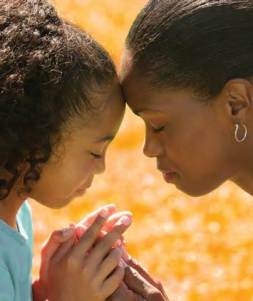
And I know you love them more than I do. That they are YOUR children first, last, and foremost.
God, Thank You for giving me the privilege of letting me be part of their lives; for allowing me to share their hopes and dreams, their failures and their struggles; their smiles and their tears. Thank you for their unique interests and personalities. Thank you for their laughter, and their questions. Thank you for their hugs, and their pouts, and more questions…
Father, help me to see them with your eyes– not through the lens of my own hopes or expectations; or my inadequacies and fears–help me to see who they are, and who you created them to be. Help me to help them to see how special they are in your eyes.
Help me to honor these children by not dishonoring the mother who gave them birth. May I never cause her children to despise her–or themselves– because of what I say about her. But help me to protect these precious children from anyone–anyone– who would hurt, abuse, exploit, or endanger them. May our home be a safe place to learn love and forgiveness and healing in a world of broken families.
Help me to honor my husband as the leader in our home. Help me to model how to be a true “help-mate” and partner– not a nag; nor a dishrag–a strong, compassionate, supportive, and respectful team player.
Help me to foster good relationships among all the children of this household– to love them each differently, and yet the same. To be fair to each individual, giving them guidance and “space” according to their needs. To do and say all in my power to help each child feel secure in our love and secure in their “place” as part of this family.
Help me to forgive and ask forgiveness freely– through outbursts, baggage, fears, and tantrums– theirs and mine!
Most of all, help me to introduce each one to Your all-encompassing love, Your wisdom, and Your eternal care. May they see you in the things I say and do; in the way we love and forgive as a family; in the way we seek the best together.
I’ve always been intrigued by the story in John’s Gospel about the “woman at the well.” (John 4https://www.biblegateway.com/passage/?search=John%204&version=KJV). Jesus and his disciples are travelling through Samaria, and they decided to rest near Jacob’s well at the town of Sychar. The disciples travel into town for food, leaving Jesus alone at the well. A lone woman comes along, and Jesus asks her for a drink of water.
This would seem to be an ordinary encounter, but there are many clues that tell us a different story. The woman comments that Jews don’t ordinarily speak to or interact with Samaritans. But even more extraordinary, most Jewish men would not strike up a conversation with a lone Samaritan woman, unless he meant to insult her or proposition her. The very fact that she is coming to the well alone and near noon (the sixth hour) puts her at a distinct disadvantage– most of the women would come early in the day to draw water, where their numbers offered protection and support, and the heat of the day would not add to the burden of carrying the water back home.
At first, this woman seems both suspicious and dismissive of Jesus. Why is he asking for a drink of water? Does he want more than just water? Does he mean her harm? He seems thirsty, not threatening– but is he safe? Then Jesus throws a curve ball– he claims to HAVE water that brings total satisfaction and life. Water far better than any of the water he has just asked for! The woman’s tone changes from suspicious to sarcastic. And then, Jesus drops the bombshell– “Go, call thy husband, and come hither.”
Aha! Here it comes… The woman admits that she has no husband. She has no protector, no status. NOW this Jewish man, this stranger, will take advantage. Or he will make improper advances. Or he will despise her even more. But instead, Jesus reveals her darker secret– she has had five husbands, and she is with another man who is not her husband. Maybe he is someone else’s husband. Maybe he refuses to marry her. Maybe he treats her badly– this man who lets her come to the well at midday with no protection and no helper. Maybe the five husbands all died; maybe she has been divorced or abandoned time after time. Jesus knows all this– yet he doesn’t call her names or look at her with disgust. He even commends her for telling the truth!
I don’t know about you, but I’m not sure I would want to meet a stranger who know that much about me. I don’t want to be reminded of my failures, my bad choices, or my past sorrows or shame. Yet this was the heart of the woman’s testimony as she went back into town. “Come, see a man, which told me all things that ever I did: is not this the Christ?”
For years, the profound nature of this encounter was lost on me. What is so exciting about someone who knows your dirty laundry and tells it back to you? There are magicians and illusionists, fortune-tellers, and charlatans galore who attempt to do such “readings.” How is it that this woman’s life could be transformed by such an unlikely and disturbing encounter? Why would she be so eager to share this encounter with all the men (or people) of her town– people who probably despised her?
Because an encounter with Jesus is an encounter with pure and holy compassion. Jesus KNEW the very worst about this woman. He could have shunned her or avoided her. He could have railed at her about her lifestyle or her past. He could have treated her shamefully. Others almost certainly had. But Jesus didn’t just see all the things she had done, or all the things that had happened in her life. He saw HER. He spoke TO her, not at her or through her, not down to her, but face-to-face, and eye-to-eye. Knowing all about her status, he came to HER for help–knowing that she had something of value to offer–not to “put her in her place,” or use her, or demand that she serve him. Jesus welcomes us into the safety of His compassion, so that no matter what we’ve done or what’s been done to us, He looks us in the eyes and wants to be part of our story– part of “all that ever” we WILL do! And THAT is life-changing!
How many people will I encounter today who are outcast, beaten down, shunned, and mistreated? What kind of encounter will it be? Will I see “all that ever they did” and dismiss them as unworthy of my attention? Or will I see THEM–uniquely created by God for a purpose; loved beyond all that I can imagine? Can my friends and family, neighbors and strangers feel safe and loved knowing that I know everything about them? Is it “Safe” to meet me at the well? I pray that God’s love will spill out and overflow to others as I go through the day. May He do the same through you.
Yesterday was a roller-coaster ride–pain, annoying interruptions, difficult encounters, successful ventures, bad moods, beautiful skies. And I almost forgot to write this post. It was just one of “those” days.
I am comforted by three things, though:
God’s love is never a roller-coaster. It is steady, eternal, and extravagant. Even on days when I can’t feel it or turn my back on it, God’s love surrounds me. No matter what the circumstances; no matter what I’ve done or what’s been done to me, God’s love never changes– it never falters, it never diminishes. He loves me just as much as he would on a perfect day; just as much as He has on my “better” days. God’s love is not based on what kind of day I might be having. It is based on WHO HE IS!
Jesus had days like this, too– he KNOWS what I’m going through. He knew pain, frustration, misunderstandings, betrayal, loneliness, grief, joy, struggle, success, and even “failure” (at least in the eyes of those around him). Some days, it feels like no one understands; that no one wants to listen. Jesus was a great listener during his time here; better than any of his friends or family. And when no one wanted to listen to Jesus, he simply found time to get away and talk with the Father. What a great example for us to follow. Better yet, Jesus is always on call to listen and advocate FOR us to the Father. And the Holy Spirit gets involved, too, helping us find words and expressions when we pray. God made us. He understands our weaknesses. He doesn’t condemn– He stands ready to help!
God is Alpha and Omega. He is eternal, and He is God of the Past, Present, and Future. Today may be an awful day– or a wonderful day. Tomorrow is a mystery to us. Yesterday tends to haunt us. But God is present in all three times at once. Nothing takes Him by surprise or causes Him to wallow in worry or regret. And that should give us courage to live in the present (even if it seems chaotic or frustrating), knowing that God’s plans and timing are for our Good. Even if we “mess up” in the present, God has the power to redeem and renew our future– if we let Him.
My wise Mama told me there would be days like this–she knows from experience. And she also knows all the ways God is ever-present and ever-ready to give wisdom, courage, and comfort. Today, I want to pass along a little of that wisdom– just like she passed it on to me. I hope your day is not the kind of roller-coaster I had yesterday. But even if it is: God Loves you, He knows what you’re going through, and He is eternally present and powerful to give you all that you need to get through.
112 Praise the Lord! Blessed is the man who fears the Lord, who greatly delights in his commandments! 2 His offspring will be mighty in the land; the generation of the upright will be blessed. 3 Wealth and riches are in his house, and his righteousness endures forever. 4 Light dawns in the darkness for the upright; he is gracious, merciful, and righteous. 5 It is well with the man who deals generously and lends; who conducts his affairs with justice. 6 For the righteous will never be moved; he will be remembered forever. 7 He is not afraid of bad news; his heart is firm, trusting in the Lord. 8 His heart is steady; he will not be afraid, until he looks in triumph on his adversaries. 9 He has distributed freely; he has given to the poor; his righteousness endures forever; his horn is exalted in honor. 10 The wicked man sees it and is angry; he gnashes his teeth and melts away; the desire of the wicked will perish!
My grandmother would have celebrated her 108th birthday today. I’m confident that she IS celebrating today– but she no longer has to count birthdays, or worry that this one might be her “last.” She passed into eternity more than 25 years ago. But she and my grandfather left a legacy of faith, hope, integrity, and prayer that lives on. It is a quiet legacy– my grandparents were not “important” people–they worked hard, lived a simple lifestyle, and never made a showy practice of their faith. But they lived it in such a way as to leave others with a glimpse of what steadfast faith looks like.
Grandma was born just a few short weeks after the sinking of the Titanic. She lived through two World Wars (one of which kept her separated from her husband, working in a factory, and raising two young girls). She lived through times of war, times of riots and uncertainty, and times of disease and pain. She knew what it was to struggle and lose. She was born before women could vote. She and my grandfather lived through the “Great Depression,” picking up whatever odd jobs they could, and sometimes not having enough for rent or food. But she also knew incredible joy and satisfaction. She knew what it was to be loved and to give love. She knew the joy of seeing a job to completion, and of using her talents and skills to help others. Most of all, she and grandad shared an incredible faith– one that had been tested many times– in God’s goodness, His provision, and His faithful protection. They lived in circumstances that would cause many to fear. But I never remember Gram being frightened–she wasn’t oblivious to bad news and difficult circumstances–but she faced them with confidence and resolve, the kind that gave hope and courage to everyone around.
My grandparents moved a lot. I mean, A LOT! They probably moved 50 times (at least) during their 62 years of marriage. Sometimes, they moved because Grandad had “itchy feet.” He liked change; he liked to have new projects to tackle; he liked to feel “free.” He loved moving into a “fixer-upper,” or renting a place with a run-down yard. But sometimes, they moved because they had to. They moved a lot– but they were never “moved” from each other, from their family, or their faith. They didn’t lose hope; they didn’t shift opinions based on their circumstances; they didn’t break promises or end friendships.
Psalm 112 gives a wonderful description of a “righteous” person. Not a self-righteous person, and not a perfect person (as none of us are perfect). But it is a great picture of the kind of legacy my grandparents left behind. They were generous– not just with money, but with gifts, work, time, hospitality, and words of encouragement and hope. They were rock-solid in their integrity– they went above and beyond not to cheat or lie or complain or shirk duties. In all their struggles (and in their good times) they never lost sight of God’s Goodness and Sovereignty.
My prayer today is that I would pass along such a legacy; such a witness. God is faithful, He is good, loving, and kind. He is never far from those who call on His Name, and He is able to deliver us from all our struggles. I am so grateful that, in addition to all the other blessings I take for granted, God gave me amazing grandparents. I hope He brings such people into your life today, and equips you to be such a legacy-builder, as well!
I have known some excellent fathers– including my own father and my husband. Fathers who do their best to provide for, pray for, protect, and prepare their families. Fathers who show patience, perseverance, wisdom, and selflessness.
But I know this isn’t the case for everyone. I have also known some wicked fathers– fathers who are physically, verbally, and mentally abusive toward their wives and children. Fathers who abandon their responsibilities, and leave behind a legacy of need, chaos, anger, and despair.
Throughout the Bible, God is portrayed as a Father. Not as a “man”– Jesus took on flesh and became a man– but the Triune God exists as Father, Son, and Spirit. God has all the characteristics of a perfect father. God also embodies all the characteristics of a good mother. But there is something about Fatherhood that God particularly wants us to learn and understand.
When God chose Abram for His special covenant, Abram’s name meant “exalted father.” But Abram was childless. God chose someone whose name had no meaning (or an ironic meaning), and changed it– not a lot–he added an “ah”, so that Abraham’s name meant “father of many” or “father of multitudes.” I don’t think it was any accident that God chose a man named “Abram,” or that He changed his name only slightly. God chose Abraham, not because he was a father, but so that he could become a father– to many! It was as a father (to Isaac, but also to Ishmael and all his other sons and descendants) that Abraham was exalted and revered.
But Abraham was not a perfect father– far from it! God gave us the story of Abraham, and drew attention to Abraham to help us learn the importance of GOD as our Father. Abraham was willing to give up his heir– the son of God’s promise– because Abraham was a “son” of God before he was a father to Isaac. https://www.biblegateway.com/passage/?search=Genesis+22&version=NIV
Even though I have known some excellent fathers, I know of only one who is perfect. And He isn’t someone else’s father, that I should be envious, or discouraged. He isn’t only “my” father, that I should be smug. He isn’t my father by birth, that I should make little of His sacrifices or His promises– they are not given out of duty or a sense of genetic obligation. He is OUR Father– He invites all of us to become His children. He lavishes love and grace, sheds tears and aches, sacrifices and pursues, rejoices and grieves– for and with every soul.
When Jesus taught His disciples to pray, He wasn’t giving them a rote prayer to memorize, but a pattern. https://www.crosswalk.com/faith/prayer/the-lords-prayer-be-encouraged-and-strengthened.html If you look through the Gospels at Jesus’ other prayers you will see it–He always begins by addressing His Father. For the group of disciples, He began with “Our Father.” Jesus, who could have claimed sole son-ship, made it clear that He (as Son with the Father and Spirit) desires this amazing relationship– more than power, more than honor, more than life! And God the Father is not a man or a mere mortal– He is Holy, Perfect, Eternally Loving and Eternally Sovereign!
Sunday will be Mother’s Day. People are already talking about how this year will be “different” because of COVID-19. They say it will be more difficult because of the social distancing measures in place. And it will be for many families. There will be few family gatherings, few long and happy discussions around a dinner table, fewer flowers, fewer hugs…Many will still have the opportunity to see their mothers/children via skype or zoom or through a window. Many can still hear a familiar and much-loved voice over the phone, and send messages via text, email or even a letter or card. But it’s not the same. There is something about a mother’s presence– her touch, her voice, her smile, the subtle scent that belongs to no one else– that we cherish and celebrate.
But for many people, this Mother’s Day will be no different. Sadly, there are many who will spend Mother’s Day alone. There is a visceral, painful place– a gaping wound– where there is no “Mother” on Mother’s Day. Maybe it’s caused by death–either the death of our mother, or the death of our child/children. Maybe it’s some other wrenching separation– Alzheimer’s, a ruptured relationship, addiction, mental illness, abandonment, deployment, rejection… We miss what once was, or we miss what we never had. COVID-19 may bring this horror to some this year, and it may leave some with that horror for years to come, but the pain and loss is no different for being caused by a virus. The pain of losing (or not having) a Mother runs deep. It may be felt more keenly on this day, but it aches and gnaws every day. Mothers give life. They nurture. They are the safe arms in which babies find peaceful rest (..eventually). They are the kissers of boo-boos; the proud recipients of our first attempts at writing, and drawing; our first audience for concerts and dances; our first teachers and nurses, police officers, drill sergeants, and life coaches; often our first playmates, too.
For many years, I have lived on “the other side” of motherhood. I am a daughter– blessed with an amazing, kind, strong, wise and Godly mother. I cherish the relationship we have, and look forward to the time when I can visit with her in person, instead of over the phone. She spent long nights rocking me to sleep; hours praying and crying by my hospital bed when I almost died as a toddler; listened patiently while I ranted and railed in teenage rebellion; encouraged me when I was exhausted from work and frustrated about living alone; and taught me the joy of spending time with God and loving others. And I want to honor her every day for the Godly example she has been to me and to others.
But I have spent most of my adult life outside the experience of motherhood, watching others with tiny arms wrapped around their necks, others kissing boo-boos and receiving artwork, others taking pictures of their graduating seniors and swapping stories with other moms. And, I have been reminded– sometimes in subtle ways, sometimes with contempt–that I do not “belong.” “You don’t know what I go through.” “You don’t understand.” “Who do you think you are to tell me about my daughter? You’re just her teacher. I’m her MOTHER!” “You can’t tell my children what to do.” None of these statements are wrong– but they hurt. And most of them come from someone else’s pain– their fear of failure, their frustration, their guilt, even a lack of sleep or a migraine…
Because of my experience, however, I have learned two things– a greater appreciation for my own excellent mother; and a new appreciation for the role I have been allowed to play as an “Other.”
Mothers are vital, but they are not perfect, and, especially where they are missing or rejected or removed, the world needs Others. Women (and men) who will stand as surrogates, substitutes, and valued helpers. Sometimes it is a thankless job; often it is temporary, even momentary, and unexpected. Throughout our lives, there are Others who inspire us, who have our backs, who cheer for us through track meets, or at dance recitals, or spelling bees. Others who may not kiss boo-boos, but patch them up in the moment. There are Others who are the first to spot our hidden potential, or warn us of dangers that no one else has spotted. Others who pray for us, cry with us, and share our smiles. Others who buy Girl Scout cookies, or magazine subscriptions, lemonade, or raffle tickets.
It was not God’s will for me to be a Mother. I have been blessed in recent years to be a step-mother and -grandmother, and I adore my kids and grandkids. I am so grateful for the mothers and others who shaped their lives, and the honor of being part of their families. But God has also given me a lifetime of being an Other. I may not have the “normal” experience of Motherhood, but I’ve had my share of doubts, failures, “bad” days, and sleepless nights. And I’ve been blessed to get to know hundreds of children– through school, Bible School, Sunday School, mission trips, Story Hours, school visits, Summer Reading, camps, baby sitting, extended family, and more.
If you are a mother– celebrate Mother’s Day this year. There are millions who have been denied the honor. And many who have lost the privilege.
If your Mother is still alive, but you can’t be with her– celebrate Mother’s Day this year. If you can’t be together in person, make an effort to be together in word and spirit. Flowers are nice; a fancy meal is fine, too, but your time– listening, sharing laughter and memories–it priceless. There will come another year when you won’t be able to be with her– and no phone line or video chat will be able to bring her closer. If your mother is alive, but your relationship is strained, you can still celebrate Mother’s Day. Use this day as a starting point to move forward– some relationships can be repaired if you are willing to take a first step. Others need closure. All relationships need forgiveness– for YOUR sake.
If you are missing your mother or have no mother–celebrate Other’s Day this year. Look for the people who have encouraged or uplifted you– aunts, neighbors, teachers, college roommates–let them know they’ve made a difference.
If you are not a mother– and even if you are– you are someone’s Other. Celebrate the opportunity to be the best Other you can be. Someone needs an Other today!
But then, he does three important things: He recounts what he knows of God’s character, he waits, and he hopes.
Sometimes, when I cry out to God, I expect God to reveal Himself to me with an immediate and positive answer. And, occasionally, God does answer prayer with a dramatic and instant result. But most of the time, God answers first with silence. Not because He is cruel or uninterested or too busy to acknowledge my cry. He gives me time to reflect– on His nature, and the nature of my need. And He gives me time to find peace and trust in the middle of the storm.
I spent much of yesterday crying out– I am frustrated with the uncertainty surrounding COVID-19. I am angry at the misinformation and conflicting reports; I don’t know what to believe about staying put or venturing out–is it allowed? Is it safe if I wear a mask? Can I go to the park or beach? When can I re-open my shop? Can I make the payments until it can be re-opened? When can I safely see my family and friends again? Will it be safe to hug them? And I am frustrated with the way I see people treating each other– yelling, screaming, eager to condemn everyone else’s behavior while justifying their own. And I find myself saying and doing the same thing from the relative safety of my computer screen– after all, I can’t yell at anyone to their face if I can’t leave the house, right? But I can let my 300 closest friends know how heartless and selfish they are if they don’t see things my way! They’re KILLING people! They’re betraying family members! They’re living in fear! They have no compassion! And I cannot make them do what I think is right!
But when I stop the crying and carrying on, and justifying, and finger-pointing; when I stop to remember who God is, and who I am, I remember that God IS attentive. And not just to my frustration, but to everyone’s needs– the person who is living in terror; the person who is suffering pain, grief, agony, and loss; the person who is defiant and uncaring and angry. God is attentive, but He is also overflowing with mercy. If He kept records– if He only looked upon mankind to find evidence of our guilt or to pour out shame and punishment– who could stand? Who would have the authority to tell God how He should direct the universe? Who could say that they were more capable of dispensing life and death, health and sickness, mercy and justice? Would I? It is no little thing to cry out to the God of the universe. And yet, God listens attentively to our every cry. Especially when we cry out to Him for mercy, for wisdom, for peace, and for healing. His answer may not look like what we expect, but He never fails to listen in Love.
And as I contemplate God’s power, wisdom, compassion, grace, and authority, I can wait. And that doesn’t mean that I sit in a lotus position and stop seeing the pain and chaos and death. Or that I count to ten and hold my breath. Or that I set a timer and think happy thoughts for 20 minutes. No. I wait like a watchman– like a sentry waiting for whatever may happen– alert and ready to do my duty. And I wait like a watchman for the dawn– for the light of day to see clearly; for the end of my watch, when there will be rest.
This season is difficult, but it will end. It will give way to a new dawn– with new challenges! But just as the Psalmist tells Israel, I know I can put my hope in the Lord, for “with the Lord is unfailing love and with him is full redemption (v. 7). If I cry out, knowing that God is willing to listen and able to save, but I don’t stand firm in hope, I can still be swept away by the winds of doubt and the current of angst.
139 O Lord, You have searched me and known me. 2 You know my sitting down and my rising up; You understand my thought afar off. 3 You [a]comprehend my path and my lying down, And are acquainted with all my ways. 4 For there is not a word on my tongue, But behold, O Lord, You know it altogether. 5 You have [b]hedged me behind and before, And laid Your hand upon me. 6 Such knowledge is too wonderful for me; It is high, I cannot attain it.
7 Where can I go from Your Spirit? Or where can I flee from Your presence? 8 If I ascend into heaven, You are there; If I make my bed in [c]hell, behold, You are there. 9 If I take the wings of the morning, And dwell in the uttermost parts of the sea, 10 Even there Your hand shall lead me, And Your right hand shall hold me. 11 If I say, “Surely the darkness shall [d]fall on me,” Even the night shall be light about me; 12 Indeed, the darkness [e]shall not hide from You, But the night shines as the day; The darkness and the light are both alike to You.
13 For You formed my inward parts; You [f]covered me in my mother’s womb. 14 I will praise You, for [g]I am fearfully and wonderfully made; Marvelous are Your works, And that my soul knows very well. 15 My [h]frame was not hidden from You, When I was made in secret, And skillfully wrought in the lowest parts of the earth. 16 Your eyes saw my substance, being yet unformed. And in Your book they all were written, The days fashioned for me, When as yet there were none of them.
17 How precious also are Your thoughts to me, O God! How great is the sum of them! 18 If I should count them, they would be more in number than the sand; When I awake, I am still with You.
19 Oh, that You would slay the wicked, O God! Depart from me, therefore, you [i]bloodthirsty men. 20 For they speak against You wickedly; [j]Your enemies take Your name in vain. 21 Do I not hate them, O Lord, who hate You? And do I not loathe those who rise up against You? 22 I hate them with [k]perfect hatred; I count them my enemies.
23 Search me, O God, and know my heart; Try me, and know my anxieties; 24 And see if there is any wicked way in me, And lead me in the way everlasting.
We can’t hide from God. We can ignore Him, deny His existence, even rage against Him. But we cannot escape His Spirit. We cannot hide who we are or what we think from Him. And we cannot flee from His goodness or mercy; we cannot run beyond His ability to restore us, heal us, or save us. He knows the worst about us, and He calls us to the very best we can be. Which begs the question– Why would we want to escape from God? Why do we try to hide from Him? What is it about God that would give us a reason to flee?
There are many terrifying things in this world–right now, we are faced with a global pandemic; a plague that brings sickness and death. Now THAT is something worth hiding from! Many of us are “sheltering in place,” trying to hide out until it is safer to interact with others. The disease seems to be everywhere–but it really isn’t– it cannot go where there are no hosts to carry the virus. It can be spread wherever we find other people who are infected, or where the virus lingers on surfaces. The disease does not seek us out or come searching for us if we stay put. Unfortunately, “sheltering in place” comes with its own dangers. We cannot survive long in a bubble. We are interdependent. We need food, medicine, fresh air, and interaction with family and friends to survive and thrive. Hiding away from a tiny virus is only effective in the short term. And there are other diseases from which we cannot hide– cancer and heart disease, and even other viruses that are active, but haven’t been traced or identified.
There are other terrors that we try to escape by fleeing– hurricanes, fires, floods, war, etc. And we may escape immediate danger from such terrors–if we have advance warning or if we have the means to escape. But there is no place of absolute safety: no place on earth where such dangers cannot exist. There is no Utopia– no earthly dwelling, community, or settlement where there is only goodness, harmony, peace, and plenty. There is no place to hide, and no place of escape.
It is understandable that we should want to hide from danger or flee bad things, even if such escape is impossible in life. But why should we wish to hide from a loving and merciful God? Is He as bad as COVID-19? Is He as threatening as a hurricane or an air raid?
Certainly, He is as powerful (and even more) than any of the dangers we fear. God has the power, and the authority, to judge, punish, and destroy all who live on the planet. He has the power to obliterate all of His creation, and none of us could stop Him or challenge His right to do as He pleases. And if we should challenge God’s authority, we would be wise to want to run away, hide, or escape the consequences of such foolishness.
Adam and Eve tried this long ago. After they sinned by eating the Fruit of the Knowledge of Good and Evil, they hid from God. And God’s response was not instant obliteration. He didn’t storm through Eden, destroying everything in His righteous anger before torturing Eve, making Adam watch in horror before He killed them both. Nor did God negate His Holiness by changing the consequences of sin. Death DID enter creation– along with disease, pain, guilt, envy, hatred, lying, greed, destruction– they all exist, persist, and continue to plague all of God’s creation to this day.
But God’s first act–His first words to Adam and Eve after their rebellion– was to seek their presence. God came to walk in the Garden; to meet with Adam and Eve. He called out to them, “Where are you?” He wasn’t asking because He didn’t know that they were hiding. He knew where they were, and why. And even in assigning their punishment, God did not throw extra guilt and recrimination at the fallen couple. He didn’t shout, “How could you do this to ME?!” “How dare you!” “I wish I’d never made you!” “You’re worthless. What a waste of time and energy. Get out of my garden! I never want to see you or hear from you again!”
God’s Spirit is always seeking reconciliation, communion, restoration, and love. God is Holy, and God is Merciful. Holiness desires Whole-ness. Mercy desires Peace. God pursues us, not because He wants to infect us or devour us or destroy us– God wants to hold us, heal us, and give us Life.
The danger is not in God’s presence, but in our ability to reject it. God is everywhere, but not everyone will see Him, accept His authority, or welcome His mercy. Some will spend a lifetime hiding and fleeing, only to discover that God will, reluctantly, give them what they want– an eternity without Him. Without Grace, without Love, without Peace, without Wholeness, without Hope.
That is a fate far worse than waking up to “shelter in place,” or even suffering through a virus that can separate us from loved ones for weeks, months, or even a short lifetime.
There are many things worth fleeing in life– But we can find joy, hope, and peace in the presence of a Loving and Omnipresent God.
I have a friend who is very keen to study if prayer “works.” His theory is that if someone were to measure the number of prayers said in various regions of the world during the COVID-19 pandemic, and compare those numbers to the rates of infection, numbers of deaths, etc, for the same regions, one could “prove” whether or not prayer is effective.
I don’t think my friend is being sarcastic or overly cynical– I believe he is sincere in wanting to study prayer. I accept his desire to study prayer–to quantify it, even to “prove” it, or legitimate it for those who are skeptical. Unfortunately, he wants to study it as an observer, and not a participant, and he wants to conduct a physical study of a metaphysical practice.
Scientists are conducting several studies during this time, to see what “works.” Does social distancing “work” better than building up “herd immunity?” Is there a treatment that works better, or faster than others? Can we develop an effective vaccine? What practices– social, hygienic, medical, political– might help mitigate the spread of future viruses? Even these studies will not be definitive. The results will depend a great deal on methodology, and the conclusions will be open to interpretation.
There are additional problems in studying whether or not prayer “works” or not, because prayer is metaphysical. Here are just a few of the “measurement” problems:
How do you measure prayer? By length of time? Number of words used? The number of prayers prayed by each person over a certain period of time?
Do you count ritual prayers? Mantras? Meditation? Unspoken “thought” prayers? Recitations? Prayers spoken “in tongues” or in ecstatic states?
Do you count corporate prayer as a single prayer or by the number of people in the group?
What about social media? Do you count all the people who say they will send “thoughts and prayers?” Do you count those who say they “will pray,” or only those who are “praying,” or “praying now.”
If you are testing by geographical region, how do you account for people who are praying for others around the world?
How do you measure the efficacy of prayer (as opposed to other factors)? If a region has a higher mortality rate, even though many people prayed, does that mean that prayer “doesn’t work?” Or does it mean that the mortality rate would have been even more devastating (given other factors) without prayer?
More than just measurement problems, there are problems with the very nature of prayer that make such a study impossible:
Even if you could come up with a standard definition of “prayer” in order to get a count, prayer is not a physical substance or action. Prayer is not a “cause and effect” exchange. It is communication. If ten people say the same thing at the same time to the same person, it is not necessarily “more effective” than a single person-to-person exchange. If a thousand people pray to the same “god” who is not a god–“Mother Nature” or “The Force,” for example, it cannot be compared to a single person praying to a Loving and All-Powerful God.
God’s ways are not our ways. If we are measuring for one thing, God may be working for a different, unseen outcome. If more people contract the virus during the “study period”, we see that as “failure.” But God may be preparing that region to build up a resistance or immunity for a future outbreak. God answered prayer in a mighty way that we won’t see immediately. I have known a great many people, and prayed for a great many people who have not received physical healing in this world. They have suffered. They have died. But that doesn’t mean that prayer “didn’t work.” Their sufferings and eventual deaths have often brought about unbelievable works of God– salvation, families restored, friends discovering renewed purpose, strengthened efforts to fight disease, injustice, poverty, etc., and communities coming together in unity and hope.
Prayer is not about measurable results. Prayer is a heart-cry to a caring Creator. It doesn’t just involve asking for healing or miracles or “wish fulfillment.” Prayer involves thanksgiving, worship and adoration, repentance and confession, sharing burdens, asking questions, and building an eternal relationship with God Almighty.
In the end, any study results will be interpreted differently by different people. Some people will be convinced by numerical comparisons to re-consider their view of prayer. Others will never be convinced, no matter how much “evidence” someone else presents.
Prayer isn’t like taking an aspirin, or holding a protest rally, or doing research for a cure. Prayer isn’t about “winning the battle.” It isn’t about “what works.” It isn’t about “what” at all. It’s about WHO.
God “works.” God is sovereign, loving, and wise beyond what we can imagine. His ways endure. And He has vanquished the power of death and disease. Yes, it can still touch us in the here and now, spreading havoc and pain and mourning. But it will never triumph over Hope, and Life, Truth, and Faith. And when we pray, we connect to the source of all that is Eternally victorious! Beyond ANY measure!
GOD–Almighty, Bountiful, Compassionate, Deliverer, Eternal, Faithful, Glorious, Holy, Incomprehensible, Just, Kind, Loving, Merciful, Noble, Omnipresent, Perfect, Quick to listen, Redeemer, Sovereign, Trustworthy, Unchanging, Victorious, Wise, EXcellent, Yahweh, Zealous. Father, let me fix my eyes, my mind, my soul, on YOU. Let me see you; let me stay close by you and be true to you. Let me reflect you and share your glory today.
LOVES–Adores, Blesses, Cares, Delights, Encourages, Favors, Gives, Holds, Intercedes, Justifies, Knows, Listens, Ministers, Nears, Ordains, Protects, Quiets, Reveals, Sanctifies, Treasures, Understands, Values, Watches, EXhorts, Yearns, Zeroes in… Jesus, your love for me is beyond anything I can imagine. I don’t understand it, I don’t deserve it, and I can’t be separated from it. It hems me in and holds me close– even when I don’t see it. I thank you and praise you for BEING love; for showing love; for sending your Son; for showering me with your mercy; for showing me how to share your love with others.
YOU. No long alphabet list– just let that sink in. God LOVES you. He adores and pursues YOU. He wants to spend an eternity with YOU– helping you become the YOU you were always created to be! Lord, let whoever may read this to know and experience the power of Your love, today. May they be wrapped in Your mercy and grace. May they be strengthened and encouraged in the warmth of Your invitation to COME to You.