“Do This in Remembrance of ME” Remember My Creation. Remember My Life. Remember My Humble service. Remember My Death and Resurrection. Remember My Victory. Remember I am Coming Soon!
I’ve spent the past few days revisiting one of my favorite movies, The Princess Bride. The movie is based on a “fractured” fairy tale, written by William Goldman. In it, a spoiled young farm girl falls in love with a lowly farm hand. When he leaves to make his fortune, the girl promises to wait for his return. When word comes back that he has been killed, she swears that she will never love again, and becomes a pawn of a wicked prince.
** SPOILER ALERT**
Of course, her true love, Westley, has not been killed, and when he finally finds Buttercup, she has agreed to marry the wicked prince, who has had her kidnapped and plans to kill her. “Why didn’t you wait for me?, ” Westley asks. “Well..you were dead,” replies Buttercup. “Death cannot stop true love. All it can do is delay it a while, ” says the intrepid Westley, to which Buttercup replies, “I will never doubt again.”
In true fairy-tale fashion, Westley and Buttercup must face many obstacles, including all the dangers of the “fire swamp,”capture, torture, a fake marriage ceremony, and Westley being “mostly dead”– again– before they can have their happy ending. But in the end, “true love” wins over all trials and obstacles, and Westley and Buttercup “live happily ever after.”
We live in a post-modern age, where people tend to sneer at notions like fairy tales, true love, and “happily ever after.” We are more likely to echo the words of the bitter Dread Pirate Roberts, who tells Princess Buttercup that “life is pain, highness, and anyone who tells you differently is selling something.” Ironically, the Dread Pirate Roberts is really Westley in disguise. His life is filled with painful trials, and “inconceivable” obstacles, but he perseveres, and his “happily ever after” makes all that came before fade from memory. Because, in the end, death CANNOT stop true love. It may take a few miracles, and lots of patience, forgiveness, and faith, but true love “bears all things, believes all things, hopes all things, endures all things” (1 Corinthians 13:7 ESV)
God’s love is true– it is sure and enduring. God’s presence goes with us even into the valley of the shadow of death–even if the shadows and darkness block our sight; even if death seems sure to win. His rod and staff are not tools of torture and dread, but reminders that He is there to guide us, even if we cannot see His face in the gloom.
Life is filled with pain–and Westley was right; anyone who tells you differently is selling you something. God doesn’t promise that our path will always be on smooth ground in sunny pastures. We may face separation from loved ones, flame spurts and quicksand, betrayal by friends, battles with giants, wicked rulers, even rodents of unusual size. But in each of these situations, we have God’s very presence to comfort us and help us endure to the end. And the “happily ever after?” It is eternal and glorious like nothing we have ever known or even imagined.
Fairy tales are not real– but God’s word is. The very reason such tales and myths and legends endure is because they echo what we know to be true– Truth, and Love, and Justice, and Honor, and Hope, and Faith–they are eternally enduring and strong. We recognize the truth that “Death cannot stop true love– all it can do is delay it for a while.” https://www.biblegateway.com/passage/?search=Romans+8%3A31-39&version=ESV
One of my favorite movies is “The Princess Bride.” Based on a modern “fractured” fairy tale by William Goldman, it tells the story of a young couple whose “fairy tale” romance is complicated by his death, her kidnapping on the eve of her wedding to an evil prince, and rodents of unusual size…
One of the kidnappers is a Sicilian mercenary named Vizzini. Vizzini brags about his intellect, and claims to know more than anyone. He also claims that his plot to kidnap Princess Buttercup is perfect to the last detail. But when a mysterious stranger begins following them, and foils each of Vizzini’s efforts to shake him, Vizzini grows more and more rattled. His brilliant plan turns out to be less than perfect. In fact, the mysterious stranger (who turns out to be Princess Buttercup’s long-lost true love) succeeds in rescuing the princess and defeating Vizzini in a battle of wits.
As each of Vizzini’s efforts fails, he declares it is “inconceivable” that the stranger should win. Even in the face of clear evidence, Vizzini finds it unbelievable that his plan should have failed–and failed again! Finally, one of the other kidnappers turns to Vizzini and says, “You keep using this word; I do not think it means what you think it means”.
I often hear people scoff at faith in God– “it doesn’t make sense.” “There’s no proof that God exists.” “How can you believe all those old myths–Noah and the Ark; Moses and the Red Sea; David and Goliath–they’re impossible in ‘real life’.” “It’s inconceivable!” “Stop saying all that stuff about God!” “Stop saying you’ll pray for me.” “Prayer is nothing more than wishful thinking.”
And it can be difficult to have faith, sometimes. We don’t ‘see’ what God is doing in our lives and circumstances.” We don’t understand the bigger picture. We don’t believe that God sees or hears us in the middle of our struggles. But God tells us time and time again that nothing is impossible for Him; that He knows all that happens, and that He works all things together for the good of those who follow Him (Romans 8:28). God is able to do “exceedingly, abundantly, above all that we ask or think..”(Ephesians 3:20)
Those stories in the Bible; those “unbelievable” stories we hear or read about miraculous healings and lives transformed…we can choose to ignore them, or scoff at them. We can, like Vizzini, claim that they are “inconceivable,” or try to explain them away while trusting our own knowledge and experiences to get us through life. We can ignore the wise counsel of others, ignore our conscience, and laugh in the face of danger. But in the end, we are human. We are fallible. We are not all-knowing or all-powerful. And we are not immune to sin and its poisonous consequences. The only chance of escape is to be rescued by someone who is “immune” to sin– our Savior, Jesus the Lamb of God.
It may seem “inconceivable” that God would part the Red Sea, or save Noah in the Ark; it may seem beyond belief that Jesus would be born as a human, live among people who denied Him, die on the cross and be resurrected on the third day, so that He could take away the power of sin and death for anyone who will trust Him. But it is precisely this Good News that has transformed the lives of millions of people throughout the centuries since he came.
It may seem “inconceivable” that God would listen to our “little” prayers and care about our every need– but He does! His Love may be beyond our ability to comprehend or explain– His power extends beyond our wildest imagination. But if we have faith– even as small as a mustard seed (Matthew 17:20)– we can experience God’s Love, Power, Grace, and Salvation in miraculous ways.
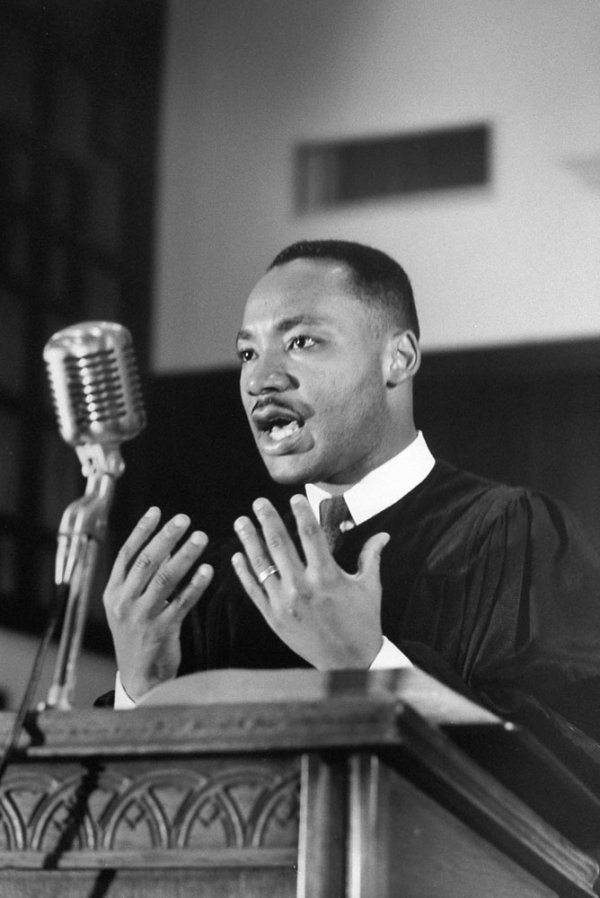
Last week in America, we marked two important dates. We celebrated the birth of a great hero, patriot, and statesman, Martin Luther King, Jr. And we marked the 47th anniversary of the Supreme Court decision, Roe v. Wade, which effectively legalized abortion across the land.
The life of Dr. King was marked by hardship, oppression, violence, and assassination at the age of 39. Dr. King was a brilliant student and gifted speaker. He led peaceful protests and civil rights marches calling for justice and equality under the law for all people. More than 50 years after his death, there are still issues of racial discrimination and racial tensions in this country. The disproportionate loss of life and liberty among blacks in urban areas has led to a new round of protests, some of which go under the name of “Black Lives Matter.” There is a feeling that, especially with the police and government officials, black lives don’t matter– that black lives are devalued and dismissed as less deserving of respect and protection.
In light of this, there has been “push back” from those who argue that “ALL Lives Matter”, or that “Blue Lives Matter” (blue for police who have become victims of mob violence and angry crowds who feel that the police are responsible for racism and corruption). The argument is that groups like “Black Lives Matter” are not so much about bringing awareness or promoting justice, but are meant to divide us as a nation and exact revenge for past offenses, slights, and perceived slights.
There is speculation about what might have happened if Dr. King had not died when he did. Would he have continued leading non-violent protests? Would the Civil Rights movement of the sixties gained more momentum under Dr. King’s leadership? Would our nation have achieved a new dawn of equality, freedom, and unity, greater and stronger than what we have seen in the last five decades? Would Dr. King be pleased with the progress we have made, or ashamed? Did his life make a difference? Yes. But was it “enough” of a difference? Does it matter to a young person of color growing up in Baltimore or Chicago that Dr. King spoke out, marched, and died for a dream that seems frozen in time and unfulfilled?
Just two days after our nation wrestled with that uncomfortable memory, we marked one even more controversial. In 1973, our Supreme Court ruled that no state could prohibit abortion. The decision also limited the ability of states to restrict abortion. Since that decision, an estimated 60 million Americans http://www.numberofabortions.com/ (not to mention infants around the world) have been denied the right by legal practice to be born. This is roughly equal to the number of people killed in World War II, though estimates of both numbers vary by source (https://www.nationalww2museum.org/students-teachers/student-resources/research-starters/research-starters-worldwide-deaths-world-war)
In looking at abortion, we see millions of lives who were determined NOT to matter. They didn’t deserve respect, protection, liberty, education, dreams, food, shelter…not even breath and a heartbeat!
Oh God– let us see life as YOU see it. Every life matters infinitely to You. You have created all life–unique, precious, priceless, glorious, fragile, and yet eternal. You walked among people, healed the sick and broken, reached out to the outcast and isolated, welcomed children, and brought the dead back to life. In Christ, you took on human life– breathed the air, knew joy and pain, weariness, hunger, and strife.
One life– every life– matters. It matters, not because we are important to the world, but because we are precious in the eyes of our creator. We celebrate the life of Dr. King, because we was considered important in the history of our nation. But God celebrated Dr. King’s life from the moment of his conception. God knit him together in his mother’s womb, just as He does for each of us. God knew the moment of Dr. King’s birth. He saw every tear, heard every laugh, felt every bruise that Dr. King experienced. And God knew the moment of Dr. King’s assassination. He knew the shock and horror it would be for his family. He knew that years later, we would quote Dr. King’s words and even argue about his relevance and impact. But Dr. King’s life mattered to God even if it had been a life of obscurity or failure.
Similarly, and incredibly, every one of those 60 million lives that have been lost to abortion “mattered” to God. He knew and loved them from the moment of conception. And He knew– He KNEW– that they would be aborted; thrown away and discarded by those who should have loved and protected them. And He LOVES those who killed them– their lives “matter” to God as well. Dr. King’s dream was that his children would be judged by the content of their character. God will judge us one day on that basis; but He offers to judge us by the content of HIS character, if we will trust Him to forgive us for the past, and transform us as we live for Him.
Your life matters to God. It has worth and meaning. You are infinitely precious– so much so that God sent His only son to live and to die for your sake. What an incredible love He has for you! What an incredible love He has for every person you will encounter today!
34 “A new command I give you: Love one another. As I have loved you, so you must love one another. 35 By this everyone will know that you are my disciples, if you love one another.”
Jesus was about to be tried and condemned to die. He was giving His disciples last instructions and reminders. But in the midst of it all, He gave this “new” command. I’ve read this passage dozens of times, and yet it struck me, possibly because we have just started a new year, that Jesus calls this a new command. Love one another. As if this was a revolutionary concept; as if it had never been spoken before.
So I began to search. ” You shall love the LORD your God with all your heart and with all your soul and with all your might. ” (Deuteronomy 6:5 ESV) “Do not take revenge on others or continue to hate them, but love your neighbors as you love yourself. I am the Lord.” (Leviticus 19:18) “So show your love for the alien, for you were aliens in the land of Egypt. ” (Deuteronomy 10:19)
Throughout the Old Testament, the Israelites are commanded to love God and to love their neighbors, especially to those who might otherwise know only hatred or injustice– enemies, conquered peoples, resident aliens, widows, orphans, etc.. Most often, the commands are given in negative terms– how NOT to treat others. “Thou shalt not steal; thou shalt not kill; thou shalt not commit adultery; thou shalt not bear false witness…”
There is nothing completely new about Jesus’ command in John 13, but it IS new– it is a positive command to show love for one another. And Jesus goes further– “As I have loved you, so you must love one another.” This goes beyond simply seeing that others are treated fairly within the broader society. Jesus washed feet. He went out of his way to speak to those who were despised and marginalized– tax collectors, prostitutes, lepers. He didn’t write a check to a non-profit charity and pat himself on the back. He didn’t share a political cartoon about Pharisees or the Roman Emperor with his followers or join the Jerusalem March for Jewish Rights–he challenged the Pharisees face-to-face about their unjust practices and healed the family members of Roman officials. He gave His life– not just on the cross, but in serving others’ needs throughout His earthly life.
Love One Another. It isn’t a suggestion. It is a command–one Jesus gave directly to His disciples. It is not a new command to the Church; but it is one we have not obeyed fully. We love those Christians in our small group at church, or those who share our politics, or those who look and talk just like us. Or we “love” those Christians who are struggling thousands of miles away– from our safe and comfortable lives thousands of miles away.
I find myself often reading this command, but trying to obey it the same way I look at the Ten Commandments– obedience by omission; obedience in the negative. “Thou shalt not offend. Thou shalt not intrude. Thou shalt not condescend.” But that’s where I stop. I don’t wash feet. I don’t visit the sick or disgraced. Sometimes I send a check or donate a box of unwanted items.
What would this new year look like if I followed this command more fully? What if, instead of just showing love to those I already like, or when it’s convenient, I reached out across town or across the globe to share my time, my heart, my resources, my skills, with those who need them most? What if I obeyed Jesus’ command to love those around me as Jesus has already loved me?
What if I dared to pray that God would bless others through me, instead of just asking that everyone would “be blessed.”
I was at worship yesterday. We sang some wonderful hymns and songs of worship. Still, I miss some of the “old” hymns we used to sing in the small country church of my youth. This was one of them:
In case the video does not show up, here are the words: Jesus calls us: o’er the tumult of our life’s wild, restless sea, Day by day His sweet voice soundeth, saying, “Christian, follow Me.” Jesus calls us from the worship of the vain world’s golden store, From each idol that would keep us, saying, “Christian, love Me more.” In our joys and in our sorrows, days of toil and hours of ease, Still He calls, in cares and pleasures, “Christian, love Me more than these.” Jesus calls us: by Thy mercies, Saviour, may we hear Thy call, Give our hearts to Thine obedience, serve and love Thee best of all. Amen.
Prayer is never just a one-way communication. We may not “hear” from God in an audible voice, but He calls us into communion with Him daily. He wants to hear from us; He wants to speak to us–through His word, through our experiences, through friends and neighbors and even chance encounters. We may not have a deep spiritual burden to bring before the throne of grace– does that keep us from needing to share a quiet moment with the lover of our soul?
Suppose the only time you ever spoke to your spouse was when you desperately needed her/his help? What would that say about your relationship? The same holds with our spiritual walk. God wants to speak to us; to have us notice the beauty of the sunrise, or the grace of moonlight in the mist. He wants to bring us hope and comfort in the stories and psalms of scripture. He wants us to share our nagging worries and our minor triumphs– not because He doesn’t know or cannot see–because He wants to share in our struggles and our joys, our deep grieving and our small amusements.
He wants all of this because of His great love for each of us. If we could just see His eyes light up with love when we walk into a room…and if we could hear the love in His voice– we would be undone. Someday, we will be– undone, and remade, and able to catch His eye without shattering in the light of that love.
O holy night! The stars are brightly shining It is the night of the dear Savior’s birth! Long lay the world in sin and error pining Till he appeared and the soul felt its worth. A thrill of hope the weary world rejoices For yonder breaks a new and glorious morn! Refrain: Fall on your knees O hear the angel voices O night divine O night when Christ was born O night divine O night, O night divine Led by the light of Faith serenely beaming With glowing hearts by His cradle we stand So led by light of a star sweetly gleaming Here come the wise men from Orient land The King of kings lay thus in lowly manger In all our trials born to be our friend. Refrain Truly He taught us to love one another His law is love and His gospel is peace Chains shall He break for the slave is our brother And in His name all oppression shall cease Sweet hymns of joy in grateful chorus raise we, Let all within us praise His holy name. Refrain
From /www.songsforteaching.com/christmas/oholynight.php
To the untrained eye, it was not a Holy Night– The streets of Bethlehem were crowded and dusty. The night, even if the stars were shining, was filled with noises and smells that fell far short of anything sacred or glorious. There were strangers clogging the city’s streets and inns and homes– extra animals to shelter, extra mouths to feed, extra waste everywhere. It was a weary world, it was in error and it was pining– but it was also noisy, angry, distracted by petty inconveniences and worried by chaos and upheaval and oppression.
There was nothing special about the night itself. It was NOT a Holy Night until Holiness arrived in the form of a squalling infant born to a teenage mother and a carpenter/stepfather who were compelled to beg for shelter in an unfamiliar city full of squalor and resentment. People had come from all over to be nothing more than numbers in an unpopular bureaucratic nightmare. This child might have been no more than a number to the governor of the region, or to the Roman Empire, or to the Herod, the hamstrung pseudo-ruler of Judea–but His coming split history in two; it redefined the value of a single, simple soul! This was the night when the creator entered His creation AS a member of the creation– a child among other children; a helpless baby in a fallen and depraved world, vulnerable to disease, cruelty, abuse, starvation, exposure and exploitation. This God/Man would see and hear, and smell and feel the ugliness of leprosy, poverty, hunger, homelessness, despair, grief, madness, war, slavery, loneliness, betrayal, and death.
In His lifetime, He had no home of his own. He built no monument, founded no schools or hospitals, fought no (physical) battle, and toppled no governments. But, in the years since that otherwise ordinary night, majestic cathedrals have been built and have stood for hundreds of years; nations and governments have been transformed; hospitals, clinics, shelters, sanctuaries, universities, and institutions have served the poor, the sick, the outcasts, the weary, the forgotten, and the lost. The world is still fallen– there is still injustice, slavery, weariness, sickness and sin around us. But, because of that night, we are not waiting in utter darkness–as the Apostle John writes:
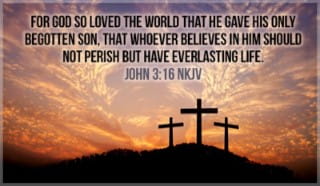
16 For God loved the world in this way: He gave his one and only Son, so that everyone who believes in him will not perish but have eternal life… 19 This is the judgment: The light has come into the world, and people loved darkness rather than the light because their deeds were evil. 20 For everyone who does evil hates the light and avoids it, so that his deeds may not be exposed. 21 But anyone who lives by the truth comes to the light, so that his works may be shown to be accomplished by God.
We live on the other side of that ordinary, Holy Night– we will never know the darkness of a time without a Gospel of Peace on Earth, Goodwill to Men–we are witnesses to the power of Divine Love in human flesh. We have reason to “fall on (our) knees” and “let all within us praise His Holy Name!”
A few months ago, I went to the theater to see the movie “Paul, the Apostle of Christ.” It was an excellent movie, not the least because I found so much of it relevant to what is happening in the world today. The movie was centered around Paul’s time in prison in Rome; the upheaval and persecution facing the early church, and the looming certainty that Paul would be martyred and his words and leadership sorely missed. The church in Rome was facing division– some were militantly opposed to the corruption in Rome under Nero, and wanted to form a rebellion. Others wanted to flee Rome in hope of supporting outlying churches, starting new churches, or just finding a safer haven. Still others were losing hope and wanted to give up or hide.
The movie also covered (in a series of flashbacks) scenes of Paul’s earlier life. I don’t want to spoil the movie for anyone who hasn’t seen it, but this part of Paul’s life is covered in the Bible, so I will stick to the facts presented there, rather than the drama from the screen…
Saul of Tarsus was both a Jew and a Roman citizen by birth. He had studied God’s word intensely his whole life, and became a Pharisee. He had studied under some of the greatest scholars of his age–in today’s world, he would have been one of the greatest legal minds of our time– a superstar in the arena of law, philosophy, and logic. Of all the people in Jerusalem and throughout the Jewish world, Paul KNEW right from wrong. He KNEW the words of God, the laws of God, the traditions of God’s people. The result of all that knowledge was an obsession with wiping out those people (Jews, especially, but also Gentiles) who followed Jesus of Nazareth and “The Way.” Saul was a man filled with righteous anger, and a zeal to have everyone conform to what was “right.” He was a man of power and influence– a man to be feared and respected. In his letters, we can still see some of that intensity and the way he has of arguing both sides to their logical ends. But something happened to Saul..something that changed his entire future, including his name.
Paul, the Apostle of Christ, was still a Jew and a Roman citizen. He was the same man who had studied vigorously and knew the laws of Moses and God’s words through the centuries written by prophets and historians and psalmists. But the Paul we see in scripture, while still bearing the intensity of his youth, is a man of gratitude and peace. Here is a man who works steadily with his hands for honest but meager wages compared to what he might have made as a Pharisee. He is a man who boldly faces down even Peter and James in Jerusalem, but who nevertheless takes orders from a council made up of former fishermen and tradesmen. Paul undergoes flogging, arrests, prison, cold, hardship, physical pain, poverty, and disgrace with the kind of stoic acceptance, and even joy, that makes him a great hero of the early church. Never once does he return to the anger that drove him to persecute others who did not agree with him. Instead, he is willing to be the victim of persecution at the hands of those he used to serve.
I was scrolling through Facebook the other night, and I chanced upon posts from two women I know. Both are about the same age, both mothers of five children, and both are practicing Christians. The first woman was posting about two recent difficulties faced by her family, and how God had been faithful and gracious in spite of a huge loss and a tense situation that could have turned into another tragedy. She spoke of God’s answers to prayer, and how their family was reminded of God’s goodness as people came alongside at just the right moment, and the loss was not as great as it might have been. I was inspired and encouraged by the way she saw God’s love, and gave credit to all who had helped them.
The second woman spoke in vicious tones about how she would not associate with certain Christians who hold political and social views she sees as hateful. She cursed fellow followers of Christ for being “anti-Jesus,” and condemned several of her early teachers and pastors. I read her remarks with great sadness, because I remember her as a younger woman, eagerly memorizing scripture and being a loving and encouraging example to others. I also read her remarks with pain, because I think she includes me in the “hateful” group based solely on the type of church I attend.
It is not my place to say that one woman is a “better” Christian than the other– on another day, their FB posts might cause me to think very differently. And God sees more than just what we post on FB or say in passing conversation–He knows our every thought and motive. So I want to be careful–these women, though similar in some superficial ways, lead very different lives and have very different experiences of following God. But I saw in their posts two ways of “seeing” Christ.
When Saul of Tarsus, in his anger and zeal, traveled toward Damascus intending to kill people he may have never met, he was already a crusader for Jehovah– ready to mete out justice against anyone who didn’t meet his standards. He KNEW all about God. He knew what it took to be righteous.
But when he actually encountered Christ– he was knocked off his horse, blinded and overwhelmed by a vision. And when Christ spoke to him, “Saul, Saul, why do you persecute me?” (Acts 9:4), Saul didn’t recognize the voice of the very God he so proudly served. Saul remained blinded for three days, but his vision was never the same again.
As Paul, he became a man of prayer– his letters are filled with prayers for the well-being and spiritual growth of those he misses and longs to see. They overflow with doxologies and prayers of worship for the Savior he loves and serves with gladness. He can’t stop talking about God’s goodness– to him, to Israel throughout the centuries, and to the Gentiles who now have access to the throne of Grace. He still has harsh things to say to some of the followers who “don’t get it.” To those who want to compromise with sin or go back to legalism. But he pleads with them; he doesn’t throw stones.
It can be very frustrating in today’s world and in our society to see Christians who have very different ideas about worship styles, ways of interacting with others, even ways of living out the words of Christ. Sometimes, it seems that fellow Christians are blind to the needs of the poor, or the sins of their friends, or the hypocrisy in their lifestyle. I think scripture gives us a clear directive:
Why do you see the speck that is in your brother’s eye, but do not notice the log that is in your own eye? Or how can you say to your brother, ‘Let me take the speck out of your eye,’ when there is the log in your own eye? Hypocrite! First get rid of the log in your own eye; then you will see well enough to deal with the speck in your friend’s eye.
Matthew 7:3-5 (English Standard Version)
We should not rush to condemnation, name-calling, and finger-pointing. Instead, we should do a “vision” test and see if we are looking and acting in love or in self-righteous hypocrisy.
God doesn’t want us to be blinded by the light of our own knowledge and self-righteousness. Instead, He wants us to walk in the light of His Word–His Word made flesh! May we live in the light of Paul’s example of prayer, loving correction, and running the good race.
Mother’s Day is coming, and I wanted to say a few words about the mothers in my life and their legacy of prayer. My Mom is a prayer warrior. I blog about prayer, and I pursue a better prayer life, but my Mom is a seasoned soldier, and the daughter of another mighty woman of prayer. Most of what I know about prayer, I learned through the examples of my Mom and Gram, but I have also been blessed by the godly examples of my mother-in-law, sister and sisters-in-law, aunts, cousins, and many more.
From my Mother, I learned to pray from the depths of my heart. I have seen and heard her pray through pain, grief, and despair– not just her own, but more often that of someone else. I have caught her holding back sobs over relatives and neighbors who don’t know or aren’t following Christ. I’ve seen her pause in silent prayer over the plight of a person who is facing a lost job, or chemotherapy, or a migraine. She very seldom offers to pray aloud,”in the moment”, but she prays fervently, nonetheless.
From my Grandmother, I learned to be patient and consistent in prayer. Gram was quiet and unassuming, but she had an unshakable faith. She prayed for years over situations that looked hopeless; often for people who or situations which never changed. I asked her once how she kept from getting angry and frustrated. She looked me straight in the eye and said, “We can’t change somebody else, and we can’t make them do what’s right. That’s not our job. Our job is to love each other, pray for each another, and let God deal with the rest.” She died never seeing answers to some of what she prayed for, but that didn’t stop others from taking up the banner, and it never stopped her from earnestly and joyfully “taking it to the Lord in Prayer.” She never gave up, never lost hope, and never stopped showing compassion.
There have been many other prayer warriors in my life– women (and men) of great faith who sought the Lord, and whose lives and words have had an unimaginable impact. My family, members of my church family, classmates and friends from school or college, neighbors through the years…some of them have held my hand and prayed with me face-to-face; others have prayed on their knees in private; some have prayed for special needs and circumstances; others have prayed at the Holy Spirit’s prompting, never knowing why, but bowing in obedience.
Praying mothers are a treasure. If you have one, or had one, don’t underestimate the value of her example. And don’t just say, “Thank you”…Pay it forward. Pray for family, neighbors and friends. Pray early, pray often, pray without ceasing. We all need more praying mothers, fathers, cousins, neighbors, co-workers, etc. If you did not have a praying mother, you have a golden opportunity to become that good example to someone else. You also have the opportunity to adopt a prayer partner– a surrogate praying mother–to pray with you and for you.
We experienced some storms last week, and while we didn’t have a lot of damage from the winds and rain, my husband and I lost our internet connection over the weekend. No wireless internet meant no Facebook, no WordPress, no e-mail, and no cash register at our little shop downstairs. We had to do every transaction by hand until we could rig up something so our smart phone could accept cards; no new chip cards, no Apple Pay or PayPal. And while our phone could begin to accept limited credit payments, it could not provide any printed receipts, nor could it do double duty– we either had a phone or a point-of-sale device, but not both!
It was an inconvenience, but not a disaster. I thought about thousands of people who are stuck in the aftermath of hurricanes, tornadoes, floods, earthquakes, and blizzards who have no electricity, no phone lines, no cell service, no roads, no water or sewer lines–cut off from common necessities and basic communication. Suddenly, an emergency becomes even more tragic because of the isolation, and the inability to ask for help or to hear any message of hope. (Of course, my husband would like me to put in a short plug here about the advantages of amateur radio– the radios can run on battery power and still connect over hundreds of miles!)
Isolation is an earthly concept. God is eternally Triune. He created us for relationship; from the very beginning, he declared that it is not good for “man” to be alone (Genesis 2:18) God instituted marriage, and families, and communities so that we would stay connected, and he himself came to walk and talk with mankind in the Garden of Eden before the Fall. It is mankind who hid from God and broke off communication– one of the effects of Sin is the desire to run away, to separate, to isolate and cut off relationships and break off contact.
That is one reason that prayer is so basic; so essential. It is a lifeline to the one who loves us best, who knows what we need, and has the power to hear us, to help us, to lift us up wherever we may be, whatever our circumstances.
But sometimes, even when we want to talk to God, it seems impossible to speak or feel like he hears us. Sometimes, we are the ones who can’t come up with words, or can’t settle our minds to seek his face. Sometimes, we pour out our hearts and wait in silence for an answer. Why should it be that just when we need it most, prayer seems the hardest?
I wish I had a pithy, perfect answer. I don’t know. I have a few incomplete thoughts, though:
what comes easily has less value to us. Cheap and pointless conversation doesn’t make us work hard, but it also leaves us empty and unsatisfied. Crying out to God is hard–it humbles us, it strips us bare and uncovers all our pretenses and subterfuge. The true depth of our need is ripped out of us like a tumor, and it hurts, but it is a healing hurt. Waiting in silence can cause us to become restless and to doubt, but it also can cause us to listen more attentively– we strain to hear the answer; we stop the white noise of busyness and half-hearted hand-wringing, and listen with our whole being. And the smallest whisper– that still, small voice– has the power of the first rain after a long drought. We are revitalized and our strength renewed as never before.
sometimes, though not always, we find prayer difficult because we have not really prayed for a long time (if ever)– we have developed a habit of saying words to the empty air and thinking that the words themselves hold some power of hope or magic or self-fulfilling prophecy. When life’s realities cannot be wished away with simple words, we search for distractions, for other types of words, for other “realities”, when we should be searching for our maker and the lover of our souls.
sometimes, it is a matter of unacknowledged or unconfessed sin that keeps us from breaking through in prayer. However, there are many people who will use this as a default position, and that, too, is wrong. Jesus had such difficulty in praying at Gethsemane that he sweat drops of blood— NOT because of unconfessed sin, but because his heart was that overwhelmed. Still, we should examine ourselves to see if we have started to move away from God– better to turn back than to go father afield.
sometimes, as with Christ in the Garden, our hearts are just overwhelmed in the moment– it’s hard to breathe! It’s hard to go on; it’s hard to ask for help; it’s hard to keep the faith. Just because it’s difficult, don’t give up– even if all you can do is groan or whimper–even if it feels like God has closed up the heavens and left you alone–don’t give up. God DOES hear, he DOES care. Sometimes, we are inches from victory– don’t give up!
And what can we do during those times? Again, I wish I had better answers, but what I have, I want to share– some from my own experience, some wisdom from others, some of both:
Learn to “pray outside the box”–
Sing–sing the blues, sing an old hymn, sing along with the radio, sing like nobody else is listening
Write it out– write a letter, write an angry letter if you have to– write a rant, write a poem, write out all your questions
Move– dance, pace, run, punch a pillow, do some sit-ups, mop the floor, scrub the sink– as you get a rhythm going, add your thoughts or questions to your movements
Cry it out– it’s ok to cry, moan, sob, weep, or just stare into space and rock yourself to sleep after all the tears have dried up. Jesus wept (John 11:35)– what makes us think that we can’t?
Count your blessings
Make a list of what you have; what you have to be grateful for; what you have experienced and enjoyed now or in the past
Make a list of your questions, concerns, needs, wants, wishes–Now think back ten years and make a list of what you wanted then, and how many of those concerns have been answered, altered, or forgotten.
Put yourself in another time or place– what do you have here and now that others lack? How do your present troubles compare to what others have had to deal with?
Ramp up your pursuit of God in other areas–
Search for answers in His word
Seek the companionship of someone you trust who will help you keep on going
Seek out counselors, web sites, and/or a church group or family who can keep you from becoming isolated
The single most important thing is to continue the pursuit– seek God with all your heart–and you will find him sufficient through the silent times, as well as through the roaring of the fiercest storms.