Who’s On First?

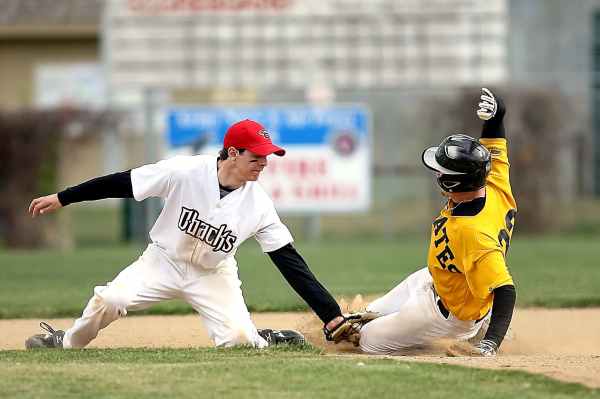
One of the classic comedy routines of the 20th century was a skit by Abbott and Costello, called “Who’s on First?” It’s all about mistaken identities and confusion, when the roster of players on a baseball team contains unusual names and nicknames that sound “question-able”.

I love baseball, and comedy, but the routine should make us do more than laugh. One of the big problems we face is that we often don’t know “who” is on first (or second, or in left field) in the game of life. We tend to become spectators, and fans, but we don’t always know the names of the players, or what position they play. We watch as players–celebrities, government power brokers, athletes, etc.–come and go on the “roster.”

Photo by Andrea Piacquadio on Pexels.com

And it can filter into our prayers. While we look at the line-up of human “players” around us, we can forget that God is in charge of the outcome of the “game.” God knows exactly “who’s on first,” and who will be there at the bottom of the fourth. He knows who will strike out in the third, who will hit a grand slam in the fifth, and who will drop the ball in the sixth. While we watch the players and bite our nails when the bases are loaded and there is a full count, God already knows the next pitch.

Photo by Liza Summer on Pexels.com

We may not understand why “Who” is on first, instead of someone else. Sometimes, we see people rise to a position only to abuse their power and oppress others. We may question “Why?” as well as “Who?” Sometimes, we may ask, “How?” “How could God put them in the line-up?” And the only answer I can offer is, “I don’t know.” God’s ways may not make sense to us in the moment. We may never understand the How or Why of our lives or circumstances. But God sees the whole picture, and His ways are not our ways. His understanding is far greater than ours.

Finally, we need to make sure that we are more than just spectators. Watching from the sidelines may seem safer, but we won’t really learn how to pray if we never learn how to “play.” God loves prayer warriors, but He commands us to be “doers of (His) Word.” (James 1:22-25) If we are just listening from the sidelines, we will continue to be confused and frustrated– in our praying and in our living!

We may not always know “Who’s on First.” But we should take comfort in knowing “Who IS First.” No matter who takes their position as shortstop or who is throwing the pitches, God is always sovereign. No matter who seems to be “winning” the game, God has already determined the outcome of the ultimate “World Series.” We can pray with confidence, knowing that, with God as our manager, Christ as the umpire, and the Holy Spirit as coach, we have the winning team!

Photo by Tima Miroshnichenko on Pexels.com

Static

This past weekend, my husband and I participated in “Field Day.” It is an annual Amateur Radio contest, in which operators have 24 hours to make as many unique “contacts” as possible within the U.S. and Canada, using low power and simulating “field” conditions (many operators and clubs literally set up with tents in fields and use only solar or battery power for their radio equipment).

Photo by Gratisography on Pexels.com

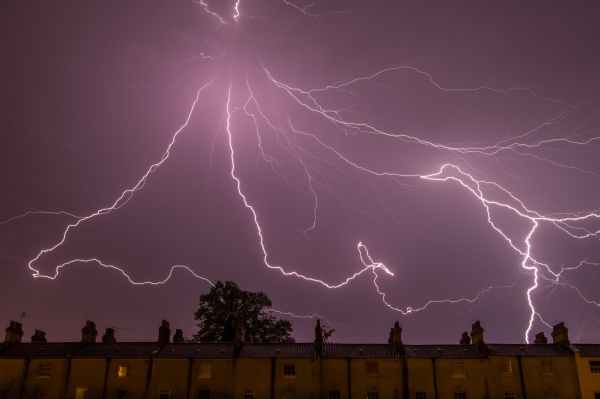
Field Day can be a lot of fun, but it can also be very frustrating. Depending on where and how you set up, the weather conditions, and other random factors, you may end up with very few contacts, and a lot of static! Radio static comes from three main sources– natural electromagnetic atmospheric noise, such as lightning, high winds, and solar pulses; radio frequency interference, when the radio equipment picks up pulses from nearby electrical devices, including TVs, other radios, or even power lines; and thermal noise coming from within the radio device itself.

Photo by cottonbro on Pexels.com

We chose to set up for Field Day at our radio store, which is located in town, just beneath our apartment. We have several antennas set up on the roof, along with a solar panel and battery, which can power all of our radio equipment. So we met the basic requirements for Field Day, operating the radios on Solar and Solar Battery power, without extra amplifiers and power boosts. We set up two stations, and we were able to make contacts through voice transmission or by Morse Code. But we were not exposed to the weather and discomfort of a tent in the field– we had a refrigerator stocked with food, we had air conditioning and comfy chairs, and we were able to sneak upstairs for a nap in our own bed, if we felt tired.

Photo by Ketut Subiyanto on Pexels.com

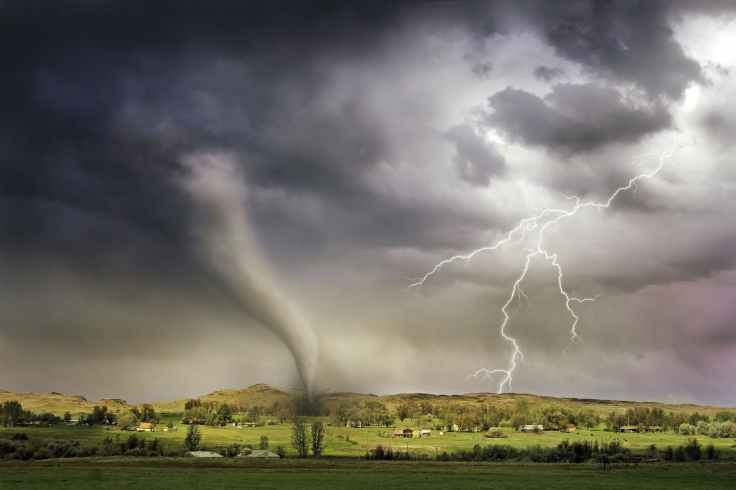
Atmospheric conditions were not so good this year for Field Day– not in Michigan, at any rate. We had a series of extreme storm cells coming through, with torrential rains, thunder and lighting, and a tornado watch, which spanned the first six hours of the contest. We were lucky not to have a tornado touch down, but other areas were not as lucky…

Photo by Ralph W. lambrecht on Pexels.com

Staying in town also provided some complications– we are surrounded by power lines, neighbors with electronic equipment, street traffic, including cars with loud stereo systems and radios, and our own electronic and radio devices– cell phones, air conditioners, computers, etc.

Photo by Jonas Ferlin on Pexels.com

Finally, we had an ongoing issue with our two radios. If we were using certain frequencies, the two radios interfered with each other. As I was listening to one radio, my husband would try tuning his radio. Suddenly, the noise of his radio could be heard over the sound of other transmissions.

All of this made for a somewhat frustrating contest, but it reminded me of some important aspects of prayer:

  • Prayer can be “choked out” by atmospheric conditions. If we are not “tuned in” to God’s presence, the noise of other worries, interests, concerns, and even “good” things can cause static. Life struggles, changes in our routine, or the “high winds” of adversity can seem louder than the faithfulness and compassion of the One who never changes and never leaves us. This is one reason we are to make prayer more than a habit or routine– it is to be a lifestyle and a blessed and constant pursuit– regardless of our circumstances or feelings at a given moment.
  • Prayer can also be derailed by “frequency interference.” If we don’t spend time in deep prayer and meditation with God, listening to His Word, or making ourselves accountable to Him, we will be susceptible to interference from other voices, other philosophies, and other “static” influences. Jesus’ prayer life included many times of retreat and separation from the crowds and stress of His ministry; not because He didn’t love others, but because He loved and honored God more.
  • Finally, prayer can get lost in the “internal” static of our wayward hearts. The heat of anger, bitterness, selfishness, pride, greed, and lust can keep us from meaningful communication and communion with our Father. Often, we struggle with prayer, because we are hanging on to the “static” of our own desires and fears. King David wrote: “Search me, O God, and know my heart; test me and know my anxious thoughts. Point out anything in me that offends you, and lead me along the path of everlasting life.” (Psalm 139:23-24, New Living Translation, via bible.com)
Photo by Luis Quintero on Pexels.com

Field Day is over for another year. We were somewhat disappointed in our performance, but, in the end, it is just a contest– an opportunity to learn and grow in our hobby. While we enjoy being amateur radio operators, and we feel it is an important and worthwhile hobby, it pales in comparison to growing in our Faith and our pursuit of praying and obeying Jesus Christ!

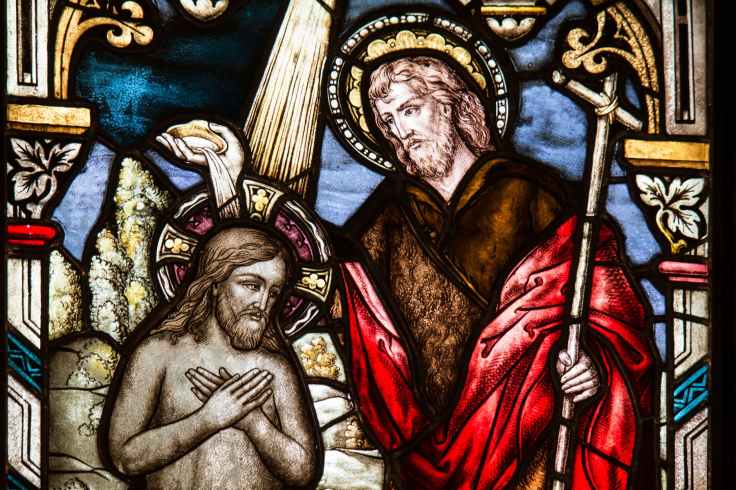
In the middle of our contest this year, we had a singular opportunity– to leave the contest for a few hours and visit a local church where my niece and two of my nephews were getting baptized. It would mean fewer contacts for the contest, at a time when the atmospheric conditions were the best they had been for several hours. After a dismal evening, we could have chosen to focus on our own pursuits. We didn’t have to witness the baptism to rejoice in it. They would have been no “less” baptized, and they had other family and friends there to see it. And going there didn’t make us “better” or more righteous people. But we chose to shut down our contesting activities, pick up my Mom, and join in the happiness of watching three precious young people publicly declare their choice to follow Jesus. And they were among others who made that decision– others whose joy and radiance also filled the church that day.

Photo by Transformation Films on Pexels.com

Field Day is about listening through the static, reaching out, and making contact with others. Yesterday, I was reminded that there is a much more important “Field Day.”

Do you not say, ‘There are still four months, and then comes the harvest’? Behold, I tell you, raise your eyes and observe the fields, that they are white for harvest.

John 4:35 (NASB, via biblehub.com)
Photo by Anna Shvets on Pexels.com

What static is preventing us from making “contact” with those who need to hear the Good News? What static is preventing us from hearing God’s voice? What static is keeping us from seeing the “fields” ready for harvest?

“Ever Hearing”

Have you ever tried to have a conversation with someone who just pretended to listen? They nod or make a sympathetic face, but clearly they have no idea what you are saying. Maybe they nodded at the wrong time, or even interrupted you with some comment that was completely off-topic.

Photo by Ketut Subiyanto on Pexels.com

God not only hears what we say to Him, He understands better than WE do!

That is not the case with us. We can be “Ever Hearing” but “Never Understanding,” just like the people of Israel during the ministry of the prophet Isaiah. (see Isaiah 6: 9-13) Isaiah brought warnings and prophetic judgments from God–calls for repentance and warnings of impending punishments. He spent years delivering the same message to hundreds of people. They heard his message, but they did not listen, understand, or repent. Jesus, in Mark 4:12 alludes to this passage in Isaiah– clearly, the people of his day were equally “deaf” to the truth, even though thousands came to hear Jesus speak

Photo by Matheus Bertelli on Pexels.com

Jesus’ brother James, in his epistle, rephrases the same idea– “But be doers of the word, and not hearers only, deceiving yourselves.” (James 1:22 ESV) Just because we have believed the Good News does not make us immune to hearing without listening, understanding, and obeying.

Photo by Ksenia Chernaya on Pexels.com

We have thousands of Bible study books, websites, videos, broadcasts and webcasts, blogs, and live meetings–and, for many of us, they are free and easy to access. There are billboards, memes, t-shirts, Christian radio stations, and more, sharing scripture, testimonies, cartoons, songs, prayers, and more, 24 hours a day in almost every corner of the world and in most of the world’s languages.

Photo by Laura Stanley on Pexels.com

But sometimes, the very prevalence of such material causes us to take it for granted; and our hearts and minds become numb to the glory of God’s wisdom and the urgency of His warnings. We hear that God is sovereign– and we say that we believe–but we act as though we know better than God how the world “should” be. We hear that God is gracious and merciful– and we sing praises for His mercy toward us– but we have no mercy for others who fall short of our expectations. We hear that God is close to the broken-hearted (Psalm 34:18), but we act as though God favors the proud and self-sufficient.

Why would God command Isaiah to continue preaching to those who refuse to listen and obey? And why would Jesus follow in Isaiah’s footsteps– relying on parables and teaching the masses who misunderstood His Gospel?

Scholars have different theories, but I think there are two main reasons:

  • We know from examples and from experience that the same message that falls on “deaf”ears over many years can suddenly “click.” God know this better than anyone. He is patient and humble. God’s message doesn’t change, but sometimes, it takes a while to “seep in” to the heart and mind. Someone who is “ever hearing” may be processing more of the message than we know. God’s spirit whispers, and His truth can be drowned out, but it cannot be silenced. It is important for us to continue to speak, to write, and to LIVE the truth– not just for others, but to make sure we are still listening, understanding, and obeying the truth.
  • God IS truth. And God may whisper, but He will not be silent. God is mysterious, but not absent, or cold, or withdrawn. In Romans 1: 18-32, Paul says that God has revealed all of His invisible qualities in all of nature throughout all of time. We cannot say that we NEVER saw the glory of a sunset, or heard the power of thunder, or felt the warm kiss of the sun, or in some other way experienced the loving and majestic reality of God. We CHOOSE to ignore or rebel against God’s ever-present, all-gracious love.
Photo by ROMAN ODINTSOV on Pexels.com

What glories will we see, hear, and experience today? Will we be “ever hearing” but “never understanding” “how wide, and long and high and deep” (Ephesians 3:17-19) is the Love of Christ? I hope we will take every opportunity to listen, understand, and obey His call today!

The Greatest Commandment

36 “Teacher, which is the great commandment in the Law?” 37 And he said to him, “You shall love the Lord your God with all your heart and with all your soul and with all your mind. 38 This is the great and first commandment. 39 And a second is like it: You shall love your neighbor as yourself. 40 On these two commandments depend all the Law and the Prophets.”

Matthew 22:36-40 (ESV via biblegateway.com)
Photo by cottonbro on Pexels.com

This is a familiar Bible passage, and one that Jesus quotes from the ancient writings (in Deuteronomy and Leviticus). All the laws and regulations of history boiled down to two commands. And they are not what one might expect. The greatest commandment isn’t to believe; it isn’t a “shalt not”; it isn’t even to “obey.” Instead, the greatest commandment is to LOVE– love God wholly and without reserve, and love your neighbor “as yourself.”

It sounds so simple, but we don’t do it. In fact, we spend countless hours and waste energy trying to make the commandments MORE complicated and adding conditions, additions, interpretations, excuses, and critiques.

There is not enough time or space to list all the ways we try to avoid the greatest commandment, but here are a few I struggle with:

Photo by Engin Akyurt on Pexels.com
  • My heart–I love the Lord, but I don’t always love Him with my whole heart. I love His creation; I love His promises; I love the “idea” of God. But I also love my comfort zone; I love my own moods (especially happiness and self-esteem); I love the admiration of my peers; I love God, but…I don’t always pray to God the way I would talk to my best friend. I don’t seek Him out ahead of everyone else. I don’t always seek His correction or welcome His Lordship.
  • My soul–Most of us would claim that we are “spiritual” on some level. But many of us (including me) don’t do a very good job of tending to our souls. We assume that behaviors and habits and a list of beliefs are “enough.” We spend very little time in prayer, worship, and Bible study (compared to the time we spend on chores, sleep, entertainment, driving around, daydreaming, etc.). I’m not suggesting that we all need to go into a cloister (especially in light of the second great commandment to love our neighbor). But souls, like bodies and minds, need to be nourished, exercised, and cared for. Very few of us make it a priority to nourish our soul-connection with God–to Love Him with all our soul. We skim over this part of the commandment, assuming it is much the same as loving Him with all our heart or all our mind.
Photo by Rakicevic Nenad on Pexels.com
  • My mind– My mind wanders– a lot! And I spend a lot of time learning “about God,” instead of learning “from God.” I want to know what God is like– to be able to explain Him or comprehend Him. But God is bigger than my ability to “know” or even to imagine. And yet, He invites me to “know” Him, not just know about Him. In fact, He invites me to “follow” Him, to be His disciple, to model my character and my thoughts after His own.
  • My neighbor–I want to love humanity. I want to love “everybody”– from a comfortable distance! But God calls me to love my neighbor– that person who cuts in front of me at the grocery store, or revs their car engine outside my bedroom window at 3 in the morning, or laughs at me when I’m having a bad hair day. And not just “love” them in the sense of tolerating them– God wants me to love them “as myself.” To value them, reach out to them when I might rather avoid them, or seek peace when they are “pushing my buttons.” God wants me to offer them grace and forgiveness, when I might expect to demand justice or recognition.
Photo by Keira Burton on Pexels.com
  • “As Myself”–Sometimes, I don’t love myself. Sometimes, I idolize myself. Other times, I despise myself. And the attitude I have rubs off on to others. God doesn’t call me to idolize my neighbor; to lie to my neighbor about Sin and its consequences, or to let my neighbor’s wicked behavior go unchallenged. Just as God wants to call me to repentance, He wants me to lovingly reach out to my neighbor, not enable her/him to live a lie. But if I am living a lie–not dealing with my own sin– I cannot demand from my neighbor what I am not willing to give to God. Similarly, I can’t give honest love to my neighbor when I despise myself– God created us both and loves us with an everlasting love! How can I give love I am not willing to receive?
  • My understanding of “commandment.” God has the authority to command my attention, my obedience, my worship, and my loyalty. But my “love?” God has given us the CHOICE to Love Him, and to Love others– He also gives us the imperative to live our lives filled with Love. It is not God’s will that we Love out of coercion, robot-like and against our own free will. Rather, God commands us to submit our will to Love in every situation. We are slaves to Sin, powerless to love perfectly–even when we try, or think we are doing well, we will fall into faulty thinking, ungoverned emotions, and uninformed, unloving reactions. We WILL break this greatest commandment, just as we will break other, lesser commandments. But God has also promised to listen to our confession and forgive us, redeeming our soul, cleansing our heart, and renewing our mind as we follow Him. God does not command us to Love perfectly in our own power. He does command us to choose Love–first and foremost for Him, and then for those around us whom He loves. In so doing, we will grow to understand the power of God’s commands as we experience the power of His Love!
Photo by Anna Shvets on Pexels.com

Laughing With the Sinners

There is a line in a song by Billy Joel (Only the Good Die Young) which reads, “I’d rather laugh with the sinners than cry with the saints. The sinners are much more fun.”

There is a myth about sin– that sin is fun and obedience is drudgery. Sinners laugh and live carefree, happy lives, while “saints” lead gloomy lives filled with tears, worry, and anguish. Heaven will be filled with sour-faced do-gooders playing harps, while Hell will be an eternal party.

Photo by Julia Larson on Pexels.com

Nothing could be further from reality. While sin gives momentary pleasure and temporary laughter, it also leads to devastating pain and haunting regret. Broken families, lost relationships, stress, and guilt are just some of the consequences of sin. The idea that “I’m not hurting anybody– I’m just doing what makes me happy” is a false comfort.

Photo by Victoria Borodinova on Pexels.com

Similarly, while obedience may require us to make sacrifices or suffer momentarily, it also leads to great reward–discipline, wisdom, integrity, and a legacy of hope and help. The idea that “I’m missing out on the fun” is also a false one. “Saints” may cry, but often their tears are for the misfortunes of others!

Unfortunately, the common stereotype of sinners laughing while saints cry or, more often, sit in judgment, is based on observation. I have known some very sour Christians. They may not be crying, but they frequently make others around them cry! They nag, scold, wag their fingers, consign their neighbors and family members to Hell, and act as though they are too good for everyone else. When challenged about their negative attitude, sometimes they suggest that they are just “waiting for Heaven.” Others plead a genuine concern for others, and they worry that the laughter they hear now will turn to mourning in the future.

Photo by Paul Theodor Oja on Pexels.com

But I have also known joyful Christians– laughing, singing, encouraging others, whistling while they work, even laughing in the face of suffering and persecution! They, too, are “waiting for Heaven.” But in the meantime, they are celebrating their new and abundant life in Christ. Their attitude and actions attract others, and reflect the love, joy, peace, and hope that transcends the mere “happiness” of a moment’s sinful pleasure.

Photo by Akshar Dave on Pexels.com

The Bible says much about the value of both laughter and tears; of joyous celebration and sober reflection. In the end, ALL of us are “sinners”–no one is righteous on her/his own. Jesus, when He walked the earth and interacted with people, wept and celebrated with them. The Pharisees reprimanded Jesus and His disciples for their “feasting” and spending time with prostitutes and tax collectors. And yet, Jesus had harsh words about sin and Hell, and often spent time alone and in anguish of heart.

Photo by Andrea Piacquadio on Pexels.com

The crying of saints is not, in itself, of any more value than the laughter of sinners. But laughter and happiness in the moment cannot save us from the sting of death or the yawning emptiness of an eternity without God. And that is no laughing matter! Unfortunately, the song is based on an empty myth. Death comes to all of us, young or old, “good” or “bad,” gloomy or exuberant in life. What makes the difference is not our laughter or tears, or even our efforts to obey or live “good” lives– what makes a difference is GRACE and FAITH. And I’d rather live with the redeemed than die with the defiant!

Praying the Perimeter

I love puzzles–jigsaw puzzles, crossword puzzles, Sudoku, logic puzzles, etc.

This may seem like a strange way to begin a blog on prayer, but stick with me…

Photo by Pixabay on Pexels.com

Puzzles can be fun, but they can also be very frustrating, especially if you approach them with no strategy. If you dump 1,000 pieces of a jigsaw puzzle on a table, and begin by trying to find any two pieces that fit, you may be able to eventually solve the puzzle, but it makes more sense to look for the “edge” and “corner” pieces first, and build a framework. Depending on the puzzle picture, you may also be able to work on colors or patterns that stand out– sky/clouds, a patch of red or blue, a dog in the foreground, etc.

Photo by Magda Ehlers on Pexels.com

The same is true of word and logic puzzles. There is usually a strategy when you approach each puzzle that can help make it easier and more rewarding. Words have patterns of letters– vowels and consonants; logic puzzles depend on deduction– narrowing down the possible by eliminating the impossible. Sudoku, and its cousin, Kakuro, involve simple math and numbers 1-9 in changing patterns. Start with the strategy, and you will find even the most challenging puzzles a little less challenging.

Photo by Dziana Hasanbekava on Pexels.com

Some puzzles seem impossible; and some are beyond my ability to solve, even with the best of strategies. That’s life. We don’t know all the answers, and we can’t always “see” the solution, or make all the pieces fit.

Sometimes, our lives seem like a challenging puzzle. Nothing seems to “fit” a pattern or make sense, and we end up lost and frustrated. Our most basic need is to trust God. But God does not leave us without a strategy. Prayer (along with reading God’s word and keeping in fellowship with other Christians) is part of an excellent strategy. Just like putting the “edge” pieces together in a jigsaw puzzle, praying “the perimeter” of our problems can put them in the proper frame.

What does that mean? Jesus gave us a perfect example in “The Lord’s Prayer.” When His disciples asked Him how they should pray, He started with the “frame.” “Our Father, who art in Heaven, hallowed be Thy Name.” God should be at the center of our life and trust, but He also needs to be the “edge” and framework of our life. There is no problem or worry that is outside of His control and awareness, no need that He cannot meet, and no problem that can take Him by surprise or leave Him frustrated and “stumped.”

Photo by Pixabay on Pexels.com

“Thy Kingdom come, Thy will be done in earth as it is in Heaven.” God already has the right strategy, and solution for our need. We can’t see it; we may not have a clue how to pay our bills, or deal with that devastating diagnosis, or make peace with our enemy–we may never find “the solution” on our own or in our short lifetime. But God sees the entire picture, and He has the power to make all the pieces “fit”– in His time and in His perfect will.

Photo by Levent Simsek on Pexels.com

“Give us this day, our daily bread, and forgive us our trespasses as we forgive those who trespass against us.” Sometimes our “puzzles” seem too big because we try to tackle everything at once, or we try to tackle things from the wrong end. God’s strategy is to rest in Him daily, letting tomorrow’s troubles wait for tomorrow, and letting go of yesterday’s struggles. That doesn’t mean that we don’t make plans or budgets, or that we don’t take responsibility for our health, or the mistakes we’ve made. But it means that we stop focusing on what we can’t control, and focus on the present. Instead of worrying, I can be thankful for what I have right now. Instead of focusing on what others think of me, or the threat they pose, I can concentrate on my own attitude and actions, making sure that I am practicing trust and obedience. Instead of getting angry when things don’t make sense, I can rest, knowing that God knows the end from the beginning.

Photo by Element5 Digital on Pexels.com

“And lead us not into temptation, but deliver us from evil.” God is our “Good Shepherd” (See Psalm 23 and John 10). He “leads us beside the still waters” and “makes us lie down in green pastures.” “He restores my soul.” (Psalm 23:3a) If we let God determine our “edges” and boundaries, we will still have to travel through troubled times and valleys “of the shadow of death.” But we need not fear evil, when we trust that God will deliver us. We need not fear the shadows and uncertainties within the boundaries of God’s will. And even when we have taken the wrong path, and “messed up” the puzzle we are in, God is in the business of redemption and restoration! He will deliver us– if we confess and seek His solution. He will wipe away the “wrong” answers and rearrange the pieces of our life, so that we can find wholeness.

Photo by Miguel u00c1. Padriu00f1u00e1n on Pexels.com

When we develop the pursuit of prayer– daily meeting with God, acknowledging who He is, and seeking His wisdom and grace– we will meet the challenges of life with the right strategy. We will still face the frustration of not knowing all the answers, or not seeing the whole picture. We will still have to deal with struggles, shadows, grief, and pain. But we will have a stronger “framework” and a God-given strategy to help.

Show, Don’t Tell..

A fundamental piece of advice for writing fiction is “Show, don’t tell.” A good writer will use words to paint a picture or set a mood. Poets and songwriters are masters of this advice. Metaphors, analogies, figurative language, even alliteration– all create memorable images with very few words.

Photo by Akshar Dave on Pexels.com

Jesus (hardly surprising, as He is the Word of God) was a master storyteller, using parables that we still recognize and identify with today–mustard seeds and prodigal sons, good Samaritans and lilies of the field– Jesus didn’t “lecture” about forgiveness or holiness or love; He provided word pictures, even as He demonstrated each concept in His actions.

Photo by Cindy Gustafson on Pexels.com

When Jesus was getting ready to return to Heaven, He commanded His disciples to “Go and make disciples of all nations.. (Matthew 28:19 NIV) He also said to “Go into all the world and preach the gospel to every creature..(Mark 16:15 NKJV). And as I review Jesus’ methods and actions, I see that I need to make some changes.

Photo by Ketut Subiyanto on Pexels.com

I need to listen more and lecture less. I need to spend more time with those who are shunned by the “righteous,” but cherished by God. I need to spend less time defending myself and more time testifying about Jesus. And I need to spend less time “telling” and more time “showing” love, obedience, joy, mercy, peace, and hope.

Photo by ThisIsEngineering on Pexels.com

This doesn’t eliminate the need to talk and write and “tell” about God– but I want to learn more about doing it God’s way!

Take My Life..

We have entered the Lenten season, and many of us have made plans to “give up” something for the 40 days leading up to Easter–chocolate, or certain meats, or a certain habit. It is traditional to use this time leading up to Holy Week to focus on preparing our hearts to receive the Gift of salvation that comes from Christ’s resurrection on Easter.

But, in a larger sense, there is nothing we can do to prepare for Grace– it is completely unmerited favor. My willingness to deny my sweet tooth for six weeks cannot make me ready for God to allow His wrath to fall on His Holy Son, so that I can be declared righteous for all eternity. It is no more than a gesture.

Photo by Francesco Paggiaro on Pexels.com

God is not impressed by our Lenten traditions. This doesn’t mean that we should not make the gesture; it doesn’t mean that we cannot grow closer to God by such observances. But we must not place too much reliance on them. Jesus Christ is the Author and Finisher of our faith (Hebrews 12:2). He gave up far more than we can imagine in order to rescue us from all that we deserve. Jesus not only gave up His human life on the Cross, He gave up His throne, His status, His omnipresence, and His omnipotence. He allowed Himself to be subject to human authorities, and He served those He had created.

Photo by Pixabay on Pexels.com

Jesus didn’t just “give up” something on His way to the Cross. He offered everything He was! May we seek to do the same. May we pray, along with Jesus in the Garden, “..not my will, but Yours be done..” (Luke 22:42)

Chariots of Iron

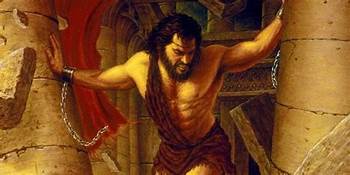
I was reading from the book of Judges today, and a curious phrase jumped out at me. The entire book of Judges is filled with the failure of the people of Israel to fully claim their promised inheritance from God. Generation after generation passes, with a cycle of sin, enslavement, and deliverance as God raises up various judges and heroes, like Gideon, Deborah, or Samson.

Already in chapter one, there is a hint of the trouble to come. The book begins with several successful battles after the death of Joshua. The people of Israel consult the Lord, who fights with them in several key battles. But in verse 19, it says: “The Lord was with the men of Judah. They took possession of the hill country, but they were unable to drive the people from the plains, because they had iron chariots.”

Say what? The Lord was with the men of Judah– the LORD! They had taken possession of the hill country– rough terrain that would have been filled with natural barriers, rocky fortresses, and literal “uphill battles.” They had destroyed massive cities like Jericho less than a generation before. They had defeated armies far larger and better positioned. They had defeated giants! And now, suddenly, they are “unable” to drive the people from the plains– because the enemy had chariots of iron?

Photo by van4er ivan on Pexels.com

https://www.biblestudytools.com/commentaries/gills-exposition-of-the-bible/judges-1-19.html I think this commentary says it well. The chariots of iron became the excuse for the Israelites’ unwillingness to obey; to trust in God’s strength instead of their own. After all, it wasn’t that long before in their history when God had drowned the entire Egyptian army, including all its chariots, in the Red Sea.

I don’t think it was about the chariots of iron. I think it was about the plains. I think sometimes it can be more difficult to fight on “the plains.” When God sends us on an “impossible” mission, we must face our own fears and acknowledge our weaknesses– we KNOW we cannot do it in our own power. But when we face an enemy on “equal footing,” we are tempted to trust in our own resources– the toughness of our armor, the skill of our generals, the speed of our horses, and the superiority of our weapons. We hope and expect God to fight for us where we cannot hope to win alone, but we don’t ask for God’s help or protection in areas where we believe our own strength should be sufficient. Israel had a fine army– seasoned veterans of battle. If they HAD iron chariots of their own, victory might have been expected– with or without God’s divine intervention. But victory eluded them, because they didn’t finish the fight!

Photo by Sora Shimazaki on Pexels.com

We do the same thing today–we fail to march into battle because the enemy has “chariots of iron.” Maybe they have more social status, more political or economic power then we have. Perhaps we see that they have the means to make our lives painful “on the plains.” We see their arrogance, and their wealth and success, and we let ourselves be intimidated. We know that God has promised never to leave us or forsake us, but He has not given us chariots of iron to match those of the enemy. We don’t pray for the courage to face their chariots, or the wisdom to trust that the battle belongs to the Lord. Instead, we make excuses for not fighting the battle at all.

The rest of the book of Judges is filled with war, slavery, corruption, death, and evil. The very last verse sums it up: “In those days Israel had no king; everyone did as he saw fit.” (Judges 21:25)

Photo by Ian Panelo on Pexels.com

Lord, help me to be courageous, and humble. May I always trust in You above all–especially above chariots of iron, and weapons of mankind.

What’s Next?

As I write this, votes are being counted in our Presidential/General Election. I don’t know what the final outcome will be, but it looks like the election will be close; it may even be contested for days or weeks to come.

Photo by cottonbro on Pexels.com

There are consequences to this election– consequences for our legal rights and freedoms– consequences for churches and Christians businesses and services, and the individual free exercise of speech and religion. And the consequences reach beyond just my city or state or even the U.S. This election may impact how (or if) I can continue to write about prayer and Christian living. It may impact how my local church continues to operate. It will impact how mission organizations and religious services continue.

But there are several things that will not change as a result of any election: God is still sovereign; the Bible is still true; I will still be a follower of Christ– committed to living for Him and sharing His Gospel.

Photo by Pixabay on Pexels.com

In that sense, “what’s next” is exactly the same today as it was yesterday or last year– I am to trust in God’s plan; God’s provision; God’s timing. And I am to obey His word. I am to “do justice, love mercy, and walk humbly with my God” (see Micah 6:8); I am to “love the Lord my God with all my heart, mind, and soul, and my neighbor as myself” (see Matthew 22:37-39).

Photo by August de Richelieu on Pexels.com

Yesterday, I did my civic duty; I voted my conscience. Today and going forward, I will do my civic duties– I will pay taxes, I will obey laws and guidelines that do not contradict God’s commands. And I will work to make a positive difference in my community and my country. I may have to make changes and adjustments in the way I serve and work and interact with other people. But “what’s next” in my Christian walk doesn’t depend on what happened yesterday, or what will happen tomorrow. My eyes have to be focused, not on any political race, or its immediate consequences, but on the race described by the Apostle Paul in his letter to the Philippians:

12 Not that I have already obtained all this, or have already arrived at my goal, but I press on to take hold of that for which Christ Jesus took hold of me. 13 Brothers and sisters, I do not consider myself yet to have taken hold of it. But one thing I do: Forgetting what is behind and straining toward what is ahead, 14 I press on toward the goal to win the prize for which God has called me heavenward in Christ Jesus...17 Join together in following my example, brothers and sisters, and just as you have us as a model, keep your eyes on those who live as we do. 18 For, as I have often told you before and now tell you again even with tears, many live as enemies of the cross of Christ. 19 Their destiny is destruction, their god is their stomach, and their glory is in their shame. Their mind is set on earthly things. 20 But our citizenship is in heaven. And we eagerly await a Savior from there, the Lord Jesus Christ, 21 who, by the power that enables him to bring everything under his control, will transform our lowly bodies so that they will be like his glorious body.

–Philippians 3:12-14; 17-21 (NIV via biblegateway.com)

Of course, I hope that outcome of this election will honor God and preserve the freedoms I hold dear. But God’s purposes and plans may involve hardship, persecution, and judgment on this nation. I must still run my race, and rejoice in my Heavenly citizenship– one that doesn’t change with election cycles or depend on politicians.

Blog at WordPress.com.

Up ↑