“The Lord Giveth…”

We are approaching Thanksgiving in America. Too often, Thanksgiving is lost amidst the shuffle between Halloween and Christmas. No one dresses up for Thanksgiving; no one passes out treats. There aren’t the same long-standing cultural traditions that we have with Christmas– no trees to decorate, no “Thanksgiving” cookies to make, no “Thanksgiving” elves or Santa Claus. There are turkeys, and sometimes stories about Pilgrims and Natives sharing a peaceful feast, but even that has become a sore topic. In fact, for many people, Thanksgiving is about three things– eating, watching parades on TV, and watching Football (trying to stay awake after all that food!). Some families give a nod to the spirit of Thanksgiving by going around the table and reciting the things for which they are thankful. But we rarely take the opportunity to draw attention to the Giver of all good things. We are more likely to be thankful for things we have as a result (we think) of our own hard work, wise decisions, and “good luck.” Families may travel long distances to be together, but even that is going out of fashion, as young adults often opt to spend the day with their friends or even on their own, and older adults are often “celebrating” without any family present.

I love Thanksgiving. It is one of my favorite holidays. But I think we have lost much of the spirit of Thanksgiving. Thanksgiving is not just about one day with lots of food spent with family or friends. Thanksgiving is really a lifestyle. The Bible is rich with thanksgiving and praise:

 “I will give to the Lord the thanks due to his righteousness, and I will sing praise to the name of the Lord, the Most High.” Psalm 7:17
“I will give thanks to you, LORD, with all my heart; I will tell of all your wonderful deeds.” Psalm 9:1
“Enter his gates with thanksgiving and his courts with praise; give thanks to him and praise his name.” Psalm 100:4
“Give thanks in all circumstances; for this is the will of God in Christ Jesus for you” 1 Thessalonians 5:18
 “Do not be anxious about anything, but in everything by prayer and supplication with thanksgiving let your requests be made known to God.” Philippians 4:6
 “And let the peace of Christ rule in your hearts, to which indeed you were called in one body. And be thankful.” Colossians 3:15
 “Through him then let us continually offer up a sacrifice of praise to God, that is, the fruit of lips that acknowledge his name.” Hebrews 13:15

We have much to be thankful for, but when we look at the Bible verses, Thanksgiving is NOT about WHAT but about WHO. We can be thankful for good health, but we should “give thanks” to the One who gives LIFE– even when we aren’t enjoying perfect health. We can be thankful for our family, but we should really be thankful for the One who created and designed families– including our imperfect, slightly dysfunctional family.

Job learned this lesson well. He was extremely blessed– one of the richest men in all the land. He owned cattle and land, had a large family, and was highly respected. But when he lost it all, he still took time to thank God– not just for the good things He had given Job, but for who He was and is. Job acknowledged that the same God who gives is also the God who takes away– yet He is just, Holy, and awesome. He is sovereign and merciful. And, in the end, Job was restored to health, prosperity, honor, and given a new family.

Jesus was always thanking God– and not for the things we might expect! Jesus arrived in Bethany to find His friend Lazarus dead. Yet He thanked the Father. He did not thank God for “letting” Lazarus die, but He thanked Him for always hearing His prayers, including His prayer to restore Lazarus to life. Jesus thanked God for food– even though He proved that He could turn water into wine and small amounts of food into feasts! Jesus even thanked the Father for hiding His message from those who think they are wise, while revealing it to the lowly and meek. Imagine how much easier His ministry would have been if God had simply opened everyone’s heart and mind to accept that Jesus was the Messiah! But it pleased God to make Jesus’ ministry “fail” on many levels and lead to the Crucifixion. In spite of this, Jesus praised the Father for His wisdom and sovereignty.

We can be thankful to God, not just when things are going well, and we are feeling blessed, but when things are dark and chaotic, or we feel as though we have failed. We don’t ignore the grief of loss, the pain and struggles we face– but we look beyond to the God who sees, hears, heals, and makes all things new in His time. We can thank God in all circumstances, because He is GREATER than all circumstances!

This season, may we take time to contemplate– not just all the good things we have–but to dive deep into who God IS. May we say with Job, “The LORD giveth, and the LORD taketh away; Blessed be the Name of the LORD!”

Arguing With the Almighty

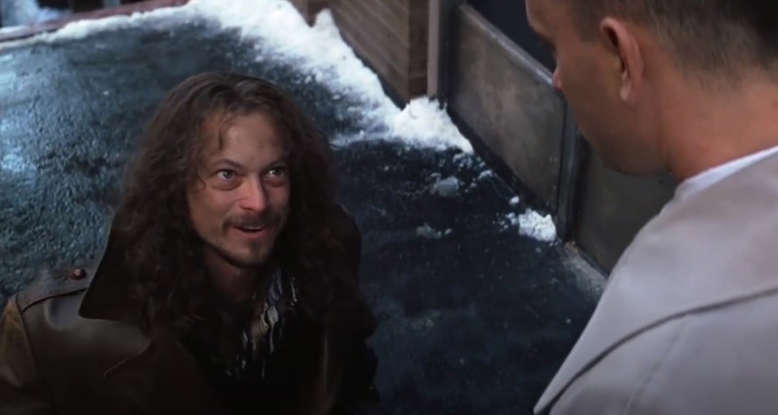
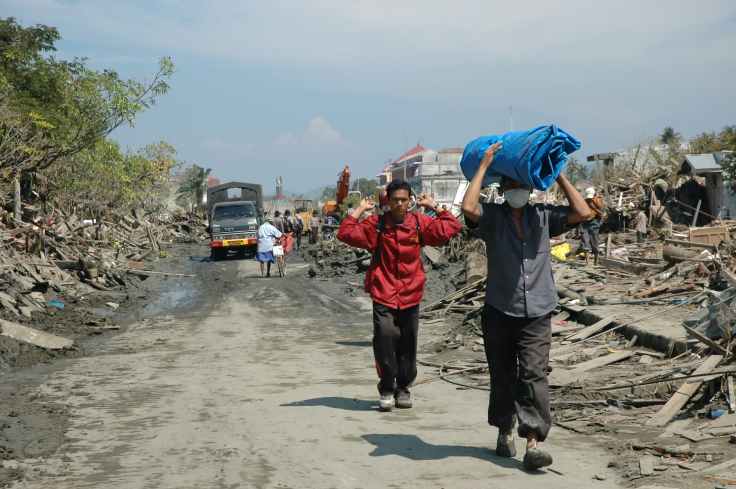
Our country has recently weathered (pun intended!) two major hurricanes which caused devastation and chaos. It seems like an unlikely connection, but I was thinking the other day about the movie, “Forrest Gump.” In it, a bitter, beaten, and angry character begins arguing with God– in the midst of a hurricane!

“Lieutenant Dan” was an able soldier, fighting in Vietnam and in charge of a small unit, which included the simple-minded Forrest Gump. When their unit was ambushed, Dan was badly injured and lost the use of his legs. Meanwhile, Forrest Gump received only a small flesh wound, and managed to save several of his fellow soldiers, receiving a medal for bravery. One of the soldiers rescued by Forrest, Dan resented his situation– disabled and ignored– while Forrest went on to become successful and celebrated.

Worse, in the years after the war, Forrest found Dan, homeless and dejected, and offered him a job and a home– on his shrimping boat. Forrest knew next to nothing about shrimping, and Dan, torn between bitterness and gratitude, gave Forrest a hard time. Dan’s life had gone nowhere, and Forrest seemed to dodge every bullet (literally), finding success in spite of his naivete and seemingly stupid choices.

It is a very relatable situation. We all know someone who seems to sail through life, while others seem to have nothing but bad luck and hardship. The class clown who ends up “making it big”– they spend money like it’s going out of style, and yet it keeps flooding in, seemingly without any effort. The neighbor who loses his job, and then his house catches on fire. And that person whose entire life seems to be lived under a cloud of misery and bitterness.

Gary Sinise as “Lieutenant Dan” in the movie Forrest Gump.

When the two men find themselves in the middle of a hurricane, Dan can take it no longer. He lashes out– not at Forrest this time, but at God. How could a loving God allow Dan to go through trial after trial– the loss of his legs and so many of the men under his command, the loss of his dignity and productivity, the loss of his independence, and now, another deadly situation beyond his control. He yells at God–“Come and get me!” He challenges God to just kill him; just finish him off–or leave him alone.

But God is silent– and soon, so is the hurricane. Forrest and Dan have survived. In fact, Forrest’s decision to be out of the harbor means their boat is the only one to survive–suddenly, they can’t catch the shrimp fast enough! Forrest becomes a millionaire and hires a fleet of fishing boats. But what about Dan?

Somewhere in the middle of the storm, Dan’s heart is pierced by a simple and life-changing thought. God has not been the one “ruining” Dan’s life– He is the one who has been preserving it! God brought him through war, disability, injustice, loneliness, frustration, and the raging sea. God was not a cosmic bully. God was not singling out Dan for punishment– after all, thousands of others had been wounded and killed in the war; millions of people knew what it was like to be hungry, homeless, and lonely; and hundreds had been devastated by the hurricane– even while they were safely evacuated or hunkered down on land. Forrest had not dodged every “bullet.” He had lost his best friend in battle; he had been rejected (time after time) by the woman he loved; he had been teased, bullied, and cheated dozens of times, and he had been tossed about by the same waves and winds Dan had survived. Dan ends up leaving Forrest, and setting off on his own, having found a peace that transcends his pain and bitterness. He swims off with a smile, leaving behind the opportunity to remain with Forrest and make millions.

Arguing with the Almighty is very tempting when we face difficult circumstances– and when we focus on our own lot, and not on the bigger picture. God is bigger than any of the troubles we face. And He is not unaware or unconcerned about whatever we are going through. Just as Lieutenant Dan challenged God, the biblical character of Job challenged God to vindicate him as he went through trials and pain. God finally answered, and Job realized that God was far bigger than anything Job had ever known or experienced. And in the end, God restored Job– giving him a new family, and even more material wealth than he had before!

Sometimes, God allows us to go through periods of pain and struggle– not because He is punishing us or because He is a tyrant, but because He is more interested in our ultimate salvation than He is in our immediate comfort. We moan and complain that God “doesn’t want us to be happy,” as if our momentary happiness is more important than our character development, than the happiness of those around us, or than God’s design for the world.

Near the end of the movie, Lieutenant Dan visits Forrest. He is transformed. No longer angry and bitter, he is quiet, self-assured, and standing! He has “new legs” made of titanium, and he has found joy, love, and success of his own.

Of course, many of us, regardless of our situations, have tried arguing with God at certain times of our lives. The loss of a loved one; the breakup of a marriage; a diagnosis of cancer; a miscarriage of justice and the loss of a reputation– it is natural to be angry, hurt, and confused. And God is more than big enough to “take it” when we ask “WHY?!!” But we will never “win” such arguments– not because God is a tyrant who won’t let us have what we want– but because God is GOD, and we are not. He alone knows how our story ends, and what trials– and blessings– await us. He alone knows what is “right” in the scope of eternity– not just for us, but for our loved ones, our neighbors, our nation, and our times. God can see that we get, not just “new legs,” but a new heart, and a new mind!

Hurricanes happen– so do hurts and hurdles. We can choose to see God’s hand–and believe that it is raised in anger, or reaching out to hold us. That choice is yours. That choice is mine. Every day.

Anywhere…

Anywhere! Anywhere!
Fear I cannot know;
Anywhere with Jesus I can safely go!

I was reading in the Psalms the other day, and I fell on one of my favorites, Psalm 139:

 O Lord, you have searched me and known me!
You know when I sit down and when I rise up;
    you discern my thoughts from afar.
You search out my path and my lying down
    and are acquainted with all my ways.
Even before a word is on my tongue,
    behold, O Lord, you know it altogether.
You hem me in, behind and before,
    and lay your hand upon me.
Such knowledge is too wonderful for me;
    it is high; I cannot attain it.

Where shall I go from your Spirit?
    Or where shall I flee from your presence?
If I ascend to heaven, you are there!
    If I make my bed in Sheol, you are there!
If I take the wings of the morning
    and dwell in the uttermost parts of the sea,
10 even there your hand shall lead me,
    and your right hand shall hold me.
11 If I say, “Surely the darkness shall cover me,
    and the light about me be night,”
12 even the darkness is not dark to you;
    the night is bright as the day,
    for darkness is as light with you.

Psalm 139: 1-12 (ESV)

This portion of the Psalm speaks of God’s Omnipresence. But often, when I read it, I read it from a negative viewpoint. It speaks of hiding from the Lord…it is impossible to escape the Lord’s presence and His omnipotence. I cannot hide my thoughts or deeds or feelings from God’s all-seeing, all-knowing presence. And this is a good thing in the end. But what about when I am not trying to escape from God, but some other threat– guilt, pain, heartbreak, or even death?

God’s omnipresence is also a metaphysical reality in a very positive sense. I cannot stray outside of God’s presence. He will not remove it from me; He will not hide from me. He will never send me into ANY situation where He is NOT already there, and where He will NOT be with me.

I know this. But I needed a reminder today. God will be with me on my best days, and on my worst. He will be with me in sickness or depression, or celebration and strength. He will be with me whether I am “alone” or surrounded by strangers. He will be with me in the darkness where I can’t see anything, as well as in the blinding bright lights of an operating room, or the eerie haze of a foggy morning.

Wherever I am, God is figuratively holding my hand; He is hemming me in all around. I am protected and supported by His Almighty Right Hand. When I am tempted to doubt– He is there! When I am distracted by the din of other voices– He is there! When I have turned my back on Him– He is STILL there; waiting for me to turn back!

I don’t know where I will have to go today. It may be to the grocery store; it may be halfway across the world…I may be called to do unexpected things, to go in an unexpected direction, to turn a frightening corner or face an unknown foe. But I can go anywhere with confidence– not in MY wisdom or abilities or strength– God is WITH me. God goes BEFORE me and BEHIND me. God is OVER me and UNDER me, and all AROUND me.

Recently, there was a news story about a submarine with passengers who were going to visit the wreck of the Titanic. Tragically, the submarine failed and their lives were lost. Just like the passengers over 100 years earlier, they were far from any human help. But God was there. I don’t know if any of the passengers were believers, but if they were, they could face their last earthly hours in confidence and peace that passes human understanding– God was there. Even though their bodies were not saved from this tragedy, their spirits were never out of God’s reach; their hearts were never lost to God’s loving gaze.

May we rest in that assurance today. There is no place on Earth– or in or over or under the Earth!– where God does not watch over us. The going may not be pleasant. It may be dangerous or even deadly. But we– our soul; our spirit– can go anywhere without fear. We can face the transition from life to death with calm assurance. We can face the empty threats of Death and the Grave without flinching. We can face our fears, and defeat them, when we trust that God’s presence in constant and completely sufficient.

Do You Love Me?

15 When they had finished eating, Jesus said to Simon Peter, “Simon son of John, do you love me more than these?”
“Yes, Lord,” he said, “you know that I love you.”
Jesus said, “Feed my lambs.”
16 Again Jesus said, “Simon son of John, do you love me?”
He answered, “Yes, Lord, you know that I love you.”
Jesus said, “Take care of my sheep.”
17 The third time he said to him, “Simon son of John, do you love me?”
Peter was hurt because Jesus asked him the third time, “Do you love me?” 
He said, “Lord, you know all things; you know that I love you.”
Jesus said, “Feed my sheep. 18 Very truly I tell you, when you were younger you dressed yourself and went where you wanted; but when you are old you will stretch out your hands, and someone else will dress you and lead you where you do not want to go.” 19 Jesus said this to indicate the kind of death by which Peter would glorify God. Then he said to him, “Follow me!”

John 21:15-19 (NIV)
Photo by Anna Shvets on Pexels.com

Today is Valentine’s Day, and many people will be saying, “I love you,” or asking, “Do you love me?” And many others will reply, “Yes, I love you,” or “I love you, too!” Cards and gifts may be exchanged; some couples will dine out or have romantic candlelit dinners at home. It is a day to celebrate love. There are thousands of poems and songs about love– ooey, gooey, gushy love; unrequited love; first love; true and lasting love; even “puppy” love.

But Valentine’s Day can also be a painful reminder– of lost love, betrayal, and loneliness. The story of Peter’s betrayal and reinstatement is not a “Valentine” story of romantic love, but it carries some lessons for today about love in general, and the Love of Christ in particular.

  • Love is a choice– freely given and freely accepted (apologies to Elvis Presley and others who have sung about not being able to help falling in love…) When Jesus first called Peter (and in the above passage as well) He simply asked Peter to “Follow me.” He made no demands, offered no bribes, used no intimidation. There is no long list of requirements or expectations; no bargaining; no “quid pro quo.” That said, Love is not a light-hearted or whimsical thing. Peter’s choice to love Christ, and to follow him cost him his life. Christ’s choice to love us led Him to humble Himself to death, even death on the cross (Philippians 2:8). Jesus could have escaped this fate several times over– He CHOSE to die for each of us!
Photo by Criativithy on Pexels.com
  • Love is more than just a feeling. “Follow me” demands an action and a commitment. There are many today who “love” the idea of Jesus; they love the parables, or the gospel story; they are in love with “love.” But the idea that “Love” is all you need (apologies to the Beatles) misses the mark. Feelings change; feelings are transitory and often dependent on circumstances. Love chooses to follow– even when the going gets rough; even when it is not convenient, even when it involves sacrifice.
  • Loving someone involves taking the risk of being hurt, denied, or betrayed. There is no Biblical passage describing the amount of hurt Jesus must have felt when Peter denied Him three times, or when Judas betrayed Him. The Biblical account tells us that Jesus already knew and predicted these two events, but how agonizing–every bit as painful as the nails in His hands and feet! Jesus loved those who spit at Him, abandoned Him, condemned Him, and persecuted Him. And we also see Peter in this passage being hurt at Jesus’ questioning him a third time; Peter was shocked and hurt when Jesus predicted his denial, and when Jesus said to him, “Get behind me, Satan.”(Matthew 16:23) Love is never free from risk– especially the imperfect love we have as humans.
Photo by Design Killer on Pexels.com
  • Love leads to restoration and forgiveness. Peter’s denial of Christ could have haunted him for the rest of his life. Had Jesus said nothing; done nothing to address this hurt, it would not have changed the fact that Peter was forgiven. But in publicly restoring Peter, Jesus made it clear that it was “all good” between them– Peter wasn’t just conditionally forgiven, he was completely restored!
  • Love is stronger than death! It is stronger than sin, or betrayal, denial, or hurt. Love is eternal and limitless, everlasting, and enduring. God IS Love and to know God is to know love. To speak to God and to hear His voice and read His Word is to converse with Love. Whether in the presence of saints on a mountaintop, in the midst of a raging storm, or on a quiet beach– Love is closer than our next breath, and more powerful than our deepest fear. Love never fails (1 Corinthians 13: 8)

And that’s a love worth endless celebration!

Praying for Time

When I was a late teen, and into my early twenties, I loved English pop music, including the duo, Wham! Their music was bubbly, upbeat (mostly), and easy to sing along to. I listened along, sang along, watched their videos, and danced along. When the duo broke up, I was eager to follow the rise of singer/songwriter George Michael, whose first two solo albums I bought and listened to, as well. But the tone of his solo music was different. There were danceable, singable tunes, but they were darker and more cynical. And many of the songs were less about enjoying life and more about social commentary, confusion, and even despair. The songs were well-crafted, but they were haunting, rather than enjoyable or uplifting. They spoke of sadness, depression, and world-weariness.

One of the songs that has haunted me for years was from his second album, “Listen Without Prejudice.” In it, he talks about greed, poverty, apathy, and a loss of innocence. It’s called “Praying for Time,” but the tone of the song suggests that time has all but run out.

And yet…

One of the ideas that still shines through the words of the song is that prayer–specifically praying for time–may be the only hope that we can still cling to. And in a time of darkness and hopelessness, prayer can reach beyond “wounded skies” to a God whose Grace extends even to His children who have “slipped out the back door.”

There is something about the idea of time as a gift from God that stays in the soul, long after most hope is gone. I think it is why we are so driven by the concept of time and time “running out” as we hustle through our busy lives. I think it is why we spend time avoiding “down time” and “alone time” and the quiet time we should take to reflect, meditate, and yes, even time to pray. And I think, too, that it is why we recognize that wasted time is a sin– that there is a purpose in our time on Earth that transcends having “fun” or living for our own selfish aims. George Michael often used “spiritual” words and phrases for his songs– often with a cynical twist, pointing out some of the hypocrisy he saw around him (and occasionally, within himself).

These are the days of the open hand
They will not be the last
Look around now
These are the days of the beggars and the choosers

This is the year of the hungry man
Whose place is in the past
Hand in hand with ignorance
And legitimate excuses

The rich declare themselves poor
And most of us are not sure
If we have too much
But we’ll take our chances
‘Cause God’s stopped keeping score

I guess somewhere along the way
He must have let us all out to play
Turned his back and all God’s children
Crept out the back door

And it’s hard to love, there’s so much to hate
Hanging on to hope
When there is no hope to speak of
And the wounded skies above say it’s much, much too late
Well, maybe we should all be praying for time

These are the days of the empty hand
Oh, you hold on to what you can
And charity is a coat you wear twice a year

This is the year of the guilty man
Your television takes a stand
And you find that what was over there is over here

So you scream from behind your door
Say, “What’s mine is mine and not yours”
I may have too much but I’ll take my chances
‘Cause God’s stopped keeping score

And you cling to the things they sold you
Did you cover your eyes when they told you
That he can’t come back
‘Cause he has no children to come back for

It’s hard to love, there’s so much to hate
Hanging on to hope when there is no hope to speak of
And the wounded skies above say it’s much too late
So maybe we should all be praying for time

“Praying for Time” George Michael, Listen Without Prejudice, 1990 (lyrics taken from Lyrics.com)

In an interview, George Michael analyzes his own lyrics:

While he mentions “He” and “God,” it is clearly humanity he blames for the apathy and selfishness, greed and scandal, the “empty hand” and “wounded skies” mentioned in the song. And his repetition of “all God’s Children” and its counterpart, “no children to come back for,” is aimed at US– people who “slipped out the back door,” moving away from God and embracing our own wickedness. WE have entered this time of hopelessness and despair. WE have crafted it in our own ignorance, and then in our own pride and stubbornness. But we can still pray for time– time to repent, time to return, time to reach out to others with compassion and hope. What the song just barely misses is that prayer can open so much more than just time. Prayer can bring renewal, justice, redemption, and eternal hope! God hasn’t stopped “keeping score,” by any means. But He is holding back the wrath and judgment we all deserve, giving us time to seek Him! Most of all, we can pray, not with desperation, but with confidence– even in times of confusion and distress, because we have an Advocate, Jesus Christ, who hears all our prayers– desperate, confused, ashamed, angry, hopeful, offered with no more than a mustard seed’s faith.

George Michael, like all of us, lived in a fallen world. He was looking at the world, and seeing injustice, greed, apathy, corruption, violence, and the ravages of Sin. His own life was plagued with sorrow, tragedy, pain, injustice, drug addiction, betrayal, and the effects of Sin– both his own and others’. I don’t know if he ever found peace and hope in this life. I hope so. His gifted life ended early and tragically. But his song lives on with a warning, and a hint of promise, too.

We SHOULD all be praying for time– time to change. Time to repent, and seek God’s wisdom. Time to reach out to a darkened world with more than despair and dark analysis. To reach out with the Hope of Christ, who brings Redemption, Justice, and MERCY! We should be praying for time to meditate on the Goodness of God, as well as time to see the needs of others. We should be praying for wisdom to share our resources, and to multiply the good we can do– things that only God’s power can really accomplish. We should be praying for connection– restored relationships, and renewed fellowship with the Father. We should be praying for time to pray! Not just a desperate kind of prayer that this song suggests, but a lifelong pursuit of prayer that connects us to the Source of Hope, Joy, Peace, Power, and Love.

This year, while I don’t often listen to George Michael’s music anymore, I will be “praying for time.” And I will be investing more time in prayer! I hope you will join me in the time God has gifted us with this year!

For more analysis of the song and its relation to prayer see the following:

How’s My Serve?

“Life is so unnerving for a servant who’s not serving–
He’s not whole without a soul to wait upon…”
(Be Our Guest from Disney’s Beauty and the Beast)

woman preparing christmas table

Philippians 2:3-8 King James Version (KJV)

Let nothing be done through strife or vainglory; but in lowliness of mind let each esteem other better than themselves. Look not every man on his own things, but every man also on the things of others. Let this mind be in you, which was also in Christ Jesus: Who, being in the form of God, thought it not robbery to be equal with God: But made himself of no reputation, and took upon him the form of a servant, and was made in the likeness of men: And being found in fashion as a man, he humbled himself, and became obedient unto death, even the death of the cross.

jesus-cross-summit-cross-37737.png

1 Peter 2:13-19 Revised Standard Version (RSV)

13 Be subject for the Lord’s sake to every human institution,[a] whether it be to the emperor as supreme, 14 or to governors as sent by him to punish those who do wrong and to praise those who do right. 15 For it is God’s will that by doing right you should put to silence the ignorance of foolish men. 16 Live as free men, yet without using your freedom as a pretext for evil; but live as servants of God. 17 Honor all men. Love the brotherhood. Fear God. Honor the emperor.

[a](or,  every institution ordained for men)


man in black coat carrying a rifle walking in straight line during daytime

The English word serve has at least seven different definitions, according to Merriam-Webster dictionary see here, and that’s just the intransitive verb form!  The concept of service and serving is often misunderstood and denigrated.  Our culture (especially American culture) in general has a low opinion of servants.  Value is placed on independence– neither needing service nor being required to give it to others.  But service is much broader then “servitude”, and good service requires that we place our value on interdependence, rather than independence.

person wearing pair of yellow rubber gloves

Thanksgiving will be here in a matter of weeks, and we may think of “service” in terms of richly laid tables, fancy linens, home-cooked specialties, traditional recipes, even time spent clearing up the dishes. We want to think of service as something noble, or even honorable. We want our service to be noticed and appreciated!

person woman sport ball

I would like to “serve” like Serena Williams–slamming my passion at the speed of a bullet train and earning trophies.  (And this is not meant to be disrespectful– I am a great admirer of Serena’s talent and drive, and I think there is much to learn from her perseverance and excellence.)  But tennis, while fun to watch and good for exercise, does not teach good “service”. No one “serves” in tennis in order to benefit their opponent.

view of tourist resort

At other times, I want to “serve” like a CEO or a leader– guiding a company, a city, or a nation to greater success, world power, and huge profits.  I might even help hundreds of people by creating more jobs and increasing their wealth, or making neighborhoods safer.  It might be difficult, and stressful; it might even be cut-throat and dangerous. And I might work long hours to enjoy the benefits– a large salary, my name on plaques, a great retirement package, prestige, power, fame… And I might enjoy the excitement and competition. I might be a leader and a change-maker who benefits millions of people while helping myself and my company or my neighborhood. But in the end, this is not the kind of service that has everlasting consequences, or “soul” benefits. When I die, my power and influence may stretch for another generation, but my soul may be untouched by the actual plights of those around me, and I might gain the “whole world” only to lose what is most important– a soul in touch with God!

various containers in store

I enjoy serving customers at work– helping them find something they want or need, or answering questions.  But that’s my job.  I get a certain gratification, and a paycheck, that help motivate such service. And, my customers come to me. I don’t have to go out of my store, or even my “comfort zone” to help those who cannot pay for my products or services, or sacrifice my “days off” to help someone at their convenience, and not at mine.

pexels-photo-190576.jpeg

I honor those who have served in the military; those who work in service industries, or provide emergency services.  Many have served selflessly and given their lives, willingly, in combat or rescue missions.  For every story of someone who has abused their office, or fled in the face of personal danger, there are many more stories of courage, compassion, and sacrifice.  Such service should also “serve” as an example to all of us. But even military service, as noble as it is, can be done out of duty or pride, not out of love and compassion.

I don’t normally recommend Disney as a source of moral instruction, but just in the short two lines of lyrics above there is a great example of a servant’s heart.  A good servant isn’t reluctantly or resentfully dragged into service.  (Oh, there are days or circumstances that are trying and tiring, but that’s the exception, not the norm.)  S/he is eager to serve, and even restless when unable to be of service.  A good servant is also personal.  Their service is not given by rote, but with attention to the individual “soul” they are serving.  It’s hyperbole, of course, but the verve and giddiness found in the singing and dancing dishes of a Disney movie should be reflective of the kind of service we provide at work, at home, and at church– “Be our Guest!”

silver spoon and forks beside vegetables

Good service requires a lot, but I think there are three indispensable ingredients–obedience, humility, and love.

As followers of Jesus, we should look to His example.  Paul reminds us that Jesus did not seek fame or attention or demand respect or recognition during His time on Earth.  Instead, He gave up all the glory of Heaven to become a man– and not just a man, but a helpless baby born in obscurity and growing up without entitlements and comforts; the child of a working-class family  in a small town under foreign occupation.  He lived as a homeless itinerant teacher, and died as a common criminal under shameful circumstances– naked and bloody, displayed in public, to be mocked and used as a warning for others.  But Jesus wasn’t a doormat–he was humble, he was meek–he CHOSE to submit to the pain and humiliation and even the injustice of a rigged trial and a death sentence by mob rule.  He had opportunities to grab the glory, to turn the tide, to escape his unfair fate, and/or to become a great political or military leader.  He didn’t take those opportunities– instead, he was obedient to the Father.  He showed love and compassion even to those who mocked him, betrayed him, and murdered him.

ancient art black and white close up

It’s frightening to serve with that kind of abandon.  It’s not humanly possible to let go of one’s life with joy for the sake of those who have taken it from you.  My human desire is to grab hold of life and get as much out of it as I can.  Even when my intention is not to hurt anyone else, it is not in my nature to put someone else’s needs and comforts ahead of my own.  But it needs to become part of my nature.

God wants me to learn to serve from the pure joy of service– pouring myself out with abandon to help others succeed– rejoicing with them when they reach their goals; grieving with them in their loss.  And, like Jesus, God wants me to do it, not in my own limited strength and wisdom, but in obedience to His will– not becoming a dupe or a doormat to anyone who wants to step on me, but discerning what is best for others and cheerfully doing what I can to bring it about. Giving faithful, humble, obedient and loving service shows my love for others, and my love for God. It’s a joyful reflection Christ– who He is and all that He has done.

people taking groufie photography

That’s a tall order, and it requires that I take time to ask God and trusted friends– How’s my Serve?

Guard Your Heart

Photo by Engin Akyurt on Pexels.com

Above all else, guard your heart, for everything you do flows from it.

Proverbs 4:23 NIV https://www.biblestudytools.com/proverbs/4-23.html

The world has a lot to say about hearts. We can be heartsick, heartbroken, half-hearted, all heart, hard-hearted, tender-hearted; we can lead with our heart or follow our heart, wear our heart on our sleeve, or have a change of heart. We can have a heart of gold, or a heart of stone. Our heart can be in the right place, or it can wander.

The Bible has a lot to say about our hearts as well. In Proverbs, we are told to guard our hearts above all else.

Our hearts are precious, but they are also fragile and fickle. Our hearts can be led astray, bruised, crushed, and hardened by sin– not just our own sin, but sins that are committed against us. And hardened hearts are not immune to damage– they don’t become stronger, just more rigid and brittle. We live in a world of damaged hearts. And damaged hearts are prone to damage other hearts.

God does not want us to lock up our hearts or wrap them in barbed wire, but He does want us to be watchful and active in protecting our hearts from the enemy. God created us with emotions, but not every emotion should be indulged or shared with others. We are told to rejoice with those who rejoice and mourn with those who mourn. But we are never told to encourage jealousy, anger, depression, envy, apathy, rage, boastfulness, or hatred. Letting these emotions control our actions can only lead to further pain, destruction, sorrow, and heartache.

We need to guard our hearts, not only from external threats, but from internal deception. We think we know our own hearts– we tend to trust them more than we trust God, or His Word, or the godly advice of friends or family. We act at the prompting of our emotions– sometimes in direct conflict with God’s Word and Wisdom, and to our shame and pain.

When we pray, God’s spirit can heal our heartache, and give us the strength of heart to reach out and heal others. But we must be careful not to attempt healing others in our own power and wisdom. Our heart may seem to be “in the right place,” but often, that’s how we got hurt in the first place!

Tender hearts, broken hearts, even hard hearts– God can heal them all and use them to heal others. That’s because God’s heart is perfect–and on Calvary, He poured it out to rescue you, redeem you, and restore you. In return, you can safely and confidently pour out your heart before God. He is your loving Father. He created your heart, and He can be trusted to protect it.

“Just a Vacation” by Faith

There is an old joke about a young boy who could hardly wait to go to a local evangelistic service. He begged to go– he counted the days– he thought of little else. Surprised and a little curious, his mother finally asked him why he was so excited. He said, “Mom, they said on the radio that the evangelist is going to be talking about “just a vacation” by faith. I want to go along– especially if he’s taking us to Hawaii!”

Of course, the joke is that the boy misunderstood what he had heard over the radio waves– “Justification” for “Just a vacation.” The evangelist wasn’t promoting travel or taking time off from work, or relaxing on an exotic beach somewhere.

But I think we often make a similar mistake when we talk about Faith. We make it sound like a vacation– a vacation from worry; a vacation from consequences; even a vacation from reason and “justification” for our beliefs. We carry our Faith as a kind of talisman against bad circumstances, or like a “free pass” from worry or responsibility. “If I just believe it, I will receive it!” is a great meme, but we need to believe in Jesus Christ– not just our belief about belief.

Faith goes hand in hand with work. Faith, according to the writer of Hebrews, “is the substance of things hoped for– the evidence of things not seen.” (Hebrews 11:1 emphasis added) Faith is more than just positive or wishful thinking; more than just the power of hoping for the best; more than just acceptance of traditions and platitudes, or falling under the spell of a powerful speaker. It results in changed thinking and a changed lifestyle. Faith is transformative– our new life is evidence of our Faith IN Christ and His Holy Spirit working IN us! We don’t take a “vacation” from our old life or old habits– we change course. Faith isn’t momentary or circumstantial.

Nor is Faith about taking a vacation from responsibilities or hardships. Faith doesn’t magically make pain go away or trials vanish. It doesn’t mean that we don’t have cause to worry, or even to question, “Why?” Instead, Faith wrestles with such questions, and moves ahead, even when we cannot see over the next rise. Faith doesn’t make hard circumstances go away, or painful problems vanish. Hard times are still hard; pain is still pain, even with Faith. But Faith makes the seemingly unbearable, bearable. Faith gives us the endurance and the peace that helps us– with Christ– overcome whatever comes our way (See Philippians 4:12-13)

Faith doesn’t change our circumstances– it changes our perspective. Today is difficult– but today is not the same as forever. Tomorrow’s unknowns might be frightening, but so were yesterday’s trials. God was there with us then; He is with us today, and He has promised to be with us always. Our lack of faith doesn’t negate God’s promises, nor does our Faith cause them. But our Faith has a solid foundation– one that has been put to the test by millions of others over thousands of years and has not been found lacking! God is Faith-ful!

So when I pray today, I am not coming to God with wishful thinking or wondering if God will hear my prayer or be willing to act on my behalf. I trust that God knows my needs, hears my prayers and will answer according to His wisdom. He knows exactly what I need and when I need it– not just what I desire in a particular moment or when I think I would like my circumstances to change–but my true need. Whether or not that includes a vacation!

…Cry With the Saints

Several years ago, singer and songwriter Billy Joel created some controversy with a song he wrote, called “Only the Good Die Young.”  The song was about a young man trying to convince a young catholic girl to give up her virginity.  Many were offended by some of the lyrics, and by the general tone of the song, which was sacrilegious; sneering at the notion of sexual purity and waiting for marriage.  One of the lines in the song says, “I’d rather laugh with the sinners than cry with the saints..The sinners are much more fun.”

Full lyrics here

It may seem that way to many– Christians (along with many Jews, Muslims, and others who are sincere and spiritually-minded) seem stern and sober in comparison to free-living, fun-loving heathens.  Why should this be so?  Shouldn’t those who are closer to God experience more Joy and happiness than those who do not know Him?  Why are saints and prophets so often shown crying, wailing, and weeping bitter tears?

man wearing gray sweater in selective focus photography
Photo by Segopotso Makhutja on Pexels.com

The author of Ecclesiastes (assumed to be King Solomon) writes:

Ecclesiastes 7:1-6 (Revised Standard Version)

A good name is better than precious ointment;
    and the day of death, than the day of birth.
It is better to go to the house of mourning
    than to go to the house of feasting;
for this is the end of all men,
    and the living will lay it to heart.
Sorrow is better than laughter,
    for by sadness of countenance the heart is made glad.
The heart of the wise is in the house of mourning;
    but the heart of fools is in the house of mirth.
It is better for a man to hear the rebuke of the wise
    than to hear the song of fools.
For as the crackling of thorns under a pot,
    so is the laughter of the fools;
    this also is vanity.

This doesn’t mean that God wants His people to be depressed, hopeless, and constantly weeping.  But God DOES want us to be aware and to see the world as it really is– fallen, chaotic, filled with needless suffering and injustice.  Why?  Because He calls us to think about the consequences of our actions, and also to have compassion for those who are hurting.  It may be more “fun” to ignore the consequences of sin and to “live it up” if you are young and healthy, but it is not at all true that “only the good die young.”  Death comes unexpectedly and randomly– taking both good and evil, both wise and foolish.  The difference is that fools get cut off and caught off-guard.  The consequences of their actions find them unprepared and filled with regret or bitterness and pain– all of which might have been prevented if they had not ignored reality.

silhouette of graves
Photo by Micael Widell on Pexels.com

I think the song DOES have a message to Christians–while we shouldn’t be fools chasing after fleeting pleasures that leave a large wake of pain and regret and filling our lives with empty laughter, we should not “die young” in the way of the Pharisees of old.  Jesus called them “white-washed tombs” for good reason.  Their “goodness” came from self-righteousness and piety.  They shunned sinners, and chased others away with their long lists of rules and disdain for anyone who didn’t keep up appearances.  Such “saints” never cry– they are more likely to crow about their own “goodness” with dry eyes and closed fists.  Jesus attended feasts and parties with the sinners– but his heart was not for the “fun”  they were having.  It was for them– for their lost souls.  Jesus wept!  Jesus wept for the loss of his friend Lazarus; he wept over Jerusalem; he even wept tears of blood in the Garden of Gethsemane!

ancient art black and white close up

The “Good” have many reasons to cry– millions of innocents suffer needlessly every day–abuse, slavery, genocide, abortion, bigotry, war, starvation, murder, theft, addiction, homelessness, disease, natural disasters, man-made disasters, and more fill our world.  People waste time angrily shaking their fists at Heaven or at governments, but so much of the suffering is a direct result of sinful actions on the parts of individuals.  In my own country, in my own lifetime, over 50,000,000 babies have been aborted–without legal consequence, but with a terrible consequence on the soul of our nation.  If we could shed one tear for each life lost it would equal over 660 gallons of water (here’s how I got that number  )– just one tear for each life, and those are only the abortions that have been recorded in the past 45 years in the U.S.  If we were to shed a tear for every broken marriage, every rape, every life lost to addiction, suicide, murder, or war, every violent assault, every broken promise, every lie, or every corrupt deed in our world over the past 50 years, we could fill an ocean!  The power of tears, or of any running/falling water is so great, it could generate electricity to light the nations! ( Here’s an interesting article on the power of a drop of water!)

waterfalls near gray paved road surrounded by green leaf trees during daytime

I would far rather “cry with the saints.”  But more than that, I would rather pray with the saints, and arise from both to work with the saints–the power of tears pales in comparison with the power of God’s mercy and grace!

A Prayer For Fathers

Photo by Pixabay on Pexels.com

We are approaching Father’s Day. It is a day of celebration for many people, but it can also be a day of sadness for others. This year will be a milestone for our family, as my father passed away 25 years ago; and yet–we are preparing to celebrate the birth of my grand-nephew’s first child. This will make him a father, my nephew will become a grandfather, and my brother will become a great-grandfather! My husband is a father and grandfather, and so are three of his brothers. We also have brothers, brothers-in-law, nephews and cousins who are great dads. So we really have a lot to celebrate!

Fatherhood– the kind we celebrate– is more than just contributing genetic material to a new life, or claiming a child on an income tax statement, or showing up once in awhile for major events. Fatherhood involves sacrifice. It requires wisdom and patience. It involves ongoing commitments, and the tough love that says, “No” because it’s the right thing, rather than the easy thing to say. Fatherhood requires a man to be a teacher, provider, protector, defender, coach, and disciplinarian. It also requires humility, and grace, encouragement and sometimes tears. In addition, fatherhood requires prayer. No father is perfect, and no father can do all that he needs to in his own power. Fathers need our support and encouragement, our grace, and our prayers.

Photo by Kaysha on Pexels.com

It is tempting to label our fathers. I have known “good” fathers. And I have known fathers who have abandoned or even abused their responsibilities, causing trauma, anguish, and hurt to their families, lasting for generations. My own father wasn’t perfect, but he was a “good” father. He was a man of humor and integrity, faithful, honest, loving and humble; a man of faith, and a man of honor. My father-in-law was the same. They left wonderful legacies of wisdom, hard work, and quiet strength. But I know of other fathers who have ruined the lives of their children (as well as their own lives) through fear, selfishness, addictions, abuse, anger, greed, and pride. Father’s Day can cause regret, envy, and bitterness in the hearts of many fathers and children alike. Many people would like to forget about their fathers on Father’s Day. Some don’t even know how to celebrate– they’ve never seen or heard from their father; some don’t even know his name!

Photo by Ketut Subiyanto on Pexels.com

But Father’s Day is not only for “good” fathers. It is a time to honor those who have been faithful, but it is also a time to reach out to those who need help. Good fathers are needed! And “bad” fathers need to be called out– not indulged or ignored, but held, guided, rehabilitated, or even incarcerated, for the good of their children. Hurting boys often grow up to be hurtful fathers. Hurting girls often end up in hurtful relationships. Hurtful fathers often struggle with their own baggage of hurt and disappointment from past generations, without knowing how to change. Fathers need more than a “day”, a cook-out, or another tie. They need a mission and a purpose; they need respect and forgiveness; they need encouragement and accountability.

My prayer today is that this Father’s Day can be a day of honor AND of healing for fathers and their children. I pray that struggling fathers will be encouraged and strengthened; that hard-working, faithful fathers will see the rewards of their efforts and find hope to keep going; that absent and apathetic fathers will wake up to the challenge and the gift of fatherhood; that broken fathers will find help and healing for themselves AND for their families; that hurting sons and daughters will find the grace to move beyond the pain of unmet expectations and abuse to become better men and women.

Photo by Anna Shvets on Pexels.com

All that I pray for is made possible because we have a Heavenly Father– a perfect, loving, eternally wise Father– who loves us through our struggles and our pain. He knows our every need, sees our every tear, and hears our every prayer. He is ready to be our coach, our provider, our healer, our disciplinarian, and our protector. No matter our experiences or how we feel about our earthly fathers, or about being a father, we can trust Him to be all that we need. Our Heavenly Father will never abandon us, reject us, abuse us, or despise us. He will comfort, encourage, uplift, and guide us– now and forever. All we need to do is pray and accept Him for all that He is!

Blog at WordPress.com.

Up ↑