I was thinking earlier this week about a past friendship– one that involved pain, abuse, and struggle. While we have moved on, and I hope we have both found peace and closure, there are still memories, both good and bad. The past has a way of popping up at odd moments, and sometimes, it pops up in pain.
Prayer isn’t really about the past. What’s past is gone– but it can be redeemed. That is the Good News of the Bible. God is about redeeming our past, and transforming our present and future. When Jesus prayed, and when He taught His disciples to pray, He never mentioned the past. So what do we do with the past when it comes to prayer?
While I don’t have any complete or definitive answer to that, I do have a few thoughts:
Don’t wallow in the past. If Jesus has redeemed you, He has redeemed your past as well. Rejoice and be thankful for this incredible gift! We can’t erase the past, but we don’t have to keep living there.
Focus on the present, and give both your past and your future into His hands. It’s easy to say, and to write, but it takes time and effort and the work of the Holy Spirit to continue to do this. It’s a daily task!
If you are still bothered by aspects of your past, ask for wisdom to do the following:
Pray for wisdom to learn from the past–both your mistakes, and situations you have had to face.
Pray for courage to face the past– to apologize, to make atonement, or to rebuild relationships where possible, and the courage to let go of situations you cannot “fix.”
Pray for those people and situations that were part of your past–acknowledge them, and lift them up before God’s Throne of Grace.
Pray for release from lingering feelings of guilt, and lingering temptations to return to past behaviors and/or toxic relationships.
The past can be powerful in shaping our present and future. God knows this, but He wants to remind us that He is MORE powerful! That doesn’t mean that we will sail through the present, or that we won’t carry scars from our past. But those scars are not the whole of our story, any more than the grave is the end of it.
He who was seated on the throne said, “I am making everything new!” Then he said, “Write this down, for these words are trustworthy and true.”
Today would have been my paternal grandmother’s 118th birthday. I have many memories of my grandmother, and I wish more of them were pleasant.
I remember dreading time spent at Grandma’s house. She wasn’t a horrible woman, but she was not peaceful or kind or warm. Her house was small and dark, with cobwebs and dust bunnies in the corners and under furniture. There were very few toys, and most of them broken. Grandma always wanted my sister and I to be still and silent, and I always had the feeling that she dreaded our visits as much as we did. I had a cousin who loved it when we came over, because she was just a bit older and an only child. If the weather was nice, Grandma would send us all outside, and my cousin would dare us to climb trees, or jump over a pit or some other physical (usually dirty and dangerous, too) activity. When we came in, Grandma would frown and comment on how dirty and sweaty and noisy and un-ladylike we all were.
Growing up, I didn’t think of Grandma as someone who had ever been young, and noisy, or happy and excitable, or awkward and easily hurt. She seemed to have been perpetually old and cranky and bitter. In hindsight, I can see how circumstances– being the middle child of seven living on a farm; starting her married life living in with a bossy sister-in-law and verbally abusive father-in-law; losing her husband when he was only 50–had been allowed to shape her character in negative ways.
There are some pleasant memories, and I cherish them. Grandma was a good cook. She made wonderful chicken dinners, and a strange candy out of mashed potatoes and peanut butter. She always had cold tea on a hot day. I knew that she loved my dad, and that she could be proud of us, in her own way. I was sorry when she died. Sorry that I hadn’t made more of an effort to know her better. Sorry that she had chosen bitterness, and that I had chosen to stay distant from her.
I write all this, difficult as it is, to say that Grandma–both her good and bad qualities–lives on in my memory as someone I would not choose to be. I don’t want to grow old like her. I don’t want my family members to dread spending time with me while I live, and dig deep to remember something good about me when I’m gone, or justify my bitterness and negativity.
My grandmother claimed to be a woman of faith. And it is not my place to be her judge. But I saw very little evidence of faith in her daily life. I cannot remember ever hearing her pray. She did not attend church. She had a Bible, but I never saw her reading it. Her better qualities, and her walk with Christ were overshadowed by rancor, bitterness, anger, hurt, and pettiness. I do not want that to be my legacy. I want people to know, not just from my words, but in my actions and choices, that God’s love lives in me, brighter and stronger than memories of Grandma.
Shortly before her death, I ended up spending an afternoon with Grandma– just the two of us. She had moved into a small apartment in town, and somehow, it transpired that I had to be in town on Saturday morning for a school event, and no one could pick me up until that evening. We were forced to keep company. It began awkwardly, but as we talked, Grandma opened up about her childhood, her love of music, and more; she asked about my time at school and my love of history. It is the single most pleasant memory I have of her, and I wish there had been more afternoons like it; more afternoons to bond; more afternoons to cherish, rather than dread.
After her death, I learned a couple of things about my grandmother– things I wish I had known earlier. I found an old copy of her high school yearbook, which contained a story she had written. Grandma’s story was full of wonderful details and imaginative characters. She was a writer– and I never knew! I also found out that Grandma not only loved music, she was a singer– an alto, just like me. At some point in her life, she stopped writing, and she stopped singing. I hope that, even if I never saw it or heard it, that she never stopped praying. And I hope that when I’m gone, those who remember me will never have to wonder if I sang, or wrote, or prayed.
Often, when I pray for those who are in pain or grief, I will ask, “God, BE WITH…” This is a natural desire, but in one sense, it is also superfluous. God is always with us; always present, no matter our circumstances.
So when I ask God to “be with” someone, I am not really asking that He stop whatever else He is doing and go to that person. He is already there. I’m not asking Him to become aware of their heartache or suffering; He already knows. I’m not asking that He do something new or different from His will or His plan. What I am asking is that His presence would be revealed in and through the situation– that my friend or loved one (or stranger whose needs have been brought to my attention) would have a supernatural sense of God’s abiding, powerful, compassion and grace.
Intellectually, I can know that God is omnipresent and omniscient. I “know” that God is always with me. The Bible is filled with God’s promises to “be with” His people. (See https://www.biblestudytools.com/bible-study/topical-studies/beautiful-verses-to-remind-you-that-god-is-with-us.html) But I also know, emotionally and experientially, that I don’t always feel His presence. I have moments of doubt and despair– I think all of us do. That’s part of the curse of Sin–being separated from the awareness of God’s continual presence. Even Jesus, as He was dying, felt the awful anguish of being separated from the Father, crying out, “Eloi, Eloi, lema sabachthani?” which means, “My God, my God, why have you forsaken me?” (Mark 15:34)
God promises each believer that He (through His Holy Spirit) will dwell with us. He will “abide” with us. But just like living with a spouse and other members of a family, there are times when His presence seems to be in another room; and we feel alone. There may be many reasons for this– sometimes, it is because we have walked away, or turned our face away. But at other times, we long for that closeness, that awareness that God is right beside us, only to feel that He is far away. As strong as that feeling may be, we need to remember that it is NOT the reality. God still abides with us. He is still present, even if He is silent.
So, when I know that feeling, or when I know someone else is going through that feeling, I pray, not that God will come to us, or come back from being away, but that our awareness of God’s presence and closeness will be deepened or reignited.
Someday, I won’t have to pray that prayer. Someday, and for all eternity, we will be surrounded by God’s Glorious Presence. But in this fallen world, what a privilege and hope to be able to pray to a God that abides with us!
Last week about this time, I was miserable. Feverish, achy, somewhat nauseous, and doubting my own sanity. I had chosen, along with my husband, to get the COVID vaccine– even though we already had the disease earlier this year! We should have a built-up immunity, and medically, there is no compelling reason to get the vaccine and take the risk of suffering all the symptoms I suffered last week.
Fever and pain have a way of making people cranky, impatient, and rebellious. Especially when they come as a result of trying to do “the right thing.” I was reminded of the Biblical character of Job, who suffered intense pain and suffering through no fault of his own. While my suffering was nothing compared to his– or to many of those who have suffered worse from COVID than I did– it brought some of the same thoughts and complaints. “What did I do to deserve this?” “Why me?” “Don’t you care about my suffering?” “How much longer must I be in pain?” “Wouldn’t it be better if I could just escape this fever and achiness?”
Most of us are not “good patients.” No one likes to suffer, even for a short while. And it can be easy to let our pain determine our prayer life. Our focus narrows to our own circumstances, and how we wish them to change. We tend to go to God with indignation–how could He let us suffer like this?! And yet, even in his indignation and self-centered moaning, Job never lost sight of God’s essential goodness and justice.
Job’s friends started out with a sincere desire to offer help and comfort. They heard of his sufferings, left their homes and traveled to visit and comfort their friend. When they arrived, they wept, tore their clothes, and sat, silent and supportive, for seven whole days! (Job 2:11-13) This is in contrast to Job’s embittered wife, who told him to “curse God, and die!” There is no other mention of her throughout all of Job’s suffering–which may have been one of the unheralded mercies of God!
Job’s conversation with his friends may not sound much like prayer, but we see into Job’s heart and mind through these conversations. As his friends remind Job that God is Just, and that He punishes those who are wicked and rebellious, Job defends himself. But he also defends God–God IS Just; but He is also merciful and loving. What is happening to Job is not consistent with all that Job has experienced of God. In fact, it seems capricious and unfair. Job’s confusion and his questioning are not only coming from his pain and suffering, but from his surprise at God’s silence and seeming absence. Job’s friends see Job’s circumstances as confirmation of his sin. But though Job is confused by sudden change of circumstances, he is convinced that God will continue to be Just– that He will hear Job’s complaint, even if He has decided against Job for reasons Job may never understand. In fact, Job is still convinced of God’s goodness, declaring that “I know my redeemer lives…I myself will see him with my own eyes…how my heart yearns within me..” (Job 19:25-27), and that “the fear of the Lord–that is wisdom”(Job 28:28)
When we face the “ash heap” of despair, pain, grief, and doubt, whether we are isolated or surrounded by well-meaning friends, we have a choice in our response. We can praise God from the ashes, we can bring Him our doubts and questions. Or we can “curse God and die”– choosing to see only our circumstances and losing sight of who God is (and always has been).
The same God who brought David and I through our bout with COVID brought us through last week’s reaction to the vaccine. He is the same God who has comforted families who lost loved ones to this disease, and who has kept still others healthy throughout this crisis. I don’t know why or how we got sick back in February; I don’t know why I had such a bad reaction last week. I don’t know what the future holds, or what other pains and struggles we may face in the weeks and months ahead. The same God who finally appeared to Job–even though He never answered Job’s questions!–is the same God who holds the universe in His hand. He is the same God who never lost sight of Job. He is the same God who parted the Red Sea, healed lepers and kings, raised the dead, and promises everlasting life with Him.
So I may not know what troubles I will face tomorrow, and I may not have the answers to all my questions. But, like Job, I know that my redeemer lives! I know that whatever happens, God will remain Faithful, Good, Just, and Holy. And one day, “I myself will see him with my own eyes…how my heart yearns within me”!
Earlier this week, my mother celebrated her 88th birthday. Mom has survived more than most people can imagine. She was born in 1933, during the worst years of the Great Depression. She survived hunger and poverty, near-homelessness, and insecurity in her earliest years, despite my grandparents’ best efforts to provide for their family. She survived the upheaval of World War 2, when her father left to serve in the Navy and her mother worked long hours in a factory. She and her sister had to take on most of the housework.
As a teenager, mom fell madly in love with a young man who convinced her to drop out of high school and become his wife. Her romantic dream quickly turned into a nightmare of abuse, heartbreak, fear, and starvation. Though he loved her, her husband could not control his own inner torments. He drank heavily and was very controlling. He insulted her, isolated her from family and friends, forbad her from going to church, and he sometimes punched her. By the age of 19, she was anemic, weighed less than 100 pounds, and had just miscarried twins– partly because she had been denied access to pre-natal care; partly because she had been beaten and malnourished. But she survived, and went on to have a healthy pregnancy, mostly because her husband was drafted and sent to Korea.
Mom survived divorce, something to which she had always been opposed, for the sake of her son. She survived the threats against herself and her young boy. She survived all the court dates and new responsibilities. She survived working 10-hours days, six days a week, at a butcher shop, cutting, grinding, and packing up meat, so she could provide for her young son.
Mom remarried at age 30. Shortly before her marriage, she had found a better job; one with better pay and shorter hours. Shortly after her marriage, on her way home from work, she was involved in a horrible accident. She had a head injury, broken ribs, and a broken collarbone. She began suffering from headaches. She suffered another miscarriage. But she survived, and went on to have me and my sister, both healthy deliveries. She had stopped working to be home with us, but she was involved in multiply volunteer opportunities through church and in the community. But her headaches were debilitating, and with them came depression.
Mom survived many dark days of pain and doubt. Though she was socially active, it took a great deal of energy and will to force herself to get out and keep going. Her doctor gave her medication for depression, and, thankfully, he carefully monitored what she took and whether it was effective. The headaches did not diminish, and mom treated them with massive doses of Anacin and other pain relievers.
In her 50s, mom developed more health problems. She developed arthritis. She had a hysterectomy, and had to have her gall bladder removed. In her 60s, mom had cataract surgery. Then she had to watch as her husband’s health deteriorated, and she lost him just after their 35th anniversary. She survived, and had to adjust to widowhood. In her 70s, she had more surgeries– she lost part of her thyroid, and nearly died. She had surgery to “undo” some of the damage from her earlier hysterectomy. She was diagnosed with bone density issues, which caused a curvature in her spine. In her 80s, she developed a heart condition. She had to undergo heart surgery and have a pacemaker. She could have died, but she didn’t. She developed a series of infections from one of her earlier surgeries, and had to use a cane to walk because of the bone density and spine curvature. She was diagnosed with macular degeneration, meaning that she is slowly going blind.
Last fall, during the height of the COVID crisis, Mom fell and broke her hip. She was in a hospital where there were COVID cases, and she was transported to a rehab facility that had 4 COVID cases. By the time she left to come home, she was one of only 4 who had NOT developed COVID at that facility! She continues to go to outpatient rehab twice a week, and now has to use a walker, instead of just a cane, to provide balance and stability when she walks. She no longer drives, and has trouble reading, due to the macular degeneration. But she survives.
I say all of this, not because my mom is tougher, or luckier than other folks; not because she is more worthy of life than those who have not survived such struggles, and not because her life is more tragic than anyone else’s. I say this because my mother is a woman of prayer.
Last week, for Mother’s Day, we took my mom to her local church. She no longer drives, and she rarely gets out because of her health issues. But she wanted to be in church that Sunday. The very first hymn they sang that day was “Love Lifted Me.” And I cried. That was the song she had used, fifty years ago, to rock me to sleep as a child. Sometimes, she would sing it out. Sometimes she would just hum the tune as she rocked me. She was often crying as she sang– exhausted, depressed, worried, or haunted–but those words imprinted themselves in my young mind: Love lifted me. Love lifted me. When nothing else could help– Love lifted me.
My mother wasn’t just singing those words, she was praying.
Mom has lived out those words. Crying out to “the Master of the Sea,” Mom has been lifted up time and again. She has been a prayer warrior, knowing that her prayers rise to the One who loves her best of all; the One who holds her destiny and her redemption in His hands. No matter her circumstances, she can sing, knowing that love will continue to lift her, and carry her through.
When I was a teenager, I read about Solomon and how he prayed for wisdom. God granted his request, and made Solomon the wisest ruler in Israel’s history. He also blessed Solomon with riches and fame, peace, and power. (see 1 Kings, chapter 3) I thought about what I should pray for in my own life– what attribute would I need as I became an adult, a wife, a parent, etc. I prayed for patience.
When I said that I wanted to pray for patience, several wise and respected adults cautioned me NOT to pray such a prayer! “You know what will happen…God won’t “give” you patience…He’ll bring all kinds of things into you life to “teach” you patience. You never pray for such things. It’s like asking for trouble. Be careful what you pray for.”
Looking back almost 40 years later, I would have to say that God answered my prayer. And, as I was warned, He allowed things to come into my life to try my patience and develop my patience. I remained unmarried until I was 46. I never had children of my own. Perhaps some people would wag their finger and say, “See, I told you so.” But I would not change my prayer or change my life’s circumstances. God’s answers were not what I expected, but His ways were better than my expectations. I wanted patience so that I could better handle life’s little ups and downs– so I could be the kind of wife and mother who was always composed; always at peace. Instead, I worked with teenagers and toddlers– many of whom knew very little peace at home. I wasn’t perfectly composed. Sometimes, I yelled at my class, or lost my temper with colleagues. Sometimes, I had to deal with crises–students who died in tragic accidents or by suicide; toddlers at story time whose parents were going through divorce or facing cancer. And all the while, I waited for the husband and family of my hopes and expectations.
I had prayed for patience– and I found it ONLY when I depended on God. All those years I was single and working with “other people’s” children, I learned to lean on God’s timing and wisdom. Even through the pain and tears, and wondering why God seemed silent and my dreams seemed to be out of reach, God was there, listening to my cries, giving me strength to keep going. And He is still doing the same for me now. My circumstances and expectations didn’t change who God was. But they helped shape who I was becoming, and who I am today.
During this time, I also watched peers who seemed to “have it all.” They had beautiful families, beautiful houses, handsome husbands, and fast-track jobs. But underneath, they were lonely and unfulfilled. Many of them ended up divorced, disillusioned, or burned-out. Some of them have turned (or returned) to God; others still struggle, trying to do everything their own way, and trying to juggle too much alone.
God doesn’t demand that we pray “risky” prayers. But when we choose to follow Him, we will have to take some risky steps. We may have to let go of our expectations; we may have to go through rejection and hardship. But what God has in store for us is worth the risk.
I’m not wealthy or famous. I wouldn’t recommend that everyone pray for patience, or wisdom, or some other virtue, thinking that God will make life easier or richer. (I think that’s what worried some of the people who “warned me off” praying this way.) But if you want to know God in a richer, deeper way, it will require a leap of faith.
There is a line in a song by Billy Joel (Only the Good Die Young) which reads, “I’d rather laugh with the sinners than cry with the saints. The sinners are much more fun.”
There is a myth about sin– that sin is fun and obedience is drudgery. Sinners laugh and live carefree, happy lives, while “saints” lead gloomy lives filled with tears, worry, and anguish. Heaven will be filled with sour-faced do-gooders playing harps, while Hell will be an eternal party.
Nothing could be further from reality. While sin gives momentary pleasure and temporary laughter, it also leads to devastating pain and haunting regret. Broken families, lost relationships, stress, and guilt are just some of the consequences of sin. The idea that “I’m not hurting anybody– I’m just doing what makes me happy” is a false comfort.
Similarly, while obedience may require us to make sacrifices or suffer momentarily, it also leads to great reward–discipline, wisdom, integrity, and a legacy of hope and help. The idea that “I’m missing out on the fun” is also a false one. “Saints” may cry, but often their tears are for the misfortunes of others!
Unfortunately, the common stereotype of sinners laughing while saints cry or, more often, sit in judgment, is based on observation. I have known some very sour Christians. They may not be crying, but they frequently make others around them cry! They nag, scold, wag their fingers, consign their neighbors and family members to Hell, and act as though they are too good for everyone else. When challenged about their negative attitude, sometimes they suggest that they are just “waiting for Heaven.” Others plead a genuine concern for others, and they worry that the laughter they hear now will turn to mourning in the future.
But I have also known joyful Christians– laughing, singing, encouraging others, whistling while they work, even laughing in the face of suffering and persecution! They, too, are “waiting for Heaven.” But in the meantime, they are celebrating their new and abundant life in Christ. Their attitude and actions attract others, and reflect the love, joy, peace, and hope that transcends the mere “happiness” of a moment’s sinful pleasure.
The Bible says much about the value of both laughter and tears; of joyous celebration and sober reflection. In the end, ALL of us are “sinners”–no one is righteous on her/his own. Jesus, when He walked the earth and interacted with people, wept and celebrated with them. The Pharisees reprimanded Jesus and His disciples for their “feasting” and spending time with prostitutes and tax collectors. And yet, Jesus had harsh words about sin and Hell, and often spent time alone and in anguish of heart.
The crying of saints is not, in itself, of any more value than the laughter of sinners. But laughter and happiness in the moment cannot save us from the sting of death or the yawning emptiness of an eternity without God. And that is no laughing matter! Unfortunately, the song is based on an empty myth. Death comes to all of us, young or old, “good” or “bad,” gloomy or exuberant in life. What makes the difference is not our laughter or tears, or even our efforts to obey or live “good” lives– what makes a difference is GRACE and FAITH. And I’d rather live with the redeemed than die with the defiant!
We have a tiny herb garden. It’s just a couple of plants each of a few different herbs– basil, rosemary, parsley, chives, etc., in small planters on our back stoop. Just enough to have fresh herbs for cooking. They smell really good when I go out to water them, or clip some to add to chicken stew or spaghetti sauce or noodles and butter.
They add flavor and color, too, but it is the smell that grabs the attention and brings immediate joy.
Our prayers are supposed to be like that, too. The Bible compares our prayers to incense with a pleasing aroma. God delights in the fragrance of our prayers.
When I water my herbs, they give off a pleasing aroma. But when I chop and crush the herbs to use them, the scent is stronger, the flavor richer, as the plants give all they have to the dish. Left in their planters, they will grow tall, but they will not be useful. They will smell good, but they won’t fulfill their greater purpose.
God wants our praise– certainly. And He is worthy of it–completely. But God also wants our chopped, crushed, bruised, torn, and painful prayers of need and brokenness. He wants us to trust Him to make even our groans and cries for help into fragrant offerings.
There are a lot of angry people out there. They have ample reason to be angry. The world is filled with darkness, injustice, pain, sickness, violence, oppression..the list goes on. Such things should make us angry. Such things are wrong. They are destructive. They are evil.
But anger, even justified, cannot heal. It begets more anger, and yet more evil in the name of vengeance. Anger alerts us to evil, but it cannot be allowed to fester and corrode all that is good.
God created us with emotions, like anger, but He desires us to bring them under His discipline to become instruments of good. All the way back in Genesis, God cautioned Cain in his anger https://www.biblegateway.com/passage/?search=Genesis+4%3A1-16&version=NIV God did not condemn Cain for his anger, but he warned him not to be mastered by it. Cain did not listen, and in his anger, he committed the first murder. God’s wrath against Cain was swift and terrible– God cursed the ground, so it would not produce for Cain; He drove Cain to wander in the barren wilderness. Even so, God put a mark of protection on Cain, and promised His own vengeance on anyone who would try to kill him. God’s mercy overwhelmed simple retribution. God had the power (and the right) to strike Cain dead. He chose to let Cain live with the dark consequences of his anger.
God understands that we will get angry– He gets angry, too! But God sees beyond anger, beyond the immediate pain and rage that we feel when confronted with evil. God’s ways are eternal and Holy and right.
If we turn to God in our anger– if we cry out to Him and wait for His wisdom, He can turn even our anger and bitterness into something far better– resolve. We can resolve to bring good out of tragedy; we can resolve to work, and sweat, and pray, and stand firm in the midst of the storm. If anger is like fire– swift and destructive, then resolve is like a mountain–enduring and offering shelter, protection, and a fixed reference. Fire can scorch the mountain. But it cannot move it or destroy it.
We are living in uncertain and evil times. Let us acknowledge it; even be angered by it. But then, let us bring our anger, our pain, our confusion– and our hope–to God. As God warned Cain, if we do not do what is right, sin will be crouching at our door, desiring to have us; to destroy us and drive us away from God’s presence. If we deny our anger, if we push it down and pretend that it has no power to touch us, we are playing with fire. But if we bring it to God, acknowledging the struggle, crying out in our pain, God can turn our anger into resolve– steadfast through fire and storm and wind and time. Solidly committed to what is good and right and truly just.
Anger, violence, vengeance–all promise easy justice and powerful change. But once the fire of emotion and action has passed, we are left with ashes and death. But on the mountain of resolve, even the ashes become mixed with the good soil underneath to produce new life and growth. The good endures. The good resolves to endure. Goodness is eternal. Let us seek the good, and seek that God would, beyond our anger, grant us resolve.
On this Good Friday, it may seem redundant and unnecessary to point this out, but Jesus died. As the world around us faces a global pandemic, we are forced to face our own mortality. People are dying from COVID-19– people we know; people we know about; people we have never met. Their deaths are more than just statistics. They represent personal loss to all their friends, family, and people in their communities. Jesus’ death was more than just another execution– more than just another dead body to be disposed of before the start of the Sabbath.
Jesus. Died. Emmanuel– God with us– died. Ceased to live. Bled out and stopped breathing. His body was cold and lifeless, wrapped in burial cloths and laid in a tomb. This was not just like sleeping, or missing a heartbeat. He was gone. This is not normally cause for celebration– this was not a “Good” Friday.
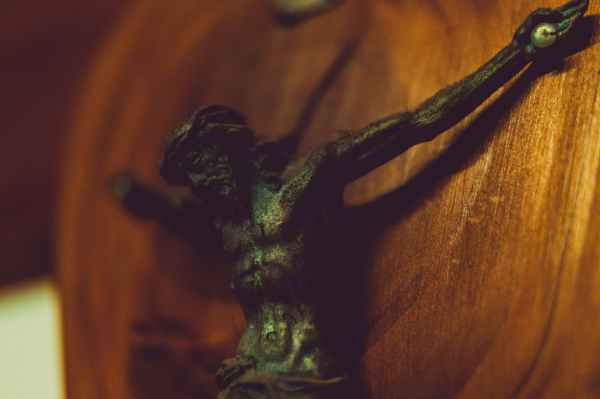
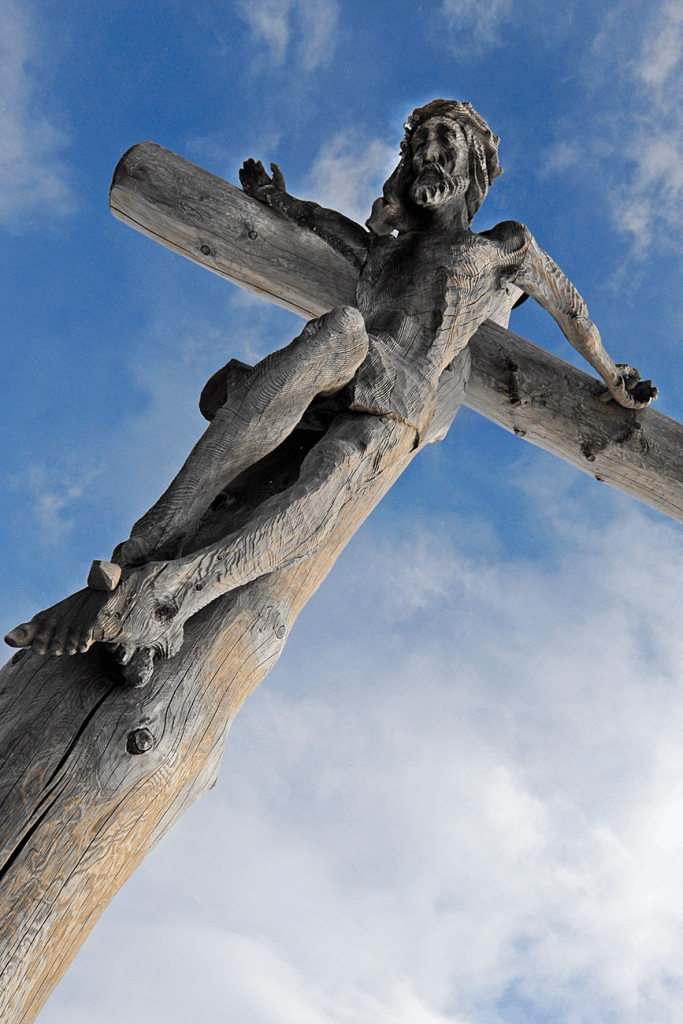
Jesus was not the only religious leader to die at the hands of enemies or rivals. The fact that his followers would commemorate or memorialize his death is not unusual or incomprehensible. But Jesus wasn’t just assassinated. He was condemned to die as a criminal. His death wasn’t just shocking or violent– it was humiliating, vile, excruciatingly painful, and involved public ridicule and anguish. There is nothing glamorous or brave or victorious about a cross. Christians who wear cross necklaces or t-shirts with blood-covered spikes might just as well wear handcuffs or ankle bracelets, or a picture of Jesus in an electric chair to show their devotion to a man who died as a criminal. Even though Pilate declared that he could find nothing wrong, he still allowed the conviction and death sentence to stand. Jesus didn’t win against his enemies– he lost, and he lost everything.
In our rush to celebrate Easter, and the “rest of the story,” sometimes we lose sight of the cross. Jesus– creator of the universe, perfect in the eyes of the law, beloved by God the Father–died a cruel, humiliating, senseless death. Those who are dying today of COVID-19 are struggling for their next breath, exactly as Jesus did so long ago. Jesus did not just “give up,” he didn’t just go into a coma as a gesture, knowing he would wake up in three days anyway, so why struggle for that next breath, or push through that cramp in his arm or leg, or let the sweat and blood from his forehead run into his eyes, unable to wipe them away or keep the flies from landing around his nose or ears… Jesus died– He heaved and strove and agonized until his heart and lungs and muscles could do no more.
We talk about Jesus as the “Lamb of God, who takes away the sin of the world” (John 1:29). Earlier in Israel’s history, God rescued the entire nation of Israel from their slavery to the Egyptians. He caused the angel of death to visit all of Egypt and kill all the first-born throughout the land. (https://www.biblegateway.com/passage/?search=Exodus+12&version=ESV)
All of Passover is a foreshadowing and visual representation of what was to happen at the crucifixion. Jesus became the sacrificial lamb, whose life would be given, and his blood be used, to save us from death and destruction, and allow us to be free. His body was broken, just like the bread of the Passover, to give us life.
Just as the lamb’s blood was placed on the sides of the door posts, Jesus’ blood stained the two ends of the cross where his hands were nailed. It stained the top and bottom of the cross where his head and feet bled, just as the lamb’s blood was placed on the top of the door frame and dripped to the ground beneath.
Jesus became a metaphysical “doorway”, painted with blood, through which we can enter into a place of safety, forgiveness, and promise. But only by going through the door– only by trusting fully in the work of Jesus’ death (and resurrection)– that we can be saved.
It wasn’t merely the act of painting the lamb’s blood on a door that saved anyone– it involved going into the house, and obeying the word of the Lord. It was wrapped up in preparing for a journey in which they would leave behind their slavery and old way of life, and walk through uncharted territory, led by God’s spirit, to a land of promise they had never seen. No Egyptian, by merely smearing blood on the doorposts or wrestling with the angel of death, or wearing a mask or staying behind locked doors, could defeat the plague. No Israelite could ignore God’s instructions, and roam the streets, trusting the the blood on the doorposts would cover him three blocks away. Death–and life– came on God’s terms. Wearing a cross necklace and “looking the part” won’t substitute for true faith that results in repentance, obedience, and discipleship.
Jesus died. And he rose again! But he didn’t do it so we could sail through life on our own terms. He came to show us that God can take our slavery, our sin, our failure, our sickness and sorrow, even our death– even senseless, humiliating, forsaken death– and give victory, life, and peace to those who follow Him.









































 Pursuing Prayer