Praying from Nineveh

It’s depressing to watch the news, lately–the reports include the COVID-19 pandemic, rioting and violence, injustice, crime, natural disasters…there is very little to celebrate. And yet, my nation just recognized the 244th anniversary of our declaration of independence from Great Britain. In that declaration are the immortal words, “We hold these truths to be self-evident, that all men are created equal, that they are endowed by their Creator with certain unalienable Rights, that among these are Life, Liberty and the pursuit of Happiness.–That to secure these rights, Governments are instituted among Men, deriving their just powers from the consent of the governed, –That whenever any Form of Government becomes destructive of these ends, it is the Right of the People to alter or to abolish it, and to institute new Government, laying its foundation on such principles and organizing its powers in such form, as to them shall seem most likely to effect their Safety and Happiness..” America has never realized perfection of these truths. No nation can claim perfection, just as no individual person can claim perfection. “All have sinned and fall short of the glory of God.” (Romans 3:23). But the truth still stands. All men (and women, children…human beings) are created equal, and are endowed by their Creator with certain inalienable rights. God does not favor the rich or the poor, men or women; He doesn’t favor one skin tone over another; He doesn’t love Baptists more than Catholics, or agnostics! He is not partial to citizens of one nation over another; He doesn’t favor Republicans over Democrats. Governments and individuals may deny or withhold these rights; they may pervert the truth or twist and shape circumstances to their favor at the expense of others. But the truth still stands.

Photo by Ketut Subiyanto on Pexels.com

Long ago, there was an empire called Assyria– powerful, ruthless, domineering. They were not governed by principles of fairness, equality, or justice. They conquered and slaughtered other people at will. Their capital city was Nineveh. The prophet Jonah, a man thoroughly familiar with their cruelty and lack of justice, was dispatched by God to warn the people of their coming judgment. Instead of obeying, Jonah fled. It would seem understandable that Jonah might fear the people of Nineveh. Delivering such a warning could put him in danger. But that wasn’t why Jonah fled.
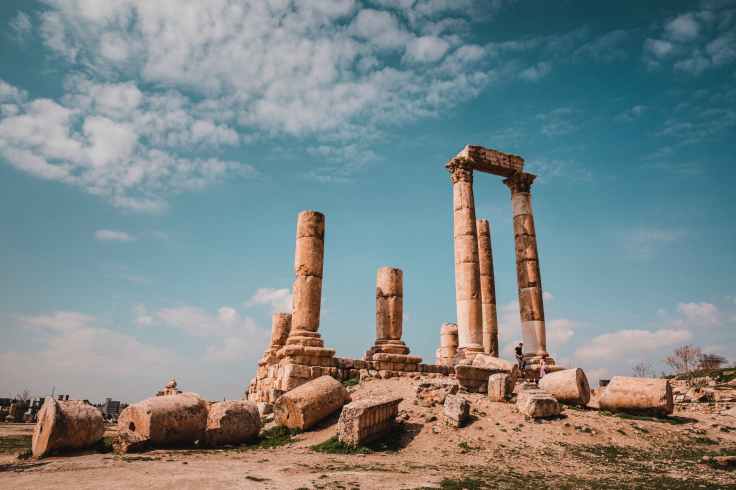
Photo by Jose Aragones on Pexels.com

The story of Jonah is well-known. After fleeing toward Tarshish on the first available ship, God sent a storm. Fearing that the ship would sink, the sailors cast lots to choose a human sacrifice to appease the sea gods. Jonah volunteered, saying it was his sin that “caused” the storm. Reluctantly, the sailors threw him overboard, and the storm ceased immediately. Jonah was “saved” when a giant fish swallowed him. From the belly of the fish, Jonah prayed, and God rescued him again, causing the fish to spit him out onto dry land. Jonah took advantage of his second chance, and went to Nineveh, preaching the message of destruction.

But when Jonah’s message results in mass repentance and a “second chance” for the Ninevites, Jonah is disgusted. THIS was why he didn’t want to go to Nineveh– because he did not want them to receive a warning and a potential reprieve! He knew that God was sending him, not with a message of doom, but with a message of hope! There was a chance to repent– to try again–to seek justice and avoid destruction. They didn’t deserve it. Certainly, they had never given mercy to any of the peoples they had already conquered. God had every right to destroy them without any warning– and Jonah had counted on it.

Photo by Nishant Aneja on Pexels.com

I almost always focus on the character of Jonah when I read through this story. https://www.biblegateway.com/passage/?search=Jonah+1&version=NIV (follow this link to see chapter 1 and use the site to read the other three chapters). But what about the people in the city of Nineveh? Imagine a stranger walking around one of America’s major cities– Washington, New York, Seattle (in light of recent events there)… His face and skin are unnaturally white and blotchy; bleached by stomach acid from an enormous fish. He looks like a zombie, and his message is delivered in utterly horrible assurance–“yet forty days, and this city will be destroyed.” Not by a spike in COVID-19 cases; not by looters or protesters tearing down a couple of buildings here or there–total destruction by the hand of God.

Photo by Євгеній Симоненко on Pexels.com

What might we do differently if we had forty days to convince God to stay His hand and give our nation a chance to repent. We claim we are not like the Assyrians– we were founded on truthful principles and ideals. We “hold” these truths, but we do not live them out as a nation.

The Ninevites did not have time to amend or rewrite a Constitution. They did not have forty weeks or forty years to “reconstruct” their empire or implement social justice legislation.

Photo by Life Matters on Pexels.com

But they had time to pray. They had time to fast, and repent, and seek the mercy of God. From the least to the greatest, they fasted and prayed. Even their animals fasted! They stopped frantically trying to grab power, and turned their eyes toward their Maker and Judge. And God listened! God forgave! God showed mercy!

Photo by Ali Arapou011flu on Pexels.com

May we pray– in every nation, region, city, village, or settlement– for God’s mercy in these times, and at all times. God is not waiting for us to “get it right.” He is waiting for us to come to Him. May we be humble and hopeful and turn to Him today. And may we learn from their example.*

Photo by Josh Willink on Pexels.com

*Spoiler alert– while the Assyrians in Nineveh repented after the message of Jonah, they quickly forgot God’s mercy and returned to their wickedness. Just a few decades later, God DID bring destruction on the entire empire– this time without warning!

G.P.S.

Psalm 23:3 English Standard Version (ESV)

3     He restores my soul.
He leads me in paths of righteousness
    for his name’s sake.

Photo by Amelie Lachapelle on Pexels.com

Many phones, tablets, even vehicles, come with a GPS– Global Positioning System–which uses satellite technology to tell you where you are. Combined with a satellite navigation system, the GPS helps tell you how to get from point A to point B– mapping out various routes, including estimated travel times, and information about road construction, detours, and traffic patterns. Applications like Google Maps or MapQuest can show you details and even images of the roads on which you are traveling. Such systems and apps can be very helpful, but they are not perfect. A GPS may be a few yards “off,” leading you close to your destination, but leaving you slightly lost and confused. If you type the wrong coordinates or address into a navigation system, you may end up far from where you expected to be!

Photo by Leonardo Gonzalez on Pexels.com

As Christians, we have a GPS– God’s Provision and Sovereignty. God promises to lead us in the paths of righteousness. God’s direction and leadership are sure and good. We still have the responsibility of listening and adjusting our course, however. We can still miss a turn, go off in the wrong direction, or set the wrong coordinates for our destination.

But, unlike a satellite navigator, God’s provision is eternal and supernatural. God knows all the roads we can take, could take, should take, (or shouldn’t take), and will take– He knows every curve, every bump in the road, every traffic jam, and every scenic lookout and rest stop along the way! God’s MapQuest sets us on a course of righteousness– paths that will not only bring us safely to our ultimate destination of eternal life with Him, but do so in a way that brings honor and glory to Him. After all, it’s His reputation at stake as our Shepherd. He is the Good Shepherd– He won’t lead us down the wrong path; He WANTS us to reach our destination. And our full potential!

Photo by Vlad Cheu021ban on Pexels.com

When we travel these paths, with our Shepherd leading the way, we will become familiar with the best roads; able to help others navigate the sharp turns and steep grades we have already traveled. We can share the glory of that sweet stretch of road beside the cool stream, or the view from the hidden rise. And we can share the blessings of being on the road with the one who owns it!

Photo by Drew Rae on Pexels.com

Sometimes, we pray for a different path– a short cut, or a road with more adventure (or less!)–God hears our prayers, and He knows where the road leads. When we look back, we may be amazed– not only at the road God laid out for us to follow, but the roads we didn’t take. We see a short-cut; God sees missed opportunities for growth. We see a detour; God sees the dangerous wash-out we were spared. But if we walk by faith, and not by sight (or intuition, or emotion), we will begin to see the goodness of the path we are on, no matter how difficult or how different from our expectation. And we will begin to pray, not for the path to change, but for wisdom to follow where our Shepherd leads.

Photo by Aleksejs Bergmanis on Pexels.com

The best part of God’s GPS is that no matter how lost we are; no matter which path we have chosen against His good will– God can get us back on course and to the right destination. He can turn our dead-end roads around, help us make the right turns, and help us reconnect with the paths of righteousness.

Photo by rawpixel.com on Pexels.com

Whatever path you and I find ourselves on today, I pray that we will turn on our GPS, and follow God’s directions for the road ahead.

…And I Am Not.

In my last post, I talked about “When God Doesn’t Answer..” Of course, there are times when God seems silent, and I spoke about a couple of times when that was true in my life. God’s timing and wisdom are reminders that He is God– and I am NOT.

I want to revisit that theme for a bit. I was reading the post and realized that I spoke of the waiting and hoping and God’s faithfulness in sending an answer in the person of David, who became my husband. I spoke of God’s ways being higher and better than our ways– and they are. But I left out one aspect of God’s character. Forgiveness.

Photo by Josh Willink on Pexels.com

It is tempting, and I gave in to the temptation, to focus on my feelings, and my positive actions during those years of waiting– taking good advice and making good use of my time as a single to volunteer and serve. But I also did plenty of wallowing in self-pity, of questioning God’s goodness and His timing. I slipped into bad habits that I had to break as a married woman– selfish habits and indulgent thought patterns. And I find myself battling new bad habits, slipping back into depression and isolation, or taking for granted the blessings of married life.

I don’t say this to negate God’s goodness in answering my longing for a husband and family, nor to suggest that God’s long silence and eventual answer were any less gracious and loving. Instead, I want to thank Him for being patient with me, for extending both mercy and grace in His good time, and in spite of my bad behavior.

Photo by u0410u043du043du0430 u0412u0430u0441u0438u043bu044cu0435u0432u0430 on Pexels.com

God’s mercy and his goodness surround us–especially when we don’t see them. When we doubt His presence, when we accuse Him of not caring, when we pout, and posture, and resent the road He has us traveling. God’s word is full of stories of people who waited– some patiently, some not so much– and people who wandered, and even rebelled. And many of them perished without ever seeing God’s answer or without repenting. But I cannot think of any instance where someone who sought God’s face or His forgiveness and was turned away– EVER. God followed the grumbling nation of Israel for forty years, His anger breaking out against them multiple times, but He remained faithful to His promise to bring them to the Promised Land. https://www.biblegateway.com/passage/?search=Deuteronomy+1&version=NCV God went so far as to remove His Spirit from King Saul, but He allowed Saul to continue to reign, even when Saul tried to kill God’s anointed one and his own son-in-law. https://www.biblegateway.com/passage/?search=1+Samuel+19-24&version=NIV God followed David from his days as a shepherd boy through his reign as Israel’s king– in spite of David’s sins, in spite of the drama and chaos of his household, in spite of betrayal by his own sons and generals.https://www.biblegateway.com/passage/?search=1+kings+2%3A1-10&version=CSB God chased down Saul on the road to Damascus– after Saul had hunted and hounded faithful followers of the Messiah.https://www.biblegateway.com/passage/?search=acts+8%3A1-3%3B+9%3A1-18&version=ESV

God is patient and faithful with us– whether we have grumbled at His timing, or turned our back on Him for a season, or actively rebelled against His sovereignty and kindness.

Photo by Artem Beliaikin on Pexels.com

When God seems silent, we often forget that He also remains silent in the face of our grumbling. He withholds His righteous judgment, giving us ample opportunities to rethink, repent, and return. His silence reminds us that He is God– and we are not. He does not owe us an answer– nor does He owe us a second chance. But He will give us both in His time. Because He is God– in His sovereignty, in His boundless Love, and in His mercy–and I am not. I am not God. I am the (sometimes) grateful recipient of all that He gives.

May I be grateful today, not just for the blessings and gifts and answered prayers, but for the patience, grace and mercy I don’t deserve.

Resent, Relent, or Repent…

We’re getting ready to enter the Lenten season–six and a half weeks of reflection and preparation before Easter. Lent is not a celebration in the traditional sense– it is solemn and reflective, personal and, sometimes, painful. It is a time of getting “real” about our sinful condition. The Bible says we have all fallen short of the Glory and Holiness of God (Romans 3:10) and deserve God’s wrath. The natural consequence of sin is death (Romans 6:23), and permanent separation from the goodness of God.

Photo by Engin Akyurt on Pexels.com

There are many ways we can react to this reality. I know many people who resent God’s Holiness and His laws. They do not want to face God’s righteous judgment; they believe that God’s laws are cruel and unjust, and that they do not have to answer to anyone greater then themselves.

Others want to bargain with God. They feel that if they relent– if they set a goal to do more good than harm, if they strive to be better than “the next guy”–God will weigh their good deeds in the balance and judge them in comparison with how bad they “might have been.”

Photo by mentatdgt on Pexels.com

But God doesn’t judge on a curve– He doesn’t judge us by our measure, but by His. And none of us “make the grade.”

If that were the final word– the end of the story– there would be no reason to relent, and it wouldn’t make any difference if we were resentful. But God, from the very beginning, designed a different outcome. His judgement is just, but it is not without hope or remedy. God Himself has given us the chance to change– to repent. Repentance is agreeing with (not resenting) God’s judgment, and responding (not bargaining) with changed behavior and a changed attitude.

Lent begins when we confront the great gulf between God’s Holiness and our sinfulness. It stretches through the realization that sin and its consequences surround us, hem us in, and poison our world. It is a time of sadness and gaping loss, when we long for healing, for hope, and for a home we’ve never seen. It is a time for reflecting on the cost involved–not just in human suffering, but in God’s suffering as a human. God, who could have, in His righteousness, destroyed even the memory of mankind, chose to share our sufferings– hunger, cold, exhaustion, rejection, heartbreak, betrayal, death– to that we could be delivered into everlasting life.

Lent ends as we remember Jesus’ death and burial– His ultimate sacrifice for our debt. It ends with a shattering trumpet-blast of hope and joy on Easter Morning. Our sadness and loss is NOT the end– Sin’s power and poison are illusory. They have no power over our Great God.

Photo by Pixabay on Pexels.com

It can be tempting to respond to our present circumstances with resentment. It can be tempting to relent in our rebellion– trying to bargain with God, and minimize the cost He had to pay, trying to pay the price ourselves with a show of good behavior and a superficial devotion.

But God’s great Love and Mercy should draw us to worship and true devotion. As we reflect on the great gulf between sin and holiness, it should cause us to gladly repent– to lay on the altar all the substitutes and lesser things that keep us from full communion with the Lover of Our Souls.

Photo by sergio omassi on Pexels.com

Our prayers during this season may be difficult. They may be filled with grief, loss, and pain. But they may also be filled with hope and joy as we anticipate the gift of Grace. And they should be filled with praise. After all, Lent is a season; a season to reflect, a season to repent, a season to mourn, but a season with a beginning and an end; a season that gives way to celebration and a sure hope of resurrection!

Come Home

It’s Football season again here in the U.S. (American Football, that is). High Schools and colleges across the country are having “homecoming” festivities, as their teams return “home” after playing games on the road. Elaborate floats, dress-up days, pep rallies, parades, ceremonies, homecoming princes and princesses, dances, tailgate parties..homecoming is a big deal. There is something about the idea of returning home that captures our emotions and brings out joy and excitement.

Photo by Joe Calomeni on Pexels.com

One of the most famous of Jesus’ parables involved a son who comes home after living a life of dissipation, folly, and dishonor. https://www.biblegateway.com/passage/?search=Luke+15%3A11-32&version=NIV. As he is making his way home, but is still “a long way off,” his father sees, him, has compassion on him, and runs to meet him and welcome him. He then commands that clothes should be brought, and a feast prepared to welcome his son back home.

Photo by Pixabay on Pexels.com

What a beautiful picture of God’s love for us–it overcomes shame and disgrace, dishonor, and ruin. God watches for us to change directions and seek His face. But He doesn’t demand that we crawl home in defeat and beg Him to take us back. He runs to meet us with joy and excitement even greater than all the parades and floats and dances of any homecoming celebration. All of Heaven rejoices over every one who comes to repentance!

Photo by Pixabay on Pexels.com

But there are two sons in this story. The “other” son does not want to join in the celebration– he is resentful and bitter over his brother’s behavior and his father’s willingness to celebrate. We do not get to know all the reasons why he might be resentful, but his father gently reminds him that he is loved and secure, and still has his inheritance. The return of the brother doesn’t change any of that.

In prayer, we should remember this parable and some of the lessons it can teach. Let’s ask ourselves:

  • Am I making some of the same mistakes as the “prodigal son?” Am I running away from “home” and God in selfish pursuits? Am I asking God for an “advance” on my inheritance–wanting blessings and rewards before God’s time or outside of God’s will? Am I wasting time or resources or talents that God has given me? Am I stubbornly refusing to return home, even when it’s obvious that “my” way isn’t working? Do I think I need to work my way back to God by bargaining my good works?
Photo by Pixabay on Pexels.com
  • Am I making some of the mistakes of the “other” brother? Do I resent God’s mercy toward people I think of as “unworthy?” Do I refuse to celebrate and welcome my brothers or sisters who have come “home?” Do I blame God for “withholding” blessings, even though I never sought them? Do I doubt God’s love for me because my life story isn’t dramatic or filled with miraculous demonstrations of grace (apart from the ultimate miracle of the Crucifixion and Resurrection!!!)
  • Am I watching and running with the Father to welcome others “home?” Am I joining in the Homecoming festivities for those who are being rescued from ruin and death? Am I filled with joy and excitement about the Gospel?
  • Am I anticipating the ultimate “Homecoming” –the indescribable joy of spending eternity with the Father, Son, and Holy Spirit, along with all the saints in Glory?

Lord, help me to see the faces of my neighbors and friends, and enemies, and even strangers, as you do–help me to delight in their redemption, ready to celebrate and share in the joy; help me to search for them, run to them, and lead them to You! And help me to never take for granted the amazing love you have for me–even me!

Photo by Munmun Singh on Pexels.com
  1. Softly and tenderly Jesus is calling,
    Calling for you and for me;
    See, on the portals He’s waiting and watching,
    Watching for you and for me.
    • Refrain:
      Come home, come home,
      You who are weary, come home;
      Earnestly, tenderly, Jesus is calling,
      Calling, O sinner, come home!
  2. Why should we tarry when Jesus is pleading,
    Pleading for you and for me?
    Why should we linger and heed not His mercies,
    Mercies for you and for me?
  3. Time is now fleeting, the moments are passing,
    Passing from you and from me;
    Shadows are gathering, deathbeds are coming,
    Coming for you and for me.
  4. Oh, for the wonderful love He has promised,
    Promised for you and for me!
    Though we have sinned, He has mercy and pardon,
    Pardon for you and for me.

“Piece” of Mind

I gave that fellow a piece of my mind! I let him know how wrong he was, how backward, how ill-informed. And he just wouldn’t see reason.
He had the nerve to call me hateful, judgmental, and “toxic!” Doesn’t he understand? He is selfish, rebellious, arrogant, and “lost.” I was just trying to give him a warning. If he doesn’t repent, he will end up in Hell. I was good enough to spend my valuable time trying to set him straight, and all I got for it was abuse! Well, you know what they say, “Hate the sin, love the sinner.” At least I tried.

Photo by Designecologist on Pexels.com

I gave that woman a piece of my mind! I let her know how judgmental and backward and hateful she is. Who is she to tell me what to think? She called me a sinner and told me I was going to Hell– and then she wants me to thank her for it?! She was completely unreasonable. Why would I want to spend time with someone like that? People like her are what’s wrong with this world. They talk about love, but only if you act and think exactly like them– what kind of “love” is that? What a hypocrite!

Photo by Lukas on Pexels.com


Christ’s Example of Humility
2 So if there is any encouragement in Christ, any comfort from love, any participation in the Spirit, any affection and sympathy, 2 complete my joy by being of the same mind, having the same love, being in full accord and of one mind. 3 Do nothing from selfish ambition or conceit, but in humility count others more significant than yourselves. 4 Let each of you look not only to his own interests, but also to the interests of others. 5 Have this mind among yourselves, which is yours in Christ Jesus, 6 who, though he was in the form of God, did not count equality with God a thing to be grasped, 7 but emptied himself, by taking the form of a servant, being born in the likeness of men. 8 And being found in human form, he humbled himself by becoming obedient to the point of death, even death on a cross. 9 Therefore God has highly exalted him and bestowed on him the name that is above every name, 10 so that at the name of Jesus every knee should bow, in heaven and on earth and under the earth, 11 and every tongue confess that Jesus Christ is Lord, to the glory of God the Father.
Lights in the World
12 Therefore, my beloved, as you have always obeyed, so now, not only as in my presence but much more in my absence, work out your own salvation with fear and trembling, 13 for it is God who works in you, both to will and to work for his good pleasure.
14 Do all things without grumbling or disputing, 15 that you may be blameless and innocent, children of God without blemish in the midst of a crooked and twisted generation, among whom you shine as lights in the world, 16 holding fast to the word of life, so that in the day of Christ I may be proud that I did not run in vain or labor in vain. 17 Even if I am to be poured out as a drink offering upon the sacrificial offering of your faith, I am glad and rejoice with you all. 18 Likewise you also should be glad and rejoice with me.

Philippians 2:1-18 English Standard Version (ESV) (www.biblegateway.com) Emphasis added.
Photo by Magda Ehlers on Pexels.com

Lord Jesus, help me to give others the “Peace” of Your mind today, rather than a “piece” of mine!

Repent, relent, or resent?

I’m revisiting Jonah today.  The book of Jonah is a fascinating study–it’s just four short chapters, but they are packed with messages that inspire, convict, and encourage. More about Jonah here…

waves

At the beginning of the book, Jonah is sent by God to preach disaster to a city steeped in evil and violence.  Nineveh was an ancient metropolis of the Assyrian empire, located near modern-day Mosul, Iraq.  The people of Nineveh had been responsible for attacks against Israel, and it is believed that Jonah may have lost family members in these attacks.  Now God is sending him into the “belly of the beast” to preach judgment and doom.  Instead of following God’s command, Jonah tries to run away and gets swallowed by a big fish.

photography of whale tail in body of water
Photo by Daniel Ross on Pexels.com

This is the part of the story with which most people are familiar– Jonah and the “Whale”.  But this covers only the first quarter of the story!  Inside the fish, Jonah prays.  It is a beautiful prayer of praise and acknowledgement of God’s might and power to save.  This is not the sniveling coward of chapter one, but the great prophet he could have, should have been.  God gives him another chance and this time, Jonah is faithful to preach the message God sends– forty more days and He will wipe out Nineveh.

brown concrete building
Photo by Nicolas Postiglioni on Pexels.com

But something unexpected happens.  The people of Nineveh hear Jonah’s dire warning– a lone voice calling in the streets with a gloomy message– and they repent.  From the least to the greatest, they cry out for mercy, they fast and mourn and do a complete about-face.  Just as God saved Jonah from the fish, He relents and saves Nineveh from destruction.  Jonah’s enemies get to live to see a new day!

The Ninevites repented, God relented, and Jonah resented.  The last chapter tells of Jonah’s temper tantrum in the light of God’s mercy.  God even sends him an object lesson in the form of a gourd vine.  The book of Jonah ends abruptly with God’s last statement.  We never read Jonah’s response; we never find out if he learned his lesson a second time or not.

green trees
Photo by Juan Pablo Arenas on Pexels.com

Even with its abrupt end, the book of Jonah teaches about three important responses:

  • The people of Nineveh repented.  When faced with judgment, they humbled themselves and called for mercy.  They received it.  In spite of their former violence, idolatry, and wickedness, God sent them a warning, and He extended the grace and mercy they did not deserve.
    • Two words of warning here:
      • 1) Their response was immediate, sincere, and dramatic.  That makes for an exciting story, but repentance sometimes comes over time and quietly.  God knows if our repentance is real.  It is not our place to judge someone else’s conversion or apology.
      • 2)  In the case of Nineveh, their repentance was short-lived.  God eventually destroyed the city and the Assyrian empire.  Just because we have a moment of sincere regret or keenly feel a need for mercy doesn’t mean that God has an obligation to extend mercy or to withhold judgment indefinitely.  Grace is a gift, not a negotiation!

pexels-photo-576926.jpeg

  • God relented.  God listens, ready to extend His grace.  He does not punish us as we deserve.  He does not mete out immediate judgment without hope of redemption.  God sent Jonah with a message of potential doom to Israel’s sworn enemy in the knowledge that they (EVEN THEY) would repent.  God sent dozens of prophets to the nation of Israel warning of doom and exile, and they mocked and even killed the messengers!  God is patient, loving, and kind.  But He is also just– evil will not be forgotten or left unpunished.  God will relent, but He won’t retreat, back down, or surrender.

pexels-photo-583437.jpeg

  • Jonah resented.  We don’t know if he stayed resentful, or rediscovered gratitude for God’s grace to Nineveh or to himself, but we are left with a picture that Jesus echoes in the story of the prodigal son.  Jonah is like the older brother who worries more about his brother’s misdeeds than his brother’s soul.  How many of us who have experienced grace sulk and pout when we see others enjoying their first delightful taste of it?  Do we stamp our feet at God when he sends us to bring the Gospel to people we have written off as uninterested in or unworthy of it?  Do we resent being corrected and humbled by a loving God?  Do we worry and fret over our creature comforts as Jonah worried over his gourd vine, while others live without hope, food, or shelter?

Three words, so similar in spelling and sound, but so very different in impact!

Lord, I pray that my repentance would always be immediate and sincere; that I would see others, and their need for your grace, through your eyes of compassion; and that I would not resent your goodness and patience toward others.  Thank you for your patience and mercy toward me, and may I give the same to those who need to see Your face.  Give me the wisdom to trust you and obey, even when my flesh would run away.  May I see the gourd vines and big fish in my life as your gifts.

Of Flotsam and Jetsam

We’ve had a lot of rain lately– torrential bursts that turn our street into a river for a few minutes, before running into the sewer drains.  In that time, many small objects come floating by our apartment– fallen leaves, pebbles, cigarette butts, discarded plastic spoons, candy wrappers, etc.  The swift waters propel them from wherever they had been– someone’s drive, the alley, the parking lot–past houses and stores and toward the drains.  Some of them end up clogging a drain, forming a small pile of trash where there was none before.

person riding a bicycle during rainy day
Photo by Genaro Servín on Pexels.com

The opposite scenario is happening along several coastal areas, where debris is washing up from the ocean and landing on beaches, clogging up deltas and salt marches and having a terrible impact on the environment.

time lapse photo of brown grass on body of water
Photo by Darwis Alwan on Pexels.com

Flotsam and jetsam–the terms come up occasionally in literature or movies.  There are characters in Disney’s “The Little Mermaid” with those names.  There is a chapter in Tolkein’s “Lord of the Rings” Trilogy (the ninth chapter of the first book of The Two Towers, for purists)  titled “Flotsam and Jetsam”.  There is even a band by that name.  They are almost always used in tandem, and most people use them interchangeably.

But there is a difference.  Flotsam is considered debris that ends up in the water by accident, as in the case of a shipwreck.  Jetsam is something deliberately thrown overboard or “jettisoned”.  Legally, flotsam can be reclaimed by its original owner, while jetsam can by claimed by anyone who finds it.  more about flotsam and jetsam from NOAA.

person holding plastic bottles and hose
Photo by Daria Shevtsova on Pexels.com

Most of what I’ve seen floating by this week is neither flotsam nor jetsam– it’s merely garbage.  And that is what is causing so many problems along the coastlines, as well.  Our lands and oceans (and our lives, too) can easily get overrun by waste and packaging and excess.  We fill our lives with things that do not have any good purpose, and even if we dispose of them, they can come back to haunt us or hurt others down the road (or on another coast).

Today, I want to pray that God would continue to teach me to find my satisfaction in Him, and to watch out for spiritual flotsam and jetsam:

  • Flotsam– those things, people, habits, beliefs, promises, warnings, etc.  that get washed overboard or lost along the way.  May God reclaim relationships, help me relearn good habits, and restore joy in my salvation (Psalm 51:12)
  • Jetsam– those things I need to jettison–bad relationships, bad habits, faulty thinking, pride, clutter, etc.  In His power, and with His help, I need to cast such things aside, or better yet, put them to death and bury them, never again to be reclaimed.

sunset ship boat sea
Photo by Pixabay on Pexels.com


Forgiveness is Free: It Isn’t a Free Pass

Yesterday, I posted about praying for our enemies– those who have hurt us.  We are commanded to forgive those who have wronged us, to do good to them, and to pray for them.  But I want to make sure I don’t give the wrong impression about offering forgiveness.

Forgiveness doesn’t ask us to excuse the inexcusable, or trust the untrustworthy.  Forgiveness is trusting that God, in His wisdom, His Holiness, and His timing, will bring justice, healing, and peace, when nothing else can.  This is important to remember, both as someone who asks for forgiveness, and as someone who gives it.

Jesus offers forgiveness–full, and free, and perfect– he died to make that offer.  He gave it to whoever believes on His Name.  But here’s the catch…he didn’t make that offer so you can temporarily wipe the slate clean and go on sinning without consequence.

Oscar Wilde wrote a chilling novel, “The Picture of Dorian Gray”, Dorian Gray/Wikipedia    in which the title character finds a way to trap his soul, with all its ugliness, hatred, anger, and sin, inside a portrait.  No matter what Dorian does, no matter how twisted or evil, he continues to look fresh, young, innocent, and handsome.  The effects of his dissipated lifestyle–drug addiction, sleepless nights, years of hard living, even murder–are all trapped in the portrait.  Over the years, the portrait haunts Dorian with its monstrous transformation from young man to gnarled wraith.  In desperation, he “kills” the portrait– and himself– in disgust and anguish.

dorian_gray_by_pti_spb-d6f1lmr

We live in an age of appearances– if all appears well on the surface, we ignore the deeper, long-term consequences of our sin.  If we “get away with” small sins, we run the risk of sinking deeper into a sham lifestyle.  We go through the motions of asking forgiveness, when what we really seek is escape from the consequences of our own actions.  We begin to see sin as a valid alternative to obedience–I can obey God if it is convenient, but when it’s not, I can just ask forgiveness.  This is a road strewn with lies, excuses, evasions, and it ends in death.  It is a lifestyle that makes a mockery of God, of his Holiness, His Sacrifice on the cross, and His loving offer of restoration.

God doesn’t just want to transfer your ugliness and rebellion into a painting to hide it away.  He wants to remove it “as far as the east is from the west.”  We don’t become perfect in an instant, but our past is expunged so that we can be free to choose obedience and live more abundantly in fellowship with a Holy God.  When we are truly sorry for our sins and seek true forgiveness, we want to make better decisions, we want to right wrongs– we want to redeem the past rather than merely escape from it.

pexels-photo-1018478.jpeg

When we, as imperfect people, offer forgiveness to someone else, we are not able to do what God does.  Our forgiveness is imperfect; like love, or discipline, or a new habit, it needs to develop and grow.  Forgiveness is not about freeing the offender, or wiping the slate clean for the other person.  It’s about freeing yourself to heal, to move away from slavery to the pain of the past, and to learn to trust God to bring justice.

Forgiveness isn’t natural or easy.  No one deserves forgiveness– that’s what makes it a miracle that God offers it to anyone who asks.  But God doesn’t undo our sin.  He doesn’t erase our actions, or clean up the messes we have made.  If I commit murder, God can forgive me, wash away the guilt of what I’ve done, and give me the power to live a life that seeks to do good, rather than evil.  But he’s not going to bring my victim back to life, or cause a judge and jury and the family of my victim to say, “Aw, that’s alright– you’ve probably learned your lesson.  No hard feelings.”  He can (and has) caused amazing healing to happen in such situations, but that’s the exception, not the expectation.

Similarly, if you have been hurt and you offer forgiveness, it doesn’t mean that the other person is no longer responsible for his/her actions.  It doesn’t mean that you were never hurt or betrayed, and it doesn’t mean that you trust them immediately and without reservation. It is not hateful, intolerant, or unforgiving to allow justice to catch up with someone who has hurt you– it IS unforgiving to seek beyond justice to vengeance and self-defined retribution.

pexels-photo-133170.jpeg

This is particularly important in cases of abuse.  If someone has abused you, physically, emotionally, or mentally, they are likely to make you feel the guilt they don’t want to deal with.  “You drove me to it.”  “You are the only one who understands my anger.”  Forgiving this person does not mean– it NEVER means– that you agree with their tactics and false accusations, or that you are giving them a pass.  But it DOES mean that you are giving them, and the damage they caused, over to the God of all justice.  Your case is closed; your final judgment is in his hands, and you are free to begin again– begin to heal, begin to see how God can bring something important and good and eternal out of something broken.  Forgiveness is impossible, but God will give you the power to do it– it may take several attempts, and several years, but when it comes, it will be the miracle of God working through you to glory!

What? A Privilege?!

“What a Friend we have in Jesus,  all our sins and griefs to bear!  What a privilege to carry everything to God in Prayer!”

The word “privilege” has taken a beating lately.  A privilege used to be considered a good thing.  Merriam-Webster defines it as, “a right or immunity granted as a particular benefit, advantage, or favor.”  A privilege is granted–given as the prerogative of someone in power or authority– to someone else.  It may be given as a reward, or granted for a limited time and under certain conditions.  But a true privilege is a gift–you can’t make your own privilege, and you cannot own or control a privilege– the terms are set by the giver, not the receiver.

In the past generation, the word “privilege” has become charged with political and societal connotations.  Those connotations, and the issues surrounding them, are worthy of discussion and could fill volumes, but I want to talk about a privilege that should be free of undertones and dubious meanings.

Prayer is a pursuit, and a practice.  It is personal, practical, and powerful.  But it is also a privilege.  Often one that we take for granted.

In pursuing prayer, we are not just developing a personal routine or discipline.  We are not just approaching a powerful supernatural entity.  We are fallen creation entering the presence of a Holy Creator; we are rebels entering the throne room of the King of Kings.

We have the right to approach God; to talk to, converse with, ask favors of, plead with, confess to, and expect answers from the One who creates galaxies with a single spoken word, and designs every unique flake of snow.  This same God grants us the right to draw breath, to experience both beauty and wonder, to question and to create.

Prayer in ancient times was almost universally accompanied by sacrifices, and surrounded with ritual– incense, bowing and prostrating oneself, covering or uncovering the head–in recognition of the horrible chasm, the great separation between God and mankind.  Many traditions still use ritual for prayer, and there is nothing wrong in this reminder of God’s Holiness and Sovereignty.  Yet God talks of prayer in intimate terms.  He didn’t impose ritual and sacrifice for his benefit, but for ours.  Several times throughout the Bible, he makes clear that he does not require the blood of bulls and goats–what he wants most is a humble and pure heart.  At the moment Jesus died, the great veil in the Temple was ripped in half from top to bottom–the most holy place laid open to all who might come into God’s presence.  Christ’s death and resurrection were not just means of saving us from Hell, but the means of bringing restoration of the intimacy God designed from the beginning.  God– Almighty, Omnipotent, and completely Holy–wants to give us the privilege to enter his presence and pour out our thoughts, feelings, burdens, and triumphs; to share intimacy with HIM.  We are not just objects of his care (or his wrath), not just creatures in whom he has a certain fond but distant interest.  We are recipients of lavish love and priceless privileges– forgiveness, power over sin, power to become more Christlike, restoration and renewal, and yes,  the pursuit of  prayer.

Blog at WordPress.com.

Up ↑