When God Uses a “Wasted” Opportunity

God’s ways are NOT our ways. And often, we can become discouraged by things that have happened in our past or things that seem like obstacles in the present. But our vision is limited by both time and space. We can’t see things from the outside looking in, and we can’t see things unfolding before they happen. Instead, we use our imagination, which can give us a vision that is wildly out of perspective.

Photo by cottonbro studio on Pexels.com

Take the case of Jonah (see Jonah 1-4). Jonah was given a clear mission from God– go to the great city of Nineveh and give them a message of judgment. Jonah could not “see” the outcome, but he could imagine a lot of things that made him run in the opposite direction! Nineveh was the capital city of his arch-enemies. The Assyrian armies had swept through Jonah’s land, and had very likely killed several of his family members. They were notoriously violent and Jonah must have presumed that there would be great danger involved in traveling into Nineveh, let alone proclaiming a message of certain doom!
Photo by Alex Andrews on Pexels.com
Photo by Guillaume Soucy on Pexels.com

Jonah didn’t just ignore God’s command– he went as far as he could in the opposite direction. He wasted the opportunity to see what God had planned, choosing instead to run away. He boarded a ship for Tarshish. He probably thought that God would have to use someone else, or that He would bring judgment upon Nineveh without any warning. At least he, Jonah, would be safe. But God’s ways were not Jonah’s ways. God brought a fierce storm that threatened to sink the ship. The sailors were terrified, but Jonah felt the weight of his guilt. He told the sailors to throw him into the sea, and God would save them from the storm. Though the sailors probably felt they were sending Jonah to his doom, they obeyed. And they were amazed as the storm disappeared! Nothing about Jonah’s words or actions caused these sailors to see God’s glory, but see it, they did. And they worshipped

Jonah missed the opportunity to see how God worked “around” him to amaze the sailors– instead, he got another lesson in how God’s ways were not Jonah’s ways. Jonah may have expected to drown, but God sent a big fish to swallow him, instead. Jonah spent three days inside the fish, being saved from the icy waters of the sea, and transported back to land, where the obedient fish “spit” him out onto the shore.

God did not find someone else to send the message. God did not change His plans. God simply changed Jonah’s situation and gave him a second chance. This time, Jonah obeyed. And God performed another miracle. Instead of killing Jonah or ignoring his warning message from the Lord, the Ninevites believed. And they repented– from the King down to the lowest citizen. God relented and showed mercy in the face of such repentance. Jonah had the opportunity to see God’s mercy and wisdom.

Photo by Luis Quintero on Pexels.com

But Jonah wasted this opportunity, as well. Instead of seeing the gracious hand of God at work to change the hearts of his enemies, Jonah only saw that God had not acted with vengeance and harsh judgment. (Later, when the Ninevites returned to their old ways of life, God DID send destruction, but Jonah missed that, too.) In fact, Jonah was angry with God, and threw a temper tantrum as the Ninevites celebrated God’s kindness and mercy. Jonah was a prophet– he very likely had a long career doing God’s work. He probably had many successes, but the Biblical account we have of him tells only of his failure. In spite of that, we can see in the story of Jonah how God can use even failure to bring salvation and redemption to the lost. God’s ways are not our ways!

Photo by Daka on Pexels.com

Today, I want to be encouraged by Jonah’s story. So often, I get bogged down in the mistakes of my past–missed opportunities and failures, things left unsaid, or actions that can’t be undone. It is important that we acknowledge our sins and mistakes; that we do what we can to make amends, and that we repent. But we must also acknowledge God’s power to make all things work together for good (Romans 8:28) and remember that “He who began a good work in you will be faithful to complete it.” (Philippians 1:6) Know too, that God knows the plans He has for you (Jeremiah 29:11) even though you and I cannot see the end of the story. God’s ways are not our ways (Isaiah 55:8); they are higher and Holier. His wisdom and power are infinite, and His plans are ultimately for our Good.

“Wasted” opportunities need not lead to years of guilt and self-torture. Instead, they should be learning experiences that lead us to greater faith, quicker obedience, and greater joy!

Flee!

As we bid goodbye to September and enter October, we are entering the season of Halloween and horror movies. I’m not too fond of this cultural phenomenon–I don’t like horror movies, and, while I don’t mind handing out candy to kids dressed up in clever costumes, I’m not thrilled about kids and adults “celebrating” witches, vampires, zombies, etc..

Photo by Yaroslav Shuraev on Pexels.com

While I don’t watch horror movies, or read horror novels, I have noted what others have told me about them. One of the strangest phenomena they report is the seeming inability of innocent people to escape the horror stalking them. This is sometimes part of the horror and the plot, but often, the “victim” has many chances of running away– but never does! (Or they wait until it is too late.) In fact, movie-goers often report the audience will sometimes yell at the characters to, “Run!” But they simply stand, fascinated or paralyzed by fear, waiting for their doom to catch up to them. Of course, this adds to the suspense of a fictional scenario, but it sets a terrible example for real life.

Photo by Trinity Kubassek on Pexels.com

Recently, I heard an interesting and disturbing parallel in reports about real “victims” from a public safety official. He said that in various crime scenes, like those involving a violent confrontation or an active shooter, many people who could reach safety, don’t. This is because they continue to watch the horror unfolding around them. They do nothing to stop it; nothing to avoid it; nothing to protect themselves. In fact, some of them take out their phones and start filming it–creating their own “real-life” horror movie. Instead of taking common sense precautions, they seem more interested in watching the “story” unfold, as if it had no power to touch them. Normally compassionate people will watch someone else being bullied, tortured, harassed, and even killed without calling for help or protecting themselves or others who could be pulled into the violence.

Photo by cottonbro on Pexels.com

There is nothing “entertaining” about violence and evil. There may be something instructive about watching evil being defeated, or violence being stopped, but there is greater wisdom in avoiding evil and violence in the first place. Evil should not make us curious– it should repulse us, and make us want to flee. Seeing a rattlesnake coiled and hissing should not cause us to reach out and try to pet it! Watching someone waving a loaded gun around should not cause us to whip out our phone and record it for later viewing.

Photo by Daniel Reche on Pexels.com

As Christians, we are warned to “flee from temptation” in the same way we are urged to flee from danger and horror. When we know something is evil, harmful, unwholesome, corrupt, poisonous, and unholy, we are to have nothing to do with it. This is not because we feel powerless in the face of evil. God is with us in any situation. But we are to stay away from situations and relationships that threaten our ability to do what we know to be honest, compassionate, and “right.” Jesus warned His disciples to “watch and pray, that you may not enter into temptation. The spirit indeed is willing, but the flesh is weak.” (Matthew 26:41 ESV) And in The Lord’s Prayer, He prayed that we would not be led into temptation, but delivered from evil. (Matthew 6:13) Jesus wasn’t saying that we should live in perpetual fear; rather that we should make it a priority to avoid ANYTHING that would draw us away from the goodness and mercy of God. Even in our prayers, we should ask God to keep us on the path of righteousness and keep us away from temptation and failure. Common sense alone will not keep us from dangerous behaviors like flirting with sin or dabbling in danger. God will provide a way out (1 Corinthians 10:13), but how much better to avoid the need for constant rescue!

Photo by Guy Kawasaki on Pexels.com

As this season approaches, I pray that God would keep me far from the path of evil. I don’t want to be like the “victim” in a horror film, paralyzed by fear or fascination, while sin and death come stalking. Nor do I want to be the bystander, filming someone else’s pain and torture instead of seeking help and protection. The spirit indeed is willing– willing to fight against evil; willing to grapple with it; willing to learn more about it; willing even to flirt with it. But the flesh is weak and vulnerable to deception, traps, and failure.

We are not to follow after the empty promises of temptation–“thrills and chills,” titillation, “secret” knowledge, “spine tingles,” etc.. Instead, we are to seek the sure promises of a Loving God– His guiding presence, His joy, His eternal Love, and His abundant Life.

Photo by Patricia McCarty on Pexels.com

Flee temptation; Run to Jesus!

Be Ready!

5-9 So don’t lose a minute in building on what you’ve been given, complementing your basic faith with good character, spiritual understanding, alert discipline, passionate patience, reverent wonder, warm friendliness, and generous love, each dimension fitting into and developing the others. With these qualities active and growing in your lives, no grass will grow under your feet, no day will pass without its reward as you mature in your experience of our Master Jesus. Without these qualities you can’t see what’s right before you, oblivious that your old sinful life has been wiped off the books.

2 Peter 1:5-9 (The Message–emphasis added)
Photo by Syed Qaarif Andrabi on Pexels.com

Do you plan for emergencies? Most people have some basic idea or plan for expected circumstances; a first-aid kit for home accidents; a small store of food or water; perhaps a generator in case of a power outage… But how many of us have a plan for the unexpected? Not just a vague idea of “what if…” but a plan. Some people have a stock of toilet paper and bottled water for their house or apartment, but no plan for what to do if they need to evacuate or relocate due to a flood or hurricane, or if they lose electricity for more than three days due to a storm, or if their building should catch fire.

Photo by Roger Brown on Pexels.com

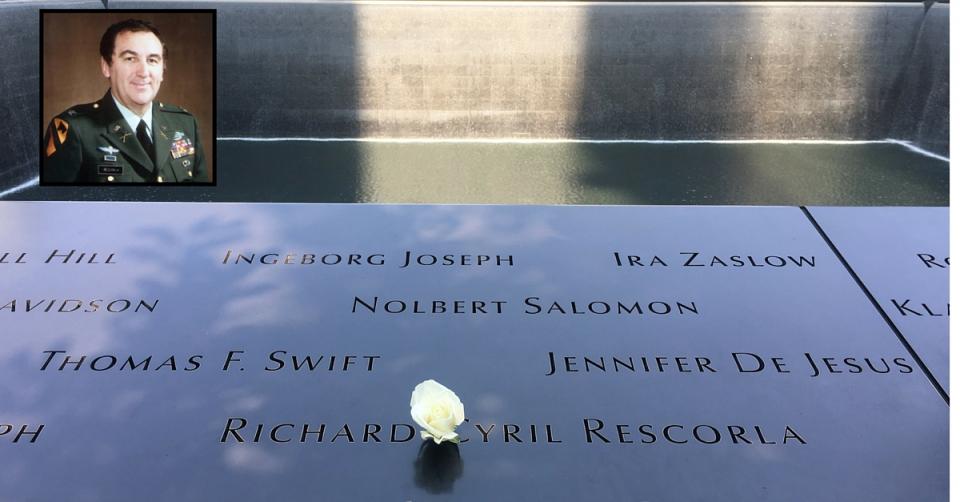
On September 11, 2001, when airplanes flew into the Twin Towers in New York City, several thousand people had to be quickly evacuated from the burning buildings. There were some plans in place; most had been misplaced or forgotten. And the chaos and confusion led to mixed messages– “stay put and wait for help…”,” don’t use the elevators…”,”get out as quickly as possible…”,” the stairways are unsafe…” But the vice president for corporate security at Dean Witter/Morgan Stanley, Richard Cyril Rescorla, was prepared for the worst. He had been planning and rehearsing for years after the failed attacks in 1993. He quickly implemented his detailed plans, ushering hundreds out of offices and into the stairwells, where they descended to safety in spite of the smoke and panic. He went back several times, checking to see who else needed help and guidance. Regardless of where they worked or who they were, Rescorla came with calm reassurance and authority, sending them into the path of rescue workers who could then offer greater assistance. Rescorla himself never made it safety– as he kept going up to get others out, he became trapped and perished when the towers fell. However, his years of planning, and his dedicated efforts on that fateful day saved the lives of hundreds, if not thousands of people. (See more here: https://www.911memorial.org/connect/blog/recognizing-war-hero-who-led-wtc-survivors-safety-911 )

We may not be called on to face another disastrous day like 9/11, but we are called to be alert and ready as we follow Christ. Those who followed Christ during His earthly ministry were called disciples. The name comes from the same root as discipline. They literally “walked” with Christ. They went where He went; they ate what He ate; they slept where He slept; they did whatever He asked them to do. If we seek to follow Christ, we must be ready to live lives of alert discipline. This comes after we take our first steps of Faith, and build on our character and understanding of God’s will. Our actions should not just be spontaneously “good” in the short-term, but patterned on the need to be prepared for the kind of challenges and trials we should expect to face. Just as Jesus was prepared for those who came to challenge Him with trick questions and false accusations, we need to be prepared to be challenged, rejected, and subjected to persecution. And we need to be prepared to respond, not with haughty complacency, outraged panic, or defensive tantrums, but with calm confidence and compassion.

The Apostle Peter, earlier in his letters, urges believers to be ready to give an answer (or a reason) for the hope that they have in Christ. (1 Peter 3:15) And this should not be a knee-jerk reaction to being challenged, or a snide commentary on doctrinal matters. We should be ready to be witnesses for the Majesty, Power, Grace, and Love of God as it has been experienced in our life and the lives of those around us. God never asked us to be His defense lawyers. He asks us to be faithful witnesses–not just of the facts about Him, but about our relationship WITH Him.

Photo by Andrea Piacquadio on Pexels.com

We also need to be prepared to be relocated or evacuated from lives of comfort, complacency, and expectation, in order to GO into the world and spread the Gospel. We will not all be called to be “missionaries” in the traditional understanding of the word, but we ARE all called to be on mission– to be ready to share our hope, our resources, our time, and our love– with others, near and far.

Photo by Porapak Apichodilok on Pexels.com

Today, I pray that God would continue to teach me as I live in obedience…that I would be alert and ready to speak, to walk, and to serve where and when and how HE sends. May I be ready to usher many others to safety as I share and live out the Gospel of Christ!

“He Didn’t Come For Me…”

I’ve mentioned several times on this blog how much I love the book/movie, “The Princess Bride.”

At one point in this fractured fairy tale, the title character, Buttercup– THE princess bride, is waiting to be rescued by her true love, Westley. She has supreme confidence that he will rescue her from having to marry the evil Prince Humperdink. But Humperdink is equally confident that Westley will NOT come– because he knows that the wicked Count Rugen has (supposedly) killed him! As the stuffy archbishop pronounces Buttercup and Humperdink ,”man and wife,” Buttercup is stunned. She keeps repeating, “He didn’t come for me.” She cannot imagine a future in which Westley does not show up and save the day. Her hopes are shattered, and she walks in a fog to the bridal suite, where she prepares to kill herself in despair.

I don’t want to give away everything, but Buttercup’s plans take an unexpected and miraculous turn before the end of the story.

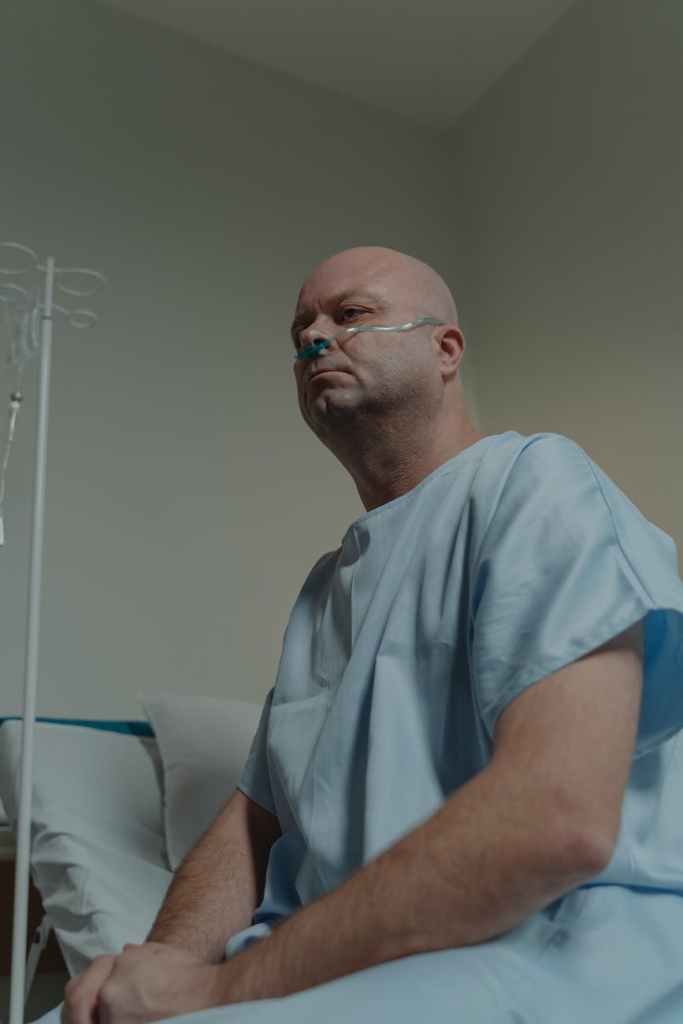
I was reminded of “The Princess Bride” yesterday morning as I sat with my husband, trying to figure out what was happening with his blood pressure. He and I have been battling COVID, and he spent a week in the hospital. He has been home for several days now, and has been improving steadily, until early Sunday morning, when his blood pressure started rising. There were no other symptoms, and we consulted a doctor, who talked us through a course of action, but there was little to nothing they could do for him at the emergency room, unless he had chest pain, paralysis, or a splitting headache, which would indicate possible heart attack or stroke. We increased his oxygen intake level, kept his legs elevated, and his blood pressure came down.

Photo by Tima Miroshnichenko on Pexels.com

Then, last night, it happened again. No warning; no other symptoms. We made sure he had plenty of oxygen, elevated his legs, continued doing what we had done in the morning. Slowly, the blood pressure reading came back down– still high, but not dangerously so. We’ve prayed for healing– dozens of other family and friends have prayed for healing. Everything seemed to be going fine– why this? Why now?

Photo by Andrew Neel on Pexels.com

It is so tempting to imagine our story will be smooth and predictable– even when we have a struggle or set-back– to believe that better days and easier times are just around the next corner. And when it doesn’t happen the way we hope or expect, we want to question God– “Why didn’t you come?” “Why did you delay?” “Why didn’t you send word that I would have to go through this?”

But God HAS sent word– there are dozens of examples in which God delays, or simply does not send a swift and easy rescue. God promised Abraham and Sarah a son– and then delayed 25 years! On top of that, God asked Abraham to take Isaac, the son of the Promise, to be a sacrifice! God showed up–just as Abraham was about to sacrifice his only son. God rescued Abraham and Isaac from their ordeal, but it was a nail-biter! (See Genesis 12-22)

Photo by Pixabay on Pexels.com

God rescued His people from their slavery in Egypt, and led them straight into a trap! Caught between the Egyptian army and the Red Sea, the Israelites seemed to be sitting ducks. How could they have imagined that God would open the sea so they could cross on dry land? Having been rescued in such a miraculous way, the Israelites should have had absolute confidence in God– but instead, they complained about food, complained about the leadership, complained about the weather–even as they could see God’s presence in a pillar of cloud by day and a pillar of fire by night! God rescued them over and over again in the midst of their struggle (and their lack of faith!). (See the books of Exodus, Numbers, and Deuteronomy)

Photo by Frans Van Heerden on Pexels.com

Daniel was taken into exile as a teenager– over fifty years later, after God had protected him and put him in a place of great power and prestige, Daniel was set up by his enemies and condemned to be eaten by lions. God did not rescue him by removing the lions or overturning Daniel’s sentence. Daniel had no reason to know that God would rescue him at all. But God’s ways are not our ways. God’s way was to shut the mouths of the lions– something ONLY God could do–proving to Darius, to Daniel’s enemies, and to all who heard about it that God was more powerful and more loving than even our wildest imagination. God rescued Daniel through his harrowing experience– and even brought judgment on Daniel’s enemies in the process.(See Daniel 6)

Photo by Skitterphoto on Pexels.com

And the list goes on– Jacob, Joseph, Ruth, Shadrach, Meschach, and Abednego, the prophets Elijah, Jeremiah, Ezekiel, and others, kings like David and Hezekiah, the exiles of Israel, the Apostle Paul, Queen Esther, Simon Peter, Jesus’ friend Lazarus, the martyr Stephen. Many of these people went through famine, disease, prison, death threats, and even death itself! Yet God preserved their stories for OUR benefit. God reassures us that He is the God of the living and the dead– death cannot stop true love (another of my favorite lines from The Princess Bride)! Nothing can separate us from God’s loving and wise and perfect care!

I don’t know what today will bring for David and me. I don’t know if we will have to return to the hospital, or if they can help restore his blood pressure to “normal.” I don’t know if I will have a sudden relapse or complications from COVID. I don’t know what future changes, adjustments, or griefs we will have to bear. But I do know this– God is with us!

Photo by John Ray Ebora on Pexels.com

Sometimes, God rescues us FROM a situation; sometimes He rescues us IN a situation; and sometimes He rescues us THROUGH a situation. We don’t know how God plans to show up and work in our lives over the next weeks. But we know we can trust Him to do what only God can do, and faithfully see us through the rest of our lives.

Photo by Tomas Anunziata on Pexels.com

I pray that if you are facing unexpected difficulties today, that God will cause you to be strengthened and reassured. He loves you. He sees you. He knows where you are, and, better yet, He knows the road ahead!

When God Sends a Canoe…

There is an old joke about a man whose house was in the path of a great flood. He prayed and prayed for God to rescue him from the rising waters. As the water crept closer to his front door, a man in a canoe came paddling by. He said he had room in the canoe, if the man wanted to evacuate. “No, no,” the man replied. I have faith that God will rescue me.

Photo by Andy Vu on Pexels.com

But the water kept rising. The man was now trapped upstairs, as the water had flooded his ground floor and continued pouring into his house. A Coast Guard rescue boat came by. It was crowded with people, but the rescue workers assured the man that there was still room for one more. “No, no,” the man replied. I’ve been praying, and I know God will rescue me.

Photo by Onur Kurtic on Pexels.com

Just before sundown, the man was forced to climb onto his roof, as the waters kept rising. A Marine rescue helicopter hovered, and a Marine was lowered with a rope to rescue the man. By this time, the man was hungry, exhausted and shivering, but he refused to accept the Marine’s help, once again claiming that God would rescue him.

Photo by Michael D. Camphin on Pexels.com

As night fell, and the waters were creeping up to his perch on the roof, the man cried out to God,” Where are you, Lord? I prayed for your help, and I trusted you to rescue me. Yet here I am, clinging to the roof. I’m wet, scared, cold, hungry, and tired. Didn’t you hear me? Don’t you care?”

From the darkness above, a voice answered: “I sent two boats and a helicopter. What more do you want?”

Photo by hitesh choudhary on Pexels.com

This is a silly story, but it made me think– how often do I miss God’s answer to my prayers because of my own narrow focus or selfish expectations? When God sends a canoe, do I dismiss it because I want a different outcome? The story doesn’t say why this man refused to see God’s hand in the reasonable rescue attempts that came his way– perhaps he thought God would simply redirect the floodwaters away from his house, or provide a supernatural rescue. And we never find out what happens next– maybe the man gets his miracle, after all.

God’s ways are not our ways, but God often uses practical, even humble means to answer our prayers. And He rarely ever tells us what His answers will look like.

Photo by GEORGE DESIPRIS on Pexels.com

Even the Apostle Paul had to be rescued– several times. In Acts 27 and 28, we find an amazing story in which God revealed to Paul that he would be shipwrecked and rescued. Several attempts were made to save the ship, but Paul’s focus was on saving the lives of all on board. And God answered his prayer. https://www.biblegateway.com/passage/?search=Acts+27-28&version=NIV Strangely, God chose not to reveal that Paul would face a new danger as soon as he was safely on land. Paul trusted God to make sure he arrived safely in Rome– no matter WHAT crisis arose, no matter what surprising disaster loomed. When he was bitten by a poisonous viper, Paul didn’t panic. The same God who had led him safely to shore kept him from harm yet again. This same God would bring him to Rome, where he would be executed for his faith. While in jail, Paul wrote many letters, sometimes asking for basic necessities– including a warm cloak and some parchment. Paul never lived to see his letters become part of the New Testament. He never lived to see generations of martyrs and missionaries reading and sharing his words around the world. But he left a testimony of faith that God would be with him, wherever he went and whatever circumstances he faced.

Photo by Ian Porce on Pexels.com

Whether God sends me a canoe today, or a helicopter tomorrow, I know I can trust Him to do what is best– in His way and in His time.

Inconceivable?

One of my favorite movies is “The Princess Bride.” Based on a modern “fractured” fairy tale by William Goldman, it tells the story of a young couple whose “fairy tale” romance is complicated by his death, her kidnapping on the eve of her wedding to an evil prince, and rodents of unusual size…

One of the kidnappers is a Sicilian mercenary named Vizzini. Vizzini brags about his intellect, and claims to know more than anyone. He also claims that his plot to kidnap Princess Buttercup is perfect to the last detail. But when a mysterious stranger begins following them, and foils each of Vizzini’s efforts to shake him, Vizzini grows more and more rattled. His brilliant plan turns out to be less than perfect. In fact, the mysterious stranger (who turns out to be Princess Buttercup’s long-lost true love) succeeds in rescuing the princess and defeating Vizzini in a battle of wits.

As each of Vizzini’s efforts fails, he declares it is “inconceivable” that the stranger should win. Even in the face of clear evidence, Vizzini finds it unbelievable that his plan should have failed–and failed again! Finally, one of the other kidnappers turns to Vizzini and says, “You keep using this word; I do not think it means what you think it means”.

I often hear people scoff at faith in God– “it doesn’t make sense.” “There’s no proof that God exists.” “How can you believe all those old myths–Noah and the Ark; Moses and the Red Sea; David and Goliath–they’re impossible in ‘real life’.” “It’s inconceivable!” “Stop saying all that stuff about God!” “Stop saying you’ll pray for me.” “Prayer is nothing more than wishful thinking.”

Photo by 3Motional Studio on Pexels.com

And it can be difficult to have faith, sometimes. We don’t ‘see’ what God is doing in our lives and circumstances.” We don’t understand the bigger picture. We don’t believe that God sees or hears us in the middle of our struggles. But God tells us time and time again that nothing is impossible for Him; that He knows all that happens, and that He works all things together for the good of those who follow Him (Romans 8:28). God is able to do “exceedingly, abundantly, above all that we ask or think..”(Ephesians 3:20)

Those stories in the Bible; those “unbelievable” stories we hear or read about miraculous healings and lives transformed…we can choose to ignore them, or scoff at them. We can, like Vizzini, claim that they are “inconceivable,” or try to explain them away while trusting our own knowledge and experiences to get us through life. We can ignore the wise counsel of others, ignore our conscience, and laugh in the face of danger. But in the end, we are human. We are fallible. We are not all-knowing or all-powerful. And we are not immune to sin and its poisonous consequences. The only chance of escape is to be rescued by someone who is “immune” to sin– our Savior, Jesus the Lamb of God.

Photo by Pixabay on Pexels.com

It may seem “inconceivable” that God would part the Red Sea, or save Noah in the Ark; it may seem beyond belief that Jesus would be born as a human, live among people who denied Him, die on the cross and be resurrected on the third day, so that He could take away the power of sin and death for anyone who will trust Him. But it is precisely this Good News that has transformed the lives of millions of people throughout the centuries since he came.

Photo by Matheus Bertelli on Pexels.com

It may seem “inconceivable” that God would listen to our “little” prayers and care about our every need– but He does! His Love may be beyond our ability to comprehend or explain– His power extends beyond our wildest imagination. But if we have faith– even as small as a mustard seed (Matthew 17:20)– we can experience God’s Love, Power, Grace, and Salvation in miraculous ways.

Vacant “Lot”

I’m continuing to explore the life of Lot in the Biblical story of Genesis. Lot, the nephew of the Biblical patriarch, Abraham, chose to live near, and then in, the wicked city of Sodom. His circumstances have made him wealthy, but they have also made him a pawn and a victim of greed and war all around.

When we left Lot (see Friday’s entry), he had been rescued by his uncle Abram (later renamed Abraham), along with all his possessions, after being kidnapped from Sodom. This might have been a good time for him to move on with his life, make a fresh start, and get away from the wars and wickedness surrounding him. But he didn’t. Nor does he seem to have had any kind of positive impact on his neighbors and friends. The Bible doesn’t mention whether or not Lot joined in any of the wicked behavior of his fellow Sodomites, but he seems to have turned a (mostly) blind eye to it.

Photo by omar alnahi on Pexels.com

The Biblical narrative leaves Lot for a few chapters, to concentrate on the life of Abraham, the changing of Abram’s name to Abraham, the birth of his son, Ishmael, and the promised coming of Isaac. But at the end of chapter 18, the LORD speaks to Abraham about the impending destruction of the cities of Sodom and Gomorrah:

17 The LORD said, shall I hide from Abraham what I am about to do, 
18 seeing that Abraham shall surely become a great and mighty nation, 
and all the nations of the earth shall be blessed in him? 19 For I have 
chosen him, that he may command his children and his household after 
him to keep the way of the LORD by doing righteousness and justice, so 
that the LORD may bring to Abraham what he has promised him.”
20 Then the LORD said, “Because the outcry against Sodom and 
Gomorrah is great and their sin is very grave, 21 I will go down to see 
whether they have done altogether according to the outcry that has come to me. And if not, I will know.” 22 So the men turned from there and went toward Sodom, but Abraham 
still stood before the LORD. 23 Then Abraham drew near and said, “Will 
you indeed sweep away the righteous with the wicked? 24 Suppose there 
are fifty righteous within the city. Will you then sweep away the place 
and not spare it for the fifty righteous who are in it? 25 Far be it from 
you to do such a thing, to put the righteous to death with the wicked, 
so that the righteous fare as the wicked! Far be that from you! Shall not
the Judge of all the earth do what is just?” 26 And the LORD said, “If I
find at Sodom fifty righteous in the city, I will spare the whole place for
their sake.” 2Abraham answered and said, “Behold, I have undertaken 
to speak to the Lord, I who am but dust and ashes. 28 Suppose five of the fifty righteous are lacking. Will you destroy the whole city for lack of 
five?” And he said, “I will not destroy it if I find forty-five there.” 
29 Again he spoke to him and said, “Suppose forty are found there.” He
 answered, “For the sake of forty I will not do it.” 30 Then he said, “Oh let not the Lord be angry, and I will speak. Suppose thirty are found there.” He answered, “I will not do it, if I find ththirty there.” 31 He said, “Behold, I have undertaken to speak to the Lord. Suppose twenty are found 
there.” He answered, “For the sake of twenty I will not destroy it.” 
32 Then he said, “Oh let not the Lord be angry, and I will speak again
but this once. Suppose ten are found there.” He answered, “For the sake
 of ten I will not destroy it.” 33 And the LORD went his way, when he had finished speaking to Abraham, and Abraham returned to his place.

(Genesis 18:17-33 ESV via http://www.esv.org)

The Bible is not explicit in describing the evil that occurred in Sodom and Gomorrah. But two things stand out in this passage. The LORD speaks of “the outcry” against these two cities and the gravity of their “sin.” Some people have suggested that there is a single egregious sin– “sodomy”– that roused God’s especial judgment. Certainly, in chapter 19 (https://www.biblegateway.com/passage/?search=Genesis+19&version=NIV) the men of the city demand that Lot’s “guests” be brought out so they can have sex with them. Lot offers his virgin daughters, but the men refuse and become so violent that the “guests” have to intervene. However, a parallel story is reported later in the Old Testament, this time in the city of Gibeah in the region of Benjamin. (https://www.biblegateway.com/passage/?search=Judges+19&version=NIV) And, while judgment is delivered to the city, it is not singled out for especial judgment by fire from heaven.

Photo by Engin Akyurt on Pexels.com

Whatever the evil in Sodom, it included rape, sodomy, and likely human trafficking and human sacrifice (see the end of Genesis 14, where the king of Sodom offers Abram all the material spoils of war, in exchange for all the people). It was not just the evil of sexual promiscuity or occasional violent practices, but something that caused an enormous “outcry” from victims, and possibly even angelic messengers reporting on the level of depravity, destruction, and oppression involved. Yet Lot lived there for years, raising his family, going about his business, and ignoring or excusing the evil all around him. There is no record of him making any positive difference, any positive contribution; no record of Lot doing anything to stand out from among his neighbors.

Photo by Krunal Parmar on Pexels.com

And when judgment comes, it is swift and terrible. The Angelic messengers must drag Lot and his family away from their home and possessions. They urge him to flee into the mountains, but he balks and asks to be allowed to flee to the small town at the edge of the destruction. (More about this at a later time…) Lot has lost almost everything of value– he ends up bankrupt; materially, and spiritually. Lot is a vacant shell of a man–fearful and snivelling, weak and empty.

What evil occurs in our neighborhoods today? What are we doing to alleviate it? Combat it? Excuse it? Enable it? If God were to bring judgment to our city or country, would He have to send angels to drag us out of the fire? Would he find even 10 righteous people on our block? In our apartment complex? God didn’t find 10 righteous people in Sodom…In fact, the Bible doesn’t say that he found ANY! Lot and his daughters were spared, but the stench of Sodom and Gomorrah lingered in this family to their ruin.

Lot’s legacy is one of emptiness, loss, and depravity. But there is one bright spot, which we’ll look at next time. God is slow to anger, and rich in mercy. His redemptive plan will include even Lot with all his flaws and weakness. And it extends to each of us, regardless of where we’ve lived, or what we’ve experienced. God didn’t find any righteous people in Sodom; He knew He wouldn’t! More than once the Bible tells us “there is no one righteous; not even one; there is no one who understands; there is no one who seeks God.
All have turned away, they have together become worthless; there is no one who does good, not even one.” (Romans 3:10-12; Psalms 14:1-3, others…) God’s plan is not to find people who are already righteous– His plan is to rescue people like Lot; people like US! And His plan is to include us in the rescue effort, too.

Photo by Julian Jagtenberg on Pexels.com

I’m learning a “lot” from Lot. There are a couple more things I want to explore in the coming days. I hope you will join me.

Blog at WordPress.com.

Up ↑