“Blessed are the merciful, for they will be shown mercy” (Matthew 5:7).
Am I merciful when I pray? That’s not a question I normally ask, but I’m looking at the Beatitudes, and how they relate to my pursuit of prayer. I pray for justice; I pray for healing; I pray to be more Christlike, but do I specifically pray about mercy? Certainly, I thank God for HIS mercy toward me, and I hope I show mercy to others, but does it enter my prayer life?
It’s easy to pray for mercy for ourselves, when we know we deserve justice (and punishment). It’s easy to ask for mercy for our loved ones. But do I pray to become more merciful? Do I pray for a greater love of Mercy? In Micah 6:8, we are told that God requires three things– to do justice, to love mercy, and to walk humbly with Him. Often, it is easier to love justice, do mercy (when it suits us) and walk in our own way, asking God to follow US as we go through the day– bless me, bless my work, bless my travels, etc..
Mercy requires a knowledge of justice and a humble acceptance of God’s sovereignty. Justice is NOT whatever we think is “fair” or “equitable” in a certain set of circumstances. Justice is defined by God, and the only way to “do justice” is to obey His will. We will not “love mercy” until we experience it at God’s hands.
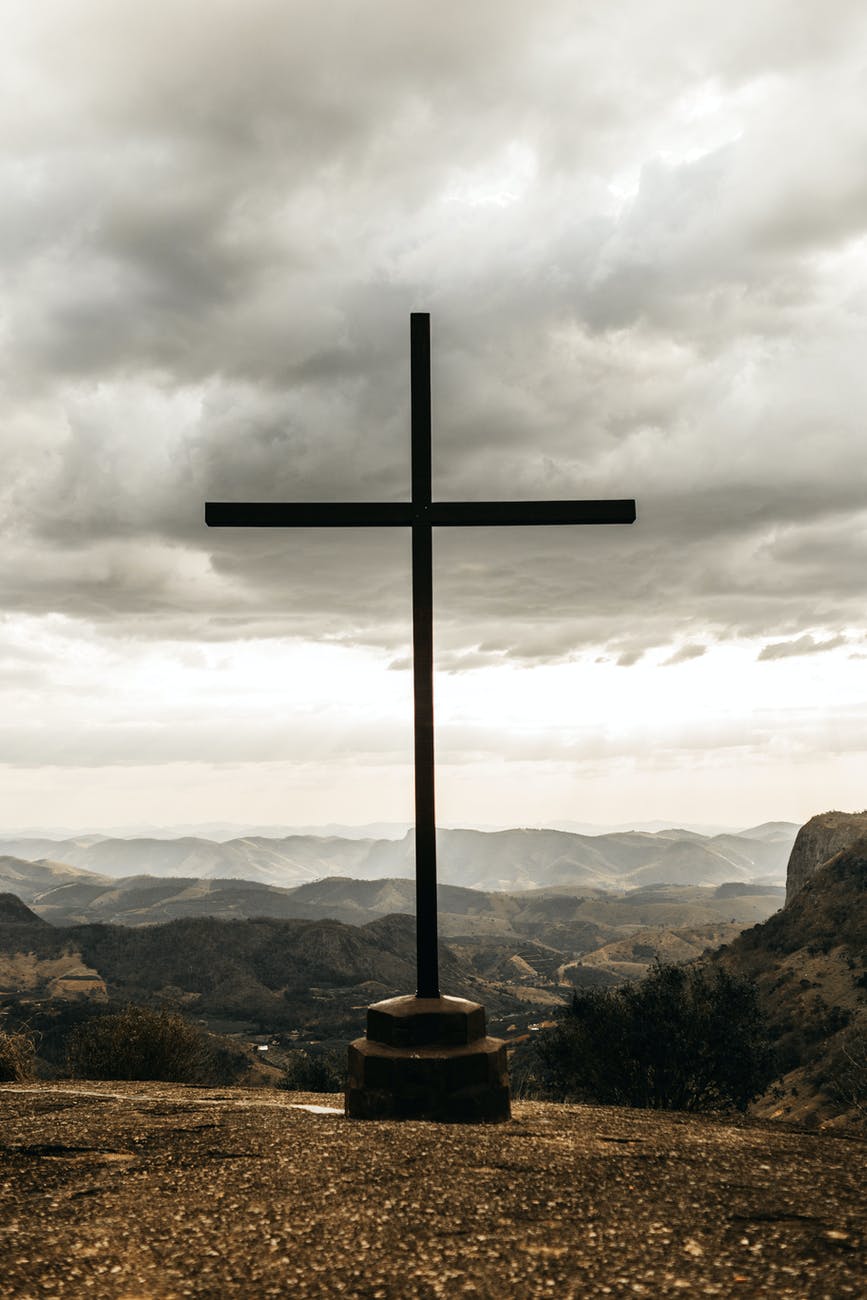
That’s really what this Holy Week is all about–God’s justice, God’s Mercy, and His Victory and Lordship. As we go through this week, in preparation for Easter, it is vital to meditate on what Jesus DID for justice to be satisfied, the depth of His Love that caused Him to suffer and die to provide, not just mercy, but Unspeakable Grace, and the humility He demonstrated in His time on earth– serving, sacrificing, even dying the painful and humiliating death on a cross–all for me; all for you.
And we must be careful about making Mercy all about us and all about the here and now. We live in a culture of “instant gratification.” We want God’s mercy to “fix” the immediate problems we see around us. Those who are merciful WILL be shown mercy– but we may not see instant ease and comfort in a situation where others hold a grudge, or where the natural consequences of our sin still exist. We have been justified before God– He will not count those sins against us–but we still live in the fallen world where sin leads to death and destruction. God will redeem all things in His time, and we can trust that His mercy will triumph over even the worst of circumstances, but we may still have to endure suffering for a season.
When we come to God in prayer, we have no right to withhold mercy– either from those who may have offended us, or from ourselves for things we did in the past. Mercy is a gift– one we cannot give without having received it, and one we cannot hold on to without sharing it freely. When we pray for our enemies, we must pray with a heart of mercy– not because they deserve it, but because God’s sovereignty demands it.
I used to work in a public library. I was the Youth Services Librarian, which meant that most of my time was spent working on building up the collection of children’s books, planning and presenting programming and story times, and going into schools to do book talks and promote library offerings. But I also spent time at the reference desks– both in the Children’s Area and the Adult Services area– and some of my time was spent finding answers to a wide range of questions:
Does the library have books or articles about Okapis (for a 4th grade report)?
Do you carry tax forms for my out-of-state business?
What are the school colors for _______ college (a small community college in Nebraska)?
Do you have a picture of the Egyptian queen Hatshepsut?
What is the title of a children’s book that featured muskrats making chicken soup?
My great-aunt left me a set of dishes and I want to know if they’re worth anything.
Some questions were easy to answer. Some required a little research within the library’s resources. Some were next to impossible and required hours of searching databases, or calling on expert help. Searching a database can be tricky. You need to find solid key words and search terms. For instance, our computer catalog did not recognize the the search term “cooking” or “cookbook.” You had to use the term “cookery” to get the best results. You could also use “cook***” to force the algorithm to look at all words that contained the letters c-o-o-k and any other letters that followed, such as cooks, cookies, cookery, etc. (Many library databases have since been updated, so searches will automatically redirect or refine common terms like this.)
Databases and search engines are amazing things, but they have limitations. They will only search for what you type in, and they will only search in the way they are programmed to do so. Computers (currently) “think” laterally–they do not make leaps of imagination, nor do they second-guess what you might have meant to ask but didn’t. If I want to know about pemmican, but I misspell it, the search engine may not find what I’m looking for.
That’s where algorithms come in. If I misspell pemmican by leaving out the second “m”, the algorithm will look for words close to what I typed, based on thousands of other inquiries. It may ask if I meant to search for pelican, instead. Or it may ask if I want pemmican. But if my spelling is really bad, or if the word I type in is actually another word, the search engine may miss my real inquiry altogether, and send me on a fruitless search. If I’m searching for a children’s book with muskrats and chicken soup, and the search engine doesn’t find both terms in a description, the algorithm will usually stick with the first term, and give me a list of children’s books with muskrats. Hopefully one of them also includes chicken soup… If I type the key words in reverse, I will get a list of children’s books with chicken soup…hopefully one of them includes muskrat characters! And algorithms can be skewed by advertisers or other interest groups that pay to have their information appear more often or first whenever certain search terms are entered.
When people request prayer, they are usually focused on what they perceive as their greatest need. They are searching for an answer; a solution to a specific problem or situation. “Pray for complete healing.” “Pray that my son/daughter will…” “Pray that I get this job.” And it is tempting to pray very specifically. This is not wrong. But sometimes, it limits how we see prayer and how we look at God’s answers. The opposite is also true. Sometimes, we pray so broadly, that we may not see God’s answer for what it is. Sometimes, we pray, hoping to change some sort of algorithm and get to the “top of the list” or get the “right” answer. This is not what prayer is about…we know this, but sometimes, our wants blind us to what we are actually asking (or asking others to ask for).
So what are some of the key words we can use in our prayer requests and prayers? Jesus gives us a fantastic blueprint in The Lord’s Prayer (Matthew 6:9-13):
“Our Father”–remembering to whom we are praying is vital. We are not praying to a distant, absent-minded, shadowy figure; He is our Father. He knows what is necessary, and what is best.
“Who art in Heaven”–God is Omnipotent. There is nothing we can ask or imagine that is too big, too difficult, or too much to ask. That doesn’t mean that God will give us whatever we want, whenever we want it, but it does mean that God is not limited by the same things that limit us!
“Hallowed by Thy Name.”–God is not our “genie in a bottle.” He doesn’t work for us, or at our command. God is sovereign; He commands the Universe. And even though He makes Himself known and wants a relationship with us, He is not like anyone else–He ALONE is GOD. When His answers seem “wrong,” or don’t make sense, it isn’t because He didn’t hear us, or because He doesn’t love us, but His ways are not our ways (Isaiah 55:8-9).
“Thy Kingdom come, Thy will be done on Earth as it is in Heaven”–There are a lot of “good” things that are NOT part of God’s best will for us. There are a lot of difficult and painful things that God can use for our good. He wants to hear the cry of our heart–“I want to be healed.” But He also wants to hear our willingness to accept that healing may not be immediate or easy.
“Give us this day our daily bread”– It is not “wrong” to pray for things in the future, or to pray for “big” or complex things, but our dependence on Him is shown best when we acknowledge our everyday basic needs are met by Him.
“And forgive us our debts as we forgive our debtors, And lead us not into temptation, but deliver us from evil”–Don’t be fooled. God will not ignore our hidden resentments, hatred, disdain, rebellion, and unforgiveness. Our requests can be sidelined by holding on to grudges and harboring secret doubts about God’s essential fairness, as well as hanging on to sinful habits.
God doesn’t need algorithms or special prayer “search terms”. We can come to Him with our requests, and He knows precisely what we want and what we need. But we will learn more about ourselves and about who God truly is when we refine our hearts and our prayer life.
Prayer is both simple and complex. Anyone can pray. There is no single correct “formula” for prayer. God is always listening and hears the prayers of those who sincerely seek Him. I can pray to God in formal words, songs, groans, and scattered thoughts.
But there are times when I don’t know how to pray. More precisely, I don’t know WHAT to pray. When someone is diagnosed with cancer, or a chronic illness, my first instinct is to pray for healing– immediate and total healing. When I hear of a mass shooting, or a blatant injustice, or a natural disaster, I want to pray for all the pain and loss and evil to disappear or be reversed. I want all those things that I know to be “good”– health, happiness, healing, hope, unity, righteousness, and wholeness.
Still, God’s ways are not my ways. God’s “goodness” is not measured in comfort and quick resolutions. I may not understand the goodness of struggle and pain in the short term. I think of disaster as total and irredeemable, and my prayers often come out of my own short-sighted thinking and my own discomfort at the realization of others’ (and my own) weakness and mortality.
There are a few Biblical principles that I find very helpful when I don’t know “how” to pray:
God knows –REALLY KNOWS– all my inner thoughts and feelings. Even more, He KNOWS what will happen, what should happen, and what is best in every situation. I can pour out my desire to see my friend restored to health, or a community re-united in hope, knowing that God is a God of healing and restoration; but also knowing that God’s timing and purposes may involve temporary suffering–even for those I love. Moreover, God knows why I am confused. He knows why I struggle to know how to pray. He doesn’t ask me to always know the “right” answer– He does ask that I trust Him to know and act in His sovereign strength and wisdom. No matter the circumstances, God is still on His throne. And I am not!
Jesus gave us simple but powerful examples of “how” to pray. In “The Lord’s Prayer,” He prayed for simple, personal things– daily bread, forgiveness, guidance–as well as big and overarching things–“Thy kingdom come, Thy will be done..” His trust in the Father’s ability to accomplish all things was absolute, and His relationship was firmly established– “Father…Hallowed by Thy Name.” In the garden, Jesus was clearly suffering, and asked that the “cup” of suffering– the torture of the cross and the inconceivable horror of being rejected as He bore our sins and carried them through death and the grave– be removed. Yet, He submitted His desire, His fears, His anguish, to His Father– “Not My will, but Thine..”
There are other wonderful examples throughout the Psalms, the Gospels, the Epistles, and hundreds of years of Church leaders and saints: their prayers can teach us, encourage us, and embolden us.
Jesus promised that we would have an advocate–the Holy Spirit– who would intercede for us. When we don’t know how or what to pray, the Apostle Paul says that the Spirit makes intercession for us with “groanings which cannot be uttered.” (Romans 8:26 KJV). The Spirit also speaks to our own spirit to help us understand more clearly God’s ways and plans.
I may not always know how to pray, or what to pray. But I can be confident that God hears my prayers. I can come before Him with the assurance that my prayers– and all my thoughts and emotions–are precious to Him because I am His child, redeemed by His sacrifice. My heart may not know all things, but as He continues faithfully completing the work He began in me (Philippians 1:6), my prayers will come more fully into alignment with His will.
I was thinking earlier this week about a past friendship– one that involved pain, abuse, and struggle. While we have moved on, and I hope we have both found peace and closure, there are still memories, both good and bad. The past has a way of popping up at odd moments, and sometimes, it pops up in pain.
Prayer isn’t really about the past. What’s past is gone– but it can be redeemed. That is the Good News of the Bible. God is about redeeming our past, and transforming our present and future. When Jesus prayed, and when He taught His disciples to pray, He never mentioned the past. So what do we do with the past when it comes to prayer?
While I don’t have any complete or definitive answer to that, I do have a few thoughts:
Don’t wallow in the past. If Jesus has redeemed you, He has redeemed your past as well. Rejoice and be thankful for this incredible gift! We can’t erase the past, but we don’t have to keep living there.
Focus on the present, and give both your past and your future into His hands. It’s easy to say, and to write, but it takes time and effort and the work of the Holy Spirit to continue to do this. It’s a daily task!
If you are still bothered by aspects of your past, ask for wisdom to do the following:
Pray for wisdom to learn from the past–both your mistakes, and situations you have had to face.
Pray for courage to face the past– to apologize, to make atonement, or to rebuild relationships where possible, and the courage to let go of situations you cannot “fix.”
Pray for those people and situations that were part of your past–acknowledge them, and lift them up before God’s Throne of Grace.
Pray for release from lingering feelings of guilt, and lingering temptations to return to past behaviors and/or toxic relationships.
The past can be powerful in shaping our present and future. God knows this, but He wants to remind us that He is MORE powerful! That doesn’t mean that we will sail through the present, or that we won’t carry scars from our past. But those scars are not the whole of our story, any more than the grave is the end of it.
He who was seated on the throne said, “I am making everything new!” Then he said, “Write this down, for these words are trustworthy and true.”
The past two weeks have been just a bit chaotic for our families. My mother fell and broke her femur, near her hip–not the hip she broke over a year ago, but the other one! Less than twenty-four hours later, my mother-in-law fell–and broke her femur. Each mom ended up in a different hospital for surgery, and in a different rehabilitation facility, located nearly fifty miles apart. Last week, two members of our extended family died on the same day in the same city; their funerals were a day apart in two different parts of the city, but handled by the same funeral home. On the day of the first funeral, we found out that another member of the family died. That same night, our toilet broke. Water poured into our upstairs bathroom, soaking the floor, running into the next room, and dripping down to the floor below. In the middle of all this, I slipped on the ice, fell hard, and bruised my ribs.
Where was God in all this? He was right there in every situation. God doesn’t disappear when the going gets tough– He is steady, sure, and faithful.
Neither of our moms suffered a concussion or any other major damage from their falls. They were able to get treatment and surgery, and they are receiving care and therapy. And, while this is something we might have taken for granted at one time, it is something for which we praise God, because it could have been much more tragic in both cases.
We live close enough to both moms that we have been able to help and visit (where we can because of continuing COVID restrictions). Though the facilities are fifty miles from each other, neither is fifty miles from our home. Also, both moms are able to receive phone calls, and we are able to receive updates from the staff at each place.
We have close families, and wonderful neighbors and friends– we are not alone in caring for our moms or grieving our loved ones, and there is a network of prayer, support and concern that staggers my imagination! I cannot imagine trying to navigate this without help– again, this is something we might take for granted, but God has been in the details long before any of this happened. Our families, friends, and neighbors represent dozens of church bodies from around the country and the world, as well as a significant group close to home– how marvelous that God allows us to work together as a body in every situation.
Though we have lost three family members in rapid succession, all three were believers! All three left a legacy of faith, love, and hope. We mourn their loss, but we also celebrate their lives with joy and not regret.
David HATES plumbing, but he knew what to do to fix the toilet. The damage from the flooding was minimal, all of our towels are freshly laundered, and the toilet works again!
My fall could have resulted in ANOTHER broken femur– or a broken arm, concussion, etc.. While it hurts to sneeze or yawn or blow my nose, at least it doesn’t hurt to breathe, and I can move and go about my day, cautiously, but normally.
God allows difficult things to come into our lives– and I don’t have any definitive answer for WHY we have been experiencing so many trials all at once. But I can say this:
Trials make us stop and look and question– and that can be a good thing. God is big enough, wise enough, and sovereign “enough” to handle our tears, our fears, our weakness, and our momentary doubts. In fact, it is in recognizing our limitations that we can focus more on God’s limitless grace and boundless love!
Trials bring us closer to each other. Our chaotic couple of weeks are just a drop in the bucket among all the other problems of the world, but so many wonderful people have called or sent messages of hope and encouragement over the past two weeks, my heart is bursting– not with the pain, but with joy and gratitude.
Trials teach us patience (see my post on “Be Careful What You Pray For.”) The toilet breaking was my low point this past week– even though it did not directly touch on our health or a loved one. But God sent friends and angels to remind me that this was a very minor problem– even among all the others– and that God was “flushing” away some unnecessary angst if I would just let it go!
There is nothing that takes God by surprise– nothing that causes Him to pause and wonder, “what happens next.” I can praise God in the hospital as I watch my mom cry in pain. I can praise God when my husband finds his mother “alive” (when he couldn’t be sure). I can praise God when I’m flat on my face on the ice, winded and sore. I can praise God when toilet water is soaking my socks. I can praise God when I hug cousins who have lost their parents to cancer or dementia, or age, knowing that God is with us every moment, in every tear, every hug, every shared memory, and every hope that our loved ones now experience what we will also know someday.
I’m ready for 2022 to calm down a little bit. But if it doesn’t, I’m also ready to be broken again– whether through broken legs, broken toilets, or broken hearts. God is in the business of repairing and restoring broken things and broken people. And no one does it better!
I’ve written a number of times about my prayer journal. In it, I pray for individuals and individual requests, as well as praying for communities and regions each day of the year. I also use what I call “Prayer Points” for each day of the week. These are broad topics– The Church, Family and Friends, Government and Politics, Community and Services, Global Health (Healthcare, Diseases, Ecology, etc.), Business and Economy, and Cultural Issues. Often, these broad topics will lend themselves to specific needs or requests (which may overlap items in my prayer journal), but there are also times when the topics seem generic and almost overly broad. I use them anyway.
It isn’t because I have any influence over such broad categories– but because God does! And I need to be reminded of that every day. God loves to hear our specific requests– heart cries and urgent needs–even bad hair days and misplaced keys. But He also loves to hear us acknowledge that “all the world” belongs to Him; that He is sovereign over our nations, our culture, His Church, our families, etc. He has authority over world economies, including all the factors we worry about– drought and famine, production, distribution, wealth (or lack thereof). He has the power to overthrow corrupt governments and bring justice. He has the power to defeat disease, and restore forests and rivers; to meet our financial needs, and to save marriages.
Moreover, He knows best in all these situations– even when I know next to nothing! My efforts to change society or fix the planet will be puny, and based on my limited knowledge and experience. Even my outlook on my own small community is limited– I don’t know all the individual people, organizations, or companies that make up my small town. I trust that God, however, knows each teacher, garbage collector, city worker, police officer, fire fighter, mail carrier, nurse’s aid, day care provider, physical therapist, food service worker, accountant, paralegal, banker, and shopkeeper (and all the other valuable members of my community)– AND He knows the number of hairs on each of their heads! It revolutionizes the way I think and the way I pray each day.
Imagine what can happen when we pray this way collectively! Imagine the way it can change our outlook, and our actions. I can be saddened by the state of our culture or the breakdown of families. But I have a Mighty Father who has both the wisdom and the power to redeem them! I know I can trust God with everything– large and small. But it is easy to take that for granted, or to “know” it only in the abstract. Keeping prayer points where I can see them and use them daily helps me to live out the truth that I already know.
So this morning, instead of worrying about our business or the larger economy, I will lift them up into the arms of One who can really make a difference! And I will pray for smaller and more personal requests– those in the hospital or grieving a recent loss; those who are discouraged; those who are celebrating birthdays or anniversaries, promotions or new opportunities; those who are lost, and those who have misplaced their keys (again).
Prayers are made up of different ingredients–worship and adoration, confession, requests and supplication, thanksgiving, even questions..
Sometimes what we pray for, and the “finished product” of what God chooses to do don’t look or taste the same. But if we don’t “follow the recipe,” sometimes we end up with a disaster. Sometimes our thoughts and prayers are like adding a cup of salt, where we were supposed to add a cup of sugar! God knows the difference, and He adjusts accordingly!
There are many different “cooking” methods for prayer. Some prayers need to simmer–they take time and dedication; others “sizzle”– they are more immediate and urgent. There are even “raw” prayers– tortured cries of the heart. Some prayers are “cock pot” prayers– we give the matter to God and let it stew for quite awhile, only to see results much later.
Some prayers involve “heat”–we are either in hot water, or we are in a pressure cooker; maybe we’re half-baked! God doesn’t always turn down the heat– He knows just the right temperature for each situation, and He also knows when to remove us from the heat!
When I was a young woman, I prayed for patience. Several well-meaning friends and family tried to tell me that this was a mistake. “Be careful what you pray for,” they said. It was their belief that, if I prayed for patience, God would send situations into my life that would force me to be patient. God doesn’t “give” patience, they warned–He merely teaches us to be patient.
I wanted more patience, in preparation for marriage and children; I wanted to be a patient wife and mother. But I was unprepared for this reaction of others. DON’T ask God for something good? Isn’t patience (long-suffering) one of the attributes listed as the “Fruit of the Spirit?”(Galatians 5:23-24) Why should I hesitate, or fear to ask God for something that will help me serve Him better?
Looking back, I suppose some of those same friends and family might say, “I told you so!” I’m sure they wanted a happy and easy future for me– one that didn’t include some of the challenges that I have had to face. And in their eyes, I was “tempting fate” to draw attention to my lack of patience. On the surface, it probably looks like that’s exactly what happened. I never had any children; I didn’t marry until I was in my mid-40s, and I have learned patience in many areas through many challenges.
But that’s just one perspective. What if I hadn’t prayed that prayer? Would God have let me drift through life without “needing” more patience? Would I have “avoided” the years of loneliness and lack of children? Would I have married and had a family and lived happily ever after without having to learn patience? Would my life have been totally different? Or would my circumstances have been the same, except that I never would have learned patience–never sought to become more patient during the same trials and challenges? What kind of life might I have had WITHOUT patience?
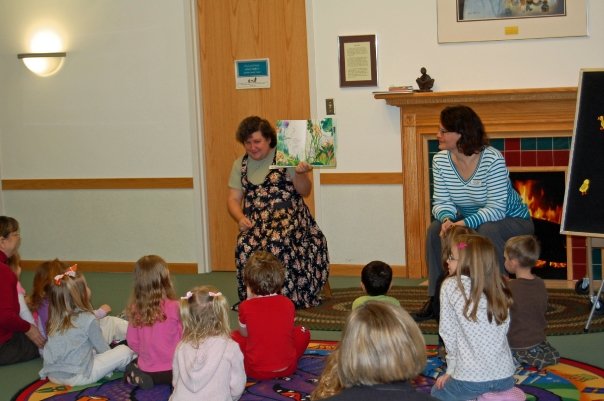
During the years that I was single, I worked full-time in youth-oriented jobs– teaching and serving in the youth department at a library. I learned patience by disciplining teenagers, cleaning up after toddlers, answering the same questions twenty times a day, and dealing with obstinate parents! I suffered with my students when one of their classmates died; and when it happened again the next year. I agonized with my student who chose to keep her baby after those close to her wanted her to have an abortion. And I rejoiced with her when she brought her son to visit me a year later. I suffered the frustration of parents whose children were rebellious, or had learning issues, or had been diagnosed with autism or ADHD. But I also endured the long nights when I had no little ones to tuck in or talk to (and learned to be thankful for the nights I didn’t have to deal with fever and sickness, or arguing–again– about the rules of the house!) But in the course of my work, I connected with hundreds of children and teens. They were never “mine” to hold or scold or say, “I love you”, but they touched my life, and I hope that I touched theirs as well. I didn’t choose my career path knowing that I would never become a “mom.” But I needed (and learned) patience in the process. I learned patience in the years I spent single–and I learned to appreciate my husband in ways I wouldn’t have as a young woman.
Story hour at the library c. 2009.
There IS some truth to the phrase, “Be careful what you pray for.” When we pray, we should pray for things that align with His will– like wisdom, patience, courage, or peace. We should not pray for things that contradict His will– instant popularity, wealth without work, or relationships or circumstances that dishonor Him. We should also be prepared for God to answer in the way He deems best–which may not look or feel like what we desired. It was His best for me not to marry young or have children of my own. He has since blessed me with a wonderful husband and step-children and grandchildren. But He might have chosen not to. And I would still thank Him for the life I have led. It’s been fantastic. I’ve met amazing people, had amazing opportunities, and traveled to wonderful places. I don’t feel like God ever “punished” me for asking for patience– instead, I feel that He has more than answered my prayer. That doesn’t mean that I have learned to be perfectly patient in every situation (just ask my husband!) But God is eternally good and faithful to give us what is in our best interest– if we ask, AND if we trust His answer more than our expectation. (see Hebrews 11:6; John 17; 1 Peter 5:7)
Don’t be too afraid or too proud to ask God for any good thing. God will not only give you what you need, He will be with you every step of the way as you learn and grow, and develop into the person He wants you to be!
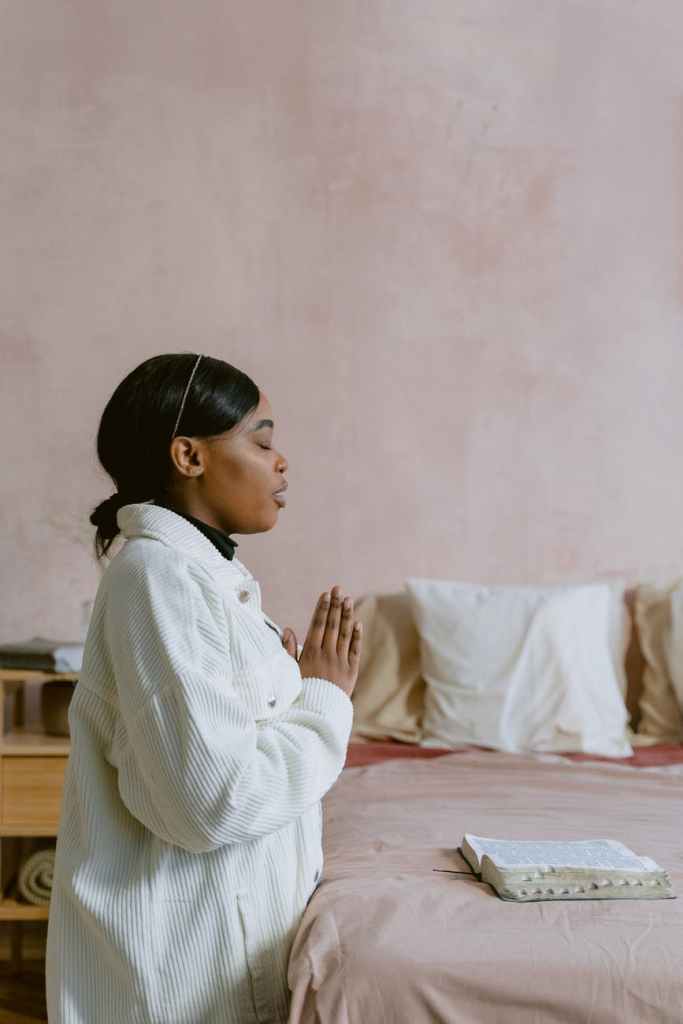
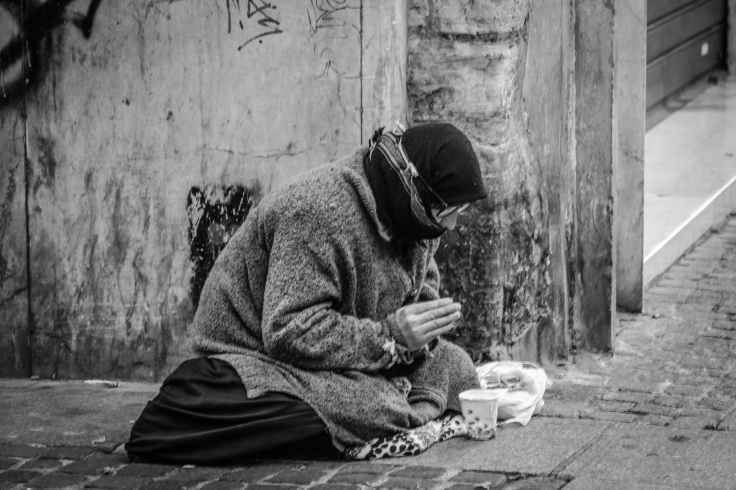
This morning, I woke up inside– protected from the rain and wind and cold. I woke up in a bed. I woke up with blankets for my body and a pillow for my head. I woke up, and moved my head, my hands and feet, arms and legs. I sat up and wiggled my toes. Thank You!
Photo by u0414u0438u0430u043du0430 u0414u0443u043du0430u0435u0432u0430 on Pexels.com
This morning, I woke up to hear my husband’s breathing. I woke up to the knowledge that I am not alone. I woke up to the knowledge that I am loved. I felt safe and comforted. Thank You!
This morning, I woke up knowing that even if I had none of the things I just mentioned, that I still have reasons to Thank You– Things I take for granted; things I haven’t even noticed; things I have not yet seen. Thank You for who You are. Thank You for Your Faithfulness; Your Majesty; Your Sovereignty. Thank You for the beauty of sunsets and snowflakes; for the seasons and the centuries; for family and friends; for triumphs and even for the tears that sometimes come my way. Thank You that you are greater, and deeper, more powerful and more tender than all that I know or imagine.
Pursing prayer sometimes leads to taking prayer for granted. Prayer becomes a habit; a daily activity; even a task to check off the list. But prayer is so much more. Prayer is a lifeline; a divine mystery. I can’t explain how prayer “works.” But I know from experience that it transcends the words I speak and the emotions I feel as I pray. I’m not praying to “a higher power” or an abstract “spiritual being.” I pray to the One who created me, and the One who loves me more than I can even comprehend.
More than that, I am praying to the One who oversees the universe, and all the inhabitants thereof. There is something powerful and mysterious about prayer. I was reminded of that just recently, when I asked for prayer for my mother, who fell and injured herself. She is 88 years old, and very frail. She is also beloved by many in her family and community. Within minutes of posting a very general request for prayer, several dozen people had responded– some with a simple message of “praying” or “sending prayers.” The next day, I was more specific, and again, dozens of people responded within minutes– “praying for your mother,” “prayers for healing,” etc.. Suddenly my prayers became more confident and hopeful. And I was reminded of all the prayers I lift up each day–those “daily prayers” that sometimes seem like little tasks. They are unique, personal, and important– not just to me, but to many others.
I shared recently about praying for others’ requests. This is also a privilege. In a mysterious and divine way, when we pray for others we join in God’s work of bringing hope, healing, and love to others. I can pray for others (and they can pray for me) regardless of where I am, or what my situation may be. I cannot always DO something, or BE somewhere. I can always pray. And where I can act, prayer often sharpens and directs my actions to be more effective.
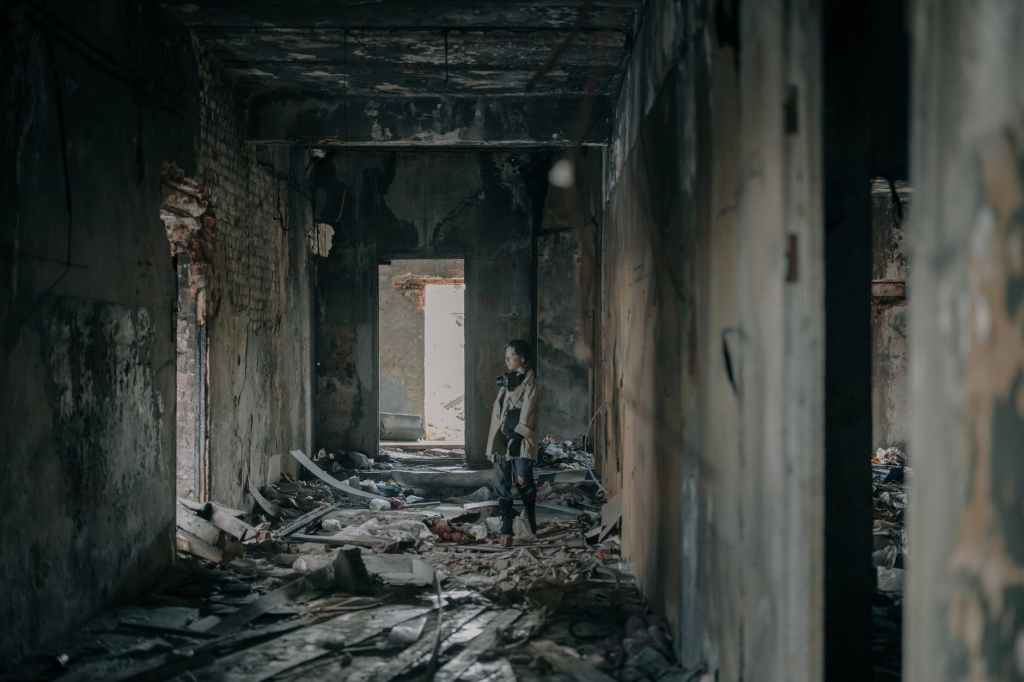
If you’ve ever tried to help in the aftermath of a disaster (as a member of the general public and not an emergency worker or someone deployed to help), you know it can be frustrating. If you’ve ever been caught in a disaster zone, you know it can be frightening AND frustrating. People do their best to help and offer hope, but in times of chaos and lack of communication, people can be left behind and resources can be misdirected or spoiled before they can get to those who need them most. Prayer never gets misdirected. It never goes unanswered or forgotten; it is never a wasted effort. God is faithful. His ways may be difficult for us to understand, but they are not warped, doomed, or limited in any way.
There is great comfort in that reality. Sometimes, we just need to be reminded of how powerful and necessary our prayers are. God loves to hear them. He loves to answer them. He loves to use them for His glory and our wholeness. What a privilege to carry EVERYTHING to God in prayer!