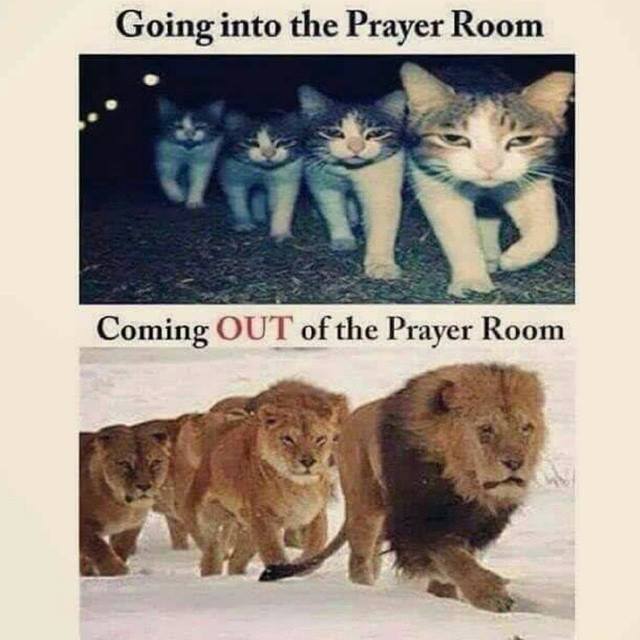
I Surrender All?

I have been revisiting old hymns lately as I write about my pursuit of prayer. This is partly because I believe that prayer is a form of worship, and is closely tied to other forms of worship– meditation, singing, etc.. Sometimes, it can be helpful to pray songs or to sing prayers– look at the entire book of Psalms!

Our church has recently been involved in revival services– two weeks of time set aside to evaluate our daily walk with Christ. We need periods of revival and refreshment, conviction and confession, repentance and reflection. Without them, we will wander; without them we will wither and grow cold, and lose sight of our first love.

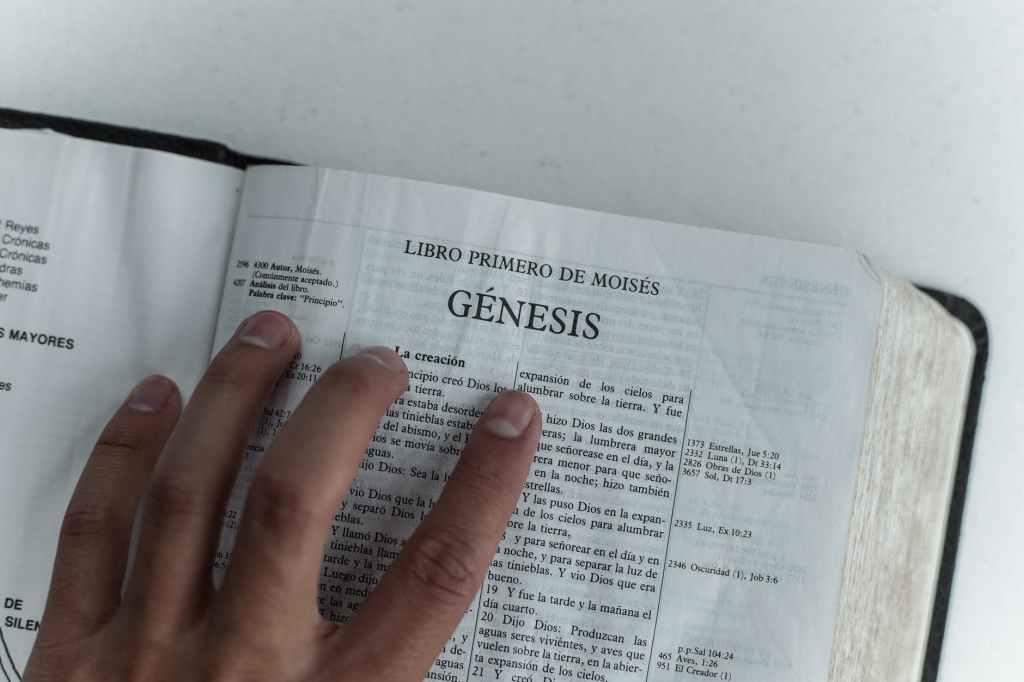
Photo by Luis Quintero on Pexels.com

One of the first nights, we explored the idea of surrender. We say that we trust God; that Jesus is Lord, that we are followers of Christ…but do we really demonstrate those truths by the way we live? Have we really surrendered our will, our lives, our futures to God? We claim that He is sovereign over big things– all of creation, world affairs, and such–but is He Lord over the little things? Do I trust Him with my reputation when someone misrepresents me to others? Do I trust Him with my diet when I am tempted to overeat? Do I trust Him with my time when someone asks me to help them on my day off?

One of the keys to this hymn (and to prayer) is in the first verse– “..in His presence daily live.” There are times when I feel the need to surrender; times when I feel wholly surrendered and devoted. But there will be other days when the feeling just isn’t there. My surrender needs to happen daily– in the “good” times and in the “difficult” times. Sometimes, I just need to pray that the Holy Spirit will guide and empower me to recognize and surrender those areas that I have tried to “take back” from Him.

Photo by Creative Vix on Pexels.com

And then, I need to be intentional about letting go–one piece at a time, if necessary–each day saying, “Yes” to God instead of “Yes” to those things that pull me away. It’s not always easy to say, “I surrender all.” It’s even harder to actually follow through. We want to hang on to things that are comfortable, familiar, even “good.” We want to hang on to things that seem to promise safety, success, or fulfillment– even when God offers more.

I’m not writing this because I have mastered the discipline of surrender– I need to learn to let go, to trust God more, to risk what I cannot keep to gain what I cannot lose (paraphrasing from Jim Elliot–https://www.brainyquote.com/quotes/jim_elliot_189244.
That is my prayer today, for myself, and for others.

I Am..

There are many ways to describe who I am (or who you are). I can describe myself in terms of my appearance, my social status, my occupation, age, familial role, or any number of other labels. These labels help distinguish me from other people around me, while also grouping me in with still others. Even my name functions in this way. My surname connects me with my current family; my maiden name with my birth family–my first name distinguishes me from my siblings within the family. However, there are many others in the world with either the same first name, surname, or both!

Photo by Craig Adderley on Pexels.com

I know that I am a unique person, but I am not singular. That is to say that while I am a unique combination of genetic materials, with unique hopes and dreams, I still belong to the human race, to my family group, and to the culture and time in which I live.

Only God can say “I AM!” and not have to add any modifier. God is..God. There is no one like God–no label that can be applied to Him and to anyone or anything else. We use words like “King”, “Father”, “Lord”, “He” even “God”, but none of them convey the fullness, the enormity, the eternity of the great “I AM.” Many ancient cultures worshiped gods; supernatural beings who ate and drank, married and had families, ruled the skies or waters or land or underworld, fought, loved– some even died. But none of them could say they were “I AM”. I AM stands in the face of doubt and unbelief; I AM remains unchanged and unchanging in the face of progress and technology; I AM defeats our attempts to shrink Him into our own limited understanding and our own limited lifespan; I AM is ever present, ever aware, everlasting.

Photo by Pok Rie on Pexels.com

And this I AM created each of us to BE. Because of I AM, I can say that I am, too! And my purpose is to be, and to become more like He is, to the glory of I AM, and the fulfillment of what I am in Him.

Photo by Pixabay on Pexels.com

Lord, Father, and the great I AM– help me to see you more clearly for who you are. Help me to become more like you, and more like the person you created me to be. Help me to reflect your glory in the words I speak and the actions I take today.

Panic, Prayer, Praise, Peace!

Philippians 4:6 New International Version (NIV)

Do not be anxious about anything, but in every situation, by prayer and petition, with thanksgiving, present your requests to God.

https://www.biblegateway.com/passage/?search=Philippians+4%3A6&version=NIV

I hope that today will be filled with peace, joy, and blessing for anyone reading this. But I know that today will bring bad news for some, pain for others, and hardship for many. Life is filled with struggle, disappointment, failures, and loss. Our first reaction is often to worry, which can lead to more worry, and a sense of urgency, even panic. In many cases, we have neither the resources nor the wisdom to overcome our struggles–even sustained effort or a “lucky break” may leave us without much hope. And the more we worry, the less we accomplish. But telling ourselves (or others) to simply “stop worrying” doesn’t banish worry; sometimes it increases it! Now we worry about worrying too much, or we find new things to worry about.

Photo by bruce mars on Pexels.com

But there is a time-honored and proven pattern that can help. Jesus spoke of it in His “Sermon on the Mount.” In Matthew 6, He gives us this advice:

“So do not worry, saying ‘What shall we eat?’ or ‘What shall we drink?’ or “What shall we wear?’ For the pagans run after these things, and your heavenly Father knows that you need them. But seek first his kingdom and his righteousness, and all these things will be given to you as well. Therefore do not worry about tomorrow, for tomorrow will worry about itself. Each day has enough trouble of its own.”

Matthew 6:31-34 (NIV)
Photo by Úrsula Madariaga on Pexels.com

The Apostle Paul expanded on this in his letter to the Philippian believers. He told them to be anxious for nothing–that regardless of our situation or circumstances, we should not panic, but pray (seek God’s grace, righteousness, wisdom, and help). But more than that, we should present all of our prayers, petitions, and requests with thanksgiving and praise!

This is not the same as pretending that our struggles don’t exist, or that they are not important, or that we are glad about the pain, uncertainty, or hardship that they bring. Instead it is lifting our eyes to Heaven and finding that God is bigger than it all; that His grace, His strength, His wisdom is sufficient for the next step– for today’s worries–for today’s battles and burdens.

Photo by Pixabay on Pexels.com

This doesn’t happen naturally or automatically–we must seek, pray, pursue righteousness, ask for help, and continue to stand firm. There are some who point to the words of Jesus, or of Paul as a kind of “magic formula.” If we repeat a few promises from the Bible, or if we pray certain prayers, or convince ourselves and others that we have “enough” faith, God is obligated to change our circumstances and give us the resolution or relief we want. God is not primarily interested in our relief– He is interested in our redemption, our renewal, and our eternal reality. In following this pattern of turning our panic into prayer, and our prayer into praise, He promises that we will experience His peace. Our panic will be transformed–even if our situation stays the same; even if it gets worse before it gets better!

So how do we practice this pattern; how do we train for this transformation?

Photo by Reafon Gates on Pexels.com

Here are a couple of suggestions:

  • Start by seeking God with abandon–pursue Him with your whole heart– thank Him for who He is, and for all He has done. It can be helpful to review some of the names of God–I AM, Almighty, Creator, Lord, King of Kings.. Or read a Psalm or find a song that reminds you of God’s character and power. Think of the times when God has been faithful in your own past.
  • Find something about your situation for which you can be thankful– genuinely thankful. Years ago, when I was young and single, I was laid off from my first full-time job after nine months. Was I worried? Yes! Where would I find another job? How would I pay my bills? But I resolved to start being thankful about all I had learned on the job– I had met new people, learned new skills, purchased a car…God knew my needs for the future, and even though I had to wait another eight months before I found a full-time job, I was able to find temporary work and interview for other jobs in the meantime. And I had friends and family who offered good advice and encouragement along the way. I know some situations are more painful and perplexing than the loss of a job. When I my father died, nothing made the pain less, but I could thank God for Dad’s life and the time we had with him. This is NOT easy, nor is it meant to be…It may not happen for days, or weeks–don’t give up!
  • Cry out to God– in praise, but also in petition, pain, confusion, confession, and raw emotion. God wants a real relationship with us, and that includes walking with us in the “valley of the shadow of death.” We don’t have to fear evil, or worry about the future, not because it holds no danger or dread, but because we never have to walk alone and defenseless!
  • Remember this is a pattern to follow, not a pill to swallow–none of this comes easy, and God’s peace is not an instant “fix.” Instead, it is a growing conviction that God is who He says He is– faithful, loving, victorious, eternal, and sovereign. Such peace defies our panic and erodes our worry, leaving us ready to face the battles before us, and move forward through the struggles.
Photo by Pixabay on Pexels.com

It is not will power or a change of circumstances that brings incomprehensible peace. It is not magic– it is Majesty!

Prayers for Harvest

I love the autumn harvest season, and I believe it has many lessons for us about prayer:

  • There is a time and season for harvest. We cannot harvest at our convenience; neither should we expect God’s answers and our circumstances to arrange themselves around our wishes. Instead, as we pray, we should watch and wait, ready to do what is necessary in the meantime, and ready when the time is right for harvest. Too soon or too late, and we will miss the best of the crop, or lose it altogether. If we pray for a harvest, we must be willing to wait on God’s timing.
  • Harvest is a season among other seasons– not a single event. If I pick apples this fall, that is not the end of apples. There will be more apples to harvest next autumn, and the following year. Sometimes, we must wait through several seasons to see the harvest; seasons of rain, sun, even snow and cold dark days. We must be faithful to keep praying for the next harvest, and the next…
Photo by Phuc ( Xù ) Pham on Pexels.com
  • The harvest bears little resemblance to what we planted. If I plant an ugly bulb in the ground this fall, I may see a beautiful tulip next spring–unless I plant an onion bulb! If I plant some tiny black seeds in the spring, I may harvest a large orange carrot later in the summer. If I plant kernels of corn, I will get new kernels, but they will be on an ear on a tall stalk. If we are praying for a harvest, it may come in ways and shapes and circumstances that will surprise, or even mystify us. Often, we pray for what we imagine we could do– instead, we need to learn to ask for what only God can do!
  • We cannot control the harvest– we can plant the seeds, fertilize them, tend them, weed them, water them, prune them–but we cannot predict or guarantee the results. But if we do nothing, we will not see any harvest at all. Similarly, we do not control God’s answers to our prayers, but we will see no growth, no harvest, if we do not pray at all, or if we give up.
  • Harvest is gathering the crop (and the seeds for a new crop). We need to gather prayer requests, thanksgiving lists, areas of conviction, songs of praise; we need to present a bountiful harvest of prayer–an offering and a fragrant sacrifice to the giver of all good things!
Photo by Element5 Digital on Pexels.com

The “God of Jacob”– not “Jacob’s God”

For a blog about prayer, I’ve been spending a lot of time doing Bible study on the character of Jacob. But I think there is a huge connection. The stories in the Bible are powerful and important, not because of the human characters, but because, in them, we see how God interacts with a variety of His created people. And that can help us as we come to God in prayer.

Photo by Thorn Yang on Pexels.com

When we begin to understand that the “heroes” of the Bible are often ordinary people who encounter Almighty God, we see that little has changed in the course of history. God still chooses to bless and challenge ordinary people– for their own good, and as a witness to others.

Photo by Julian Jagtenberg on Pexels.com

In today’s world, we often reverse the importance of the characters in our own stories. Christians talk about “my God” or “our God”, as though God belongs to us or serves us. But the Bible doesn’t speak in those terms. God is not “Jacob’s God” or “Solomon’s God” or “Queen Esther’s God,” or even “Israel’s God.” Instead, He is the God of Abraham, Isaac, and Jacob– the God of Israel. He is pre-eminent. God exists, rules, creates, and acts on His own terms, not ours. And He exists, rules, and acts universally. No person, group, or nation can claim that God blesses them because of who they are or what they have done. Thus, there is no African God or Caucasian God or Chen Family God, or Jean’s God, or Muscovite God, etc. There is only One God– but He wants to be the intimate and personal God of every person on the African continent, and in Moscow, and everyone named Shirley, Clarence, Chen, Smith, Martinez, or Klein. He invites each of us into a personal relationship, but He remains Holy and Unchanging and Sovereign.

Photo by Nicholas Githiri on Pexels.com

The very same God who wrestled with Jacob wants to be your best friend. He also wants to be your King and Lord of your life. When we pray to “the God of Jacob”– we are not praying to “Jacob’s God”. We are praying to the very passionate lover of our soul. He just happens to be the same God who loved Jacob enough to take him through a series of adventures many centuries ago; the same God who promised never to leave him; the same God who blessed him and preserved him and made him the father of a great nation. Just think of what He’s waiting to do for and through you!

The Birds of the Air

Yesterday, I was working in the Toddler Room at church.  The children had been playing and singing, when suddenly, our attention was caught by something happening outside our window.  Hundreds of birds were gathering in the front lawn and in the parking lot of the church, resting and re-organizing for the next leg of their long migration.  Birds were swooping in, landing, hopping about, lining up, changing places with other birds, circling in low flight, rearranging, and chattering before the entire flock took off and headed south.  The children gathered by the window in fascination for a few minutes, before returning to their play.

afterglow art backlit birds
Photo by luizclas on Pexels.com

I was reminded of the passage in Matthew 6:

25 “Therefore I tell you, do not worry about your life, what you will eat or drink; or about your body, what you will wear. Is not life more than food, and the body more than clothes? 26 Look at the birds of the air; they do not sow or reap or store away in barns, and yet your heavenly Father feeds them. Are you not much more valuable than they? 27 Can any one of you by worrying add a single hour to your life?

Ironically, yesterday was the first day of “falling back” from daylight savings time to “normal” time– literally trying to add a single hour to our lives by changing our clocks!

close up photography of wristwatch
Photo by Mat Brown on Pexels.com

The birds were not worried about clocks, or falling leaves.  They were not nervously searching about for seeds or worms or bread crumbs to eat.  They didn’t compare feathers or try to ostracize birds who were “different” in size or coloring or age.  Each year, the birds fly hundreds of miles, over lakes and fields and cities, to get to their “winter” home.  They repeat the process each spring to get to their “summer” home.  God has created them with a special GPS that not only gets them where they need to go, but helps them find food and resting places along the way– including the lawn and parking lot of our church!  And this is only one of thousands of flocks of birds.  They arrived, rested, regrouped, and left.  They didn’t collide with another incoming flock; they didn’t arrive upset or confused about the repaving that occurred this summer.  They didn’t need reservations or recalculations, credit or debit cards, cell phones with wi-fi hotspots, or pilots’ licenses.  God did not forget about them, abandon them, or set them up for failure.

The birds still have to face the long journey– they must gather food each day; rest each night; they must brave the very real dangers along the way.  Not every bird will reach its destination.  Some will be injured or become food for predators; some will succumb to bad weather or old age.  Some will even be blown off course or become separated from the rest of the flock.

flock of birds flying above sky during sunset
Photo by Irina Kostenich on Pexels.com

God doesn’t promise that we will never face danger, or that we will never have to struggle.  What He does promise is that we can trust Him to always be present and that He will provide all that is sufficient for us to follow Him.  There is nothing we can do to add an hour to our life– and nothing we can do to erase, amend, or alter His Love for us!

The Politics of Prayer

I have been bombarded lately with political ads–and that takes some doing, since I don’t have television and don’t listen to the radio– still two major sources of “coverage” used by most candidates.  And many of the political ads are deceptive, in that they don’t seem to be “for” or “against” a particular candidate– rather they are trying to encourage me to see a particular issue (healthcare, abortion, gun control, education, taxes, etc.) in a particular way, or vote based on a single polarizing issue.  I get very frustrated with the intense saturation and obvious propaganda, but overall, I am thankful that we have the freedom to state our political preferences and encourage everyone to vote– hopefully based on thoughtfully looking at the issues, policies, and consequences of the actions proposed by the candidates.

One thing that frustrates me is the conflation of politics with religion and Christianity in particular.  God is apolitical…He is not a Republican or Democrat, a Socialist, Fascist, Capitalist, or even monarchist.  He is not American, Canadian, British, Honduran, Somalian, Laotian, Korean, German, Bolivian, Syrian, New Zealander, Nigerian, Greek, or Pole.  His Kingdom is a Theocracy– He is the sovereign and absolute ruler.  He does not consult with a Senate, or Assembly, or Cabinet, or Ministry.  He cannot be “voted” in or out, succeeded, or supplanted.  He allows for and even institutes worldly governments– He raised up priests and prophets in Israel and founded their Monarchy–but He also tears down corrupt governments and destroys empires.

close up photo of pharaoh figurine
Photo by Kalvin Sainz on Pexels.com

So when we pray for government officials, we are not doing so based on their merits in God’s eyes.  When we pray for upcoming elections, we do not pray for the “best” result, based on our personal political preferences..or we shouldn’t.  We should be praying that God will be honored by our vote; that our nation (and its leaders) will recognize God’s sovereignty and act in obedience to His will; and that we will be prepared for God’s blessings or corrective punishments as He sees fit to bring them..that we will learn from those in authority, pray for them with sincerity and good will, and use our vote as stewards of Grace, and not as power-hungry, politically rabid puppets trying to create a substitute Kingdom of God within our own state or nation.

woman holding newspapers
Photo by Rosemary Ketchum on Pexels.com

Consider King David– God had anointed him King of Israel to succeed King Saul, who had fallen out of favor with God.  David was hunted down as a traitor by Saul, his own father-in-law, and forced into exile.  Yet he continued to faithfully pray for and speak kindly of Saul.  When given the opportunity to kill his tormentor and take the crown, he refused– even though God had promised him the kingdom BECAUSE Saul had become corrupt. (see 1 Samuel, chapters 16, 19, 23 and 24)  David still prepared to become King–he learned many lessons during his exile that made him an excellent king– diplomacy, warfare, economics, and listening to his future subjects.  Most importantly, he learned from the bad example of King Saul that he should not second-guess God’s purposes and timing.

art carving close up crown
Photo by Mikes Photos on Pexels.com

Prayer isn’t about asking God to give us what we want– not on a personal level and not politically.  It is about asking God to help us want what He gives!

pexels-photo-767276.jpeg

A Sacrifice of Praise

Hebrews 13:15 English Standard Version (ESV)

15 Through him then let us continually offer up a sacrifice of praise to God, that is, the fruit of lips that acknowledge his name.

Praise is an essential part of prayer– God is worthy of our continual praise and worship.  He is eternally good and thoroughly righteous; all-powerful and all-wise.  The author of Hebrews reminds us that we are to offer a sacrifice of praise–continually– to God.

This is more than just a simple “Praise the Lord” uttered when we are at church or surrounded by fellow believers.  A “sacrifice” of praise implies more than just a gift or even an acknowledgement of God’s worthiness and majesty.  It implies cost, and hardship; a giving up of something precious in the act of worship.

bow down

Sometimes, the sacrifice is small–giving up our right to take credit for God’s mercies; being thankful (instead of jealous) of our neighbor’s success.  Other times, the sacrifice is painful– praising God in the aftermath of a daughter’s rape, or a spouse’s betrayal, or acknowledging God’s goodness after a diagnosis of cancer or dementia.

God isn’t looking for false and empty worship–He wants us to be real.  Sometimes, the sacrifice isn’t eloquent, polished, or “pretty”; it comes with tears, tormenting questions, and anguish.  Sacrifices are poured out, broken, or burned up– dreams that have been dashed, hopes and plans that have been abandoned, heartaches that crush the soul.

God wants these sacrifices– but not because He is a cruel God who wants to see us crushed and hopeless.  God wants these sacrifices because only when we are ready to put them on the altar can He make the exchange– Beauty for ashes; eternal hope for temporary dreams; trust and security for our doubts and fears.

pexels-photo-133170.jpeg

In the same verse (Hebrews 13:15), the author describes the sacrifice of praise as the “fruit of lips that acknowledge his name.”  The Hebrews to whom he was writing were making a huge sacrifice in just uttering the name of Jesus.  They were beset on all sides– from the Jews who did not acknowledge Jesus as the Messiah; to the Romans who were using them as scapegoats for troubles within their Empire.  In the midst of their troubles, God did not ask them to slaughter their enemies, or to create a separate society and live only to themselves.  He didn’t ask for impossible deeds of daring–though many endured persecution and became martyrs for the Cross of Christ.  God asked for the sacrifice of praise.  God’s ways are not our ways– his weapons are not our weapons, and his words are not our words– God’s words are more powerful than any weapon or plan that we could ever imagine.

pexels-photo-546657.jpeg

The practice of praying the various names of God and titles of Jesus and the Holy Spirit– Almighty, Father, King of Kings, Lord of Lords, Counselor, I AM, Savior, Redeemer, etc.–is the essence of praise.  In times of trouble, God’s attributes may seem hidden, but when we acknowledge what we do not see, we are harvesting the fruit of our faith and putting it on the altar.

Stand back– God has been known to set both the sacrifice and the altar on fire!

fire wallpaper
Photo by Pixabay on Pexels.com

Praying for Peace

A few years ago, I was introduced to a man from South Sudan, who had come to the U.S. for a missions conference.  Earlier in the evening, he had shared a report on conditions in his region– all the horrible details you dread hearing–displaced families, homeless refugees, orphaned children, shortages of food, clothing, shelter, blankets, and medicine, constant fear of being attacked by one side or another in the ongoing conflict.  Throughout his report, he emphasized the sovereignty of God, and his hope that he and his team could continue to help those most in need.  As I got a chance to speak directly to “Robert” *, I told him that I would pray for peace to come to his region.  I was shocked when he stopped me.  “Please don’t pray for peace,” he told me.  “Pray instead that God would give us the resources and the strength to be faithful and to keep helping.”

south sudan

Then he explained.  It wasn’t that he didn’t want peace to come, but he wanted me to pray for whatever God willed for his region.  The Kingdom of God, not earthly peace, was his highest priority and his greatest urgency.  Because of the circumstances of war, people were desperate.  Their world had been turned upside-down, and they were in great need.  But war had also opened up opportunities– not only opportunities to help those in need, but opportunities to show the Love of Christ as it had never been known to the people there.  The people who were coming to refugee camps were meeting, sometimes for the very first time, people from other villages, other cultures, and other faiths– people they had considered enemies.  Suddenly, they were seeing these enemies as fellow sufferers, fellow human beings with the same injuries and losses, needs and longings as themselves.  They were also “seeing through” some of the lies they had believed about “the others” in their midst.  Their circumstances were desperate, but their biggest need was for hope and help.  Help was coming from around the world– United Nations’ agencies, The Red Cross, Doctors Without Borders, and several Christian relief and medical organizations.  These groups had been kept out during peacetime and even in the early stages of fighting.  Not only were they able to help with immediate relief; they were able to provide medical care for victims of AIDS, and childhood diseases, care that had long been denied.  Along with practical help, though, these groups were providing hope– hope to rebuild, hope in the midst of despair and chaos, hope of eternal life and a relationship with God.

“Robert” was not saying that he didn’t long for peace, or that peace would be a bad thing for the people of South Sudan.  Of course not.  But the greatest need was not for an immediate end to fighting– it was for the kind of peace that only God can bring.  As far as I know “Robert” is still working with refugees and displaced families in South Sudan.  The work is difficult and often heartbreaking.  Resources are stretched, and chaos still haunts the land.  But progress is coming– slowly, but surely.  Lives are being changed, reclaimed, and renewed.   And I pray that he and his team are being strengthened and encouraged even as their circumstances continue to be desperate.

pexels-photo-752473.jpeg

I share this story because I am still learning that Prayer isn’t about what I want or think is best; it isn’t about getting my way, or asking for the easy “fix” or the happy ending.  It’s about seeking God’s will, His way, His answer, His timing, and His grace.  Suffering, whether we are experiencing it or hearing about it, reminds us that we live in a fallen and dying world.  We long for peace.  We long for healing.   We long for rest and comfort and happiness.  But in this world, there will be trouble and injustice, death and disease, pain, suffering, betrayal, and unanswered questions.  We don’t understand God’s timing, his plan in allowing innocent people to suffer the cruelties of war or poverty.  And if we are living in peace and comfort, it makes us feel guilty and even fearful– why them and not us?  When might we face unexpected hardship?  So we ask God to remove all the discomforts, the struggles, the pain.  It is not wrong to want healing and peace and all the other good things– we should seek justice and mercy and peace and joy.  But we also need to recognize that God may choose to bless us in unexpected ways through our hardships and agonies.  And he may be calling some of us to take action– to be His hands and feet– to reach out with the resources he has given us to help others.  He doesn’t love those others less; he doesn’t love us more– he loves to see us love each other in His name!

God’s ways are not my ways; his timing isn’t the same as mine– it is better.  It is perfect. In the end, there will be peace in South Sudan.  There will be Peace on Earth. There will be healing and justice, and peace and joy.  There will be answers for all the questions, and happy endings.   But in the meantime, may God give all of us the strength and resources to help those in need, the faith and discipline to keep going in the midst of chaos, and the wisdom to make peace and spread love wherever and whenever we can.


*Because “Robert” is a Christian worker in an area of intense persecution, his true identity is being protected.  Please pray for all those who are risking their lives and livelihoods to live, work, and worship as Christians throughout the world.  And be thankful if you live in an area where you risk little or nothing to proclaim the name of Jesus Christ.

Blog at WordPress.com.

Up ↑